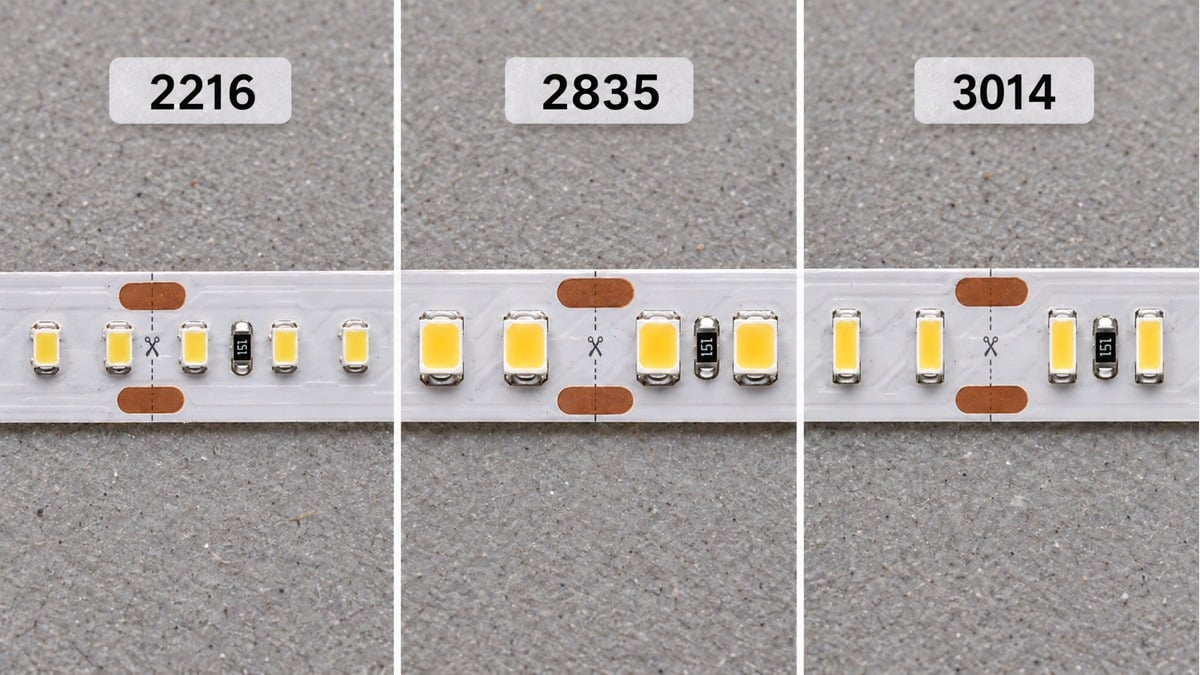
Confused by small SMD LEDs? Our guide compares 2216, 2110, 2835, 3014, 3528, and more on size, brightness, and application to help you choose the best LED strip.
LED Strip Basics
This engineering guide serves as a foundational resource for understanding the core principles of modern linear LED lighting. We will deconstruct the essential question, “what is LED strip lighting?”, by examining the underlying architecture, electrical fundamentals, and material science that dictate performance and reliability. The focus is on providing engineers, designers, and technical professionals with the concrete knowledge needed to specify and implement LED strip solutions effectively, moving beyond surface-level specifications to a deeper comprehension of how these systems function.
From high-density, dotless illumination to specific application requirements, the choice of LED strip technology is critical. Core product families include the latest in seamless lighting with Flexible COB LED Strip Lights, which offer a perfectly uniform line of light. Traditional options remain powerful choices, including versatile 2835 SMD Flexible LED Strip Lights for general applications and high-power 5050 SMD Flexible LED Strip Lights for tasks requiring maximum brightness. For accent and general purpose lighting, our Single Color LED Strip Lights collection provides a wide range of options.
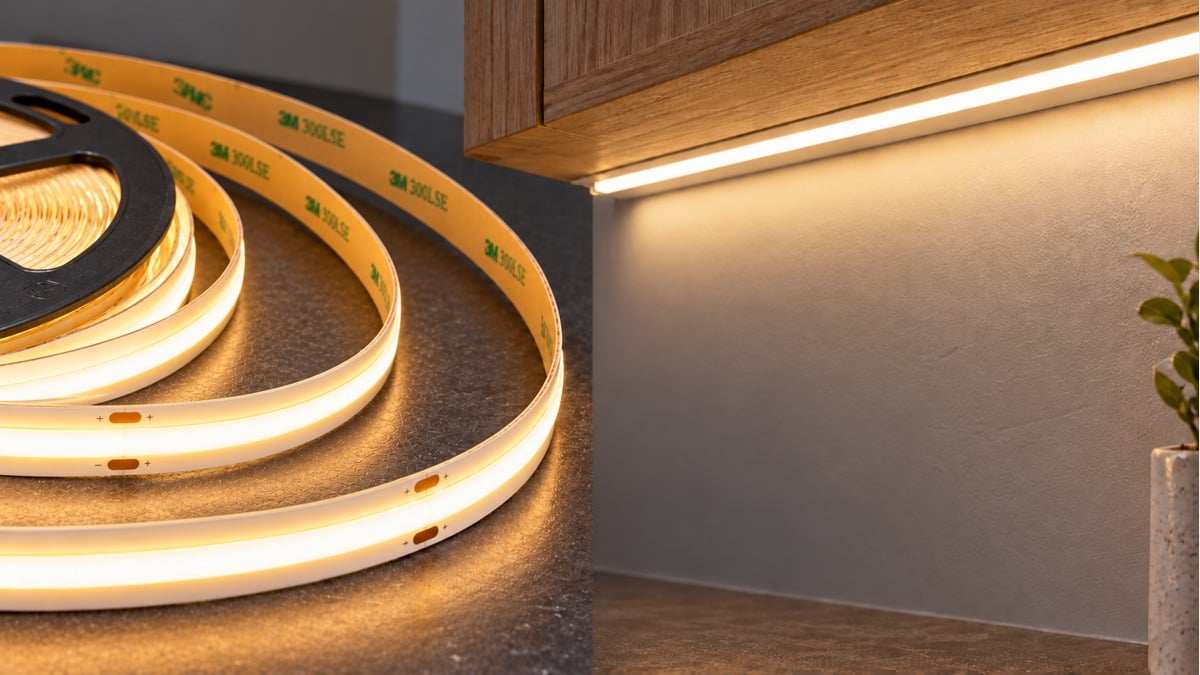
The Ultimate Guide to COB LED Strips: Why They’re Trending & SuperLightingLED’s Top Picks
Discover why COB LED strip lights are trending. Learn what they are, how they compare to SMD, and their benefits like dotless light and flexibility.
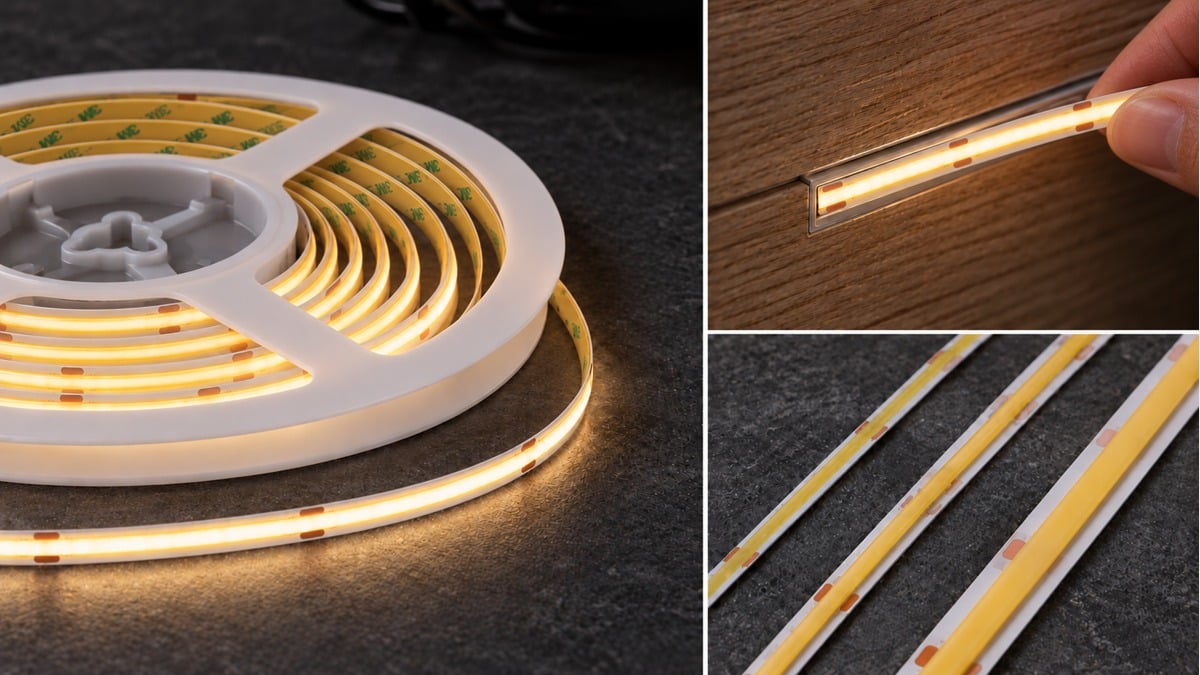
SlimLine COB LED Strip Collection – Revolutionizing Ambient Lighting
As a manufacturer and online seller of COB led flexible strip lights in China, Super Lighting LED provides customers with many types of slim COB strip lights.
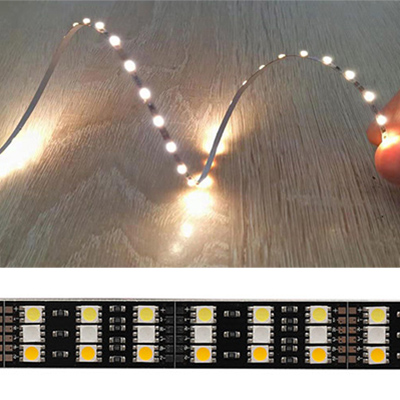
Flexible LED Strip Lights VS Rigid LED Linear Light Bars
Difference between flexible led strip lights and rigid led light bars in flexibility, length, width, and where they are used.
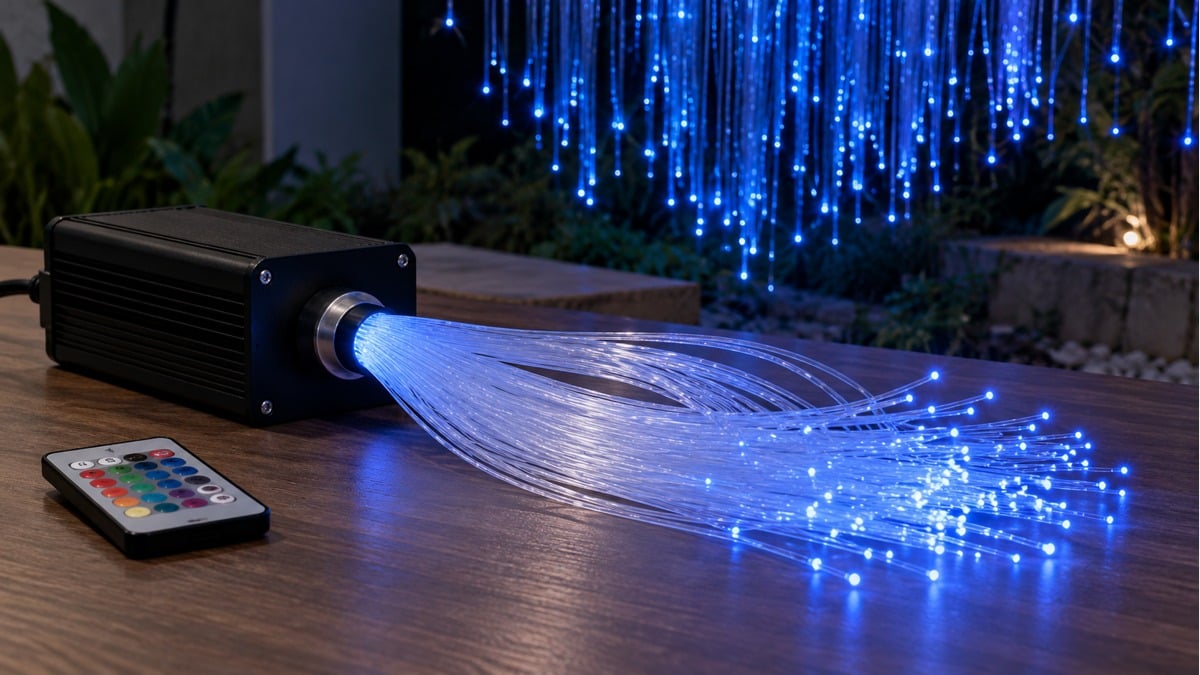
What Are LED Fiber Optic Lights?
LED fiber optic lights are often used to make a starry sky, a meteor shower, and other lighting effects, widely used in LED fiber optics decor lighting, such as fiber optic Christmas tree lighting, LED fiber optic pool […]
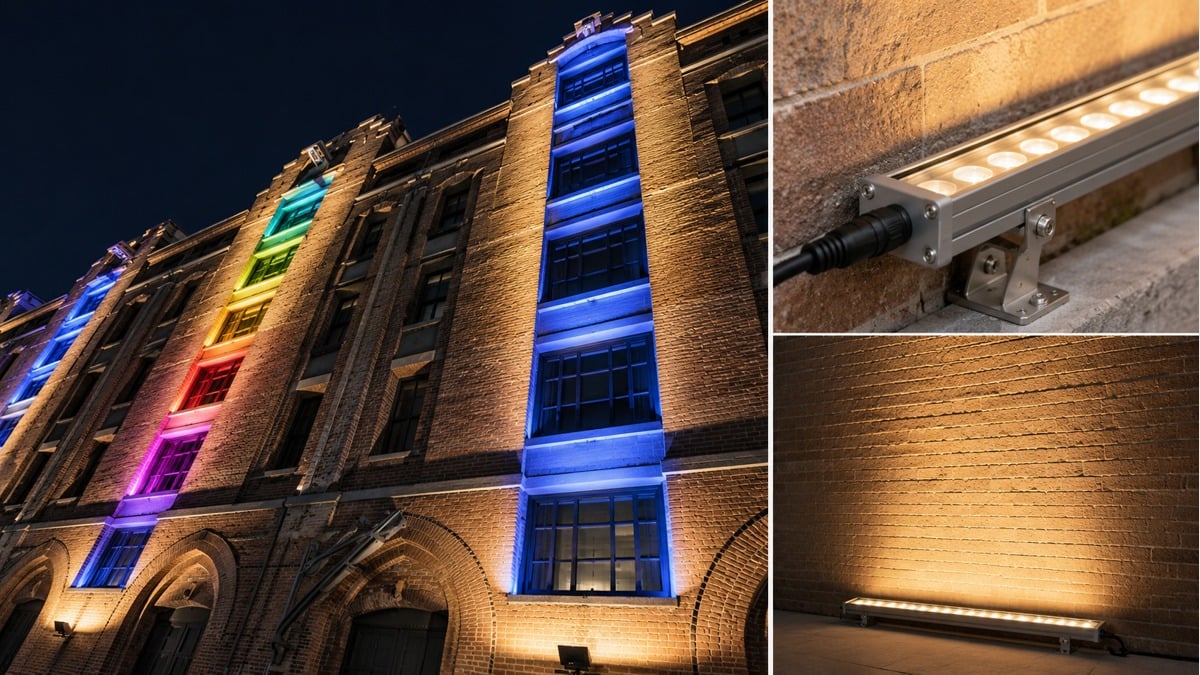
What Are LED Wall Washer Lights?
A comprehensive knowledge of wall washer light.
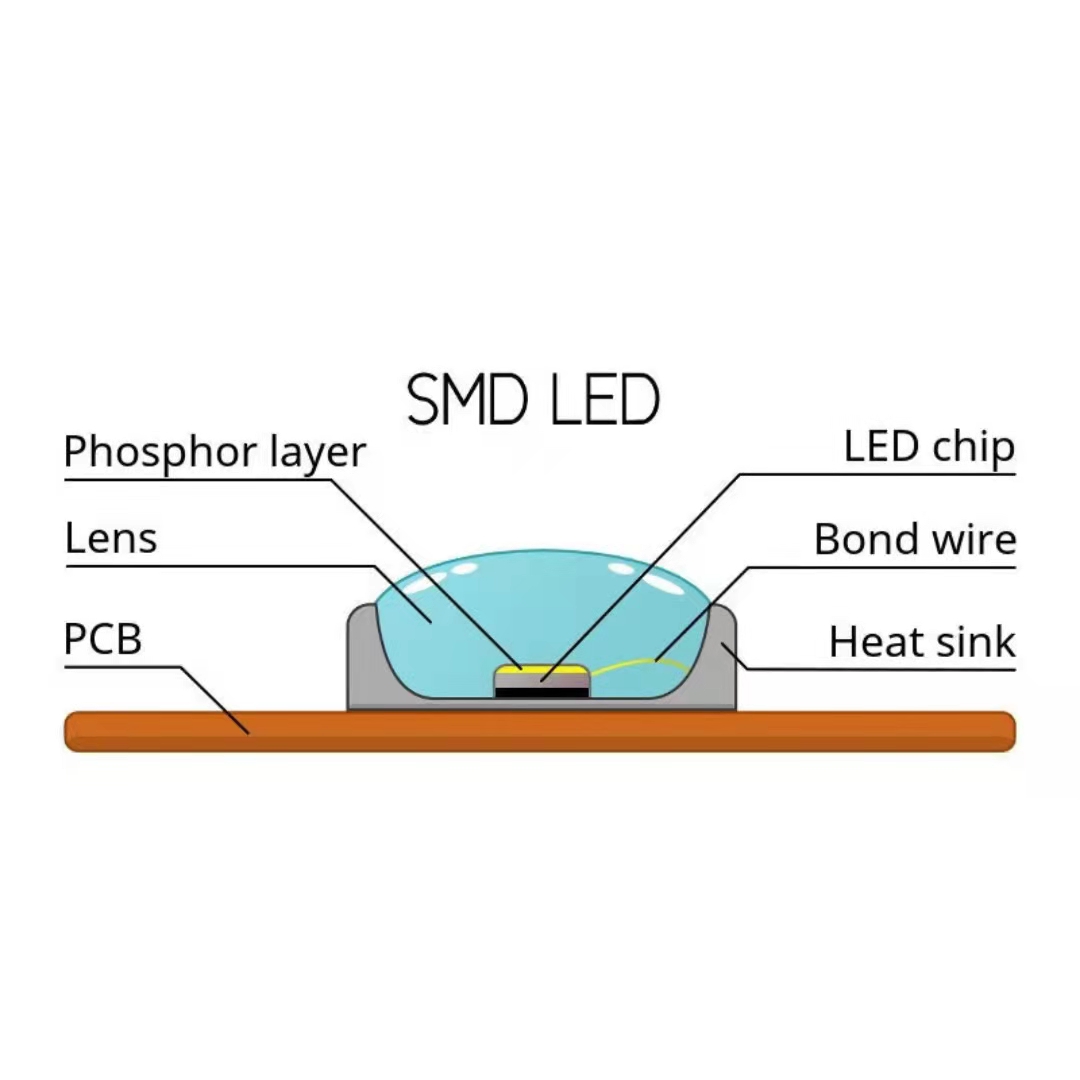
What Is A SMD LED Strip Light?
When browsing LED strip lights, we often see the LED strip lights with the word SMD or SMD5050, forming a special word, SMD5050 LED strip. SMD LED meaning the surface mount LED lights that are installed on the […]
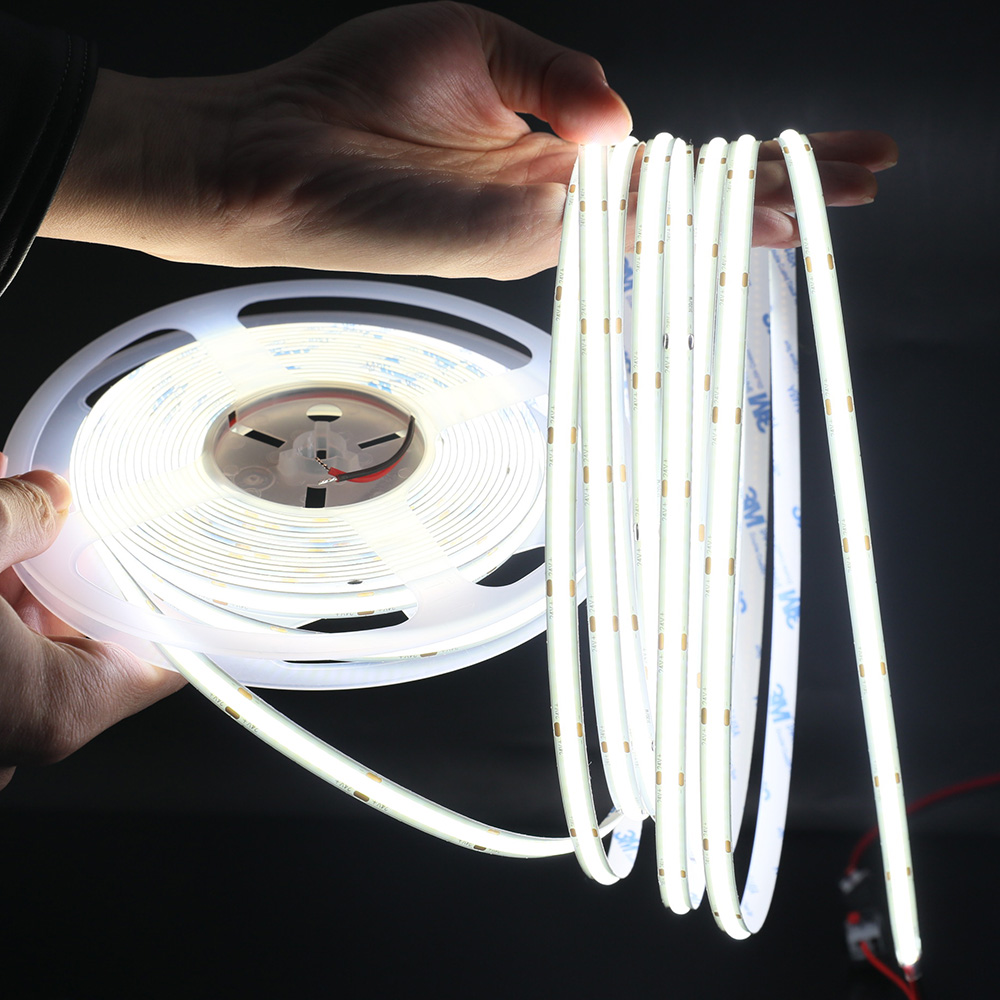
What Is COB LED Strip Light?
COB vs LED, which one is better? COB is chip on board, LED chips are directly patched on the FPCB, creating soft linear lighting. Here’s what COB led strip is.
Quick Technical Summary · At-a-Glance Specifications
LED strip lighting operates by mounting light-emitting diodes onto a flexible circuit board, with performance defined by the core architecture. Key technologies include COB (Chip-on-Board) for seamless, dot-free light and traditional SMD (Surface Mount Device) for discrete, high-power points, while the FPCB (Flexible Printed Circuit Board) quality dictates electrical stability and lifespan.
Core ArchitecturesCOB (Chip-on-Board), SMD (2835, 5050, etc.)
Standard DC Voltages12V DC, 24V DC
Typical Efficacy Range90 - 160 lm/W
FPCB Copper Weight2oz - 3oz Rolled Annealed (RA) Copper
SMD vs. COB LED Strip Architecture
The fundamental difference between LED strip technologies lies in how the semiconductor die (the chip that produces light) is packaged and mounted to the circuit board. This architectural choice directly impacts optical performance, thermal management, and visual aesthetics. The two dominant architectures are Surface Mount Device (SMD) and Chip-on-Board (COB).
SMD (Surface Mount Device) Architecture
SMD has been the traditional standard for LED strips. In this design, individual LED packages (e.g., 2835, 3014, 5050) are manufactured separately and then soldered onto the Flexible Printed Circuit Board (FPCB). Each package contains one or more semiconductor dies, a phosphor coating to convert the blue light to white, and a small lens. This creates discrete points of light along the LED strip. For a detailed breakdown of common chip types, see our SMD LED Comparison: 2216 vs 2835 vs 3014 Strip Lights guide. The primary characteristic of SMD is the visible 'dotting' or 'spotting' effect, which can be mitigated with deep aluminum channels and diffused covers.
- Thermal Path: Heat generated by the die must travel from the chip, through the package's solder pad, and into the FPCB's copper trace. This multi-step path has higher thermal resistance compared to COB.
- Beam Angle: Standard SMD packages typically have a beam angle of 120°, creating a directed cone of light from each diode.
- Application: Excellent for general backlighting, task lighting, and high-brightness applications where individual light points are hidden or intentionally visible.
COB (Chip-on-Board) Architecture
A COB LED strip represents a significant evolution in linear lighting. Instead of using packaged LEDs, bare semiconductor dies are mounted directly onto the FPCB in very high densities (e.g., a cob led strip 384 has 384 chips per meter). The entire array of chips is then encapsulated in a continuous line of phosphor silicone. This construction answers the question, What Is COB LED Strip Light?, by defining its key benefit: a completely uniform, dotless line of light. This makes it one of the best cob led strip lights for applications with reflective surfaces or where the light source itself is visible.
- Thermal Path: The die is bonded directly to the copper FPCB, creating a direct and highly efficient thermal path. This superior thermal management allows for higher chip densities and improved longevity.
- Beam Angle: The continuous phosphor surface emits light in a much wider 180° beam angle, providing a soft, diffuse, and expansive illumination.
- Application: Ideal for architectural reveals, under-cabinet lighting, display cases, and any application demanding a seamless, homogenous line of light without hotspots. Variants like an RGB COB LED strip or a warm white COB LED strip offer this seamless effect in color-changing and specific color temperatures.
| Engineering Parameter | SMD LED Strip (5050, 60 LEDs/m) | COB LED Strip (480 LEDs/m) |
|---|---|---|
| Light Emission | Discrete, visible light points ('dots') | Continuous, uniform, dotless line of light |
| Typical Beam Angle | 120° | 180° |
| Chip Density | Low to Medium (30 - 120 LEDs/meter) | Very High (320 - 840+ LEDs/meter) |
| Thermal Resistance Path | Die → Package Solder Pad → FPCB Copper | Die → FPCB Copper (Direct Path) |
| Light Quality at Close Proximity | Requires diffuser for uniformity | Inherently uniform and diffuse |
| Typical Efficacy | 100-140 lm/W | 95-125 lm/W |
PCB Anatomy & Electrical Fundamentals
Understanding how do LED strip lights work at an electrical level is crucial for proper system design and ensuring longevity. The Flexible Printed Circuit Board (FPCB) is not just a mounting surface; it is the electrical backbone of the entire system, responsible for power distribution and thermal dissipation.
FPCB Construction and Copper Weight
High-quality LED strips utilize a Rolled Annealed (RA) copper FPCB, which is more durable and resistant to cracking from repeated flexing than cheaper electro-deposited (ED) copper. The thickness of this copper, measured in ounces per square foot (oz), is a critical specification.
- 2oz Copper: A common standard for entry-level and moderate-power LED strips.
- 3oz Copper: Preferred for high-power, long-run, and professional-grade LED strips. The thicker copper traces have lower electrical resistance, which minimizes voltage drop and allows them to carry more current without excessive heat buildup.
Series-Parallel Circuits: 12V vs. 24V DC
LED strips are designed to operate on low-voltage DC power. To achieve this, LEDs are arranged in series-parallel groups along the FPCB. Each cuttable segment of the strip is a self-contained parallel circuit.
- A 12V COB LED strip lights segment typically has 3 LEDs in series with a current-limiting resistor.
- A 24V COB LED strip segment typically has 6 or 7 LEDs in series with a resistor.
Operating at a higher voltage like 24V is more efficient for longer runs. According to Ohm's Law (P = V × I), for the same power (P), doubling the voltage (V) from 12V to 24V halves the current (I). Lower current reduces resistive losses (I²R losses) in the copper traces, resulting in less voltage drop and less heat generation. This is why 24V COB LED strips are often recommended for professional installations. For precise calculations, our Power & Voltage Drop Calculators are an essential engineering tool.
Calculating Power Supply Wattage
To correctly size a power supply, calculate the total power consumption and add a 20% safety headroom.
Formula: (Watts per Meter × Total Meters) × 1.20 = Required PSU Wattage
Understanding Efficacy (lm/W)
Efficacy measures the efficiency of a light source. It is the ratio of luminous flux (lumens) to power (watts). Higher lm/W values indicate greater efficiency.
Formula: Total Lumens / Total Wattage = Efficacy (lm/W)
Specialty Linear Formats
While flexible tape-style LED strips are the most common format, various specialty linear systems exist to solve specific design and engineering challenges. The choice of format depends on mounting requirements, environmental exposure, and desired light effect.
Flexible Tape vs. Rigid Aluminum Bars
The core distinction here is mechanical. As detailed in our guide on Flexible LED Strip Lights VS Rigid LED Linear Light Bars, flexible LED strips offer unparalleled versatility for conforming to curves and irregular shapes. They are ideal for cove lighting, backlighting, and architectural accents. In contrast, LED Backlighting Lens Rigid LED Bar products provide structural integrity. They are pre-mounted in an aluminum extrusion, which acts as a robust heatsink and ensures perfect straight-line installation, making them suitable for task lighting, display cases, and integrated fixtures.
LED Wall Washers
LED wall washers are high-power, rigid linear fixtures designed with specific optics (lenses) to project light smoothly and evenly across a large vertical surface. As explained in What Are LED Wall Washer Lights?, their purpose is to eliminate shadows and create a uniform 'wash' of light, often used for accenting architectural facades or feature walls. They operate at higher power and require more robust thermal management than standard flexible LED strips.
LED Fiber Optics
For applications where electricity cannot or should not be present at the point of illumination (e.g., in pools, saunas, or museum displays), LED Fiber Optic Lights provide a unique solution. An LED 'illuminator' engine generates the light, which is then transmitted through non-conductive fiber optic cables. The fibers themselves emit no heat or electricity, only light at their ends, creating points of light often used for 'starry sky' ceiling effects. You can learn more about the technology in our article, What Are LED Fiber Optic Lights?.
Matching Strip Construction to Longevity & Optical Performance
The long-term performance of an LED strip is not determined by a single specification but by the interplay of its construction materials and design. Selecting the right product requires looking beyond initial brightness to the factors that ensure stability and reliability over its operational life.
The Role of Materials in Longevity
The quality of the FPCB, the efficiency of the thermal path, and the chemical stability of the encapsulation material are paramount. A waterproof COB LED strip, for example, must use a high-grade silicone or polyurethane coating that resists yellowing and degradation from UV exposure and environmental factors. Cheaper epoxy coatings will yellow, harden, and crack over time, altering the color temperature and compromising the IP rating. Our commitment to quality is detailed in our LED Strip Factory & QC overview.
Key Engineering Rule: Thermal management is the primary determinant of LED longevity. For every 10°C increase in junction temperature, an LED's operational lifespan can be reduced by as much as 50%. This is why high-power LED strips must be mounted on an aluminum profile or heatsink to properly dissipate heat.
Optical Performance: CRI, R9, and SDCM
Beyond brightness (lumens) and efficiency (lm/W), true optical performance is measured by color quality.
- Color Rendering Index (CRI): A measure of how accurately a light source reveals the true colors of an object compared to a natural light source. A CRI of 90+ is considered excellent for commercial and residential applications.
- R9 Value: A specific score within the CRI test that measures the rendering of deep, saturated reds. This is critical for applications in retail, art galleries, and hospitality where rendering skin tones and rich colors accurately is essential.
- SDCM (Standard Deviation of Color Matching): Also known as MacAdam ellipses, this metric quantifies the consistency of color from one LED to another. A rating of <3 SDCM ensures that there is no visible color variation along the length of an LED strip or between different production batches.
A successful COB LED strip installation depends on selecting a product with specifications that match the application's demands. This includes choosing the correct voltage (e.g., COB LED strip 24V for longer runs), the right color quality (CRI 90+), and appropriate accessories like a compatible COB LED strip connector. For detailed product data, always refer to the official datasheets in our Spec Sheet & Manual Library.
| Performance Metric | Economy-Grade LED Strip | Professional-Grade LED Strip |
|---|---|---|
| PCB Copper Weight | 1oz or 2oz ED Copper | 2oz or 3oz Rolled Annealed (RA) Copper |
| Voltage Drop (5m run) | High (>3V drop) | Low (<2V drop) |
| Color Rendering (CRI) | 80+ | 90+, 95+ with high R9 values |
| Color Consistency (Binning) | >5 SDCM (visible variation) | <3 SDCM (no visible variation) |
| Lumen Maintenance (L70) | ~25,000 hours | >50,000 hours |
| Warranty | 1-2 Years | 3-7 Years |
Recommended Hardware Matching These Specs
Each product below is stocked in our factory-direct catalog and verified for compatibility with the engineering guidelines in this library.
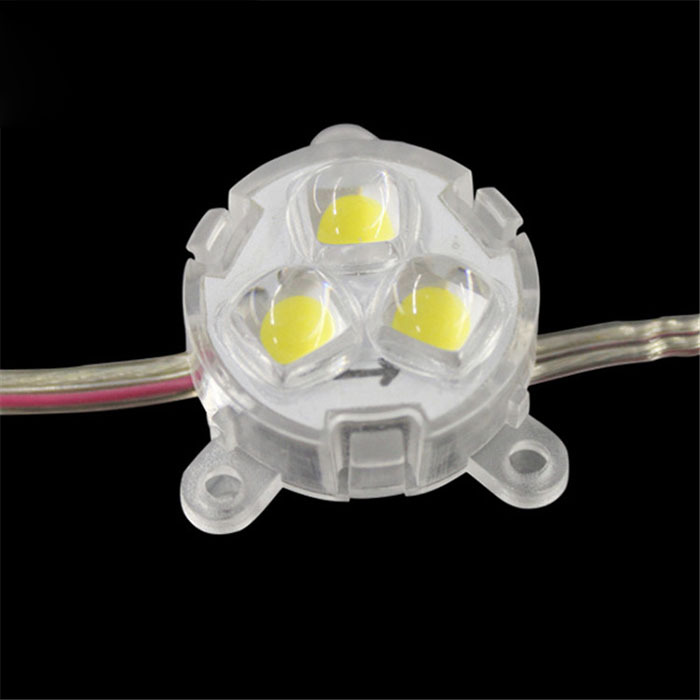 DC-24V-3X
12V 24V Single Color White String Lights Waterproof LED Module For Signs
From $13.98View Specs →
 FLS-24V-2835-CCTX440
24V 2835 Dual White Thin Flat Sheet LED Panels for Backlighting Stone 22X10
From $26.98View Specs →
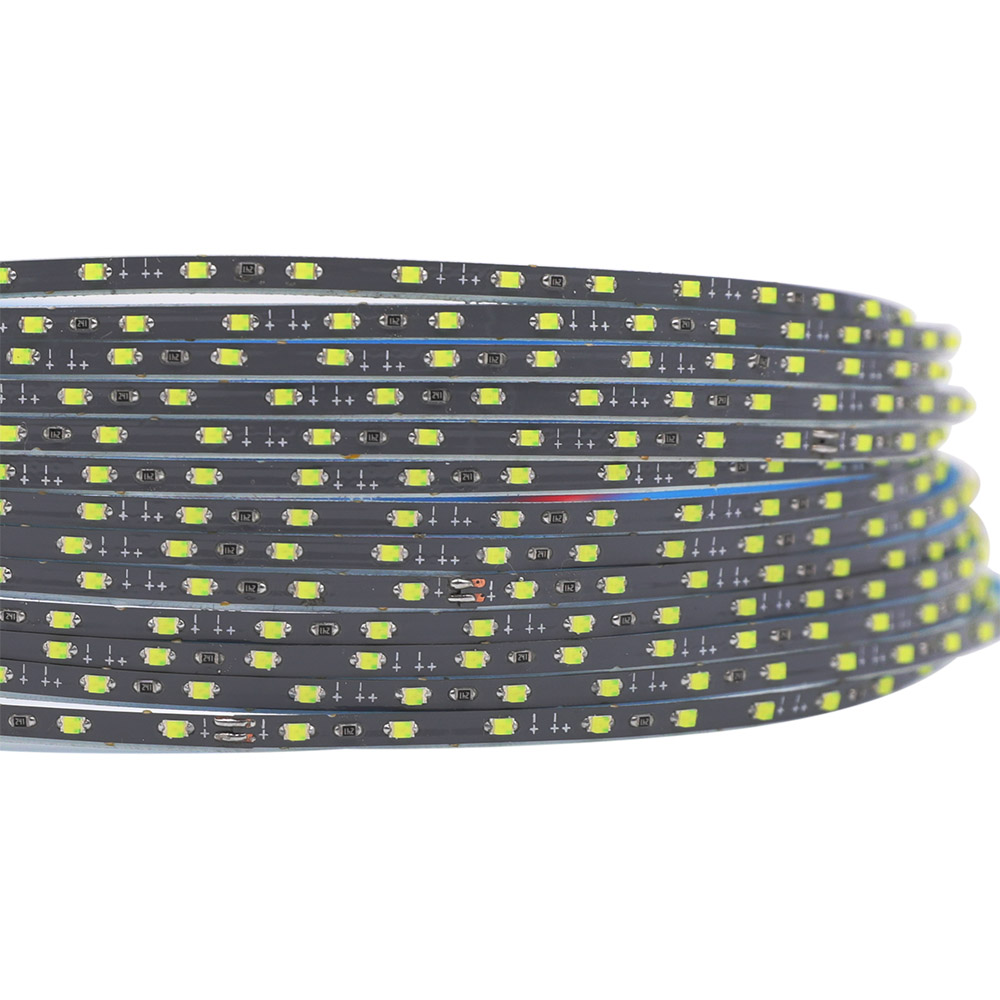 FSLDR-12V-0603X600W3
0603SMD 600LEDs Single Colors LED Strip Light - Super Narrow 0.12in Width 3mm - DC12V
From $39.98View Specs →
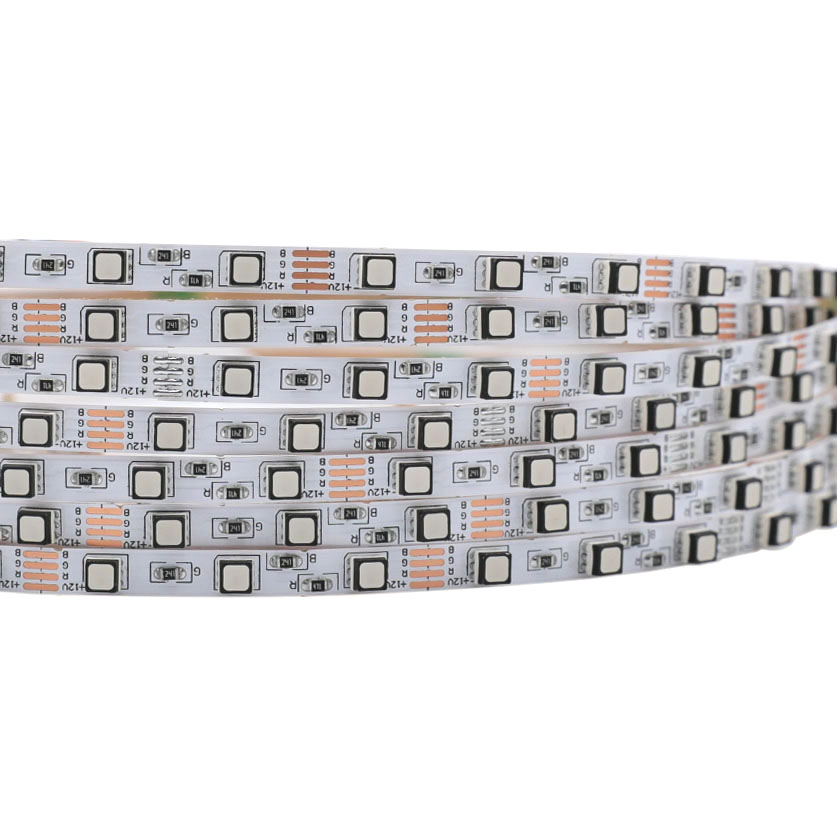 VL3030-RGB72-12V-W5
5mm Ultra Narrow RGB Color Changing LED light Strips - DC12V 72LEDs/m 16.4ft
From $21.98View Specs →
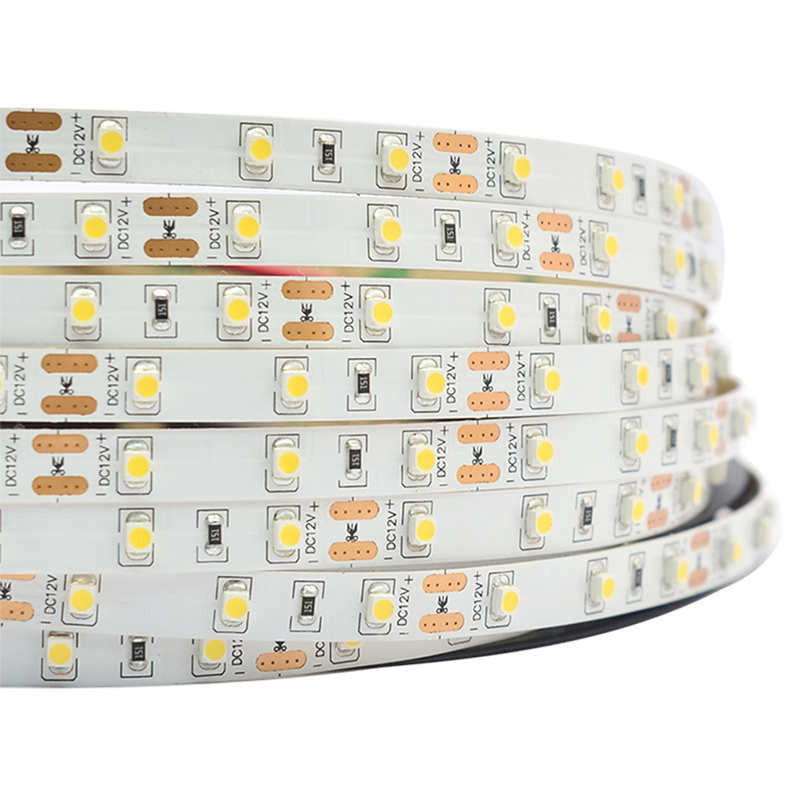 FSLSR-IP20-3528X300
Single Row Series DC12/24V 3528SMD 300LEDs Flexible LED Strip Lights, Indoor Lighting, Non Waterproof, 16.4ft Per Reel By Sale
From $17.98View Specs →
 FSLSR-IP20-2835X300
Single Row Series DC12/24V 2835SMD 300LEDs Flexible LED Strip Lights Indoor Lighting 16.4ft Per Reel By Sale
From $24.98View Specs →
Interactive Engineering Tools & Design Utilities
Use our free factory-maintained calculators, schematics, and BOM planners before finalizing parts or cutting hardware.
Calculator Suite
Power & Voltage Drop Calculators
Compute exact PSU amperage with 20% headroom, wire gauge (AWG), max run length, cut increments, and lumen targets.
Open Calculators →
Guided Builder
Interactive LED Project Planner
Step-by-step bill-of-materials generator matching strips, channels, controllers, and UL-listed drivers for your room.
Launch Project Wizard →
1,000+ Demos
LED Strip Video Help Map
Task-organized bench tests, installation tutorials, brightness comparisons, and troubleshooting walkthroughs.
Watch Video Library →
Datasheet Vault
Spec Sheet & Manual Library
Download photometric reports, wiring diagrams, UL/CE compliance sheets, and controller manuals by model.
Browse Spec Sheets →
Engineering Datasheets & Specification PDFs
Download primary technical manuals and test sheets directly from our PDF specification library.
Hands-On Video Demonstrations
Watch bench tests and step-by-step wiring demos from our LED Video Library.
 Demo
DC24V 5050SMD 16.4Ft 300LEDs Flexible RGBCCT LED Color Changing Neon Light Kit - superlightingled
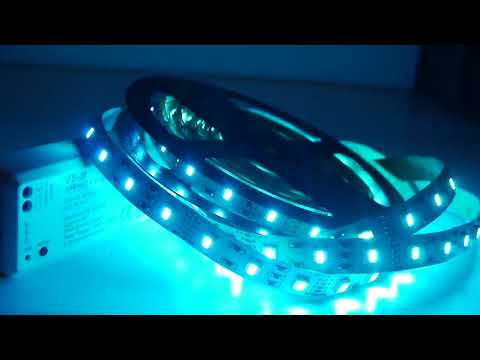 Demo
DC12V 5050SMD 16.4ft/5M 5 IN 1 60LEDs/M RGBCCT Flexible LED Strip Light- superlightingled
 Demo
Super Bright LEDs Triple Row SMD5050 Flexible LED Strip Lights For LED Industrial Lighting
 Demo
Dual Row DC24V Waterproof IP68 5050SMD Flexible LED Strip Lights
 Demo
Five Rows Width 58mm Super Bright Series DC24V 5050SMD 1400LEDs Flexible LED Strip Lights
 Demo
7 Rows The World's Brightest Engineering lighting DC24V 5050SMD Width 0.39ft Flexible LED Strips
Matching Hardware Categories & Reference Hubs
Single Color LED Strip Lights
Flexible COB LED Strip Lights
White COB LED Strip
2835 SMD Flexible LED Strip Lights
3014 SMD Flexible LED Strip Lights
5050 SMD Flexible LED Strip Lights
LED Backlighting Lens Rigid LED Bar
LED Fiber Optic Lights
What Are Flexible LED Strip Lights?
What Is a COB LED Strip Light?
LED Strip Knowledge Map
LED Strip Factory & QC
Technical Support Desk
01What’s the real difference between 12V and 24V COB LED strips for a long run?
The primary difference is voltage drop. For the same power (wattage), a 24V COB LED strip draws half the current (Amps) of a 12V strip. This lower current significantly reduces voltage loss over distance, allowing 24V strips to run much longer—typically up to 10 meters (32.8 ft)—from a single power feed without visible dimming at the far end. A 12V strip often shows noticeable dimming after just 5 meters (16.4 ft). For any installation exceeding 5 meters, such as cove or architectural lighting, specifying 24V is the superior engineering choice for maintaining consistent brightness. Learn more about Flexible COB LED Strip Lights.
02How do I prevent my COB LED strips from dimming at the end of a 20-foot run?
This dimming effect is called voltage drop, and it's expected in long low-voltage DC runs. The best practice for a 20-foot (approx. 6m) run is to use a 24V COB LED strip and power it from both ends. Run a parallel set of 18-20 AWG wires from your power supply's V+ and V- terminals to the start and end of the strip. This 'dual-feed' or 'parallel' connection ensures the entire length receives adequate voltage, eliminating the dimming effect. For even longer runs, you may need to inject power in the middle. Use our Power & Voltage Drop Calculators to verify your wiring plan.
03Are solderless COB LED strip connectors reliable, or should I always solder?
Solderless connectors are reliable for dry, indoor applications where speed and ease of installation are key, provided you use the correct connector for your specific COB strip's width (e.g., 8mm, 10mm) and pin count. However, for permanent, high-current, outdoor (even IP65), or high-vibration installations, soldering is the superior method. A soldered joint offers the lowest possible resistance (1-10 mΩ), preventing future flicker or failure points caused by oxidation or loosening. If you must use a COB LED strip connector, ensure it is correctly matched and securely clamped.
04What IP rating do I actually need for a waterproof COB LED strip in a bathroom shower vs. an outdoor patio?
For a bathroom or kitchen area with steam and splashes but no direct water jets, an IP65-rated waterproof COB LED strip is sufficient. For an outdoor patio or under eaves where the strip is exposed to rain, you need a minimum of IP67, which protects against temporary immersion. An IP68 rating is only necessary for continuous underwater applications like pools or fountains. Always ensure that any cuts and connections are sealed with silicone end caps and adhesive to maintain the IP rating throughout the installation. Explore options for Flexible COB LED Strip Lights.
05How do 'free cut' COB LED strips work, and can I really cut them anywhere?
Standard COB LED strips have designated cut points, typically every 25mm to 50mm, where the circuit can be safely severed. 'Free cut' or 'cut-anywhere' COB LED strips are designed with extremely close cut intervals, making it possible to trim them to a very precise length. While not literally 'anywhere' at a microscopic level, the cut points are so frequent that for practical purposes, you can achieve a custom fit for cabinetry or displays with minimal waste. Always use sharp scissors and connect to the newly exposed copper pads using a compatible COB LED strip connector or by soldering.
06What causes COB LED strips to flicker when dimmed, and how do I fix it?
Flickering during dimming is almost always a compatibility issue between the dimmer, the power supply (driver), and the LED strip. The most common cause is using a standard non-dimmable driver with a wall dimmer or an incompatible dimmer/driver pair (e.g., a leading-edge dimmer with a PWM-input driver). To fix this, ensure you are using a dimmable LED driver that matches your dimmer's technology (e.g., TRIAC, 0-10V, DALI). For low-voltage PWM dimming between the driver and the strip, use a high-quality controller with a stable frequency (e.g., >2kHz) to avoid visible flicker.
07What does a high CRI value (e.g., 90+) mean for a warm white COB LED strip, and when is it necessary?
CRI (Color Rendering Index) measures how accurately a light source reveals the true colors of objects compared to natural sunlight (CRI 100). A standard LED strip might have a CRI of 80. A high CRI 90+ warm white COB LED strip, set to a color temperature of 2700K-3000K, will render colors, especially reds and skin tones, much more vividly and naturally. This is critical for applications like high-end retail displays, art galleries, kitchen under-cabinet lighting (for food appearance), and bathroom vanities. For general ambient lighting, CRI 80+ is acceptable, but for color-critical tasks, specify CRI 90+. See our White COB LED Strip collection.
08How do I choose the correct power supply wattage for my 24V COB LED strip installation?
To correctly size your power supply, calculate the total power consumption of your LED strip and add a 20% headroom to ensure longevity and safety. First, find the wattage per meter (or foot) on the strip's spec sheet. For example, a 5-meter strip rated at 15 watts/meter consumes 5m * 15W/m = 75 watts. Then, apply the 20% headroom: 75W * 1.20 = 90W. In this case, you should choose a 24V DC power supply with a rating of 90W or higher (e.g., 100W). Under-sizing the power supply is a primary cause of flickering, overheating, and premature failure.
09What is the functional difference between an RGB and an RGBW COB LED strip?
An RGB COB LED strip uses red, green, and blue LEDs to mix a wide spectrum of colors. It can create a white light by combining all three colors at full intensity, but this often results in a cool, bluish-white. An RGBW COB LED strip adds a dedicated fourth channel with a pure white LED (e.g., 3000K warm white or 6000K cool white). This provides a much higher quality, brighter, and more efficient white light for general illumination, while still offering full RGB color-changing capabilities for accent lighting. Choose RGBW when you need both functional white light and decorative color effects.
10My COB LED strip gets very hot. Do I need an aluminum channel for heat dissipation?
Yes. Due to their high chip density, COB LED strips generate significant heat that must be managed. While low-wattage strips might survive on some surfaces, mounting any COB strip—especially those over 10W/meter—in an aluminum channel is mandatory for proper thermal management. The channel acts as a heat sink, drawing heat away from the LEDs. Without it, the junction temperature can exceed safe limits, drastically reducing the strip's lifespan from a potential 50,000 hours to 15,000 hours or less and causing color shifting. Learn more about the differences between Flexible LED Strip Lights VS Rigid LED Linear Light Bars.
11What gauge wire (AWG) should I use to connect my 24V COB LED strip to the power supply?
The correct wire gauge depends on the total current (Amps) of the strip and the distance between the power supply and the strip. For a typical 5-meter (16.4 ft) 24V COB strip drawing around 75W (3.1 Amps), 18 AWG wire is sufficient for a run of up to 10 feet. For longer distances or higher-wattage strips, you must use a thicker wire (lower AWG number), like 16 or 14 AWG, to minimize voltage drop before the strip even begins. Using undersized wire is a fire hazard and will cause dimming. Always consult an AWG chart and use a Power & Voltage Drop Calculators to be certain.