
What are flexible led strip lights?
Flexible LED strip lights are LEDs welded on a flexible printed circuit board, which gives the possibility of bending. They are only as thick as a coin and stick on with an adhesive back. Rigid LED strip lights are the other kind:
- Flexible LED strip: flexible circuit board, bends, fits even narrow spaces. Low voltage 5V to 48V, most commonly in 5 m rolls, or high voltage 110V/220V, normally in 50 m or 100 m rolls.
- Rigid LED strip: SMD LEDs on a hard aluminum substrate. It cannot be bent, but it is easier to fix and gets good heat dissipation. Generally 12V or 24V, in 0.5 m or 1 m pieces.
- Which one: bending needs or irregular places, choose flexible. Flat surfaces such as LED advertising light boxes and booth counters, rigid works well.
At SuperLightingLED we sell both kinds, and “flexible or rigid?” is a question we answer for customers all the time. Below: a side-by-side table, what each type is, what voltage drop means for long flexible runs, what happens when you bend them, and how to pick.
Flexible led strip lights VS rigid led strip lights
Led strip lights can be divided into two categories, flexible led strip lights and rigid led strip lights. Most led light strips on the market are flexible strips, but there is also a place for rigid led strips.
►Everything you need to know before buying led strip lights:
Is it worth getting led strip lights?
Flexible vs rigid LED strips at a glance
Each row is explained in the sections below; the last row takes you to the products.
| Flexible LED strip lights | Rigid LED strip lights | |
|---|---|---|
| Circuit board | Flexible printed circuit board; the LED patch is welded on it | Hard circuit board: SMD LEDs welded on an aluminum substrate |
| Bending | Bends: the choice when you have bending needs | Cannot be bent; bending breaks the LED chips and damages the board |
| Mounting | Adhesive back; only as thick as a coin, fits narrow spaces | Flat surfaces only; easier to fix, process and install |
| Heat dissipation | Fit it in an aluminum profile, which works as a heat dissipation channel | Good heat dissipation under long-term working conditions, thanks to the aluminum substrate |
| Voltage | High voltage 110V / 220V; low voltage 5V / 12V / 24V / 36V / 48V | 12V or 24V |
| Length | High voltage 50 or 100 m a roll; low voltage most commonly 5 m (16.4 ft) a roll | 0.5 m or 1 m; up to 7 × 0.5 m or 3 × 1 m connected together |
| LED colors | Single color, tunable white, RGB / RGBW / RGBCCT, addressable dream color | Warm white, white, red, green, yellow, blue; RGB |
| Waterproof grade | IP20 / 65 / 67 / 68 | IP20 / 65 / 68 |
| Density (LEDs/m) | 30 / 48 / 60 / 72 / 90 / 96 / 120 / 144 | 60 / 72 / 144 |
| Typical uses | Outdoor building outlines, shopping mall atmosphere lighting, bridge and park lighting | LED advertising light boxes and booth counters |
| Shop | Single color, RGB, addressable | Rigid LED bars, LED linear bar lighting |
What are flexible led strip lights?
We said before that led strip light is a strip-shaped printed circuit board with other electronic parts. And when connected an led strip light to a power supply, the electricity is converted into light energy, and the light emitting diodes will glow.
Flexible led strip lights are that printed circuit board is flexible, which gives the possibility of bending. The flexible strip light is to weld the LED patch on the flexible circuit board, and the back side is installed in the form of adhesive on the occasion where it is needed.
►According to the different application occasions and the requirements of environmental illumination, the surface treatment can be divided into glue filling, waterproof treatment and non-waterproof treatment. The thickness of the flexible light strip is only the thickness of a coin and does not take up space. And it can be installed even in narrow spaces.
Flexible strip lights have more abundant use scenes, outdoor building outline lighting, shopping mall atmosphere lighting, bridge lighting design, park lighting design, etc.
►Flexible led strip lights can be divided into high-voltage strip lights and low-voltage strip lights according to different voltages.
High voltage light strips use 110V-220V voltage, and these 2 voltages can cover the basic requirements of all voltages (85V-265V), while the voltage of low-voltage light strips can be 5V, 12V, 24V, 36V, and 48V.
High-voltage led strips are normally 50 meters or 100 meters a roll. The most common low-voltage light strips is a roll of 5 meters/16.4 feet. If the low-voltage light strip is too long, there will be a voltage drop.
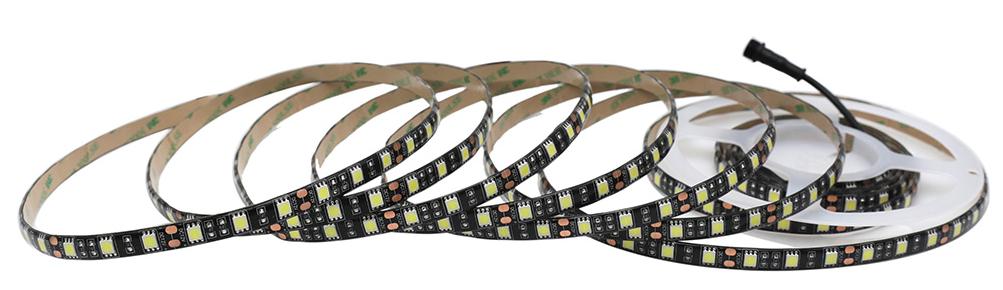
*Single color/ RGB led strip light FSLSR-IP20-5050X300
What is voltage drop?
There will be loss during the voltage transportation of led strip lights. The longer the light strip, the greater the voltage loss. If you use a 10 meters 12V led strip light, the voltage at the beginning is 12V, and the voltage at the end may only be 8V.
Voltage drop means that the brightness of the light strip will also drop. The brightness changes from the white light at the beginning to yellow gradually, and finally turns to red light until the light disappears.
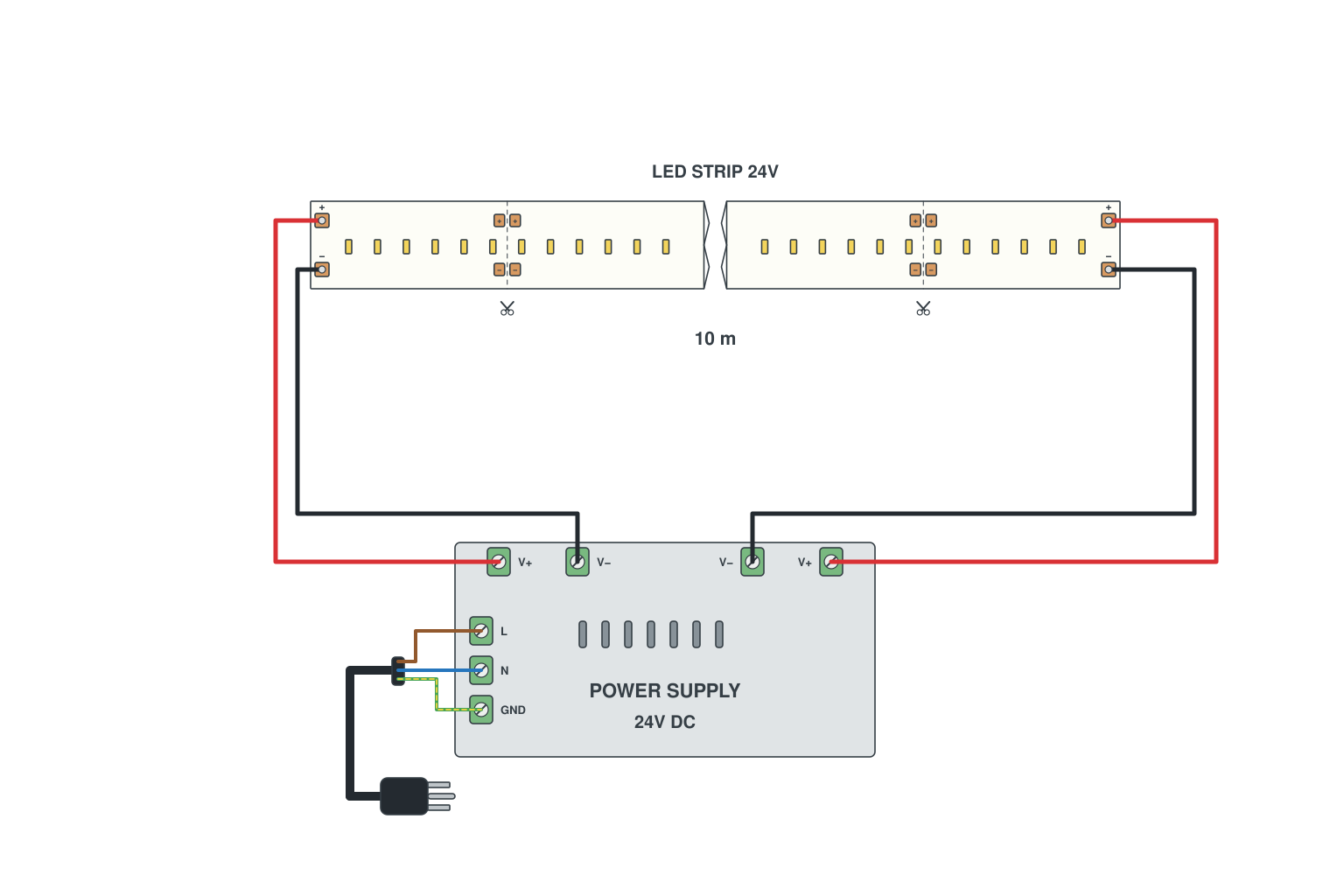
When there is a voltage drop, a good way is to use two power supplies. Connect one power supply at the beginning of the light strip and add another power supply at the end, so that there will be no voltage drop. And you can enjoy the happiness brought by the lights to your heart's content.
Feeding power at both ends, as described above, is one of four fixes our engineers draw for a long flexible run. The diagrams are drawn by the SuperLightingLED engineering team; wire colors follow our house convention (red V+, black V-/GND). Click a diagram for the full notes in our LED strip wiring diagrams library.
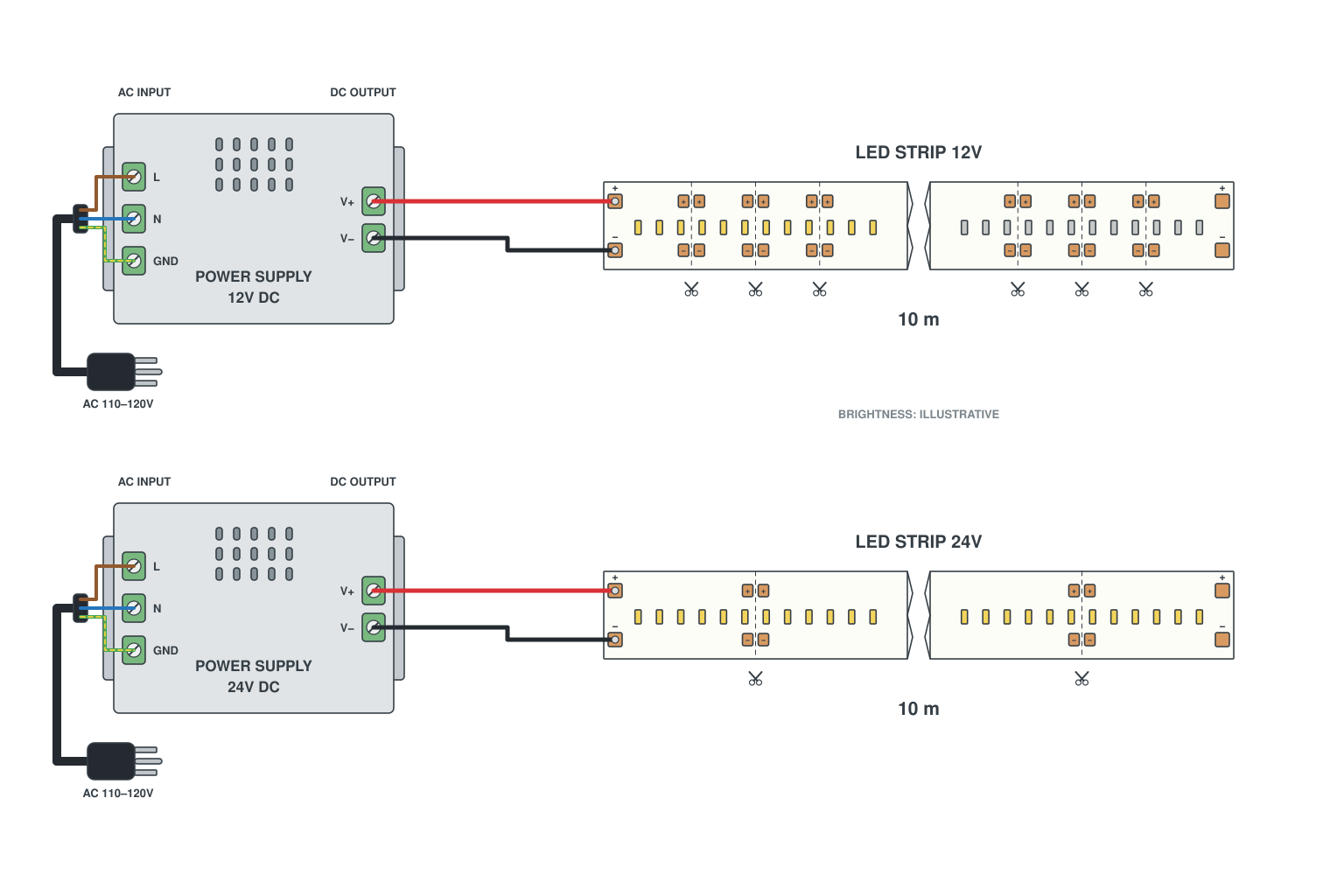
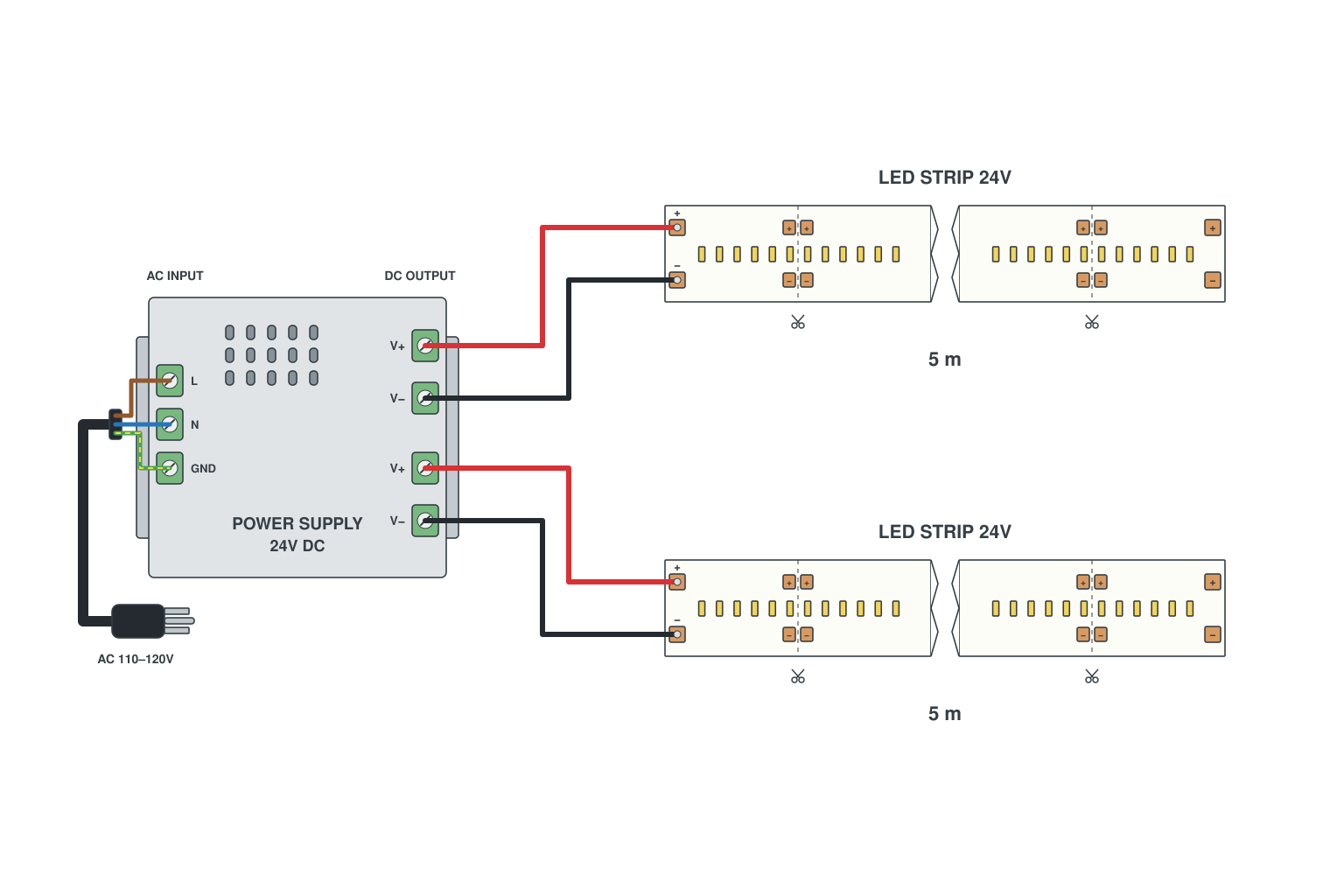
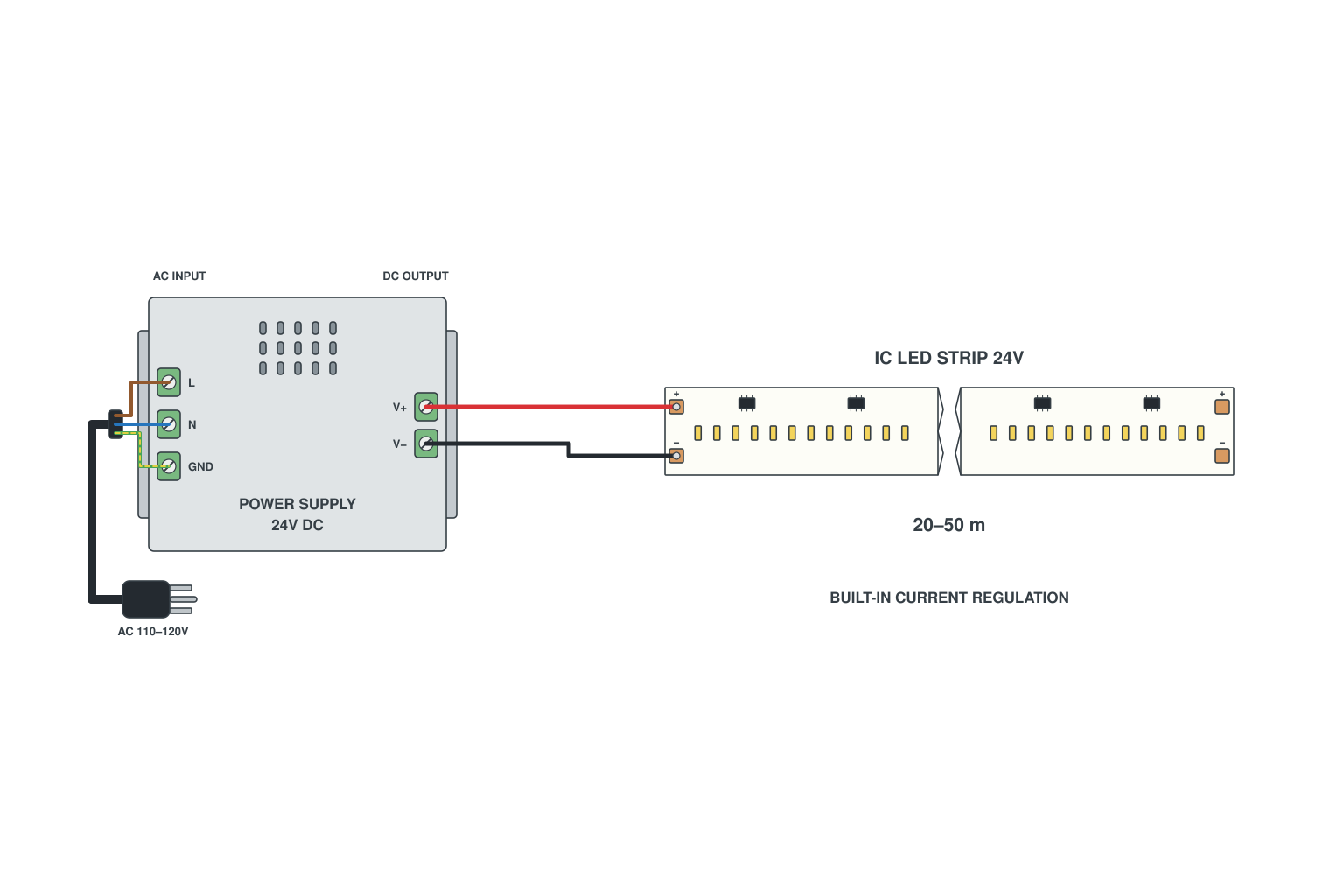
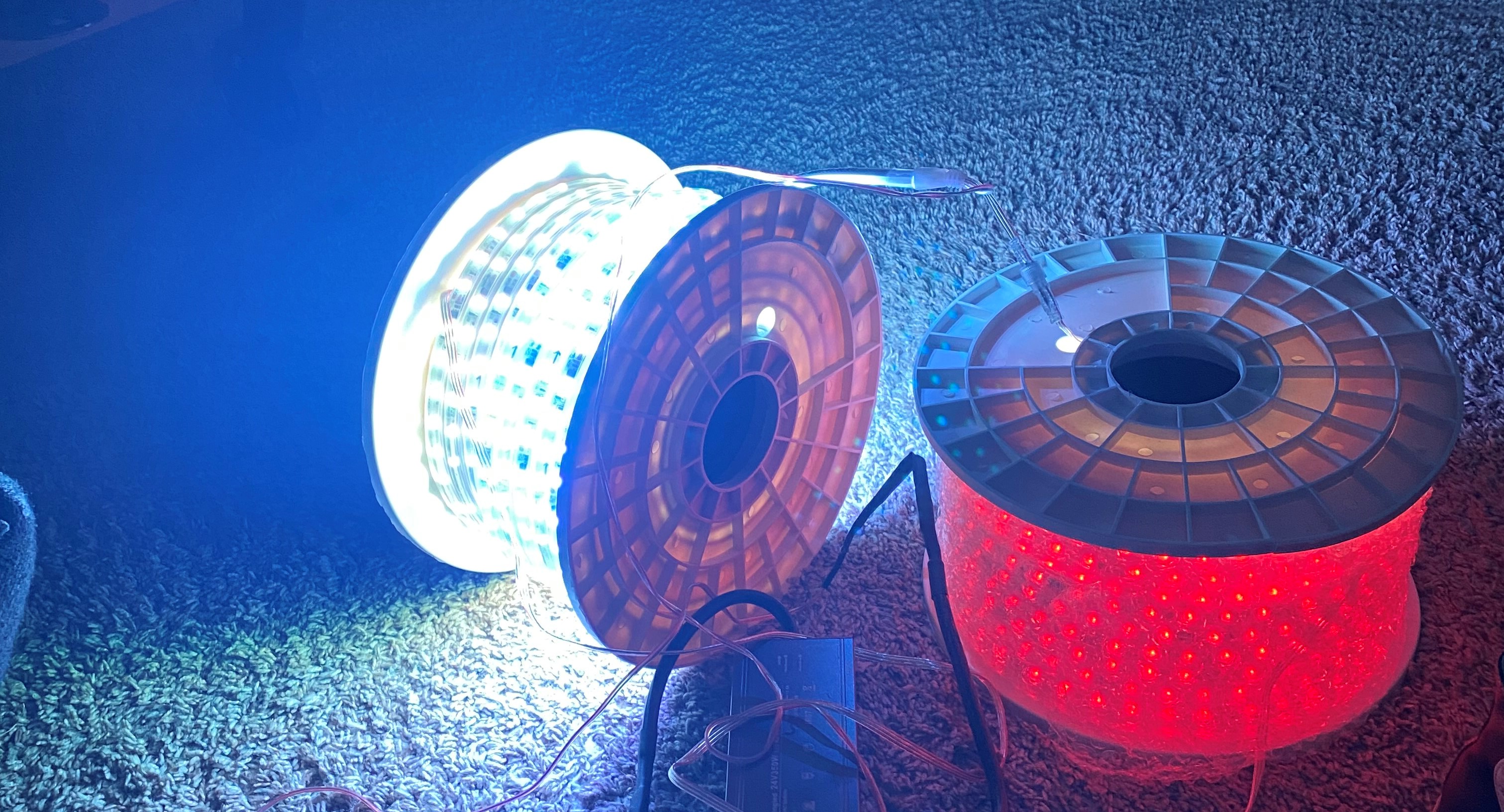
Shop ultra-long constant current LED strips for one long run with a single feed, and size the supply with how to calculate power for LED strip lights.
What are rigid led strip lights?
Different from the flexibility of the flexible strip lights, the rigid light strip printed circuit board is hard. The LED chip lamp beads are mounted on a hard circuit board to form a light strip called a rigid strip light.
►The rigid led strip lights cannot be bent at will, which will cause the LED chip lamp bead to break and make it unusable. However, rigid led strip light is easier to fix, and it is more convenient to process and install.
►The rigid strip light is based on the flexible strip light in order to better solve the heat dissipation problem, and the SMD LED is welded on the aluminum substrate, so that the LED can get good heat dissipation treatment under long-term working conditions.
►Different from the multi-voltage of flexible led strip lights, the voltage of the rigid light strips is generally 12V or 24V. And the length we commonly see is 0.5 or 1 meter.
The 0.5 meter rigid strip can be connected to 7 at the same time, and one meter can be connected to 3. When you connect multiple rigid led strip lights, it is recommended that you use the power supply separately to prevent voltage drop.
►The color of rigid light strips is not as rich as that of flexible light strips. Its single color have warm white, white, red, green, yellow, and blue. RGB is its color changing strips.
LED rigid light strips are mainly used in places such as LED advertising light boxes and booth counters. And it is not suitable for irregular places and that is where the rigid strip lights is restricted.

*Rigid led strip light WS2812C-RGB-5050X300W5
Looking for rigid LED strips? SuperLightingLED carries rigid LED options for flat, straight projects: LED backlighting lens rigid LED bars for backlighting, and LED linear bar lighting. Want the same straight line with a flexible strip of your choice? Fit it in an LED aluminum profile; the difference is explained below.
What happens if you bend LED strip lights?
The result of bending an led strip light depends on which led strip you are bending.
If you bend a rigid strip light, this is not allowed. Because rigid led strips can not be bent, it will damage the printed circuit board, and cause the light strip to not be used normally. The rigid led strip lights can only be installed on a flat surface.
So, when you have bending needs, please choose flexible light strips, which can help you solve the bending needs very well.
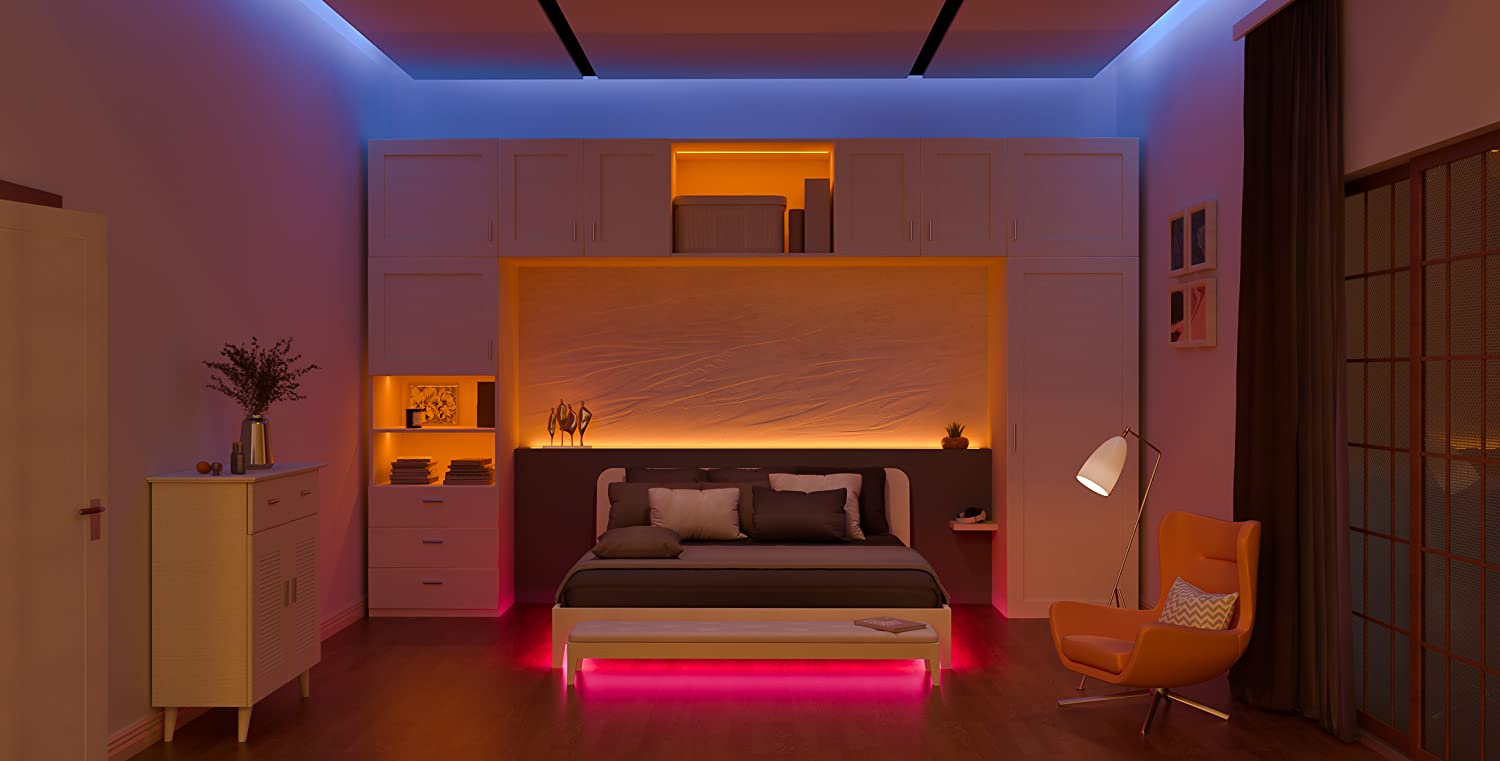
How to take flexible LED strips round corners and curves
- Sharp corners: use an L connector, two clips at 90 degrees for inside or outside corners (see diagram C2). Corner connectors are for the same strip type only; do not mix voltages.
- Curves in a channel: with special structural design, aluminum profiles can have a certain flexibility, and you can bend them into different shapes. See the flexible LED channel series: LR series curved LED tape tracks, UD series bendable LED strip tracks and 3D fully bending LED strip rails.
- Winding shapes: COB LED strips are more flexible to use; you can wind and bend a COB strip at will.
- Signs and lettering: LED neon is more flexible than an aluminum channel and can be made into various shapes, which is why it is common in advertising signs.
What is the difference between flexible led strips and rigid led strips?
On the surface, the biggest difference between flexible and rigid light strips lies in their flexibility.
Below we will list the difference between flexible and rigid strip lights to help you better understand them. You can also find out what light strip you want based on the listed knowledge.
| Led strips | Length | Voltage | LED color | Waterproof grade | Density (LEDs/m) |
| Flexible led strip lights | • High voltage 50 / 100 meters • Low voltage 5 meters |
• 110V / 220V • 5V / 12V / 24V / 36V / 48V |
IP20/ 65/ 67/ 68 | 30/ 48/ 60/ 72/ 90/ 96/ 120/ 144 | |
| Rigid led strip lights | 0.5 meter / 1 meter | 12V / 24V | • Warm white, white, red, green, yellow, blue • RGB |
IP20/ 65/ 68 | 60 /72/ 144 |
►To know the LED light color:
Ultimate Guide to Choosing the Right Addressable LED Strip
Flexible or rigid: which LED strip should you choose?
Choose a flexible LED strip when
- You have bending needs, or the place is irregular.
- The space is narrow: the strip is only as thick as a coin (see ultra-narrow LED strip lights).
- The run is long: high voltage strips come in 50 m or 100 m rolls (see AC110/220V LED strip lights).
- You want more colors: single color, tunable white, RGB, RGBW, RGBCCT or addressable dream color.
- It lights outdoor building outlines, shopping mall atmospheres, bridges or parks.
Choose a rigid LED strip when
- It mounts on a flat surface, in a straight line.
- It lights an LED advertising light box or a booth counter.
- You want it easier to fix, process and install.
- It will run for long hours and heat dissipation matters: the SMD LEDs sit on an aluminum substrate.
Chosen a flexible strip? See how to install LED strip lights and where you can cut LED light strips.
Flexible LED strip in an aluminum profile vs a rigid LED bar
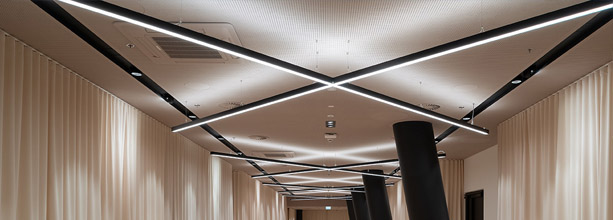
Aluminum has good rigidity, which is convenient for LED strip lights to be fixed in a straight line. So a flexible LED strip in an aluminum profile gives you a rigid, straight line of light, and the profile protects the strip from dust and moisture and helps heat dissipation. A rigid LED bar is the same idea, factory-assembled:
| Rigid LED bar | Flexible LED strip in an aluminum profile | |
|---|---|---|
| What it is | The LED board comes already mounted in an aluminum housing with its diffuser | A metal housing with a diffuser cover and end caps; the LED strip goes inside |
| The strip | Built in | Choose any LED strip, and change it later |
| Length | As supplied | Cut to any length on site |
| Curves | Straight | Straight, or bend it with a flexible LED channel |
| Shop | LED linear bar lighting, rigid LED bars | LED aluminum profiles |
Full guide: aluminum profile for LED strip lighting.
Flexible and rigid LED strip FAQ
What are flexible LED strip lights?
LED strips built on a flexible printed circuit board, which gives the possibility of bending. The LED patch is welded on the flexible circuit board and the back side has adhesive for installation. The strip is only as thick as a coin, so it can be installed even in narrow spaces. Flexible strips come in high voltage (110V/220V) and low voltage (5V, 12V, 24V, 36V, 48V) versions.
What is a rigid LED strip?
A rigid LED strip has its LED chips mounted on a hard circuit board: the SMD LEDs are welded on an aluminum substrate, so they get good heat dissipation under long-term working conditions. Rigid LED strips are generally 12V or 24V, and the common lengths are 0.5 meter and 1 meter.
Can you bend a rigid LED strip?
No. Bending a rigid LED strip damages the printed circuit board and can break the LED chips, so the strip no longer works normally. Rigid LED strips can only be installed on a flat surface; for bending needs, choose a flexible LED strip.
How many rigid LED strips can be connected together?
Up to 7 pieces of 0.5 meter rigid strip, or 3 pieces of 1 meter rigid strip, can be connected at the same time. When you connect multiple rigid LED strips, use separate power supplies to prevent voltage drop.
Should I use a rigid LED bar or a flexible LED strip in an aluminum profile?
A rigid LED bar comes factory-assembled, with the LED board already mounted in an aluminum housing with its diffuser. An aluminum profile lets you choose any LED strip, cut it to any length on site and change the strip later. The aluminum keeps the strip in a straight line, and flexible channels can also bend.
Shop flexible and rigid LED lights
 Single color LED strip lightsFlexible, adhesive back
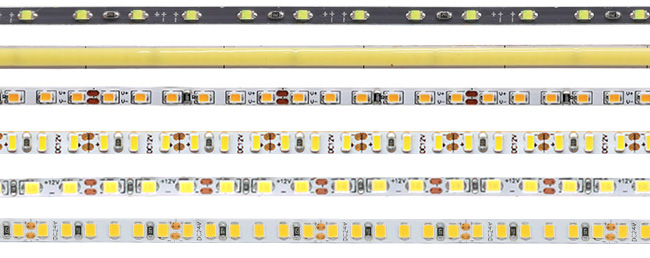 Ultra-narrow LED strip lightsFor narrow spaces
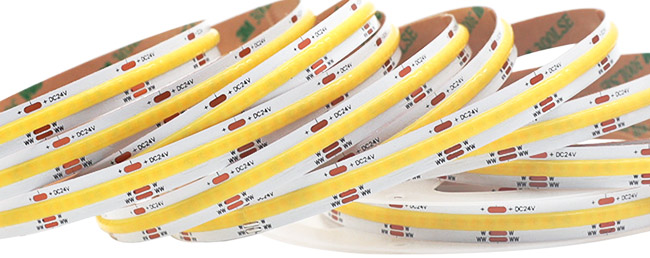 Flexible COB LED strip lightsWind and bend at will
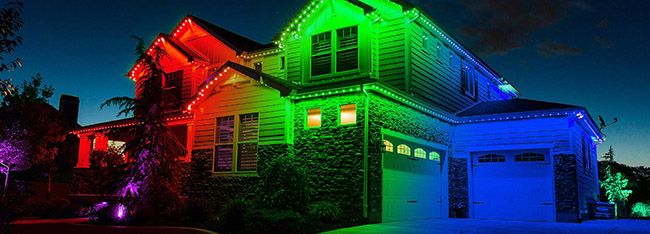 Multi-color RGB LED stripsRGB, RGBW, RGBCCT
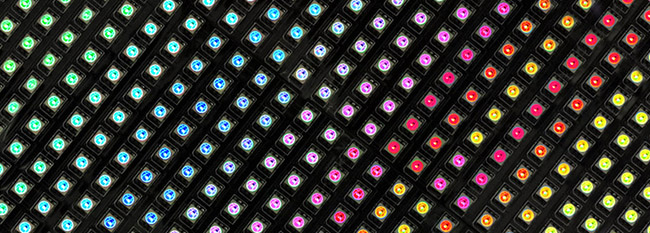 Addressable LED strip lightsAddressable dream color
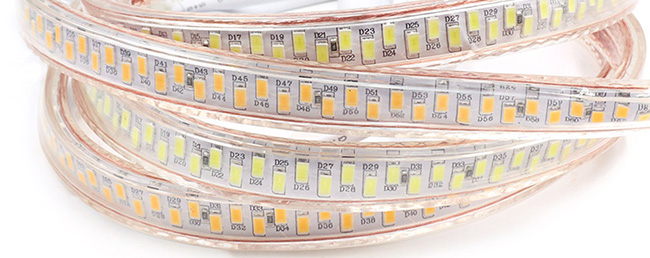 AC110/220V LED strip lightsHigh voltage, normally 50 or 100 m a roll
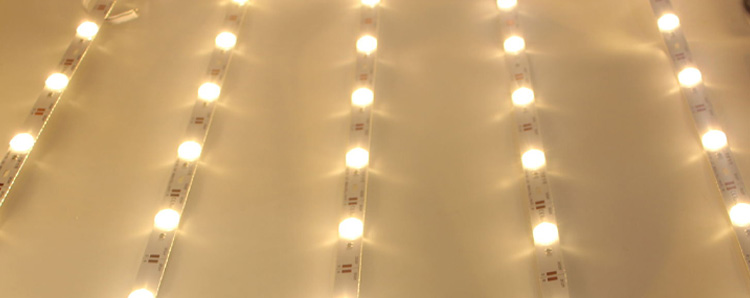 LED backlighting lens rigid LED barsRigid bars for backlighting
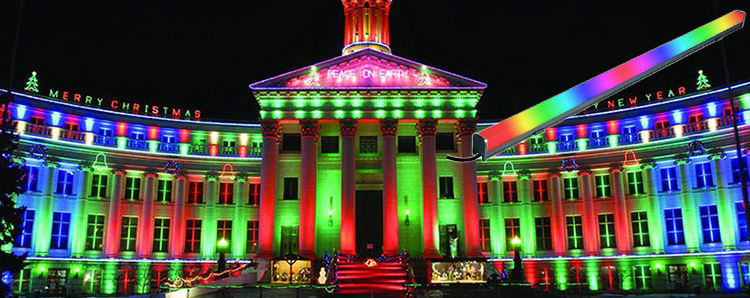 LED linear bar lightingReady-made linear bars
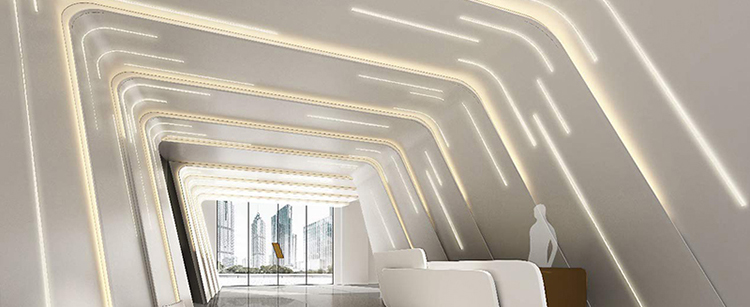 Flexible LED channel seriesAluminum profiles that bend
 LED aluminum profilesA straight line for any flexible strip
Tell us where the light goes (a curve or a flat surface, indoors or outdoors) and how long the run is, and the SuperLightingLED team will recommend the strip or bar, the profile and the power supply. Standard orders such as accessories and controllers ship within 24–48 hours; LED strip orders follow the production lead time shown on the product page. Contact our team