
How to choose led strip light power supply?
A power supply for LED strip lights turns the mains into the low DC voltage the strip runs on. Choose one in five checks:
- Match the voltage. 5V strip: 5V power supply; 12V strip: 12V supply; 24V strip: 24V supply. 110/220V high voltage strips run on AC and need no separate power supply.
- Size it with the 80% rule. The strip should use no more than 80% of the supply: a 100W LED strip needs a 125W power supply.
- Pick the type. A plug-in adapter (up to about 60 W) for one or two strips and simple wiring; an enclosed switching power supply (100–600 W) for multiple or long runs; a mini supply to hide it; a lithium battery for portable use.
- Dimming and location. A TRIAC or 0-10V dimmable driver for a dimmable strip; a waterproof or rainproof supply outdoors or in a wet place.
- Choose a good product. A UL listed power supply with protection functions against problems such as overheating and short circuit.
The best LED power supply is the one that passes all five checks for your strip.
5 easy steps to finding your correct power supply
LED power supply is an essential part for LED strip light working. A power supply is a device that provides power to electronic equipment. The choice of power supply depends on your LED strip light.
When you are choosing correct power supply, there are some factors you need to consider. This article will help you to choose the right power supply for your LED strip lights.
Before choosing a power supply, it is necessary to understand the knowledge about the LED power supply. Next, we will provide you with the basic knowledge of different types of LED power supplies for your reference.
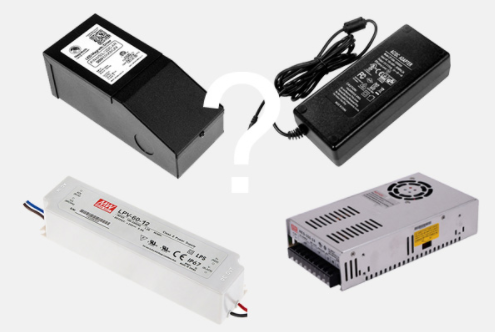
At SuperLightingLED we stock 5V, 12V and 24V power supplies for our LED strips: plug-in adapters, UL-listed Mean Well supplies, waterproof and rainproof supplies, dimmable drivers and lithium batteries. The table below compares them; the five steps further down help you pick one.
LED strip power supply types compared
| Power supply type | What it is | Best for | Shop |
|---|---|---|---|
| Plug-in power adapter | Plugs into a socket, DC barrel jack on the other end; up to about 60 W. Lower power than a switching power supply. | One or two LED strips (good for one 5 m strip) and the simplest wiring and installation | DC5V · DC12V · DC24V; UL-listed DC12V MW Class II · DC24V MW Class II |
| Enclosed metal (switching) power supply | 100–600 W; screw terminals: wire the mains L, N and earth yourself or have an electrician do it; put it in a ventilated cupboard. | Multiple LED strips or long runs: the power output of a switching power supply is relatively large | MW UL-Listed IP20 (12V) · MeanWell UL indoor (24V) · DC5V MW switching |
| Mean Well UL-listed power supply | UL listed. Whichever supply you buy, make sure it has protection functions against problems such as overheating and short circuit. | Choosing a good product when the quality of products on the market varies | DC5V · DC12V · DC24V |
| Waterproof (IP67) or rainproof power supply | Waterproof driver (IP67): sealed cables both ends; no earth terminal needed but keep the plug end dry. | Outdoors, damp rooms or a wet environment; indoors or in a dry place a non-waterproof supply is fine | DC5V · DC12V · DC24V · MW UL-Listed IP67 · MeanWell UL outdoor · Rainproof |
| Ultra slim mini power supply | A small, slim power supply. | A beautiful layout with the power supply hidden | LED ultra slim mini power supplies |
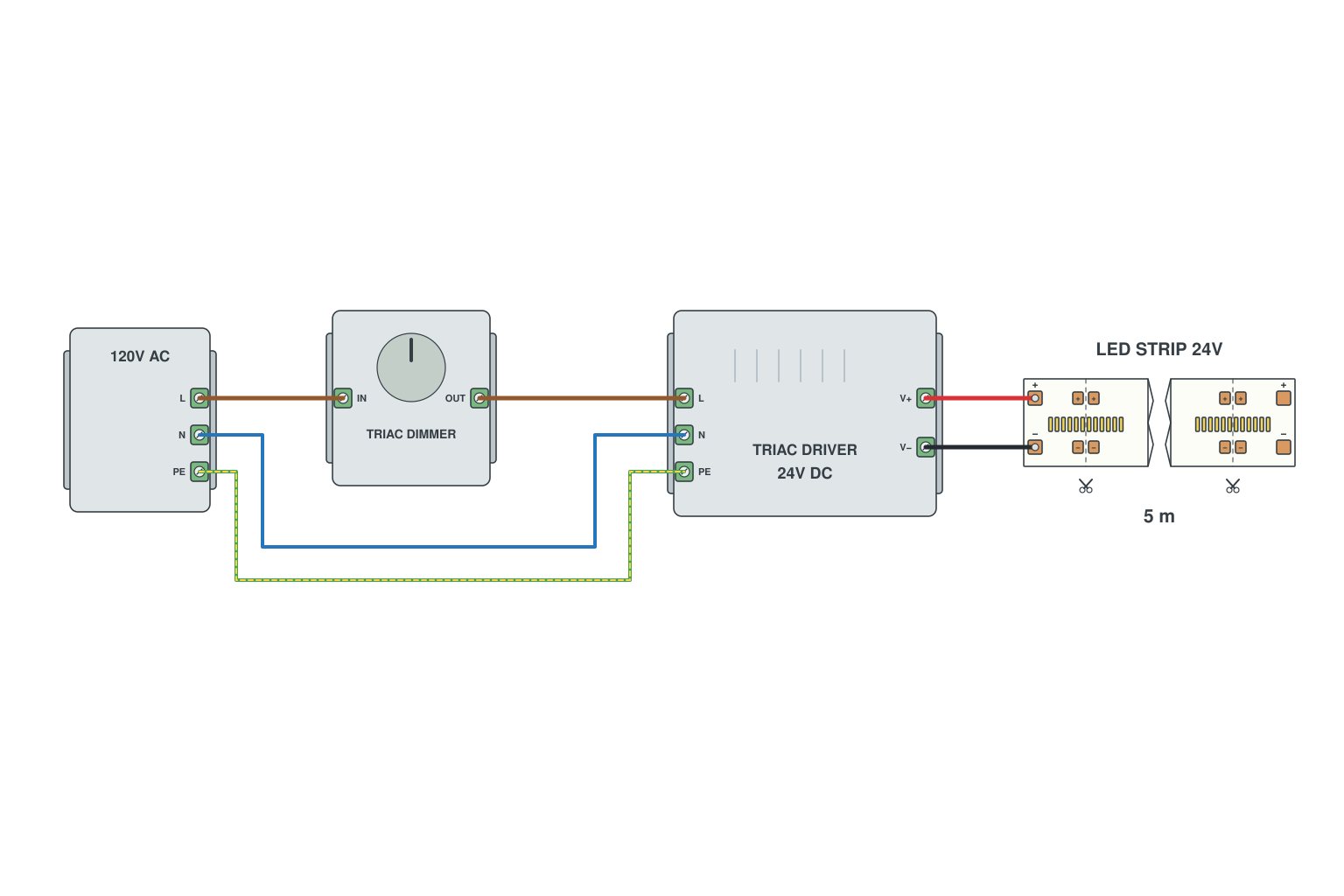
| Dimmable driver (TRIAC / 0-10V) | A wall TRIAC dimmer in the mains line feeds a TRIAC-dimmable driver; driver output to the strip, no extra controller. A 2-in-1 driver takes either a TRIAC dimmer or a 0-10 V panel; the 5-in-1 type also takes 1-10 V and PWM inputs. | Dimmable LED strips; keeping a normal wall dimmer | LED TRIAC 0-10V 2in1 · TRIAC 0/1-10V PWM |
| Lithium battery | A DC12V battery: no socket, no mains wiring. | Temporary lighting you want to carry; 12 V makes sense for anything fed from a battery | DC12V lithium batteries |
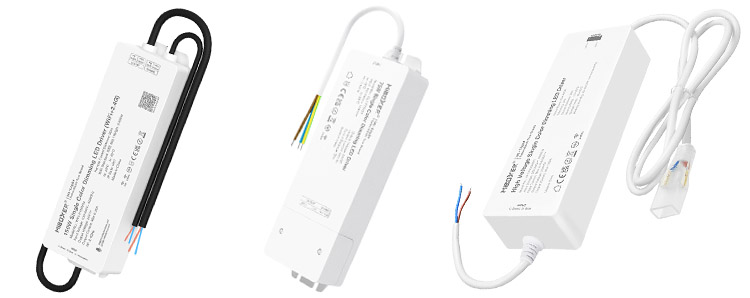
| WiFi / RF / Bluetooth power supply | A power supply with the wireless control built in (see the next section). | App or remote control from the power supply itself | WiFi RF power adapters · Bluetooth 5.0 drivers · Tuya Bluetooth drivers |
| Distribution box CCTV power supply | The control center that distributes electrical energy in the power supply line. | Schools, hospitals, factories, workshops and homes | Distribution box CCTV power supplies |
| No power supply: 110/220V LED strip | The strip plugs into the mains through its own plug and inline rectifier; on an RGB strip the high-voltage controller contains the rectifier. | Gardens, rooflines, long runs with no low-voltage supply | AC110/220V LED strip lights · high voltage controllers |
Not sure how many watts you need? Our how to calculate power for LED strip lights has an online calculator. Already have the supply? See how to connect an LED strip to the power supply.
Power supply for Bluetooth, WiFi and RF LED strips
A Bluetooth LED strip does not need a special “Bluetooth power supply”. The Bluetooth part is the controller, and the LED power supply provides power to both the controller and the strip. So choose the supply exactly as in the five steps below: the same voltage as the strip and the controller, and enough watts for the whole run.
- RGB strip with a Bluetooth controller. Supply into the controller (V+/V-); the controller outputs go to the strip. Shop RGB Bluetooth controllers.
- Addressable strip with an app controller. The phone-app controller takes DC 5–24 V in; power it from the strip supply. The app pairs by Bluetooth or WiFi. Shop SPI LED Bluetooth controllers.
- Power supply and control in one. Our WiFi RF power adapters, Bluetooth 5.0 drivers and Tuya Bluetooth drivers put the power supply and the wireless control in one box; check the product page for the strip types each one drives.
- 110/220V strip with app control. The mains plug goes into the high-voltage controller, which contains the rectifier, so no other box is needed.
Choosing the controller itself: how to choose LED strip light controllers.
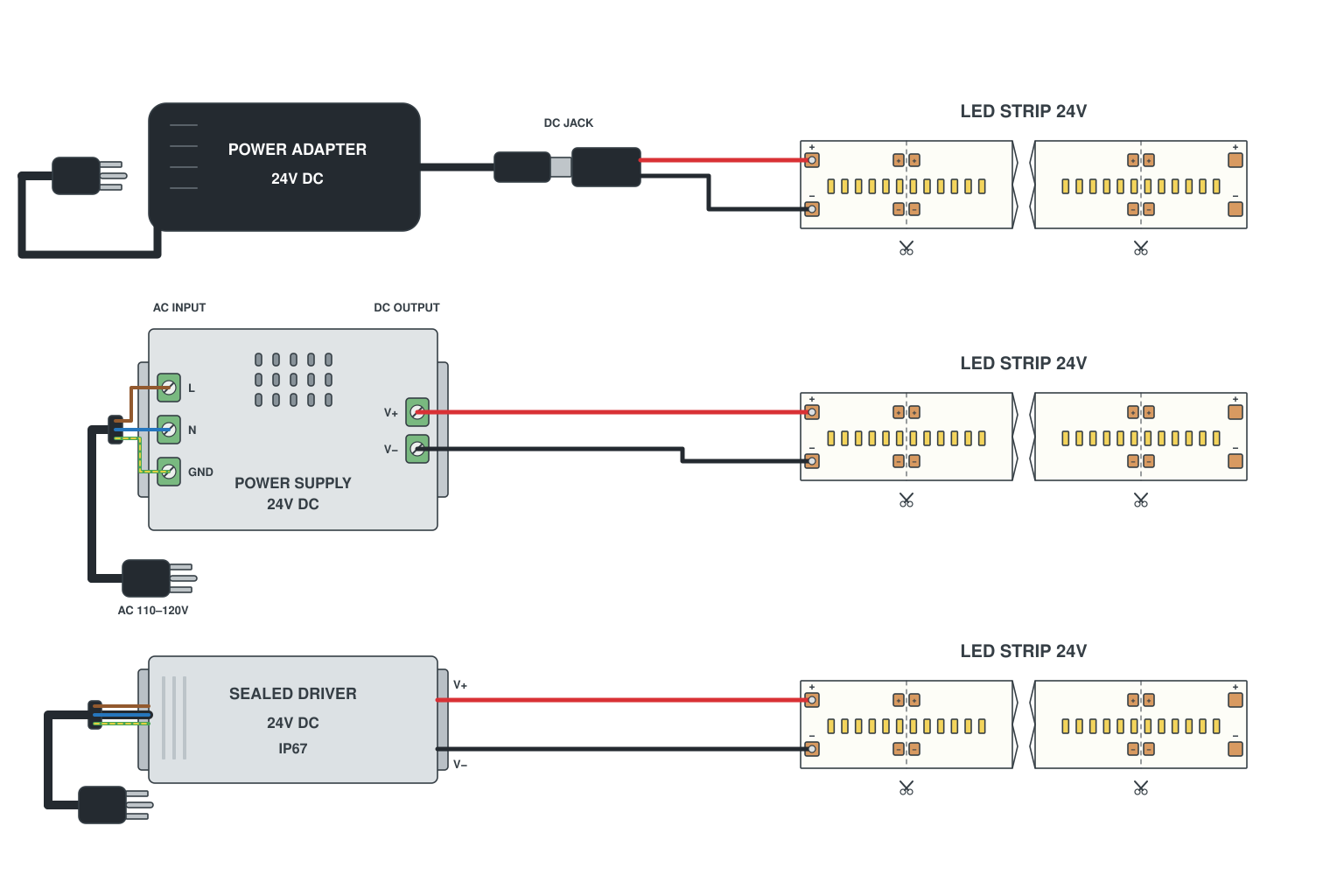
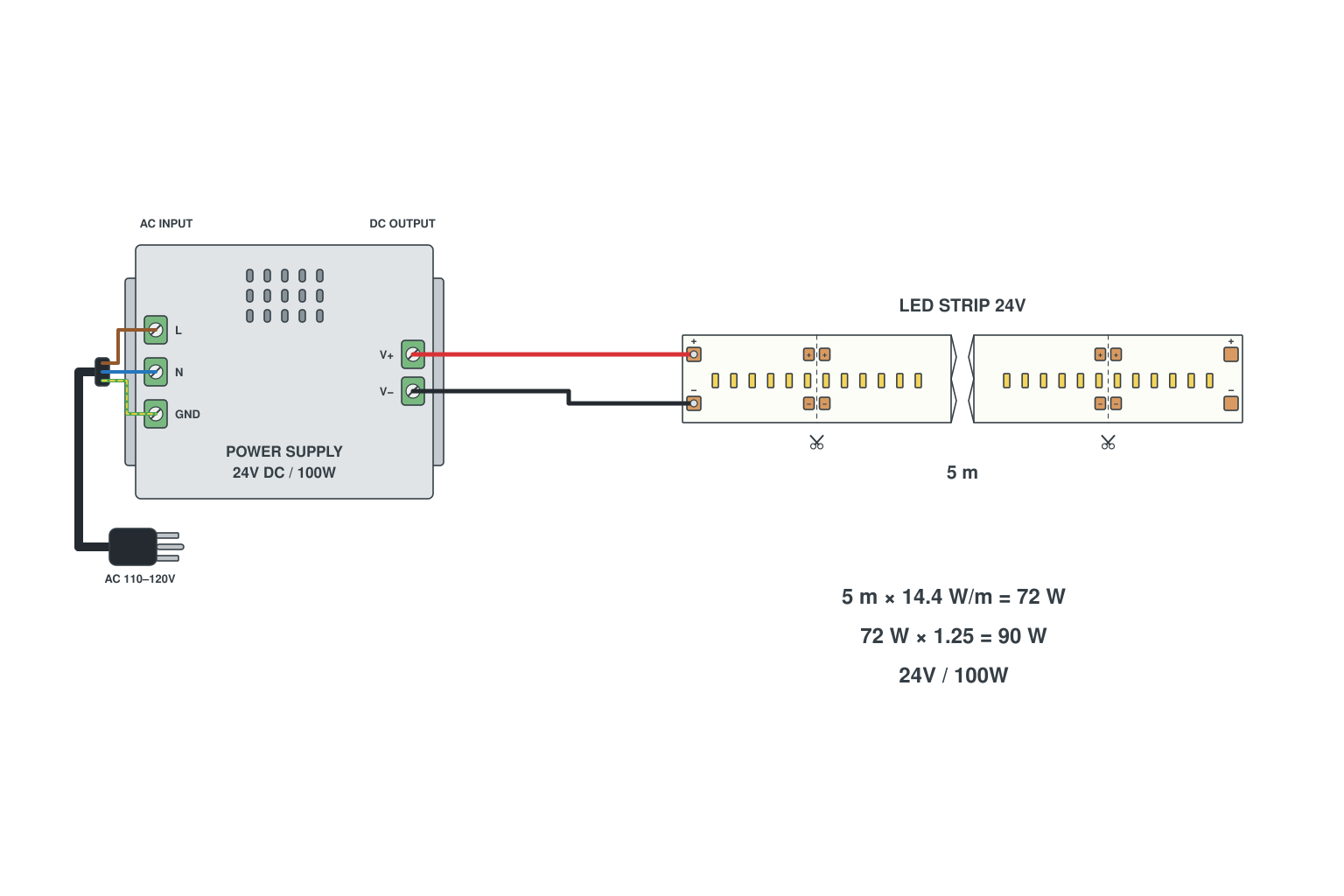
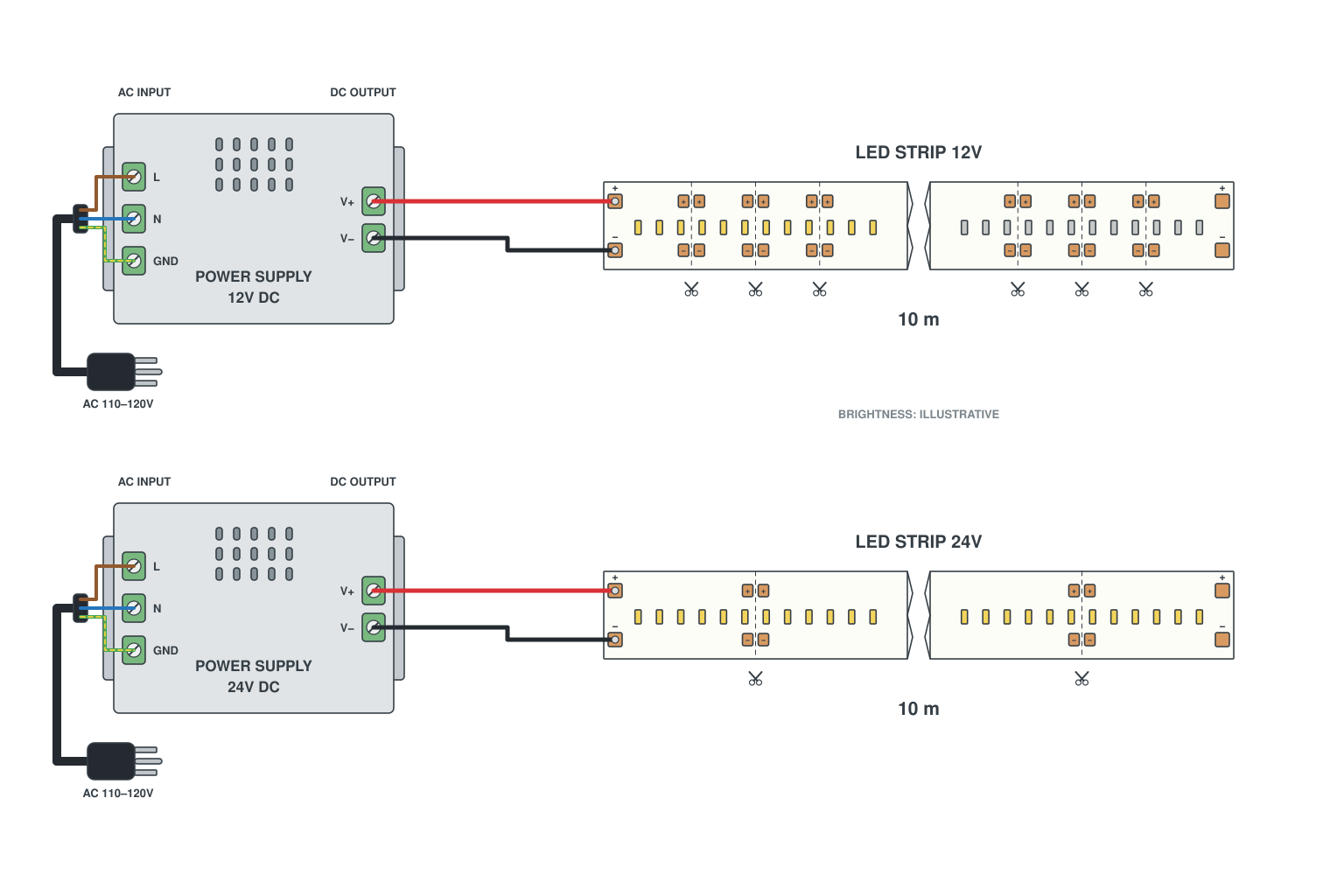
LED power supply wiring diagrams
Drawn by the SuperLightingLED engineering team; wire colors follow our house convention (red V+, black V-/GND). Click a diagram for the full notes in our LED strip wiring diagrams library.
Alternating current power supply VS direct current power supply
What is AC power supply?
Alternating current is also known as high-voltage electricity, which is provided by the generator of the power plant and output from the outlets to home or industry use.
The direction of AC current movement will change over time, sometimes from positive to negative, sometimes from negative to positive, forming a wavy curve, so it can be transported over long distances.
Different countries have different AC voltages. The Americas generally use 110V and Europe uses 220V.
Alternating current is not suitable for precision electronic equipment, because large changes in current will damage its internal parts.
An AC to DC power supply is composed of a transformer, a rectifier, and a filter. In order to reduce the line loss, the electricity from the power plant must first be boosted to tens of thousands of volts, and then lowered when it reaches the destination. A transformer is needed to reduce the voltage. The rectifier converts the alternating current whose direction and magnitude are constantly changing into unidirectional pulsating electricity whose direction and magnitude are changing. Then through the filter circuit and the voltage stabilizing circuit, the pulsating electricity is changed into a constant-size direct current. The filter is a frequency selection device that can pass specific frequency components in the signal while greatly attenuating other frequency components. |
High-voltage led light strips are powered by AC power supply.
What is DC power supply?
The DC power supply uses low voltage, mainly for power supply, such as storage batteries. The DC power supply voltage is stable and reliable, and it is used in mobile phones, computers and other electronic equipment.
The direction of direct current flows in a straight line from the positive pole to the negative pole, so it is also called a linear power supply and is suitable for short-distance transportation. Direct current converts other forms of energy into electrical energy.
Low voltage led strip lights, like 12VDC or 24VDC, should be powered by DC power supply.
What is the difference between the AC and DC power supply?
The most obvious difference between AC and DC is the level of voltage, AC uses high voltage, and DC uses low voltage. This is also the point that you should focus on when choosing an LED power supply for your led light strip.
High voltage led strips to choose AC power supply, and low voltage led strip lights like 12V led strip light to choose DC power supply. Choosing the corresponding product is the most important.
Constant Current VS Constant Voltage
Most led power supplies are constant voltage power supplies. It is more efficient and lasting. And most led strip lights are constant voltage too. These types of LED power supplies convert AC voltage to a lower DC voltage, and the voltage will always remain the same.
But constant voltage led strips have voltage drop. And this is the reason why there are constant current led strip lights.
The following is the voltage drop phenomenon of the LED lighting strip.
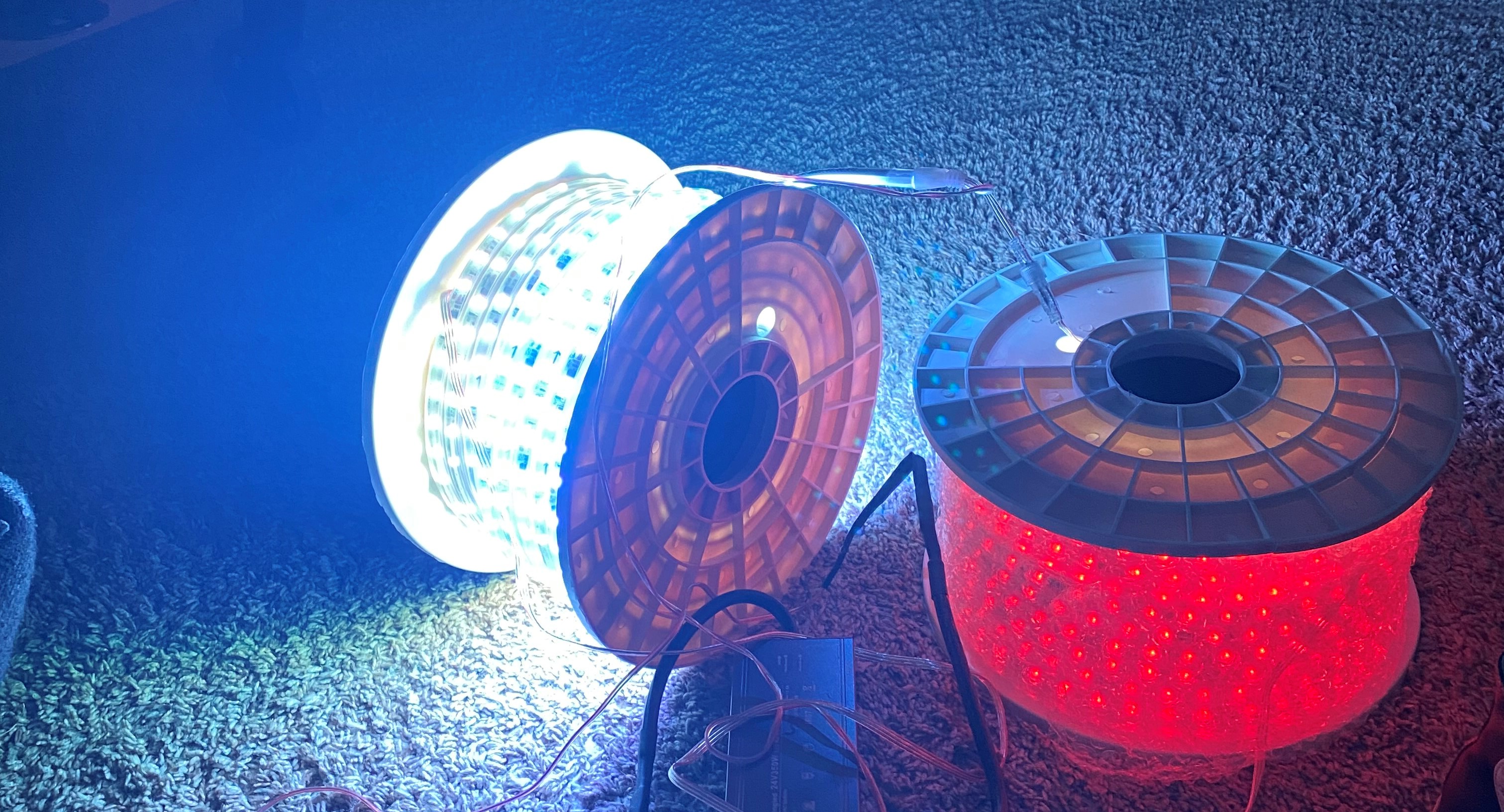
High-power and high-brightness led strip lights, such as the constant current led strip lights, it means that there is no voltage drop in the light strip, so that the light strip maintains the same brightness and color no matter how long it is.
However, if the constant current does not have a current limiting device, it is easy to cause excessive current to cause heating or damage to the light strip, which will reduce the life of the light strip.
Constant voltage led strip lights and constant current led strip lights should both choose the constant voltage power supply.
A single run of 15–50 m? A constant-current (built-in IC) strip keeps each section at the same brightness regardless of the length: one feed point at the start, 24 V, and a supply sized for the whole length. SuperLightingLED stocks 10, 20, 30, 40 and 50 m rolls of this type; see ultra-long constant current LED strips and the long-run wiring diagram (S6).
How to choose the best led power supply for your led strip light?
Step 1. Led lighting power supply or led light adapter? Small or large led lighting drivers?
The difference between choosing an LED power supply or an LED power adapter lies in the power of your LED strip lights. The power of the LED power adapter is lower than LED switching power supply.
An LED strip light is 5 meters/16.4 feet in roll. One or two strip LED lights are available for a power adapter. However, multiple LED strip lights should choose an LED power supply. And if you want a simple wiring and installation, the power adapter is an excellent choice.
If you need to install more LED light strips with longer running time, it is best to choose a switching power supply, because in general, the power output of a switching power supply is relatively large. And it can provide sufficient power for multiple or long-running LED strip lights.
If you want a beautiful layout and hide the power supply, choose the mini power supply.
When you need a light strip temporarily and you are afraid that it will not be easy to carry, choose a lithium battery. It is convenient.
Distribution box CCTV power supply is the control center that commands the reasonable distribution of electrical energy in various components in the power supply line, suitable for schools, hospitals, factories, workshops, homes, etc.
Step 2. Choose the correct voltage, wattage, and current.
Wattage size and whether the current and voltage are stable will directly affect the performance and service life of the power supply.
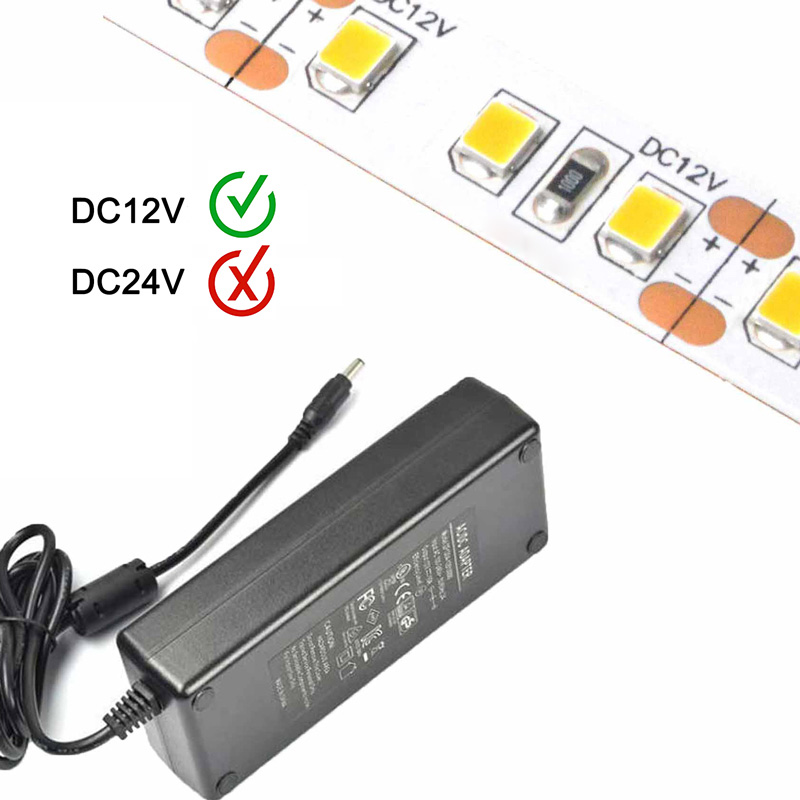
LED strip lights have a working output voltage of 5V, 12V, and 24V. If your strip light is 5V, you need to choose 5V power supply. 12V strip lights choose 12V power supply, and 24V strip lights choose 24V power supply.
Calculate the wattage of your LED strip lights with the rule 80%. This means the total power of your LED strip lights is 80% of the power supply. The advantage of this is to increase the service life of the power supply. If your LED strip light is 100W, you need a 125W power supply. Remember the rule 80% when you choose power supply.
If the current is not adjusted, there will be more and more current consumption. And the current consumption too high will cause the internal heat of the power supply to be too high, so as to damage the power supply and cause malfunctions.
*Calculating the power you need for your LED strip lighting step by step: How to calculate power for led strip lights?
Step 3. A dimmable power supply or non-dimmable power supply?
If your strip light is triac dimmable, you should choose triac dimmable power supply. The dimming led light strip is generally controlled by touching the wall panel function button to control the brightness of the light strip, but there is also a remote control to adjust the light.
There are many types of led strip light dimmers, 0/1-10V dimmer, triac dimmer, DALI dimming system, and DMX512 system.
0/1-10V dimming application is simple and the dimming effect is good.
DALI dimming system has strong anti-interference ability, can feedback faults, and single light control makes the control more flexible.
The powerful control function of DMX512 brings rich lighting effects to architectural lighting, night lighting, studios and variety stages. And DMX512 requires special wiring layout and certain programming ability in order to set basic colors and scenes.
Choose the corresponding dimming power supply for your dimming light strip.
Wiring a dimmable driver: see the TRIAC diagram (P6) above, or the TRIAC + 0-10 V two-in-one driver (P15) that takes either a TRIAC dimmer or a 0-10 V panel. Shop LED TRIAC 0-10V 2in1 dimmable drivers or TRIAC 0/1-10V PWM dimmable drivers.
Step 4. Do you need waterproof or rainproof power supply?
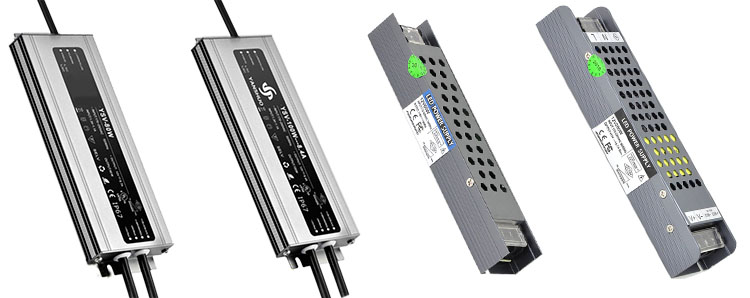
Your installation place influences whether you choose waterproof or rainproof power supply. If you want to install LED strip lights outdoor or in a wet environment, you need to pay attention to the waterproof problem, and it is best to choose waterproof or rainproof power supply. But if your power supply is installed in indoor or a dry environment, you can choose non-waterproof power supply.
Shop DC12V waterproof power supplies, DC24V waterproof power supplies or UL-listed MeanWell UL outdoor power supplies.
Step 5. Your led strip light is what type? RGB or RGBW?
If your LED strip is RGB or RGBW color changing lights, the light strip must equip a corresponding RGB or RGBW LED light controller, in this case, the LED power supply should provide power to the LED controller and the color changing LED strip lights.
Put an RGB LED light strip wiring diagram to help you understand better.
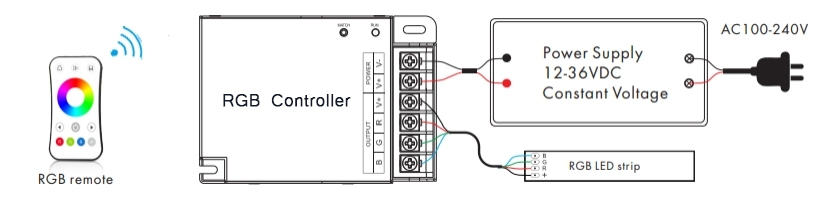
However, single color LED strip lights can directly connect to the LED power supply when you don't plan to install an LED dimmer. And you can connect multiple LED light strips in one power source like the following wiring diagram. You only need to make sure the power of the LED driver can run the multiple single color LED strip lights.
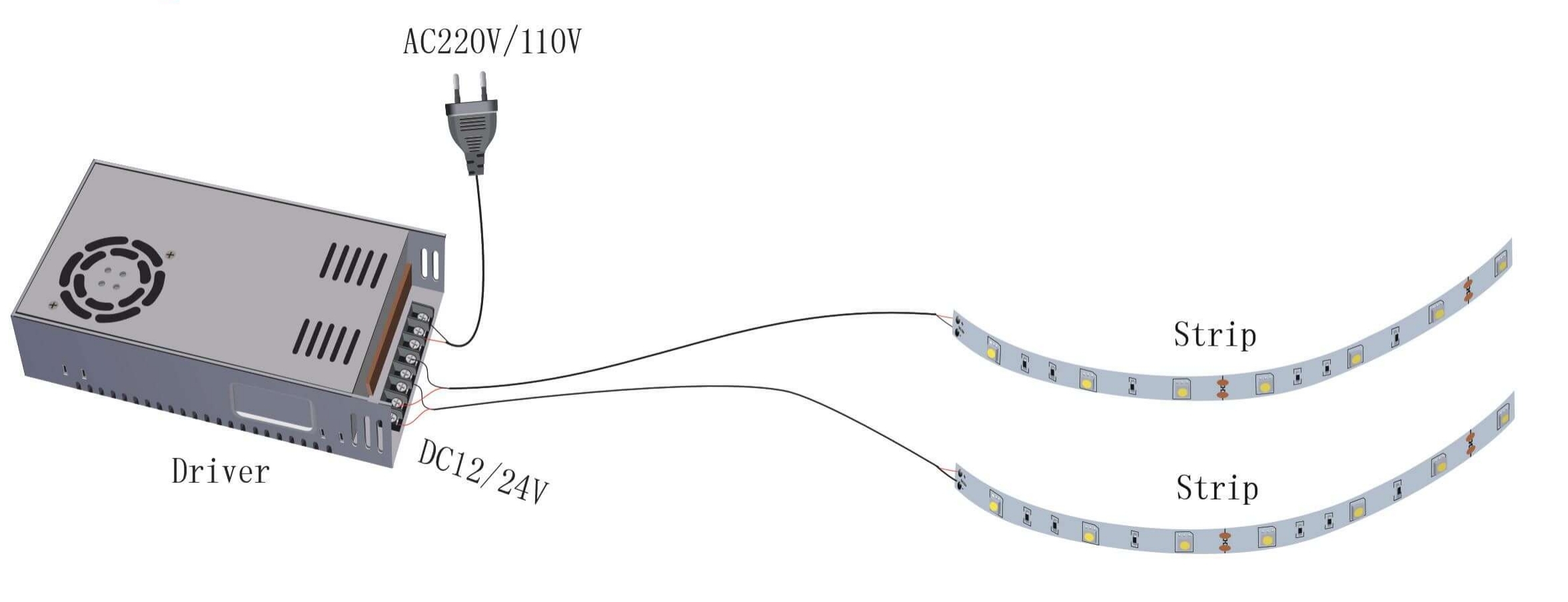
The quality of products on the market varies. In this case, in order to choose a good product, what you need to do is to look for UL listed power supply. Improper use of the power supply or other reasons may cause problems such as overheating, short circuit, etc. For safety reasons, please ensure that the power supply you purchase has these protection functions. Choose the right power supply for your project according to the above steps. A right power supply not only can the LED strip lights be used well, but also decrease the risk of use and improve using safety.
More LED strip knowledge is in our LED strip lights guide.
LED strip power supply FAQ
What is a power supply for LED strip lights?
A device that provides power to the LED strip. Most LED power supplies are constant voltage: they convert AC mains to a lower DC voltage, such as 5V, 12V or 24V, and the voltage always remains the same. Low voltage LED strips need a DC power supply; 110/220V high voltage strips run on AC and need no separate power supply.
What size power supply do I need for my LED strip?
Follow the 80% rule: the total power of your LED strip lights should be 80% of the power supply. A 100W LED strip needs a 125W power supply. The voltage must match too: a 12V strip needs a 12V supply and a 24V strip a 24V supply.
Should I choose a power adapter or a switching power supply?
It depends on the power of your LED strips. A plug-in adapter, up to about 60 W, suits one or two strips and the simplest wiring. For multiple or long-running strips choose a switching power supply; enclosed metal supplies run from 100 to 600 W.
What power supply does a Bluetooth LED strip need?
An ordinary LED power supply with the same voltage as the strip and the controller, big enough for the whole run: the power supply provides power to both the Bluetooth controller and the strip. If you want the power supply and the wireless control in one box, look at WiFi RF power adapters and Bluetooth drivers.
What is the best LED power supply for LED strip lights?
The one that matches your strip: the same voltage, at least 20% more watts than the strip draws, the right type for the place (waterproof or rainproof outdoors, dimmable for a dimmable strip), and UL listed with protection functions against problems such as overheating and short circuit.
Shop LED power supplies
 DC12V plastic shell power adaptersPlug-in, for one or two strips
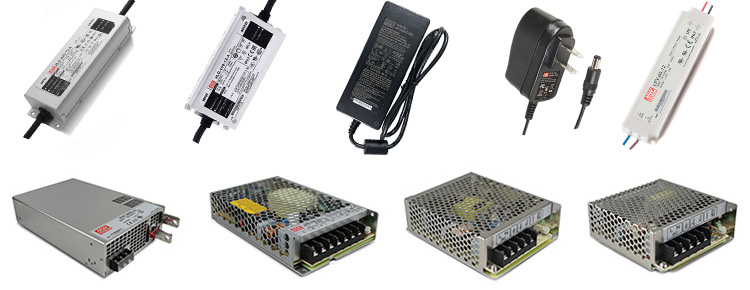 DC12V MW UL-Listed power suppliesFor 12V LED strips
 DC24V MW UL-Listed power suppliesFor 24V LED strips
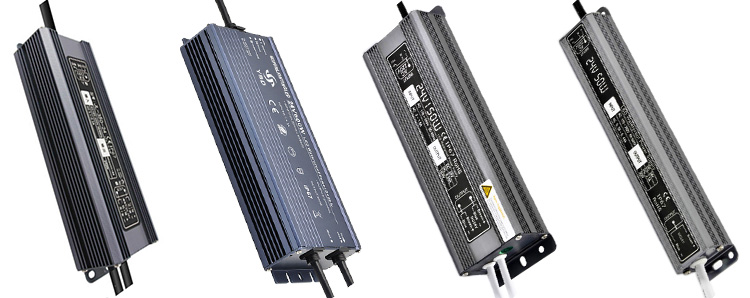 DC24V waterproof power suppliesOutdoors and damp rooms
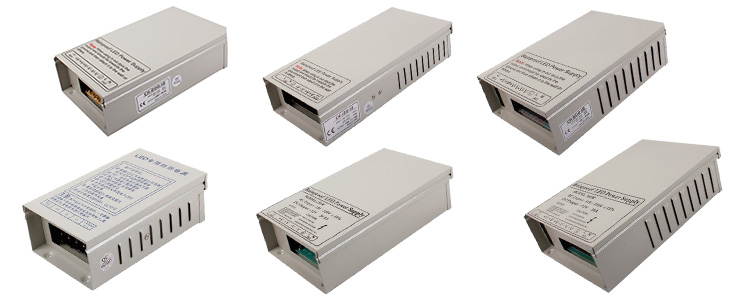 Rainproof power suppliesOutdoor installations
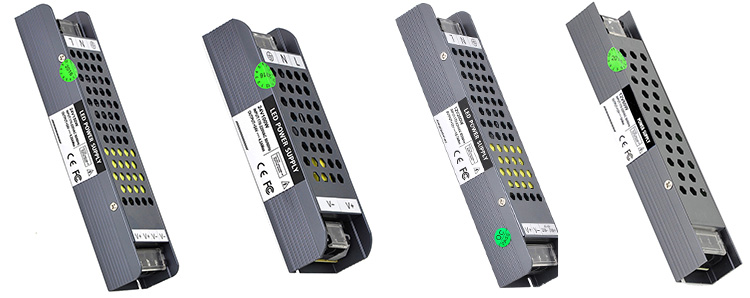 LED ultra slim mini power suppliesHide the power supply
 LED TRIAC 0-10V 2in1 dimmable driversWall dimmer or 0-10 V panel
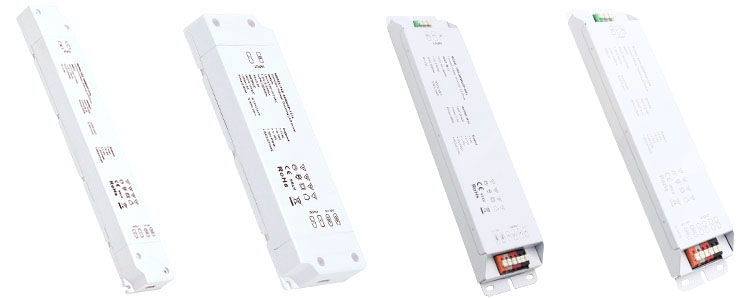 TRIAC 0/1-10V PWM dimmable driversAlso 1-10 V and PWM inputs
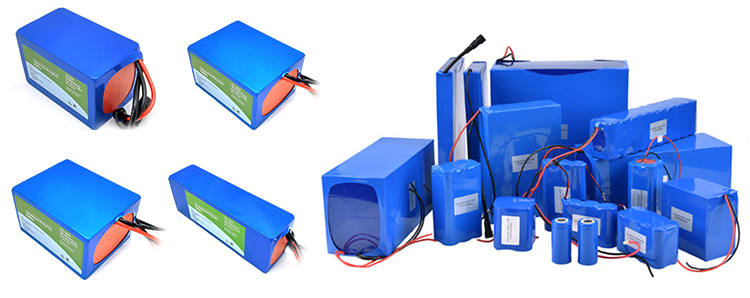 DC12V lithium batteriesPower without an outlet
 WiFi RF power adaptersPower supply and wireless control in one
Tell us the strip model, the length and where it will be installed, and the SuperLightingLED team will match the power supply, controller and connectors. Standard orders such as accessories and controllers ship within 24–48 hours; LED strip orders follow the production lead time shown on the product page. Contact our team · Browse all LED power supplies