LED Fiber Optic Light Kit
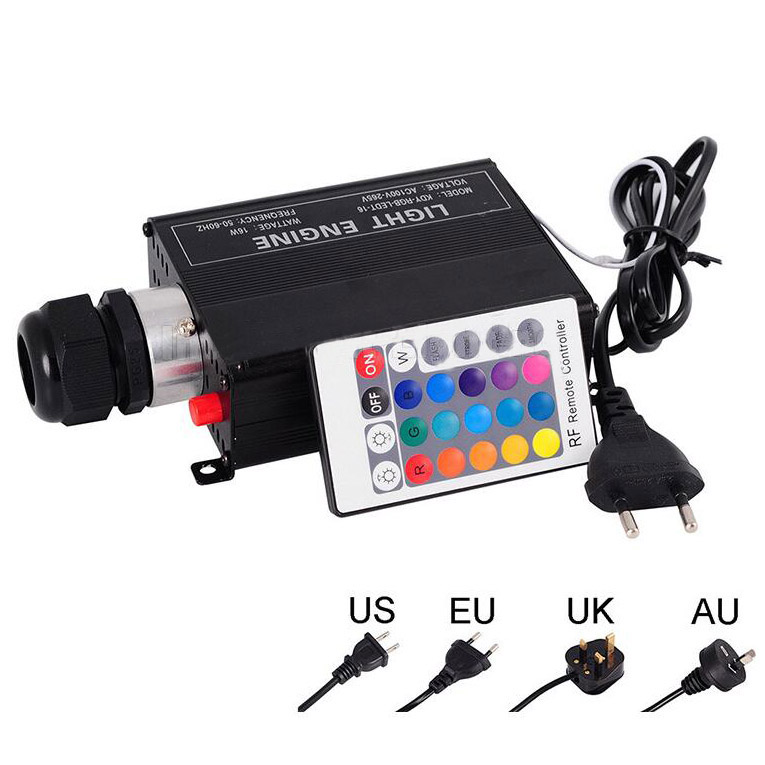
11 productsLED fiber optic lights kit includes LED fiber optic cables which are available in different numbers and lengths, a fiber optic illuminator (with plug), and an RF remote. The fiber optic lighting engine supports one head and two heads, and the fiber optic LED lighting matching RGBW color mode can create various lighting effects, such as starry sky, constellation, hanging curtain, etc.
The fiber optic illuminator can be controlled by RF remote, the control method is convenient, and it can realize a variety of control commands, change the brightness, change the color, change the dynamic mode, etc.
With our fiber optic starlight headliner kits, you can effortlessly transform any location into a dazzling starry environment.

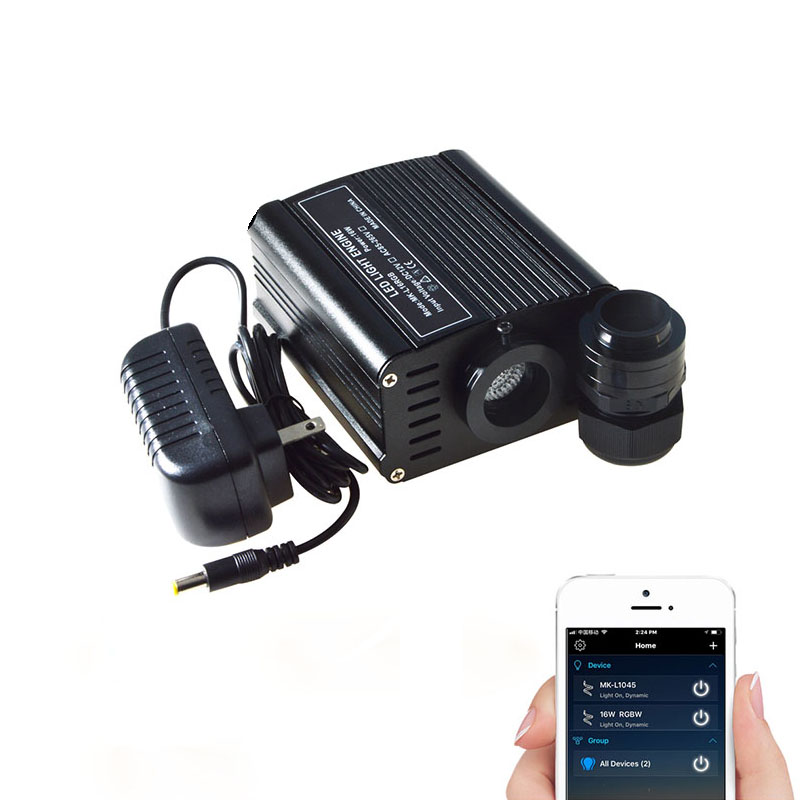
Bluetooth 20W RGBW Dual Color LED Twinkling Starlight Fiber Optic Lights Illuminator


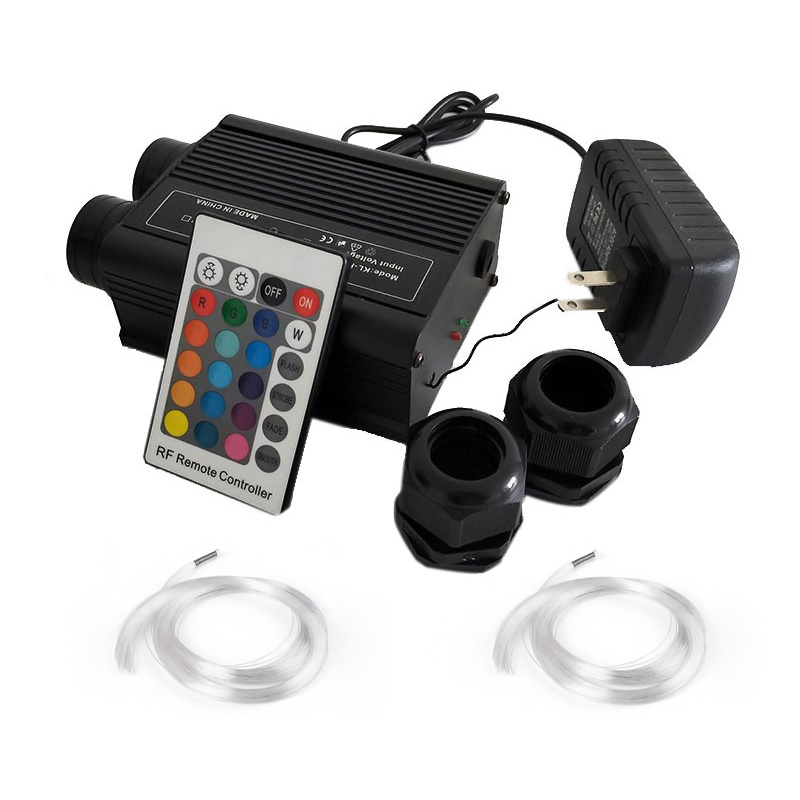
Double Head 32W RF RGBW LED Star Ceiling Light Fiber Optic Kit
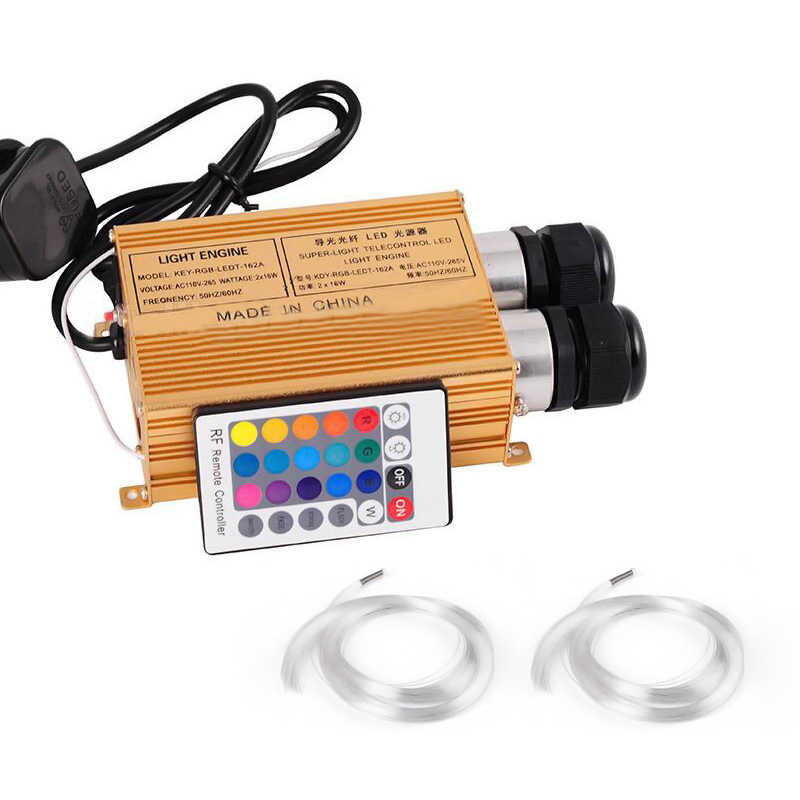
Double Head 32W RF RGBW LED Fiber Optic Ceiling Star Lights Kit
FAQ About LED Fiber Optic Light Kit Systems
Clear, practical answers from our pre-sales engineering desk on sizing, wiring, cutting, and installing complete fiber star ceiling kits.
An LED fiber optic light kit transmits focused light from a central illuminator through solid PMMA plastic optical strands to remote endpoints. The illuminator houses a high-power RGBW LED emitter and a optical coupler port, while the fiber bundle carries only photons—not electrical current. Because the stranded polymer fibers conduct zero electricity and produce zero heat along their run, you can route fiber optic lighting safely through drywall, acoustic panels, moisture-heavy shower ceilings, or tight timber cavities without fire risk or electrical clearance issues.
You can cut end-emitting cables in an LED fiber optic light kit anywhere along their length without breaking electrical continuity. The proper way to trim polymer optical fiber is with a fresh, heated razor blade or dedicated hot-knife cutter at a 90-degree perpendicular angle. Crushing the strand with blunt dull wire cutters will fracture the core and drop light output at the star tip by 30% to 50%. Once you feed strands through your drywall or ceiling tile, snip them flush or leave 2 mm protruding below the ceiling surface.
We routinely manufacture custom fiber harnesses tailored to your exact ceiling dimensions, strand counts, and fiber diameter ratios. Send us a simple layout drawing with your engine location and room measurements; our technical support team calculates required drop lengths, bundles them into labelled room zones, and returns a detailed harness specification within 12 hours. We vary strand lengths from 1 m to 10 m, blend 0.75 mm, 1.0 mm, and 1.5 mm fibers, and fit custom engine ports with zero design fees or obligation before you order sample or production units.
To install a fiber light led ceiling in finished drywall, drill individual holes with a 1.0 mm twist bit for 0.75 mm strands, poke 50 mm to 75 mm of fiber through from the crawlspace above, and lock each strand from behind using a tiny dab of water-based silicone or PVA craft adhesive. Never use solvent-based cyanoacrylate superglues, because industrial cyanoacrylate dissolves the fluoropolymer optical cladding and clouds the strand core. After the adhesive cures for 24 hours, cut the fibers flush with sharp flush-cutters and paint the ceiling as normal.
If you bend an optical strand past its minimum bend radius—which is roughly 10 times the outer diameter, or 7.5 mm for a 0.75 mm fiber—the internal reflection angle breaks and light leaks into the cladding. While PMMA plastic is flexible, a sharp crease or kink turns the core opaque, permanently dropping light delivery at the star tip by over 80%. When routing bundles across ceiling framing or metal furring channels, pull bundles with broad 50 mm sweeping arcs and support them with loose velcro loops rather than cinched zip ties.