
RGB DMX Led Tape
24 productsDMX RGB led strip lights is a kind of programmable LED strip which directly support DMX512 control protocol, it adopts intelligent chips such as PDFUCS512H6L, UCS512C4, UCS512H4LB1.1 MB, SM18512SK, UCS512D, UCS512CNB, HI5DS and matches with high brightness three-in-one SMD5050 or SMD2835 RGB package, can output 281.4 trillion colors mixed effect.
Features of LED Strip RGB DMX Lights
Our RGB DMX led strip has diverse specifications, with densities ranging from 24, 36, 48, 60, 72, 80, 96, 120 to 240 lights per meter (low density is suitable for ambient lighting, while high density can present delicate dynamic effects), 8mm 10mm 12mm 15mm 20mm flexible FPC substrate, working voltage covers 5V, 12V, 24V, 36V 48V for safe use and reducing voltage drop over long distances, and IP20 (indoor) to IP68 (fully waterproof, universal for outdoor/underwater scenarios) outdoor IP ratings.
RGB DMX controlled led tape can be single or dual signal DMX 512 transmission, each smart DMX ic chip controls 3 DMX channels (corresponding to R, G, B respectively), the total number of DMX512 channels in a single strip roll ranges from 2×3 to 40×3. It is necessary to match the DMX controller that supports sufficient number of channels, otherwise the DMX RGB strip cannot be fully lit.
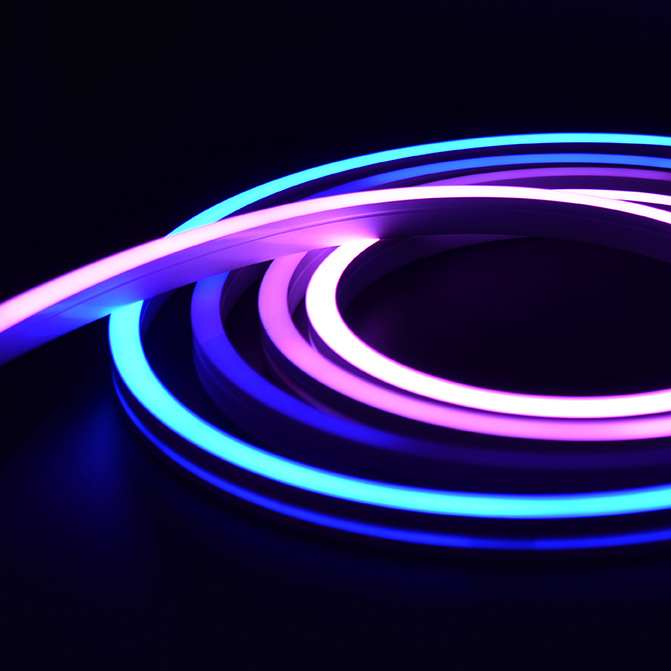
DC24V 480LEDs Side Emitting DMX512 RGB LED Neon Flex Tape Light
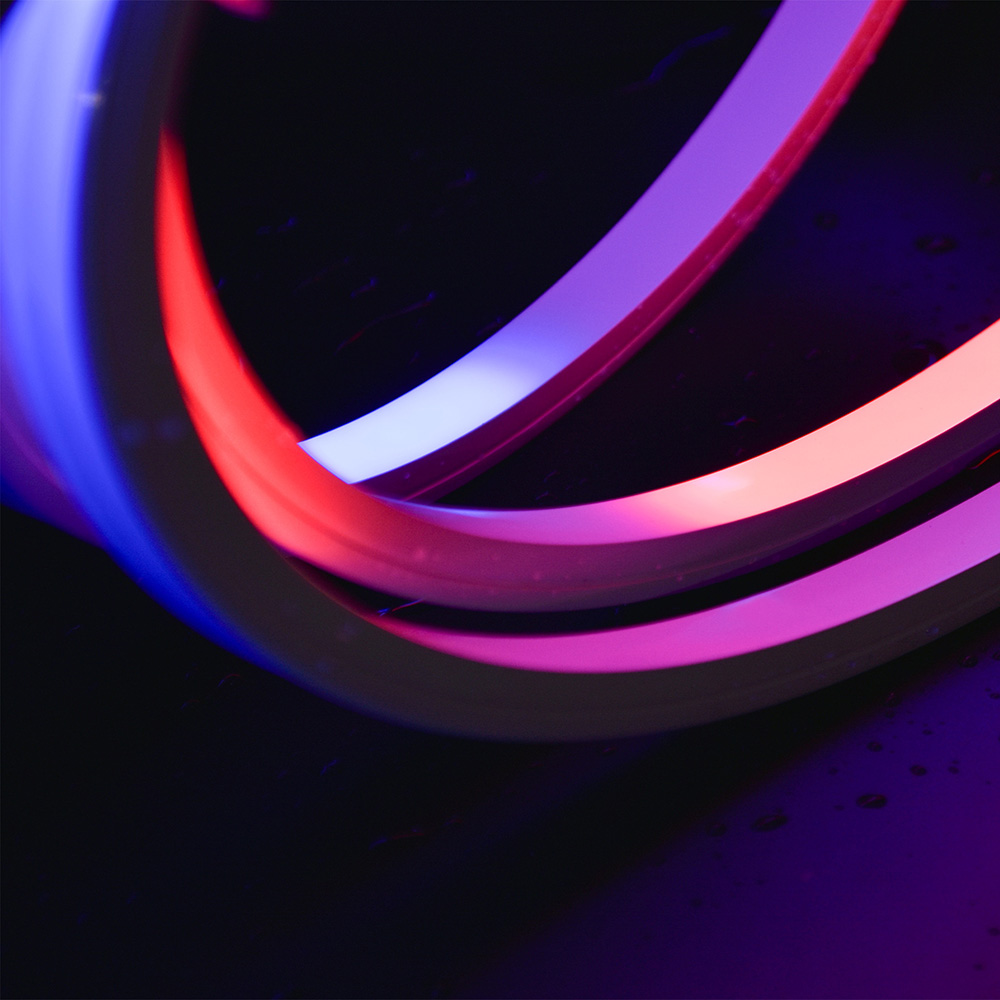
DC24V DMX512 Outdoor Waterproof 16.4Ft 480LEDs Dream Color RGB Flexible LED Neon Light
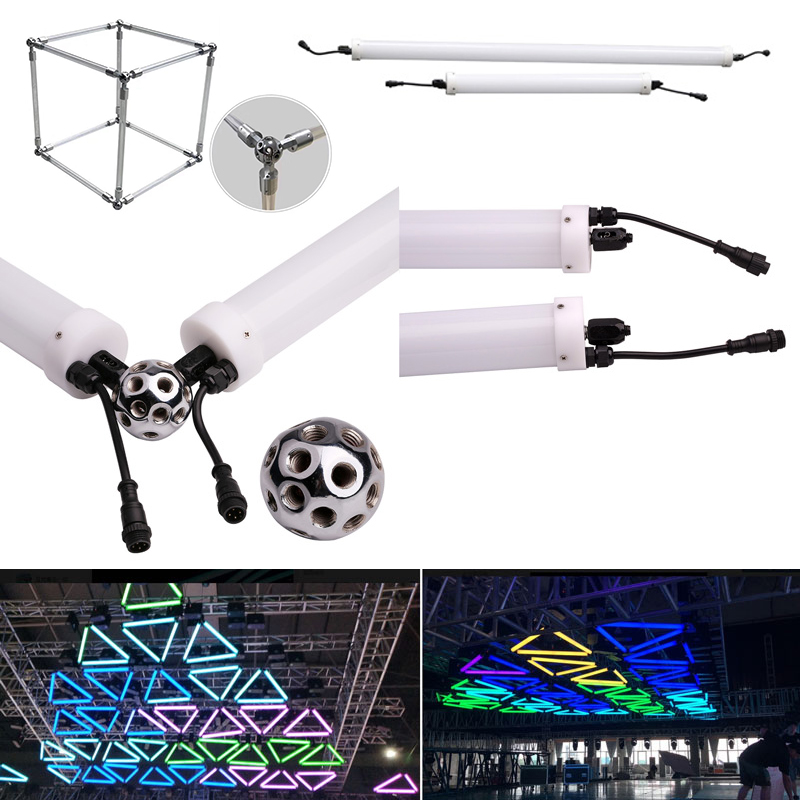
Programmable DMX512 LED Tube Lights 24V 360 Degree Lighting
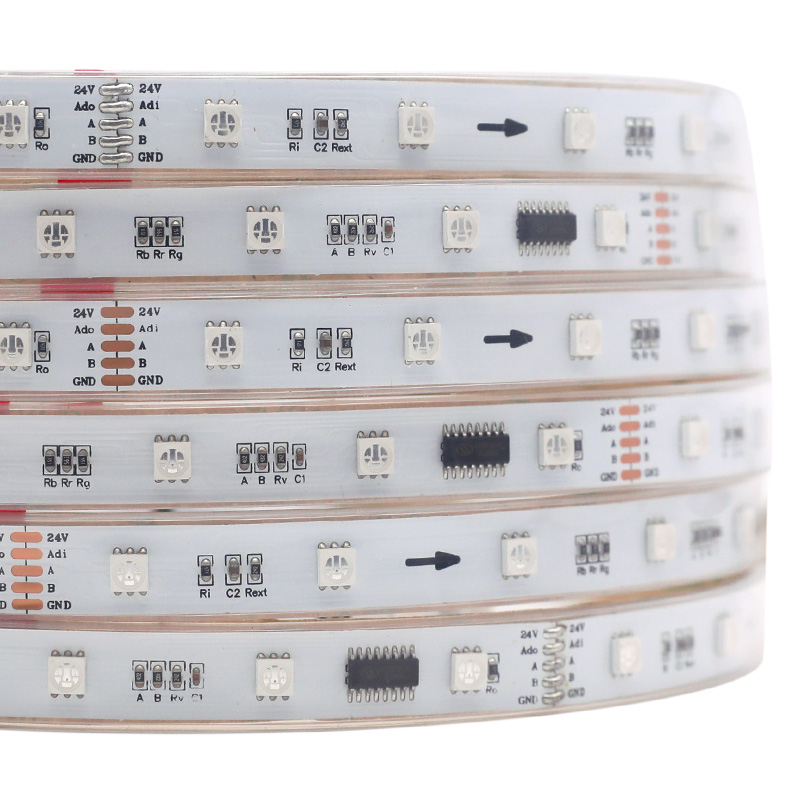
DMX512 RGB DC24V 180 LEDs Full Color Digital LED Strip Light
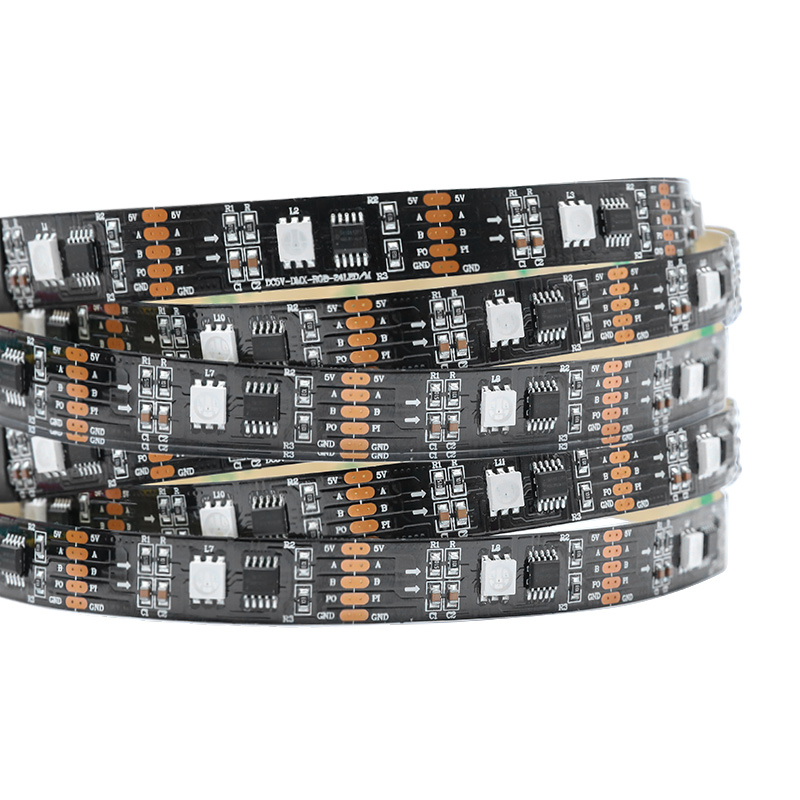
5V Individually Programmable Breakpoint Continuous 3in1 RGB LED Stripe DMX

Addressable RGB DMX Light Strip DC24V 240LEDs 40Pixels
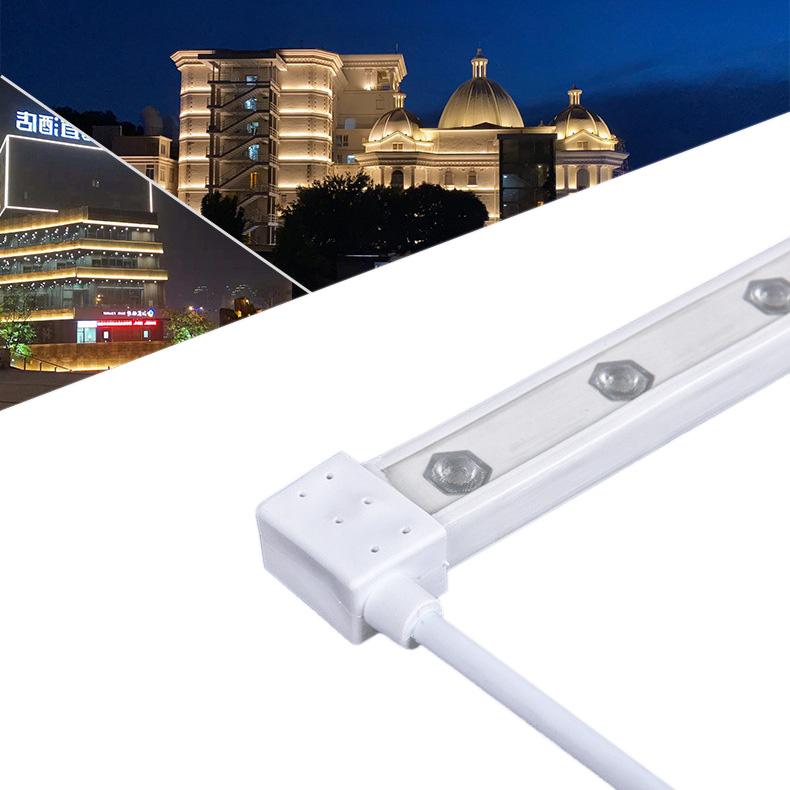
Flexible DMX512 Wall Washer LED Strip - Curve-Fitting & Durable
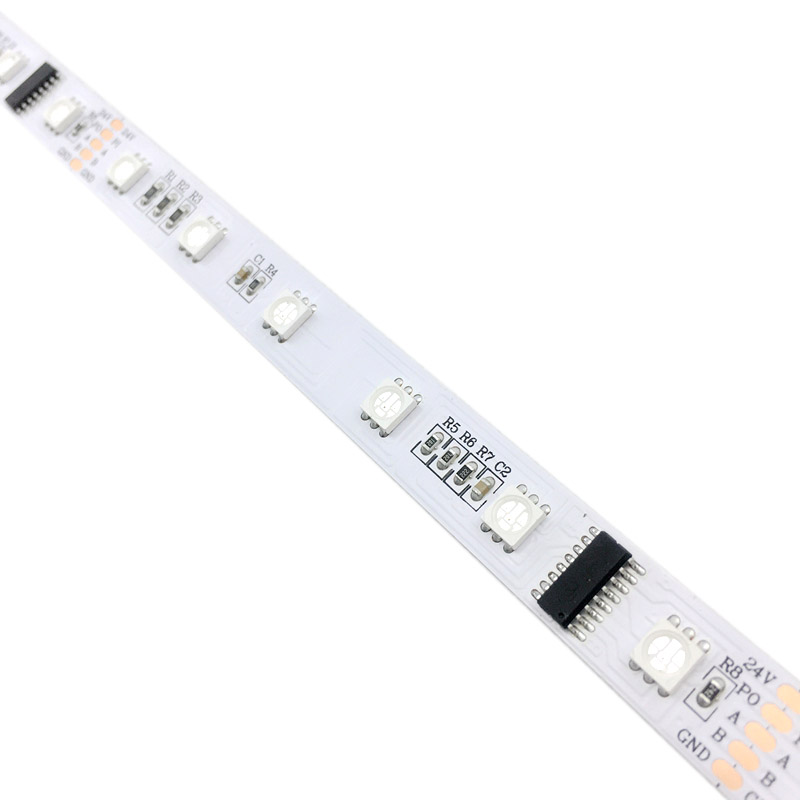
DMX Controlled LED Rope Light DC24V 300LEDs 50Pixels
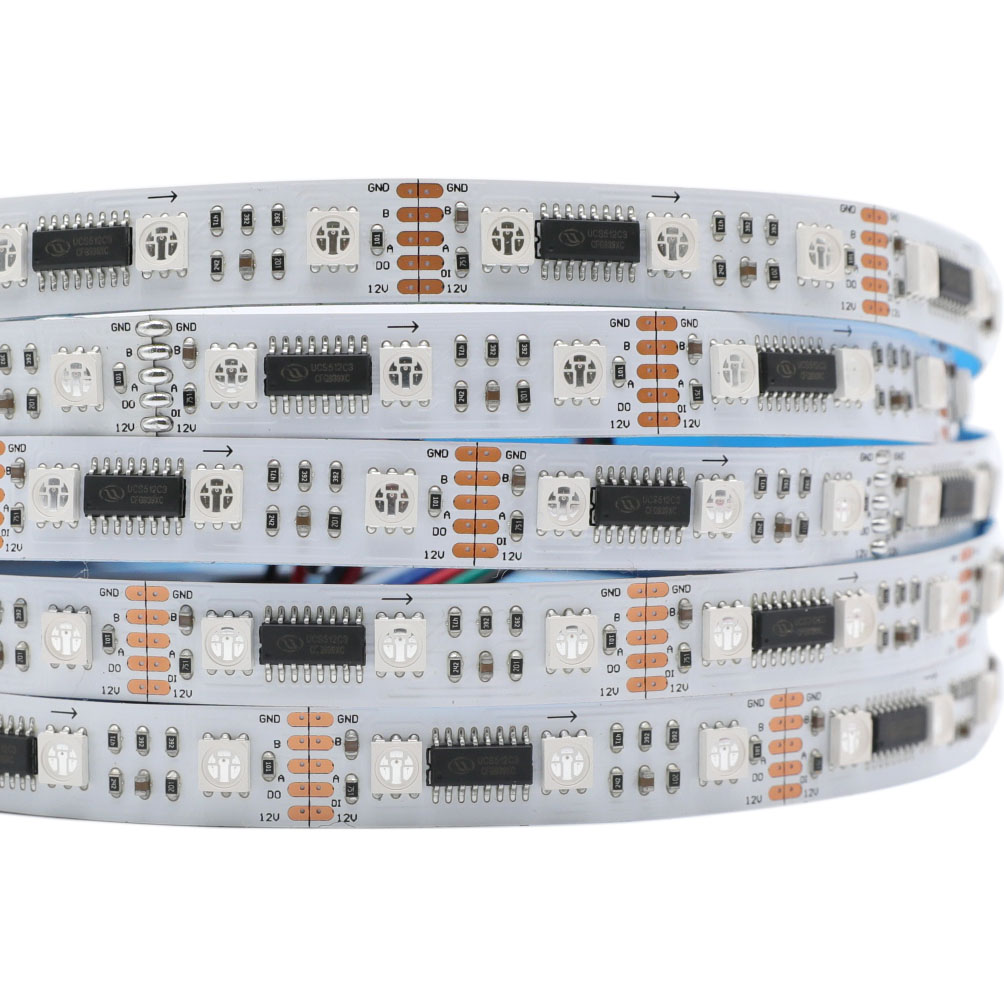
RGB DMX Controlled LED Tape Light DC12V 300LEDs 100Pixels
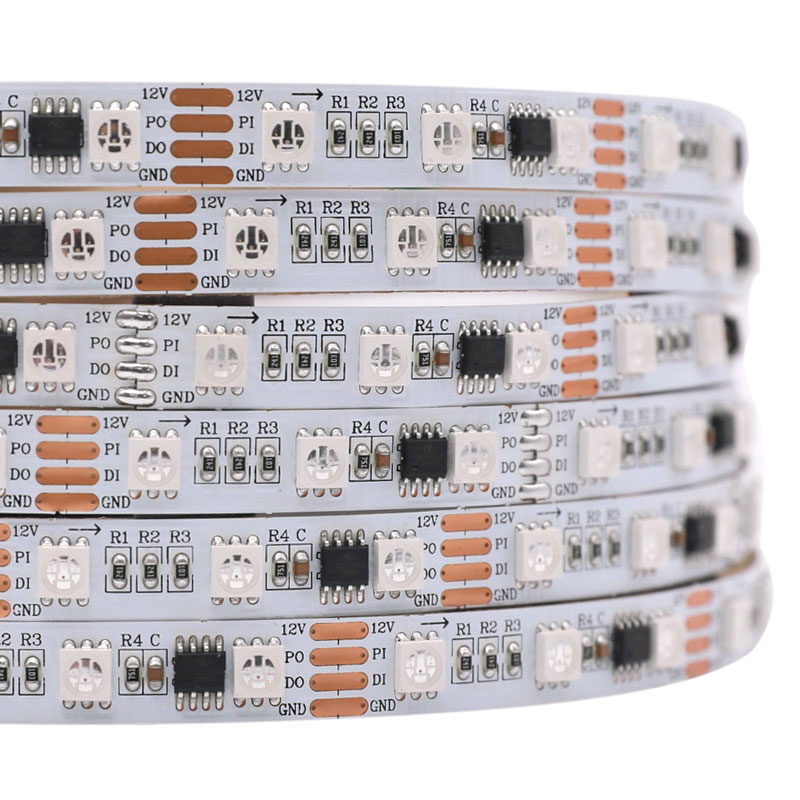
Addressable RGB DMX512 LED Strip Lights DC12V 300LEDs
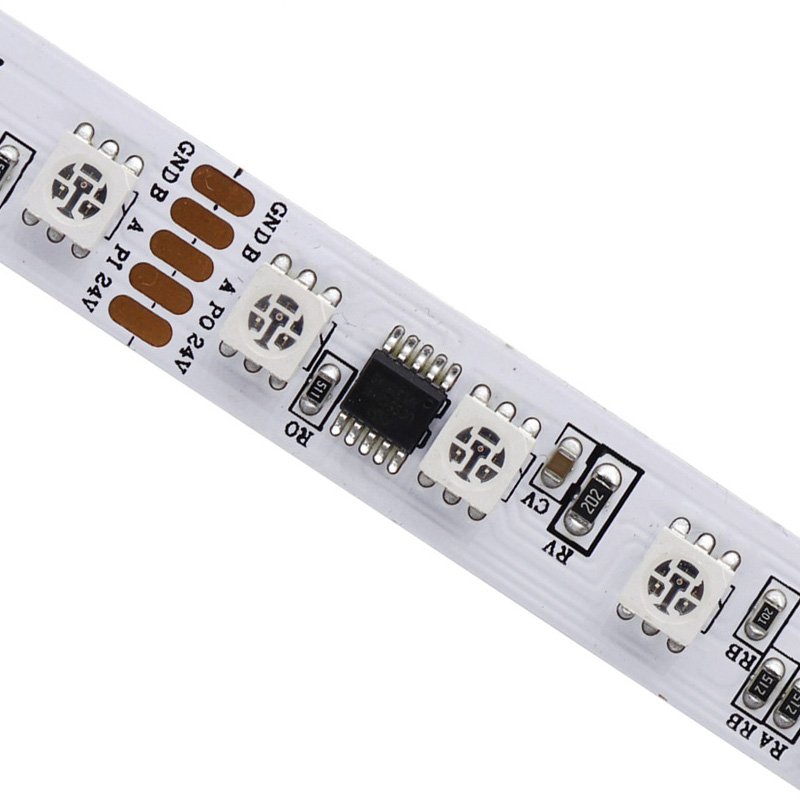
72 Light/m High Density 5050 DMX Compatible LED Rgb Strip 24-Volt
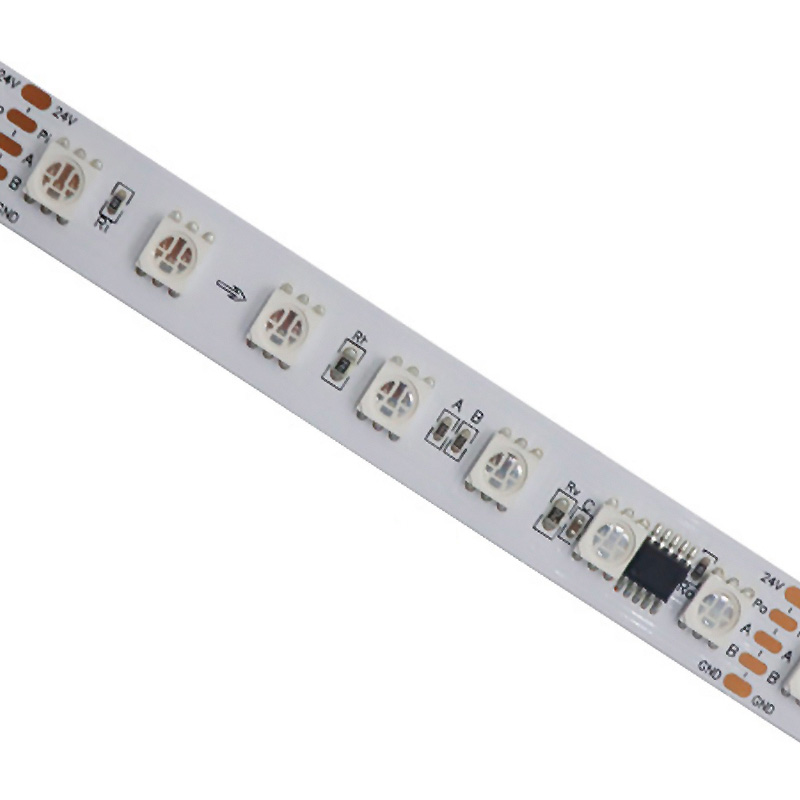
Higher Density 5050 RGB Led DMX-Enabled Lighting Tape 24 Volts
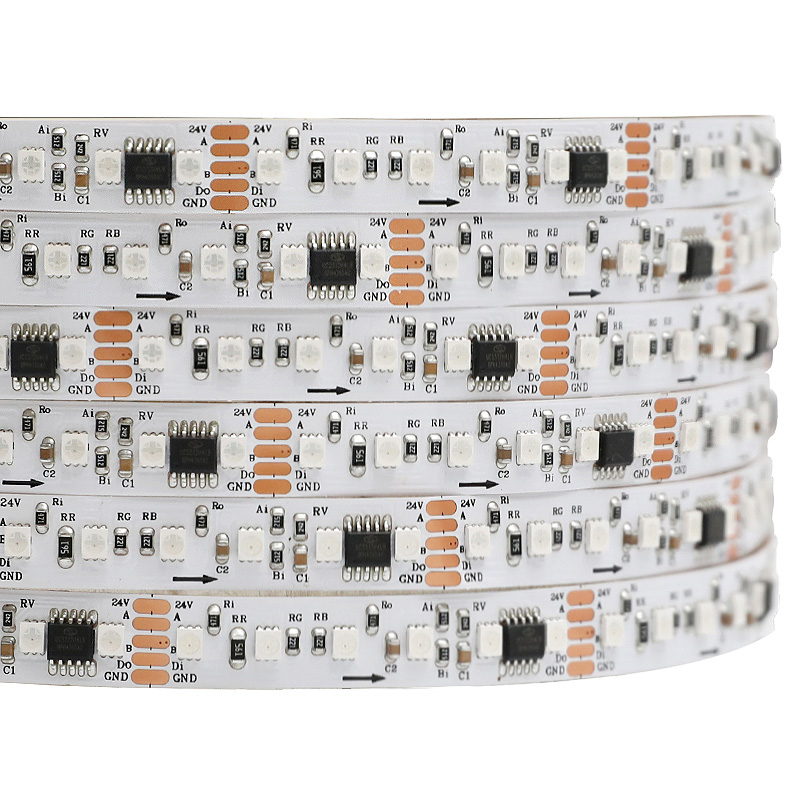
8mm Narrow Dense UCS512H6L RGB DMX Led Tape 96LEDs/m
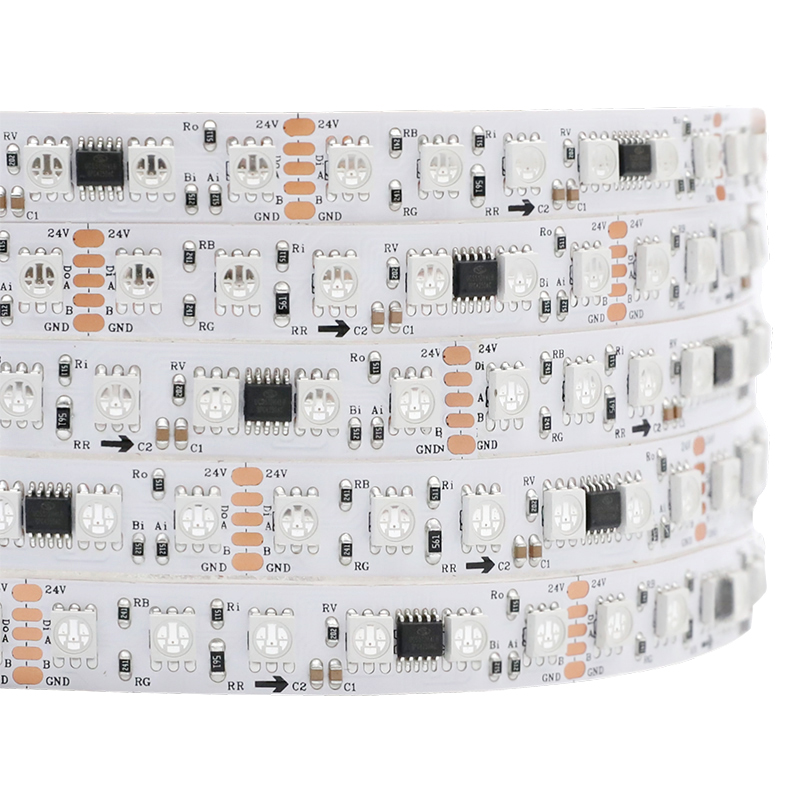
UCS512H 12mm 24V 5050 Addressable DMX RGB LED Strip 96 LED/m
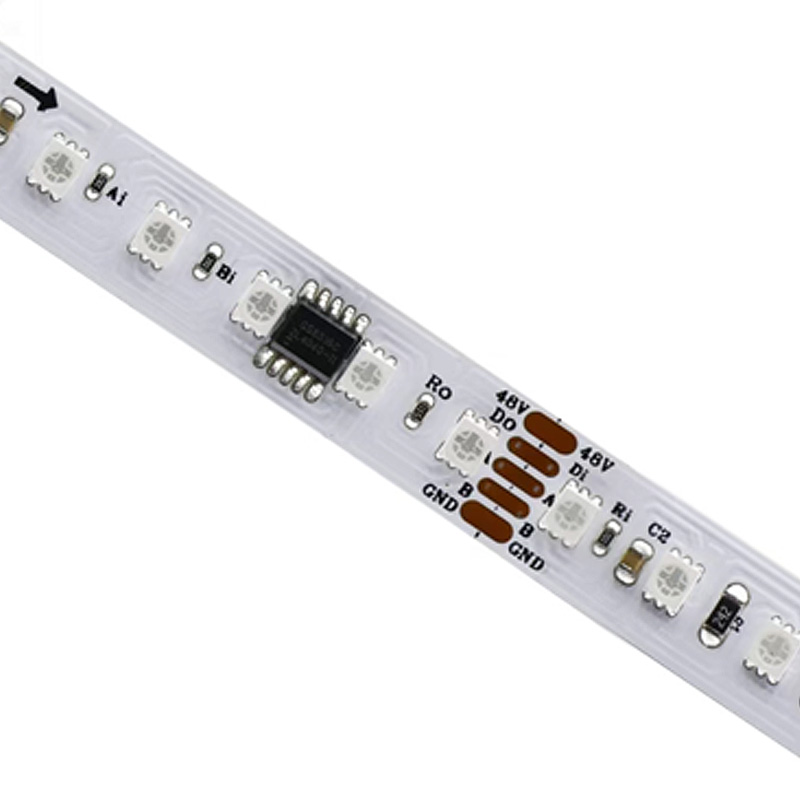
48 Volts 65.6FT Long DMX-Driven RGB Pixel Mappable LED Tape
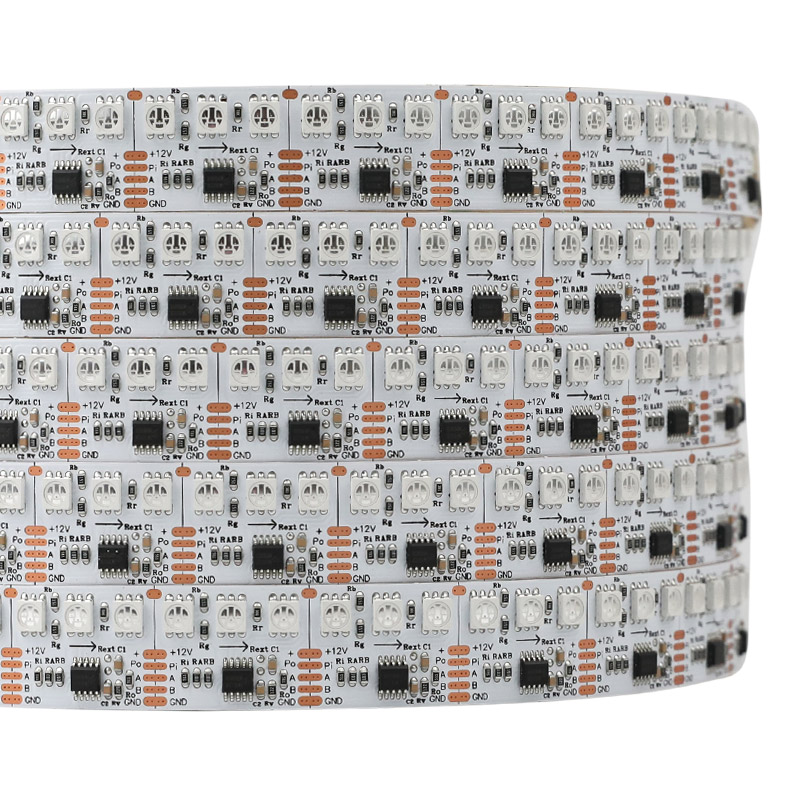
DC12V Ultra-Density DMX RGB/RGBW Tape Light (120LEDs/m 40ICs/m)
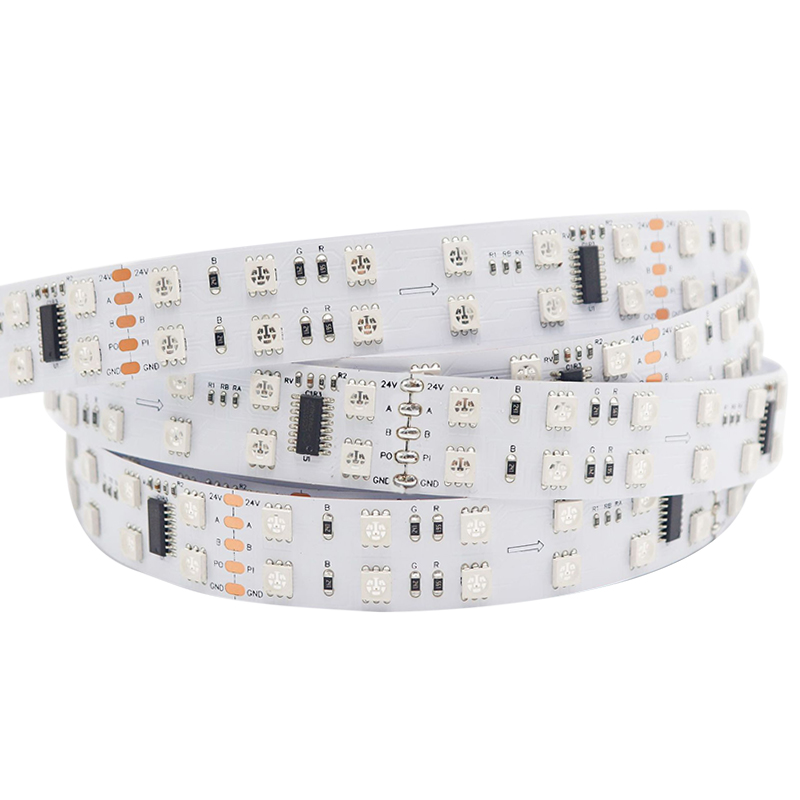
DC24V 20mm Bright Double Row DMX RGB LED Strip
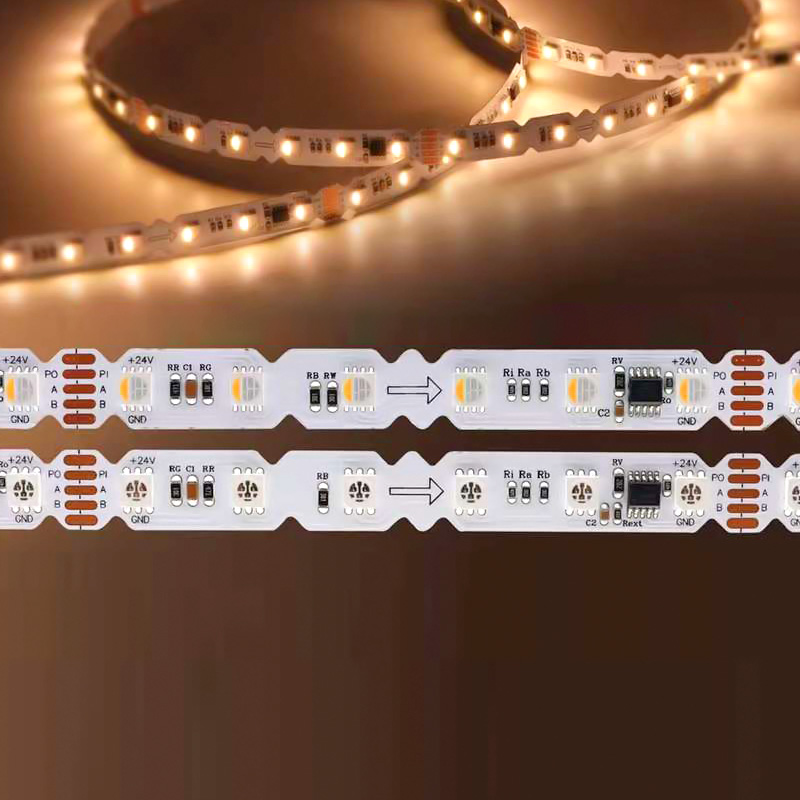
DC24V Flexible S-Type DMX Pixel RGBW Shapeable LED Strip
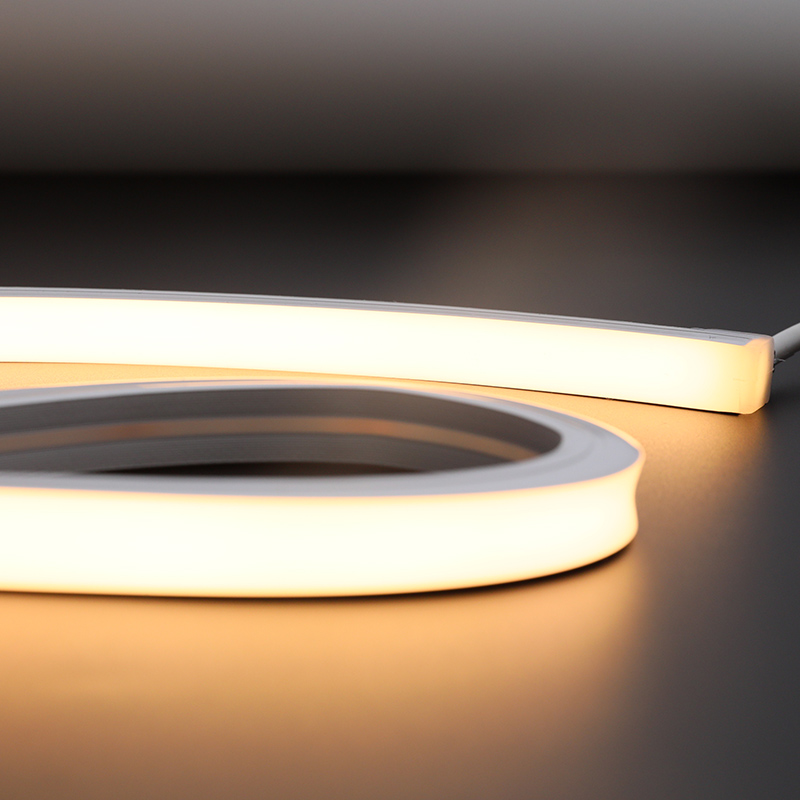
16x16mm Top Emitting Flexible LED Neon Tube Light
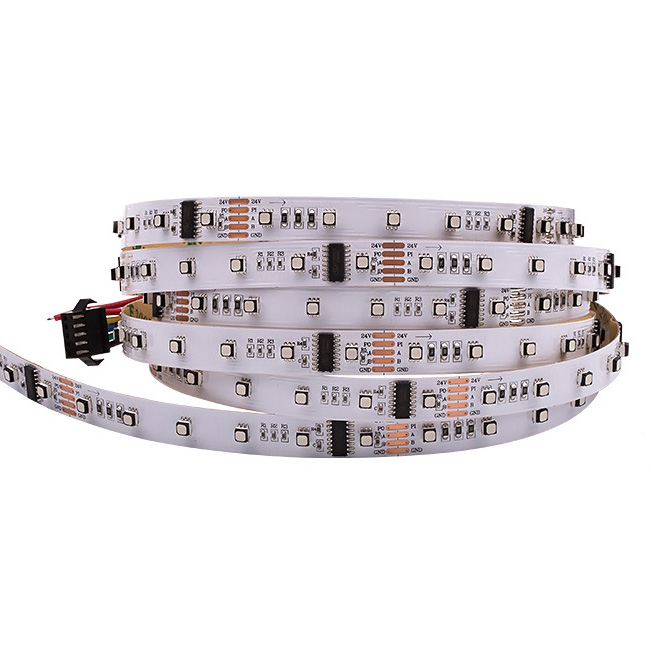
RGB DMX LED Strip Lights SMD3535 DC24V 300LEDs
DMX vs. SPI (API): Which RGB LED Tape Do You Really Need?
Although the results of DMX RGB led strip and SPI RGB led strip are very similar in terms of color control and dynamic light effect presentation, DMX512 RGB LED has more advantages in large-area lighting arrangement (professional stage lighting, building lighting, commercial lighting ), global synchronization of multiple devices, and compatibility with various DMX light fixtures.
Your first big decision with programmable RGB strips isn't color, it's control protocol. While our DMX RGB led tape and SPI strips (like WS2812B IC strips) can both create amazing color-chasing effects, they're built for different scales.
DMX512 is the global standard for theatrical, architectural, and stage lighting. It's designed for rock-solid reliability over hundreds of meters and plays nice with other professional fixtures. SPI is simpler and cheaper, perfect for smaller, self-contained projects.
If your lights are part of a larger DMX universe or absolutely cannot fail, you need DMX. For a single prop or a short accent, SPI is often enough.
| Feature | DMX RGB LED Tape | SPI RGB LED Tape (e.g., WS2812B) |
| Signal Transmission | Differential Pair (A/B lines), high noise immunity | Single data line, ground referenced |
| Max Distance | Up to 300m (1000ft) between devices | Typically under 10m (33ft) without amplification |
| Failure Mode | Parallel signal versions available; one bad IC won't stop the run | Data is in series; one bad IC stops the signal for all following ICs |
| Compatibility | Any standard DMX512 controller, console, or software | Requires a controller built for the specific IC (e.g., WS2811) |
For a deeper dive, check out our guide to DMX control for LED lighting.
Frequently Asked Questions About RGB DMX LED Tape
Your project's already on our shelf. Here are the questions we hear most often before a DMX lighting job goes from plan to purchase order.
Think of it like this: DMX is the global standard for all professional stage and architectural lighting. It's robust, designed for long signal runs, and every piece of pro gear speaks its language. SPI is simpler, great for DIY projects, but can be susceptible to signal problems on larger jobs. For a single room it's fine, but for a whole building or a stage show that has to work every night, you use DMX.
Some of our DMX LED tape uses chips where you have to set the starting DMX address for each section of the strip manually. This gives you absolute control in complex setups, ensuring there are no address conflicts. You connect the writer, tell the chip 'you are channel 1', and it remembers. Not all strips need it, but for large, professional jobs, it's a critical tool.
For most professional jobs, 24V is the sweet spot. It gives you good run lengths—typically up to 10 meters with a single power feed—without major voltage drop. 12V is usually for shorter runs or very high-density strips where cutting sections are smaller. We carry 48V DMX tape specifically for extra-long runs, letting you go 20 meters or more before needing to re-inject power. It all comes down to the length of your run.
Yes, absolutely. That's the whole point of the DMX512 protocol. As long as your console or software can output a standard DMX signal, our strips will understand it perfectly. You just need to patch the strip into your console as a generic RGB fixture, making sure you've allocated enough channels for the number of pixels you're running.
It depends entirely on the LED density. The math is simple: (LEDs per meter) ÷ (LEDs per pixel) x 3 (for R, G, B) x (length in meters). For a 60 LED/m strip where one IC controls 3 LEDs, a 10-meter roll would need (60 ÷ 3) x 3 x 10 = 600 DMX channels. That's more than one DMX universe (512 channels), so you'd need a controller that can handle at least two universes.
For a smooth color gradient on a wall, density is more important than the raw brightness of a single LED. A high-density 5050 led tape, like our 72 or 84 LED/m models, will reduce the 'scalloping' effect. Even better, consider a product designed for it, like our flexible DMX wall washer light, which uses optics to blend the light before it even leaves the fixture. It creates a much more even field of light.
Any controller that outputs standard DMX512 will work. The key is making sure the controller can handle the total number of channels your project requires. A simple 3-channel controller won't run a pixel-mappable strip that needs 1,800 channels. We stock everything from small wall panels to multi-universe ArtNet and sACN controllers that can run massive installations.
This is a fundamental concept for all lighting, not just DMX. In a series circuit, electricity flows through each LED one after another, like old Christmas lights—if one bulb fails, the whole string goes out. In a parallel circuit, each LED (or strip section) gets its own direct connection to the power source. For LED strips, the power connection must always be parallel to ensure every section gets the correct voltage.
Yes, custom fabrication is a huge part of our business. Many of the projects we ship are built to a customer's drawing and never appear on the website. You can specify the exact length of the strip, the length and type of the lead wires, and the specific IP68 waterproof connectors you need. Just send us a sketch or a parts list. An engineer will review it and send back a complete wiring diagram and quote, usually within 12 hours. There's no fee and no obligation to order.