
SK6812 WWA LED Strip
9 products
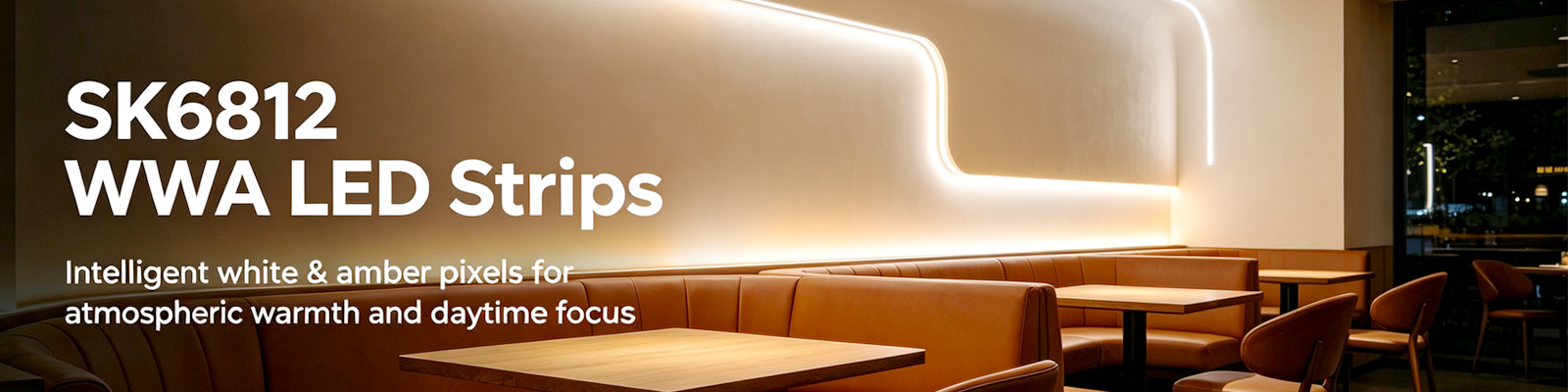
WWA means Warm white+White+Amber, the SK6812 WWA's LEDs integrate 1800K-2000K amber light and 6000K-6500K white light inside the same SMD5050, the change between the different color temperatures is very smooth with no noticeable color jumps. SK6812 WWA led strip allows adjustment of any color temperature between 1800K amber and 6500K white, covering the complete transition from warm to cool, wide color temperature change range. This makes it the perfect choice for human-centric lighting, luxury residential coves, hotel suites, and high-end retail displays where seamless circadian rhythm adjustments and rich, atmospheric warmth are essential.
• Amber Light: a light that leans towards orange for a more decorative, ambient feel;
• Soft Warm White: soft and warm light similar to traditional incandescent bulbs, creating a warm, cozy environment;
• White light: close to daylight color temperature, suitable for environments that require high brightness and close to natural light illumination.
Each LED on the SK6812 WWA led strip is individually addressable, meaning you can adjust the color and brightness of each LED individually to create transitions and combinations of color temperatures on the same strip light. For example, you can use warm white light in one part of the strip and cool white light in another part. This ability to finely control localized areas of the tuning white led strip provides richer visual effects and greater spatial adaptability than normal color temperature adjustable led strips.
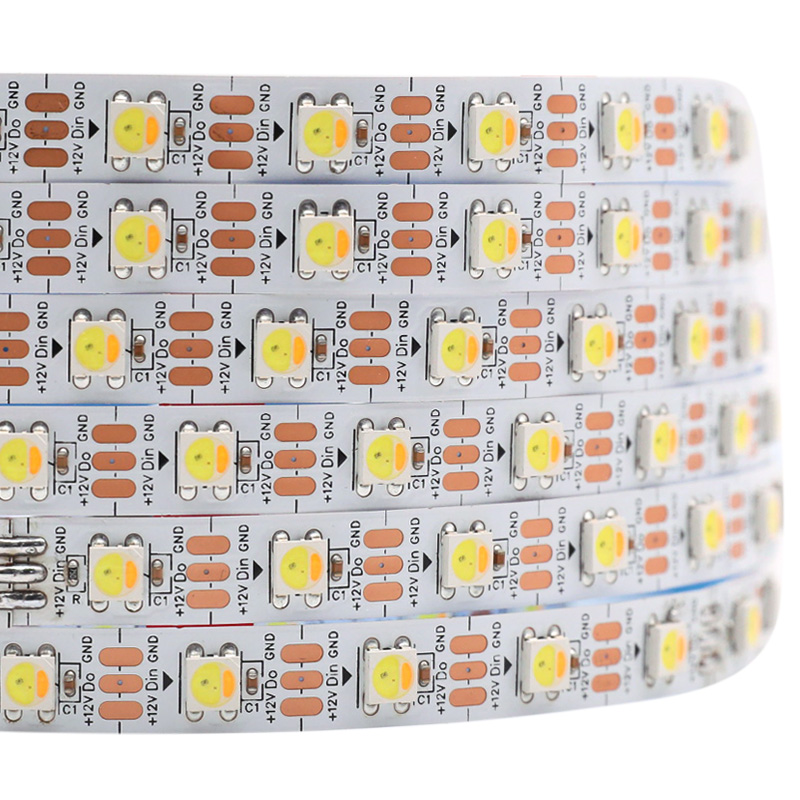
12V Individually Addressable SK6812 1800K to 6500K WWA LED Strip
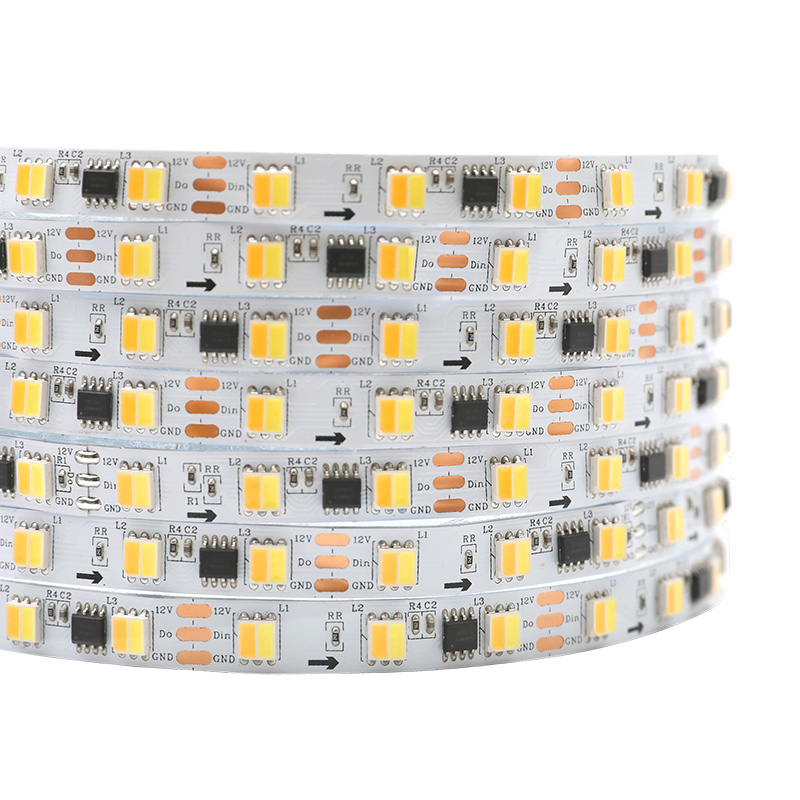
DC12V SM16703 SMD5050 Dynamic Tunable White LED Strip Light
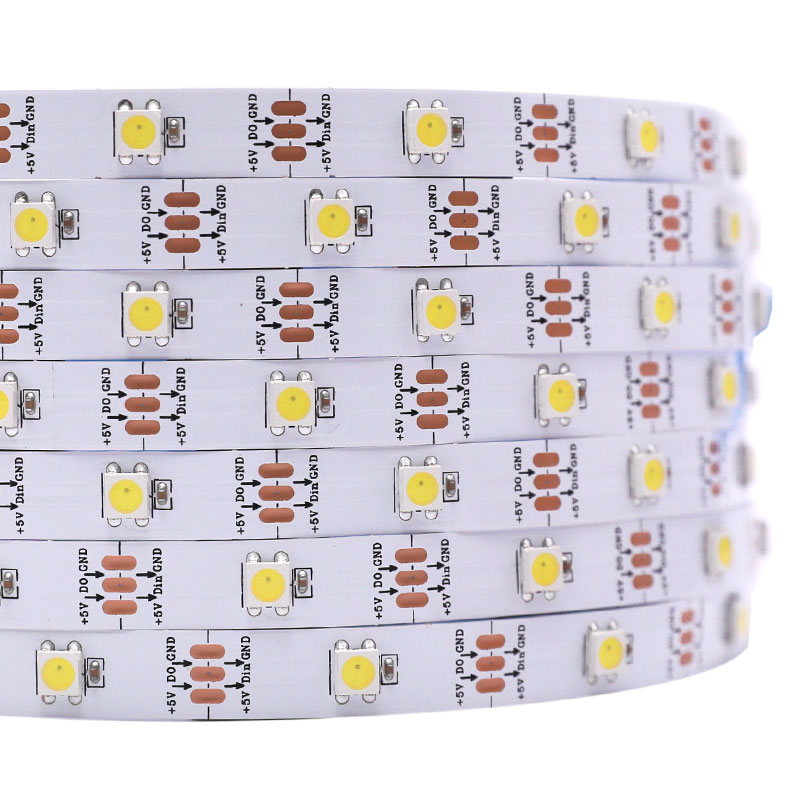
30LEDs/m SK6812B Digital Daylight/Warm White/WWA LED Strip
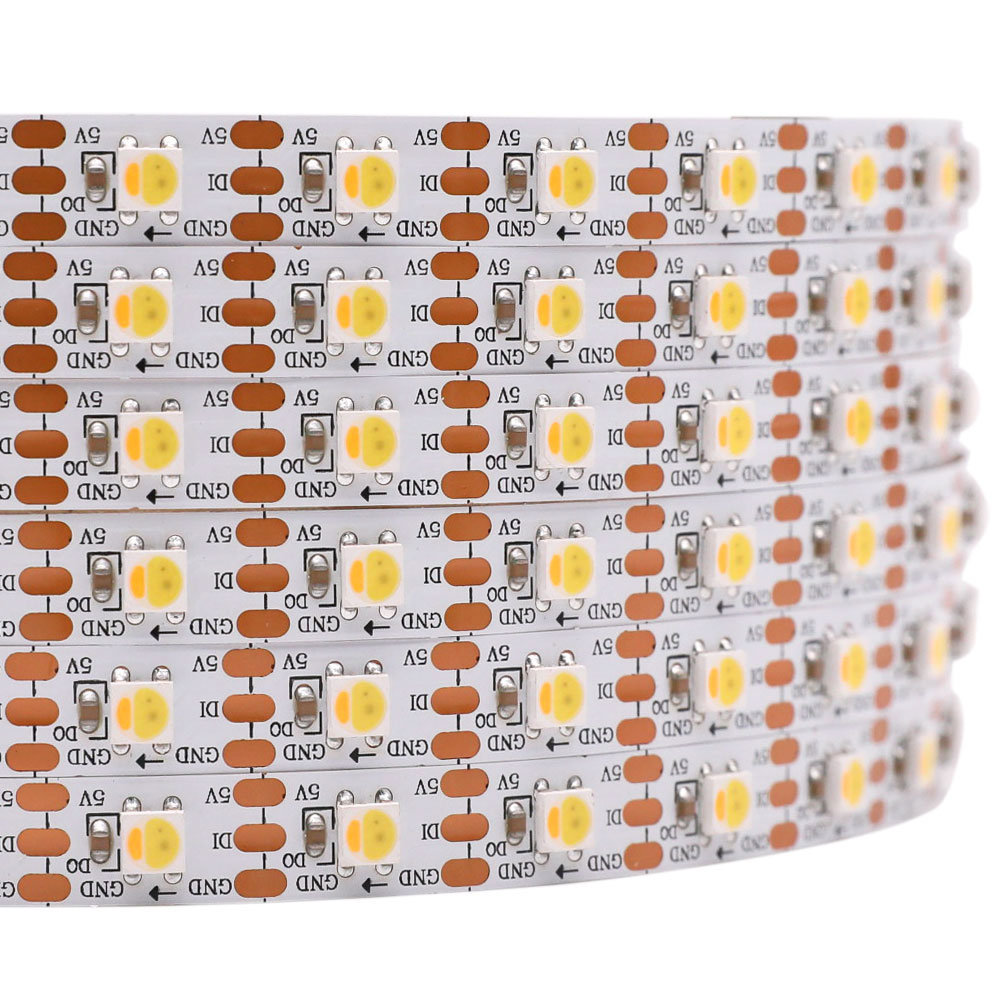
SK6812 WWA 2200K~6500K Adjustable LED Strip - Individually Addressable
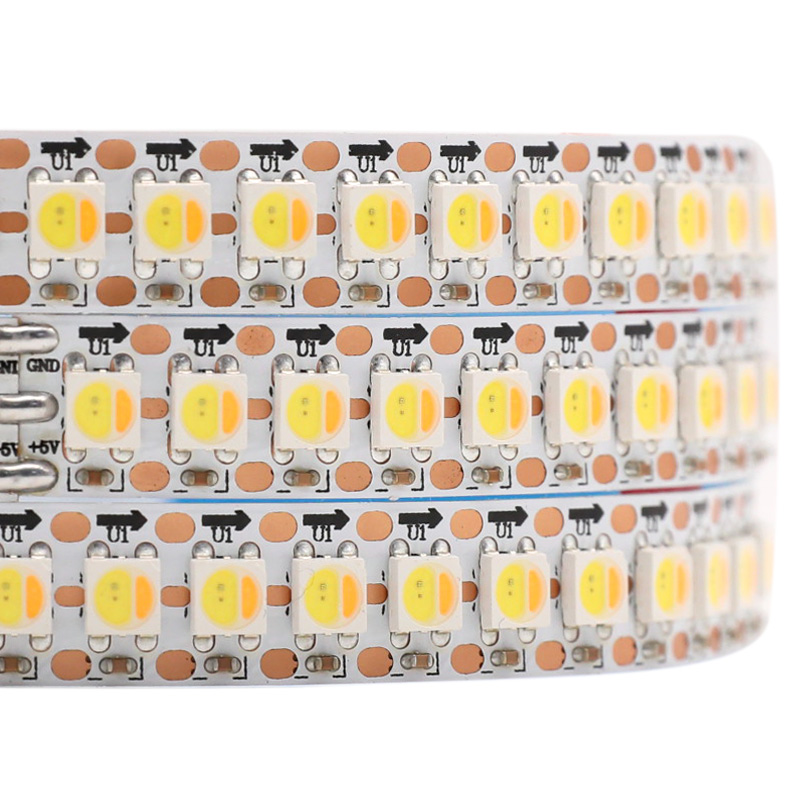
5V SK6812 144 1-Meter Digital Dim to Warm to Bright WWA LED Strip
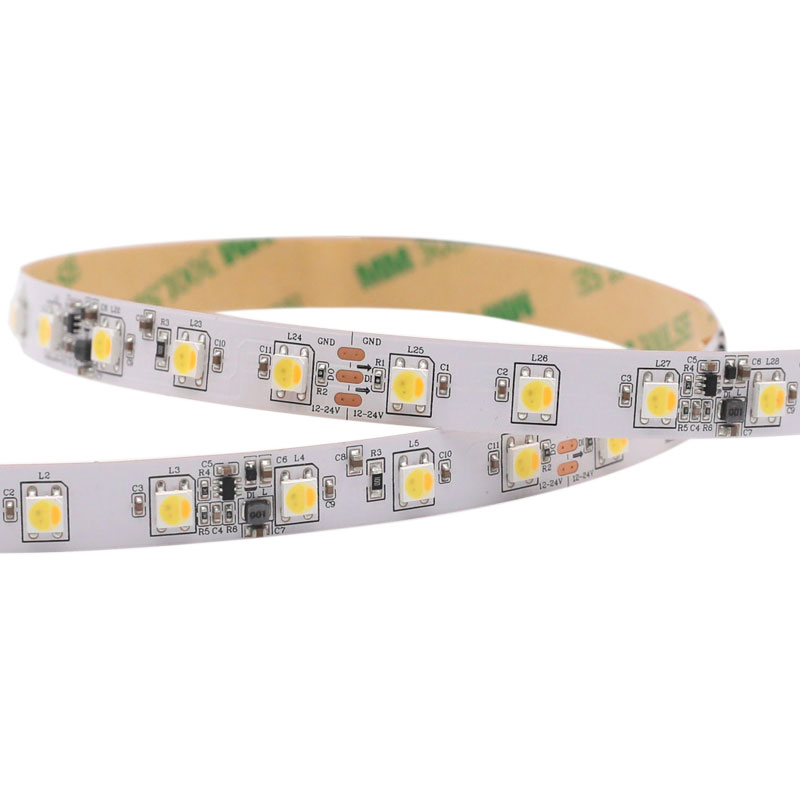
DC12-24V Commercial Individually Controllable SK6812 WWA LED Strip
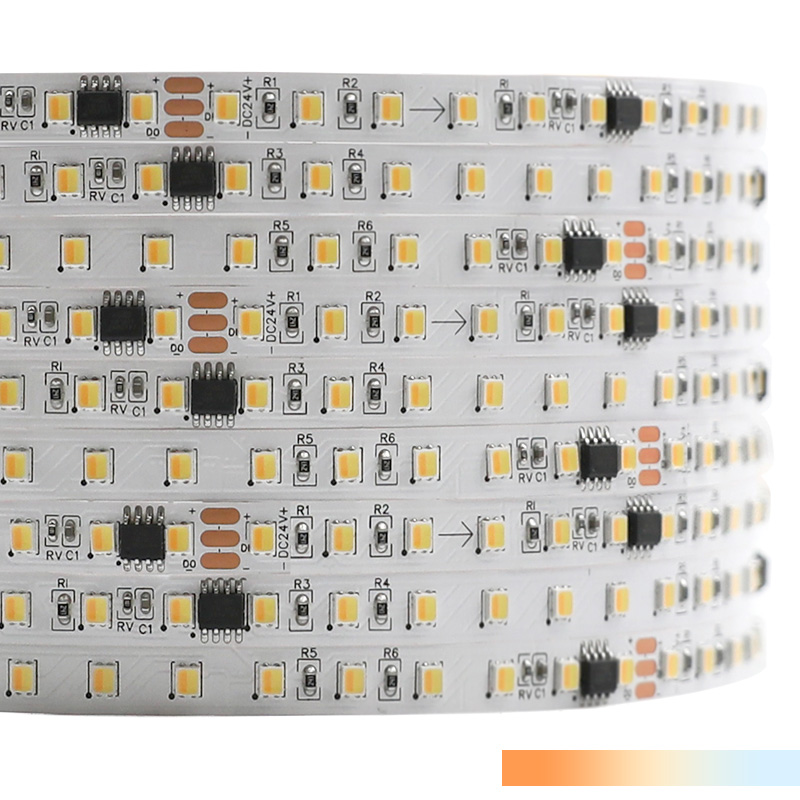
Long Thin Addressable 2-in-1 2835 CCT LED Strip
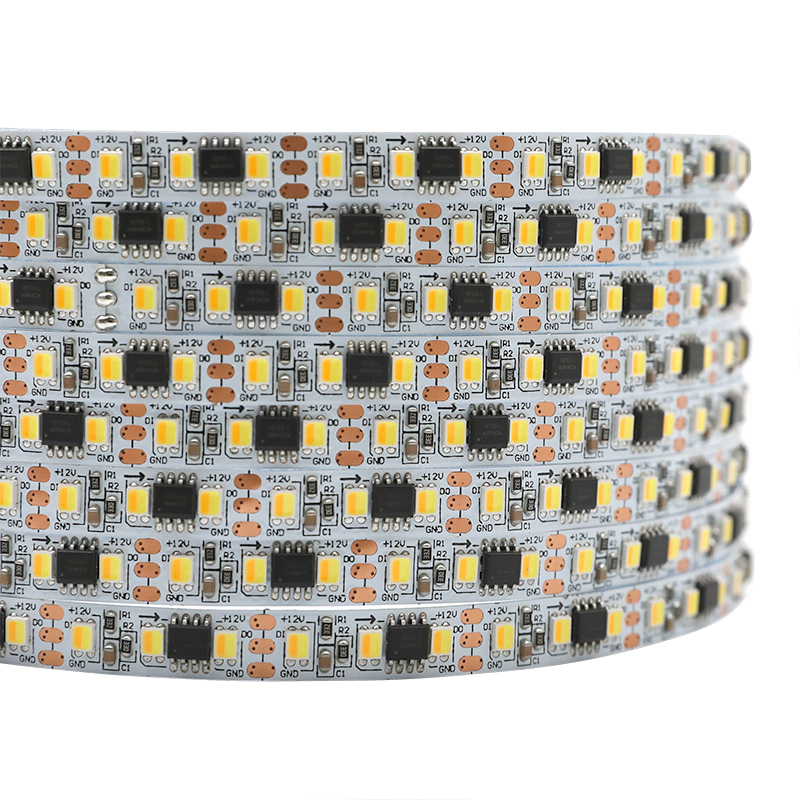
DC12V SM16703 Bright Dynamic CCT Adjustable LED Strip Light
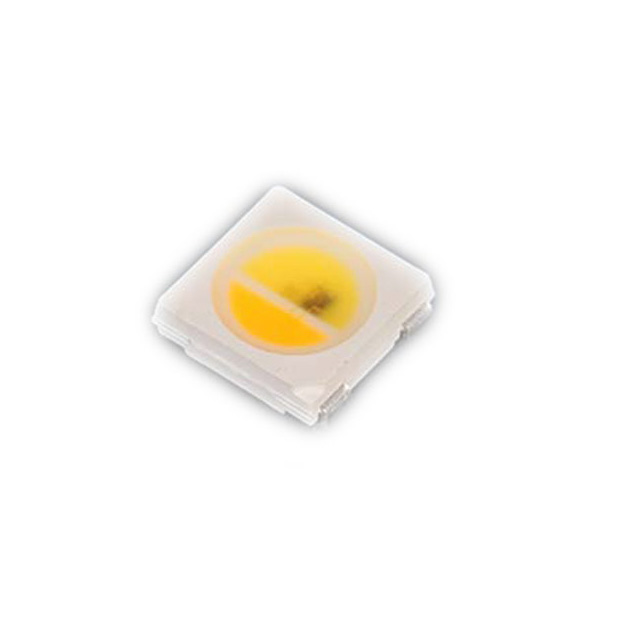
SK6812 Arduino LED Chip - 5050SMD WWA - 1000PCS By Sale
Your SK6812 WWA LED Strip Questions, Answered
Your questions, answered by an engineer. Here’s what you need to know before you buy and install.
For an SK6812 WWA LED strip, 6500K is a cool, crisp white, very close to natural daylight. It’s great for task lighting or areas where you need to see colors accurately. The 1800K on the other end is a very deep amber, much warmer than a typical incandescent bulb. It's designed to mimic candlelight or a fire's glow, creating a really cozy, decorative vibe that standard tunable white strips just can't reach.
You need to calculate for the worst-case scenario, which is full brightness with all three internal LEDs (Warm White, Cool White, and Amber) on at once. Check the product page for the 'watts per meter' spec. Multiply that number by the total meters you're running, then add 20% headroom. For instance, if a strip is 15W/m and you have a 4-meter run, that's 15 x 4 = 60 watts. Add 20% (12W), so you'll need a power supply of at least 72W.
You dim an addressable LED strip light like this through the data signal, not by cutting power. Your controller's software or app will have a brightness setting. This tells the SK6812 chip inside each LED how bright to be. Trying to use a standard wall dimmer in front of the power supply will either do nothing, cause flickering, or damage the power supply. The dimming is digital, handled by the controller.
No, a standard wall dimmer or a simple CCT controller won't work. Those are designed for non-addressable strips. This SK6812 WWA LED strip needs a dedicated addressable LED controller that speaks the right digital language. These addressable controllers send data to each individual LED, telling it what color temperature and brightness to be. A simple analog dimmer just varies voltage, which won't control these strips correctly.
That's classic voltage drop. The voltage from your power supply decreases as it travels down the copper on the strip. The blue/white LEDs require slightly more voltage to run at full brightness than the amber/warm ones do. So, as the voltage drops, the cool white is the first to suffer, making the light appear dimmer and warmer. For runs over 5 meters, you must inject power at both ends, or sometimes in the middle, to keep the color and brightness consistent. Our guide to wiring addressable strips explains exactly how to do this.
You need a programmable pixel controller that supports the SK6812 chipset. Popular choices in the DIY community include boards running WLED (like an ESP32) or Arduino with the FastLED library. For more professional setups, you might use a DMX-to-SPI decoder. These controllers allow you to send commands to each LED's address, letting you create flowing gradients from amber to cool white, chase effects, or have different sections of the same strip hold different color temperatures.
A standard CCT strip changes the color of the whole strip at once—all 5 meters turn to 3000K, or all 5 meters turn to 5000K. An SK6812 WWA LED strip is addressable, which means you can control every single LED independently. You can make the first meter look like candlelight (1800K) while the second meter is daylight (6500K), and have them flow smoothly into each other. It gives you dynamic, localized control that's impossible with a standard strip.
Yes, we strongly recommend it, especially for higher density strips (60 LEDs/m and up). The SK6812 chips generate a bit of heat, and the aluminum channel acts as a heat sink, pulling that heat away and extending the life of the LEDs. Without it, the strip can overheat, leading to premature failure or color shifting. Plus, aluminum channels provide a clean, professional finish and protect the strip from physical damage.
The most common cause is static discharge (ESD) during handling, which can damage the tiny SK6812 IC inside the LED. The second is physical stress—bending the strip too sharply at the point of an LED can break the internal connections. Less often, a single LED can fail from a manufacturing defect or overheating. Because the data line runs in series, if one LED's chip fails, it can sometimes stop passing data to all the LEDs after it on the strip.
A good rule of thumb for this SK6812 WWA LED strip is to assume the '6500K light in watts' value is about half the strip's maximum rated power. The full wattage listed on the spec sheet is for when all internal LEDs are on. When you're only using the cool white LEDs for a 6500K output, you're using a fraction of that. The most power-hungry state is a neutral white around 4000K where both the warm and cool LEDs are running near full tilt.
Yes, but you need to configure them correctly. These aren't standard RGB or RGBW strips. In your code or WLED setup, you'll need to treat them as a 3-channel strip, but instead of Red, Green, and Blue, your channels are Amber, Warm White, and Cool White. You'll have to map your desired color temperatures to the correct brightness values for those three channels. It takes a little more setup, but it's completely doable.
We build custom LED strips like this every day. A huge amount of what we ship is built to a customer's drawing and never appears on the site. Just send us your required lengths, the type of connector you need, and the wire length for the leads. An engineer will send back a complete wiring diagram and a quote, usually the same business day and always within 12 hours. There's no fee for the consultation and no obligation to order.
For any run over a couple of meters, go with 12V or 24V. Voltage drop is much more aggressive on 5V strips. With a 5V strip, you might see dimming and color shifting after just 2-3 meters. With a 12V strip, you can often get to 5 meters before needing to inject power. For really long runs, like architectural coves, a 24V strip is even better, as detailed in our guide on long run LED strips.
Absolutely. That deep amber is fantastic for circadian rhythm lighting in bedrooms, as it contains very little blue light which can disrupt sleep. It's also used in high-end hospitality and restaurant design to create an intimate, relaxing atmosphere that feels much richer than standard warm white. Think of it as a 'dusk' or 'embers' setting for winding down at the end of the day. It provides a level of warmth and mood that standard CCT strips can't replicate.