
CV DMX512 Decoder
48 productsDMX512 Decoders for Constant Voltage LED Strip Lighting
LTECH constant voltage DMX512 decoders convert standard DMX512 control signals into PWM output for low-voltage LED strips and other constant-voltage LED lights. They provide a practical way to integrate conventional LED lighting into professional DMX control systems without requiring the LEDs themselves to have built-in DMX circuitry.
SuperLightingLED offers LTECH CV DMX decoders for different channel counts, output capacities, voltages, installation environments, and control requirements. Depending on the model, features may include DMX512/RDM support, high-resolution dimming, adjustable PWM frequency, OLED or digital displays, DIP-switch addressing, wireless functions, multiple output channels, and waterproof construction.
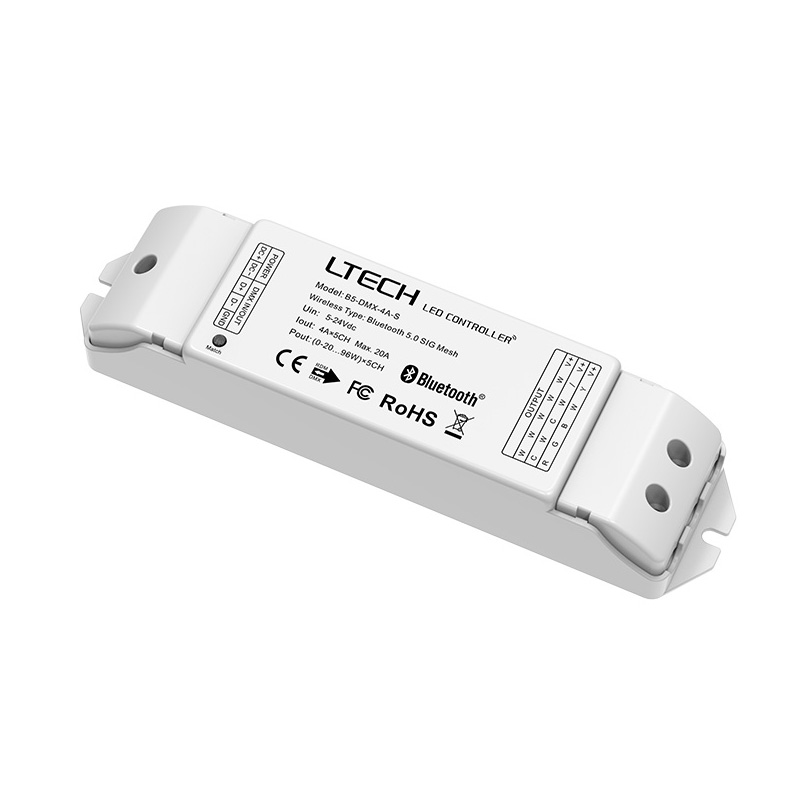
B5-DMX-4A-S 5CH LED Strip Wireless Bluetooth DMX Controller
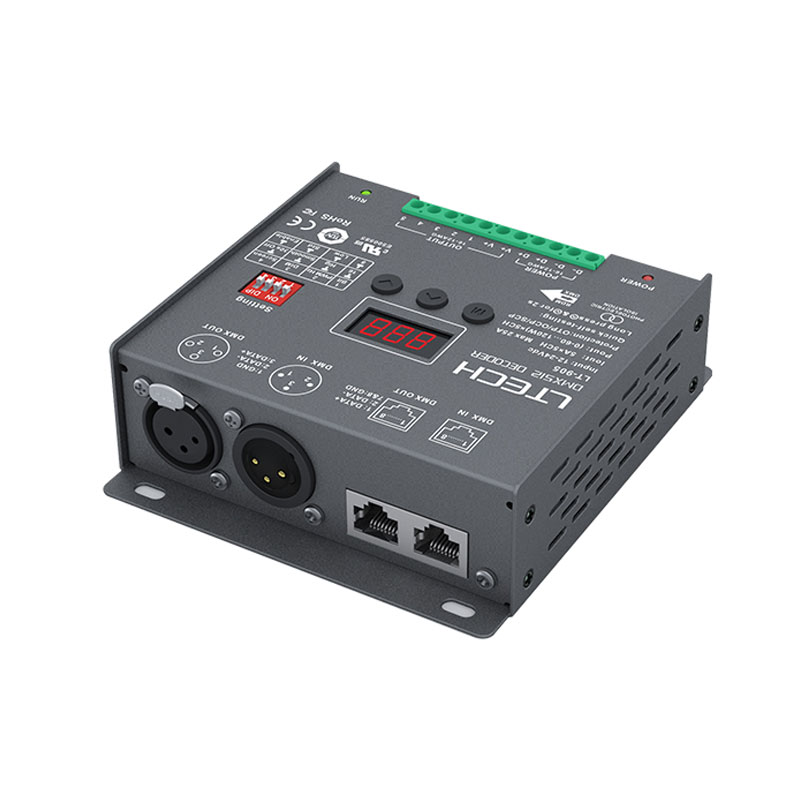
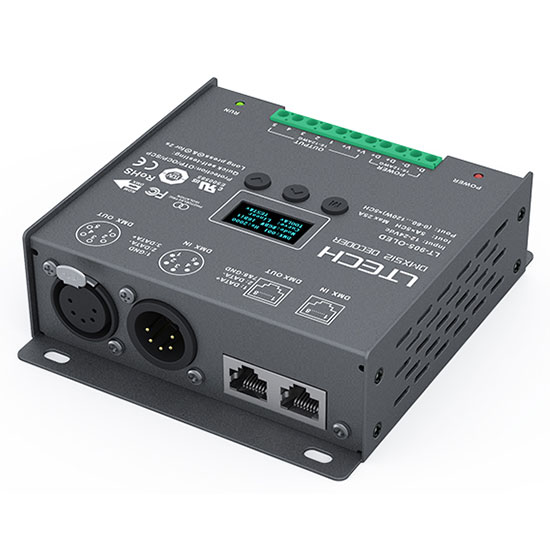
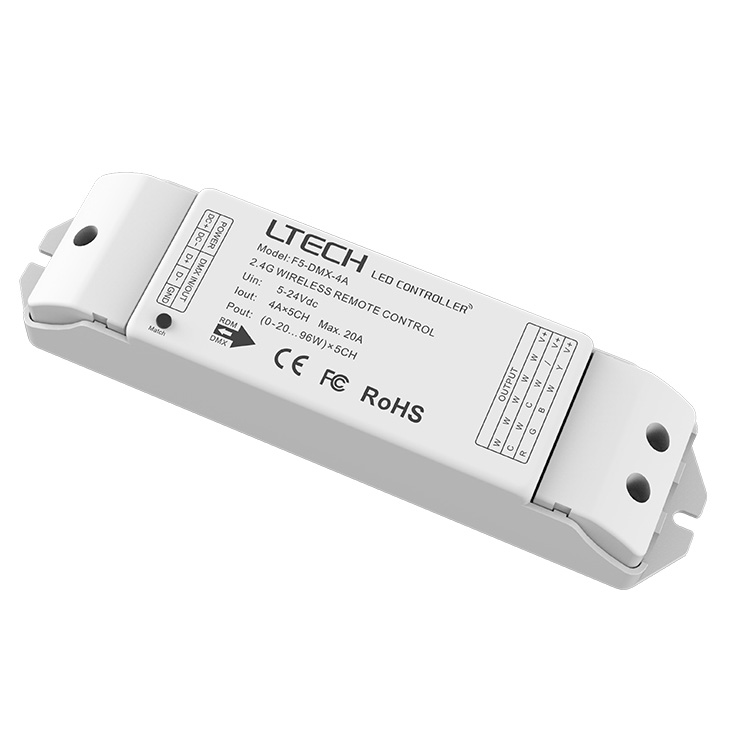
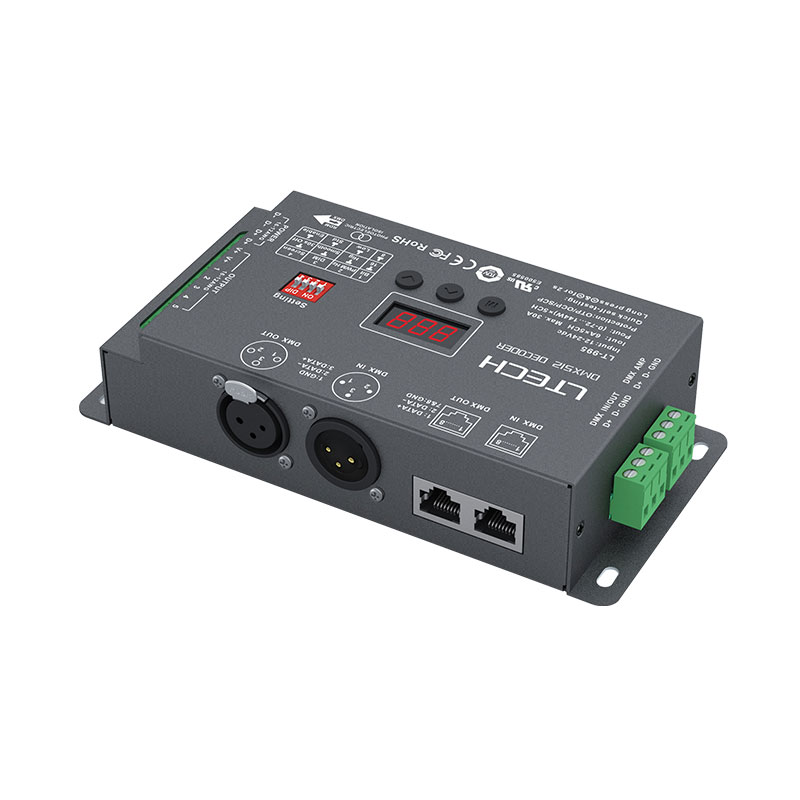
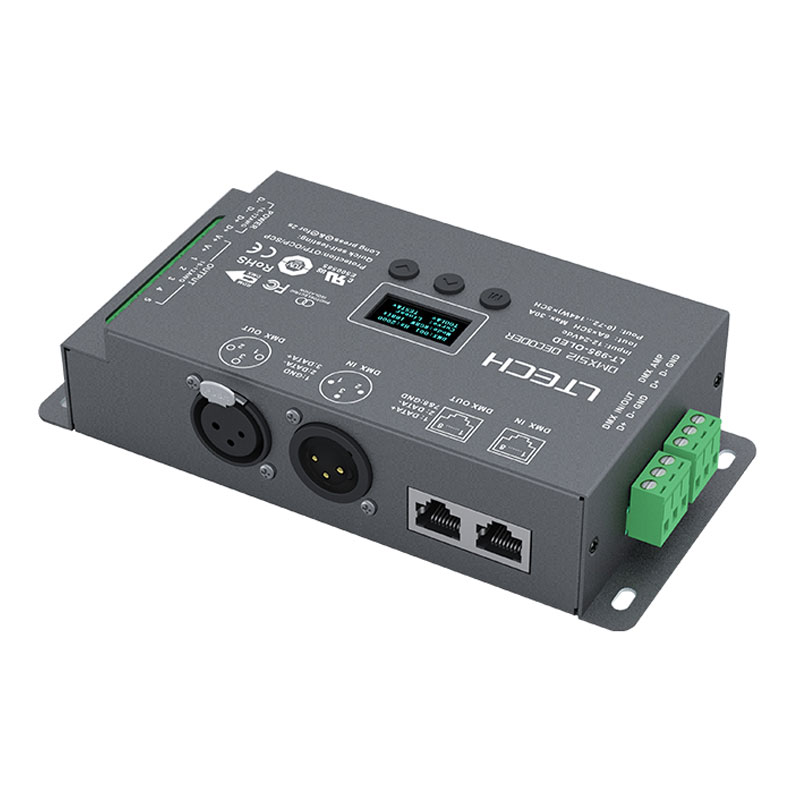
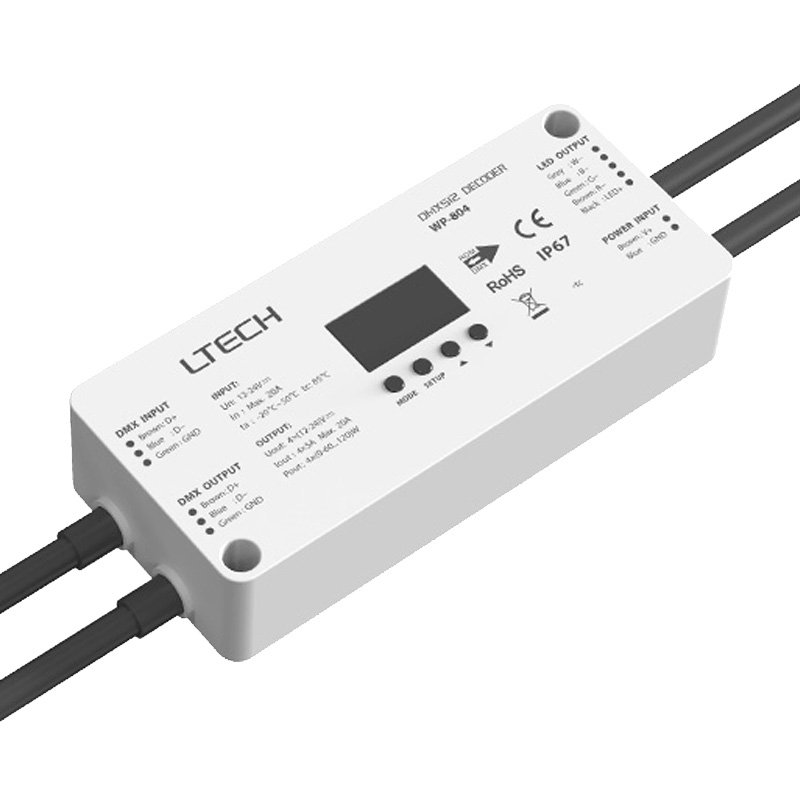
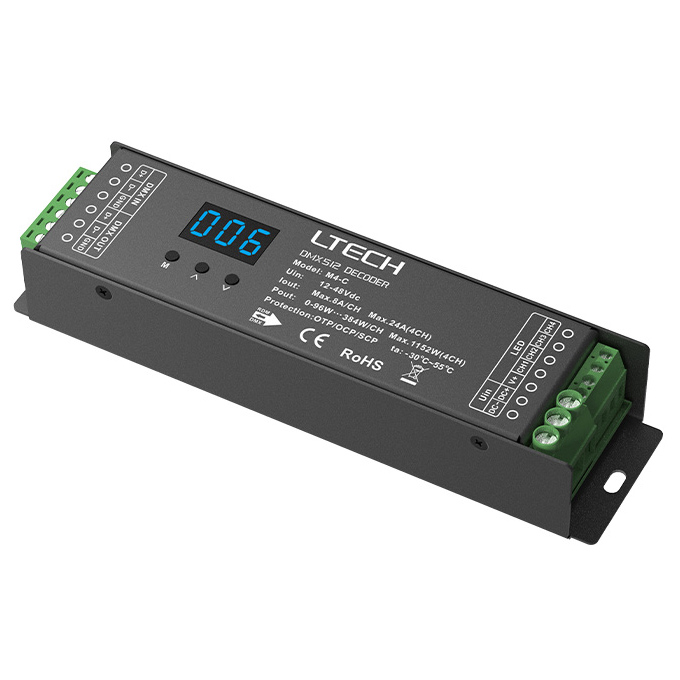
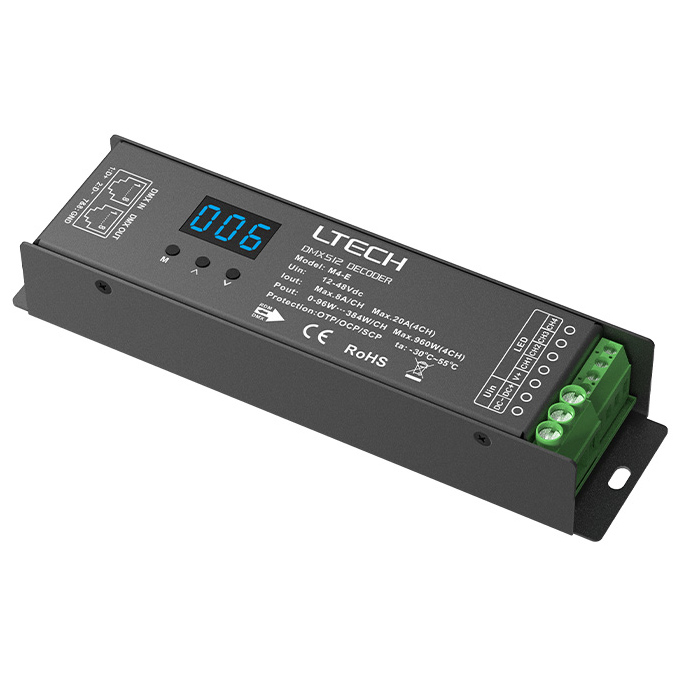
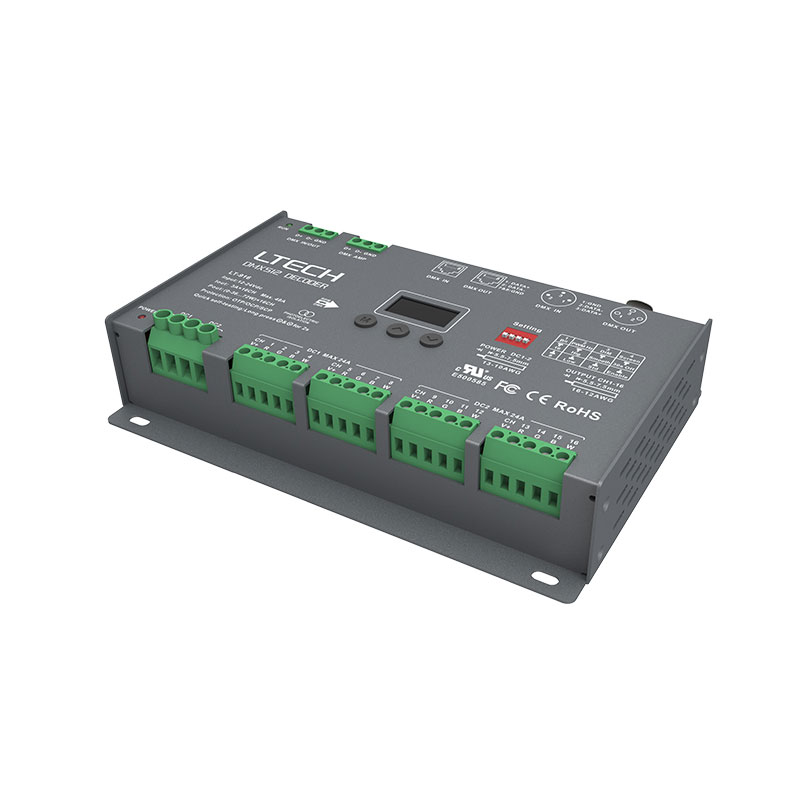
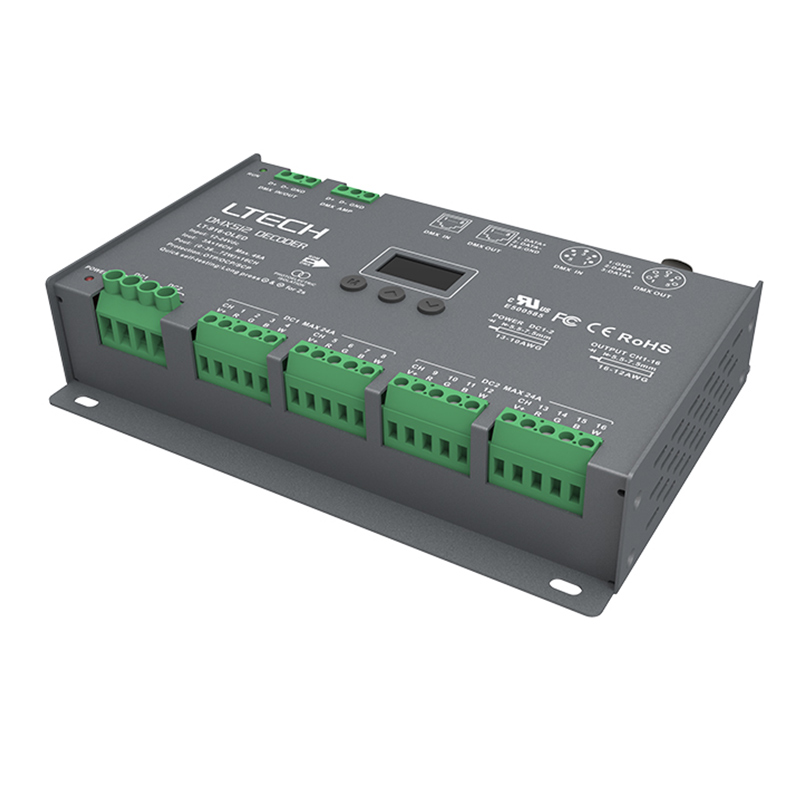
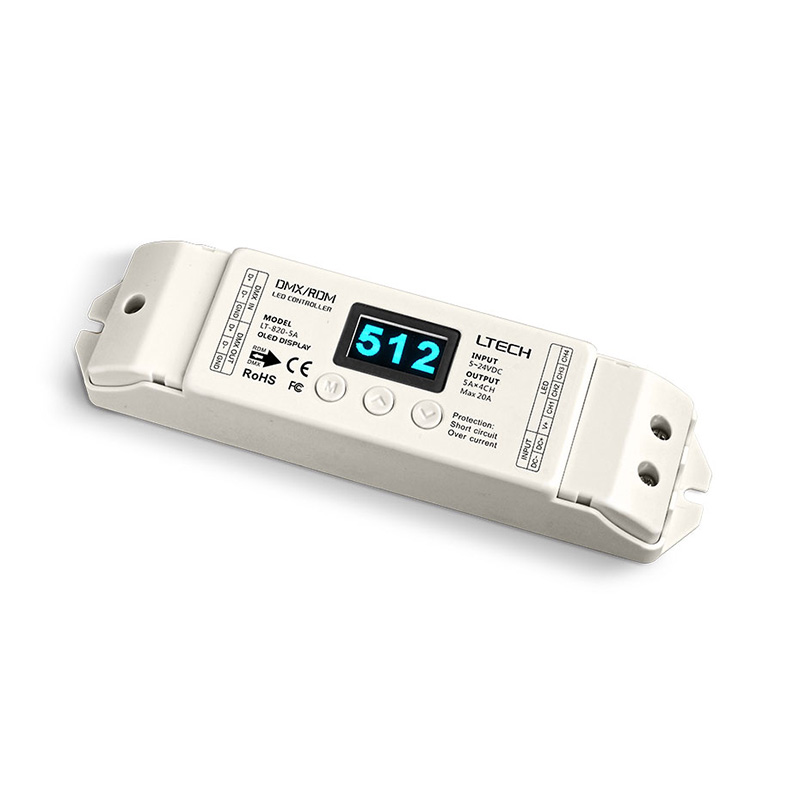
4CH 20A RGBW DMX Decoder LT-820-5A - Wireless DMX512 Control
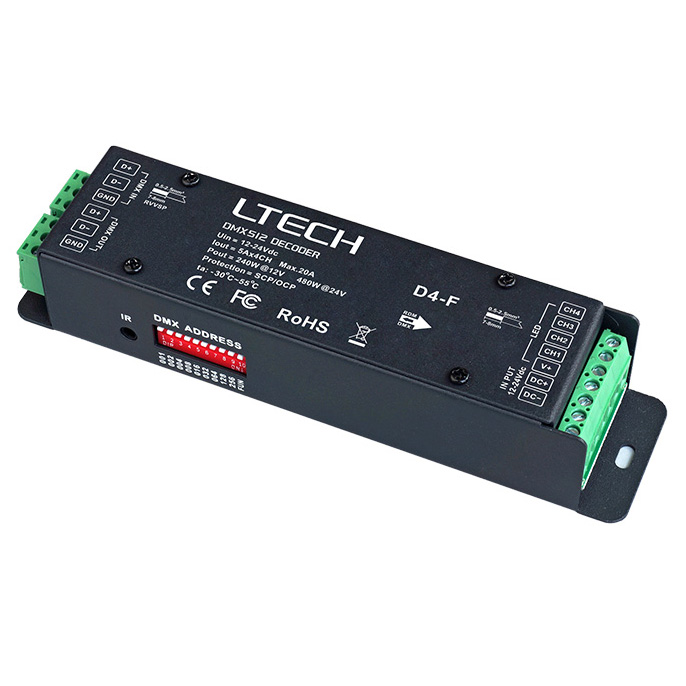
LT-858-5A (D4-F) 4CH LED Strip CV DMX Decoder
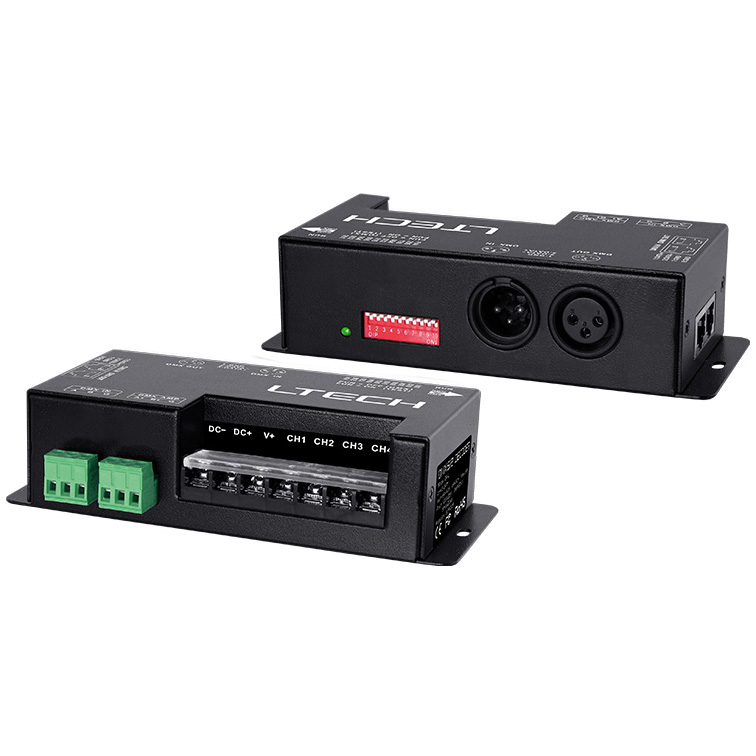
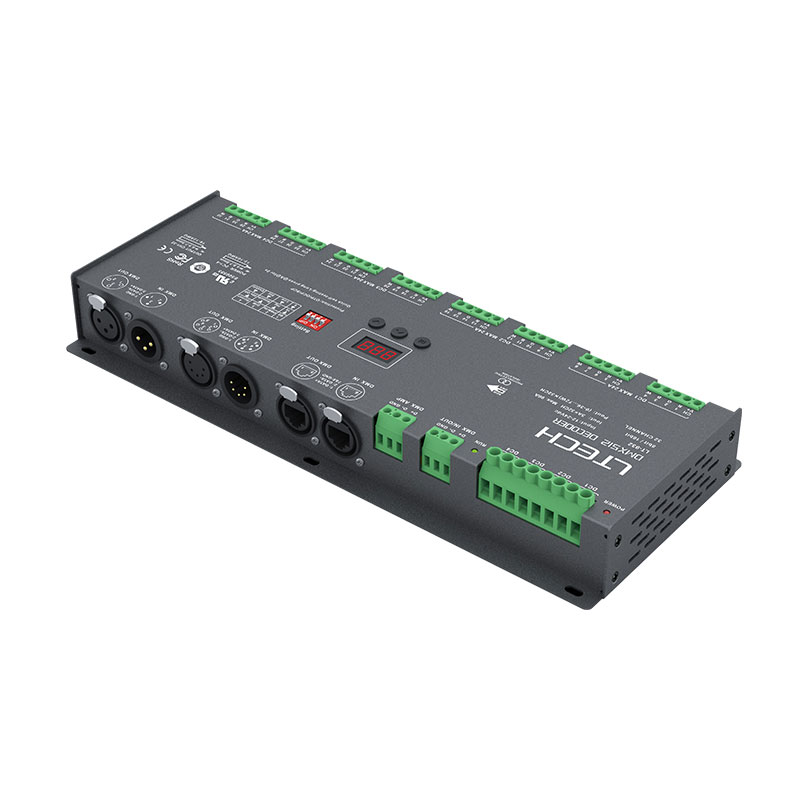
LT-932 32-Channel DMX LED Decoder - 2304W High Power RDM Control
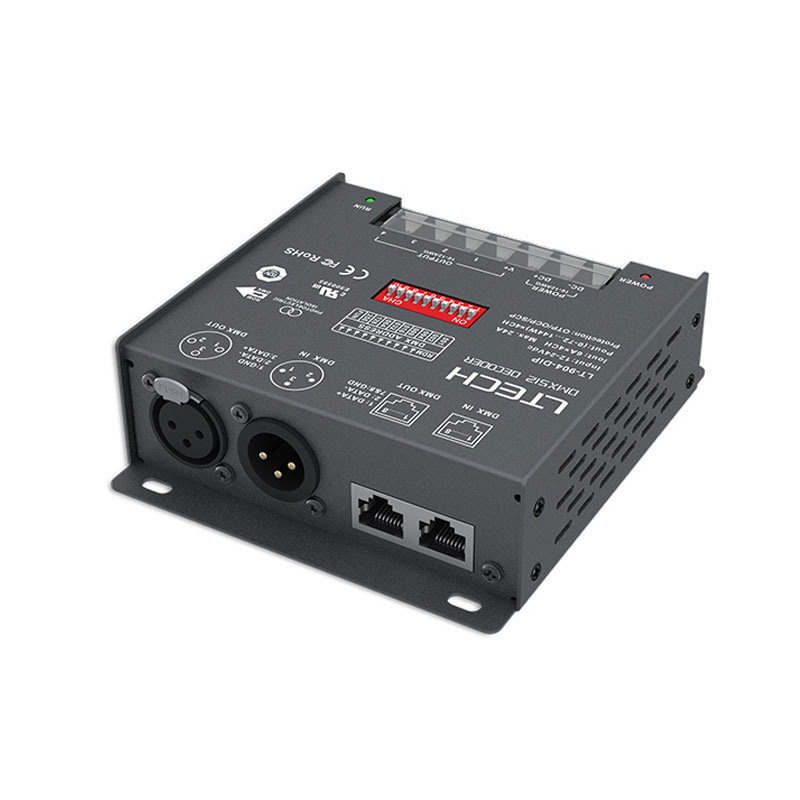
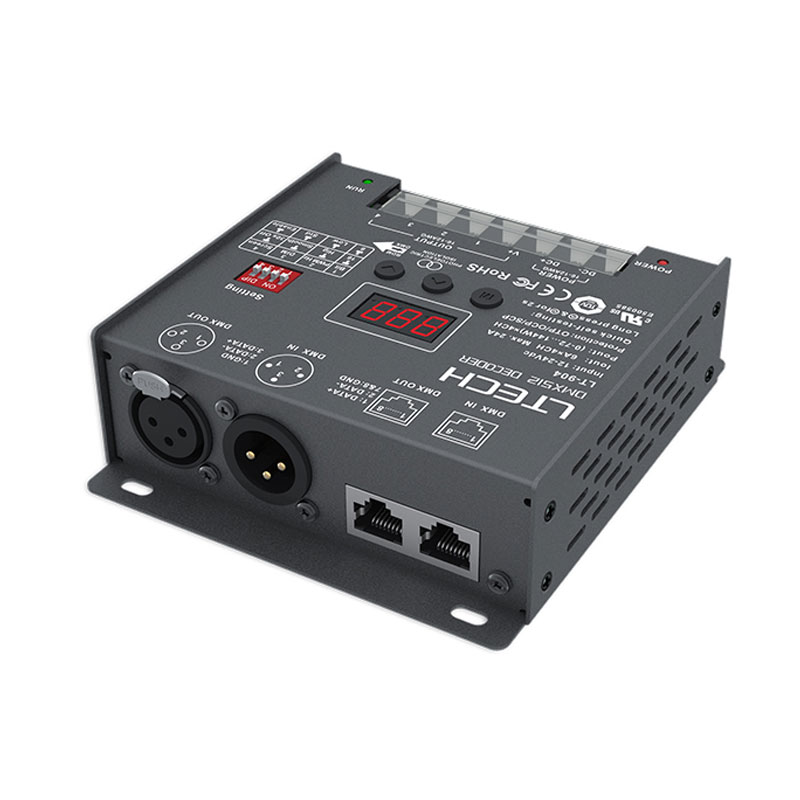
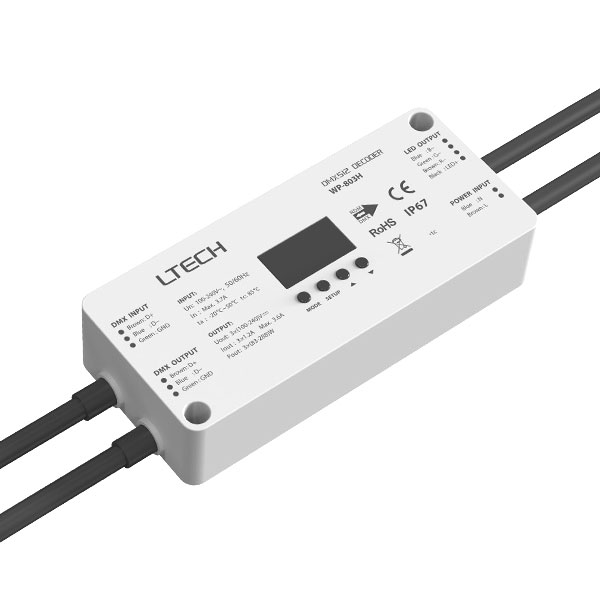
WP-803H 3CH High Voltage LED DMX512 RDM Decoder Outdoor
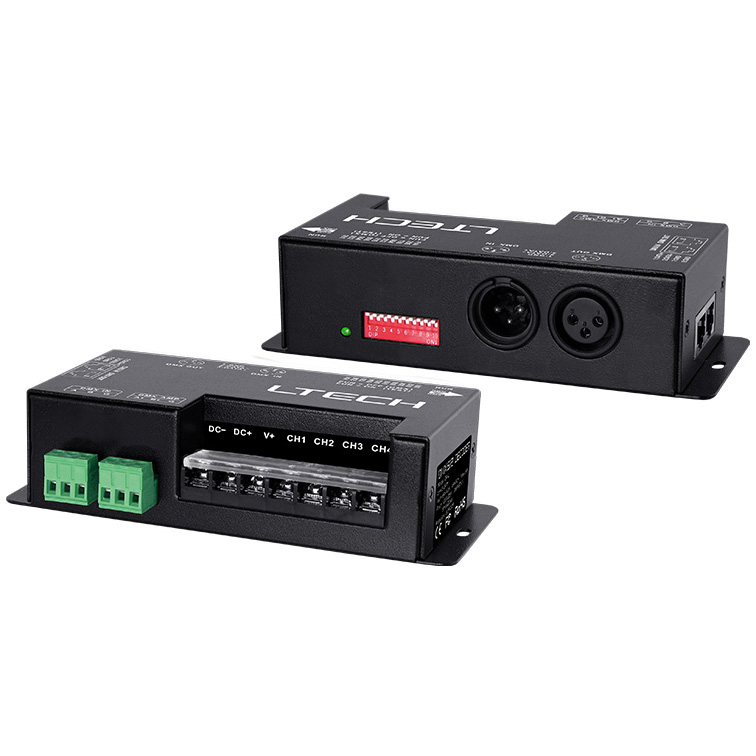
DMX512 Decoder D4-L (LT-830-8A) - RDM Protocol, 24A Max | LED RGB Dimmer
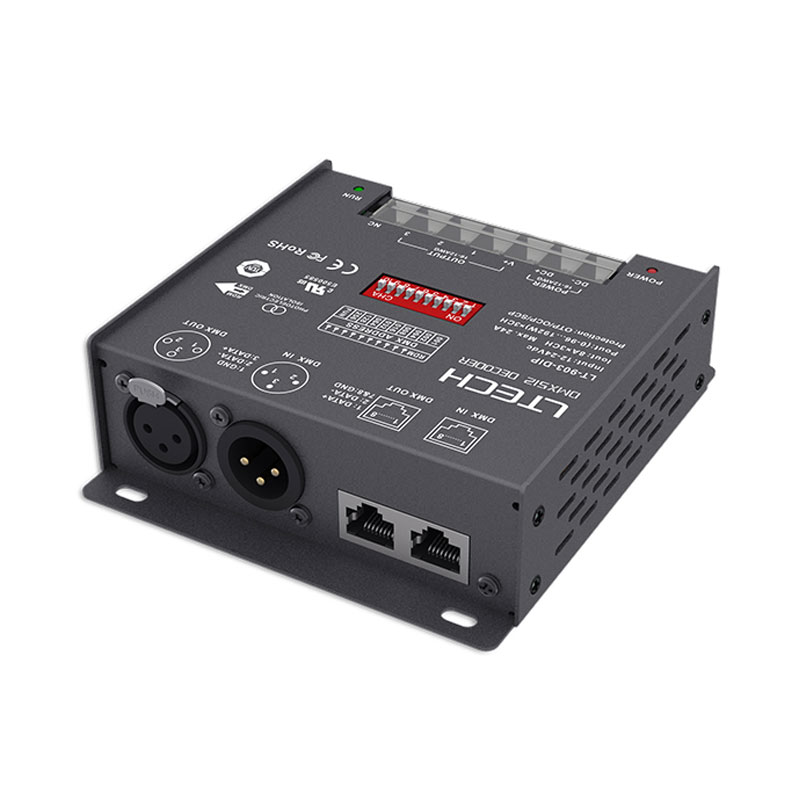
What Can a CV DMX512 Decoder Control?
Constant voltage DMX decoders are primarily designed for PWM-controlled constant-voltage LED lighting strips and fixtures.
The required number of output channels depends on the type of LED light:
- Single Color —— Typically requires one control channel (1 per strip) for brightness adjustment.
- Tunable White / CCT —— Uses separate warm-white and cool-white channels (2 per strip) to adjust both brightness and color temperature.
- RGB —— Uses red, green, and blue channels for color mixing.
- RGBW —— Adds an independent white channel to RGB (4 per strip) for cleaner white light and greater color flexibility.
- RGB+CCT / RGBCCT / RGBWW —— Uses separate RGB, warm-white, and cool-white channels (5 per strip) for full-color and tunable-white control.
Multi-channel DMX decoders can also control several independent single-color circuits or multiple lighting zones from one device, depending on the channel configuration.
How to Choose a CV DMX512 Decoder
1. Match the LED Operating Voltage
Start with the operating voltage of your LED strip or fixture. A constant-voltage DMX decoder does not normally convert one DC voltage into another. The power supply, decoder, and LED load should therefore be selected for compatible operating voltages.
For example, a 24V LED strip should normally be paired with a suitable 24V power supply and a decoder that supports 24V operation.
Always check the individual decoder specifications before installation, as supported input and output voltage ranges vary between models.
2. Choose the Correct Number of Channels
The LED type determines how many control channels are required. A simple single-color installation may only need one channel, while RGB, RGBW, and RGB+CCT lighting require additional independent outputs.
LTECH also offers higher-channel-count DMX decoders for larger installations, multiple zones, or projects where several lighting circuits need to be controlled from a single decoder.
Choosing an appropriate channel count can simplify wiring and reduce the number of separate devices required in a larger DMX installation.
3. Check Output Current and Total Load
Channel count alone is not enough. The decoder must also be able to handle the electrical load connected to each output.
Calculate the wattage or current of the LED strip connected to each channel and compare it with:
- - maximum current per channel
- - total decoder output current
- - operating voltage
- - maximum supported output power
For long LED strip runs or high-power installations, the lighting load may need to be divided between several decoders or expanded with compatible power repeaters.
The power supply should also be sized independently according to the total LED load and installation requirements.
4. Consider Dimming Resolution and PWM Frequency
For applications where very smooth dimming, low-level brightness performance, cameras, or professional architectural lighting are important, decoder performance goes beyond channel count and power.
LTECH models provide 8-bit or 16-bit dimming, adjustable PWM frequency, and different dimming curves or response settings.
Higher dimming resolution can provide finer brightness transitions, while adjustable PWM frequency can be useful when matching the lighting system to different application or camera requirements.
Check the specifications of the individual decoder when these features are important to your project.
Build the Right DMX-to-PWM Lighting System
In addition to LTECH, SuperLightingLED also offers constant-voltage DMX decoders and related lighting-control products from other professional controller brands, including SkyDance, MiBoxer / Mi-Light, SunRicher, BinColor, LeyNew, as well as SuperLightingLED controller series.
Different brands may offer different combinations of channel count, output current, RDM support, dimming resolution, PWM frequency, wireless functions, enclosure style, waterproof protection, and user interface. If a particular LTECH decoder does not match your project requirements, you can compare compatible DMX-to-PWM solutions across our other controller collections.
When comparing brands, start with the same key requirements: LED voltage, number of channels, current per channel, total load, DMX/RDM compatibility, installation environment, and control features. This makes it easier to select the right decoder without changing the basic lighting-system architecture.
SuperLightingLED provides multiple DMX control ecosystems so you can choose the most suitable combination of master controller, decoder, driver, signal device, power supply, and LED lighting for your project.
Frequently Asked Questions About CV DMX512 Decoders
Your DMX questions, answered by engineers. Here’s what you need to know before you buy.
A DMX decoder takes a DMX signal and converts it to a low-voltage PWM signal to control an LED strip. It sits *between* your main power supply and the strip, acting as a translator. A DMX driver is an all-in-one unit that has the power supply and the DMX control built-in. Decoders give you more flexibility to choose your own power supply, while our CV DMX dimmable drivers simplify the parts list.
It depends entirely on your LED strip. Use a 3-channel (3CH) for standard RGB strips. You'll need a 4-channel (4CH) for RGBW strips (that's Red, Green, Blue, and a separate White channel). A 5-channel (5CH) is for RGBCCT strips, which have RGB plus two separate white channels for tunable white. Using the wrong one means you won't be able to control all the colors on your strip.
Most of our current Ltech CV DMX512 decoders use a digital display and buttons, which is much easier than the old dip switches. You just press the buttons to set the starting address for that decoder. Many models also support RDM (Remote Device Management), which lets you set the address remotely from a compatible DMX master controller, a huge time-saver on big jobs.
Yes, absolutely. As long as the power supply's total wattage is enough for all the decoders and connected LED strips, you can run them from a single PSU.
It's all about dimming smoothness. An 8-bit decoder gives you 256 steps of brightness for each color. A 16-bit decoder gives you 65,536 steps. On a slow, smooth fade to black, you might see the 'stepping' with an 8-bit decoder. For professional theater or architectural jobs where the dimming curve has to be perfect, 16-bit is the way to go. Models like our M4-C and M4-E support both.
You choose a CV (Constant Voltage) decoder because you're using CV LED strip lights, which is by far the most common type. These strips have resistors built-in and require a steady voltage (e.g., 24V). Constant Current (CC) decoders are for high-power LEDs or special CC strips that don't have onboard resistors. Mismatching them will destroy the strip. We have a whole separate category with 11 different CC DMX decoders for those specific jobs.
Yes, but you must use a model with the right IP rating. For outdoor or damp locations, you need a waterproof decoder. We have models like the WP-803H and WP-804 which are IP67-rated. This means they're fully protected against dust and can be temporarily submerged in water. Using a standard indoor decoder (like an IP20 model) outside will lead to failure from moisture, usually pretty quickly.
The DMX512 standard allows for up to 32 devices in a single 'daisy chain' before the signal starts to degrade. If you need to connect more than 32 decoders, you should use a DMX signal amplifier or a splitter to create a new, separate run. This keeps the signal strong and reliable across your entire installation. Our DMX control guide covers this in more detail.
Yes, we specialize in high-density applications. Instead of using a dozen separate 4-channel decoders, you can use a single high-channel-count unit to simplify wiring. We list decoders with 8, 12, 16, 24, and even 32 channels. This massively reduces the number of components and failure points in your electrical cabinet.
Yes, you can bridge the two worlds. We offer specific models like the B5-DMX-4A-S that have both Bluetooth and DMX inputs. For other decoders, you'd use a wireless gateway, like a WiFi-to-DMX or ArtNet-to-DMX controller, which receives the wireless signal and outputs a standard wired DMX512 signal to the decoder's input.
This happens when the output channels are wired incorrectly to the strip. For example, you might have the Red wire from the strip connected to the Green terminal on the decoder. Double-check that your R, G, B, W, and V+ wires from the strip are connected to the matching R, G, B, W, and V+ terminals on the decoder output. It’s a common mistake and an easy fix.