
SK9822 IC Programmable LED Strips
5 productsSK9822 is an RGBIC chip built into SMD5050 RGB LEDs. SK9822 is differentiated from SK6812, WS2812B, and WS2815 in that it has an SPI DATA signal wire as well as an additional CLOCK wire that allows for more precise control of each LED of the strip light. Our SK9822 LED strip has a full range of LED density options (30 60 72 144), waterproof IP rating options (IP20 IP65 IP67 IP68), and PCB color options (white black) to suit both indoor and outdoor addressable led strip lighting project needs.
If you're looking for a cost-effective alternative to APA102 strips, our SK9822 LED strips are engineered for that exact spot. They use the same 4-wire SPI protocol (positive, ground, data, and clock), which makes them a drop-in replacement in many projects. The core difference comes down to the chip's internal PWM (Pulse Width Modulation) frequency: SK9822 runs at 4.7kHz, while the genuine APA102 Programmable LED Strips run at a much higher 19kHz. For most visual applications like accent lighting, signage, or architectural highlights, you won't see a difference, but you'll notice the lower price.
SK9822 vs APA102 vs APA107 vs HD107 vs HD107s vs HD108
SK9822 Datasheet PDFSK9822 DATASHEET648 KB
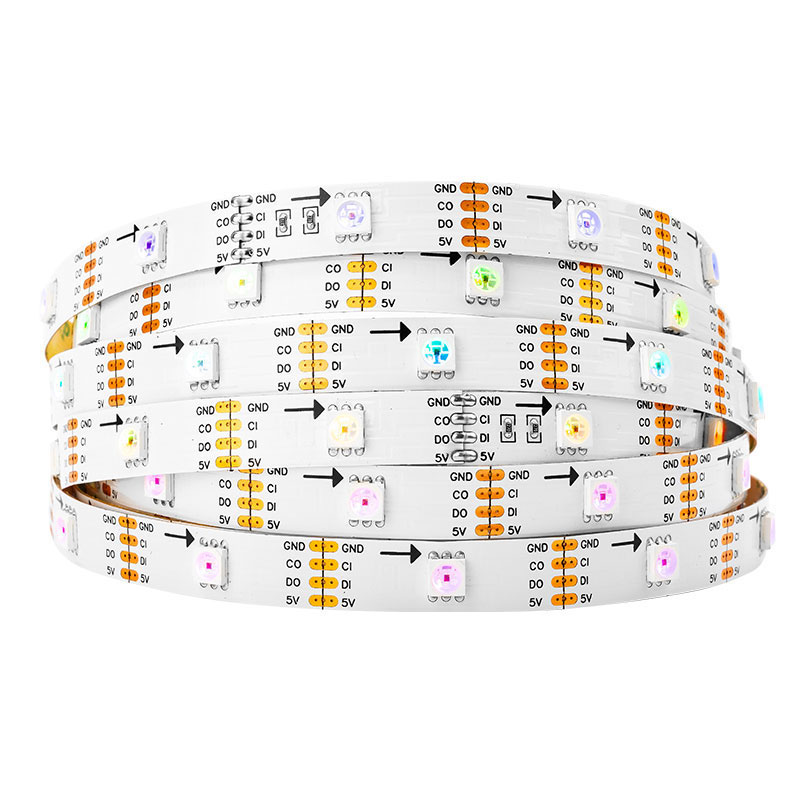
SK9822(Similar to APA102) RGB 30LEDS/M DC5V 10MM-Wide Digital Intelligent Addressable LED Strip Lights - 5m/16.4ft per roll
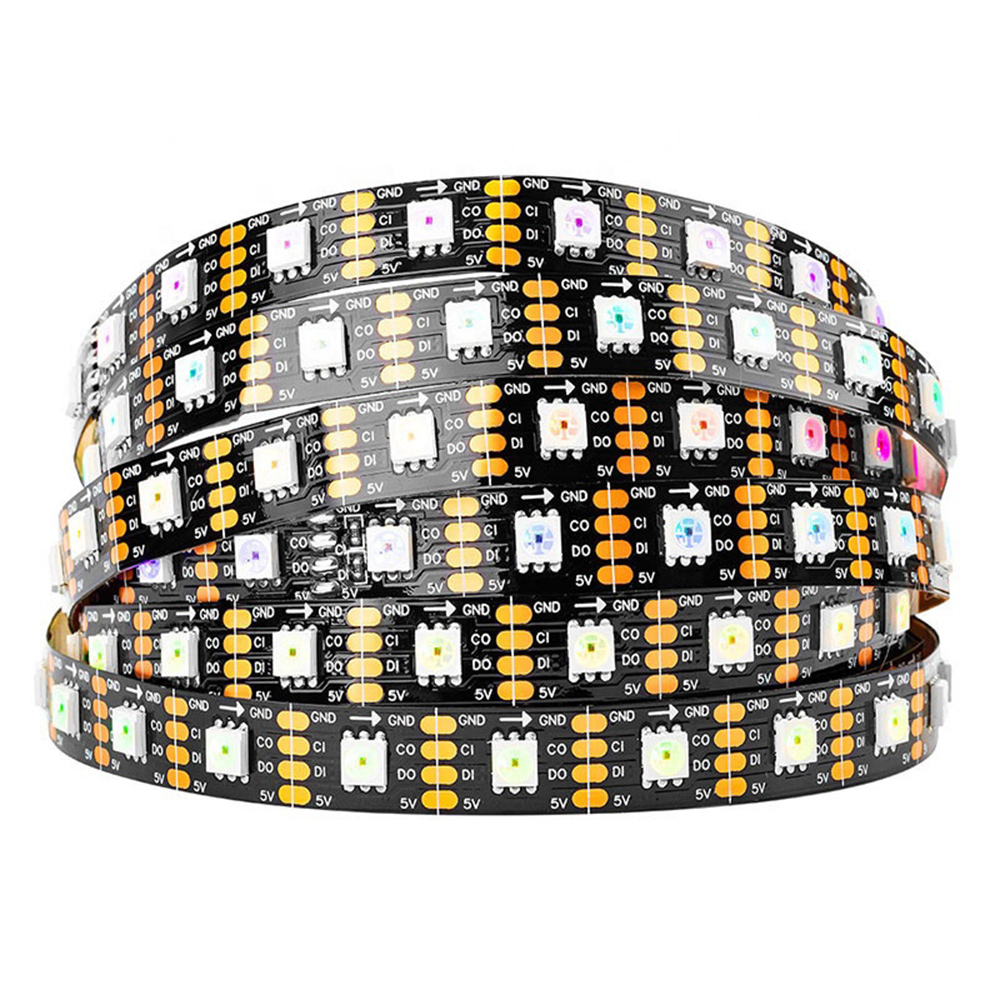
SK9822(Similar to APA102) RGB 60LEDS/M DC5V 12MM-Wide Digital Intelligent Addressable LED Strip Lights - 5m/16.4ft per roll
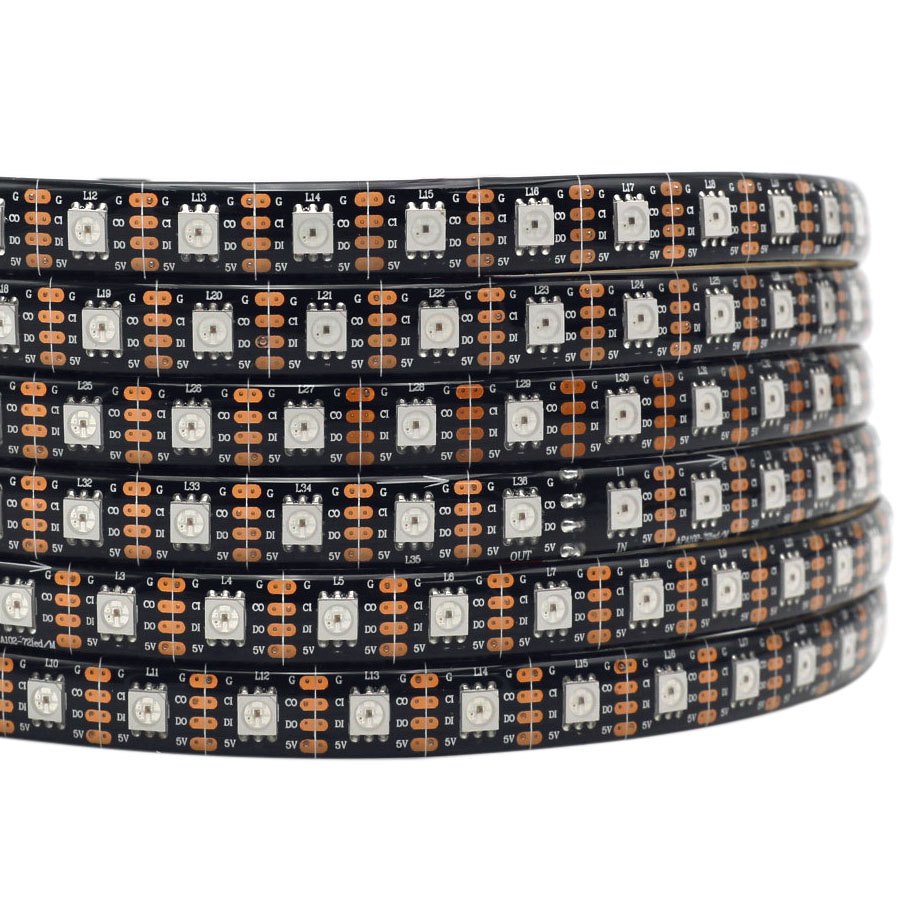
Individually Controlled 72LEDs/m SK9822 RGB LED Strip (Data + Clock)
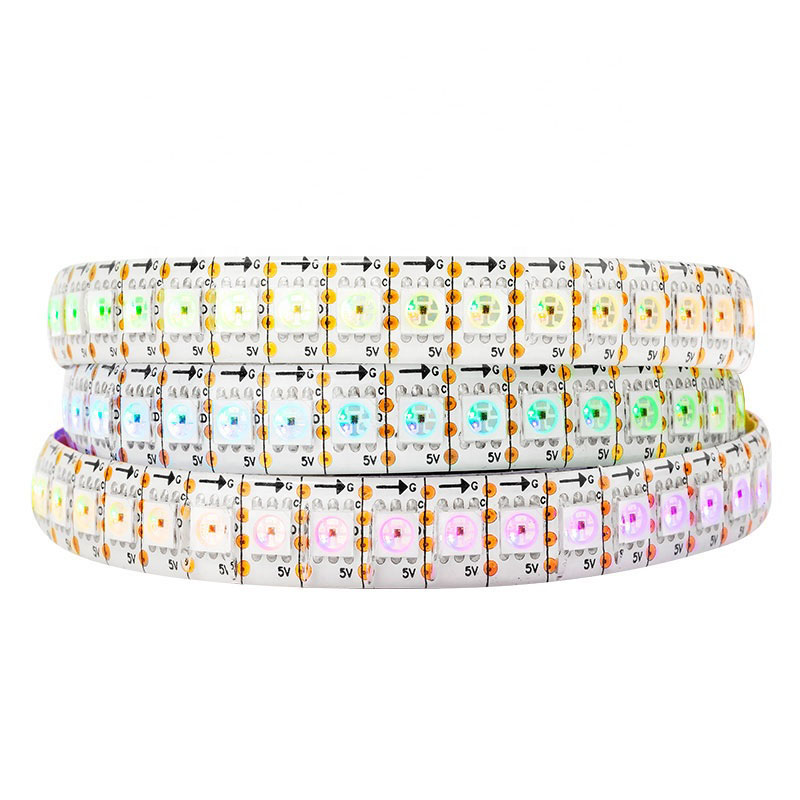
SK9822(Similar to APA102) RGB 144LEDS/M DC5V 12MM-Wide Digital Intelligent Addressable LED Strip Lights - 1m/3.28ft per roll
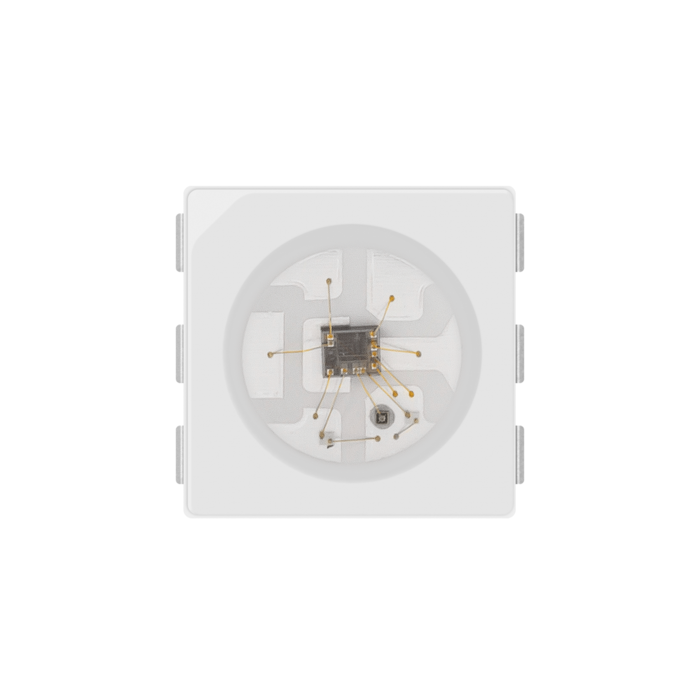
SK9822 RGB 5050SMD Digital Intelligent Addressable LED Chip, DIY LED Chip, 500PCS By Sale
SK9822 vs. APA102: Which is the right choice?
The decision almost always comes down to your application's sensitivity to refresh rate versus your budget. While SK9822 is compatible with APA102 controllers and libraries, the lower PWM frequency can become visible in specific scenarios like high-speed photography, video recording, or persistence-of-vision (POV) displays. For the vast majority of projects, SK9822 offers nearly identical visual performance at a better price point.
This table breaks down the key technical differences.
| Specification | SK9822 | APA102 |
| PWM Frequency | ~4.7 kHz | ~19 kHz |
| Visible Flicker | None to the naked eye; may appear in high-speed video | Effectively flicker-free, even for cameras |
| LED Chip Size | 0.65 mm² | 1.0 mm² |
| Relative Cost | Lower | Higher |
| Best For | General purpose animated lighting, signage, hobbyist projects | Professional video backdrops, POV displays, light painting |
How to wire and control SK9822 strips
Getting your SK9822 strip running is straightforward thanks to its 4-wire design. You'll need a dedicated controller that can output a clock signal alongside the data signal. Many of our addressable dream color controllers are compatible, as are popular DIY platforms like Arduino or Raspberry Pi using libraries like FastLED (just select the APA102 chipset in your code). The wiring is simple: 5V to 5V, Ground to Ground, CI (Clock In) to your controller's clock pin, and DI (Data In) to the data pin.
Power is the most critical part of any addressable strip installation. All our SK9822 strips run on DC5V, and you must use a regulated DC5V power supply with enough amperage for your total run length. A common mistake is trying to power a long strip just from a controller's output; this will lead to dim, discolored LEDs. For any run longer than a few meters, you must inject power at multiple points to avoid voltage drop. You can learn more about this in our guide to wiring addressable strips.
Frequently Asked Questions About SK9822 LED Strips
Got questions before you spec your SK9822 project? I've answered the most common ones we get on the support desk right here.
The SK9822 is a functional APA102 replacement, but with a different internal PWM frequency. SK9822 runs at 4.7kHz, while the APA102 is much faster at about 19kHz. For most visual projects like cove lighting or signage, you won't notice a difference, which makes the SK9822 a more economical choice. For professional video or persistence-of-vision (POV) displays where you need to avoid any chance of camera flicker, stick with the faster APA102 strips.
That clock line is what makes SK9822 IC programmable LED strips so reliable. Unlike single-wire strips like the WS2812B that depend on very precise timing, the separate clock signal lets you send data much faster and more robustly. This is a huge advantage when you're using a microcontroller like an Arduino or Raspberry Pi that might be busy with other tasks. It just makes the whole system less prone to errors.
Any controller designed for APA102 strips will work perfectly with an SK9822 LED light strip. The protocol is compatible. This includes everything from simple standalone RF controllers to advanced DMX512 master consoles. On the DIY side, popular libraries like FastLED for Arduino and Adafruit's CircuitPython/Python libraries have built-in support for this chipset, usually under the APA102 name.
That's voltage drop, and it's the number one issue with 5V addressable strips. The SK9822 IC programmable LED strips all run on DC5V, and that low voltage has a tough time traveling down long copper traces. The resistance in the strip itself causes the voltage to decrease along its length, making the LEDs at the end dimmer. It's not a fault; it's just physics.
For any 5-meter reel of SK9822 LED tape, plan on powering it from both ends right from the start. The high-density version will need power injection even more frequently, sometimes every 2-3 meters, to maintain full brightness and correct color.
Yes, you can. Every SK9822 LED tape light has copper pads between each LED, right on the cut line. Just snip it with a pair of sharp scissors. To rejoin them, you'll need to carefully solder four wires (+5V, Clock, Data, Ground) to those little copper pads, or use some 4-pin solderless LED connectors.
Yes, for the vast majority of projects, the SK9822 is an excellent, economical APA102 replacement. It gives you the same benefits of a two-wire (data and clock) signal for high-speed, reliable control over individual pixels. Unless you are shooting high-speed video where its lower PWM frequency might be a factor, it performs identically for a better price. We see it specced all the time in large-scale architectural and entertainment jobs.
Sometimes, yes. The SK9822 has a PWM refresh rate of 4.7kHz. While that's invisible to the naked eye, some digital cameras with specific shutter speeds can pick it up as a rolling band or flicker. If your project involves any kind of video recording, we strongly recommend using a true APA102 strip instead, as its ~19kHz refresh rate is high enough to be safe for almost any camera.
It depends on how you'll see the strip. For indirect accent lighting where the strip is hidden, 30 or 60 LEDs/meter is usually fine. If the strip itself will be visible, or you want very smooth animations for things like light sabers or art pieces, the 72 or 144 LEDs/meter strips will give you a much less 'spotty' look. Just remember that doubling the density more than doubles the power consumption.
Yes, absolutely. A huge portion of what we ship is built to customer drawings and never appears on the website. Send us your requirements—even a photo of a napkin sketch—showing the lengths of each SK9822 strip segment and the wire lengths you need in between. We can pre-solder custom leads with specific connectors like JST-SM or waterproof barrels, and seal them to your required IP rating. We'll send back a full BOM and quote, usually within 12 hours, with no obligation to order.