
DMX Controller & Driver
4 sub-categoriesThe BinColor DMX Control System provides versatile DMX512 lighting control solutions for DIM/CCT/RGB/RGBW/RGBWY LED strips, DIM/CCT/RGB/RGBW constant current LED fixtures, and professional lighting installations.
Its control functions include time-based programming and scheduling, Art-Net and E1.31 (sACN) network control, offline playback, RDM remote device management, built-in lighting program selection, DMX signal enhancement and amplification, and to manage 0-10V lighting. Explore the BinColor DMX series at SuperLightingLED to find the right solution for your DMX lighting project.
What Can You Find in the BinColor DMX Control System
- - DMX Controllers: Generate and output DMX512 control signals to compatible LED fixtures and DMX decoders, serving as the central control source for your lighting system.
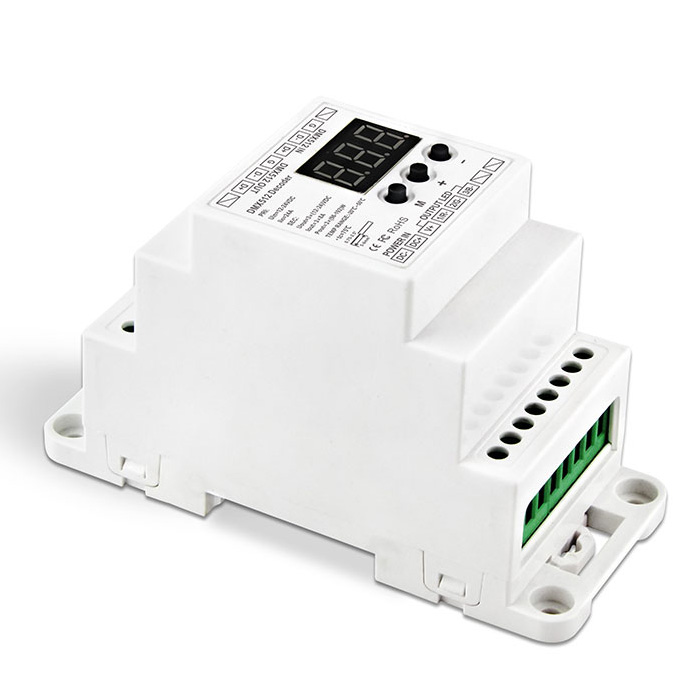
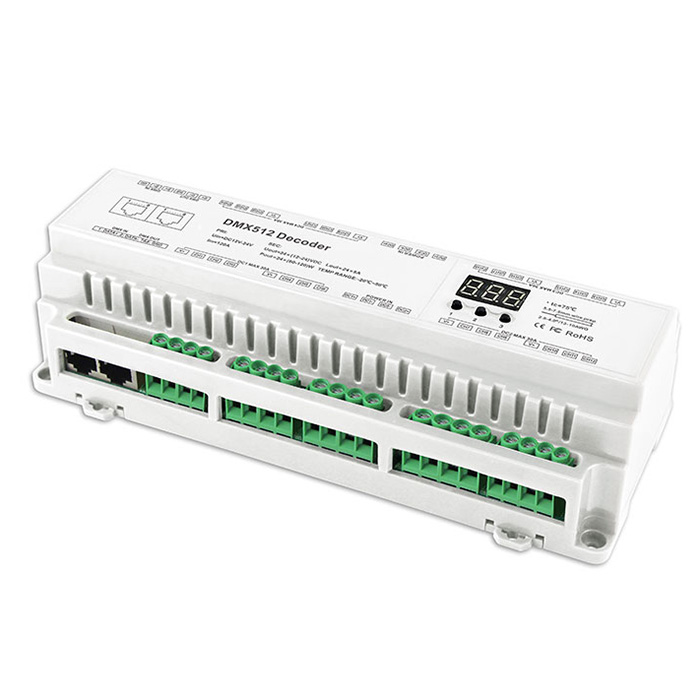
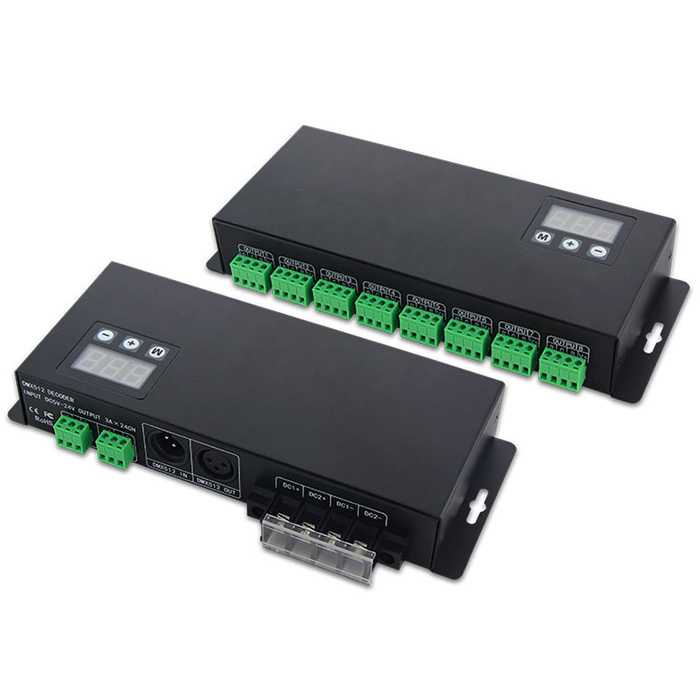
- - DMX CV Decoders: Receive DMX512 signals and convert them into PWM outputs to control constant voltage LED strips, with default or adjustable PWM output frequencies ranging from 1kHz–8kHz or 3kHz–24kHz, depending on the model.
- - DMX CC Decoders: Provide DMX512 dimming and control for constant current LED fixtures, with available output current options of 350mA, 500mA, 700mA, 750mA, and 1050mA, depending on the model.
- - DMX Signal Drivers & Converters: Regenerate, boost, and distribute weakened DMX512 signals to help maintain reliable signal transmission across larger lighting systems. Selected models can also convert DMX512 signals into 0-10V analog control signals for compatible dimmable LED drivers and fixtures.

DMX Controller
The BinColor DMX Controller Series is designed for lighting projects that require centralized control through the DMX512 protocol. These controllers directly output 1, 2, or 4 channels (DMX universes) of standard DMX512/1992 signals, allowing you to control DMX-compatible LED fixtures directly or send control commands to DMX decoders for operating LED strips and lighting fixtures.
Depending on the model, you can manage your DMX lighting system through Art-Net over Ethernet for network centralized control, or use the controller's built-in programs and local interface for direct operation. Many models feature physical buttons and LCD/TFT displays for selecting lighting programs, adjusting parameters, and configuring control settings. Selected models also offer wireless remote control for added convenience.
Whether you need computer-based network control, preset lighting effects, scheduled operation, or straightforward local control without a separate computer, SuperLightingLED BinColor DMX Controllers provide flexible control options for residential, commercial, architectural, and professional lighting projects.
Choose a suitable DMX light controller according to the number of DMX outputs, network control requirements, built-in functions, and the DMX devices you plan to operate.

DMX CV Decoder
BinColor DMX Constant Voltage (CV) Decoders – DMX to PWM LED Strip Control
The BinColor DMX CV Decoder Series receives standard DMX512/1990 digital control signals from a DMX master controller and converts them into PWM signals required by LED strip lights and constant-voltage lighting fixtures. This allows flexible LED strips to be integrated into a centralized DMX lighting control system for synchronized dimming, color adjustment, and multi-channel lighting control.
Depending on the model, output channel configuration, and load capacity, a single BinColor DMX CV Decoder can connect to and control multiple LED strip runs, supporting configurations such as:
- 1–40 Runs of Single-Color (DIM) LED Strips: For independent or synchronized brightness control.
- 1–20 Runs of Dual-White (CCT) LED Strips: For warm white and cool white adjustment.
- 1–8 Runs of RGB LED Strips: For full-color mixing through red, green, and blue channels.
- 1–8 Runs of RGBW LED Strips: For RGB color mixing with a dedicated white channel.
- 1–8 Runs of RGBCCT LED Strips: For RGB colors combined with warm white and cool white channels.
The actual number of connectable LED strip runs depends on the DMX decoder's output configuration, current rating per channel, total power capacity, and wiring arrangement. Multiple lighting strips connected to the same output channel will operate together rather than as independently addressable zones.
Most BinColor DMX CV Decoders are designed for DC12V–24V LED strips and fixtures, some can also support wider voltage ranges such as DC5V–24V and DC12V–36V, providing more flexibility for different low-voltage LED lighting installations. Always match the DMX decoder's working voltage with the rated voltage of your LED strips and power supply.

DMX CC Decoder
The BinColor DMX Constant Current (CC) Decoder Series is designed to control constant-current LED fixtures through a DMX master controller. It receives DMX512 control signals and converts them into constant current outputs, allowing you to centrally control the brightness and color of compatible LED fixtures through a DMX lighting system.
Depending on the model, these BinColor DMX CC decoders support 1–4 channels of single-color dimming, 1–2 channels of CCT tunable white control, or 1 channel of RGB or RGBW color control. Available output current options include 350mA, 500mA, 700mA, 750mA, and 1050mA, providing flexibility for different constant current LED fixtures and lighting requirements.
Simply connect the decoder to a DMX master controller and configure the DMX starting address and corresponding output mode to match your lighting setup. Multiple decoders can be integrated into the same DMX system for centralized lighting control. Select the appropriate decoder according to your fixture's channel configuration, rated current, and wiring requirements.

DMX Signal Driver
The BinColor DMX Signal Driver Series includes two main types of products designed to extend, enhance, and convert DMX lighting control signals.
1. DMX Signal Amplifiers & Enhancers
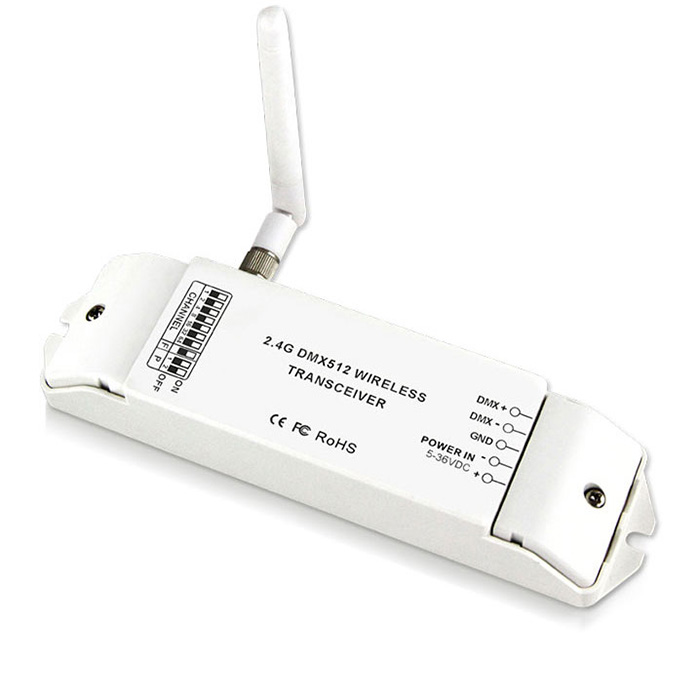
Available in both wireless and hardwired versions, these devices help amplify, regenerate, or extend DMX512 signals to improve signal transmission and support more reliable communication across DMX lighting systems. They are useful for installations with long cable runs, multiple DMX devices, or situations where additional signal distribution is needed.
2. DMX Signal Converters
These converters transform DMX512 digital control signals into other control signal formats, including 0-10V analog signals and 5V/10V PWM signals. They allow DMX lighting control systems to work with compatible 0-10V dimmers and controllers, PWM-controlled LED lighting products, and other lighting equipment that uses these signal inputs.
Depending on the model, an additional DC power supply may be required to support signal amplification or conversion. Always check the product specifications for compatible input/output signal types, wiring requirements, and DC power supply ratings before installation.
Best-selling DMX Controller & Driver
1–20 of 61 products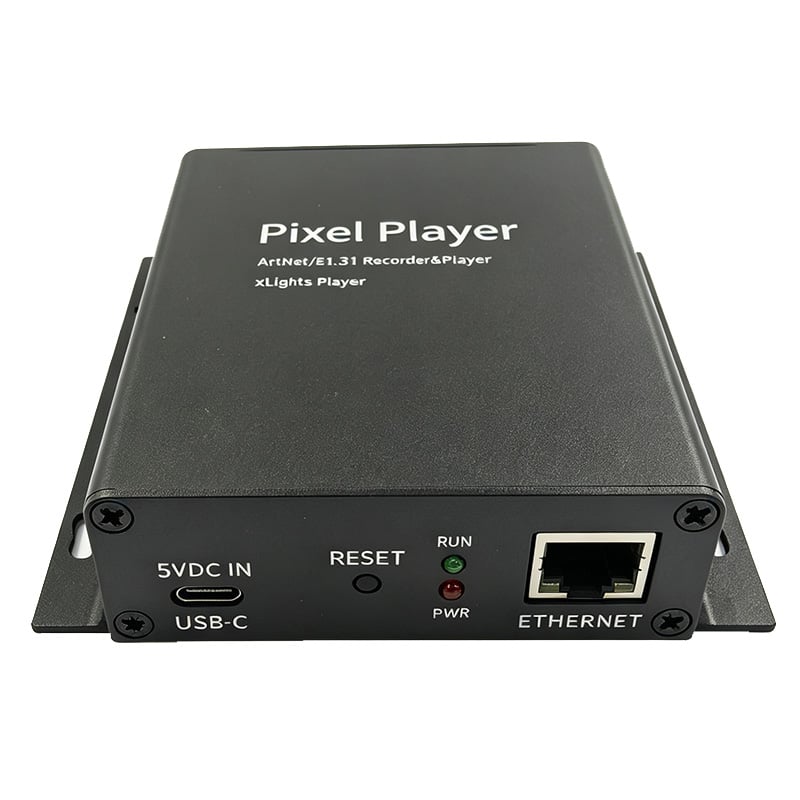









FAQ About DMX Controller & Driver
Direct answers to common wiring, addressing, and specification questions from our technical support desk.
A DMX controller generates the digital DMX512 communication signal, while a DMX decoder receives that signal and translates it into PWM voltage to dim your LEDs. The controller acts as the brain—originating channel values via buttons, faders, or programmed scenes—and the decoder acts as the muscle, taking DC power from your transformer and switching the negative rail on your LED strip. If you plug an LED strip directly into a controller, nothing will light up because the controller only sends 2.5V differential data down pins 2 and 3. You need both pieces unless your fixtures have integrated decoders on board. For a full breakdown of console architectures, see our DMX control guide.
A DMX lighting controller handles 512 individual control channels per universe, but actual strip footage is limited by decoder amperage rather than data addresses. For example, a 4-channel RGBW decoder rated at 5A per channel handles 20A total; at 24V, that equals 480W of lighting, or roughly 32 meters of 14.4W/m tape. If your job exceeds that wattage, you do not need a second controller—you simply daisy-chain additional decoders down the DMX line or place a constant voltage DMX decoder next to each regional power supply. One universe can easily run 128 separate 4-channel zones across an entire building floor if you budget your DC transformers properly.
Stuttering and phantom color flickers are almost always caused by missing termination or line reflections. DMX512 travels as an RS-485 balanced signal; when that data pulse reaches the last decoder on an unterminated run, it bounces back down the cable and collides with incoming packets. Fix this by placing a 120-ohm, 0.25-watt resistor directly across the D+ and D- terminals of your final unit. If the cable path exceeds 300 meters or carries more than 32 decoder loads, signal attenuation will degrade the packet stream. In that scenario, insert one of our optically isolated DMX splitters to reshape the wave and isolate dangerous ground loops between distant distribution boards.
Yes, a DMX light controller can manage commercial 0-10V or 1-10V ballasts by using a protocol converter like the BC-834-010V. That unit reads standard DMX512 slots from your console and outputs isolated analog 0-10V or 10V PWM signals across 4 separate output channels. This setup bridges theatrical or architectural consoles with commercial high-bay panels and architectural troffers that do not accept native serial data. Just keep in mind that pure 0-10V lines only transmit intensity; they cannot assign individual pixel colors or bidirectional telemetry like native DMX fixtures do.
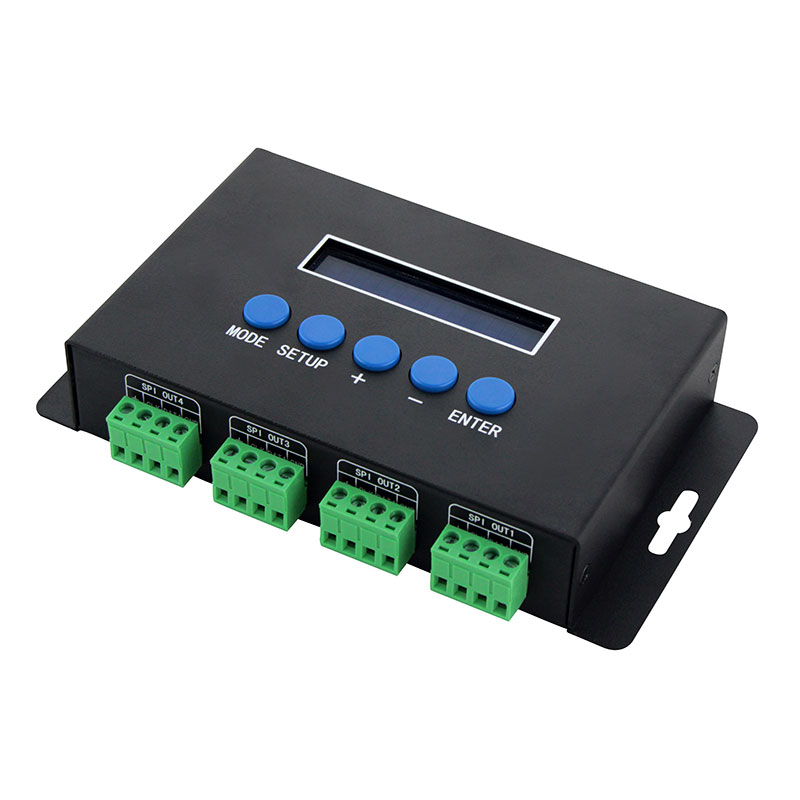
Ethernet DMX controllers route multi-universe packets across standard IP networks using Art-Net or sACN E1.31 protocols before converting them to physical DMX lines. Hardware like the BC-204-DMX512 mounts directly into your control cabinet, pulls data from software like MADRIX or xLights over an RJ45 switch, and breaks the network feed into 4 distinct physical DMX universes. That gives you 2,048 channels out of one compact box without lag. For reliable playback, set your host computer to a static IP on the 2.x.x.x or 192.168.x.x subnet, disable Wi-Fi to eliminate packet jitter, and use dedicated gigabit switches instead of standard office routers.
RDM (Remote Device Management) decoders let you discover devices and assign DMX start addresses remotely from your console over the existing signal line, eliminating physical dip-switch adjustment. On high ceiling coves, architectural facades, or recessed risers, climbing a 6-meter ladder just to toggle switch 6 from 32 to 64 is a massive waste of labor. With an RDM controller like our BC-800 or an RDM-ready desk, you simply query the network; every connected decoder reports its unique UID, lets you remap addresses, and monitors line telemetry directly from the ground.
Wiring a master controller DMX line requires a continuous daisy-chain topology: cable runs from the console to decoder 1 (DMX In), loops out of decoder 1 (DMX Out) over to decoder 2, and continues onward. Never create star taps, Y-splits, or T-junctions using terminal blocks. Star tapping splits the transmission line impedance, creating signal reflections that wipe out data packets to every downstream fixture. If your building layout physically forces runs in opposing directions from a central electrical closet, install an optically isolated multi-channel splitter to create multiple legitimate, isolated daisy-chains from a single input.