
Zigbee LED Controllers
7 products
Skydance Zigbee 3.0 Series LED Controllers offer a convenient, efficient, and customizable solution for controlling and managing LED strip lights. They allow Dimming/CCT/RGB/RGBW/RGBCCT LED strip lights to be easily controlled and managed through a smartphone, a smart speaker, or a Skydance Zigbee wireless remote or wall panel.
Skydance Zigbee LED Controllers can be integrated with other smart devices, allowing for seamless control of multiple devices and systems to create a larger smart home lighting system. With features such as dimming control, color temperature and color control, and scene management, Zigbee Constant Voltage LED Controllers provide users with a customizable and dynamic lighting experience.


Zigbee vs. Zigbee RF LED Controllers
When choosing a smart Zigbee LED strip light controller, it is important to distinguish between Zigbee-only controllers and dual-protocol Zigbee + RF controllers. Both can support smart lighting integration through a compatible Zigbee system, but their options for direct wireless remote control are different.
Zigbee Light Controllers with Zigbee Remotes or Wall Panels
A Zigbee-only LED controller in this series communicates through a compatible Zigbee network and can be controlled through a supported smart home app or compatible Zigbee remote and scene panel. With a suitable Zigbee gateway, you can adjust brightness, change color temperature, select colors, and incorporate compatible lighting into scenes and automation. This setup is ideal for users who want to manage their lighting as part of a broader Zigbee smart home system.
Zigbee RF Light Controllers with Compatible RF Remotes
Dual-protocol Zigbee + RF controllers provide two control paths in one device. Zigbee connects the controller to a compatible smart home network for app-based control and supported automation, while the separate 2.4GHz RF interface allows it to pair with a compatible RF handheld remote or wall panel.
Choose a Zigbee controller with a compatible Zigbee remote or scene panel when you prefer to manage lighting through your Zigbee smart home ecosystem. Choose a Zigbee + RF controller when you also want a separate RF remote for quick, direct lighting control.
Before purchasing, check the individual controller's supported protocols and remote compatibility. A Zigbee-only controller cannot directly pair with an RF-only remote.
FAQ About Zigbee LED Controllers
Direct engineering answers on wiring, voltage limits, gateway pairing, and load sizing for SkyDance Zigbee constant voltage receivers.
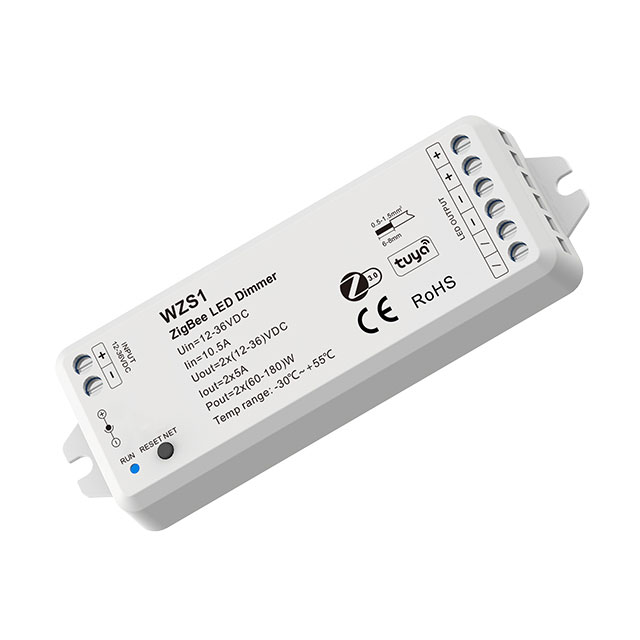
On a zigbee led controller 24v installation, the maximum wattage depends on whether you have a multi-channel unit like the WZS5 or a 2-channel dimmer like the WZS1. The 5-channel WZS5 handles 3A per channel for a combined 15A rating, delivering up to 360W total at 24V DC (72W per channel). The 2-channel WZS1 and WZS2 models provide 5A per channel (10A total), allowing 240W across two channels at 24V. To prevent heat buildup in continuous runs, we recommend leaving a 20% safety margin on the connected LED strip lights rather than operating at continuous maximum load.
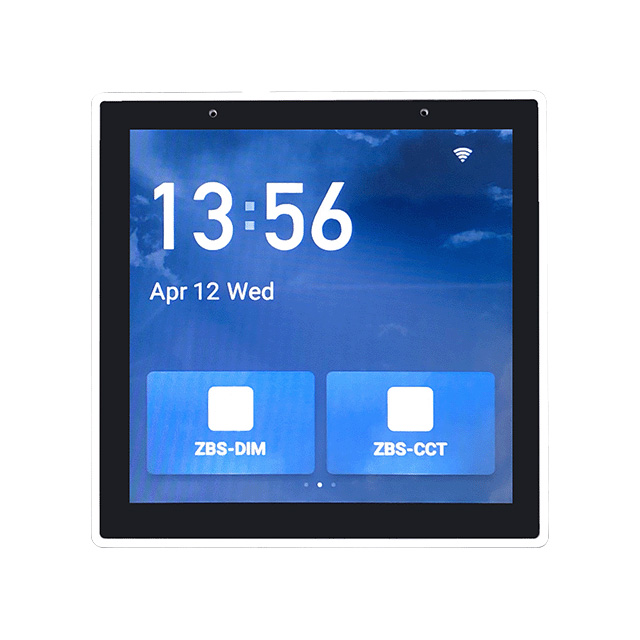
The TWZS1 smart home panel has an integrated Zigbee 3.0 gateway module, so you can pair downstream receivers directly without purchasing an external hub. It runs on 100-240V AC line power and coordinates up to 100 sub-devices over Zigbee while connecting to your local Wi-Fi router for Tuya app and voice assistant synchronisation. If you already have standard wall switches and want hidden equipment, you can skip the touch screen and pair receivers using our standalone tuya zigbee mesh gateway instead. Both communicate over the standard 2.4GHz mesh to keep network hops responsive.
Yes, every standard zigbee 3 0 led controller in this line uses standard ZLL and ZHA profiles, pairing directly with Philips Hue Bridge v2, SmartThings, and Homey. To pair with Philips Hue, open the Hue app, choose light search, and power-cycle the controller three times or hold the match button for 5 seconds until the status indicator flashes. The bridge recognises single-color models as dimmable lights, WZS2 as extended color temperature lights, and WZS5 as extended color lights. Note that Hue entertainment zones and sync box dynamic video tracking require official Hue fixtures, but standard scenes and app schedules work normally.
When a zigbee 3 0 led controller drops connection after your Wi-Fi router restarts, 2.4GHz channel overlap is almost always the culprit. Wi-Fi channels 1, 6, and 11 overlap heavily with Zigbee channels 11 through 24; if your home router reboots and automatically shifts Wi-Fi channel to Channel 11, it can drown out weak Zigbee signals. Lock your 2.4GHz Wi-Fi router permanently to Channel 1 or 6 with a 20MHz channel width, and keep your Zigbee network on Channel 25. Because these constant-voltage controllers operate as Zigbee router nodes that repeat packets, maintaining clean RF spectrum ensures uninterrupted mesh transmission.
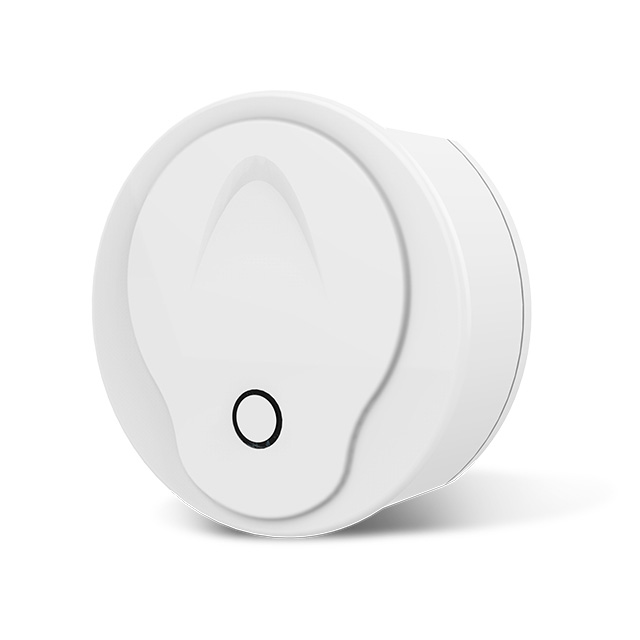
You can bind a battery-powered wall remote directly via Touchlink or pair both devices to the same Zigbee gateway. While the controllers in this category manage the DC dimming output, our zigbee scene panels and remotes provides wall-mounted control without running low-voltage copper down your drywall. Once both the zigbee led controller 24v unit and the wall transmitter join your hub, assign them to the same room or group inside the Tuya or Smart Life app. The panel then triggers on/off, dimming, and color scenes over the Zigbee mesh even if your home broadband goes down.
A triple flash followed by a shutoff indicates the receiver has triggered internal over-current or short-circuit protection. Check the output screw terminals first: a single stray copper strand bridging the positive bus and a color channel terminal will trip the protection circuit instantly. If the wiring is clean, calculate the total wattage of your connected LED strip lights. The WZS3 RGB controller, for instance, has a 4A-per-channel and 12A overall limit; exceeding that draw causes the internal MOSFETs to shut down defensively to prevent thermal runaway. Disconnect the load, reset power, and verify current with a multimeter.