
DALI Master Controller
33 productsLTECH DALI Master Controllers & System Components
LTECH DALI Master Controller series provides more than wall-mounted dimming panels. It includes the essential control, communication, expansion, sensing, and signal-integration components needed to build a complete DALI intelligent lighting system.
DALI is an addressable lighting protocol, allowing compatible devices to be controlled individually or organized into groups and scenes. LTECH provides smart programming and configuration tools, including Bluetooth and NFC programming products, to simplify device setup and parameter management.
Depending on the project, a DALI system can combine wall control panels, DALI bus power supplies, signal repeaters, relay units, smart control modules, motion sensors, programmers, and protocol converters with compatible DALI dimmers and LED drivers. This modular structure makes it possible to control individual luminaires, groups, zones, and lighting scenes while expanding the system as the project grows.
A typical LTECH DALI lighting control architecture can be understood as: DALI Control Panel / Smart Module / Sensor → DALI Bus + DALI Bus Power Supply → DALI Dimmer / DALI Driver / Relay / Signal Converter → LED Strip / Downlight / Fixture / Other Lighting Load. For larger installations, DALI signal repeaters and additional bus infrastructure can be added to extend the control network.
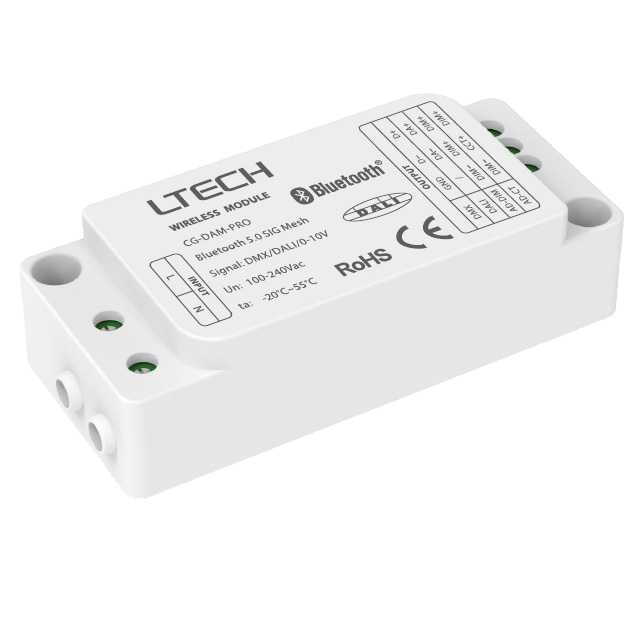
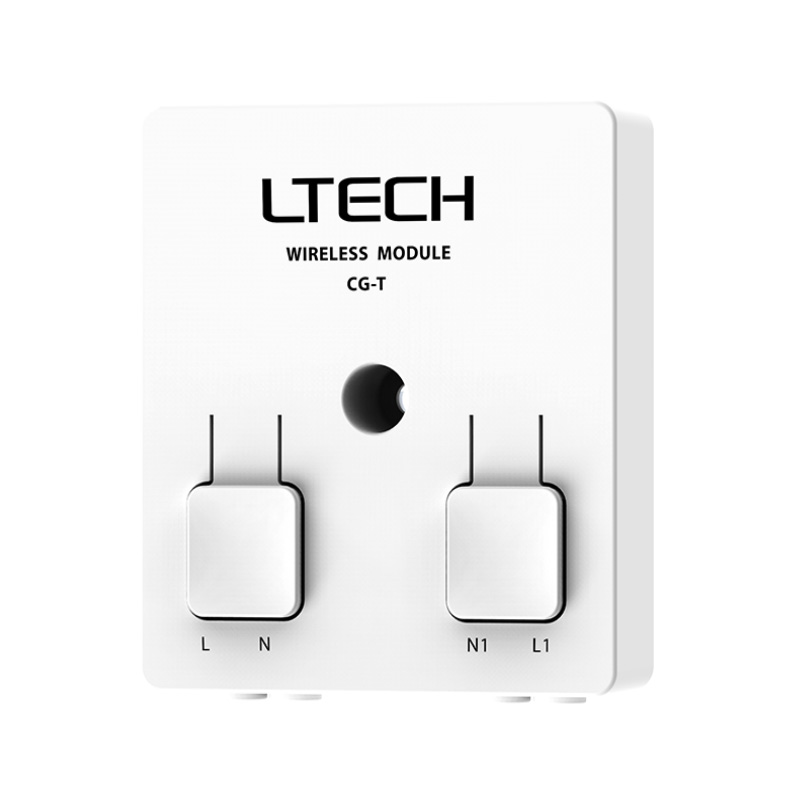
GC-DAM-PRO Bluetooth 5.0 Mesh LED Controller - DMX, DALI, 0-10V Output
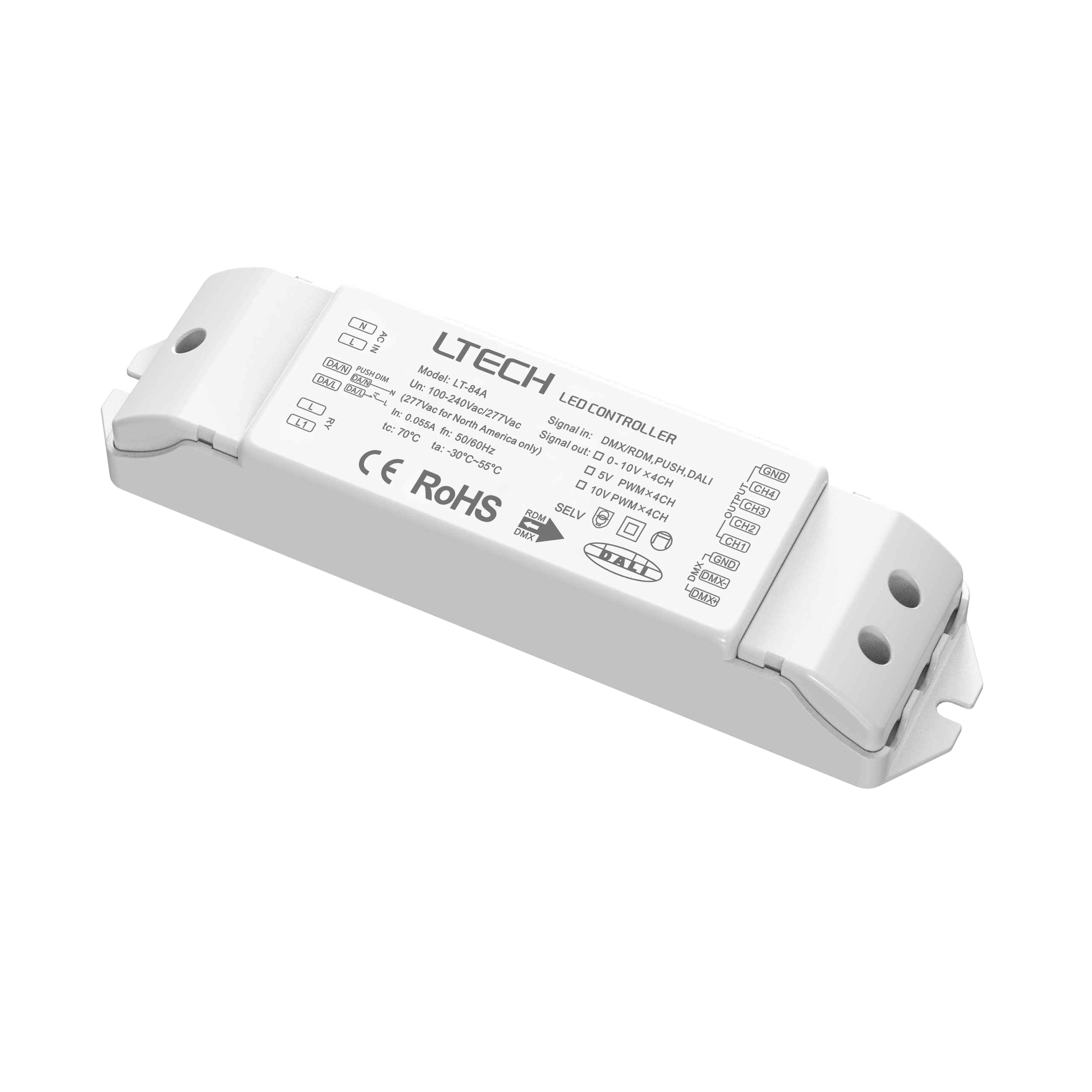
LT-84A Dmx Dali to 4CH 0-10V 5V PWM 10V PWM Converter
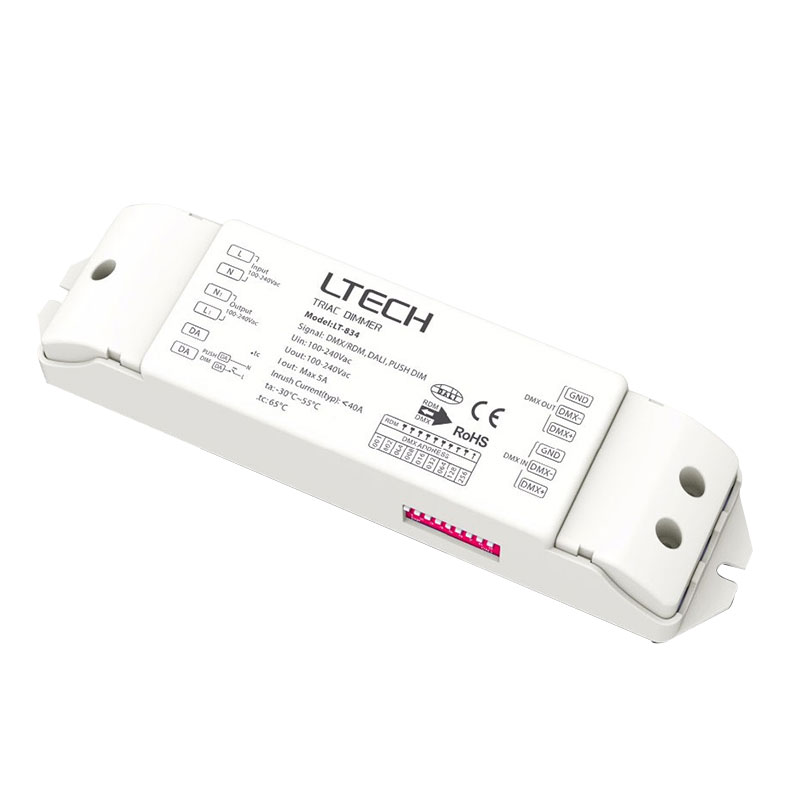
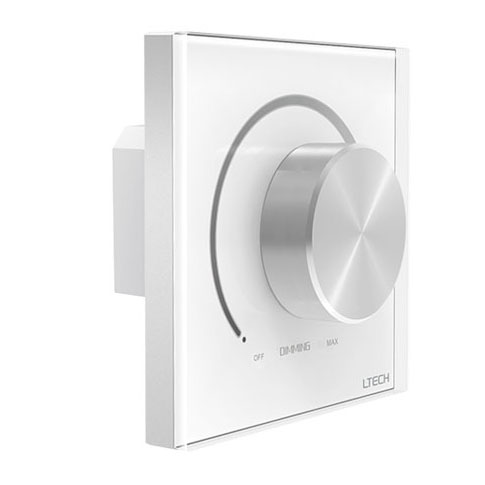
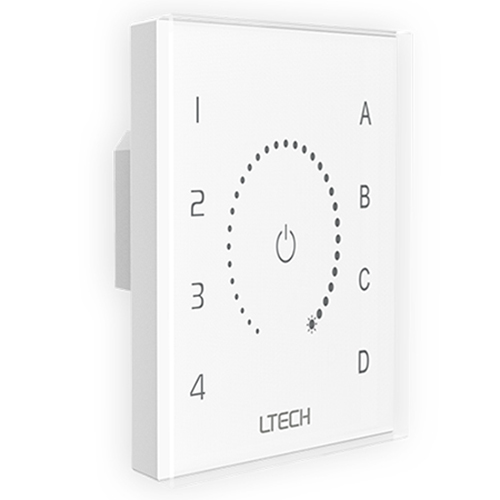
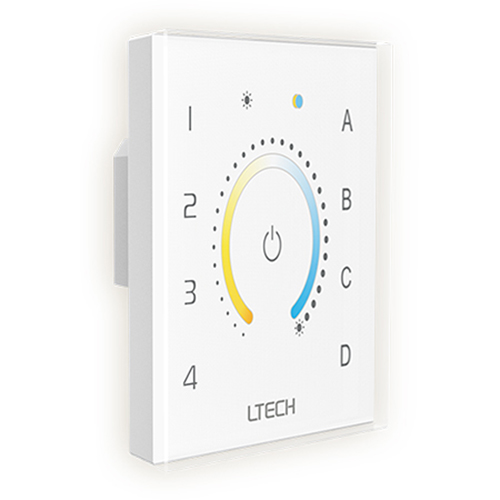
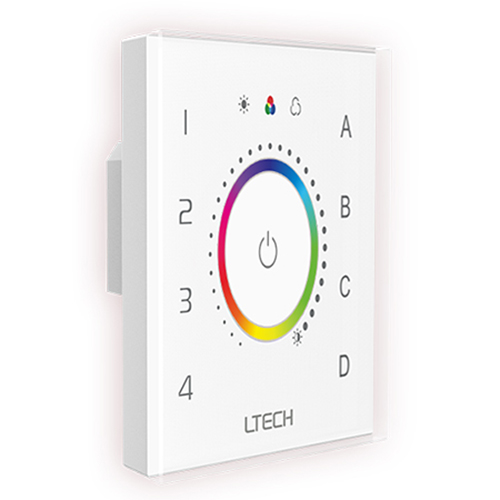
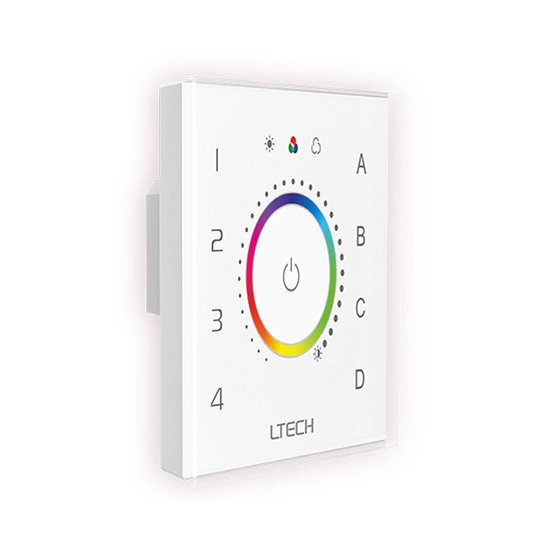
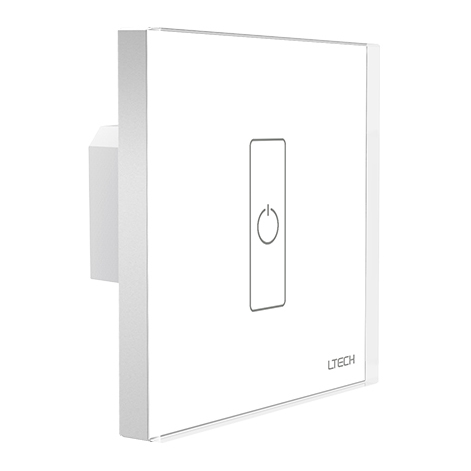
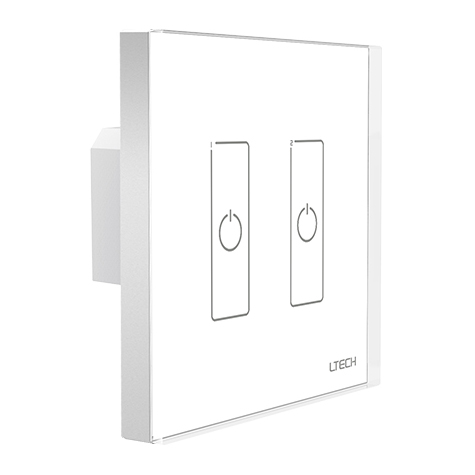
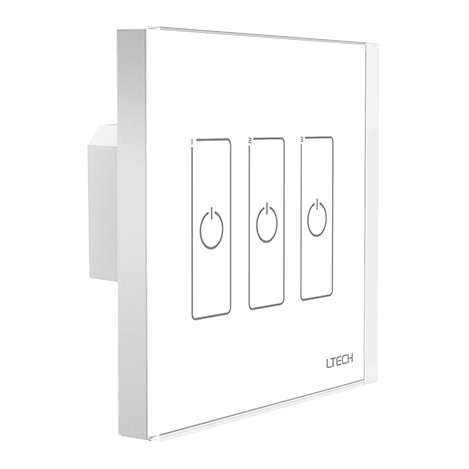
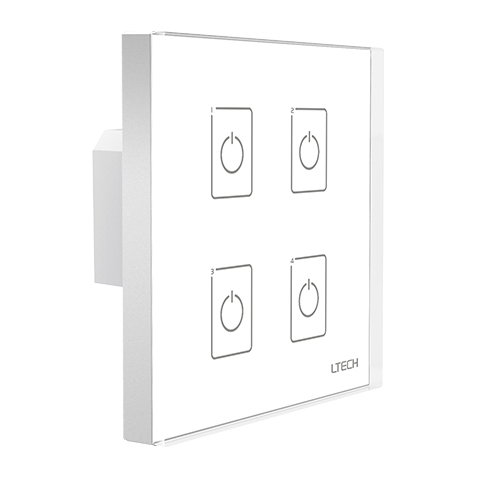
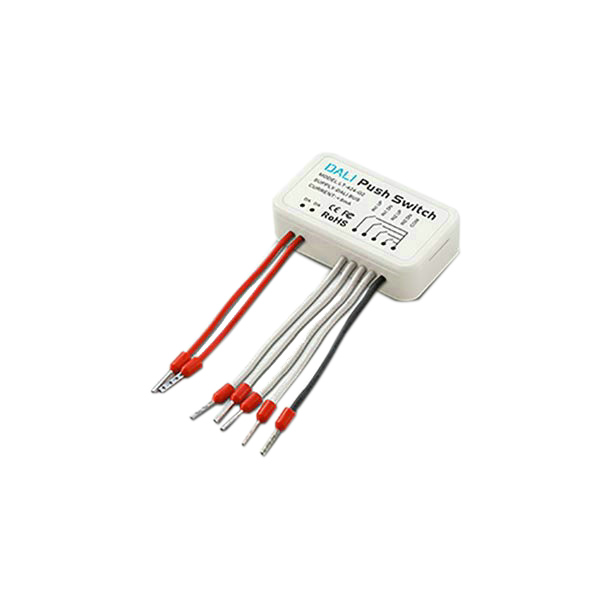
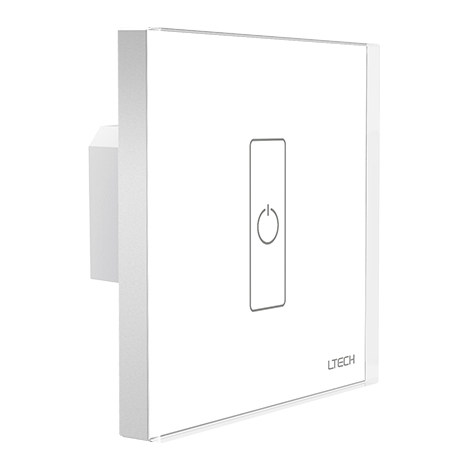
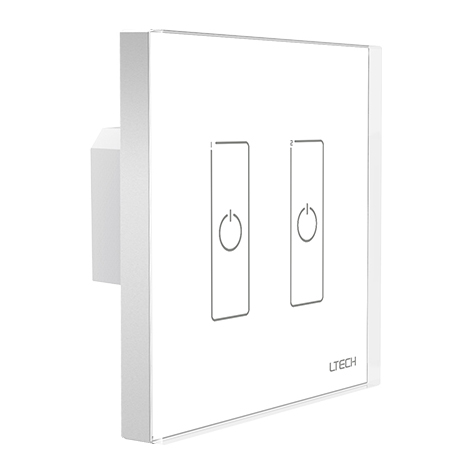
Wall Panels for Direct DALI Lighting Control
LTECH provides DALI wall controllers in touch, push-button, and rotary-knob formats for convenient everyday operation.
Different panel models are designed for functions such as single-color dimming, tunable white, RGB, RGBW, group control, and scene control. This allows the user interface to be matched to the actual lighting system instead of using the same panel for every application.
These wall-mounted controls are particularly suitable for hotels, restaurants, residences, meeting rooms, retail spaces, offices, and other projects where lighting needs to be adjusted locally while remaining part of a centralized DALI system.
DALI Bus Power Supply & System Infrastructure
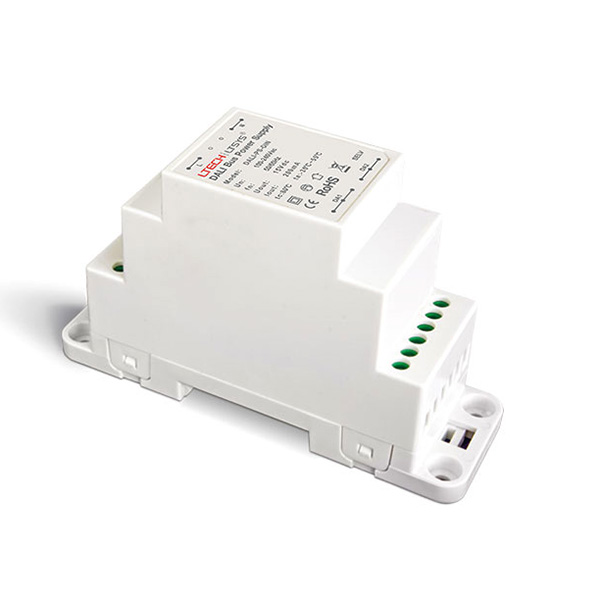
A DALI network requires a dedicated bus power supply for communication between lighting devices. LTECH DALI bus power supplies provide the required power for the DALI communication line, while the LED fixtures themselves continue to receive their operating power through the appropriate LED drivers or power circuits.
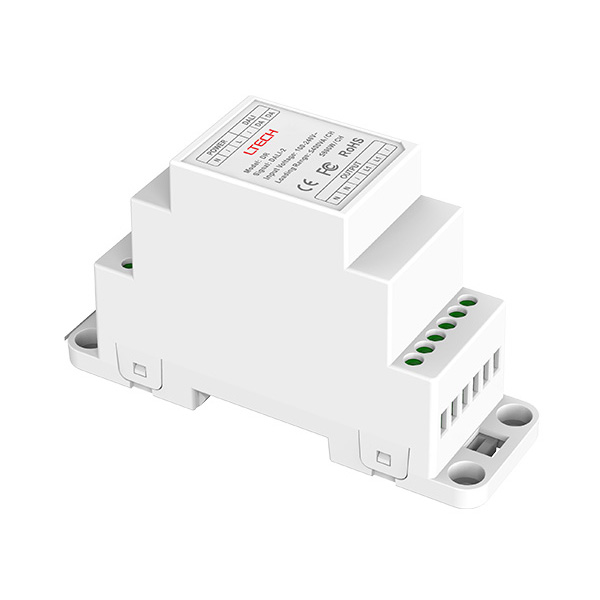
Not every device connected to an intelligent lighting project needs dimming. LTECH DALI relay units allow compatible switched loads to be integrated into the DALI control system, providing DALI-controlled ON/OFF operation for equipment that does not require a dimmable output. This allows both dimmable lighting and simple switched loads to participate in the same overall control architecture.
Smart DALI Modules & Wireless Integration
One of the distinguishing features of the LTECH DALI ecosystem is the integration of conventional wired lighting protocols with newer intelligent-control technologies.
LTECH smart modules combine DALI with Bluetooth 5.0 Mesh, while multi-protocol modules can provide DALI, DMX, or 0-10V output within a broader smart-control system.
This allows a traditional DALI installation to gain additional options for wireless control, smart scenes, system configuration, and integration with other LTECH intelligent-lighting products.
Instead of limiting DALI to a standalone wired dimming network, these modules make it possible to use DALI as part of a larger smart-building or smart-lighting architecture.
DALI Sensors for Automatic Lighting Control
LTECH also provides sensor-based control options such as microwave motion and presence sensing for projects that require automatic lighting behavior.
Sensors can allow lighting to respond to occupancy rather than relying entirely on manual wall control. This is particularly useful for corridors, offices, meeting rooms, public areas, hotels, commercial spaces, and other locations where energy-saving and automatic lighting management are important.
Combined with DALI drivers, groups, and scenes, sensor control can become part of a more responsive lighting system rather than simply acting as an independent ON/OFF switch.
DALI Signal Conversion & Multi-Protocol Integration
Modern lighting projects frequently contain more than one control protocol.
LTECH provides signal-conversion products that allow DALI to work alongside other commonly used lighting-control systems, including DMX512, 0/1-10V, PWM, and TRIAC, depending on the selected converter.
This is especially valuable when an existing building already contains one control system but new fixtures or control zones use another.
Instead of replacing the complete installation, a suitable signal converter can help connect different parts of the lighting system and create a more unified control architecture.
LTECH multi-protocol products also make DALI particularly useful for projects that need to bridge architectural lighting, LED strip lighting, smart control, and professional lighting systems.
Other DALI Lighting Control Brands at SuperLightingLED
LTECH is not the only DALI control ecosystem available from SuperLightingLED. We also provide DALI products from SkyDance, Sunricher, MiBoxer / Mi-Light, LeyNew, and other professional lighting-control series. Each brand has a different product focus.
Because DALI is a standardized digital lighting protocol, the best product should be selected according to the required DALI functions, device type, driver/load compatibility, certification requirements, system scale, and integration needs, rather than by brand name alone.
SuperLightingLED provides multiple DALI control ecosystems so residential, commercial, hospitality, architectural, and smart-building projects can be configured around the actual requirements of the lighting system.
Frequently Asked Questions About DALI Master Controllers
Your project's on the line and you need straight answers. Here are the questions we hear every day about DALI masters.
Yes, and this is the most common part people forget. The DALI bus itself requires a small amount of power (typically 16Vdc, max 250mA) to carry the data signal. A DALI master controller doesn't provide this. You'll need a dedicated DALI bus power supply on the line. It's a small DIN rail unit that powers the communication for the entire circuit of up to 64 devices.
They come in all shapes and sizes for different jobs: sleek glass touch panels for single-color, tunable white, and RGBW control; simple rotary knobs for straightforward dimming; push-button switches; and even wireless Bluetooth modules that let you control a DALI system from your phone. We also have programmers and converters for complex setups.
Yes, absolutely. DALI is an open, standardized protocol (IEC 62386). That's its biggest advantage. Any certified DALI-2 master controller should work with any certified DALI-2 driver or fixture, regardless of the manufacturer. This gives you the freedom to mix and match components to get the exact result you need for your project.
You'll need a protocol converter. We have specific modules for that job. For example, our LT-84A DMX/DALI to 0-10V converter can take a signal from a DALI master controller and translate it into a 0-10V signal that older analog drivers can understand. This is great for retrofits where you're upgrading the control system but keeping some of the existing fixtures.
Check the bus power. Nine times out of ten, the DALI bus power supply was either forgotten or there's a wiring issue. Make sure it's outputting a steady 15-16Vdc. The second most common cause is an address conflict, where two devices have been accidentally set to the same address during commissioning, or the device you're trying to control hasn't been addressed at all.
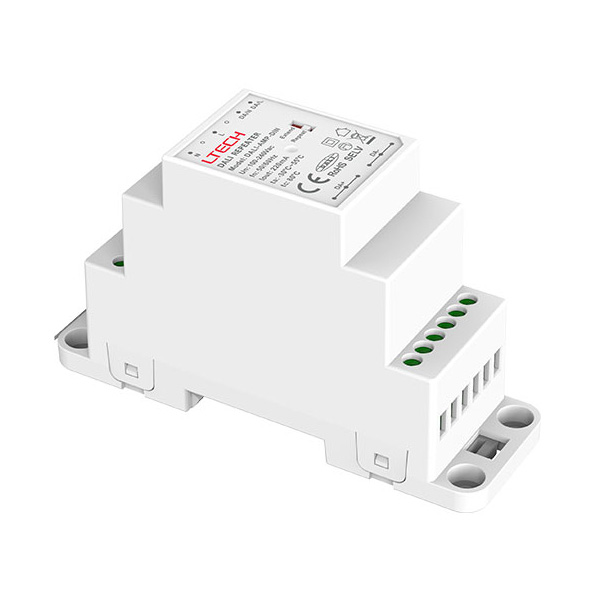
The DALI standard has hard limits: 64 addresses and a maximum bus length of 300 meters (using 1.5mm² wire) before the signal degrades. If you exceed these, you'll need to create another DALI line. To expand the system, you can use a DALI signal repeater like our DALI-AMP-DIN, which amplifies the signal and allows you to extend the bus or add more fixtures. For very large projects, you'll use multiple DALI lines connected to a higher-level system.
The main function of an L-tech DALI master controller is to serve as the command center for your entire DALI lighting installation. It's the user interface that allows you to turn lights on and off, dim them, change their color, and recall preset scenes. Whether it's a simple knob or a multi-function touch panel, the master is what originates all the digital commands that are sent out over the DALI bus to the drivers.
You sure can. The traditional way is with wired wall panels, but we have wireless gateways that bridge the gap. Our GC-DAM-PRO module, for example, combines Bluetooth 5.0 SIG Mesh with DALI output. You install the module on your DALI bus, and it lets you control the lights through a mobile app. It's an easy way to add smart control to a robust, hard-wired DALI system.
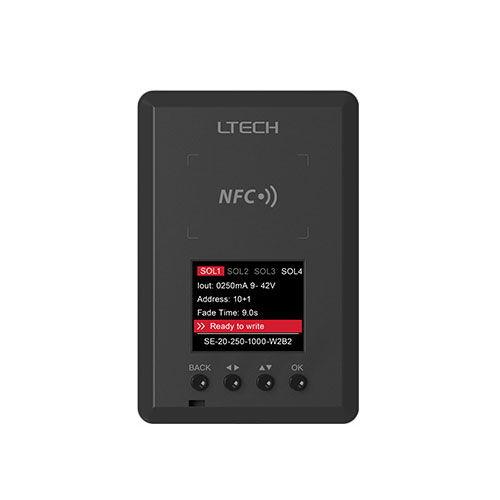
It can be, especially on your first job. Commissioning is the process of assigning a unique address (from 1 to 63) to each driver on the bus and then grouping them. For smaller jobs, some masters have a simple 'broadcast' mode. For professional results, you'll want a dedicated tool. Our LT-NFC programmer makes it much faster. You can set addresses and parameters just by tapping the programmer to the driver, even before it's powered up.
It's a big topic, and it helps to have the fundamentals down before you start a project. We wrote a guide that covers the basics of the protocol, its advantages, and how all the parts work together. You can read it in our guide to DALI dimming, which is a good starting point if you're new to the standard.
No, and that's one of its key strengths. DALI uses a simple 2-wire bus for both power and data, and it's not polarity sensitive, so you can't wire it backwards. You can run the DALI bus wiring in the same conduit as the mains power (local codes permitting), which can save a lot of time and cost on an install compared to other control systems.