
LED UV Light Bar
2 productsProfessional LED UV lighting tubes that are capable of emitting UV-A ultraviolet light, mainly including 365nm UV light bar and 395nm LED UV tube light.
Our ultraviolet light bar features a slim design with linear uniform emission and a 120-degree beam angle, making them ideal for scenarios that require even UV illumination. The UV light tube light utilizes high-power LED chips to provide high-brightness UV illumination, while featuring low energy consumption and a long lifespan of 50,000 hours. These ultraviolet light fluorescent tubes support splicing with each other and can be directly mounted on lamp holders, brackets, or hanging devices for plug-and-play, easy installation. We also provide other excellent ultraviolet LED fixtures to cover your different needs, such as UV flashlights and UV flood lights.
The longer part of the UV-A wavelength band, such as 395nm, is safer for the eyes and skin. If you choose a UV-A LED bar with shorter wavelengths (e.g. 365nm), it is recommended to wear UV protective glasses to avoid direct eye contact with ultraviolet light.
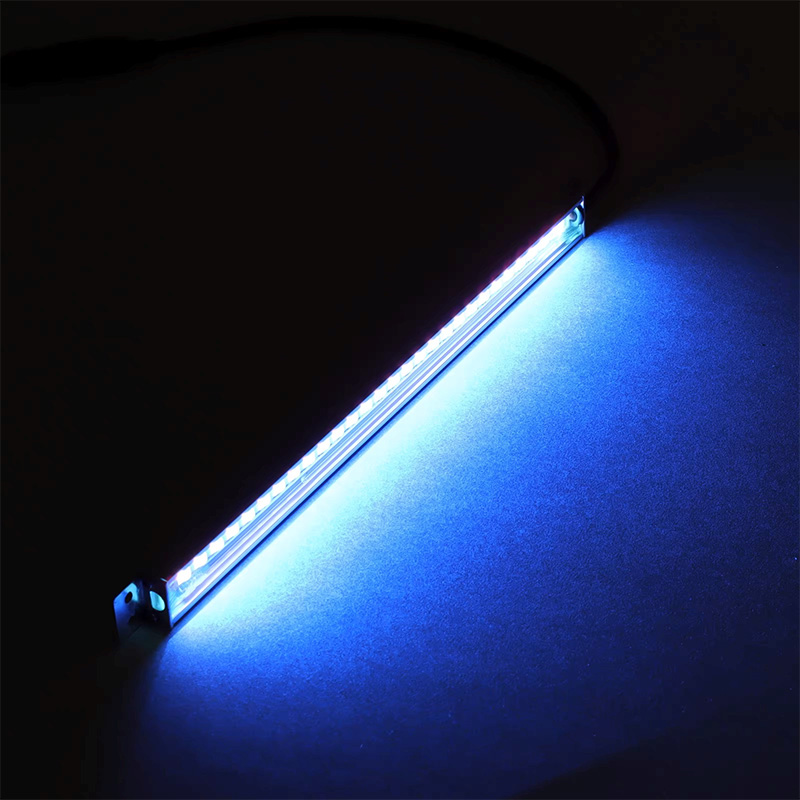
Waterproof Small High Power 28W 365nm UV LED Light Bar
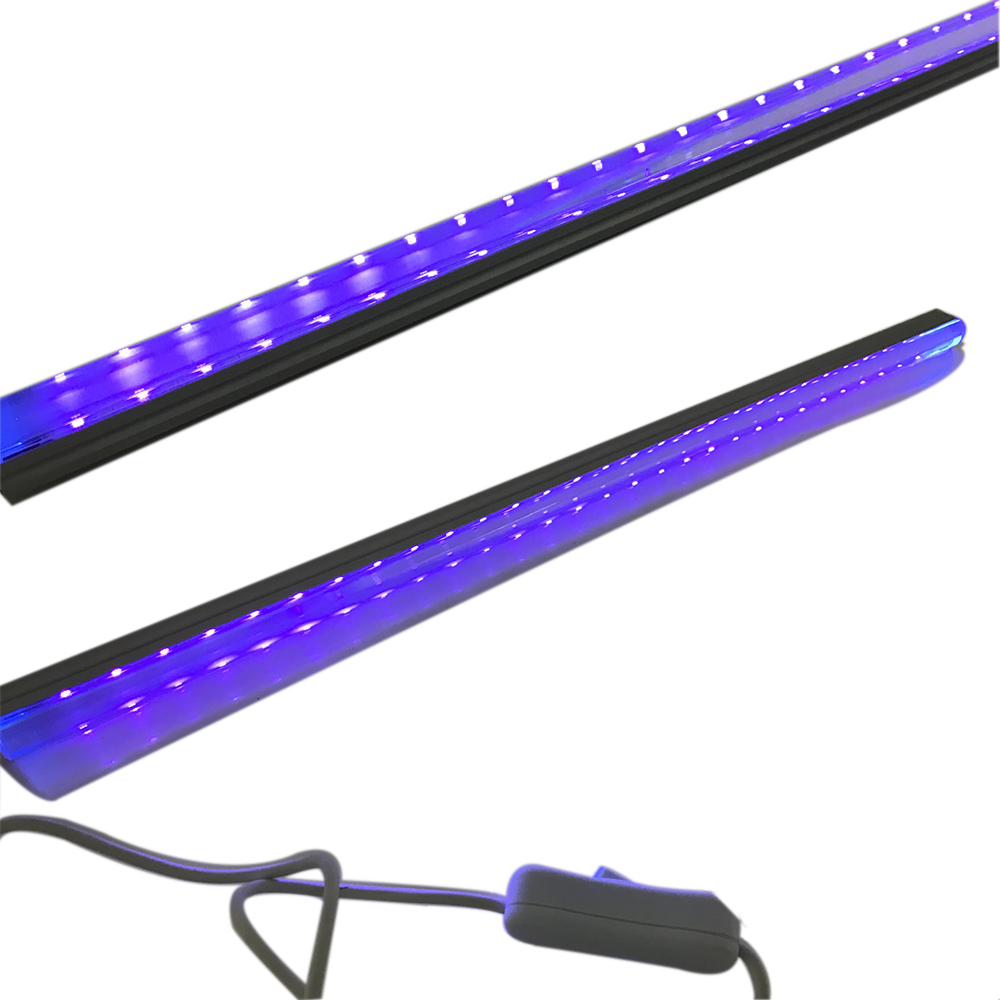
Portable 20inch USB-Powered 395nm-405nm UV Light Bar With Switch
Frequently Asked Questions About LED UV Light Bars
Your questions about UV-A wavelengths, power, and applications, answered by our engineers.
The main difference is the amount of visible light. A 395nm LED UV light bar emits a noticeable violet-purple glow, while a 365nm bar produces very little visible light, making the fluorescence effect on objects appear much stronger. For applications like counterfeit detection or high-contrast inspections where you want the glow effect to pop, 365nm is the clear choice. For general blacklight parties or curing certain adhesives, 395nm works great and is usually more budget-friendly.
Yes, you absolutely can, and it's a common application. An LED UV light bar provides the long, linear coverage you need for an epoxy bar top. Most UV-curing epoxies specify a wavelength, typically between 365nm and 405nm, so check your resin's data sheet first. Our bars emit UV-A light which is what these resins require. The even, 120-degree beam angle helps ensure a consistent cure without hotspots.
These bars emit UV-A light, which is the least harmful part of the ultraviolet spectrum and is what's used in blacklight attractions. It's much safer than the UV-B or UV-C rays used for sterilization. That said, you should never stare directly into any UV light source. For the more intense 365nm wavelength, we recommend wearing UV-protective glasses during prolonged exposure or setup, just to be safe.
Choose a rigid UV bar light when you need durability, a perfectly straight line of light, and better heat management. The aluminum body acts as a heat sink, which is crucial for high-power LEDs and contributes to that 50,000-hour lifespan. Flexible UV LED strips are better for wrapping around curves or fitting into tight, irregular spaces where a rigid bar just won't go.
Yes, our designs support splicing them together to create a longer, continuous fixture. However, you have to be mindful of the power supply. You can't just power an infinitely long chain from one end. You'll need to calculate the total wattage of all the connected UV LED tube lights and ensure your 24V power supply can handle the load. For very long runs, you may need to provide power to the chain in the middle or at both ends to avoid any dimming.
A UV-A black light emits long-wave ultraviolet light, which is mostly invisible to our eyes. This light energy excites things called phosphors, which are present in all sorts of materials, from laundry detergent on your white shirt to neon-colored paints. The phosphors absorb the invisible UV energy and then re-emit it as visible light, creating the glowing effect. It's a simple, safe way to create some really cool visual effects.