
LED Strip Control System
59 productsThis LAIMI (LM) Series is a flexible smart LED lighting & control system available at SuperLightingLED. Designed for modern lighting applications, the LM series provides flexible wireless control solutions for both LED strip lighting systems and traditional lighting installations.
Similar in concept to the popular MiBoxer (Mi-Light) ecosystem, the LAIMI series integrates multiple wireless communication technologies including 2.4G RF, WiFi, Bluetooth, and Zigbee, enabling reliable and convenient smart lighting control.
What You Can Get With LAIMI Series
When paired with LM series RF remotes, compatible LED strip controllers, or smart lighting fixtures, users can achieve wireless lighting control with operating distances ranging from 30 meters (98 feet) up to 150 meters (492 feet).
For best system performance, it is recommended to use LM series controllers and remotes within the same ecosystem, rather than mixing them with controllers from other brands.
In addition to low-voltage LED strip controllers, the LAIMI series also includes AC smart controllers designed for any line-voltage lighting systems. By installing an AC controller, a knob or touch switch on the main AC power line of your existing lighting circuit, your conventional lighting will be upgraded into a smart lighting system without replacing all fixtures.
In many residential spaces such as kitchens, living rooms, bathrooms, hallways, and entryways, LED strip lighting is often combined with recessed ceiling lights to create layered lighting designs. The LAIMI ecosystem includes compatible smart LED bulbs and smart recessed downlights, allowing these ceiling fixtures to be controlled within the same lighting system as white to RGBCCT LED strip lights and addressable RGB / RGBW digital LED tapes.
For outdoor landscape and architectural lighting, where powerful illumination is required to highlight large objects, building facades, trees, or garden features, the LAIMI series also includes smart LED flood lights ranging from 20W to 100W with convenient control.
Explore the full LAIMI Smart Lighting Control Series to build a flexible and reliable lighting control system for your project.

DR03W WiFi Tuya Addressable RGB LED Strip Controller

20KHz High Frequency PWM Dimming LED Strip Controller - 2CH Smart Control

C01RF Dimmable Single Color LED Light Strip RF Controller


C02RF RF 5 to 24VDC LED Strip Tunable White LED Controller


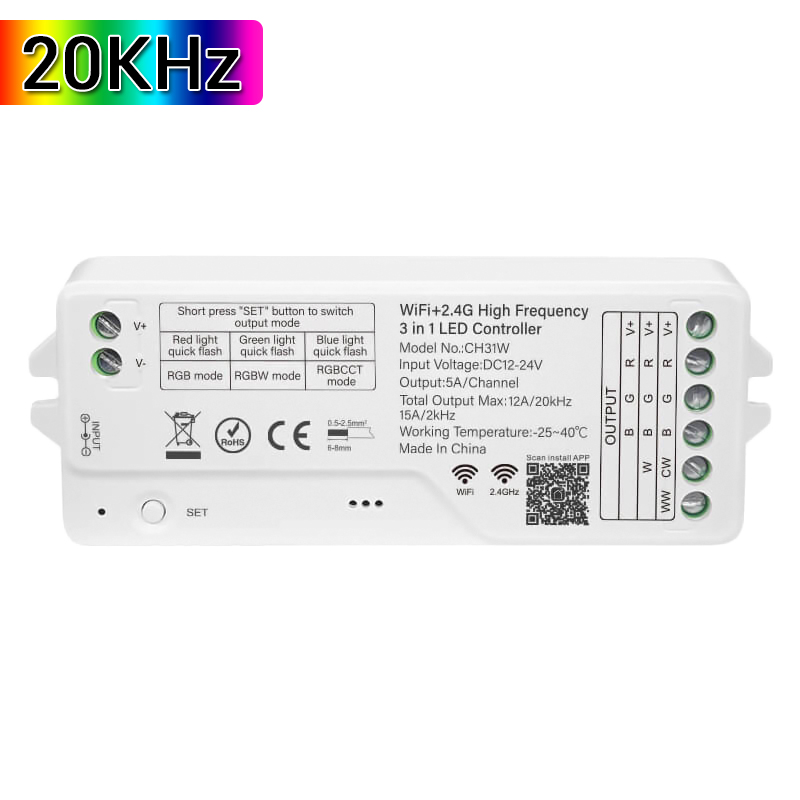
20KHz High Frequency Color Changing LED Strip Controller 3-5CH Smart

C03RF 5 to 24VDC Dimmable LED RGB Strip RF Controller
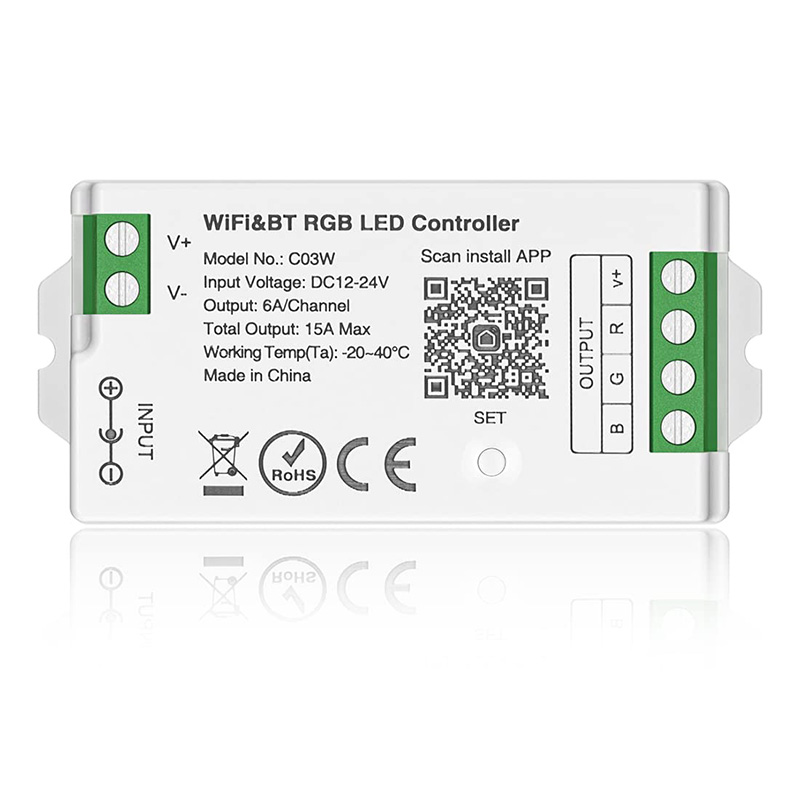


C04RF 5 To 24VDC RF Dimmer LED Strip RGBW Controller


C05RF Dimmable RF RGB CCT LED Controller for RGBCCT LED Strips


LM051 5 in1 12 to 24VDC Dimmer LED Light Strip RF Controller
FAQ About LED Strip Control System
Direct answers on pairing, wiring limits, PWM frequencies, and multi-zone protocols from our engineering desk.
For clean whole-room installations, pair 24V constant-voltage LED strip lights with a multi-zone 2.4GHz RF receiver rather than buying all-in-one consumer kits. An all-in-one retail kit usually locks you to a flimsy 12V plug-in supply that drops voltage after 5 metres and forces you onto a short-range infrared eye. A modular setup lets you run 10 metres of high-density tape from one driver, hidden in a closet or joist bay, while controlling four to eight separate lighting zones from a single handheld remote up to 30 metres away.
Selecting the best lighting control system for multi-zone coves requires an LED strip control system that synchronises 24V tape without line latency. Start by tallying your total wattage and dividing your perimeter into distinct channels. For large spaces where pulling control wire between walls is impractical, our 2.4GHz wireless mesh receivers re-transmit signal from unit to unit up to 30 metres apart.
To run clean video without rolling shutter bars, an LED strip control system must deliver high-frequency PWM dimming up to 20KHz. Standard commercial drivers switch at 500Hz to 2KHz, which looks fine to the human eye but creates terrible horizontal dark bands when filmed at 60 or 120 frames per second. For broadcast studios, trade show booths, or streaming rooms, we use our 20khz high-frequency pwm dimmer. It switches fast enough that high-speed camera sensors capture flat, flicker-free illumination across the entire 1% to 100% dimming curve.
Alexa can operate your fixtures through an LED strip control system whenever you bridge the RF or Zigbee receiver to a 2.4GHz gateway. The receivers themselves run on low-voltage DC and communicate directly with local RF remotes for zero-lag wall switching. Adding a gateway like our GW01W or wired GW02Z links those local addresses to the Tuya or Smart Life cloud skill, enabling voice commands for brightness, CCT shifting, and schedules without losing tactile wall panel responsiveness.
Managing whole-room ambiance is straightforward when your LED strip control system pairs tape light receivers with matching smart recessed downlights on the same 2.4GHz zone. You wire your low-voltage cove tape to an LM-series strip receiver, then fit your ceiling cutouts with matching fixtures like the 9W LM071 or 12W LM072. Because both units share the same 2.4GHz RF chip and auto-sync timing, one wall touch slider dims your perimeter tape and overhead downlights together without visual color stepping.
Signal loss on a wireless LED strip control system almost always stems from burying the receiver inside a sealed metal junction box or mounting it directly behind steel studs. Sheet metal blocks 2.4GHz radio waves instantly, reducing an open-air 30-metre range down to barely 3 metres. Always position the controller's antenna outside metal ducting, or space intermediate receivers every 25 metres so the built-in signal re-transmission mesh can pass instructions down the line automatically.
A standard multi-channel LED strip control system safely handles 6A per channel with a maximum combined rating of 15A across the entire terminal block. If you run 24V tape, 15A gives you 360W of total capacity; on 12V, that drops to 180W. Pushing beyond 15A through the spring terminals will cause extreme resistive heat, melting the plastic housing. For runs requiring 500W or more, feed the control signal into a dedicated power repeater rather than pulling all current through the receiver board.
Connecting an LED strip control system to HomeKit requires an Apple-certified Zigbee 3.0 bridge, like our wired GW02Z gateway, rather than a generic WiFi hub. Once the gateway is hardwired to your router via Ethernet, set your strip controller into pairing mode by power-cycling it five times until the LEDs pulse. Add the bridge to the Tuya or HomeKit app first, scan for child devices, and your tape light controls will appear as dimmable light accessories on your dashboard.