
0-10V Control System Series
4 productsLow-voltage LED dimming select 0-10V lighting control can improve the stability of dimming and brightness consistency, ensuring that the light performance is consistent at different dimming levels.
The 0-10V dimming circuit is that the line voltage provides energy for the constant voltage or constant current 0-10V driver, and the 0-10V dimmer sends a dimming signal to LED strip or constant current LED lights through the driver. The 0-10V LED driver matches the dimming signal from the dimmer and adjusts the LED current accordingly, resulting in more precise dimming of the LED light.
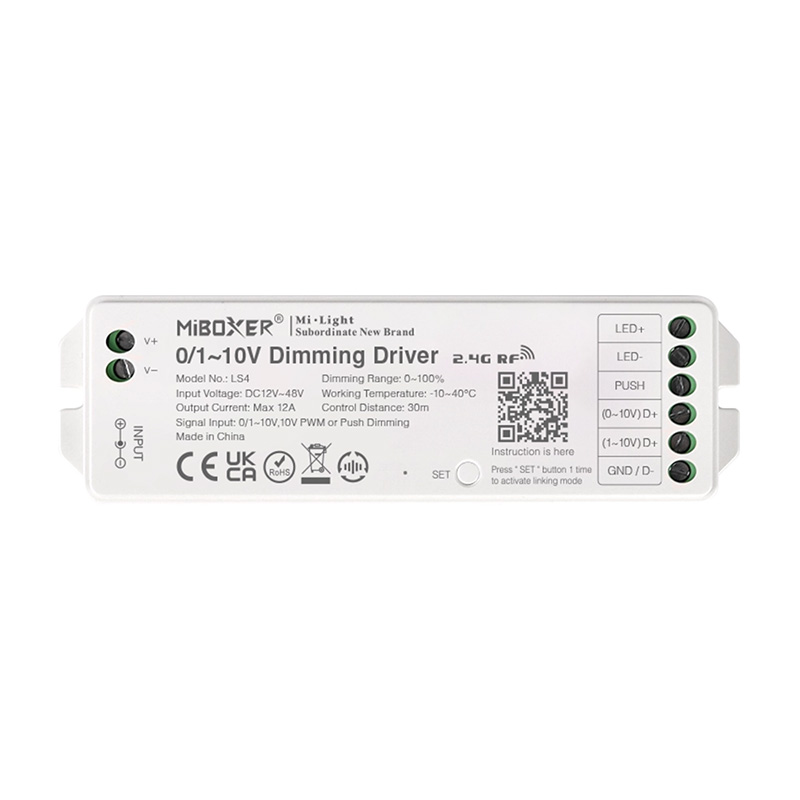
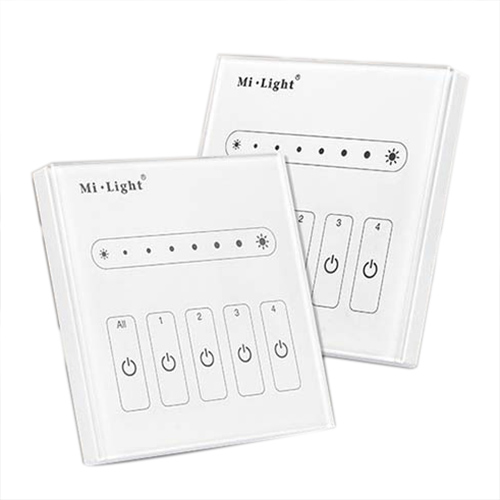
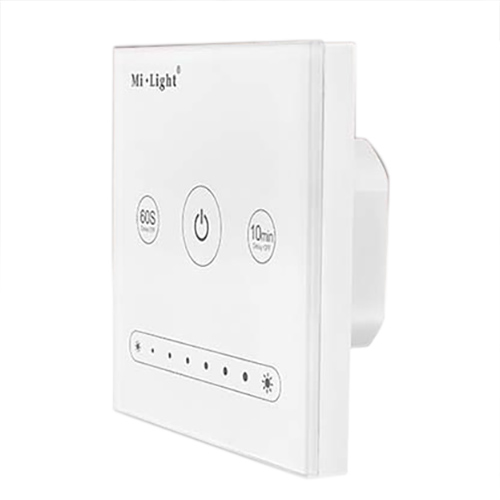
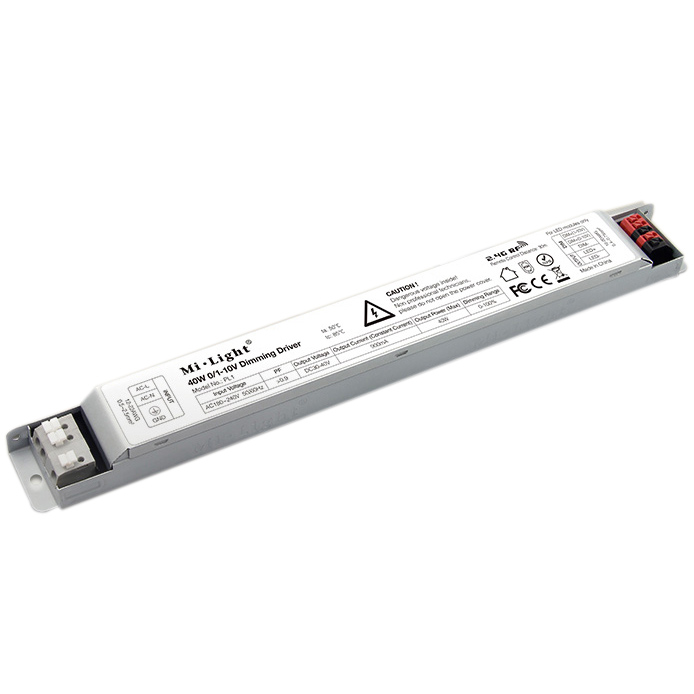
This is MiBoxer Mi-Light 0-10V wall mount dimming control, the brightness adjustment of LED lights is realized by touching the function buttons of ML-L1. And the ML-LS4 and ML-PL1 0-10V drivers are compatible with mi-light RF remote control and smartphone control (via gateway). Adjust the brightness (0~100%) through 0~10V, 1~10V, 10V PWM and push dimming signal. Also with one-to-many control, signal auto-transmitting function.
FAQ About 0-10V Control System Series
Engineering answers for wiring, sizing, and troubleshooting 0-10V dimming drivers, wall panel controllers, and low-voltage circuits.
In 0-10v dimming, a true 0V signal turns the LED strip fixture completely off, whereas a 1-10V system only dims down to 10% brightness and requires an external line-voltage relay to cut AC power. The confusion happens because jobsites use both terms interchangeably. If your LED driver is rated 1-10V, dropping your dimmer slider to the bottom leaves the LED strip glowing dimly at 1V. Our MiBoxer L1 and L4 panel dimmers output a full 0~10V range, giving you dimming down to zero when paired with drivers engineered to switch off below 0.7V.
You can wire them together only if their current sourcing and sinking types match. A 0-10v controller like our L1 or L4 wall station functions as a current sink, meaning it pulls down the control voltage generated by the driver. If you connect a sinking controller to a driver that also sinks current, the control signal stays stuck at 0V and your LED strip will not light up. Most commercial LED drivers source between 0.5 mA and 2 mA on the control pair. Always verify which device supplies the 10V reference before terminating your low-voltage lines.
You can run 0-10V control lines up to 50 meters (164 feet) using standard 18 AWG shielded twisted-pair wire before resistance distorts the dimming level. Because a 0 10v driver draws or supplies tiny currents—typically 0.5 mA to 2 mA—line resistance creates far less voltage drop than it does on DC power cables. However, past 50 meters, wire resistance and electromagnetic interference can pull a 10V signal down to 9.2V, capping your LED strip at 90% maximum brightness. Keep signal wires inside their own conduit away from high-current AC circuits to prevent induced hum.
Yes, you can operate the LS4 0/1-10V dimming driver via 2.4GHz wireless handheld remotes or wall panels while maintaining wired 0-10V inputs. The LS4 accepts a 0/1-10V analog voltage, 10V PWM, or push-dim input on its control terminals, but it also contains a built-in RF receiver with a 30-meter wireless range. If someone adjusts the hardwired 0-10V wall dimmer, the driver follows that voltage; if you send a command from a paired wireless remote or smartphone gateway, the driver executes the latest command received. It auto-transmits signals between drivers to extend wireless coverage throughout large spaces.
On a 24V supply, the LS4 0 10v driver handles up to 288W of single-color LED strip, based on its 12A continuous output rating. If you run the LS4 on a 12V DC input, that same 12A current ceiling limits your total connected load to 144W. We recommend sizing your power supply with an 80% continuous safety margin, meaning you should keep your steady 24V LED strip load under 230W to prevent thermal throttling. If your installation requires more than 12A of 24V LED strip, branch the 0-10V control signal into multiple LS4 units wired in parallel.
Yes, the LS4 0 10v led controller features a dedicated push-dim terminal that lets you dim and switch your LED strip using standard normally-open momentary wall switches. A short press turns the LED strip on or off, while holding the push button ramps brightness smoothly from 0% to 100% or back down. The controller retains memory of your last brightness level after power loss. This allows you to combine tactile, low-cost push buttons on the wall with 0-10V master automation systems or 2.4GHz RF remotes without needing complex control interfaces.
You cannot run standard Class 2 low-voltage 0-10V wires in the same conduit as Class 1 line-voltage AC power unless the signal wire insulation matches the highest AC voltage present. Most standard 0-10v lighting control cables carry 300V insulation, which violates National Electrical Code (NEC) Article 725 when placed alongside 277V or 480V lines. To run them together lawfully and safely, choose 600V-rated cable insulation such as Luminary cable (combining power and purple/pink 0-10V control in one armored sheath). Otherwise, keep low-voltage 0-10V control wiring in a dedicated separate conduit.
If your LED driver 0-10v port stays locked at full output on an LED strip circuit, check control polarity, open-circuit voltage, and signal isolation with a digital multimeter. First, disconnect the 0-10V control wires from the driver and measure DC voltage across the driver's positive and negative terminals; a healthy sourcing driver should read approximately 10V DC. Next, temporarily short the positive and negative 0-10V terminals together. If the LED strip drops to minimum brightness or shuts off, your driver works properly, meaning the fault lies in reversed polarity, a broken wire run, or an incompatible sinking wall dimmer.