
ARTNET-SPI Madrix Converter
4 productsBinColor ARTNET Converters – Ethernet Control for SPI Pixels and DMX Lighting
The BinColor ARTNET Converter Series is designed for controlling large-scale SPI addressable LED systems and DMX lighting installations through an Ethernet network. By converting network-based lighting data into SPI/TTL pixel signals or DMX512 outputs, these controllers allow computer-based lighting software to manage thousands of LED pixels, matrix displays, and DMX fixtures within one integrated lighting project.
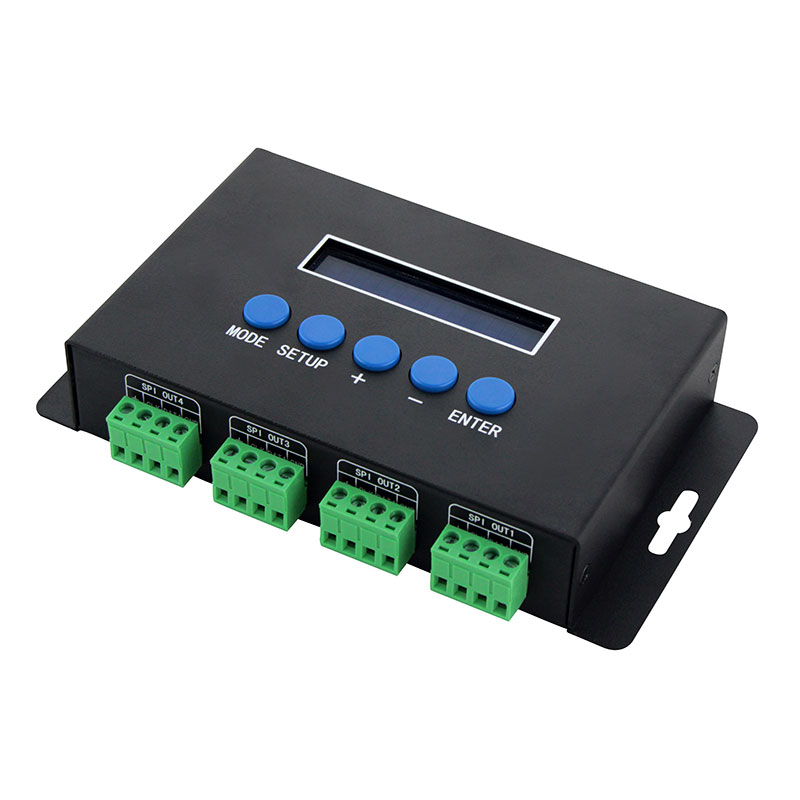
Compatible with RGB and RGBW pixel ICs such as 2811/2812 (TM1812, UCS1903, UCS2903, WS2811, WS2812B, SM16703P, GS8206, etc.), 8904, 6812/2904 (SK6812 RGBW, UCS2904B RGBW), 1814 (TM1814 RGBW), 1914 (TM1914), 5603, 9812, 3001 single-signal or resume-on-break DAT series and APA102 (APA102, SK9822, etc.), 9813, 8806, 6803, 2801 (WS2801) dual-signal DAT+CLK series; each SPI output channel can support 680/340 RGB pixels or 512/256 RGBW pixels.
Supporting Art-Net and, on compatible V2 models, sACN (E1.31) protocols, the series provides flexible network-based control for professional pixel lighting applications. Compatible with popular lighting software such as MADRIX and xLights for pixel mapping, synchronized lighting effects, and dynamic visual displays. Software compatibility depends on the specific controller model and firmware version.
DMX512 4CH LCD Controller | ArtNet Compatible | BC-204-DMX512
FAQ About ARTNET-SPI Madrix Converter
Direct bench answers on universe mapping, IC timing, network bandwidth, and field wiring for Ethernet-to-pixel installations.
An Art-Net to SPI converter translates incoming DMX-over-Ethernet broadcast or unicast packets into low-voltage serial pulse trains that addressable ICs understand. Software like MADRIX, Resolume, or xLights maps your visual canvas into DMX universes of 512 channels over a standard RJ45 local area network. Once received, the converter strips off the network frame headers and clocks raw data directly out to data (DAT) and clock (CLK) terminals. For a deeper breakdown of data line wiring differences, check our addressable LED strip guide.
An ARTNET-SPI Madrix converter routes control data signals only, meaning high-amperage LED power must come directly from your DC power supplies. While the controller shares a common DC5V to DC24V input terminal to power its internal logic board, the terminal blocks are not rated to carry 30A or 40A of LED load. Always connect DC positive directly from your power supply bus to the LED strip lights. Tie all power supply DC negative lines back to the converter ground terminal so the data line has a clean reference plane.
Frame drops on an Art-Net to SPI converter typically happen when lighting software broadcasts full Art-Net packets across an unmanaged consumer network switch. When you broadcast 16 or 32 universes, every device on the subnet gets flooded with UDP traffic, causing packet collisions. Change your output settings in MADRIX or xLights from Broadcast to Unicast directly targeting the converter IP address. If you must use broadcast or multicast sACN, install an IGMP-snooping gigabit switch to isolate traffic strictly to the converter network ports.
An Art-Net to SPI converter running V2 firmware supports both Art-Net III/IV and sACN (ANSI E1.31) streaming protocols over standard UDP. You select between Art-Net and sACN using the front panel LCD buttons or the built-in HTTP web server interface. When running sACN, the unit supports up to 16 multicast universes per physical controller box without dropping below 30 fps. This dual-protocol capability makes the converter compatible with grandMA onPC, ChamSys MagicQ, and Avolites consoles without requiring third-party protocol translation nodes.
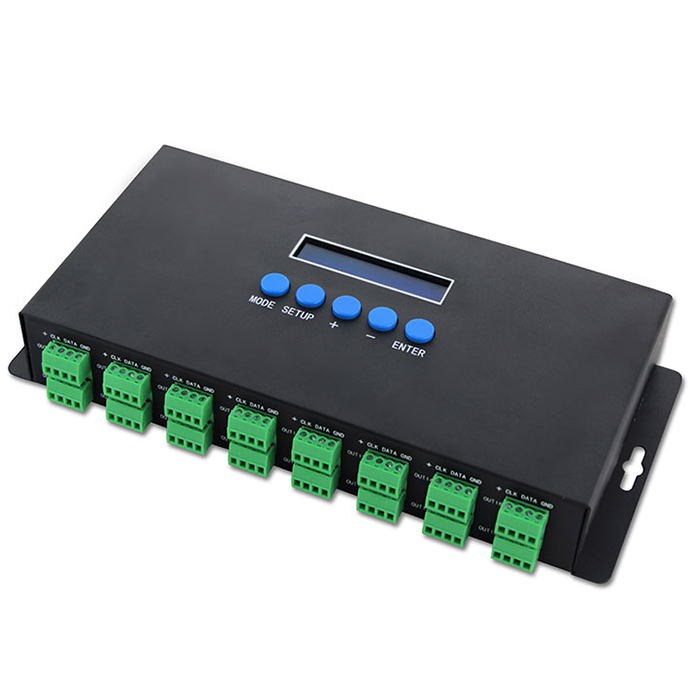
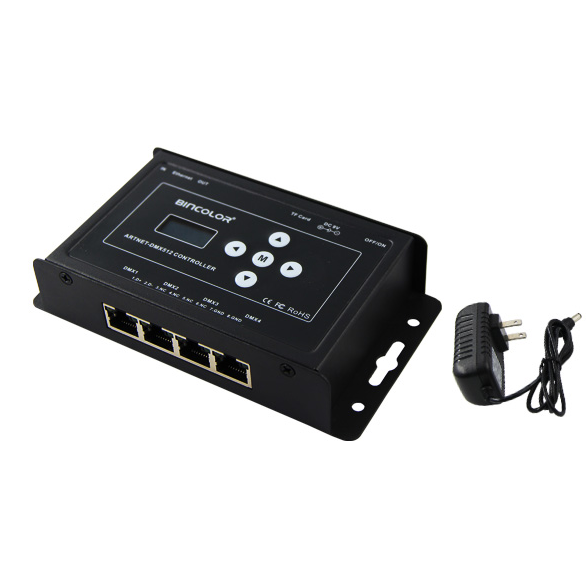
Selecting the right ARTNET-SPI Madrix converter comes down to total universe density and physical enclosure layout. The 4-port BC-204 handles up to 16 DMX universes (2,720 RGB pixels total) and provides 4 dedicated DMX512 terminal outputs alongside SPI, which suits localized stage trusses or architectural coves. For large-scale matrix displays, building facade accents, or high-density video screens, the BC-216 16-channel controller manages up to 64 universes across 16 separate outputs (10,880 RGB pixels), cutting down the total number of networked converter boxes required in your control rack.
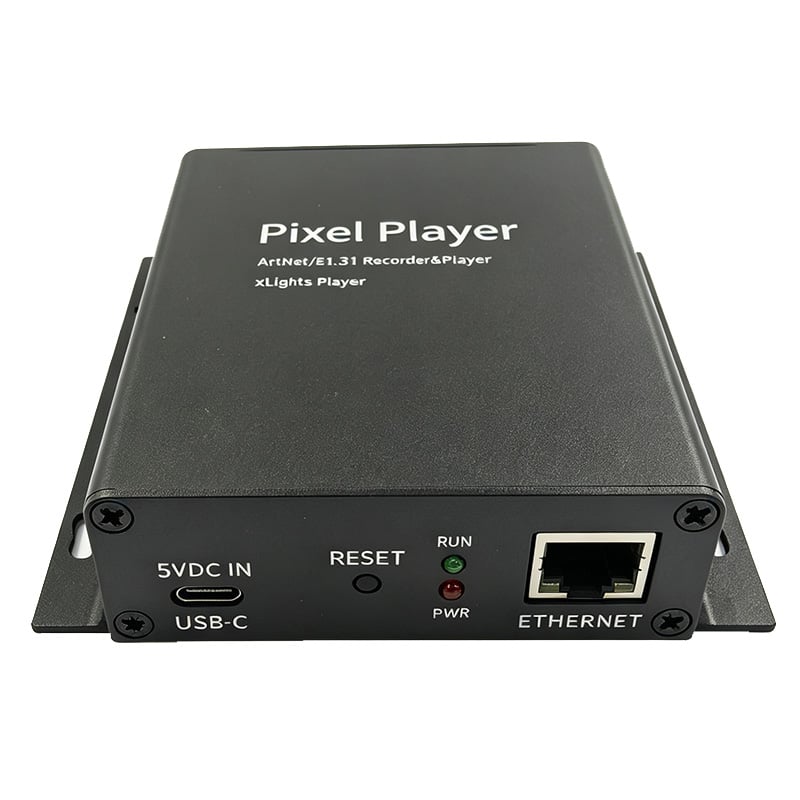
Certain ARTNET-SPI Madrix converter models store and trigger shows independently via onboard SD card playback slots. Units like the BC-204-DMX512 record real-time Art-Net or DMX streams straight from MADRIX or an external console onto an SD card for permanent offline installations. You can trigger up to 8 scheduled playback routines using the front LCD screen, timed clock triggers, or external dry-contact switches, eliminating the cost and vulnerability of leaving an expensive media server computer running on-site 24/7.