
DMX Strip LED White
4 products
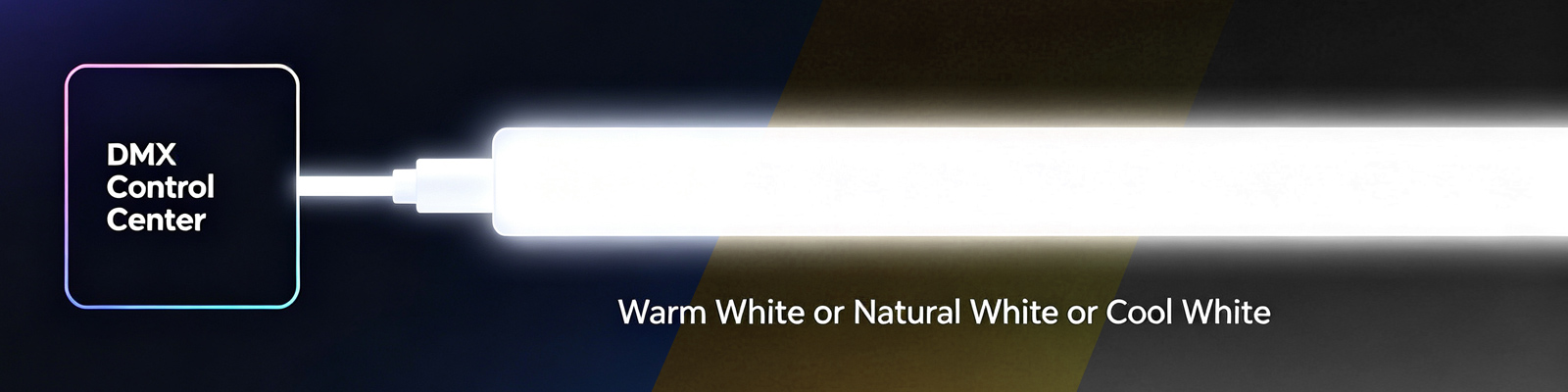
These DMX white LED strips are controlled by UCS512 ic chip, which can be directly connected to DMX lighting control system to realize precise dimming and dynamic light effects such as gradient, fade in/out, flashing, breathing, running water chase, etc. Each IC on the white dmx led light strip is one DMX pixel and one DMX channel, with 20 to 50 DMX512 pixels and channels per reel. One DMX 512 channel controls 100-250mm (3.94-9.84inch, 0.33-0.82ft) white LED lights.
Our low voltage DMX white light displays 3000K warm white, 4000K natural white, 6000K cool white color, other temperatures can be customized. The light strips are made of cuttable FPC board and waterproof IP rating design, flexible to adapt to indoor outdoor straight or curved installation. DMX512 single signal (4-pin) and redundant signals (5-pin) are available.
DMX White vs. SPI vs. PWM: Which One Is Right for Me?
Both DMX White and SPI Addressable White LED lights allow for fully customizable, programmable lighting effects. The primary difference lies in their signal transmission protocol. Be sure to select the addressable white LED strip type that directly matches your control system's architecture.
PWM White lights provide continuous illumination where all white LEDs operate under the exact same dynamic pattern across the entire strip. Without individual pixel addressability, it serves as the ideal, cost-effective choice for foundational ambient and general task lighting.
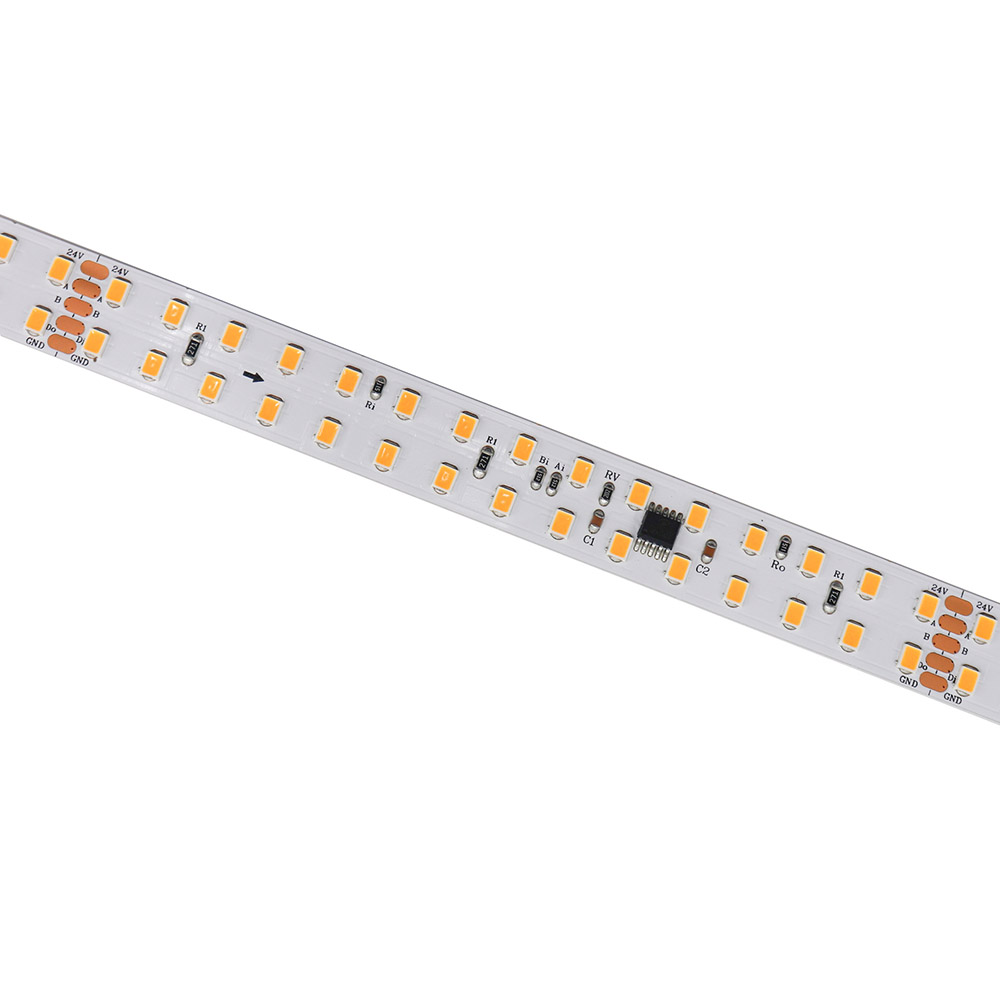
3000K/4000K/6500K LED Double Row DMX Light Strip
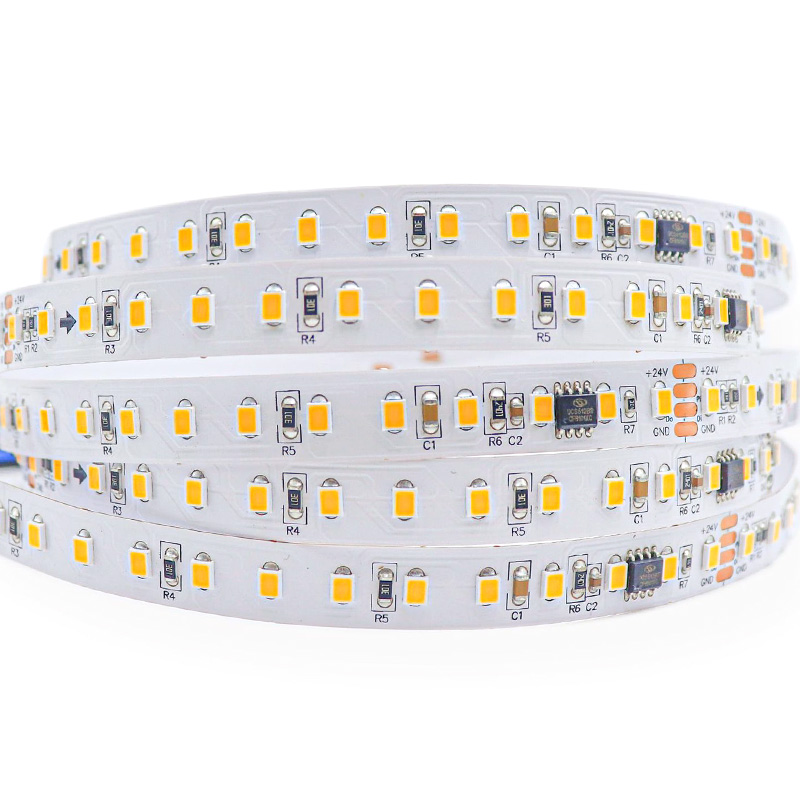
24V SMD 2835 Addressable LED DMX White Strip Lights
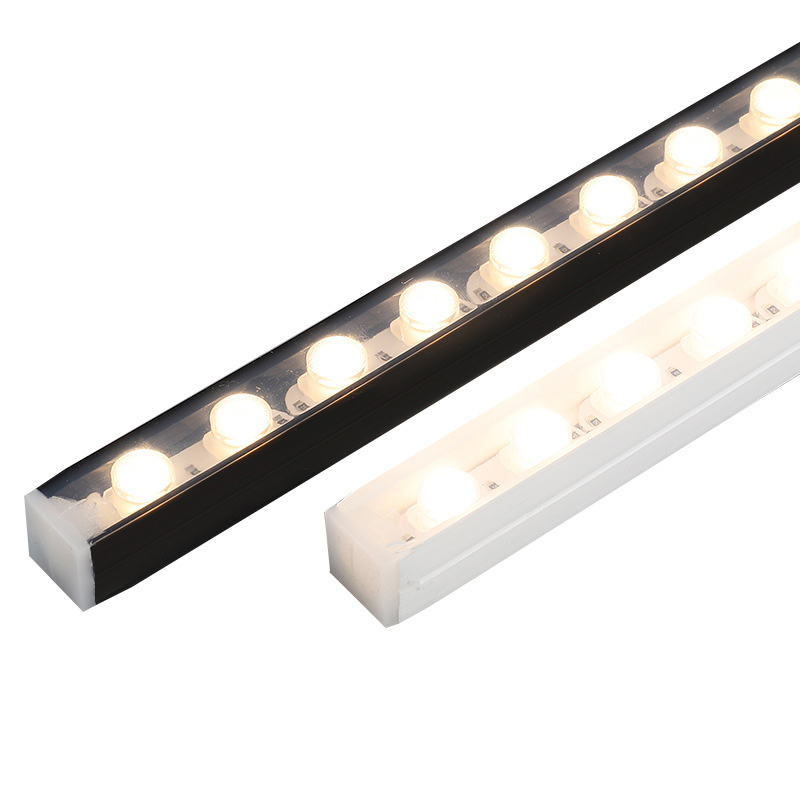
White 24V Silicone Flex LED Wall Washer Strip Light Outdoor
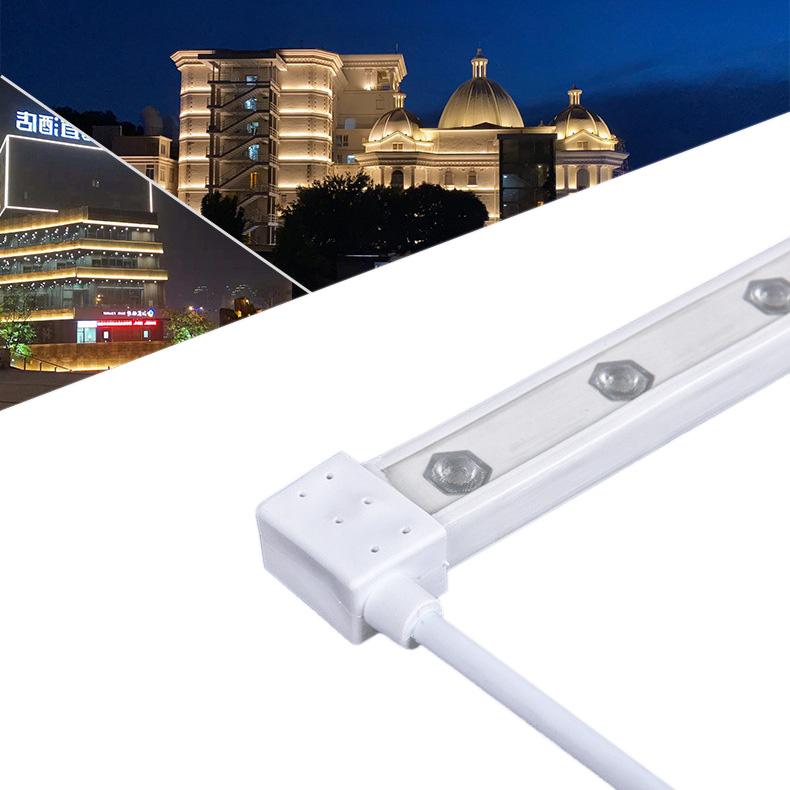
Flexible DMX512 Wall Washer LED Strip - Curve-Fitting & Durable
Frequently Asked Questions About DMX White LED Strips
Your real-world questions about installing and specifying DMX512 white addressable LED strips, answered by our engineers.
A DMX white LED strip gives you pixel control. This means you can program individual sections of the strip to create dynamic effects like chasing, fading, or sparkling white light. A standard dimmable strip only lets you change the brightness of the entire strip at once. If you just need simple, uniform dimming, PWM is fine. If you want animated white light for architectural features or displays, you need DMX.
The 5-pin version has a redundant data line. The 4-pin has Power (+), Data, and Ground (-). The 5-pin adds a backup Data line. In a large installation, if one IC fails, the backup line ensures the signal continues down the rest of the strip without interruption. For critical projects where failure is not an option, the 5-pin is absolutely the way to go. For smaller, less critical jobs, 4-pin is usually sufficient.
This is almost always a controller or decoder setting, not a faulty strip. Many DMX controllers have a setting for PWM frequency or dimming curve. A low frequency (under 500Hz) can be visible as flicker, especially at low brightness levels. Check your controller's manual to see if you can increase the PWM frequency. Also, ensure you're using a high-quality DMX decoder that's matched to your strip's voltage.
Not directly, and this is a common mistake that will damage the strip. A DMX strip needs a DMX signal. A standard wall dimmer outputs phase-cut AC power. You need a DMX controller or decoder to generate the signal that tells the pixels what to do. The wall dimmer doesn't speak that language. We stock a full range of DMX master controllers that can take various inputs and output the correct signal.
They achieve similar goals—addressable white pixels—but use completely different control protocols. SK6812 white is an SPI protocol, common in the hobbyist and maker communities. DMX512 is the professional standard for theatrical and architectural lighting. DMX is more robust, designed for much longer cable runs and larger systems with hundreds of fixtures. You can't mix them; your controller must match the strip's protocol.
We do this all the time. A huge part of our business is building to a spec that isn't listed on the site. If you need a specific color temperature, a certain IP rating, or pre-cut lengths with waterproof connectors already soldered on, just send us your requirements. You can send a CAD file or even just a sketch on a napkin. An engineer will reply, usually the same business day, with a full wiring plan and quote. There's no fee for the consultation.