
SPI Master controller
11 productsAn SPI master controller generates or translates the clocked serial data stream that tells individual digital ICs along an addressable LED strip light exactly when to light, dim, and shift color. SuperLightingLED provides a complete range of pixel hardware within our SPI control systems, bridging standard network protocols to bare chip inputs across DC 5V, 12V, 24V installations.
Standard building automation and stage consoles communicate via balanced DMX512 or wireless networks, yet digital LED strips require single-ended TTL signals with microsecond timing. Deploying dedicated master controllers eliminates signal degradation across long runs by providing direct protocol conversion, localized timing generation, and onboard amplification right at the strip header.
What protocols does an SPI master controller translate?
A dedicated SPI master controller acts as a hardware bridge between standard lighting networks and raw pixel data lines, converting DMX512/RDM, RF, or Bluetooth signals into high-speed TTL serial data. Rather than relying on software-emulated timing from a computer, each hardware unit features dedicated microprocessors designed to handle specific digital signaling without timing jitter.
- DMX512 and RDM conversion: Decoders like the DMX-SPI-202 and DMX-SPI-203 take standard DMX512 console data and output SPI data to control up to 1,024 virtual pixels, with RDM parameter configuration supported over the line.
- RF and standalone playback: Units such as the SPI-16S work with handheld remotes (powered by a 3V CR2032 battery) to run pre-programmed chases and dynamic scene modes across DC 5V to 24V circuits.
- Wireless mesh control: Compact units like the CG-SPI (135×30×20mm) integrate Bluetooth 5.0 SIG Mesh to manage RGBIC pixel tape up to 10A directly from a mobile device without running external data wire.
- Networked video playback: Systems like the LT-600 offer direct WiFi wireless transmission alongside standard DMX512 and SPI outputs for video synchronization.

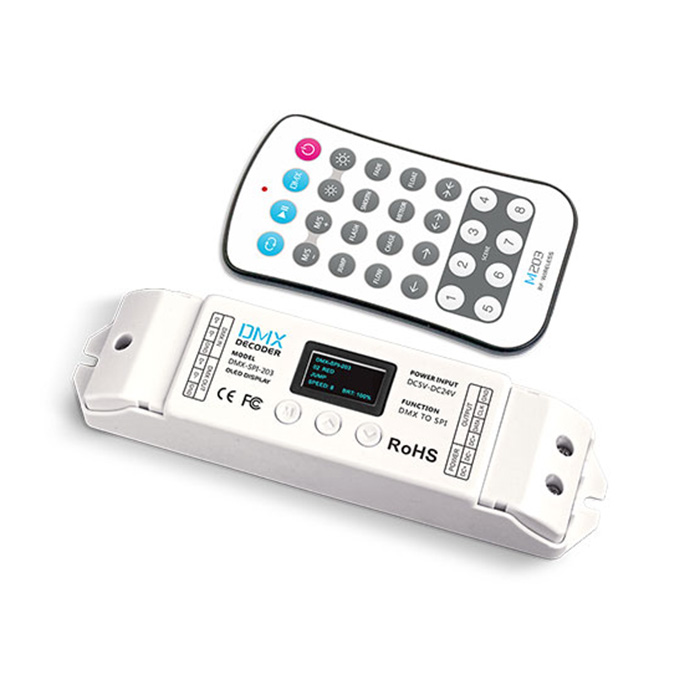
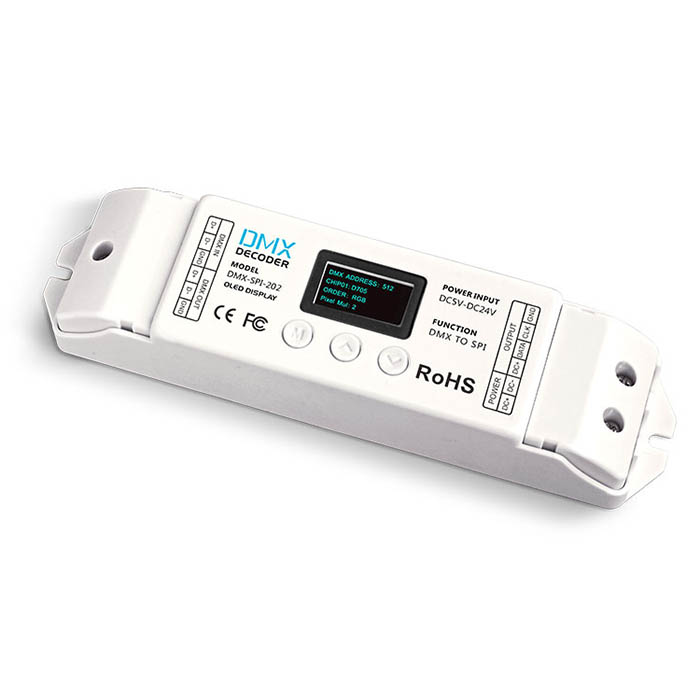

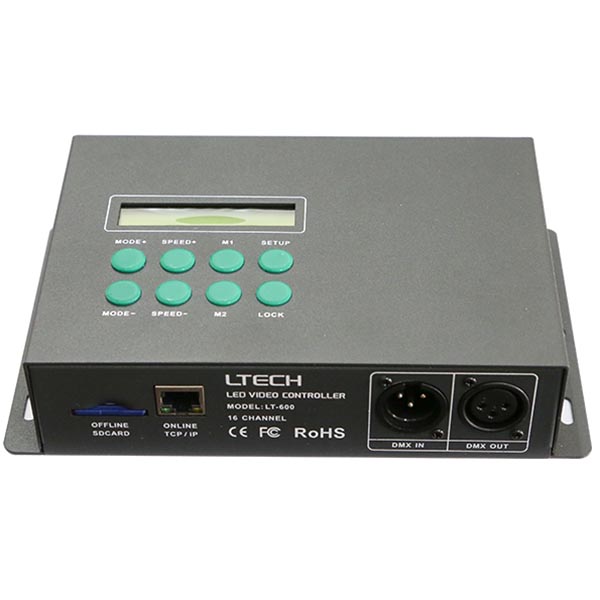


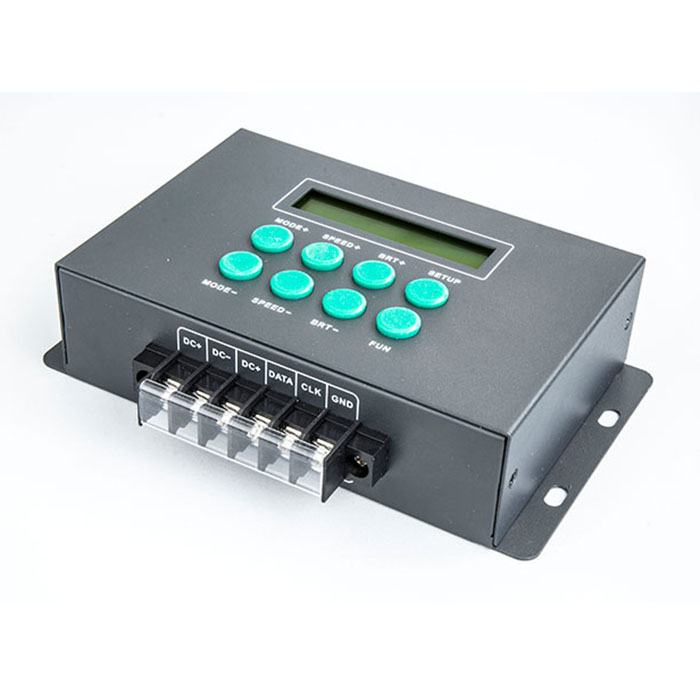
LETCH LT-209 DMX512 Controller - 1024 Pixel Dream Color LED Music Sync


FAQ About SPI Master Controllers
Direct engineering answers on wiring, IC compatibility, signal limits, and system design for SPI master controllers.
An SPI master controller generates pixel control data directly from onboard memory, an RF remote, or a phone app, running standalone without requiring an active external lighting console. Unlike slave decoders that simply translate continuous streaming feeds, an SPI master controller stores dynamic effect tables locally. It clocks out precise high-speed pulse trains to IC chips on fixtures driving individual colour and brightness steps along the line.
Choose an RF SPI master controller when you want zero-latency handheld remote control from up to 30 metres away, and pick Bluetooth mesh when you need smartphone app scheduling and multi-room grouping. RF models like the SPI-16S pair with dedicated wireless handsets to cycle preset chases without software setups. Bluetooth mesh units, like our CG-SPI 10A, let you build lighting schedules, create custom chases on your phone, and sync multiple controllers across commercial spaces.
An SPI master controller can only drive non-addressable LED strip lights if you place a multi-channel pixel driver between the controller output and the LEDs. Standard analog RGB strips have no ICs to decode data packets. By wiring a dedicated translation driver like the LT-280 to your SPI data line, the driver reads SPI packets and outputs 24 channels of constant-voltage PWM dimming, turning groups of standard LED strip lights into controllable pixel blocks.
You cannot reliably split an SPI master controller data line with standard wire nuts or Y-taps without causing data reflections and pixel jitter. Because SPI is an unbuffered 5V TTL single-ended signal, splitting the copper trace cuts signal amplitude and introduces standing waves. When you need identical chasing across parallel runs, route the data line through an active splitter like the LT-122 SPI amplifier to regenerate clean clock and data signals across isolated outputs.
Erratic chasing or incorrect colours on an SPI master controller almost always point to an RGB color sequence mismatch or the wrong IC protocol selected in the controller settings. Different chipsets expect data registers in different sequences—WS2811 often reads BRG or GRB, while UCS1903 might expect standard RGB. Access the controller IC setup menu to match your strip's driver chip, then step through the RGB order setting until the primary colours match your remote buttons.
An SPI master controller must share a common negative ground wire with every auxiliary power supply powering the LED strip lights. SPI data pulses rely on a 0V DC reference. If your controller sits on one power pack and your LED strip lights run off another without a shared ground wire, the signal voltage floats unpredictably, causing flickering, erratic flashing, and missed trigger frames across the run.