
CC DMX512 Decoder
11 productsConstant Current DMX512 Decoders for Professional LED Fixtures
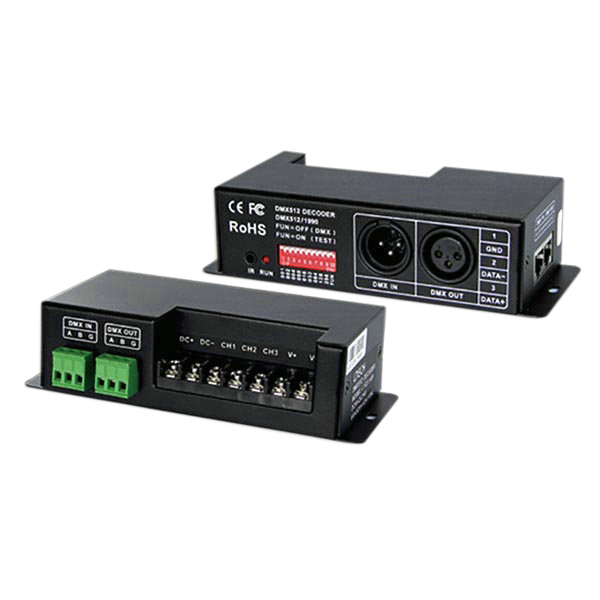
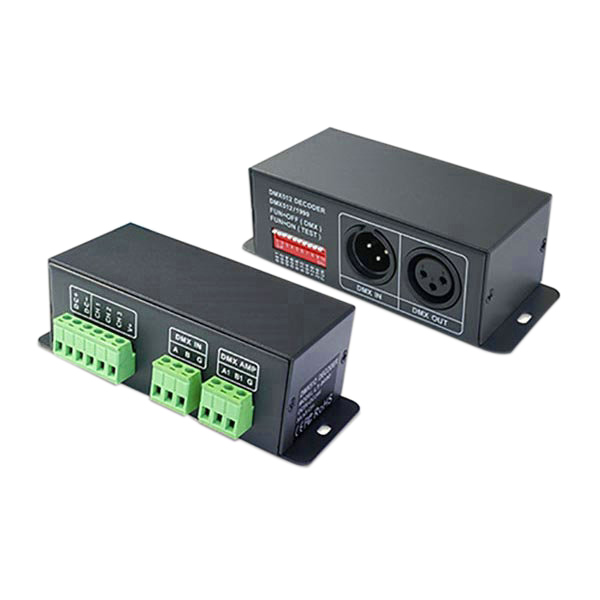
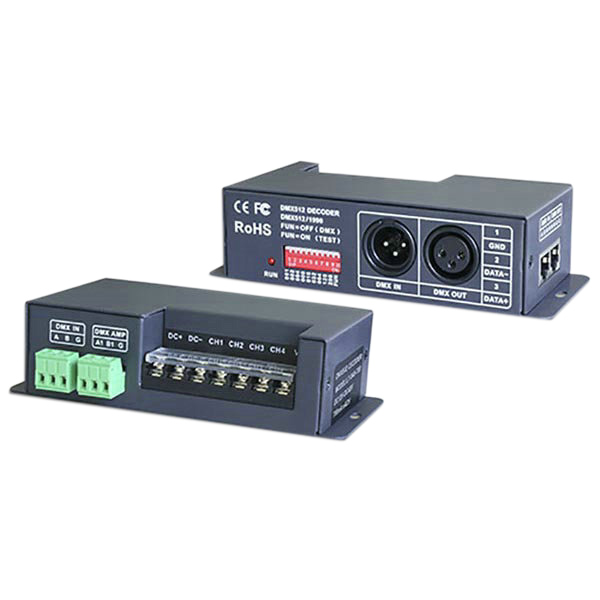
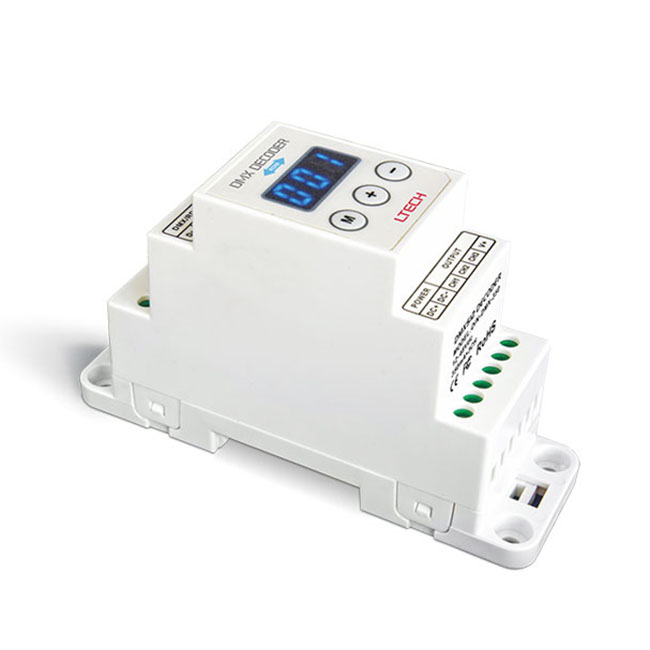
LTECH Constant Current DMX512 Decoders are designed to integrate constant-current LED lights into professional DMX512 lighting systems. Unlike constant-voltage DMX decoders used primarily with conventional 12V, 24V, or 48V LED strips, these decoders regulate the output current supplied to the LED load while responding to DMX dimming and color-control commands.
SuperLightingLED offers LTECH CC DMX decoders with different output currents, channel counts, input-voltage ranges, DMX/RDM functions, and installation formats. Depending on the model, options include single-channel, 3-channel, 4-channel, and higher-channel-count control for high-power LEDs, downlights, spotlights, LED modules, custom fixtures, and other constant-current lighting applications.
The most important selection factor is the required LED drive current. The decoder's constant-current output must match the electrical requirements of the connected LED fixture.
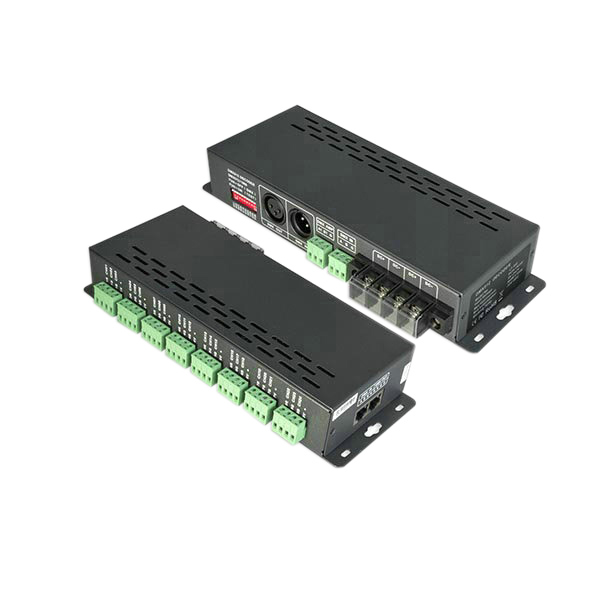
LT-880-350 16CH DMX Controller - RDM, DMX512 Bi-directional RGBW Control
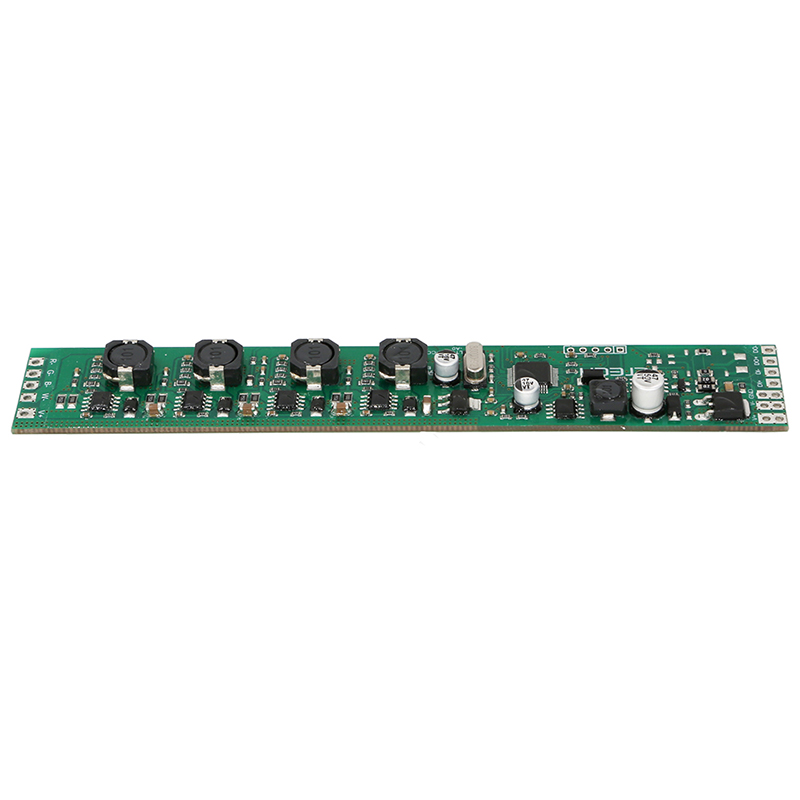
LT-8036-1000 DC12-36V 4 Chnanels DMX/RDM CC Decode Circuit Board
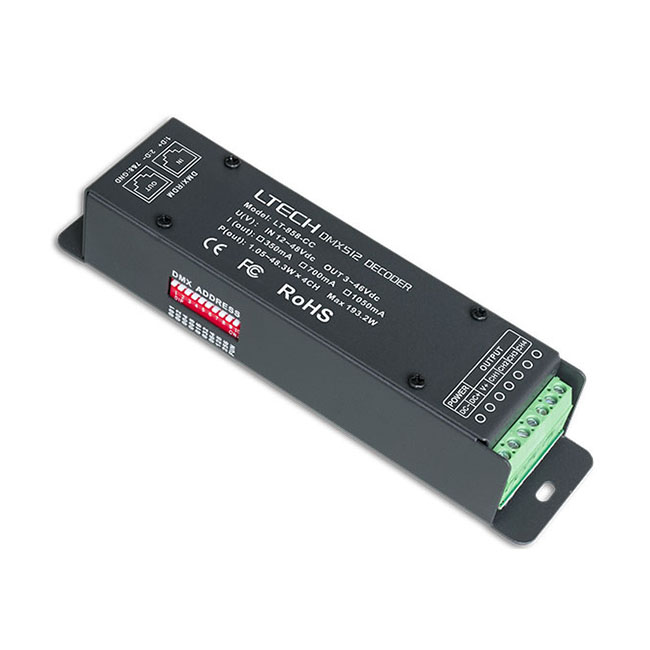
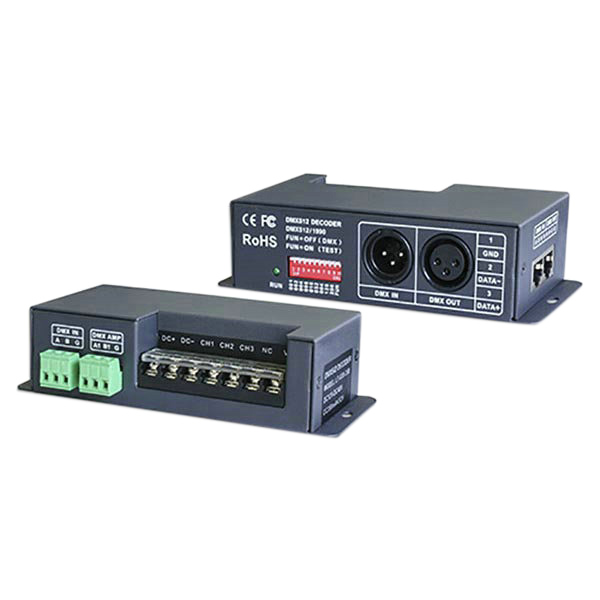
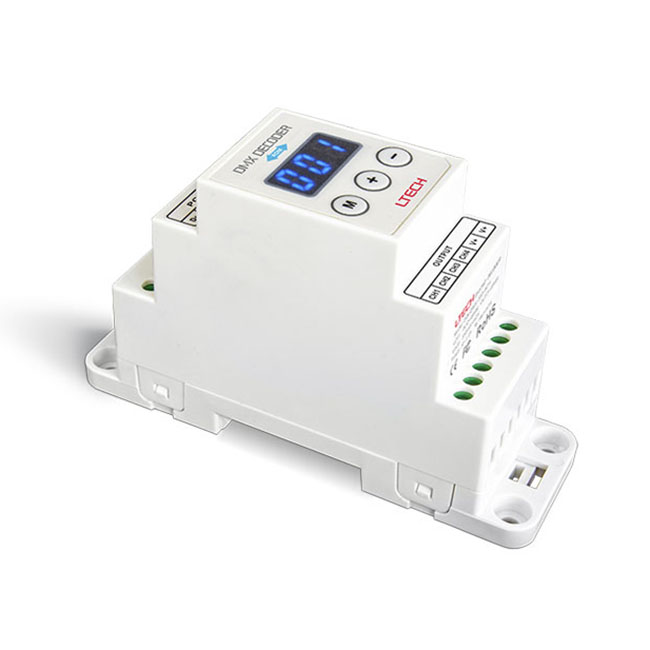
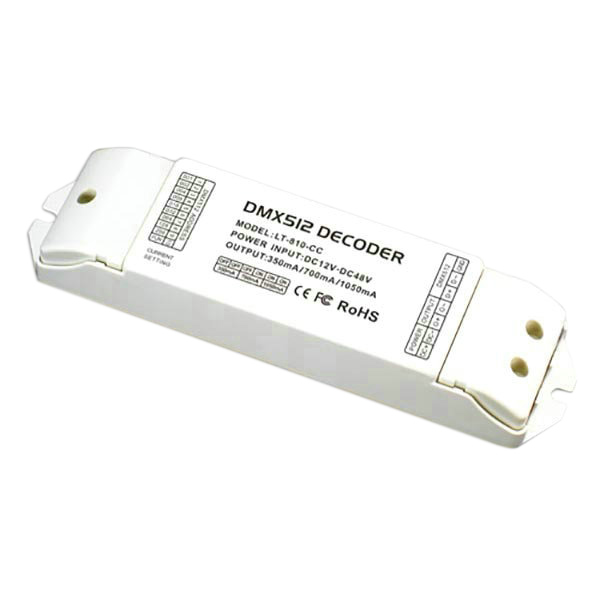
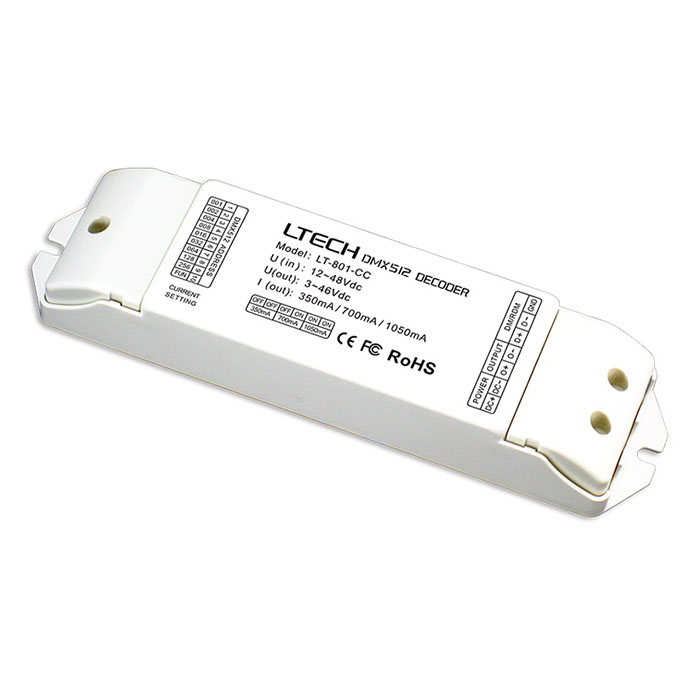
What Is a Constant Current DMX Decoder?
A constant-current DMX decoder receives DMX512 commands from a master controller and converts them into controlled constant-current outputs for compatible LED loads.
Instead of simply switching a fixed-voltage supply to an LED load, the decoder regulates the current delivered through each output channel. This makes it suitable for LEDs and fixtures that are specified by a required operating current such as 350mA, 700mA, or another defined constant-current value.
A typical system is: DMX Master Controller → CC DMX Decoder → Constant Current LED Light
The decoder allows conventional constant-current LEDs to become part of a larger DMX system without requiring each LED fixture to include its own DMX interface.
What Can a CC DMX512 Decoder Control?
Constant-current DMX decoders are commonly used with lighting products such as:
- - high-power LED modules
- - LED spotlights
- - downlights
- - recessed fixtures
- - architectural LED modules
- - RGB or RGBW constant-current fixtures
- - custom-built LED luminaires
- - other LEDs that require a regulated drive current
Different channel configurations support different types of lighting.
- A single-channel decoder is suitable for dimming one constant-current LED circuit.
- A 3-channel decoder can be used for RGB lighting or three independent LED circuits.
- A 4-channel decoder can support RGBW lighting or four separately controlled channels.
- Higher-channel-count decoders are useful when multiple LED circuits need to be controlled from one DMX device.
Always confirm the electrical specifications of the LED fixture before choosing the decoder.
How to Choose a Constant Current DMX Decoder
1. Match the LED Drive Current First
For constant-current lighting, output current is the first specification to check.
If an LED module is designed for 350mA, select a decoder or output setting that provides the appropriate 350mA constant-current drive. Likewise, a 700mA LED load requires a compatible 700mA output. Some LTECH models provide a fixed current, while selected models offer multiple or adjustable current options.
Using an output current higher than the LED's rated current can damage the LED or shorten its operating life. An output current below the specified value will generally reduce light output. For this reason, do not select a CC decoder based only on wattage or channel count.
2. Check LED Forward Voltage and Decoder Operating Range
After confirming the current, check the voltage requirements of the LED load.
Constant-current LEDs have a forward-voltage range, and multiple LEDs connected in series increase the total required voltage. The decoder and its power source must provide sufficient operating voltage for the complete LED string while remaining within the decoder's specified input and output limits.
For custom LED assemblies, check: **LED current requirement + total forward voltage + number of LEDs per channel** before selecting the decoder and power source.
This is one of the main differences between selecting a constant-current system and choosing a conventional 12V or 24V constant-voltage LED strip system.
3. Choose the Number of Output Channels
Next, determine how many independently controlled LED circuits are required.
For example:
- 1CH — single-color dimming
- 2CH — tunable white or two independent circuits
- 3CH — RGB or three independent circuits
- 4CH — RGBW or four independent circuits
- Multi-Channel — multiple fixtures or larger architectural systems
SuperLightingLED offers LTECH CC DMX decoders ranging from compact single-channel models to multi-channel solutions for more complex installations.
4. Check the Load Per Channel
The LED load connected to each channel must remain within the electrical limits of the selected decoder.
Do not assume that two constant-current LEDs can simply be connected in parallel to one output. Series/parallel wiring changes the current and voltage requirements of the load and must be designed according to the specifications of both the LED and decoder.
For larger installations, divide the lighting into suitable circuits or use multiple decoders when necessary.
Choosing the Right Constant Current DMX Decoder Solution
LTECH is one of several professional lighting-control brands available from SuperLightingLED.
For projects that require different output currents, channel configurations, form factors, features, or price levels, we also provide DMX CC decoder products from brands including SkyDance, BinColor.
When comparing CC DMX decoders across brands, focus first on: Required output current → LED forward voltage → channel count → load per channel → DMX/RDM compatibility → installation format, rather than choosing by brand alone.
Because DMX512 is a standardized control protocol, compatible products from different manufacturers can often be integrated into the same DMX system when their signal, addressing, electrical, and load requirements are correctly matched.
Frequently Asked Questions About CC DMX512 Decoders
Your questions about choosing, wiring, and troubleshooting Constant Current DMX decoders, answered by our engineers.
It's the single most important choice you'll make. A Constant Current (CC) decoder drives LEDs directly by controlling the milliamps (mA). You use it for high-power LEDs that don't have their own circuitry, like in wall washers or spotlights. A Constant Voltage (CV) decoder provides a stable voltage, like 24V, for products like LED strip lights that already have current-limiting resistors on the board. Using the wrong one will destroy your LEDs.
This is the critical step. The decoder's output current, measured in milliamps (mA), must exactly match the LED's required forward current. If your LED needs 700mA, get a 700mA decoder. Also, check the decoder's output voltage range (e.g., DC3V~DC46V). The total forward voltage of your LEDs wired in series must fall within this range. A mismatch here will either under-drive your lights or burn them out instantly.
Yes, but they absolutely must be wired in series. This is a very common wiring mistake. Unlike constant voltage strips that are wired in parallel, constant current LEDs must share the current in a single chain. The combined forward voltage (Vf) of all the LEDs in that series chain cannot exceed the maximum output voltage of the decoder channel. Always check the specs on both sides.
The decoder unit itself runs on standard constant voltage DC power, typically somewhere in the DC12V to DC48V range — check the spec sheet for your model. This power supply runs the decoder's logic circuits. It does NOT power the LEDs directly. The decoder takes that DC input and converts it into the precise constant current that your LEDs require. Don't confuse the two.
It's about where the AC-to-DC conversion happens. A CC DMX Decoder takes in low-voltage DC (from a separate power supply) and a DMX signal, then outputs the constant current. A CC DMX dimmable driver is an all-in-one unit that connects directly to mains AC power. You'd use a decoder when you have a central, low-voltage power source, and a driver for a distributed setup where each fixture needs its own AC connection.