
RGB/RGBW Controller
2 sub-categoriesThe BinColor RGB/RGBW Controller Series is designed for color-changing RGB, RGBW, and RGBCCT LED lighting, providing flexible color and brightness control for different LED strip lights and lighting fixtures. The series includes both constant voltage (CV) and constant current (CC) controller solutions, offering manual and wireless control options to suit different lighting configurations.
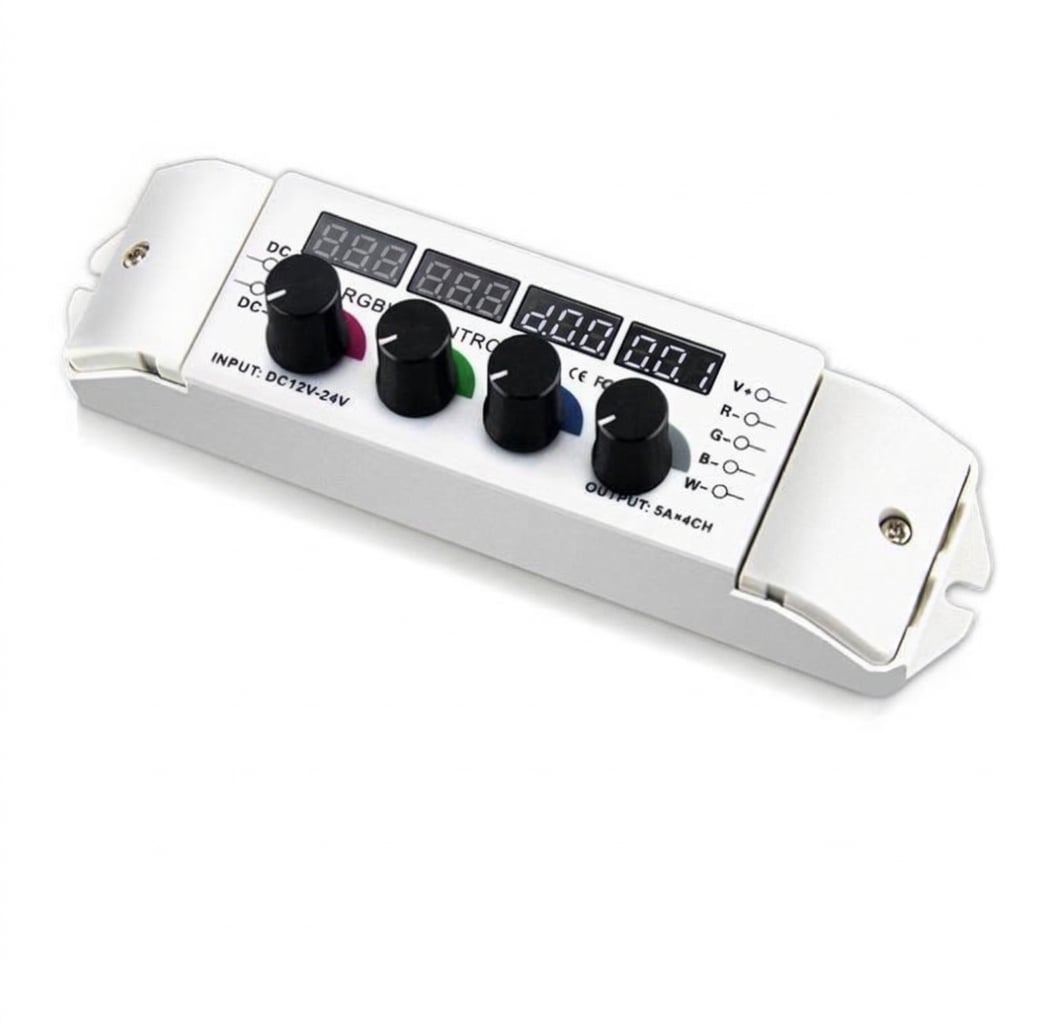
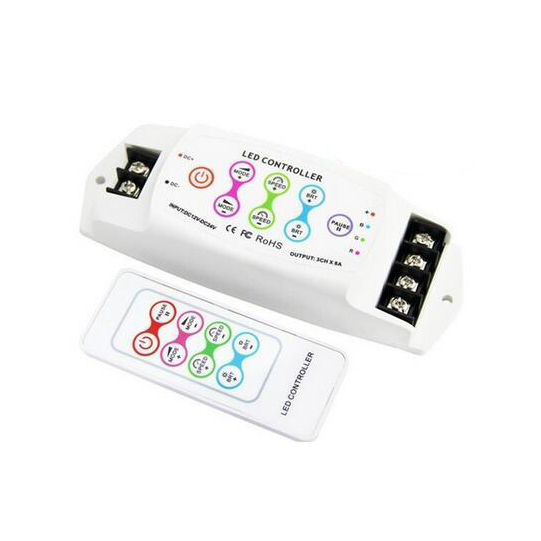
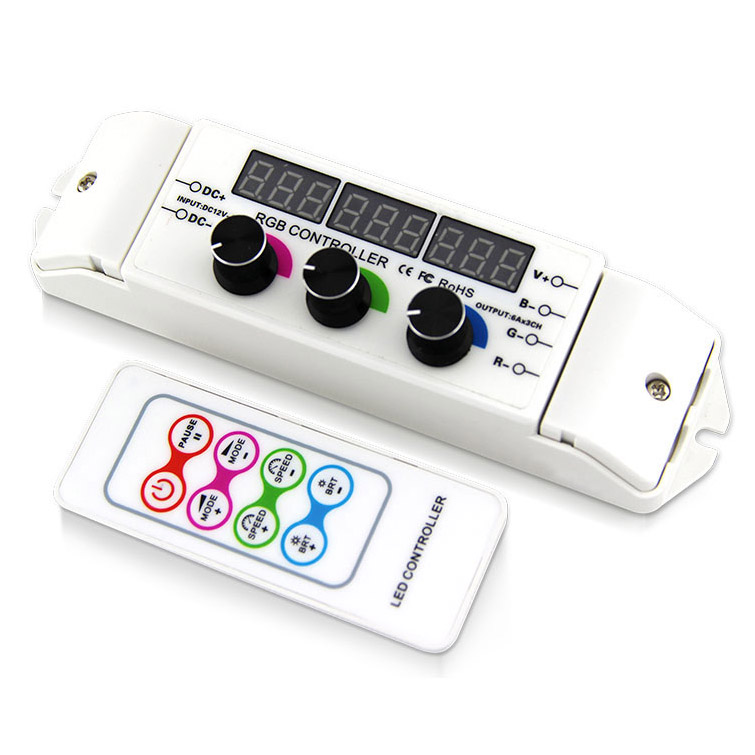
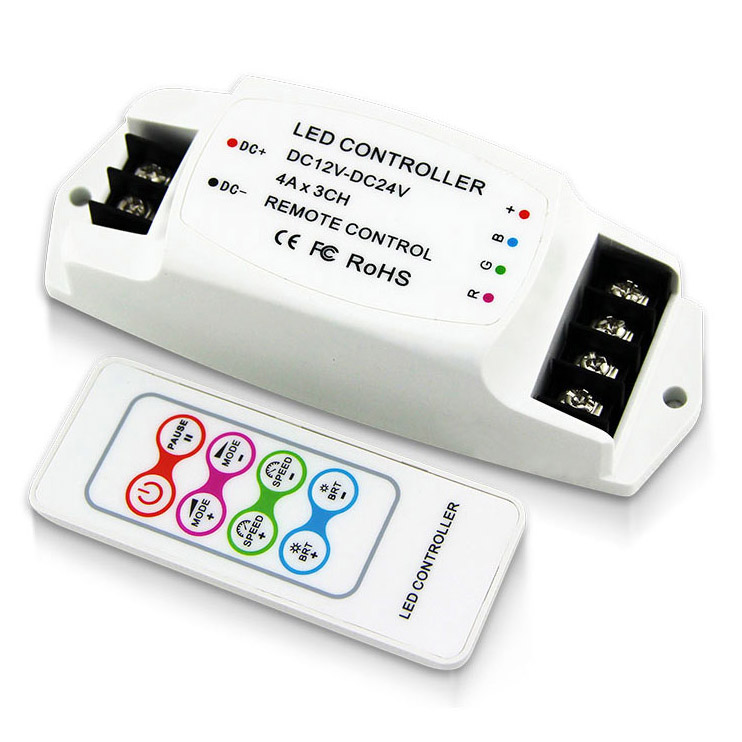
– Constant Voltage (CV) RGB / RGBW / RGBCCT Controllers: Designed for DC-powered LED strip lights, offer flexible operation through RF wireless remotes or direct manual controls, including physical buttons and rotary knobs.
– Constant Current (CC) RGB / RGBW Controllers: Designed for compatible constant current LED fixtures, provide wireless control through matching RF remotes and receivers. A convenient way to adjust color and brightness while maintaining the required current for compatible LED fixtures.

CV Controller
PWM Color Control for RGB, RGBW & RGBCCT LED Strip Lights
BinColor Constant Voltage (CV) RGB/RGBW/RGBCCT Controllers are designed for common-anode color-changing LED strip lights, using PWM (Pulse Width Modulation) technology to independently regulate each color channel and create a wide range of lighting colors and effects.
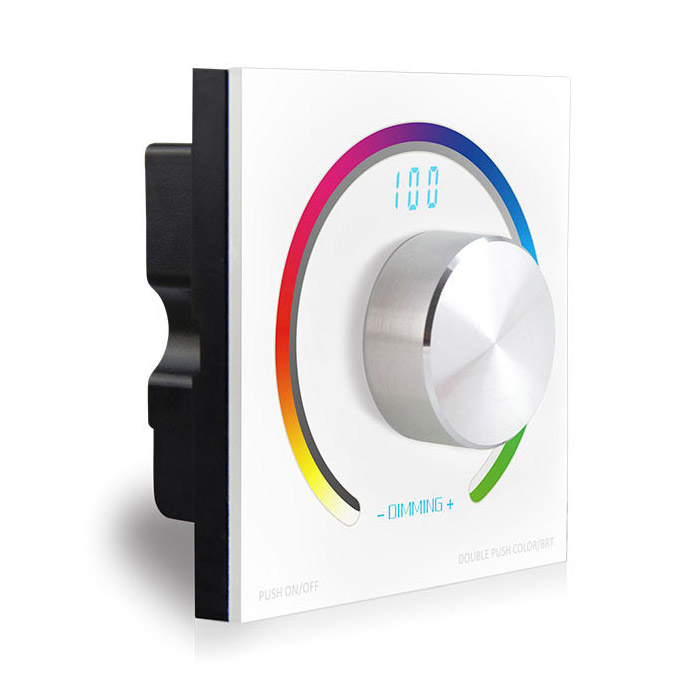
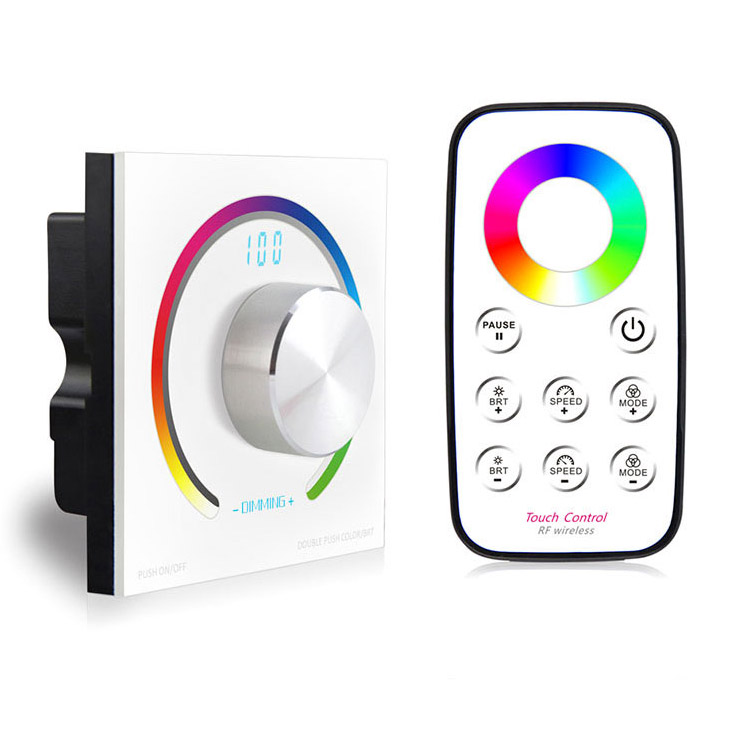
The CV series offers more than one way to interact with your lighting. Users can make direct adjustments through onboard buttons, rotary knobs, or touch controls, or use compatible RF handheld remotes and wireless wall panels for convenient remote operation. Some also combine manual and wireless controls in one system, giving users greater flexibility in how they operate their color-changing LED strips.
Choose a controller according to your LED strip configuration:
- RGB LED Strips: Three-channel PWM output for independent red, green, and blue color mixing.
- RGBW LED Strips: Four-channel control with an additional dedicated white LED channel, allowing color-changing effects and independent white illumination.
- RGBCCT LED Strips: Support RGB color control together with adjustable warm and cool white output.
Depending on the model, users can select colors, adjust overall brightness, control individual color channels, and choose preset dynamic effects.

CC Controller
RGB RGBW Current Control for LED Fixtures
BinColor Constant Current (CC) RGB/RGBW Controllers are developed for color-changing constant current LED modules and lighting fixtures. Unlike constant voltage RGB controllers that regulate LED channels through PWM voltage switching, CC controllers provide regulated constant current outputs to drive compatible RGB and RGBW LED loads.
The series offers multi-channel constant current configurations for controlling different color channels, with output current options including 350mA and 700mA. By matching the controller's rated output current to the LED fixture, users can achieve consistent and controlled color output while adjusting the brightness of their constant current RGB/RGBW lighting.
BinColor CC RGB/RGBW controllers primarily offer wireless control through compatible RF remotes and receiver combinations. Users can select colors, adjust brightness, and activate preset dynamic lighting effects through the matching control interface.
The PX systems also integrate wireless touch-panel control and additional DMX512 connectivity, providing more options for incorporating constant current color-changing fixtures into different lighting control setups.
Best-selling RGB/RGBW Controller
1–20 of 37 products
DC12V-48V RGB+CCT LED controller BC-355RF

 (1)



FAQ About RGB/RGBW Controller Units
Direct engineering answers on wiring, load limits, PWM frequencies, and control protocols for BinColor RGB and RGBW LED strip installations.
An RGB controller regulates color by rapidly pulsing the negative ground path for red, green, and blue channels using pulse-width modulation (PWM). The positive DC rail stays continuous at 12V, 24V, or 48V, while the controller switches each color channel to ground thousands of times per second. By varying the duty cycle of each channel between 0% and 100%, you get millions of color mixes from your rgb led light. Common-anode wiring is standard.
An RGB controller has three output channels (R, G, B), whereas an RGBW controller adds a dedicated fourth channel for an independent white diode. Mixing red, green, and blue to produce white yields an uneven, cool-tinted beam with poor color rendering. Adding a genuine 3000K or 4000K white chip produces clean architectural task lighting.
Connect the black +V wire from your RGBW LED strip lights directly to the V+ terminal, then land red on R, green on G, blue on B, and white on W. The positive line carries common anode DC power, while the controller switches each negative terminal. If your strip runs longer than 5 m on 12V or 10 m on 24V, don't feed current solely from one end. You will see voltage drop shift the white balance pinkish; run a parallel DC power feed back to the output block.
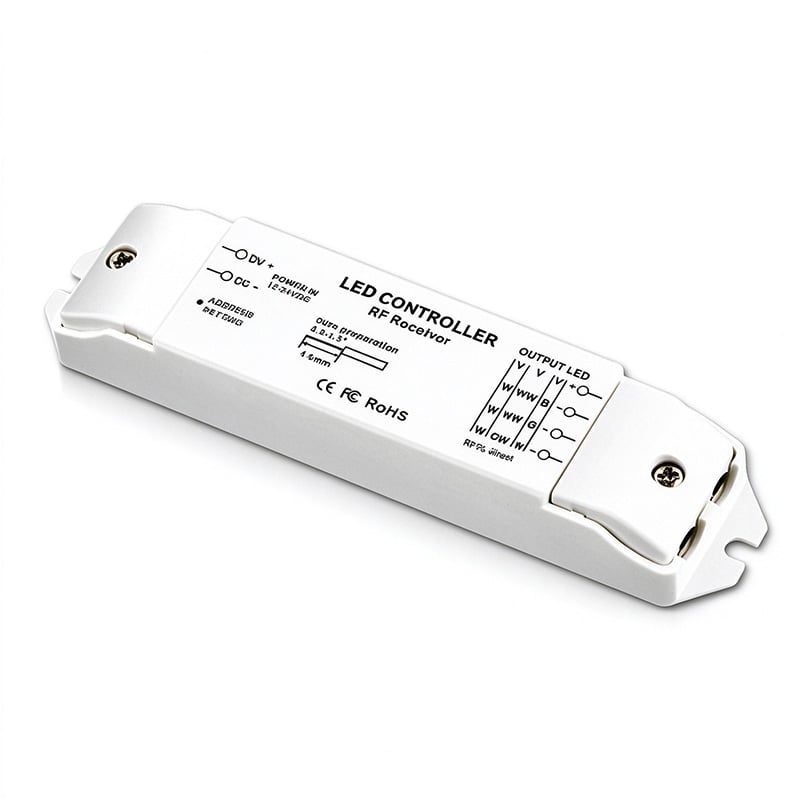
Do not overload the receiver terminals past their rated amperage; use an external power repeater to take over the extra wattage. For example, our BC-354 handles up to 5A per channel (20A total), which powers 240W on 12V or 480W on 24V. When your total installation exceeds that limit, run a signal line from the receiver outputs into signal power repeaters connected to their own dedicated power supplies. This lets one primary controller sync unlimited footage seamlessly.
Nine times out of ten, two channel wires are swapped on the output terminal block, usually green and blue. Turn off DC power, look closely at the printed terminal markings on the receiver casing, and confirm that the red wire lands on R, green lands on G, and blue lands on B. If your strip uses a non-standard wire order (like +BRG instead of +RGB), match the wire traces on the PCB to the terminal letters rather than matching wire jacket colors.
You can run 48V fixtures on our wide-voltage models like the BC-355RF and BC-361 series, which auto-adapt across a DC 12V to 48V range. Most generic controllers top out at 24V, but 6 models in our category support 48V operation out of the box. Running 48V cuts your operating amperage in half compared to 24V, letting you run longer distances on thinner 18 AWG copper wire without visible voltage drop.