
CC DMX512 Dimmable Driver
22 productsLtech Constant Current DMX Drivers provide a stable current output to LED lighting systems while also allowing LED light dimming. Unlike constant voltage DMX drivers which provide a stable voltage output to the LED lighting system, a constant current DMX LED driver ensures that LED lights receive a consistent, regulated current. This helps protect LED lamps from damage caused by input voltage fluctuations. They are a popular choice for commercial and industrial lighting applications.
LTECH Constant Current DMX512/RDM Dimmable Drivers combine regulated constant-current LED driving with professional DMX lighting control in one compact device. They are designed for LEDs and luminaires that require a defined operating current rather than a simple fixed-voltage input, making them especially suitable for downlights, spotlights, high-power LED modules, architectural fixtures, commercial luminaires, and custom LED lighting.
SuperLightingLED offers a wide selection of LTECH CC DMX RDM drivers with different output-current ranges, power ratings, channel configurations, input types, control functions, and programming options. Depending on the model, available features include NFC parameter setting, PUSH DIM, RF control, tunable-white output, multi-current selection, and deep low-level dimming.
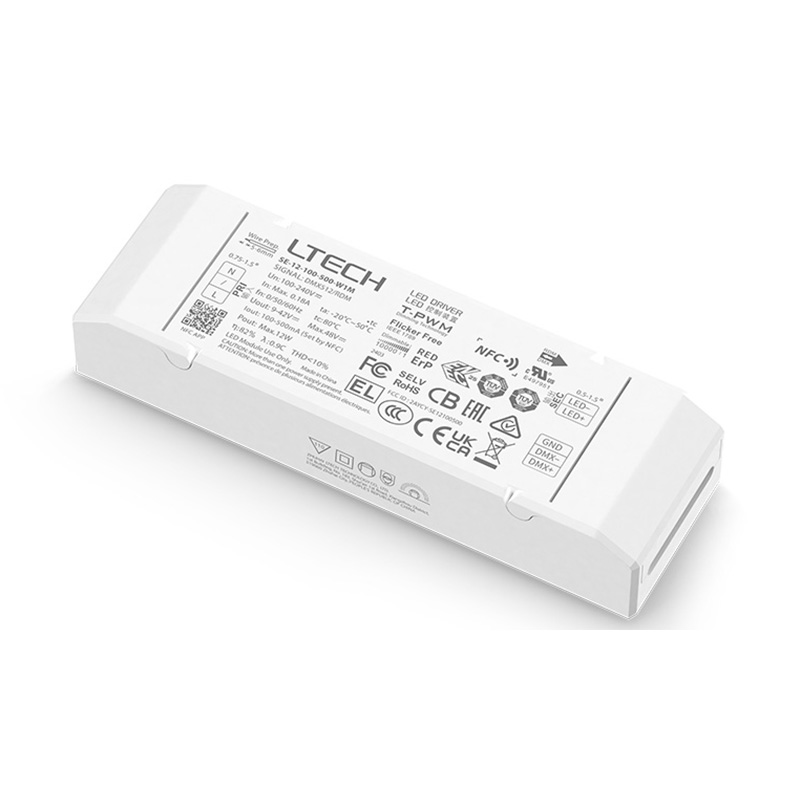
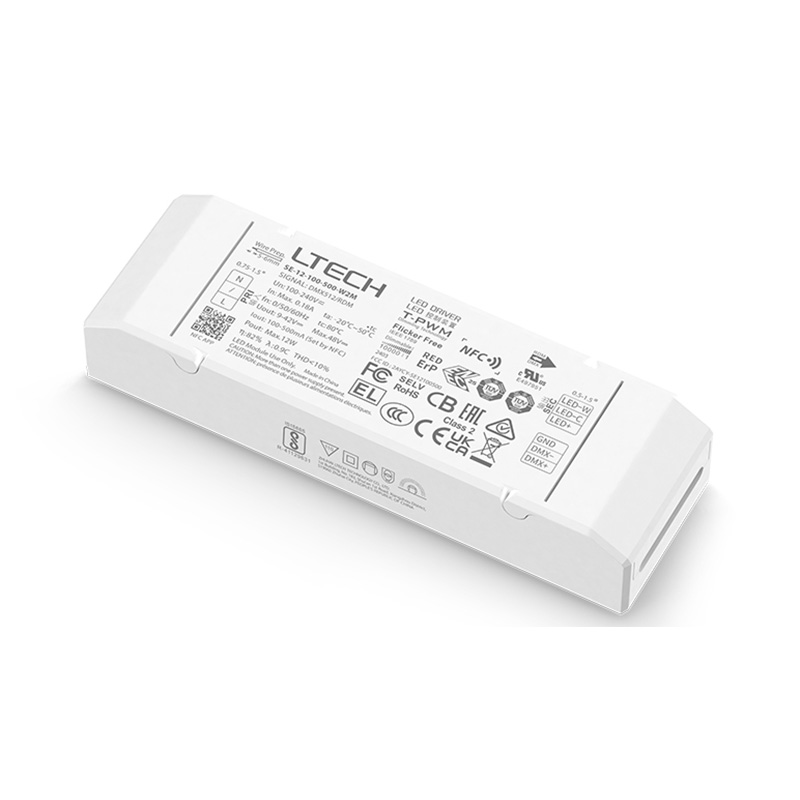
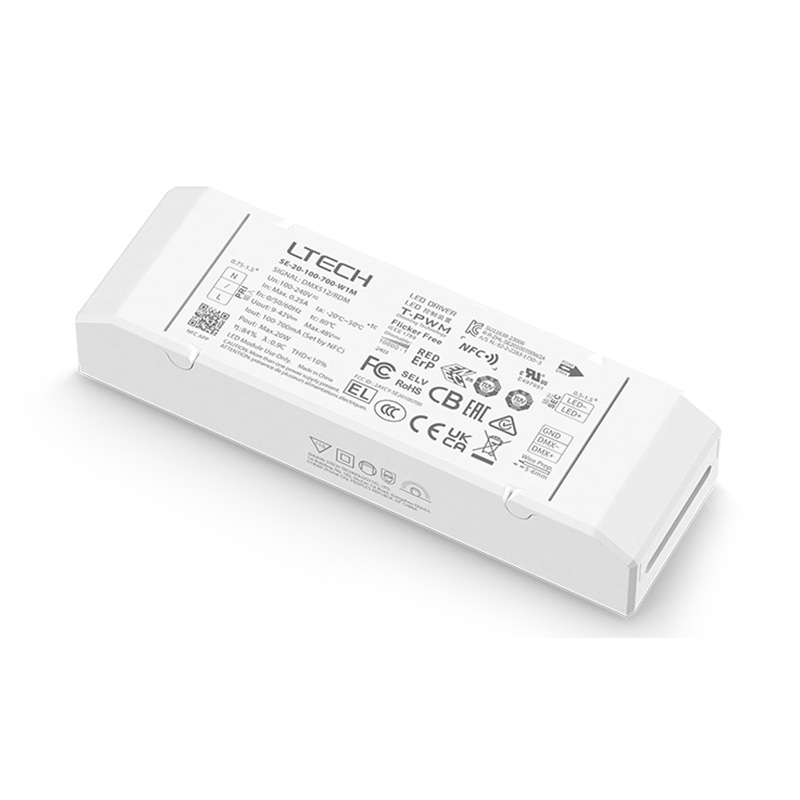
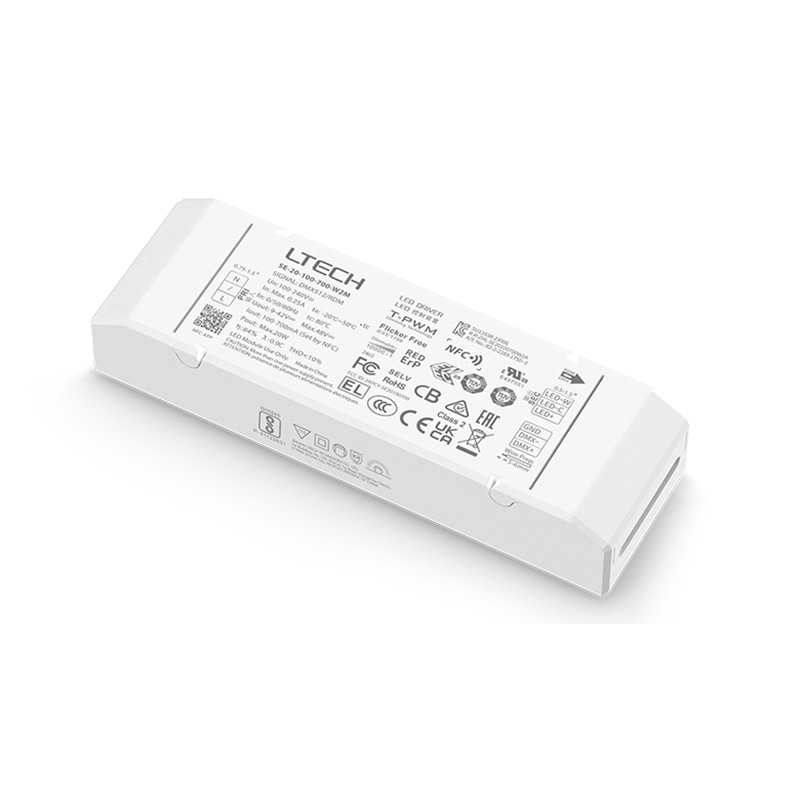
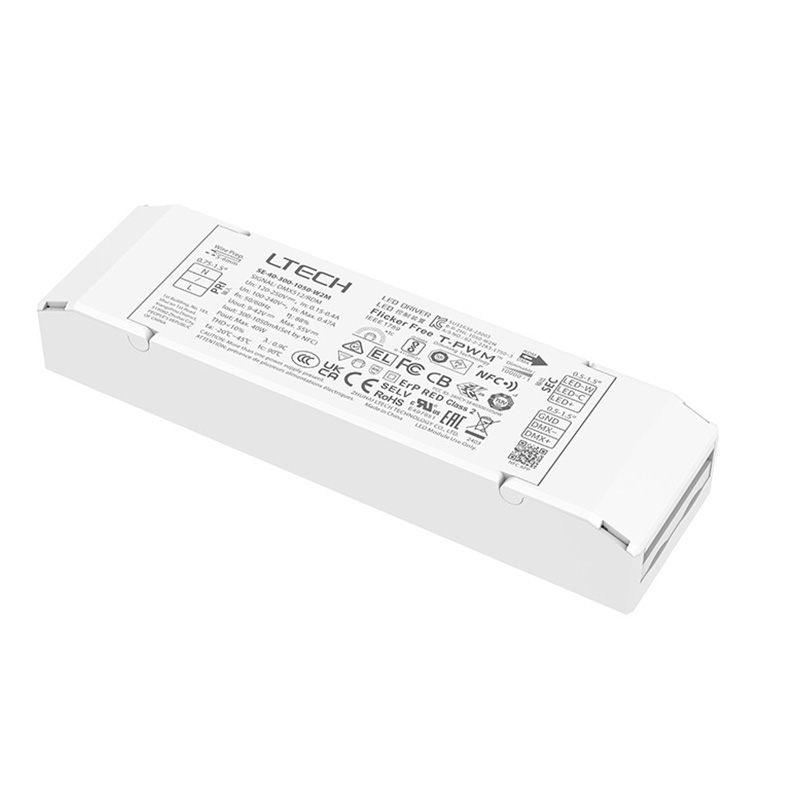
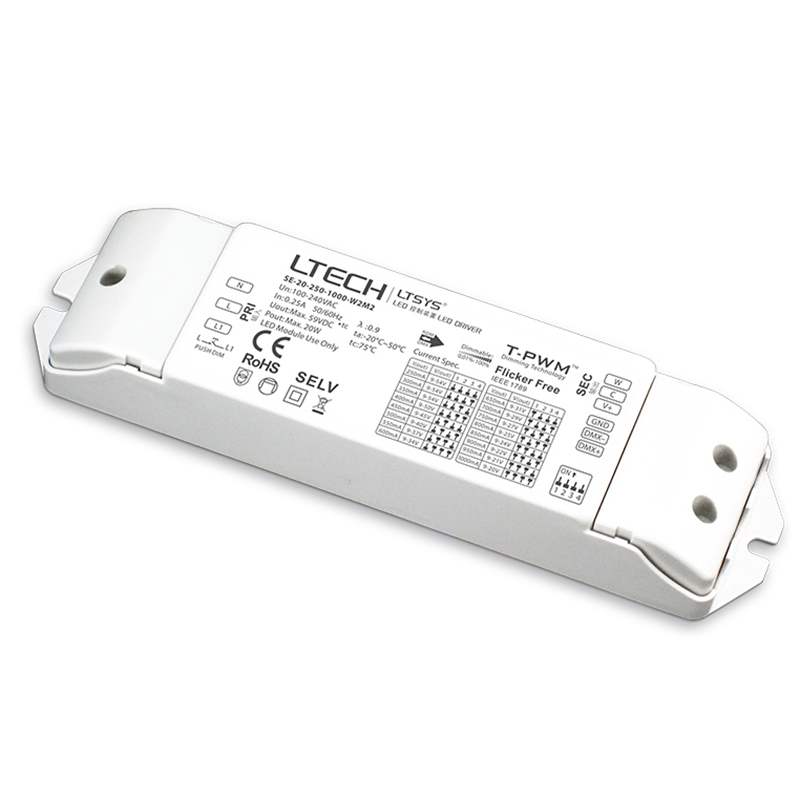
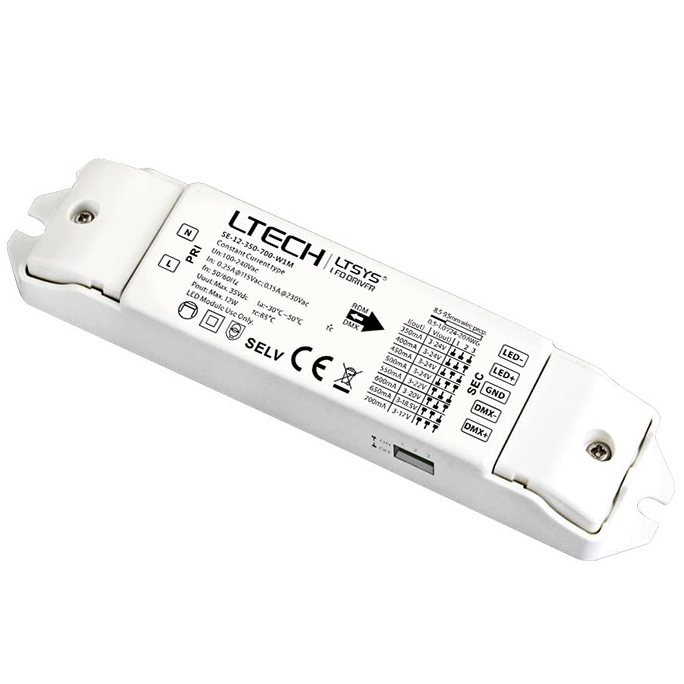
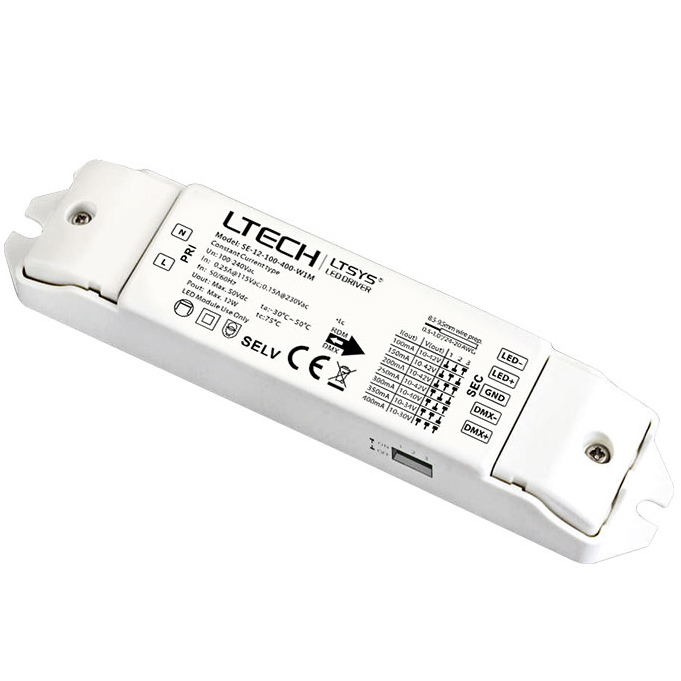
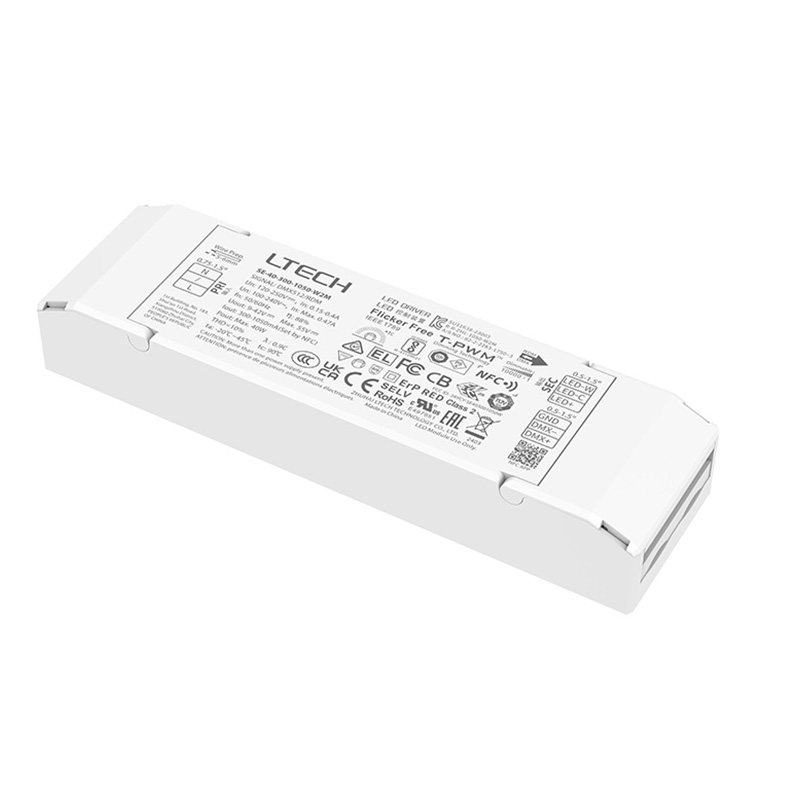
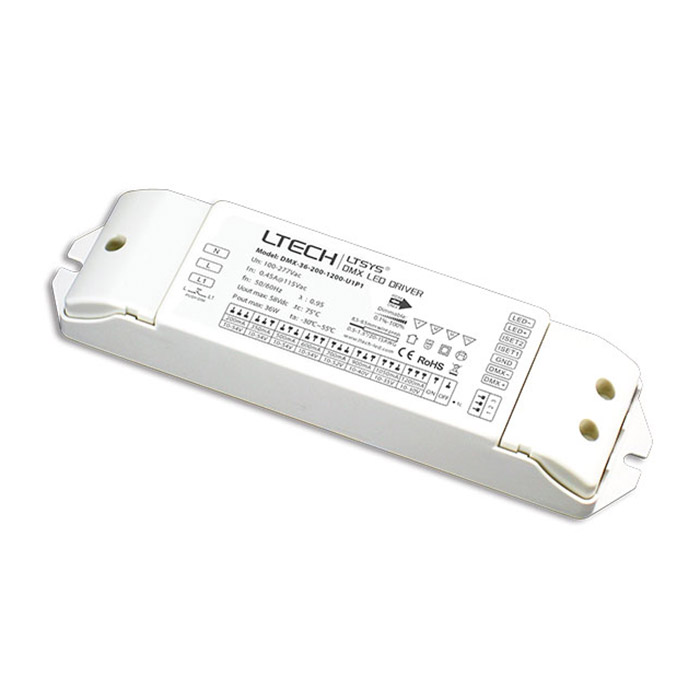
DMX-36-200-1200-U1P1 DMX LED Driver - RDM, 200-1200mA CC | Discontinued
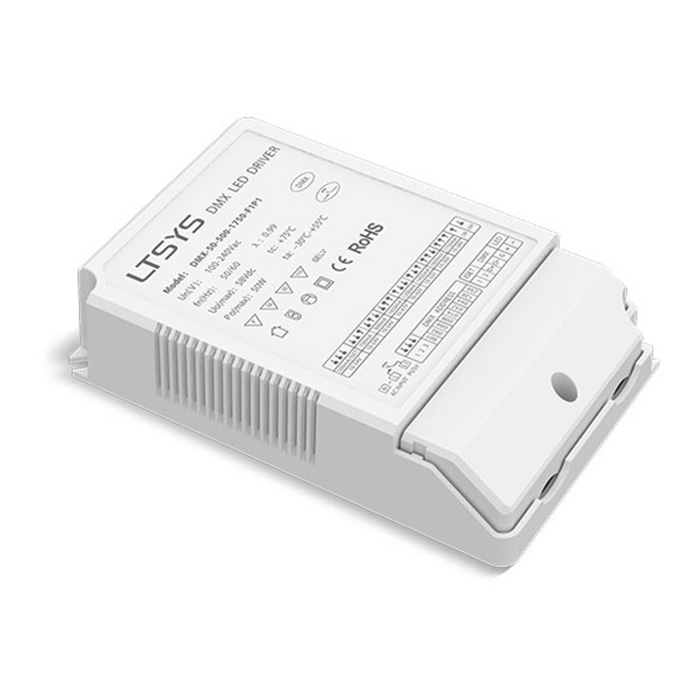
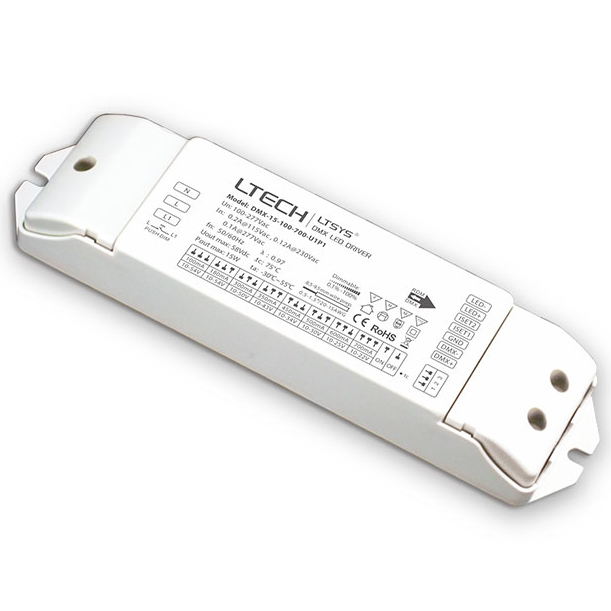
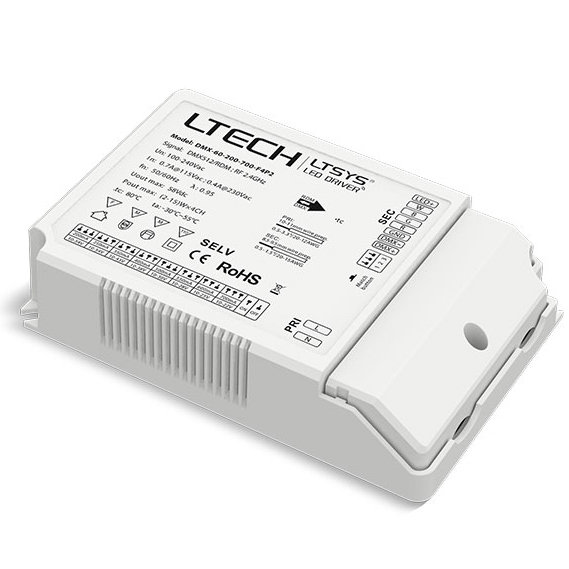
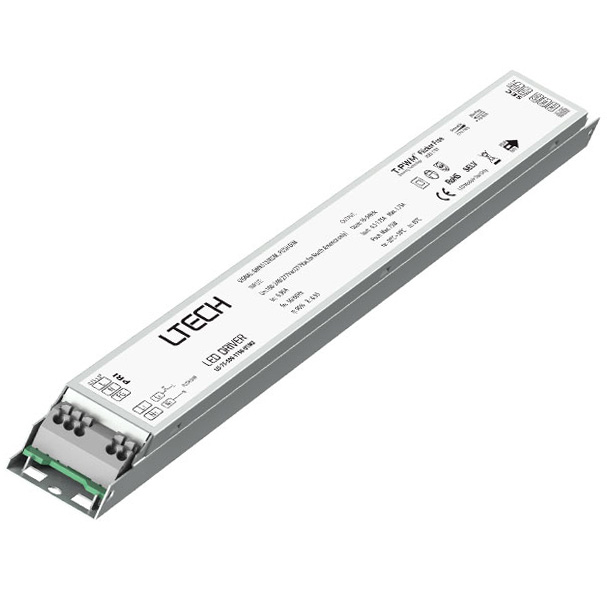
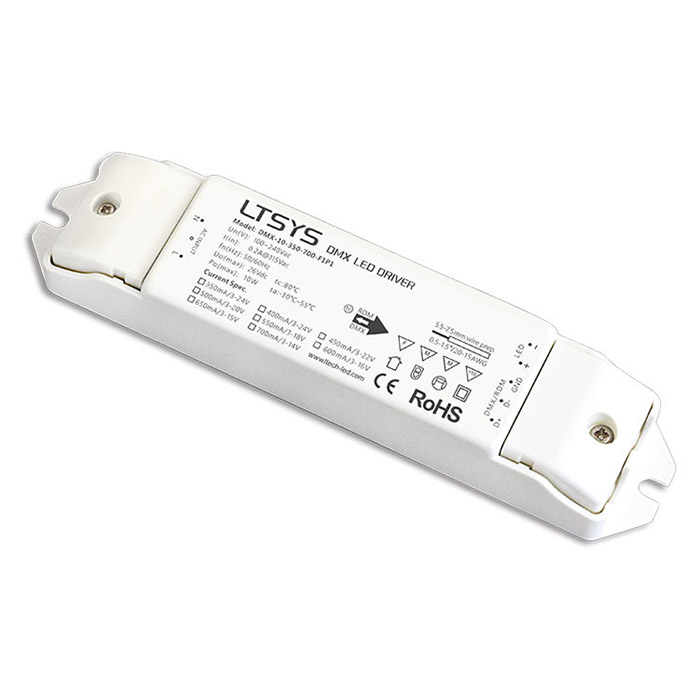
25W 180-700mA CC DMX LED Driver - DMX512/RDM & PUSH DIM | 100-240VAC
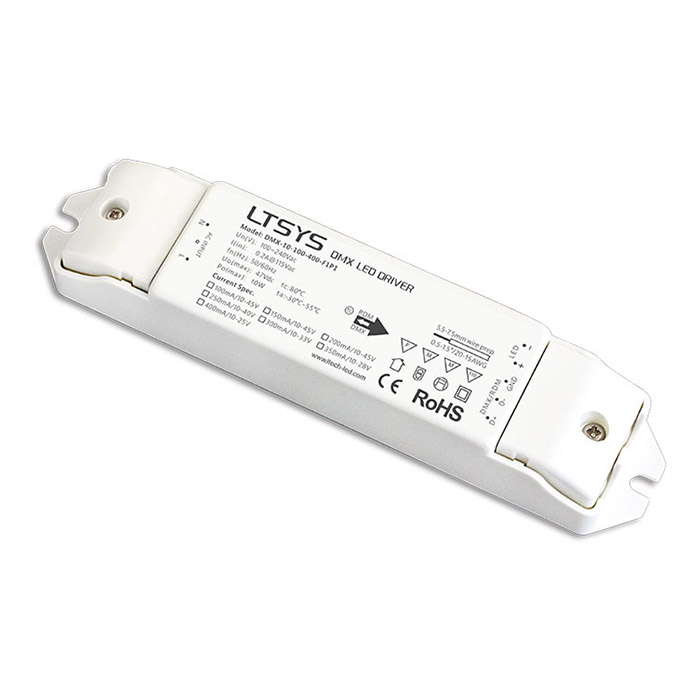
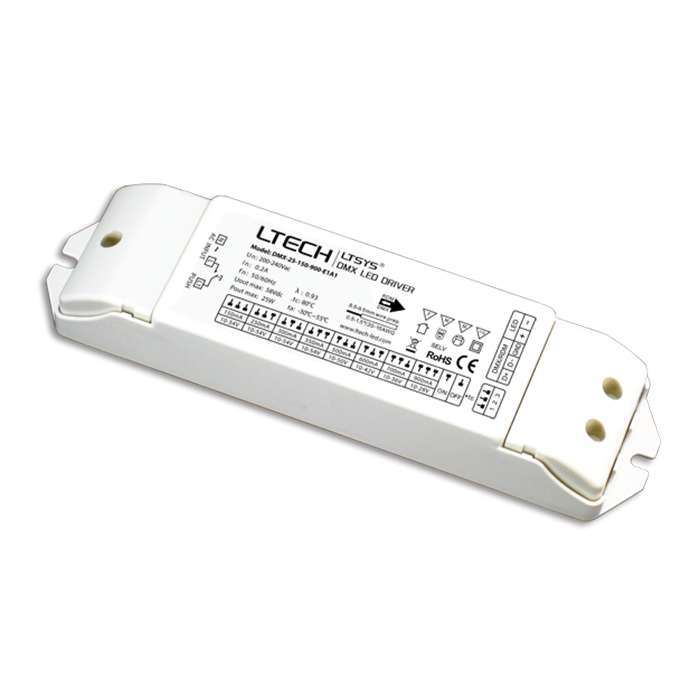
DMX-25-150-900-E1A1 DMX Constant Current LED Driver 25W | RDM Dimmable
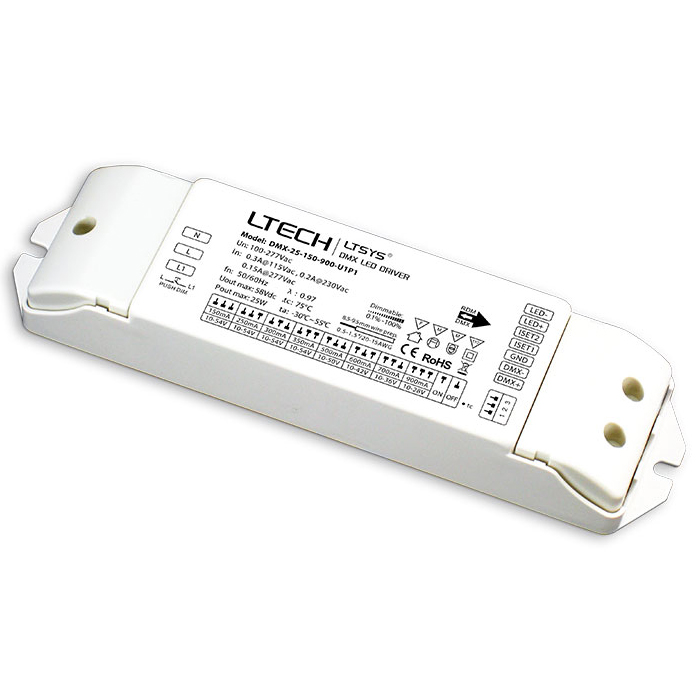
DMX-25-150-900-U1P1 LED Intelligent Driver - 25W Multi-Current DMX/RDM
Integrated Constant Current Driving & DMX Control
LTECH CC DMX RDM drivers are designed to perform two important functions within the same device: provide the regulated current required by the LED load and receive DMX commands for brightness, scene, or multi-channel lighting control.
A typical installation follows a simple architecture: DMX Master Controller → LTECH CC DMX Driver → Constant Current LED Fixture
The driver interprets the DMX signal and adjusts the LED output accordingly while maintaining the required constant-current operating conditions.
This integrated design is particularly useful for professional luminaires where compact installation, smooth dimming, accurate current regulation, and centralized lighting control are important.
Designed for Constant Current LED Fixtures
These DMX light drivers are suitable for LED products that specify an operating current such as: 100mA · 350mA · 500mA · 700mA · 900mA · 1050mA · 1200mA · 1750mA, depending on the selected LTECH model.
Typical applications include:
- - recessed LED downlights
- - architectural spotlights
- - high-power LED modules
- - track-light modules
- - linear luminaires using constant-current LEDs
- - tunable-white LED fixtures
- - commercial display lighting
- - hospitality lighting
- - custom-built LED luminaires
- - architectural and professional lighting systems
Unlike choosing a driver only by wattage, a constant-current LED project must start with the rated drive current of the LED fixture.
Match the Output Current First
The required output current is the first specification to confirm when selecting an LTECH constant-current driver.
If the LED fixture is rated for 700mA, the driver should be configured or selected to provide the appropriate 700mA current. A fixture designed for 350mA should be paired with a compatible 350mA output.
Many LTECH models offer a selectable or programmable current range rather than only one fixed current. This allows the same driver platform to be adapted to different LED fixtures within its supported electrical range.
Some models also support NFC programming, allowing installers to configure compatible output parameters without repeatedly opening or rewiring the installation.
Always confirm and configure the required output current before connecting the LED load.
Check the LED Forward Voltage Range
After confirming the current, check the LED fixture's forward voltage.
Constant-current LEDs operate within a voltage range determined by the LED chips and their series configuration. The selected driver must be capable of supplying the required current while the total LED forward voltage remains within the driver's supported output-voltage range.
For example, when several LEDs are connected in series, their forward voltages are added together. The basic selection process should therefore be: Required LED Current → Total Forward Voltage → Required Power → Driver Selection
Matching these parameters correctly helps the LED fixture operate at its intended brightness and electrical conditions.
Select the Appropriate Driver Power
The driver wattage must also be sufficient for the connected LED load.
For a constant-current circuit, the approximate output power is determined by: Output Power ≈ Output Current × LED Forward Voltage
The actual installation should remain within the driver's specified current, voltage, and maximum power limits.
LTECH offers CC DMX drivers across multiple power levels for compact fixtures as well as higher-output professional luminaires.
For larger projects, multiple drivers can be assigned to separate fixtures or lighting zones and controlled independently through the same DMX network.
Frequently Asked Questions About CC DMX512 Dimmable Drivers
Got a question about picking the right constant current DMX driver? You're in the right place. Here are the answers I give our customers every day.
It's all about what they keep stable. A constant current (CC) DMX LED driver provides a fixed output current (like 350mA, 700mA) and lets the voltage change to match the LED load. It’s for directly powering LED chips or fixtures that don't have their own current-limiting resistors. A constant voltage (CV) driver, like the ones in our CV DMX driver category, provides a fixed voltage (like 12V or 24V) and is used for products like LED strip lights which already have resistors built in. Mixing them up is a fast way to kill your lights.
A CC DMX LED driver is an all-in-one unit that takes mains voltage (like 120/240VAC) and outputs the correct, dimmable constant current for your lights. It's simpler wiring. You'd use a separate CC DMX decoder when you already have a big, central DC power supply and just need to add DMX control to a constant current fixture. The integrated driver is usually more compact and efficient for new installs.
You must match the driver's output current to the specified forward current of your LED fixture. Look at the spec sheet for your light — it will say something like '350mA' or '700mA'. Your driver *must* be set to this exact value. Unlike voltage, you can't go a little over. A higher current will overdrive the LED, causing it to overheat and fail quickly.
If the current is too high, you'll burn out your LEDs, guaranteed. Maybe not instantly, but their lifespan will be cut dramatically. If the current from the CC DMX LED driver is too low, the LEDs will just be dimmer than they're designed to be. It's not dangerous, but you won't get the light output you paid for. Always match the number on the LED to the number on the driver.
Most of them do, yes. That's a key feature of this category. Some models are designed for direct 100-240VAC or 100-277VAC input, which simplifies installation by removing the need for a separate bulky power supply. You wire the mains power in and the low-voltage constant current wiring out to your fixture. A few low-voltage DC-in models exist for special cases.
NFC (Near Field Communication) lets you set the precise output current just by tapping the driver with your phone before you even install it. You can set the current anywhere from 300mA to 1050mA in 1mA steps. This is huge. It means one driver can handle hundreds of different LED fixtures perfectly, without needing clumsy DIP switches. It's fantastic for getting an exact match to your light's spec sheet.
RDM stands for Remote Device Management. It's a game-changer for big jobs. It lets the driver talk back to the DMX controller. You can use an RDM-enabled controller to remotely discover all the drivers on the line, set their DMX addresses, and monitor their status without having to physically get to each one. It saves a massive amount of time on commissioning and troubleshooting.
The biggest advantages are precision and flexibility. The newer SE-series often includes NFC, letting you program the output current down to the milliamp for a perfect match. They also tend to have smoother, deeper dimming curves thanks to T-PWM technology, and many are more compact. We're always updating our lineup.