
DMX512 Lighting
7 productsMiBoxer DMX/RDM lighting fixtures integrate a five-channel RGB+CCT LED light source and DMX control electronics into a complete lighting fixture. Unlike a separate DMX decoder designed to control an external constant-voltage LED strip, these fixtures have built-in control circuitry, allowing them to receive DMX512 commands directly without requiring an additional external LED strip decoder.
Five-Channel RGB+CCT Lighting in One Fixture
The integrated RGB+CCT lighting structure combines three RGB color channels with separate cool-white and warm-white channels. This gives users independent control over red, green, blue, cool white, and warm white to create a wide range of colors, adjustable white light, and customized lighting scenes.
Use saturated RGB colors for decorative effects, blend colors for architectural accents, or adjust the warm-white and cool-white channels to create different white-light atmospheres. The five-channel configuration offers greater flexibility than RGB-only fixtures when both colorful effects and functional white lighting are required.
DMX512 and RDM for Professional Lighting Control
MiBoxer DMX/RDM fixtures are designed for integration into DMX-controlled lighting systems. DMX512 enables centralized control of brightness and color through a compatible lighting console or DMX controller, while RDM-supported equipment can provide remote device management functions through a compatible RDM controller.
MiBoxer DMX/RDM lighting includes garden lights, wall washers, and downlights for applications such as building facades, landscape features, outdoor decorative lighting, hospitality spaces, and commercial interiors. Integrated lighting and DMX control electronics simplify system design by reducing the need for separate external decoders at each fixture.
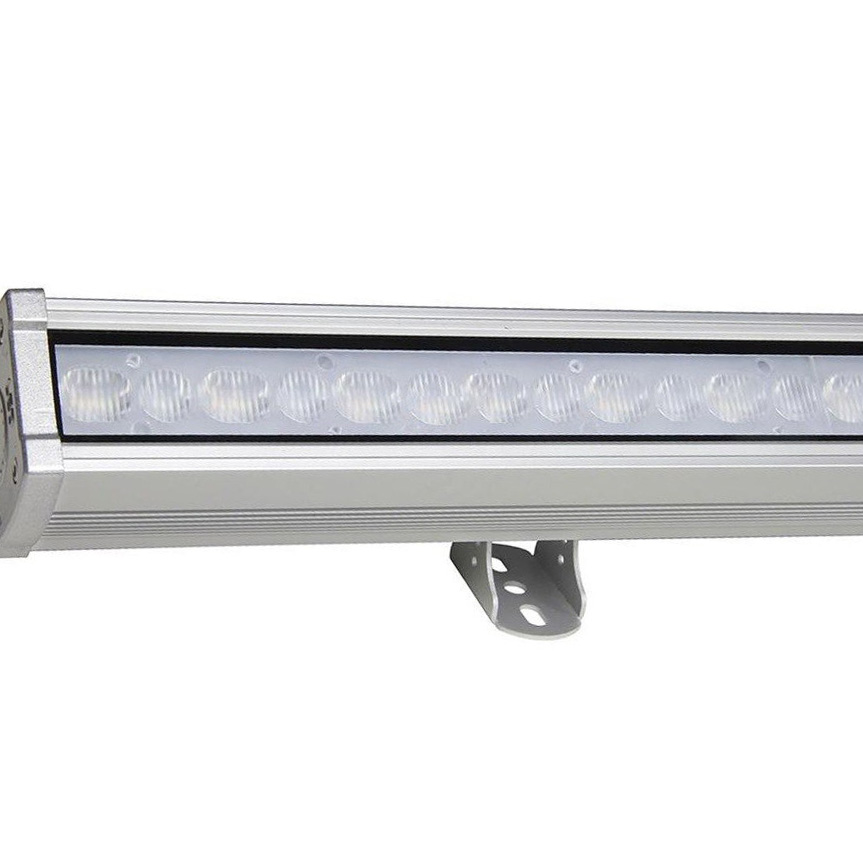
D5-W72 RGB+CCT LED Wall Washer Light - DMX512 & RDM Control

D5-G50 50W RGB+CCT LED Garden Light - Vibrant Outdoor Lighting

D5-G100 100W RGB+CCT LED Garden Light - DMX512 & RDM Control

16.4Ft 18AWG M16 Male and Female DMX512 LED Connector MiBoxer


3Pin Signal XLR DMX512 Lighting Connecting Cable Miboxer

D5-W72 RGBCCT LED Wall Washer Light - DMX512 & RDM Control
FAQ About DMX512 Lighting
Direct engineering answers on wiring, addressing, power limits, and hardware selection for MiBoxer DMX architectural and landscape luminaires.
An RGB+CCT fixture consumes 5 consecutive DMX channels: Red, Green, Blue, Warm White (2700K), and Cool White (6500K). On an older 4-channel RGBW fixture, you only had a single fixed white channel, whereas 5-channel RGBCCT lets you blend saturated theatrical colors and sweep color temperature across clean white light. A single 512-channel DMX universe accommodates up to 102 of these 5-channel fixtures when each fixture receives its own unique address. If you map several fixtures to duplicate start addresses, they mirror each other while consuming only 5 channels total across the whole run.
You can daisy-chain up to 32 dmx light fixtures on a single DMX512 data run before line capacitance demands an optical splitter. This 32-device threshold is a hard physical limit defined by the EIA-485 transceiver specification, not a power limit. When your layout requires 40 or 60 fixtures across a building perimeter, do not push a single continuous line past 32 units. Instead, run your main signal into an active DMX splitter and branch out into isolated runs, keeping each branch well under 30 fixtures and within 300 meters of total cable length.
For line-voltage AC100-240V fixtures like our D5-W72 72W wall washer, 16 AWG to 14 AWG copper wire is standard for runs up to 50 meters, while data requires shielded 18 AWG to 22 AWG twisted pair. A 72W fixture pulls roughly 0.6A at 120V (or 0.3A at 230V), which means a typical 15A outdoor breaker comfortably handles up to 16 fixtures wired in parallel. Never run unshielded data cable in the same conduit alongside high-voltage AC feeds; electromagnetic induction from line voltage will corrupt the DMX data packets.
Outdoor dmx lighting fixtures should be set to logarithmic dimming for architectural illumination and linear dimming for fast entertainment chasing. Human eye perception is non-linear; our pupils are far more sensitive to subtle brightness shifts at the bottom 20% of the range than near 100%. A linear curve makes the light drop abruptly when fading from 10% to zero, creating visible stepping. Logarithmic dimming compensates by spreading channel steps heavily across the lower brightness levels, giving you smooth, imperceptible architectural crossfades across building facades.
Sibling auto-addressing DMX fixtures write their own starting channel sequentially along an extra addressing line, whereas fixtures here use standard RDM or pre-programmed addressing. Auto-addressing lamps make rapid installation easy for large in-ground paver grids, but if one fixture fails or gets removed, downstream addressing can shift unexpectedly. Fixtures in this category retain fixed DMX addresses in onboard non-volatile memory. If a fixture on this line needs servicing, swapping it or disconnecting it has zero effect on the addressing of downstream luminaires.
You set the starting address remotely via RDM (Remote Device Management) through an RDM-compatible controller without ever breaking the factory IP66 environmental seal. When you initiate an RDM discovery scan from your controller or programmer, the console detects the fixture's unique UID code over the standard DMX data cable. From the console screen, you assign the starting DMX channel, switch between linear and logarithmic dimming curves, and query internal operating parameters. Once stored, the fixture saves the address permanently, surviving power outages without manual dip-switch adjustments.
A 72W dmx light fixtures model like our D5-W72 comfortably throws vertical light between 5 and 12 meters (16 to 40 feet) up a building surface. For two- to three-story architectural facades, placing the fixture 0.5 to 1.0 meter back from the wall creates uniform vertical color saturation without hot spots at the base. Narrow 15° to 30° lenses concentrate punch toward higher parapets, while wider spreads blend seamlessly along continuous horizontal foundations.