
Zigbee LED Drivers
10 productsSkydance Zigbee 3.0 constant current LED driver is a device used to control and manage LED lighting systems that use Zigbee 3.0 wireless communication technology. The primary function of the driver is to regulate the flow of current to the LED lights, providing a consistent and stable light output. This helps to prolong the LED lifespan and improve their performance.
The Zigbee 3.0 protocol is a low-power, wireless mesh network standard that allows multiple devices to communicate and be controlled by a single device, such as a smart home hub or a smartphone. The constant current LED driver integrates with this network, allowing for remote control and management of the LED lighting system, enabling more sophisticated and customized lighting designs.
The driver is commonly used in smart home lighting systems, commercial and industrial lighting systems, and other applications that require wireless control and management of LED lighting. Can match with Skydance Zigbee remotes and wall panels.
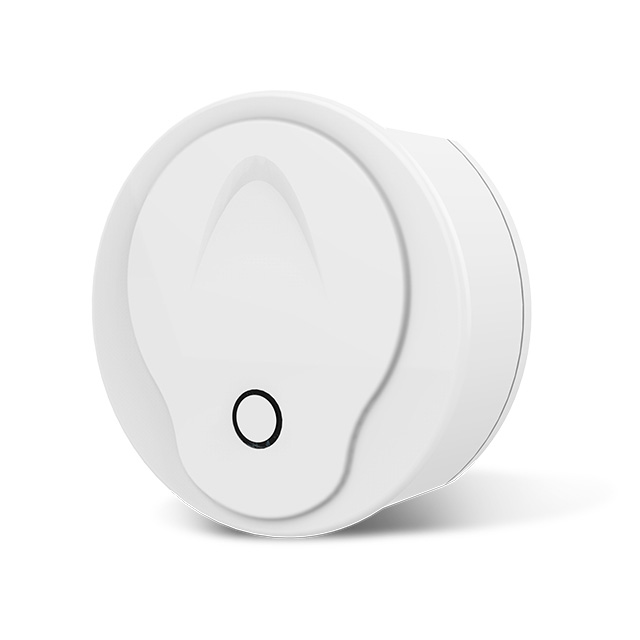


Standard Zigbee vs. NFC Zigbee Constant-Current LED Drivers
Both standard Zigbee and NFC Zigbee constant-current LED drivers provide wireless lighting control for compatible LED fixtures through a supported Zigbee smart home system. The main difference is how the driver’s output parameters can be configured.
Standard Zigbee drivers typically offer model-specific current settings, such as selectable output levels through onboard DIP switches, while NFC Zigbee drivers add convenient near-field programming for more precise driver configuration.
For lighting projects that require more precise current adjustment and customized driver settings, explore our NFC Zigbee LED Drivers.
FAQ About Zigbee LED Drivers
Direct answers to the most common engineering and compatibility questions about our constant current Zigbee 3.0 driver lineup.
A constant current Zigbee LED driver regulates precise amperage rather than fixed voltage, which is what raw LED COBs and downlight engines require to prevent thermal runaway. Unlike standard LED strip tape that relies on onboard current-limiting resistors, spot fixtures require an active driver to maintain constant current—such as 350mA or 700mA. Putting a constant voltage supply on bare spot diodes burns them out in minutes. For a deeper breakdown of circuit types, check our constant current vs constant voltage guide.
You set the output current on an adjustable Zigbee LED driver by adjusting the onboard multi-position DIP switch block before applying line power. For example, our CXR-28A allows selecting 350mA, 500mA, or 700mA steps. Always check your fixture's rating plate first: if the COB is rated for 500mA, setting the switches to 700mA will shorten its operating life or pop the bond wires. Never change DIP switch positions while the driver is energized under load.
Yes, a magnetic track Zigbee LED driver like our CXR-21A and CXR-28A series is specifically molded to click into standard low-voltage 48V Stucchi magnetic tracks. These models house both the constant current buck stage and the Zigbee 3.0 transceiver inside a narrow, ultra-compact body that recesses flush into the track channel. You can group and dim individual spotlights magnetically attached to the same track rail without running extra control wires through the channel.
If an LED fixture's forward voltage falls outside the rated DC output window, the driver will shut down on over-voltage protection or cause erratic strobe blinking. Constant current drivers adjust their output voltage dynamically, but only within strict design limits. We list 10 live models in this category covering broad spans like 10-42VDC, 9-45VDC, and 3-24VDC. If your fixture requires 48V and your driver tops out at 42V, it will simply fail to regulate and drop offline.
You need a Zigbee 3.0 hub to pair a Zigbee LED driver to Tuya, Smart Life, or Philips Hue app ecosystems. The driver speaks standard Zigbee mesh protocol, so it cannot talk directly to your Wi-Fi router. Connecting through our Tuya Zigbee mesh gateway enables cloud automation, schedules, and voice commands. Once added to the mesh, commands repeat across neighboring Zigbee nodes, keeping latency below 50 milliseconds across your space.
To calculate total wattage on a Zigbee LED driver, multiply the fixture's forward operating voltage by the configured current setting in amperes. For instance, if you set a CXR-28A(WZS) driver to 700mA (0.7A) and connect a 36V downlight COB, the total consumed load is 25.2W (36V × 0.7A = 25.2W), which falls within the driver's 29.4W ceiling. Never calculate driver load using nominal AC line voltage; always work from the secondary DC load requirements.
You can wire multiple downlights to one Zigbee LED driver, provided you wire them strictly in series and the cumulative forward voltage does not exceed the driver's maximum limit. For example, three 9V fixtures wired in series require 27VDC, perfectly matching a 10-42V driver. Never wire constant current fixtures in parallel: if one module develops higher internal resistance or fails open, the remaining fixtures receive double the current and burn out.