
Zigbee 3.0 Control System
71 productsIn LED lighting, the Zigbee protocol is commonly used to interconnect smart lighting systems. Through the Zigbee 3.0 standard protocol, these Mi Light led lights and controllers can communicate directly with the Zigbee wireless remote, or through the Zigbee gateway and other smart devices such as smartphones (Tuya Smart APP) to realize remote control, dimming, color mixing, timmer, group control, and music rhythm, etc.
The Zigbee lighting protocol is characterized by: low power consumption, short-range wireless communication, self-organizing capability, short latency and reliability, and strong anti-interference capability. Zigbee-compliant devices from different manufacturers are compatible with each other. This openness and interoperability allow users to choose Zigbee-compatible LEDs and controls of different brands that work together in their smart home systems.


Mi-Light E2 Series New Tool Free Wiring RF/Zigbee/WiFi LED Controller


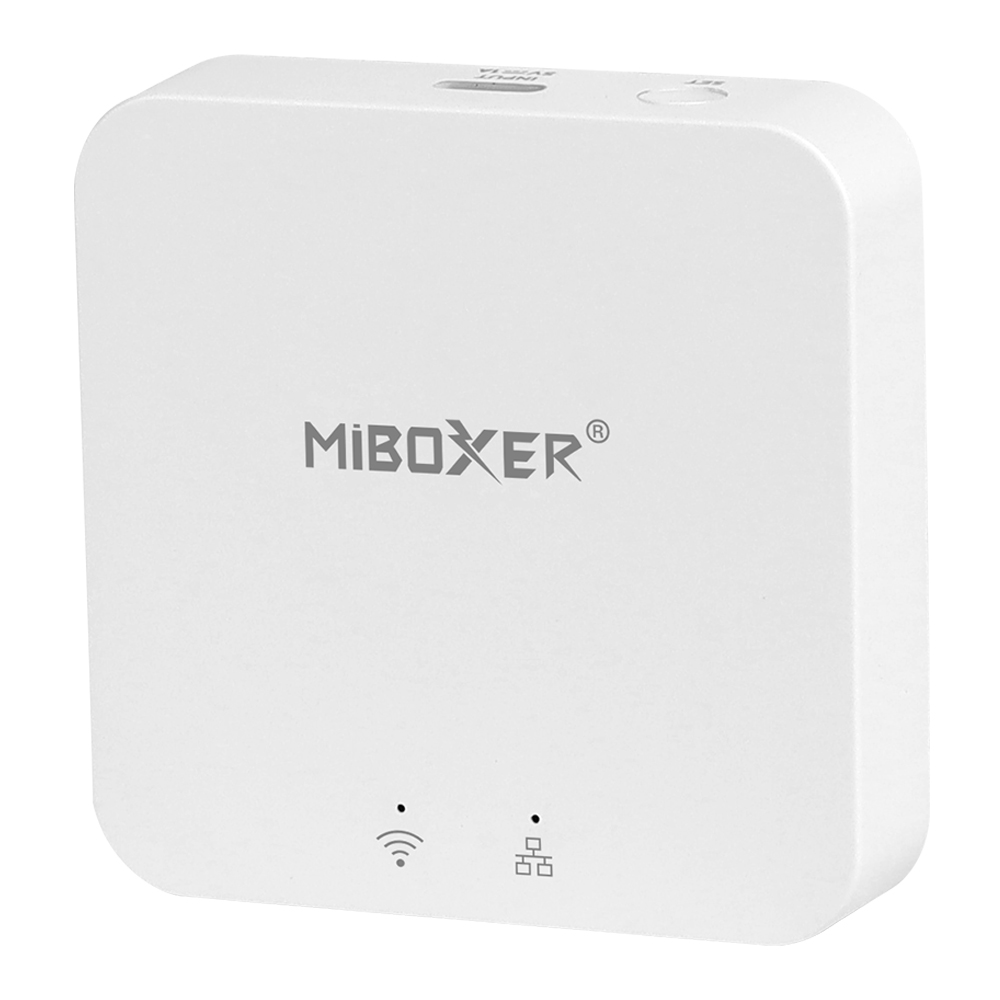
ZB-Box3 Zigbee 3.0 + Bluetooth Gateway - Smart Home Hub
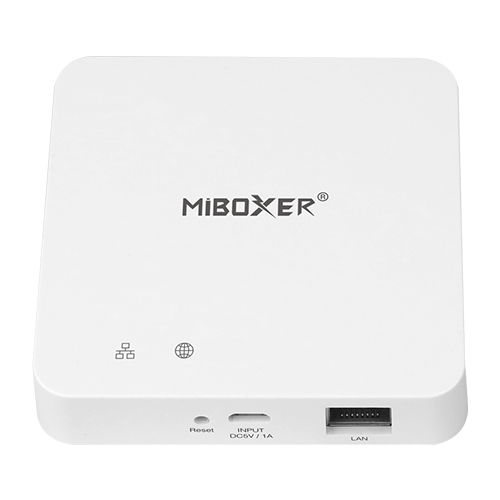

500W High Power Line Voltage Smart Triac Dimmer (RF, Zigbee, WiFi)
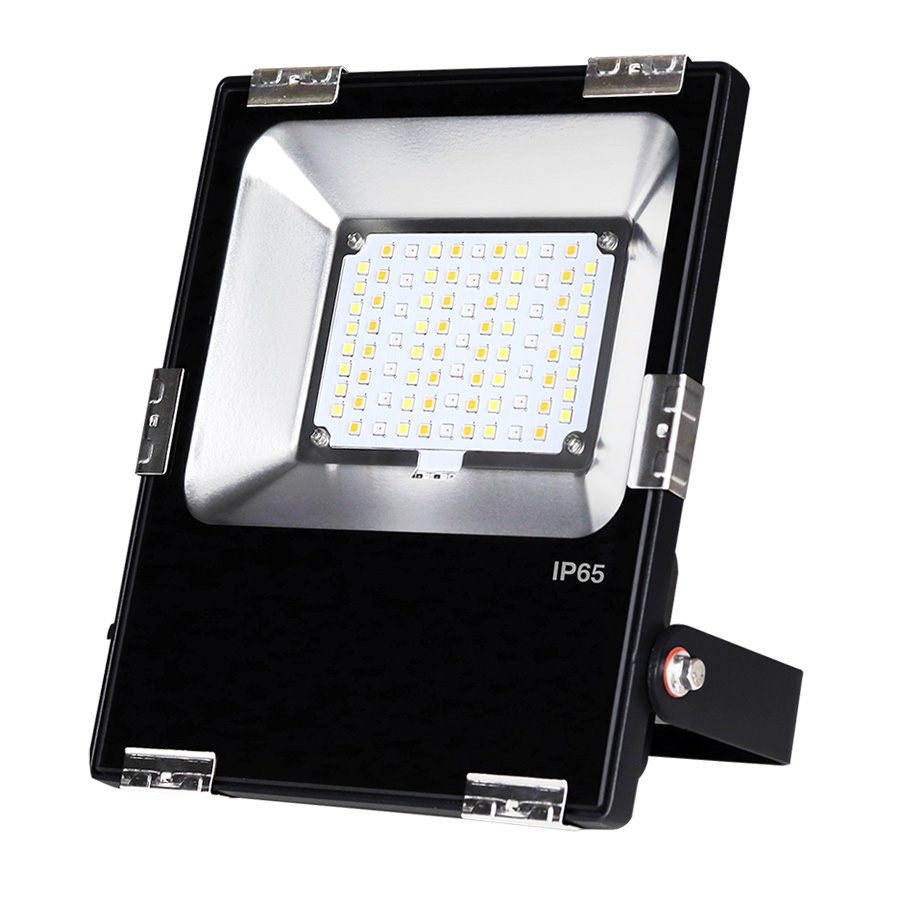

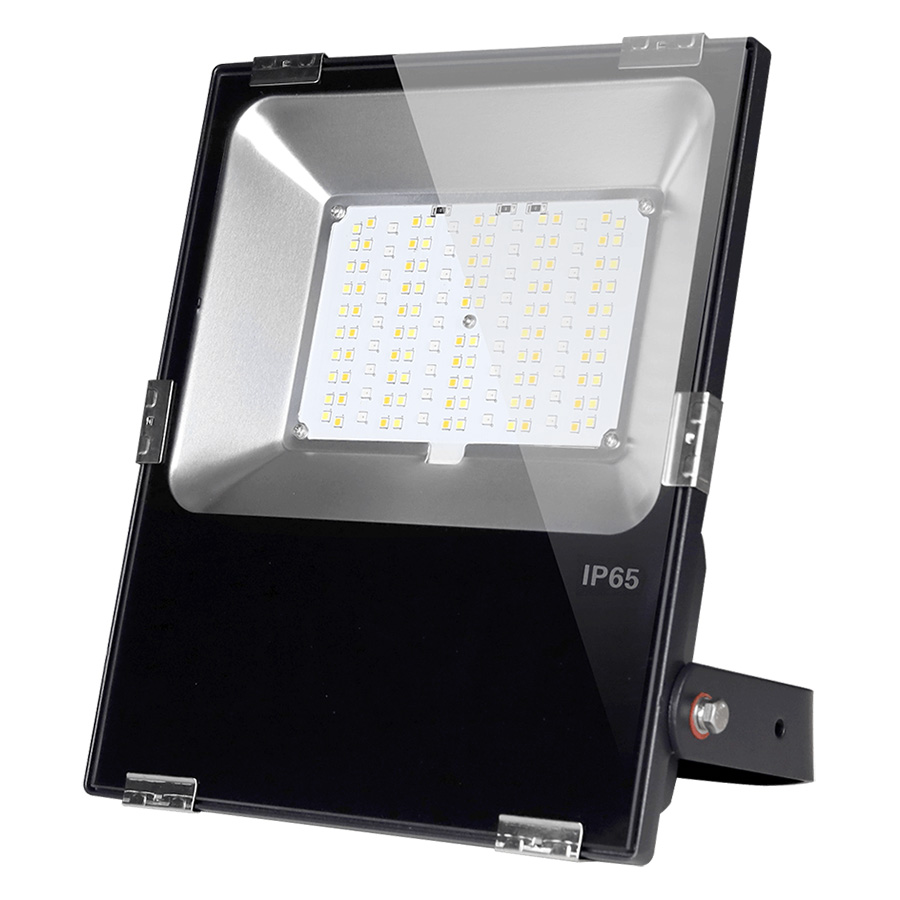


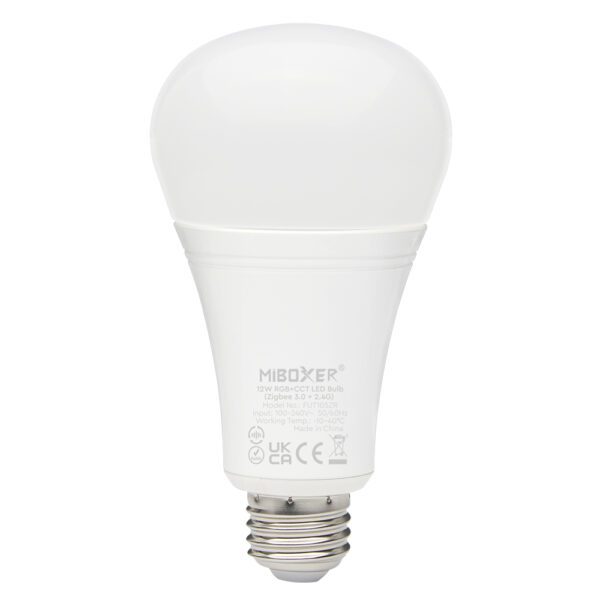
12W 2.4G Zigbee Colored Bright Led Light Bulbs FUT105ZR
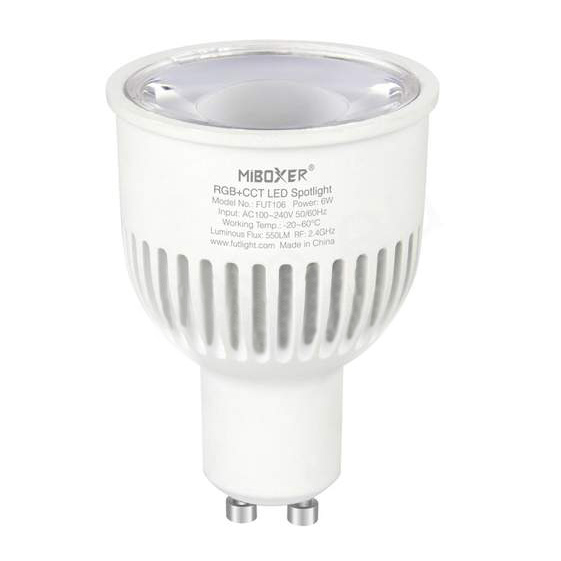
Explore Zigbee Lighting Control Systems from Leading Brands
SuperLightingLED™ offers a diverse selection of Zigbee lighting control solutions from MiBoxer (Mi-Light), Gledopto, Sunricher, and SkyDance. Whether you are building a smart home lighting system or designing connected lighting for offices, retail stores, hotels, and other commercial spaces, you can choose from Zigbee LED strip controllers, AC phase-cut dimmers, smart lighting fixtures, gateways, and wireless control devices.
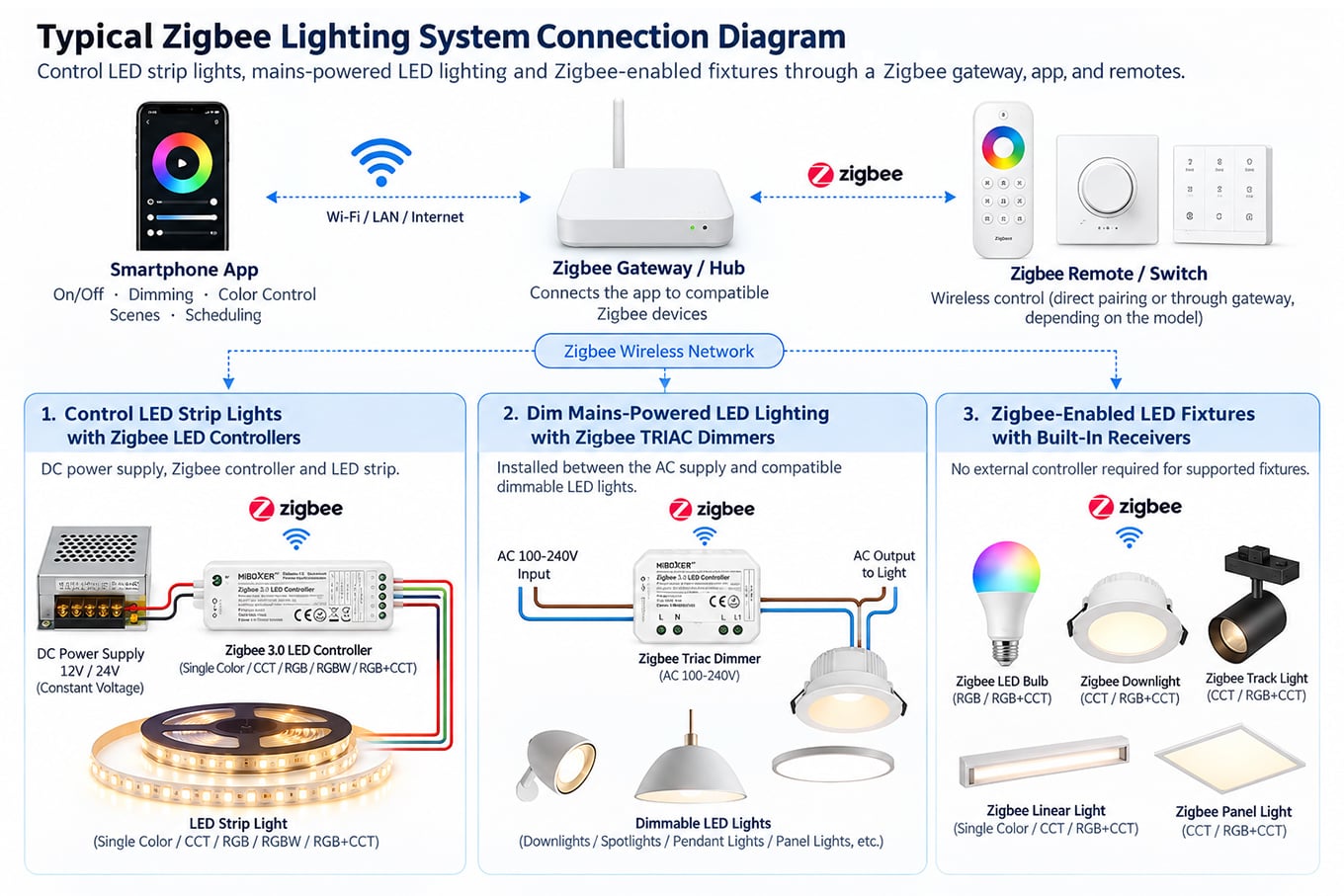
Control LED Strip Lights with Zigbee LED Controllers
Transform conventional low-voltage LED strip lights into smart lighting by adding a compatible Zigbee constant-voltage LED controller. The typical setup consists of an AC-to-DC power supply, a Zigbee LED controller, and an LED strip. The power supply delivers the required DC voltage, while the controller receives wireless commands and regulates the strip's brightness, color, or color temperature according to its supported functions.
Choose a controller that matches your LED strip type, such as single-color, CCT tunable white, RGB, RGBW, or RGB+CCT. Selected multi-mode controllers support several lighting configurations, allowing you to choose the appropriate output mode for the connected strip.
Dim Mains-Powered LED Lighting with Zigbee TRIAC Dimmers
For compatible mains-powered lighting, Zigbee TRIAC dimmers offer a practical way to integrate phase-cut dimming into a smart lighting system. Installed between the AC supply and a suitable dimmable LED lamp, fixture, or TRIAC-dimmable LED driver, the dimmer adjusts the light output in response to commands from a compatible Zigbee network, remote, or smart home control system.
Depending on the model, available features may include brightness adjustment, scheduled lighting, scene control, wireless operation, and integration with supported smart home platforms. These solutions are useful for residential lighting upgrades as well as selected hospitality, retail, and commercial projects where existing mains-powered lighting needs smarter dimming control.
Smart LED Fixtures Featuring Built-In Zigbee Receivers
Some LED lighting fixtures integrate Zigbee communication and control electronics directly into the product. Examples may include smart LED bulbs, downlights, spotlights, linear lights, and other compatible luminaires. Because the Zigbee receiver is built in, these fixtures generally do not require a separate external Zigbee LED strip controller for their supported lighting functions.
Depending on the fixture, users may be able to switch the light on or off, adjust brightness, change color temperature, or select RGB and RGB+CCT colors through a compatible Zigbee gateway, app, or remote. This integrated approach can reduce the number of external components and simplify installation, particularly when replacing conventional lamps or planning multiple smart lighting zones.
How to Use Zigbee Remotes in a Smart Lighting System
Zigbee remotes and wireless switches provide convenient local control without requiring users to operate a smartphone for every lighting adjustment. To get started, confirm that the remote supports your selected controller, gateway, or Zigbee-enabled light.
Follow the manufacturer's pairing instructions, place the devices in the required pairing mode, and assign lighting zones or groups where supported. Once configured, you can use the remote for everyday lighting adjustments while retaining app-based or automated control when the system supports both methods.
FAQ About Zigbee 3.0 Control System
Direct engineering answers on Zigbee 3.0 mesh networking, gateway pairing, wiring limits, and multi-zone control.
A Zigbee 3.0 LED controller requires a compatible Zigbee 3.0 gateway for phone app and voice control, but it can operate without one if you pair a 2.4GHz RF remote. Unbox the controller, wire your 12V or 24V power, and you can bind a handheld remote or wireless wall panel directly via 2.4GHz RF. However, without a Zigbee hub (such as Tuya, SmartThings, or a standard Zigbee 3.0 bridge), you lose remote cloud access, automated timers, and Google Home or Alexa voice commands.
Standard Zigbee lighting control receivers following the universal Zigbee 3.0 protocol pair directly with SmartThings, Home Assistant (via ZHA or Zigbee2MQTT), and Philips Hue bridges. In the Hue app, they show up as standard extended color lights or dimmable white fixtures. Note that Hue will not pass third-party Zigbee devices through to Apple HomeKit—if HomeKit is your main platform, route the controller through Home Assistant with a ConBee II or Sonoff dongle instead.
Zigbee lighting control hardware forms a self-healing mesh where each DC-powered or AC mains receiver acts as an active router, repeating signals up to 30 meters indoors and 100 meters line-of-sight. Unlike battery-powered sensors that act as sleep end-devices, our hardwired LED receivers continuously relay packets. As long as each receiver is within 15 to 20 meters of another node through standard drywall, your mesh will cover multi-story buildings without dead zones.
Dual-protocol Zigbee lighting control units accept simultaneous commands from 2.4GHz RF handheld remotes and Zigbee gateway automation without signal collision. The receiver processes RF and Zigbee packets side by side. If you dim the tape to 30% using a wall remote, the Tuya or SmartThings app status updates to 30% within a couple of seconds. This gives you instant physical wall control without relying on an active internet connection.
Outdoor landscape fixtures like our IP66-rated FUTC02ZR 9W spotlight and 50W FUTT02ZR floodlight join the exact same Zigbee lighting control mesh as your indoor LED strip lights. Because they connect directly to AC100-240V mains power, these outdoor fixtures act as permanent Zigbee routers. Spacing them along garden beds or exterior walls extends your wireless mesh coverage from the house all the way to perimeter fences and driveways.
An AC phase-cut Zigbee lighting control dimmer like the TRI-C1ZR wires in series between the AC100-240V mains supply and a phase-dimmable driver. Connect AC Live and Neutral to the input terminals, and run the dimmed Live-out to your driver input. The unit provides trailing-edge phase cutting, eliminating buzz on electronic low-voltage loads. It also includes an auxiliary push-switch terminal for standard momentary wall buttons, giving you manual push-dimming alongside smart app control.