
RGBW/RGBCCT Module String Lights
18 productsRGBW and RGBCCT module string lights solve a common problem with standard RGB lighting: poor quality white light. By adding a dedicated white LED chip to the red, green, and blue, these modules produce a much cleaner, purer white and a wider range of pastel colors.
What's the difference between RGBW and RGBCCT LED modules?
The main difference is the type of white light control you get. An RGBW LED module adds a fourth channel for a single, fixed color temperature of white. Many of our RGBW models use a 4-in-1 SMD 5050 chip and let you choose a specific white, such as 3000K warm white or 6000K cool white. This is a significant step up from mixing RGB to make a bluish or pinkish white.
An RGBCCT (or RGBWW) LED module goes further, providing a fifth and sixth channel for tunable white. These modules have both warm white (around 2700K) and cool white (around 6500K) LEDs. By mixing these, you can create any shade of white between them, giving you complete control over the ambiance.
Getting the best result from these RGB white LED modules requires the right power and control. An RGBW module needs a 5-channel controller, and an RGBCCT module needs a 6-channel controller to access all the colors.
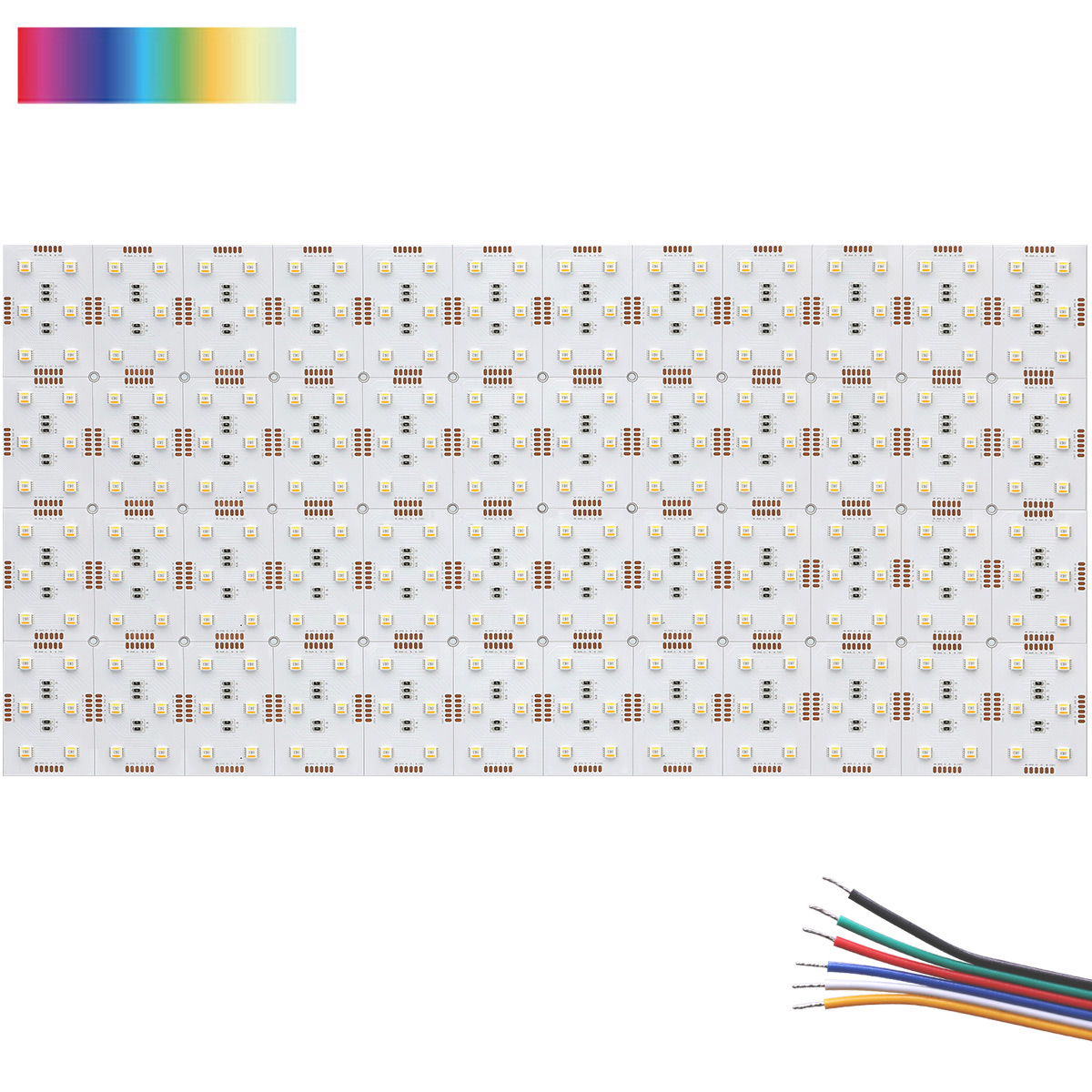
1.24FT² 5-In-1 RGBCCT 1800/2700-6500K Color Changing Flexible LED Sheet
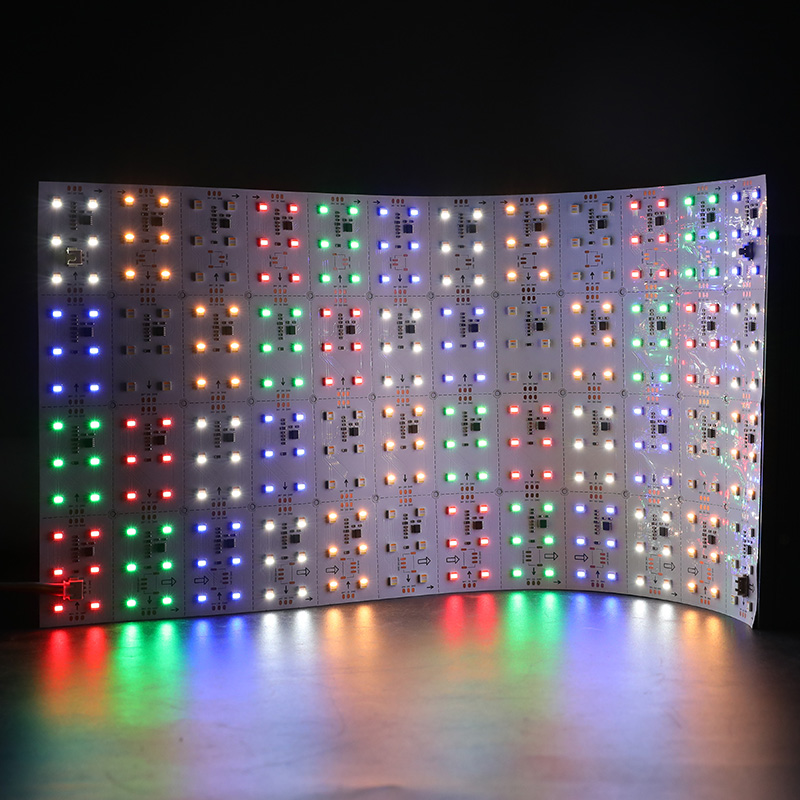
WS2805 Digital 5-in-1 RGBCW LED Matrix Light Sheet 1.24FT²
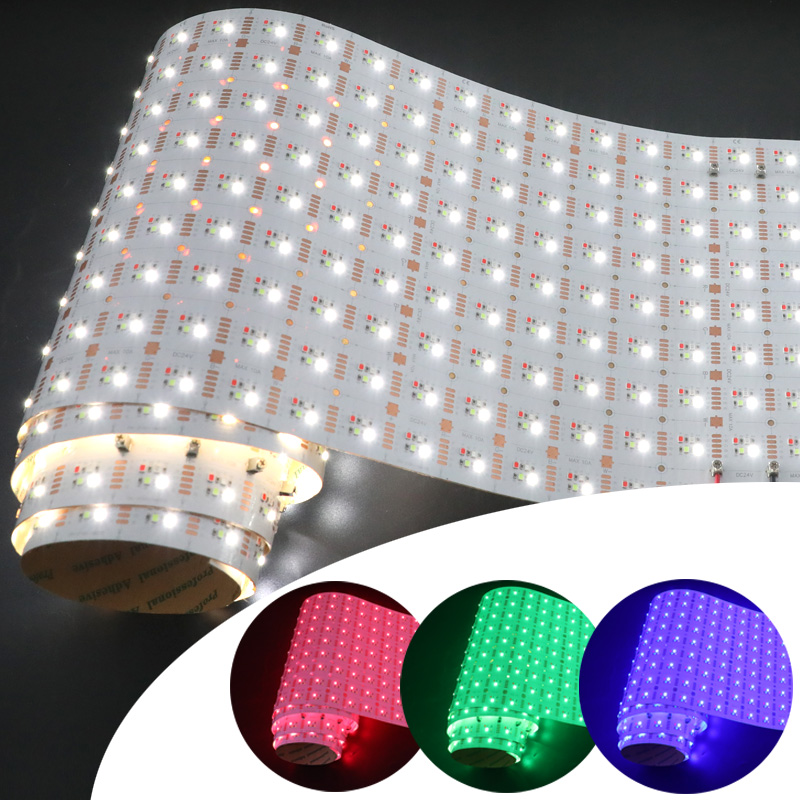
Extra-Large 26 Square Feet Continuous Roll RGBW LED Sheet BackLighting
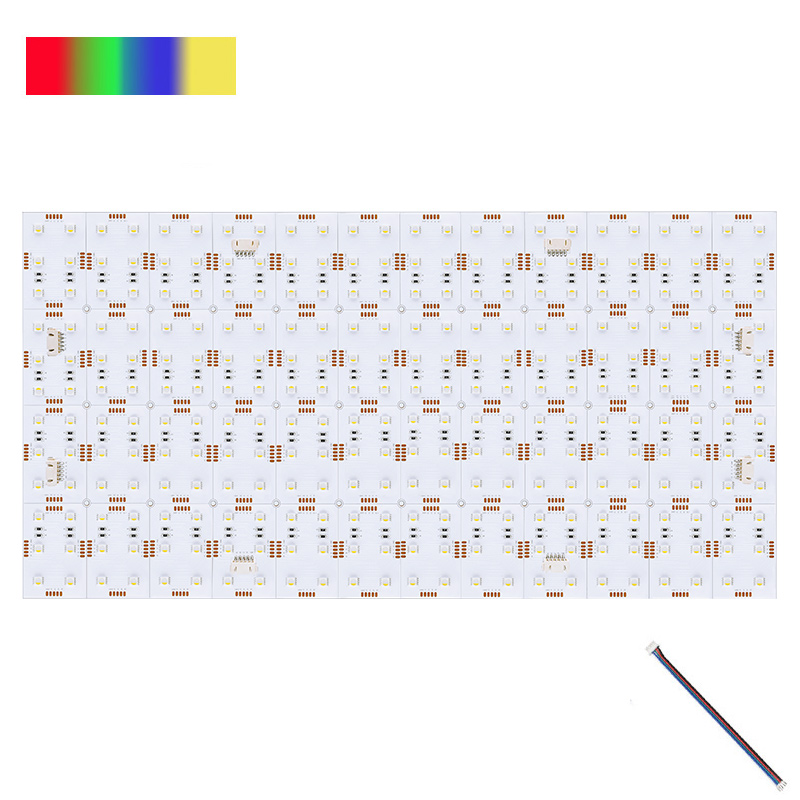
1.24FT² 70W High Power 4-in-1 RGBW Flex Backlight Panel LED Bed Sheets
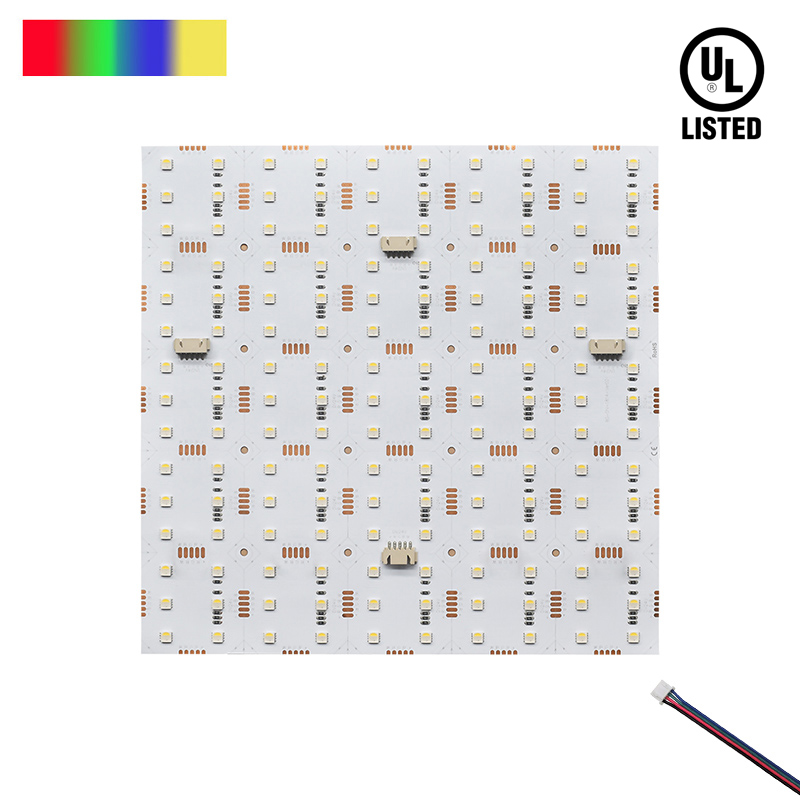
96.8in² Small UL 24V 5050 RGBW Flexible LED Panel Sheet Light 24W
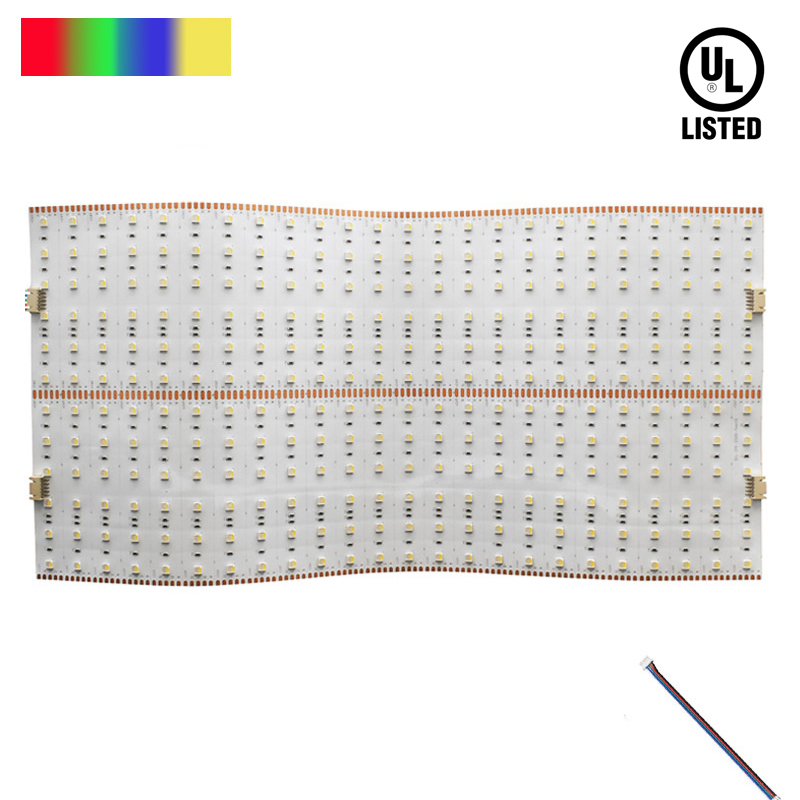
1.29FT² 48W 4-in-1 RGBW LED Cuttable Sheet 24V UL-Listed
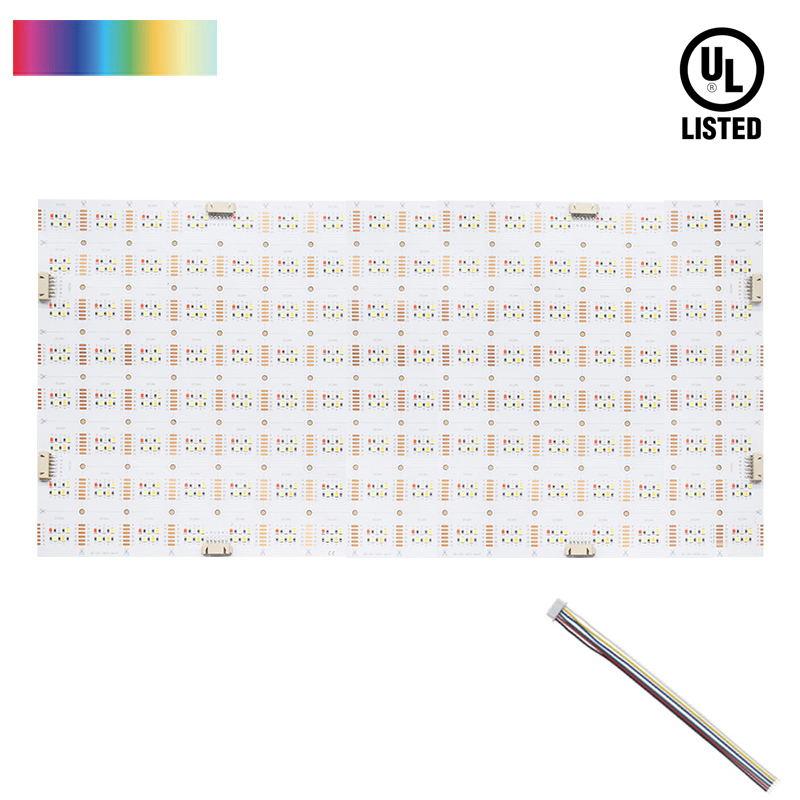
1.29FT² UL 2835 RGB Tunable White 2700-6500K LED Sheet Light

1.32FT² 5-in-1 RGBTW 2400-6500K UL LED Light Panel Sheet For Backlighting Stone
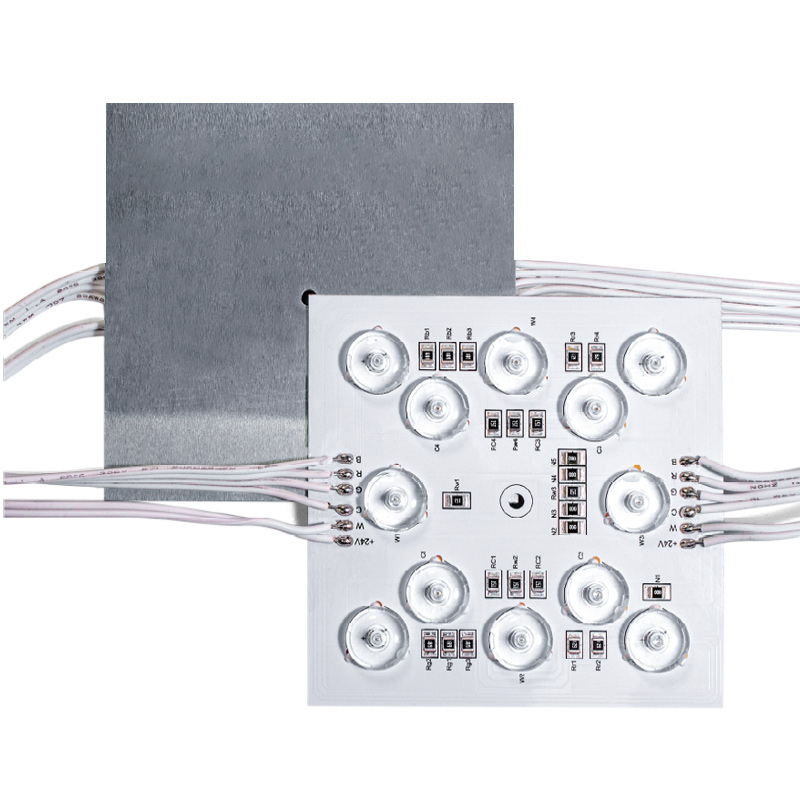
DC24V 3030 Diffuse Reflection Lens RGB CCT LED Module Light Signs
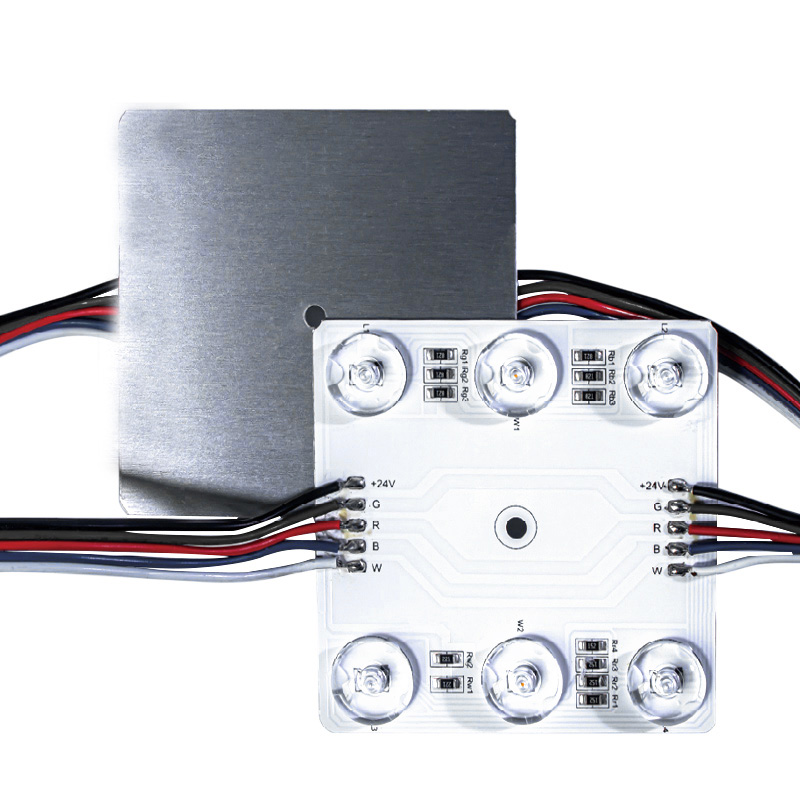
DC24V RGBW LED Module Light Diffuse Reflection Lens for Lightbox
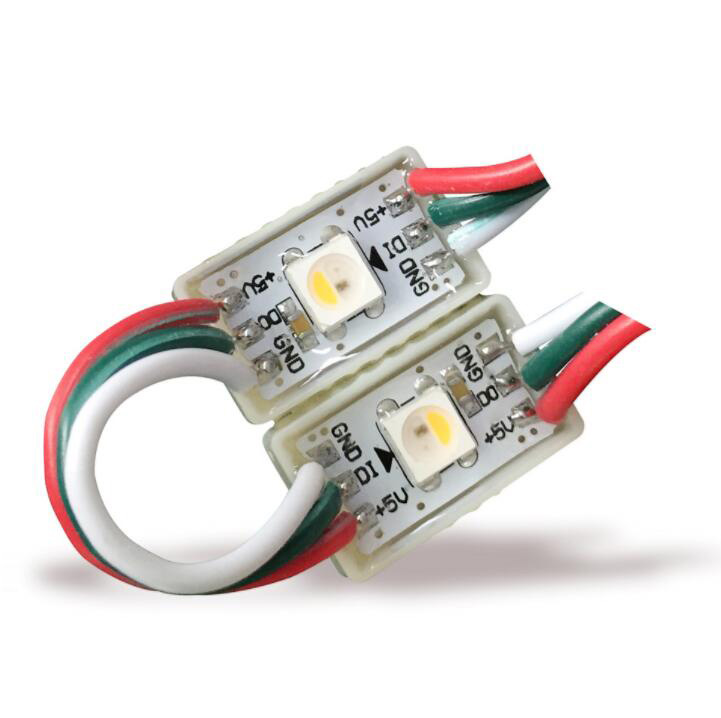
DC5V RGBW 5050 IC LED Pixel Module - Waterproof IP65 Full Color | 3-LED
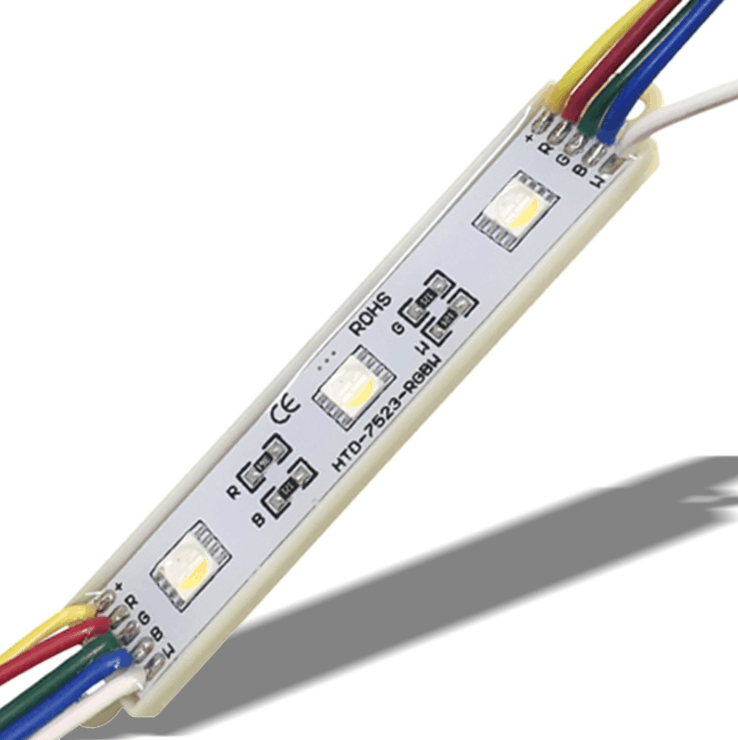
DC12V Super Bright High-Efficiency RGBW LED Module String
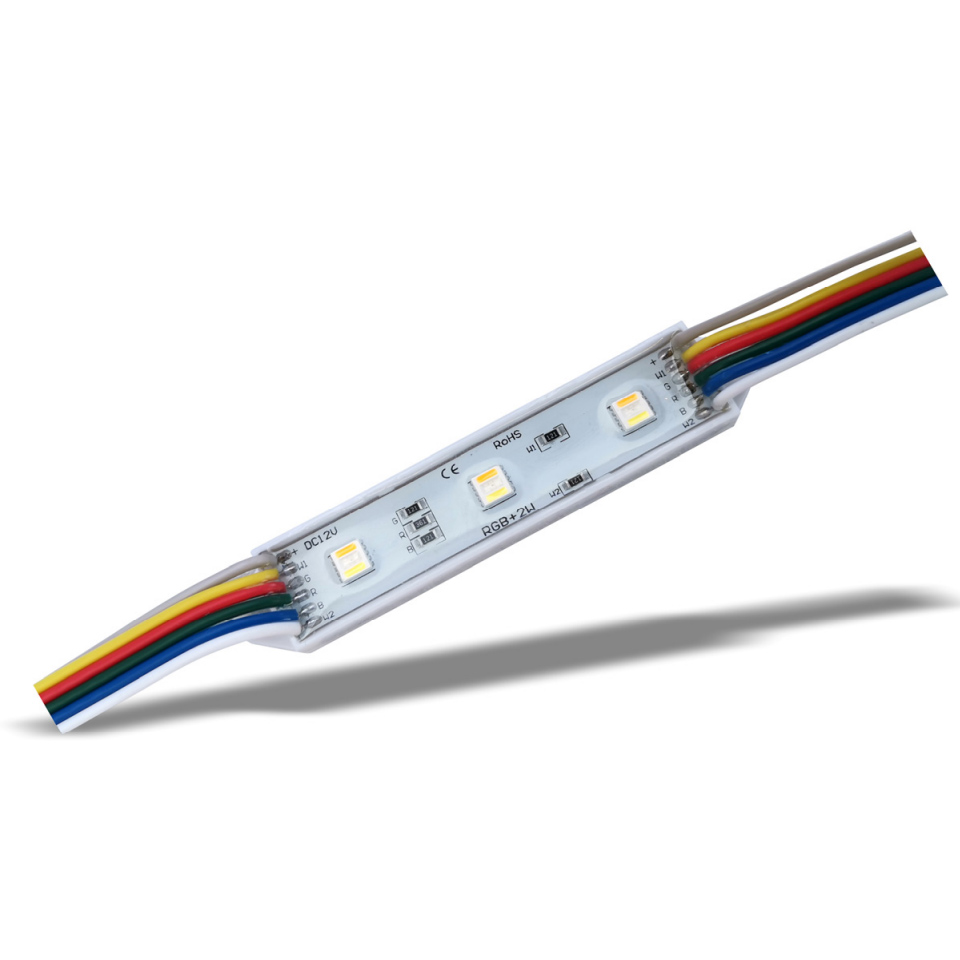
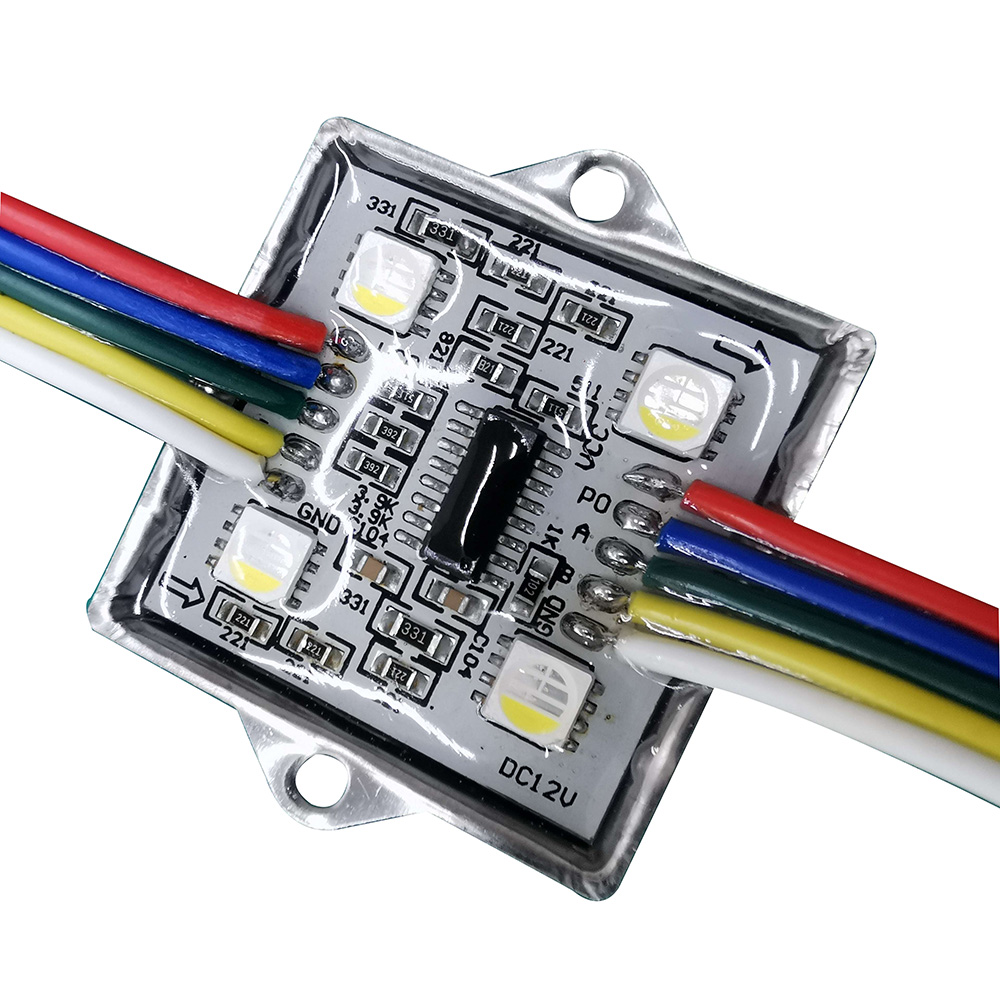
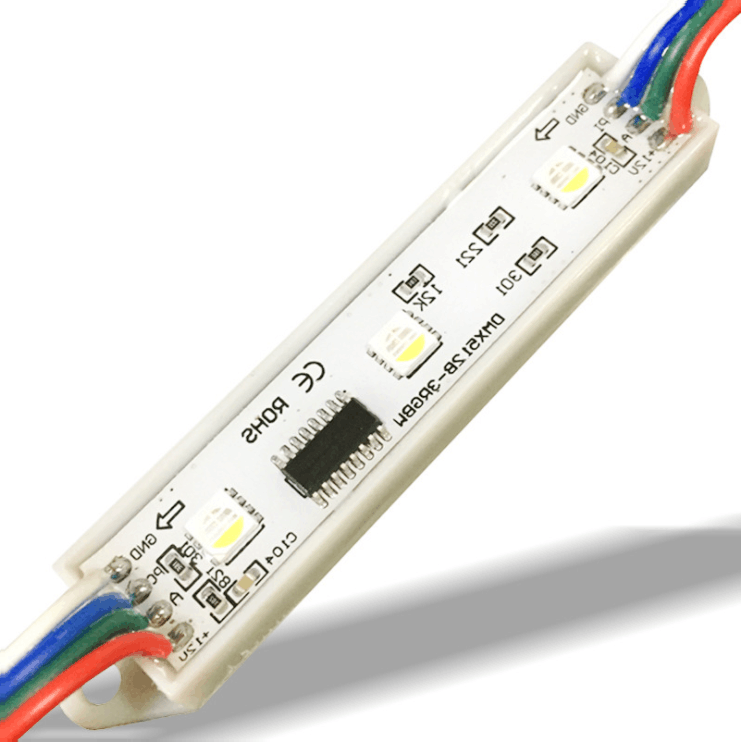
12V 3-Chip DMX RGBW LED Modules String Lights Waterproof
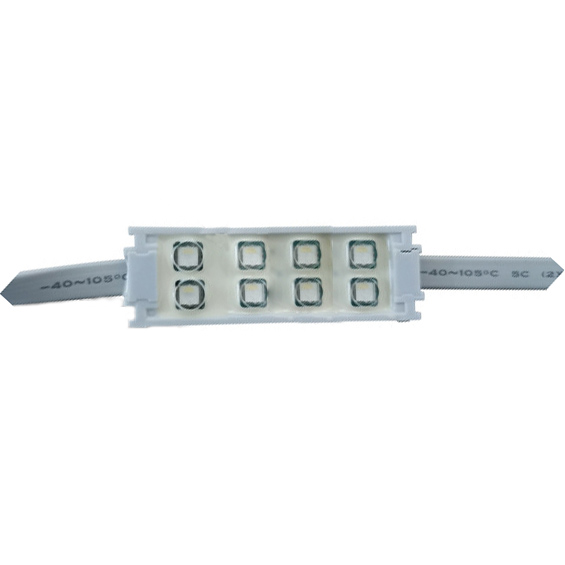
DC24V 8 lights Constant Voltage SMD5050 Glass Fiber Board RGBW LED lens modules
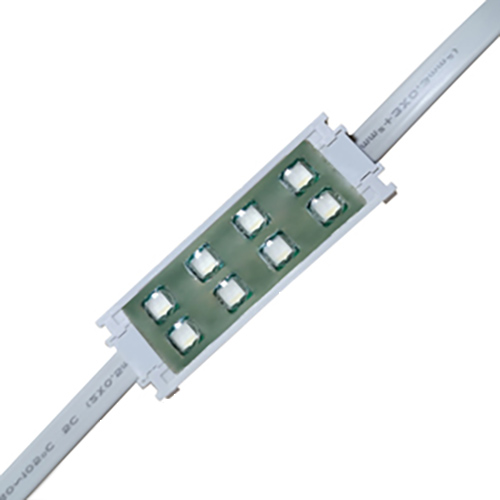
DC24V 8 Lights Constant Voltage SMD5050 RGBW DMX full-color Lens Module
Types of Modular LED Designs in RGBW/RGBCCT Lighting
RGBW (RGB + Dedicated White) and RGBCCT (RGB + Tunable White: Warm White + Cool White) lighting systems combine rich dynamic color-changing capabilities with high-CRI functional illumination. By integrating 4-channel (RGBW) and 5-channel (RGBCCT) LED configurations into our Modular Pixel, Modular Panel, and Modular Strip lighting designs, SuperLightingLED empowers you to achieve optimal spatial routing, flawless optical diffusion, precise control granularity, and ideal depth clearance for any project.
1. Modular Pixel LED String Design
Consists of discrete, injection-molded or potted LED modules linked sequentially by flexible, multi-core interconnect wires. Each individual RGBW or RGBCCT module operates as an independent physical point and is mechanically secured using mounting flanges, screws, or adhesive backing.
When applied to commercial advertising lightboxes, large sign cabinets, and branded 3D letters, RGBW/RGBCCT modular LED string lights offer unmatched versatility.
2. Modular Panel LED Sheet Design
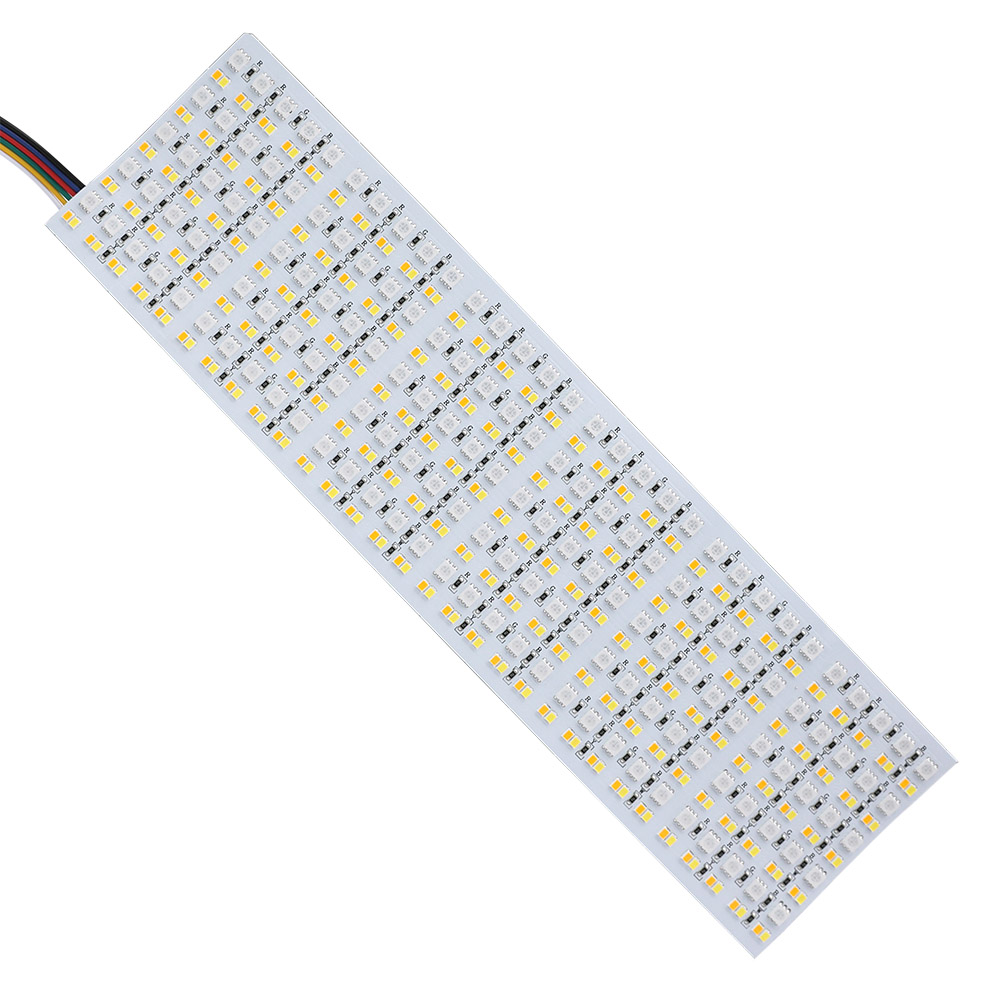
Integrates a high-density grid of RGBW or RGBCCT LED circuits across a continuous, wide flexible printed circuit board (FPCB) panel. The backside features a full-coverage self-adhesive backing.
Distributes hundreds of 4-in-1 or 5-in-1 SMD LEDs across a uniform plane. It delivers completely shadowless, edge-to-edge blended light and tunable white ambiance at ultra-shallow depth clearances (as thin as 2–5 cm) without visible LED hot spots.
The matrix can be trimmed along both horizontal and vertical grid lines without breaking the surrounding circuit matrix, enabling custom-shaped backdrops without complex manual wiring.
Primary Applications: Ultra-slim fabric lightboxes, backlit translucent natural stone (marble, onyx, granite), stretched ceiling panels, reception desk aprons, retail showcase backdrops, and architectural feature walls.
3. Modular Strip LED Design
Arranges grouped 4-channel RGBW or 5-channel RGBCCT LED circuits linearly along a narrow, continuous flexible copper PCB tape. Supplied with continuous peel-and-stick adhesive tape along the entire length, available in either traditional SMD or seamless COB (Chip-on-Board) formats.
Cuttable at designated copper pad intervals along a single axis, offering high flexibility for running along narrow tracks, aluminum profiles, and curved perimeters.
Offered primarily in 12V and 24V DC configurations to minimize voltage drop and maintain consistent CCT color temperature and brightness over longer runs.
Primary Applications: Slim aluminum channels, cove lighting, vanity mirror surrounds, under-cabinet/counter task lighting, perimeter halo backlighting, and narrow architectural reveals.
Frequently Asked Questions About RGBW & RGBCCT LED Modules
Got a question before you order? I've been on the tech desk here for 12 years, so chances are I've answered it before. Here are the common ones.
RGBW adds a dedicated white chip to the standard red, green, and blue. This gives you a much cleaner, purer white than trying to mix one from RGB. RGBCCT takes it a step further: it has the RGB chips plus a range of white chips, usually from warm white (around 2700K) to cool white (around 6500K). You get all the colors and you can tune the exact shade of white light you want. Pick the exact control you need. Our guide to color-changing LEDs breaks it down completely.
You're right, an RGBW LED module string has five connection points. You'll connect the four color channels (Red, Green, Blue, White) to the corresponding R, G, B, and W terminals on your controller. The fifth wire, usually labeled V+, goes to the positive output on your power supply. The key is using a 5-channel RGBW controller that's designed for it. Our RGBW wiring guide has diagrams for common setups.
The main difference between pixel vs non-addressable LED modules is how you control them. With a standard, non-addressable module string, all the LEDs in the string do the same thing at the same time—they're all red, or all blue, or all fading together. An addressable (or 'pixel') LED module has a tiny integrated circuit (IC) for every LED or small group. This lets you control each one independently, creating chasing effects, rainbow waves, and dynamic patterns. If you need a whole sign to be one solid color, non-addressable is perfect.
An RGBCCT LED module string has six connection points. You'll connect the five color channels (Red, Green, Blue, Cool White, Warm White) to the corresponding R, G, B, CW, and WW terminals on your controller. The sixth wire, usually labeled V+, goes to the positive output on your power supply. The key is using a 6-channel RGBWW controller that's designed for it. Our RGBWW wiring guide has diagrams for common setups.