
Power Repeater
2 sub-categories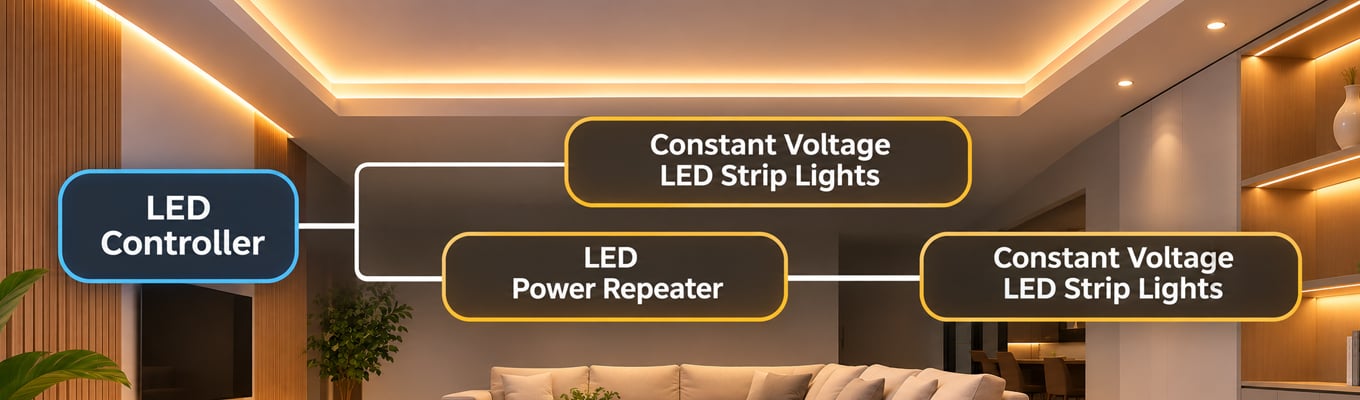
SkyDance LED Power Repeaters, also known as PWM Power Amplifiers, are designed to expand the power capacity of LED lighting control systems. When a single LED controller or dimmer cannot supply enough output current for a large lighting load, or when multiple LED fixtures need to be controlled synchronously across an extended installation, a power repeater provides additional power output while maintaining the original dimming and color control signals.
The SkyDance series includes both Constant Voltage (CV) and Constant Current (CC) Power Repeaters, covering a wide range of single-color, dual-white CCT, RGB, RGBW, and RGB+CCT LED strips, linear lights, and other LED lighting fixtures.

CV Power Repeater
The SkyDance CV Power Repeater Series is designed to expand the power capacity of constant voltage LED strips and lighting fixtures, allowing you to control larger lighting loads without overloading your original LED controller or dimmer.
By receiving PWM control signals from the main controller and using an additional power supply to drive the connected LED strip loads, these repeaters reproduce the original dimming and color control signals, keeping multiple LED tape lighting sections synchronized in brightness, color, and lighting effects.
Choose an LED Power Repeater Based on Your LED Strip Colors
Select a compatible CV Power Repeater according to the lighting colors and control channels of your LED strips or fixtures:
- - Single Color LED Strips: Use a 1-channel power repeater to expand brightness control for single-color white or colored LED strips.
- - Dual White / CCT LED Strips: Choose a 2-channel power repeater to maintain synchronized warm white and cool white adjustment.
- - RGB LED Strips: Use a 3-channel power repeater for synchronized red, green, and blue color mixing.
- - RGBW LED Strips: Choose a 4-channel power repeater to control RGB colors and the dedicated white channel.
- - RGB+CCT LED Strips: Use a 5-channel power repeater to expand control of RGB colors, warm white, and cool white channels.
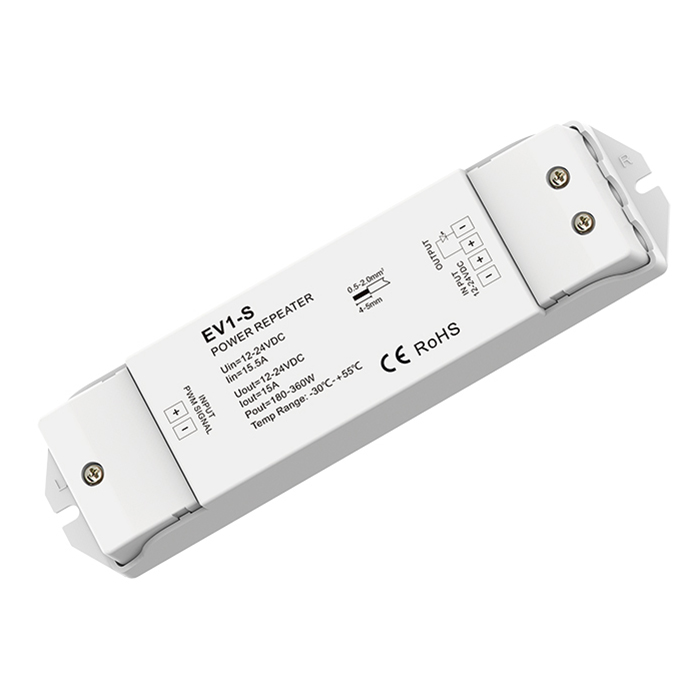
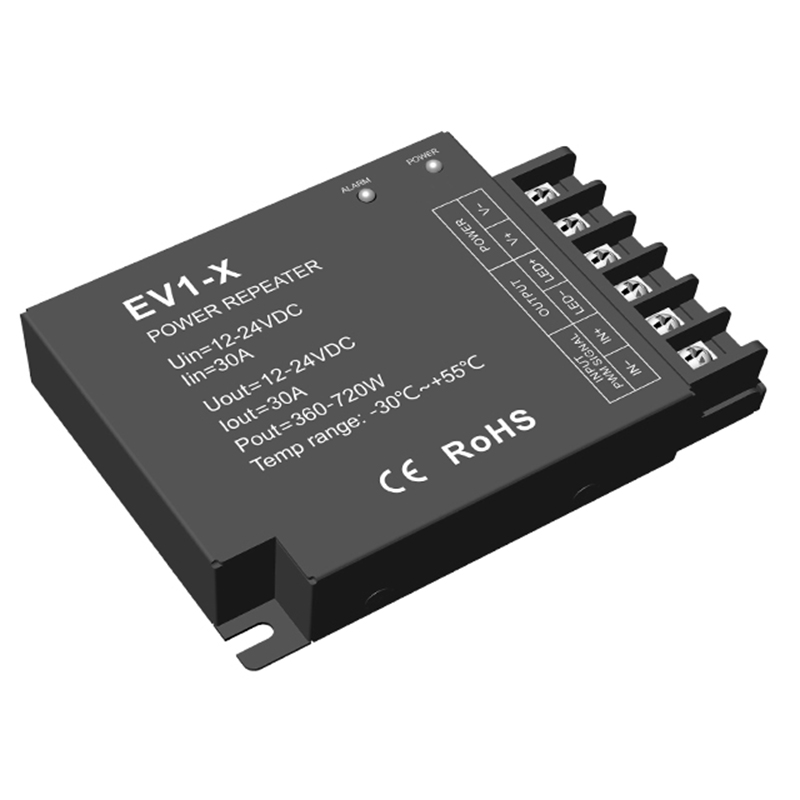
SkyDance CV Power Repeaters support a range of constant voltage LED strip lighting applications. Check each product's compatible input voltage, output current, channel configuration, and power rating to find the right repeater for your lighting system.

CC Power Repeater
Power Repeaters for Constant Current LED Light Fixtures.
1. DC12/24/36/48V power input, 1/2/3/4 channels PWM constant voltage signal input, 1/2/3/4 channels PWM constant current output.
2. 350mA/700mA output, other currents (150-1200mA) need to be customized.
3. Accept 1-4 channel PWM constant voltage signal input, control single color, color temperature, RGB, or RGBW constant current LED lamps.
4. A PWM constant voltage controller can theoretically be connected in parallel with an unlimited number of constant current power repeaters.
5. Short circuit / Reverse polarity protection.
Best-selling Power Repeater
1–20 of 20 products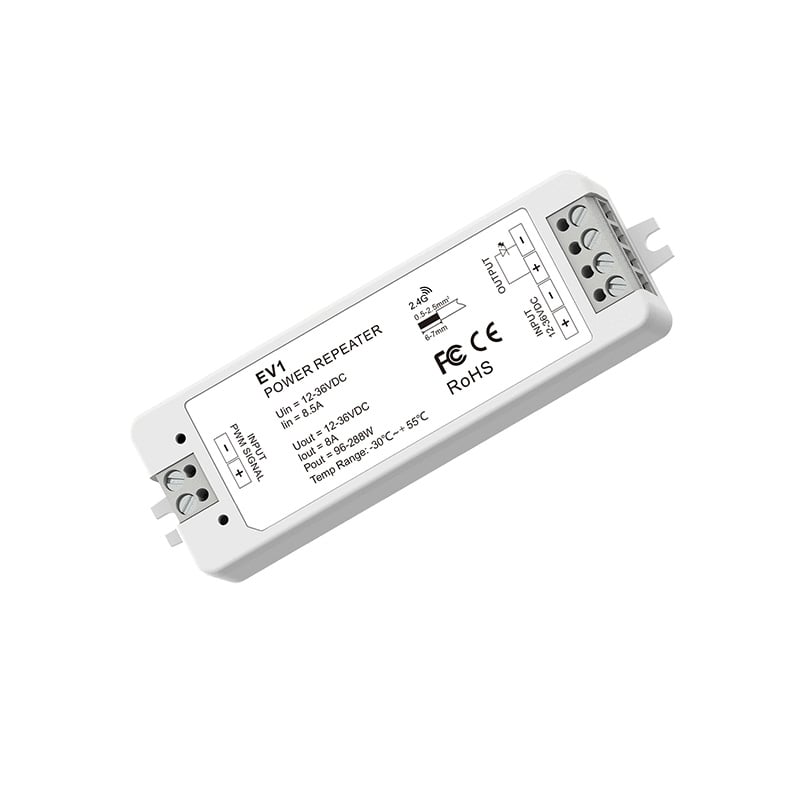
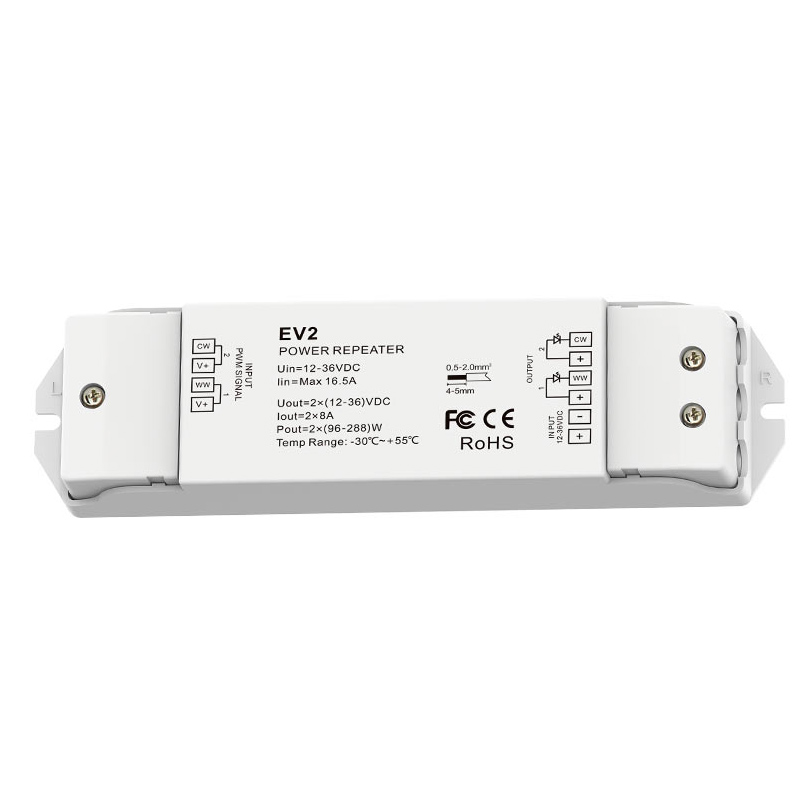
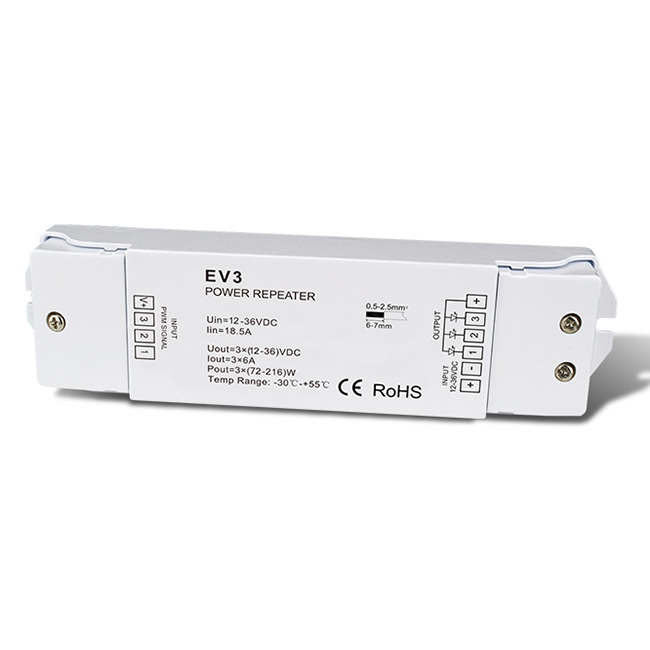

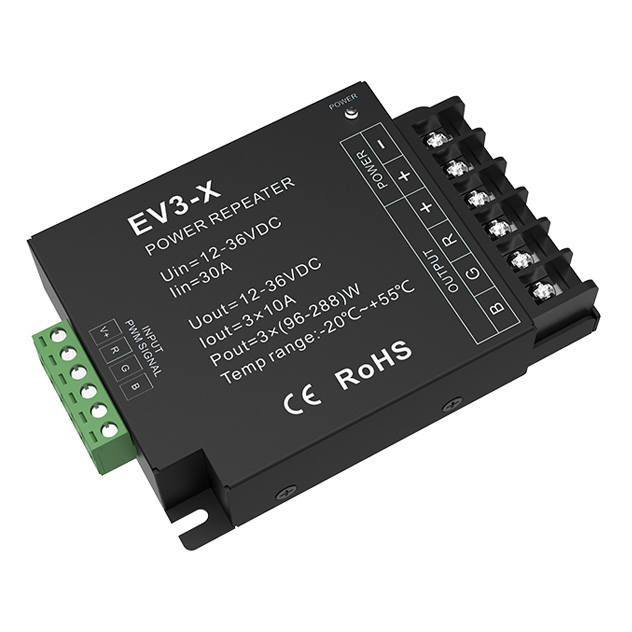
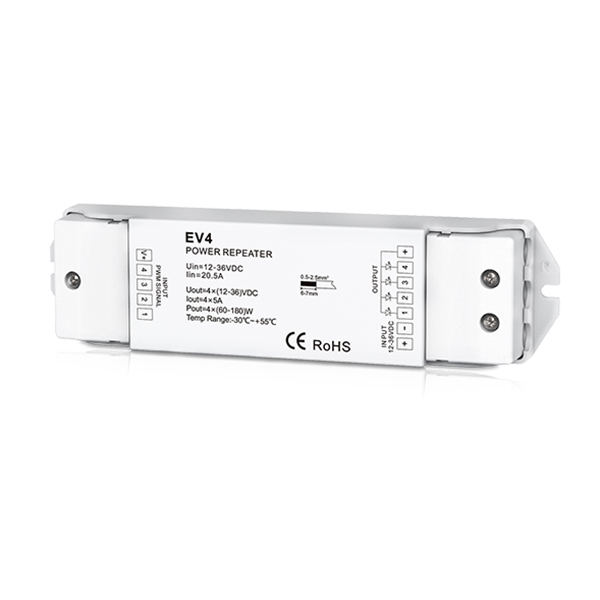

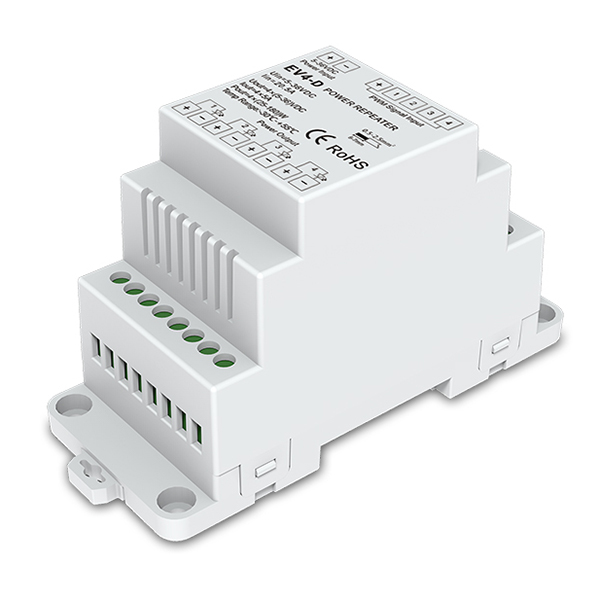

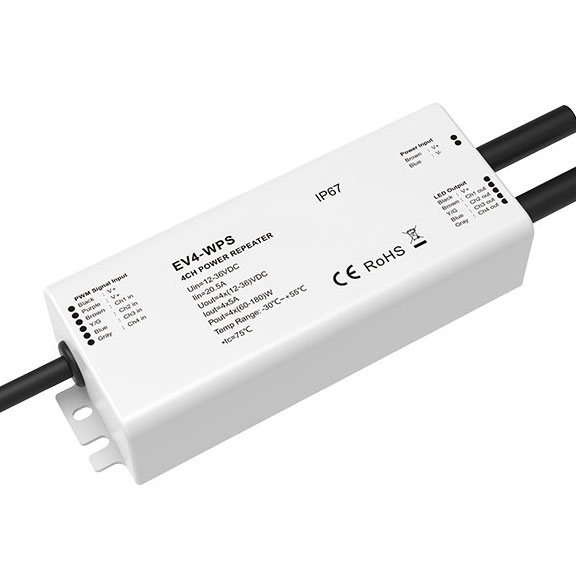
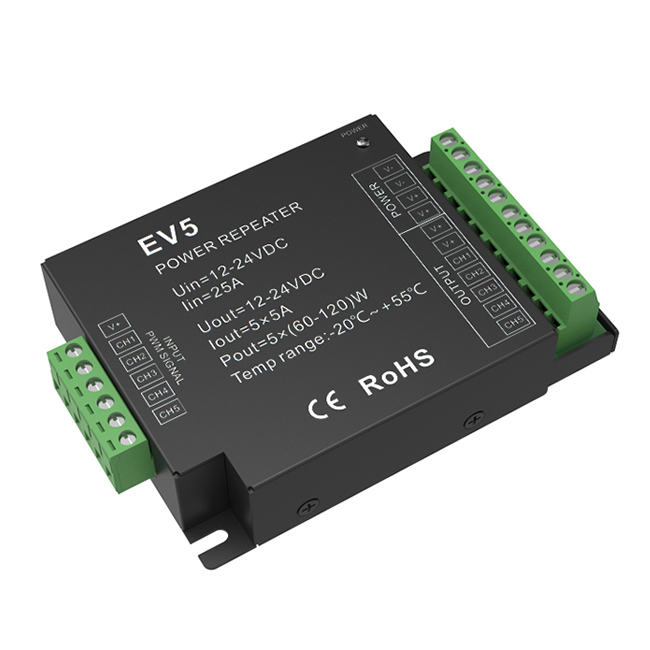
 Power Repeater EC3 For RGB Lamp.jpg "DC12-48V 3CH Constant Current (3 in 1) Power Repeater EC3 For RGB Lamp")


How Does an LED Power Repeater Work?
A power repeater receives the PWM control signal from a compatible LED controller, dimmer, or decoder, while using a separate power supply to drive additional LED loads. It reproduces the original PWM dimming signals at its output, allowing multiple groups of LED lights to follow the same brightness levels, color changes, and lighting effects without placing the entire electrical load on the original controller.
By adding power repeaters where needed, you can expand the total lighting capacity, distribute power across multiple sections, and maintain synchronized control throughout larger LED lighting installations.
FAQ About Power Repeaters
Direct technical answers on sizing, wiring, and synchronising SkyDance LED power repeaters across large installations.
To power 24V LED strip runs past your controller's rating, wire an LED power repeater at the end of your first run to receive the PWM signal while drawing power from a secondary 24V driver. Most standard 4-channel LED controllers max out at 3A to 5A per channel, which limits you to roughly 15 to 20 metres of 14.4 W/m tape before the controller trips or overheats. By placing a constant voltage power repeater between sections, the first controller only carries the load of the first zone, while the repeater drives the next zone in lockstep.
An LED power repeater cannot be used with addressable digital LED strip lights because it only processes analog PWM voltage pulses, not digital IC data streams. Digital strips like WS2811, WS2812B, or UCS1903 rely on a single-line or dual-line serial data signal carrying binary code for individual pixel chips. If you feed an SPI data line into the PWM input of a power repeater, the unit cannot interpret the protocol. For pixel strips, you inject 5V, 12V, or 24V DC power directly to the tape's copper pads and use dedicated data amplifiers or signal splitters instead.
Wiring multiple LED power repeaters in parallel from the master controller's output is always the preferred method to prevent cumulative signal delay. SkyDance repeaters feature built-in 3KV optoelectronic isolation, which lets you daisy-chain repeater signal inputs in series if your jobsite layout makes home-run cabling impossible. However, when you chain more than five or six units in series, the microsecond switching delays in the optical couplers can eventually stack up, creating a tiny visible lag between the first and last zone during rapid strobe or colour-chasing effects.
Choose a constant voltage power repeater if your LED strip lights use built-in current-limiting resistors and require a fixed DC rail (like 12V, 24V, or 36V). If you are powering architectural spotlights, downlights, or step lights that require fixed milliamp drives (such as 350mA, 700mA, or 1050mA) with varying forward voltages, choose constant current repeaters like the EC3 or EC4. Using a CV repeater on raw series LED chips will over-current and destroy them, while wiring a CC repeater to a standard 24V flexible LED strip will cause severe undervoltage and flickering.
Flickering or delay on a repeater channel almost always traces back to a floating ground connection or severe input wire resistance. A power repeater needs a clean, low-resistance PWM reference signal from the master dimmer. If the signal cable running between the controller and the repeater's input terminals is too thin (smaller than 20 AWG) or exceeds 15 metres without shielding, electrical noise induces false trigger pulses. Check that your signal wiring polarity is firmly clamped into the input terminals and ensure the repeater's dedicated power supply output voltage matches the strip's operating voltage within ±2%.
Calculate the power supply size by multiplying the total length of LED strip lights connected to the repeater by the strip's wattage per metre, then add a 20% operating headroom buffer. For example, if a 4-channel repeater runs 20 metres of RGBW tape drawing 19.2 W/m, total strip draw is 384W; adding 20% means you need a minimum 480W 24V power supply for that repeater. Sizing drivers with an 80% continuous load cap prevents thermal throttling and voltage sag. Review our in-depth walkthrough on calculating power for LED strip lights to map your run lengths against wire gauge charts.