
APP Controlled Fiber Engine
18 productsWith Bluetooth+RF and WiFi+RF control options, you can control fiber optic lighting at your fingertips, effortlessly adjusting brightness levels and changing colors. The combination of Bluetooth/WiFi and RF enhances the reliability of fiber optic lighting control.
These fiber optic illuminators allow you to connect them to your smartphone or local WiFi network and control the fiber optic lights from anywhere in the control range.

50W Dual-Head Dynamic RGBW LED Star Roof Light Source For Fibers

4-Port Independent Color Changing RGBW Fiber Optic Light Source 36W
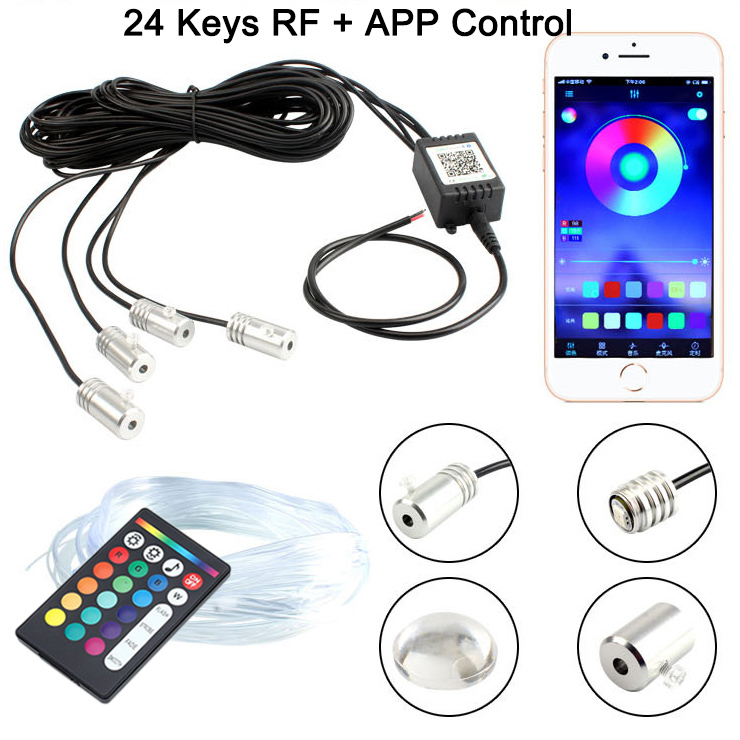
DC12V 6 Heads Bluetooth RF RGB LED Fiber Optic Illuminator
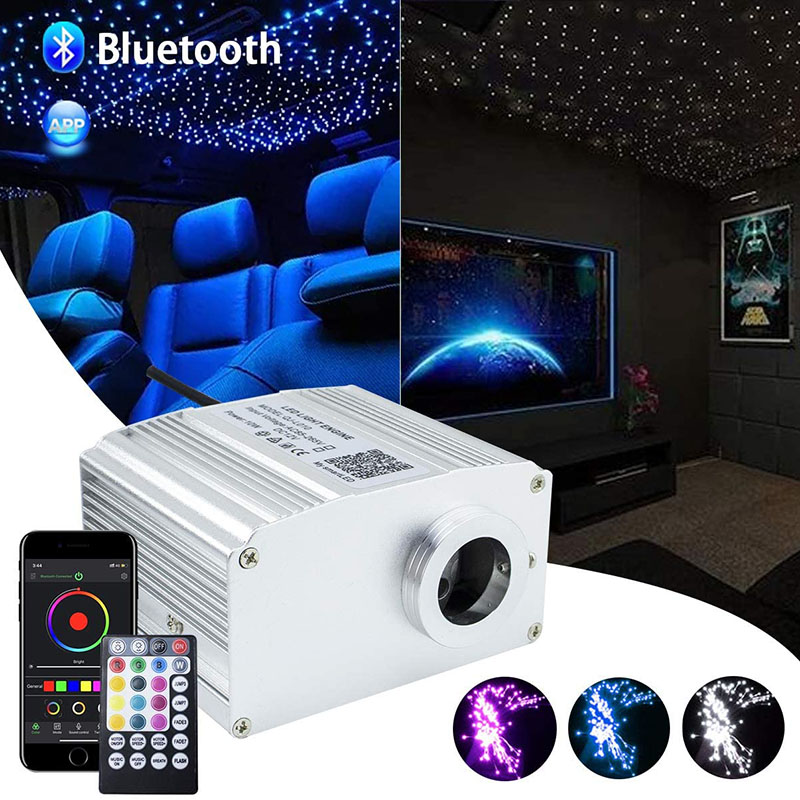
10W Bluetooth+RF Music Twinkle RGBW LED Fiber Optic Light Engine


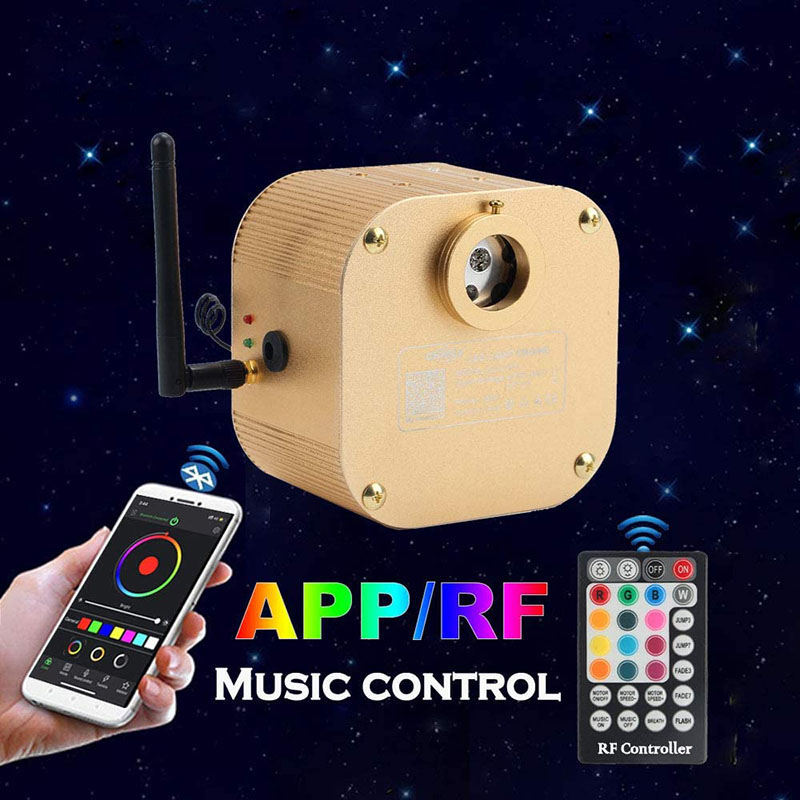
16W Bluetooth APP & RF Twinkle RGBW LED Star Fiber Optic Light Source
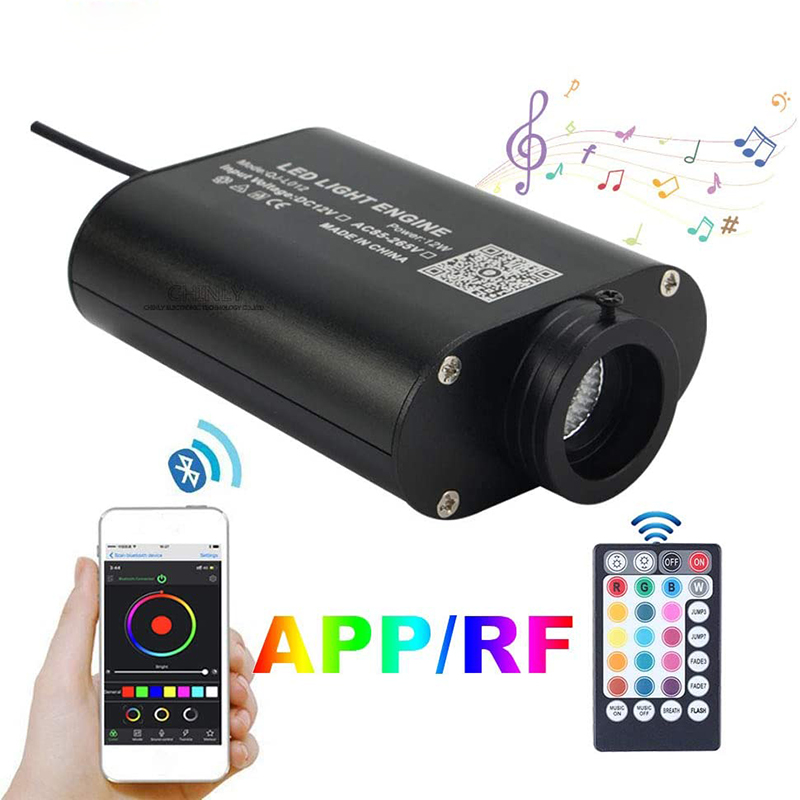
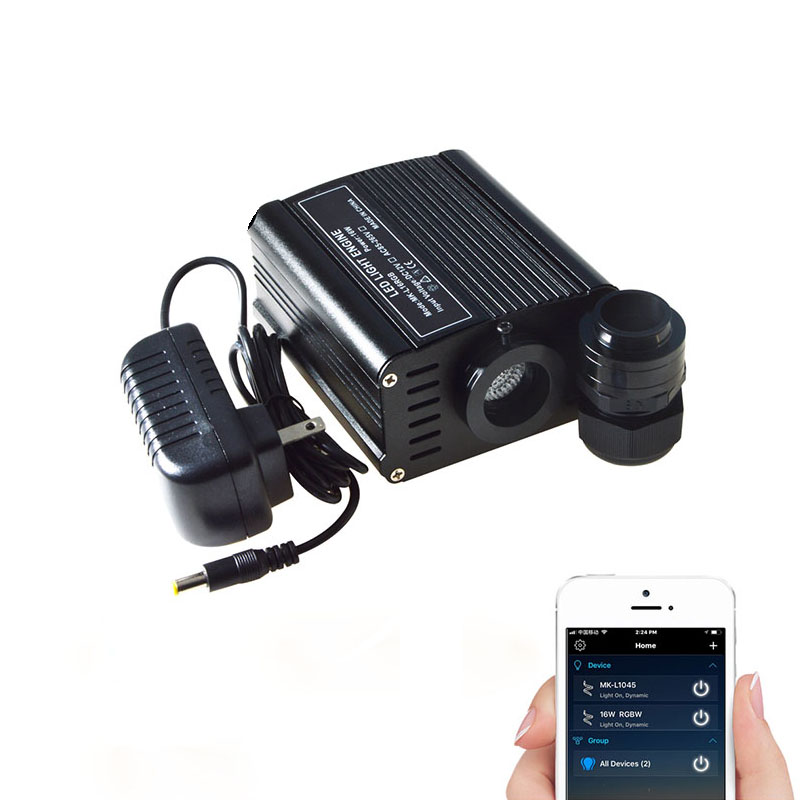
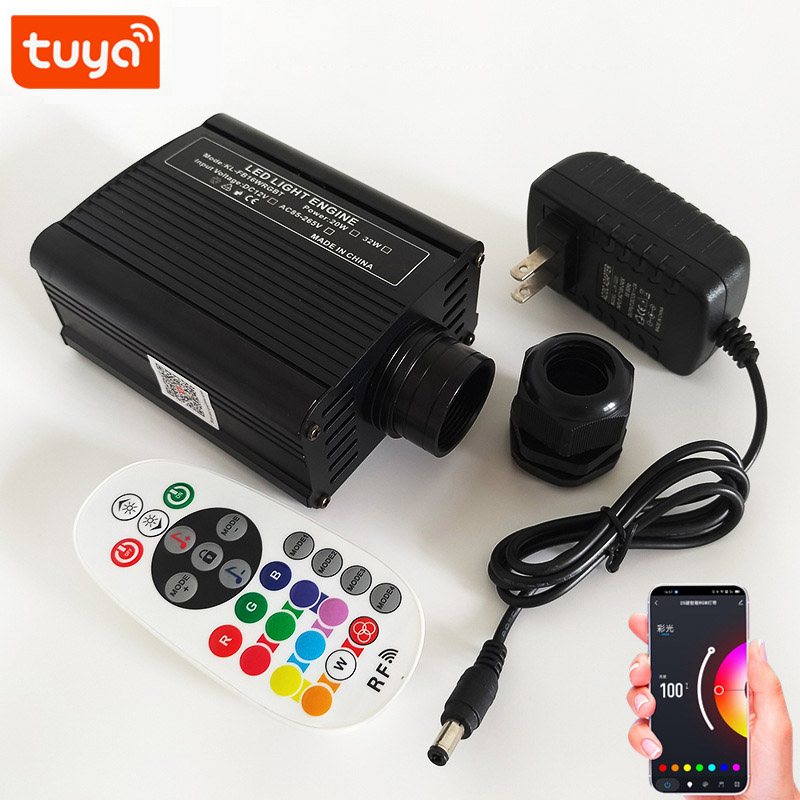
16W Tuya WiFi RF Controlled RGB Fiber Optic Light Engine
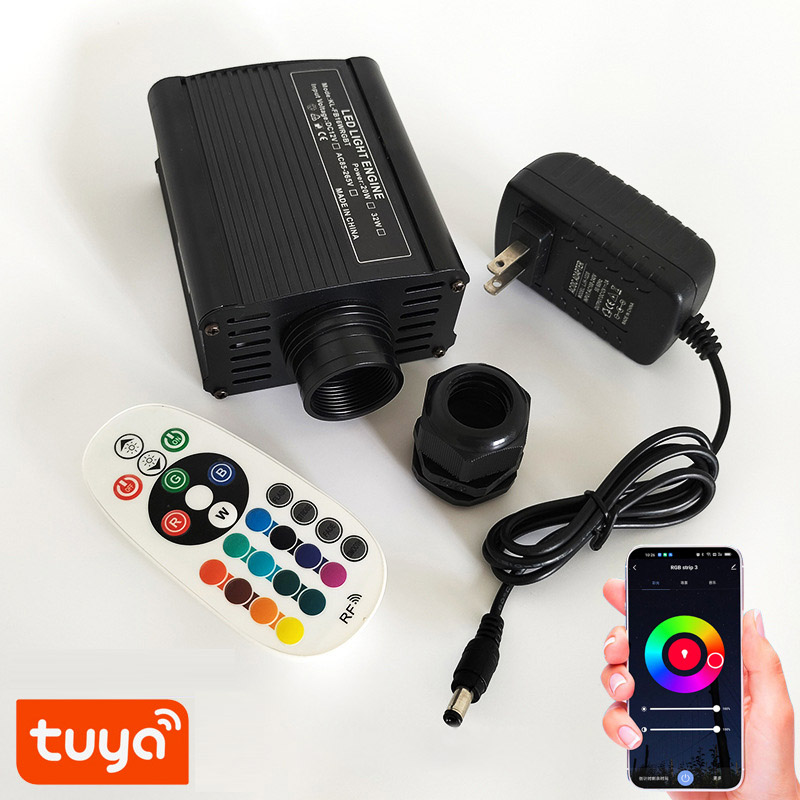
16W WiFi Tuya RF RGBW LED Fiber Optic Light Source Engine
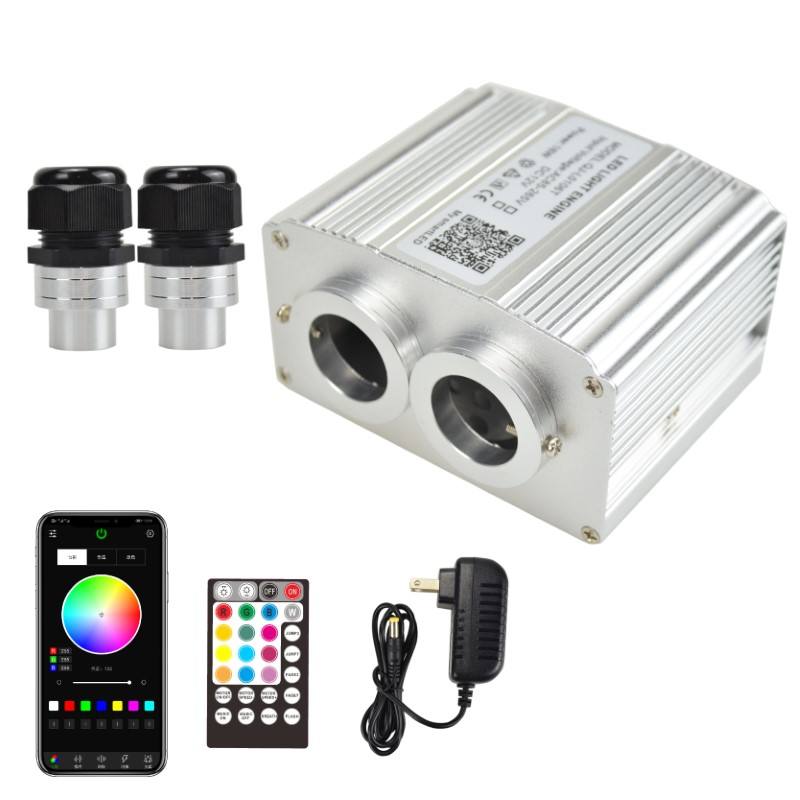
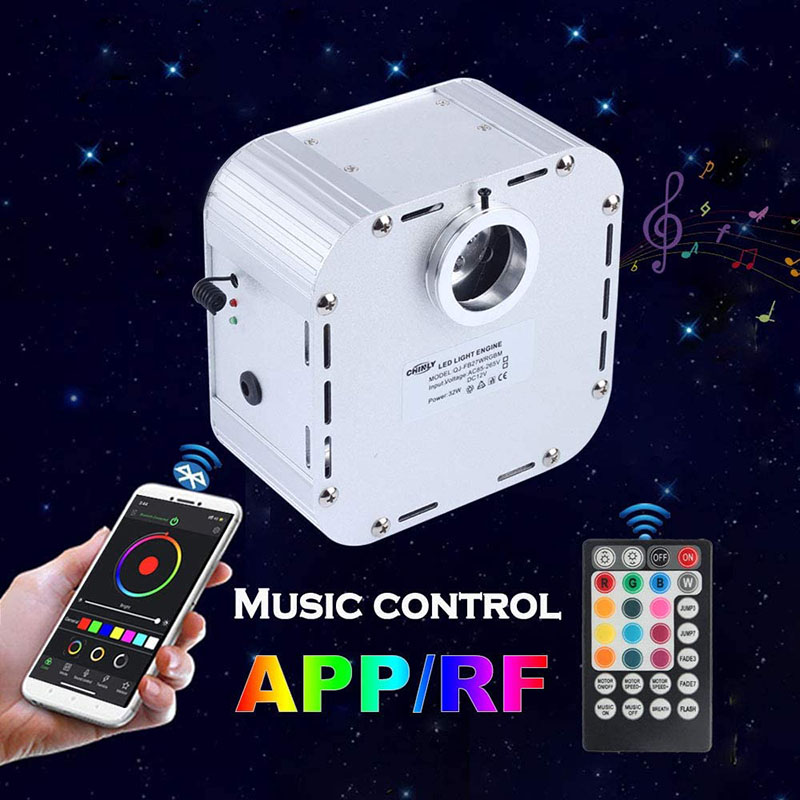
32W Bluetooth APP & RF Music Twinkle RGBW LED Fiber Optic Light Source

DC12V Double Head 32W Tuya RF RGB Fiber Optic Light Source
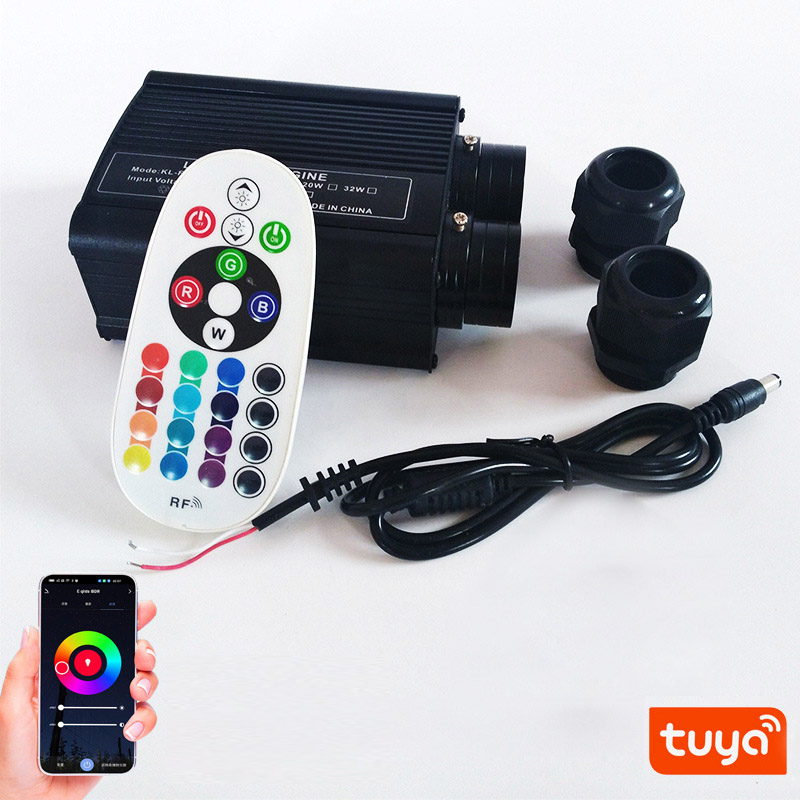
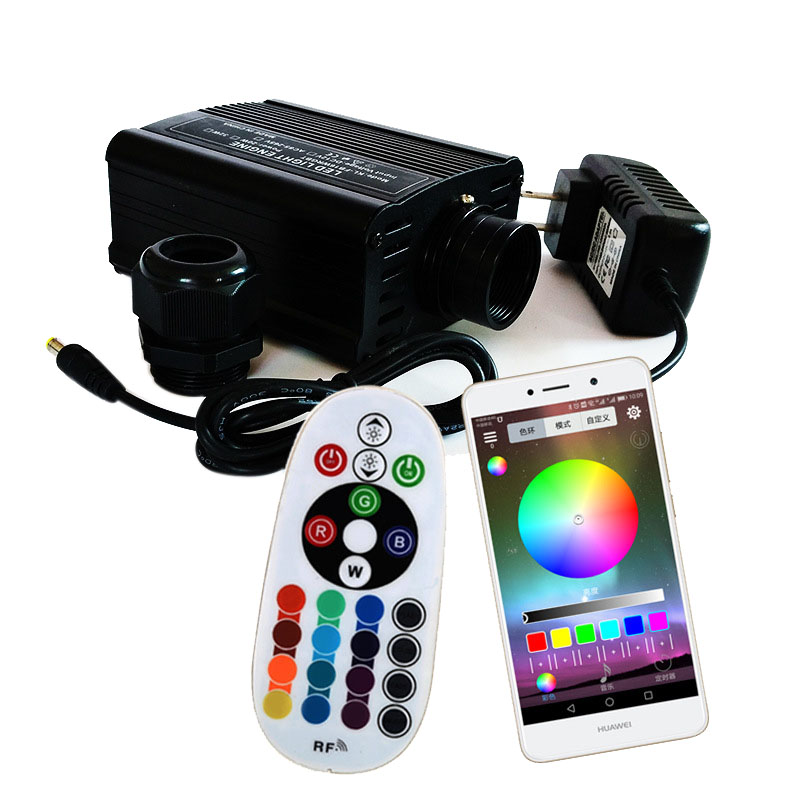

DC12V 16W WIFI Smartphone Controlled RGBW Fiber Optic Illuminator Support Android & IOS
Frequently Asked Questions About APP Controlled Fiber Engine
Direct engineering answers on wireless protocols, strand loading, wiring, and thermal planning for app-controlled fiber optic light sources.
An APP controlled fiber engine is a specialized illuminator containing solid-state LED emitters that focuses high-density light directly into an optical fiber port, managed wirelessly over 2.4GHz WiFi or Bluetooth. Unlike basic light boxes that rely solely on handheld remotes, these units integrate internal transceiver modules that pair with smartphone platforms like Tuya Smart or MySmartLED. This gives you phone-based PWM dimming from 1% to 100%, 16 million RGB color mixing, pure 6000K or 3000K white LED selection, scheduling, and dynamic star effect cycles without running control cables to the ceiling cavity.
Choose Bluetooth if you are outfitting a vehicle headliner or an offline room, and pick Tuya WiFi for whole-home automation. Direct Bluetooth pairing requires no local router and connects instantly in cars or isolated booths. The Tuya WiFi models integrate into 2.4GHz home networks for Amazon Alexa or Google Home voice control and off-site scheduling.
A standard 20mm coupling port on an led light fiber engine holds up to 600 strands of 0.75mm fiber or 300 strands of 1.0mm fiber. If you mix diameters to create variable-magnitude starfields, a practical layout is 450 strands of 0.75mm combined with 75 strands of 1.0mm and 15 strands of 1.5mm. Never exceed 85% of the mechanical cross-section, because fibers need slight clearance to align perpendicular to the internal condensing lens; overpacking pinches optical cores and produces dark strands across your star layout.
RF and Bluetooth attenuation happens when the fiber light led engine is enclosed behind foil-faced insulation, steel studs, or dense drywall. While line-of-sight Bluetooth ranges up to 10 meters, metal headliner ribs or foil vapor barriers can cut that signal down to less than 2 meters. Keep the engine's external antenna stub clear of metal chassis contact, or position the unit within 300mm of an access panel or return-air grille so 2.4GHz radio waves can reach your phone without physical reflection.
Yes, our 12V fiber led lights engines run directly on automotive DC systems, but you should wire them through an accessory fuse tap rather than an unswitched circuit. Automotive alternators routinely spike to 14.4V during driving, so our 12V models use internal buck regulation to protect both the RGBW LEDs and the wireless receiver from overvoltage. Splice the positive lead into an ACC ignition fuse rated at 5A to ensure the engine powers down when the vehicle is turned off, preventing phantom battery draw from the active Bluetooth receiver.
To sync multiple fiber light led engines across a large space, link all units to the same 2.4GHz WiFi network and assign them to a common device group in the Tuya Smart app. Once grouped, color shifts, brightness changes, and scene presets broadcast simultaneously across every illuminator. If your space lacks reliable WiFi, our Bluetooth mesh models bridge automatically phone-to-engine, while bundled multi-channel RF remotes allow you to pair up to four engines to a single wireless zone for latency-free physical wall control.