
Optic Fiber Illuminator
5 sub-categoriesTo make your fiber optic glow, you must have a fiber optic illuminator. We offer many types of fiber optic light sources to cater to your fiber optic decorative lighting. Our fiber optic light source illuminator can be controlled by a RF remote or a smartphone through WiFi and Bluetooth. Select a category that interests you to view.
What is a fiber optic illuminator?
Fiber optic illuminator is the light source in fiber optic lighting, it usually uses LEDs to emit different colors of light, such as various solid colors, RGB and RGBW changing colors. LED fiber optic illuminator can be connected to a car power system, powered via USB, or directly connected to the home grid for ease of use.
How do fiber optics glow?
Fiber optic itself does not emit light, it must be connected to a fiber optic light source to transmit light and allow you to see fiber optic light. Fiber optics and fiber optical illuminators are used together.

RGB Fiber Optic Engine
RGB fiber optic light illuminator sources display RGB color-changing light mode on fiber optic cables, suitable for atmosphere lighting or creating artwork with fiber optics, such as LED fiber optic tree lights, LED fiber optic star ceiling lights, LED fiber optic pool lighting, etc. Different types of RGB fiber optic light engines have different powers, heads, and control methods (button remote, touch remote, IR remote control, RF remote control, Bluetooth, Tuya WiFi APP control). You can browse and choose according to your actual needs.

RGBW Fiber Optic Engine
If you want your fiber optic cables to be colorful lights, then you need an RGBW light source. Our RGBW fiber optic light engines are available with RF remote control, Bluetooth APP control, and Tuya WiFi Alexa control. View these multiple types of illuminators with different powers and coupling heads.

DMX Fiber Optic Engine
DMX (Digital Multiplex) fiber optic illuminator is a lighting device that realizes luminaire control through digital multiplex technology. DMX protocol was originally designed to solve the problem of equipment interoperability in stage lighting systems and has now become the standard in lighting industry.
-
Integration of a large number of fiber illuminators and control equipment, making the fiber optic lighting system layout more concise and more convenient to control fiber lights
-
Can achieve precise control of individual fiber light sources, flexible adjustment of brightness, color, dynamic effects, etc.
-
It is the best choice for commercial lighting, large building lighting, and landscape lighting
-

Twinkle Fiber Optic Engine
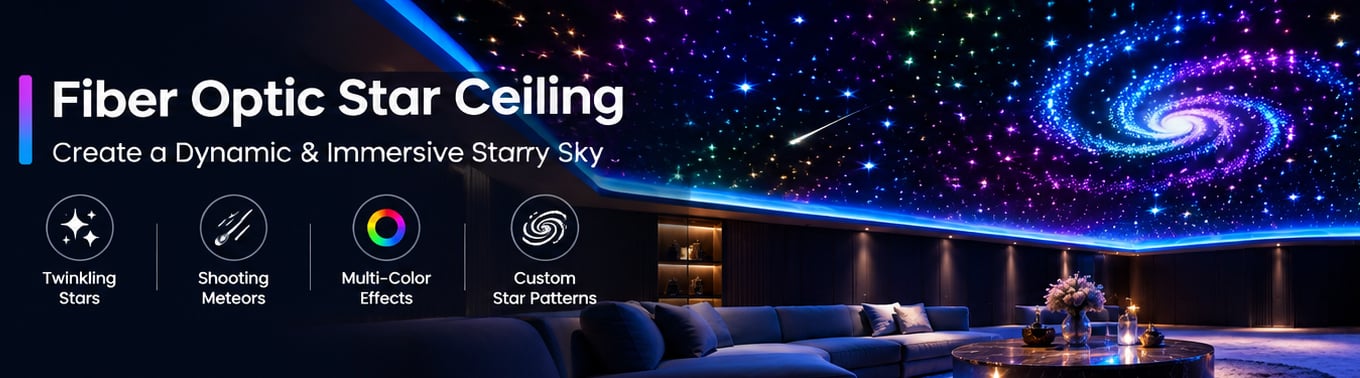
Twinkle Fiber Optic Light Engines are specialized LED light source machines designed to create dynamic starry sky lighting effects through fiber optic cables. By transmitting RGB, RGBW, or white LED light into bundles of optical fibers, these illuminators transform individual fiber ends into brilliant points of light, recreating the appearance of a sparkling night sky across ceilings, car headliners, home theaters, and decorative installations.
Depending on the selected model, built-in optical flicker mechanisms, sequential lighting channels, color mixing, and music-responsive functions can produce everything from subtle twinkling stars to dynamic shooting meteor effects.
Whether you are designing a residential star ceiling or a professional decorative lighting installation, SuperLightingLED twinkling fiber optic light generators offer versatile solutions for creating immersive atmospheric lighting.
APP Controlled Fiber Engine
With Bluetooth+RF and WiFi+RF control options, you can control fiber optic lighting at your fingertips, effortlessly adjusting brightness levels and changing colors. The combination of Bluetooth/WiFi and RF enhances the reliability of fiber optic lighting control.
These fiber optic illuminators allow you to connect them to your smartphone or local WiFi network and control the fiber optic lights from anywhere in the control range.
Best-selling Optic Fiber Illuminator
1–20 of 55 products
50W Dual-Head Dynamic RGBW LED Star Roof Light Source For Fibers

4-Port Independent Color Changing RGBW Fiber Optic LED Light Source 36W

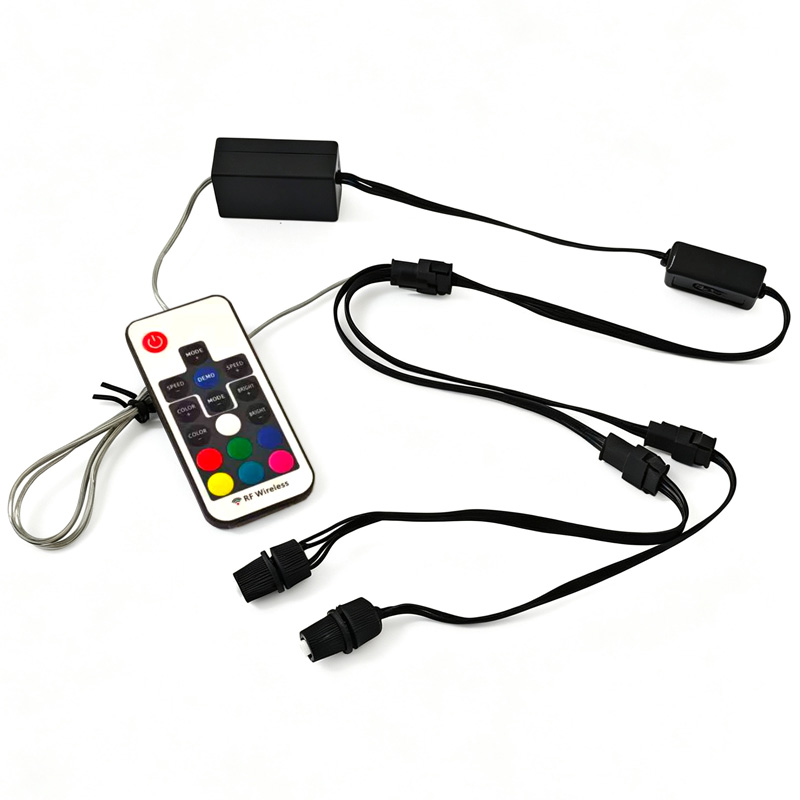
DC12V 2W 2/4 Heads 24 Key Remote RGB Side Glow Fiber Optic Light Source Illuminator

DC12V 3W 6 Heads Choose RGB Bluetooth 24 Keys Wireless Remote Voice APP Control Colour Changing...
 (1)

Bluetooth RF RGB /White Shooting Star Fiber Optic Light Engine 12 Holes 6W 12VDC

DC12V 6W RGB 4 Plug Type Selection RF 17key Remote Car use LED Fiber Optic light engine

7W RGB 4 Plug Type 20key Selection RF Remote LED Fiber Optic Engine Driver for fiber optics sky...

DC12V 10W Bluetooth APP & RF Music Twinkle RGBW LED Fiber Optic Star Ceiling Light Engine

DC12V 10W RGBW / White Twinkle LED Starlight Fiber Optic Illuminator With RF Remote


12W Twinkling Star & Shooting Meteor RGBW LED Fiber Optic Light Engine (Bluetooth APP + Remote)

16W RGB 4 Plug Type Selection 20key RF Remote LED Fiber Optic Engine Driver Golden Case For Fiber...

16W RGBW 4 Plug Type Selection 24key RF Remote LED Fiber Optic light Engine Driver For Fiber Optics

16W RGBW 4 Plug Type Selection 28key RF Remote LED Fiber Optic Engine Driver For Fiber Optics

16W RGBW 4 Plug Type selection 28key RF Remote LED Fiber Optic Engine Driver for fiber optics

16W Single Head RGBW LED Optic Fibre Engine Driver With 28 Keys RF Remote Controller

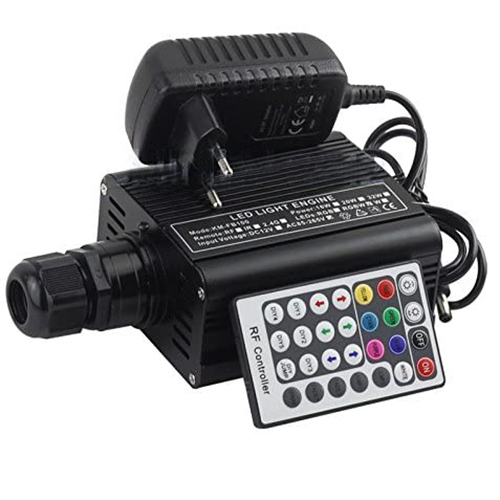
DC12V 16W 6 Channels DMX RGBW LED Fiber Optic Engine With 28 Keys RF Remote Controller
How to Choose the Right LED Fiber Optic Light Engine
Choosing the right fiber optic illuminator requires more than selecting an LED wattage. Consider the size of your installation, the number and diameter of fiber strands, the total fiber bundle size, and the desired lighting effects.
Higher-output engines are generally more suitable for larger fiber bundles or projects requiring stronger illumination, while compact models can be appropriate for smaller residential and automotive installations.
Also check the optical coupling port diameter to ensure it accommodates your selected fiber bundle, as well as the fiber cable length and type to suit your installation layout.
If you want a natural starry sky, choose a dedicated twinkle model. For moving celestial effects, look for an engine with shooting star or meteor sequencing. Selecting an illuminator that matches your fiber optic cables, installation requirements, and preferred control method will help achieve the intended lighting effect.
Frequently Asked Questions About Optic Fiber Illuminators
Direct engineering answers on light engine selection, port capacity, thermal management, DMX control, and custom builds.
A fiber optic illuminator serves as the dedicated light engine that focuses high-output LED light directly into the polished end of optical fiber bundles. Optical fibers carry zero electricity and produce no illumination on their own; they simply conduct photonic energy along their transparent cores. In our range of illuminator models, the engine houses the LED emitter, heat sink, focusing optics, power supply, and optional motor-driven twinkle wheels. The engine remains accessible in a ventilated cabinet or ceiling access hatch while the passive fibers travel into damp spaces, saunas, or display cases.
Port strand capacity depends on the cross-sectional area of the illuminator's coupling aperture compared to the diameter of your fiber strands. For example, a standard 20 mm diameter port has a total cross-sectional area of roughly 314 mm²; accounting for the practical 70% packing density of circular strands, it accepts up to 650 strands of 0.75 mm fiber, 360 strands of 1.0 mm fiber, or 90 strands of 2.0 mm fiber optic cable. Forcing extra strands into the ferrule crushes the outer optical cladding, causing severe light leakage right at the collar instead of along your run.
Most residential and commercial illuminators run on either DC 12V, DC 24V, or universal AC 85–265V mains input. In our catalogue, 20 models run on 12V, 3 use 24V, and dedicated AC-direct models take standard line power. A 12V engine lets you power small 10W to 16W units directly from low-voltage circuits or battery systems, but larger installations with 50W to 100W emitters demand 24V or direct AC feeds to keep operational current low and avoid resistive heating on the internal circuit board.
Yes, if you select one of our DMX fiber optic engines, which feature onboard RJ45 or 3-pin XLR terminals that map red, green, blue, white, and twinkle-motor speed directly to separate DMX channels. Rather than using an external secondary decoder, these engines decode the DMX512 signal right on the main PCB. You set your starting address on the 3-digit LED display or DIP switches. If the DMX cable run exceeds 30 m, add a standard 120-ohm terminating resistor between Data+ and Data- on the final unit's output port to eliminate signal reflections.
Use a dual-head or four-port engine whenever your star ceiling exceeds 800 fiber points or requires separate room zones to show different colors simultaneously. A single 20 mm port can hold around 600 pieces of 0.75 mm strand before light transmission drops. Our dual-port 50W (FOLE2-RGBW-50W) and 90W (2x45W) units provide two isolated 20 mm ports, letting you run up to 1,200 points without bundling all fibers into a single stiff cable. Our 4-port 36W light source provides independent color mixing per port, allowing four separate fiber zones to run distinct animations.
Standard indoor illuminators carry an IP20 rating and must remain inside dry, conditioned enclosures, but we also stock dedicated IP65 weatherproof illuminator models built in sealed stainless steel enclosures for exterior wet locations. Even with an IP65 rated engine, keep the light source elevated at least 300 mm above ground level to avoid standing water immersion. Because the optical fibers themselves are completely non-conductive and carry no electrical current, you can safely submerge the optical cables into swimming pools, ponds, and water fountains while keeping the illuminator dry.
Bluetooth illuminator models connect directly from your smartphone via point-to-point RF within a 10 m to 15 m line-of-sight radius, requiring no local network or internet access, making them ideal for vehicles, boats, and isolated booths. Tuya WiFi models integrate into 2.4 GHz home networks, allowing you to control illuminator scenes through smart-home ecosystems like Amazon Alexa or Google Assistant, set automated cloud timers, and trigger scenes from anywhere in the world. If your illuminator sits inside a shielded metal enclosure, Bluetooth range drops to under 4 m; WiFi systems with external antennas maintain reliable signal reception.