
DMX Signal amplifier
7 productsIndustrial Grade Opto Isolated DMX Signal Amplifiers and Splitters
At SuperLightingLED, we supply lighting designers, electrical contractors, and system integrators with heavy-duty DMX512 and RDM signal distribution hardware engineered for high-demand commercial and architectural environments. Our LTECH series of industrial-grade opto-isolated DMX amplifiers and splitters delivers the ultimate defense against ground loops, high-voltage surges, and signal degradation across long transmission distances.
Engineered with robust photoelectric isolation rated on 1KV (DIN-121 model) or above 3KV DC (other models), bi-directional RDM management compatibility, and wide-voltage metal enclosures, these LTECH repeaters guarantee flawless data integrity and zero-latency control across complex stage rigs, building facades, and large-scale fixture networks.
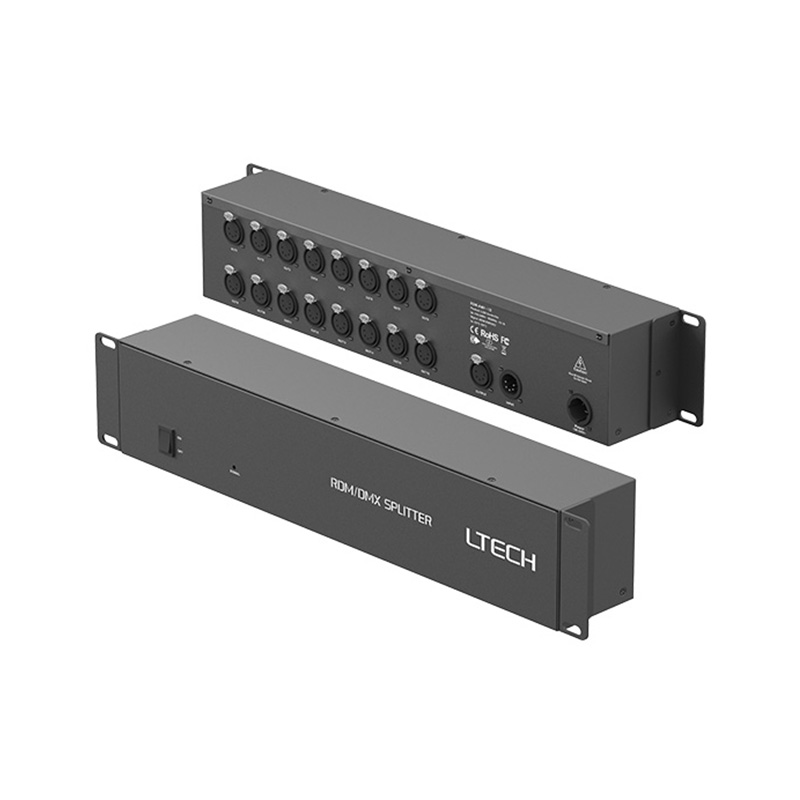
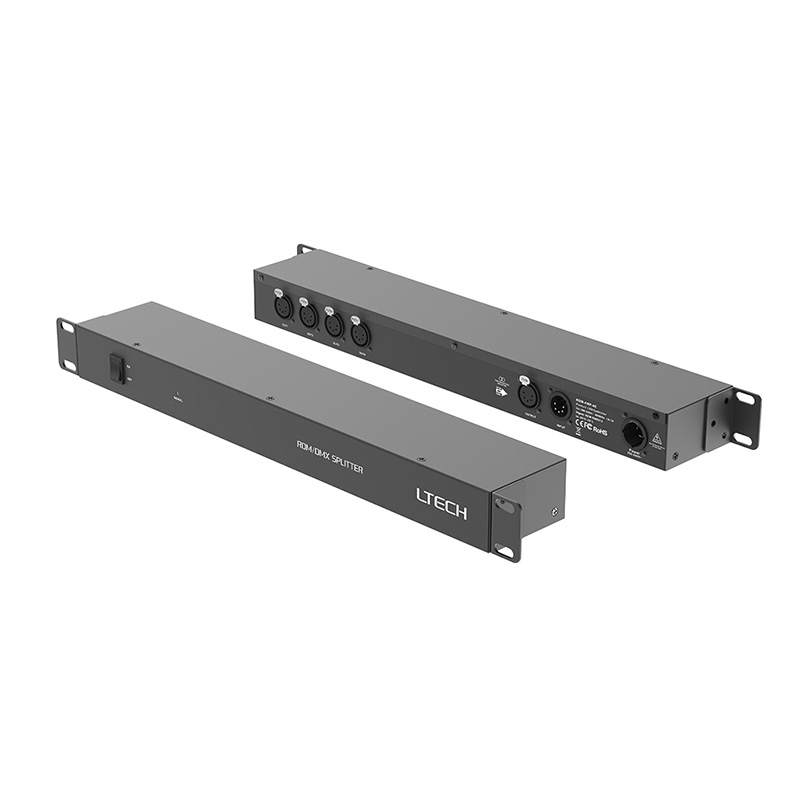
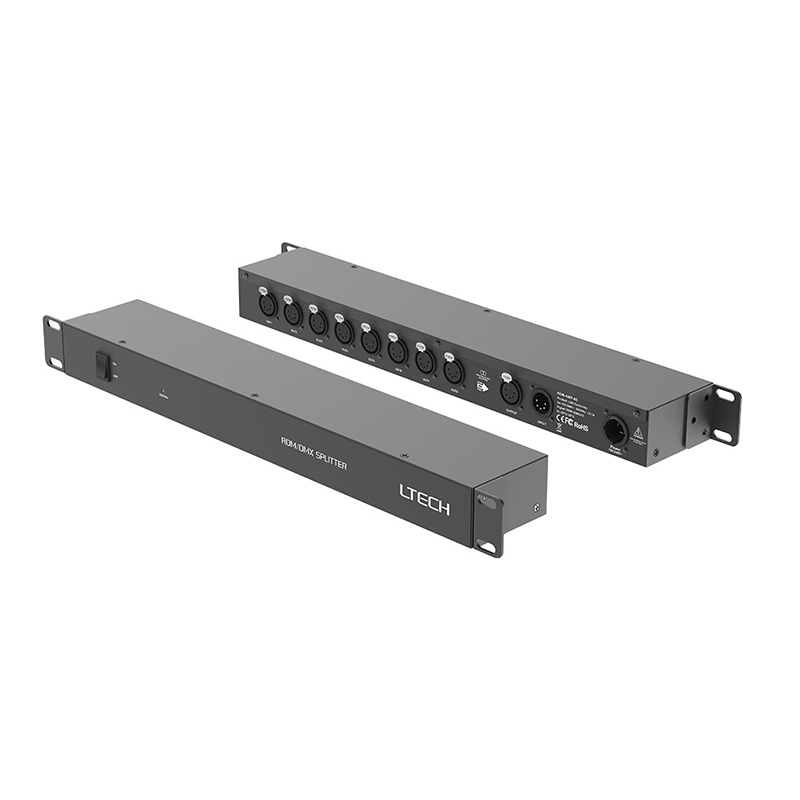
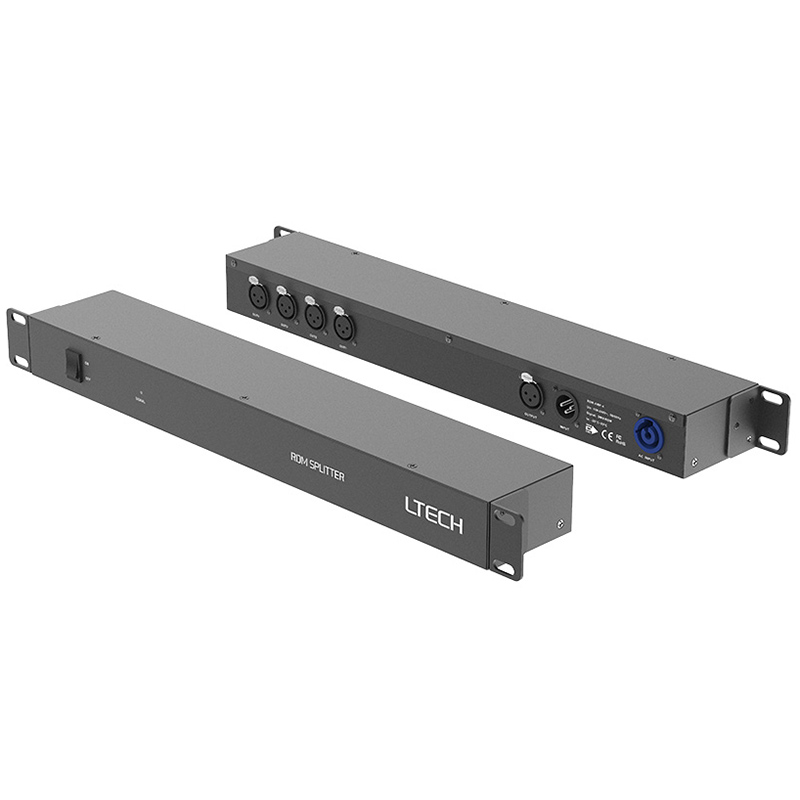
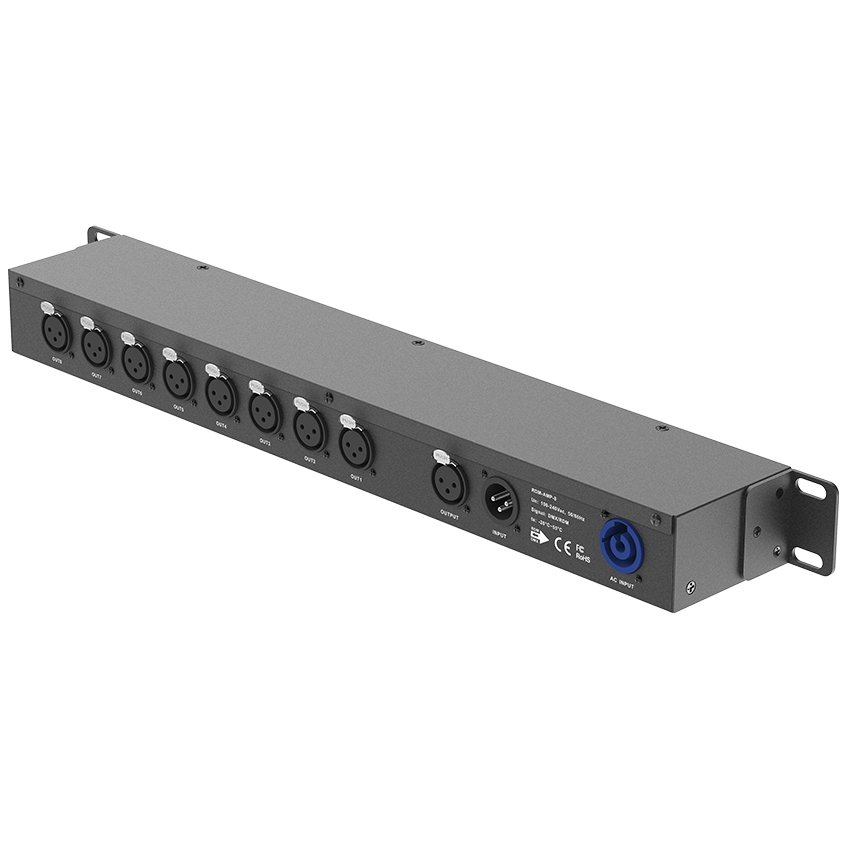
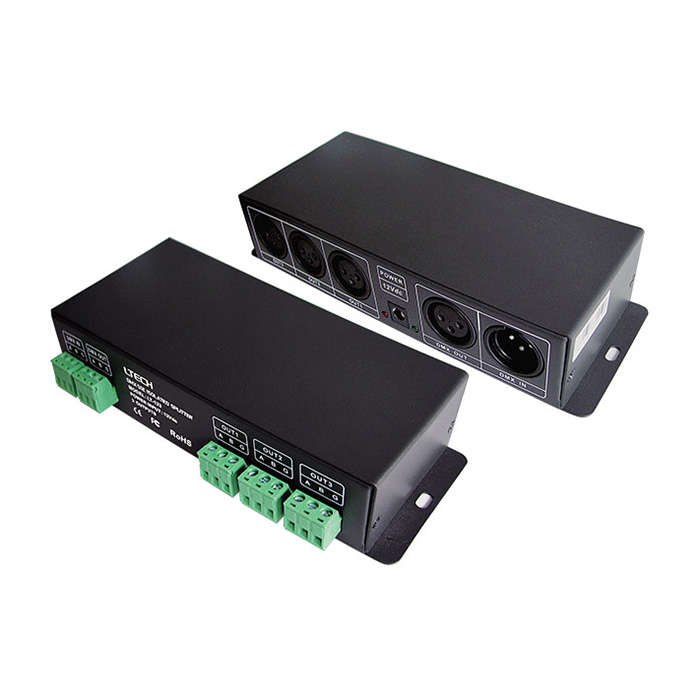
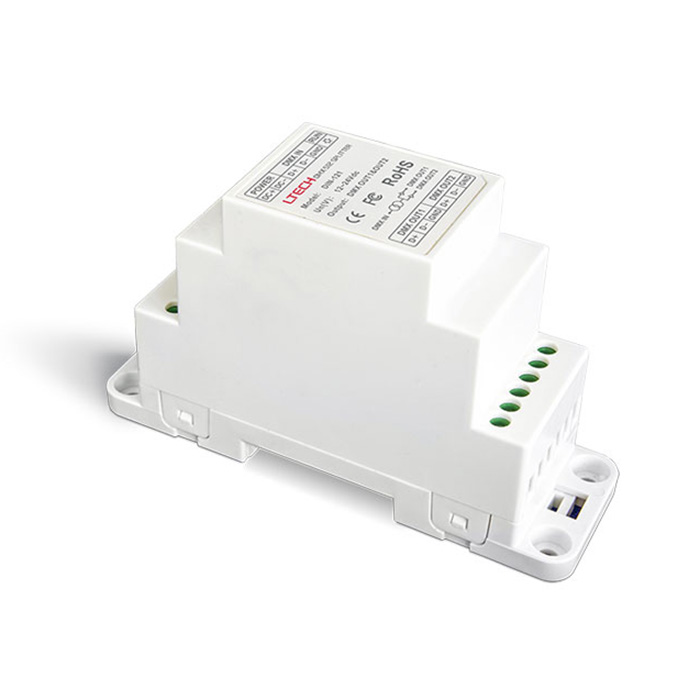
DMX Signal Amplifiers vs DMX Signal Splitters: Distance Extension and Multi Branch Distribution
DMX signal amplifier, also known as DMX signal repeater or booster, is a device used to extend the range of DMX signals in a lighting system. DMX signals will be attenuated over long distances due to signal loss or interference.
The Ltech DMX signal amplifier works by receiving the DMX signal from the controller and regenerating it to its original strength so that it can be transmitted further without loss of quality. The amplifier then sends the enhanced signal to the next set of fixtures, expanding the range of the DMX lighting control.
Typically, DMX signals can be transmitted over a distance of 300-500 feet (100-150 meters) without excessive loss of signal strength. Beyond this distance, DMX signals will be attenuated over long runs due to signal loss or line interference.
While a traditional DMX signal amplifier solves linear distance limitations and a standard splitter divides a single data line into multiple physical branches, LTECH devices combine both functions into a unified high-performance hardware solution. The LTECH DMX/RDM signal amplifier works by receiving the DMX signal from the controller and regenerating it to its original strength so that it can be transmitted further without loss of quality.
Simultaneously, it acts as a multi-channel splitter, sending the enhanced signal across multiple independent, optically isolated outputs to the next set of fixtures. By combining signal regeneration with multi-channel splitting in one fixture, LTECH DMX/RDM amplifiers effectively expand both the transmission range and layout flexibility of complex DMX lighting control networks.
More DMX Signal Amplification and Splitting Systems
At SuperLightingLED, we curate top-tier DMX distribution products from LTECH, Skydance, and Sunricher to provide a complete spectrum of control options for any budget and engineering requirement.
Skydance DMX amplifiers excel in compact, highly cost-effective, and versatile installation scenarios—such as retail displays, hospitality accent lighting, or standard multi-channel LED strip runs—where space optimization and straightforward signal duplication are required.
For high-end architectural automation, Sunricher specializes in sophisticated signal amplifiers engineered to seamlessly interface with broader multi-protocol ecosystems, including DALI, Zigbee, Z-Wave, and KNX smart building networks.
Whether your project demands straightforward signal duplication for retail lighting or intricate multi-protocol integration for a smart building, SuperLightingLED delivers the exact DMX amplification and splitting hardware tailored to your specific system architecture.
Frequently Asked Questions About DMX Signal Amplifiers
Got questions about boosting your DMX signal? I've been answering them for 12 years. Here are the common ones I hear right before a customer places an order.
A DMX signal amplifier (also called a splitter or booster) doesn't change the signal; it just cleans it up and copies it. It takes one DMX input and creates multiple, identical DMX outputs to send to more lights. A DMX decoder, on the other hand, is a translator. It takes the DMX data signal and converts it into the low-voltage PWM signal that actually controls the brightness and color of the LED strips.
No, and this is a common point of confusion. A DMX signal amplifier only handles the low-power data signal. It has absolutely nothing to do with the main power for your lights. You will always need a separate, correctly sized LED power supply to provide the 12V or 24V DC that the fixtures or decoders require.
Pretty much, yes. In the context of DMX512, these terms are used interchangeably. They all refer to a device that takes a DMX input, isolates it, and regenerates a fresh, full-strength signal on one or more output ports. We call them DMX signal amplifiers, but if you see 'splitter' or 'booster' elsewhere, they're talking about the same piece of hardware.
Standard DMX512 officially uses a 5-pin XLR connector. Pins 1-3 are for the signal, and pins 4 and 5 were originally intended for a secondary data link but are rarely used. Many fixtures use a 3-pin XLR connector to save cost, since only 3 pins are needed. For professional installs, 5-pin is the standard, but you can use adapters if you need to mix them.
Only if the amplifier is specifically designed to be RDM compatible. Standard DMX amplifiers block the bi-directional communication that RDM (Remote Device Management) needs. All our newer models, like the RDM-AMP series, are fully RDM compatible. This lets you configure and monitor your RDM-enabled fixtures right through the amplifier, which is a huge time-saver on site.
This depends entirely on your lighting layout. If you have lights in four different areas of a building and want to run a separate cable to each from a central point, you'd want a 4-output model like the RDM-AMP-4E. We have models with 1, 2, 4, 8, and even 16 outputs to handle everything from a small setup to a large stage.
Photoelectric isolation is a critical feature for protecting your gear. It means the input is electrically disconnected from the outputs, and each output is disconnected from the others. If a fault on one line sends a high voltage surge back up the cable, the isolation stops it from destroying the amplifier and any other equipment connected to it, like your main DMX controller. It's a lifesaver for your whole system.
Indirectly, yes. You can't connect the DMX amplifier's output directly to an addressable strip like a WS2812B. The amplifier outputs a DMX signal. You need to feed that DMX signal into a DMX-to-SPI decoder. The decoder then translates the DMX commands into the SPI protocol the addressable strip understands. The amplifier's job is just to get a clean DMX signal to that decoder, especially if it's far away.
It's straightforward. The DMX signal from your main controller (or the previous fixture in the chain) goes into the DMX IN port on the amplifier. Then, you run new DMX cables from each of the DMX OUT ports to the first fixture of each new chain. Remember to power the amplifier itself, as it has its own power supply. Our full guide on DMX control for LED lighting has detailed wiring diagrams for these exact scenarios.