
Zigbee 3.0 LED Lighting Control Series
3 sub-categories
Zigbee is an IEEE 802.15.4-based wireless protocol designed by the Zigbee Alliance. Zigbee is a reliable, low-power, and interoperable protocol that shows high immunity in noisy RF environments. The Zigbee PRO certification ensures smart object interoperability, enabling IoT devices from different vendors to work together.
Skydance is a member of the Zigbee Alliance, which provides professional Zigbee lighting controllers that are Zigbee 3.0 certified, enabling their products to work together with IoT devices from different vendors, and interoperability between products from different vendors.
Skydance Zigbee LED controllers are ideal for home or building automation smart lighting applications. They include single-color Zigbee LED dimmer, CCT dual white color/ RGB/ RGBW/ RGB+CCT Zigbee LED controller, curtain controller, and various Zigbee remote controls.

Zigbee LED Controllers

Skydance Zigbee 3.0 Series LED Controllers offer a convenient, efficient, and customizable solution for controlling and managing LED strip lights. They allow Dimming/CCT/RGB/RGBW/RGBCCT LED strip lights to be easily controlled and managed through a smartphone, a smart speaker, or a Skydance Zigbee wireless remote or wall panel.
Skydance Zigbee LED Controllers can be integrated with other smart devices, allowing for seamless control of multiple devices and systems to create a larger smart home lighting system. With features such as dimming control, color temperature and color control, and scene management, Zigbee Constant Voltage LED Controllers provide users with a customizable and dynamic lighting experience.

Zigbee LED Drivers
Skydance Zigbee 3.0 constant current LED driver is a device used to control and manage LED lighting systems that use Zigbee 3.0 wireless communication technology. The primary function of the driver is to regulate the flow of current to the LED lights, providing a consistent and stable light output. This helps to prolong the LED lifespan and improve their performance.
The Zigbee 3.0 protocol is a low-power, wireless mesh network standard that allows multiple devices to communicate and be controlled by a single device, such as a smart home hub or a smartphone. The constant current LED driver integrates with this network, allowing for remote control and management of the LED lighting system, enabling more sophisticated and customized lighting designs.
The driver is commonly used in smart home lighting systems, commercial and industrial lighting systems, and other applications that require wireless control and management of LED lighting. Can match with Skydance Zigbee remotes and wall panels.

Zigbee Scene Panel & Handy Remote
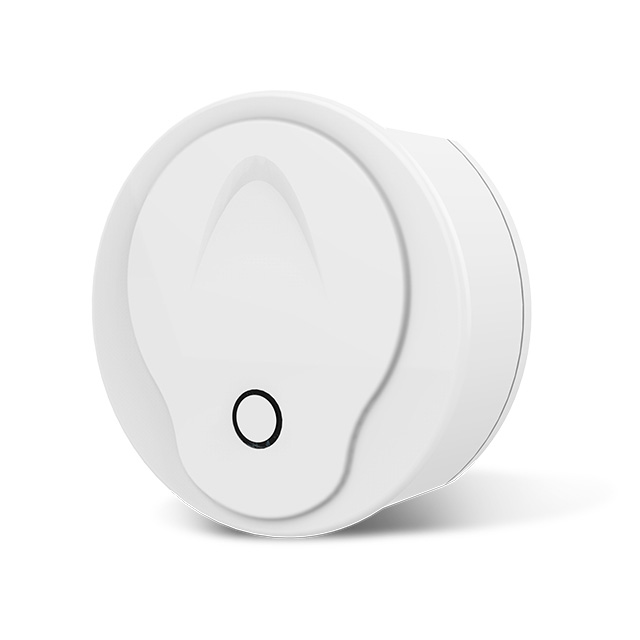
Skydance Zigbee handheld remotes and scene wall panel controllers bring LED lighting to a new level by providing a convenient and flexible way to control LED strip lights via Zigbee controllers or adjust constant-current light fixtures via Zigbee CC drivers.
With a handheld LED remote, users have the ability to control their LED lights from anywhere in the room. Scene panel controllers allow users to control multiple LED lights at once with a single device. This is especially useful in large spaces where multiple lights are used.
Using Zigbee 3.0 wireless technology, these LED remote controllers can be integrated with other control methods, to make your lighting more intelligent.
Best-selling Zigbee 3.0 LED Lighting Control Series
1–20 of 23 products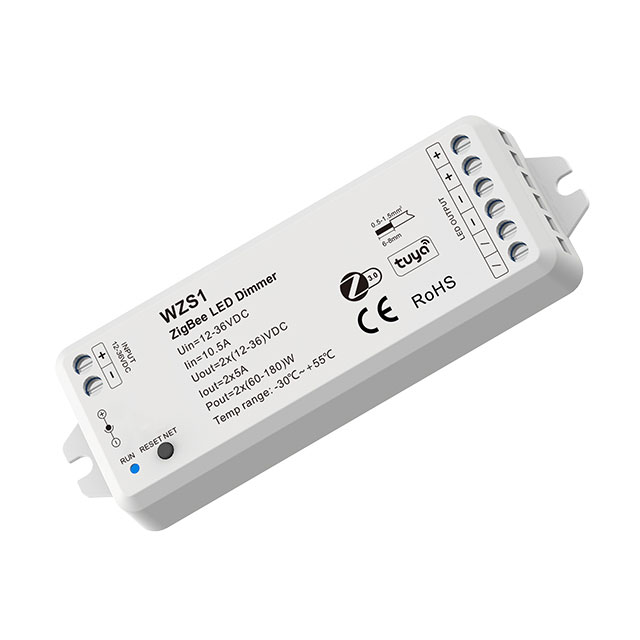




9-45VDC 1CH*(100-450mA) 12W Zigbee Constant Current Dimable LED Driver PB-12A-L(WZS)

3-24VDC 1CH*(350-700mA) 12W Zigbee Dimmable Constant Current LED Driver PB-12A-H(WZS)


12-24VDC 4CH*3A Tuya Zigbee RGBW LED Controller WZS4, Support Voice Control


FAQ About Zigbee 3.0 LED Lighting Control Series
Direct answers to real installation, wiring, and pairing questions from our technical desk.
A constant voltage zigbee 3.0 led controller regulates DC voltage (usually 12V, 24V, or 36V) using pulse-width modulation (PWM) to dim standard LED strips, while a constant current Zigbee driver supplies a fixed milliamp rating (such as 350mA or 700mA) over a variable DC voltage window to power discrete downlights, spotlights, and magnetic track fixtures. If you wire a constant voltage LED strip to a constant current driver, you will burn out the tape in seconds. Always check whether your light source lists fixed volts or fixed milliamps.
A zigbee 3 0 led controller relies on a 2.4GHz mesh topology where mains-powered and DC-powered nodes act as routers to forward packets across your space. If you install an isolated controller 20 meters away from your hub with thick masonry or foil-backed insulation in between, the signal will attenuate significantly and drop out. Adding intermediate AC-powered devices—like a wall panel or an extra line-powered driver—creates stepping-stone repeaters that restore responsiveness. Battery-powered remotes are purely end devices and never route data. Keep your gateway centrally located, or introduce intermediate powered Zigbee nodes every 8 to 12 meters indoors.
Yes, pairing works directly using Zigbee Touchlink commissioning without needing an active gateway or Wi-Fi network. Bring your handheld Zigbee remote within 10 cm of the controller, initiate the Touchlink sequence on the remote, and trigger pairing on the receiver. The connected LED strip lights will flash twice to confirm the direct binding. Direct Touchlink lets you switch and dim locally even if your home automation hub goes offline or your internet connection cuts out entirely. Once linked, reliable line-of-sight range between the remote and controller sits around 30 meters.
Choosing between them comes down to whether you want an all-in-one enclosure or split components. A dedicated unit from our Zigbee LED drivers range combines an AC-to-DC transformer and an integrated wireless receiver inside a single case, wiring straight to 100-240VAC mains. A standalone receiver like the WZS1 requires a separate external 12V or 24V DC power supply upstream. If you are retrofitting into tight ceiling voids or replacing an existing magnetic track fixture driver, an integrated driver saves space and eliminates secondary DC wiring entirely.
Every zigbee lighting receiver in this range features non-volatile memory that stores the last operating state, dimming level, and color mix. When AC line power cuts out from a standard mechanical wall switch, the internal memory retains your configuration. Once power restores, the fixture reboots to its prior state within 0.5 to 1.2 seconds without dropping off your Zigbee network. However, while mains power is switched off, the controller cannot receive app commands, scheduled automations, or remote signals because its internal radio is unpowered.
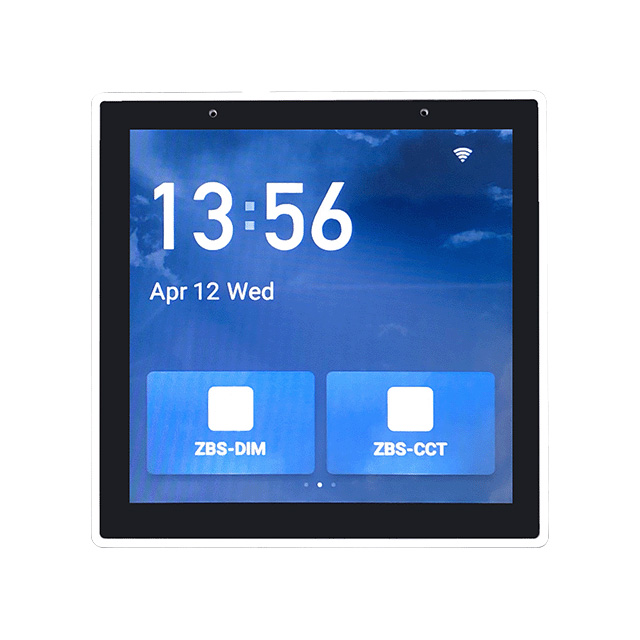
A wall-mounted Zigbee scene panel, such as our Zigbee wall panel remotes, sends broadcast or unicast scene-recall commands across the mesh using Zigbee group addressing. You bind specific receivers—whether single-color dimmers, CCT drivers, or 5-channel RGB+CCT boxes—to the corresponding scene buttons in your software. Pressing a physical button transmits a single lightweight RF payload to the network; every bound controller reads the group ID simultaneously and transitions smoothly to its pre-saved lumen and color coordinate level, eliminating the uneven popcorn effect common on Wi-Fi systems.
Yes, provided the fixture uses a standard track profile and an adjustable constant current input. Our CXR series zigbee 3.0 led controller drivers feature low-profile form factors designed to snap directly into Stucchi-style magnetic track housings. You must configure the onboard DIP switches to deliver the exact current required by your fixture heads—such as 350mA, 500mA, or 700mA—before applying 48V track power. Setting the DIP switch to a higher current rating than your LED module is rated for will cause rapid thermal runaway and permanently destroy the diodes within minutes.