
Multi Zone Control Series
17 products4-Zone RF Control for CV & CC LED Lighting
The BinColor Wireless Multi-Zone Remote Control Series is designed for independent control of multiple LED lighting areas through a single 4-zone wireless remote or touch panel. Each system combines a multi-zone control device with compatible wireless LED receivers, providing flexible solutions for single-color DIM, CCT tunable white, RGB, and RGBW lighting.
Four-Zone Handheld RF Remote + CV Wireless Receiver
Pair a T-series 4-zone handheld remote with a compatible 3-channel or 4-channel constant voltage wireless receiver designed for DC12–24V LED strip lights.
The handheld remote allows users to select one of four lighting zones and adjust the connected LED strips independently. Multiple R3M and R4M receivers can be assigned to different zones, making it possible to control several lighting circuits with one handheld remote.
Four-Zone Wireless Touch Panel + CV / CC Wireless Receiver
For installations that prefer wall-mounted controls, the PX-series touch panels can be paired with compatible four-channel constant voltage or constant current wireless receivers.
- CV Receivers: Control DC12–24V constant voltage LED strips, including DIM, CCT, RGB, and RGBW configurations.
- CC Receivers: Control compatible constant current LED fixtures using rated output current options such as 350mA or 700mA.
The touch panels use 2.4GHz RF communication to control compatible receivers wirelessly. Selected PX-series panels also feature DMX512 output, allowing them to integrate compatible DMX decoders into the same lighting control setup.


CCT Multi-Zone LED Controller T7+R3M | 12V-24V RF Dimming
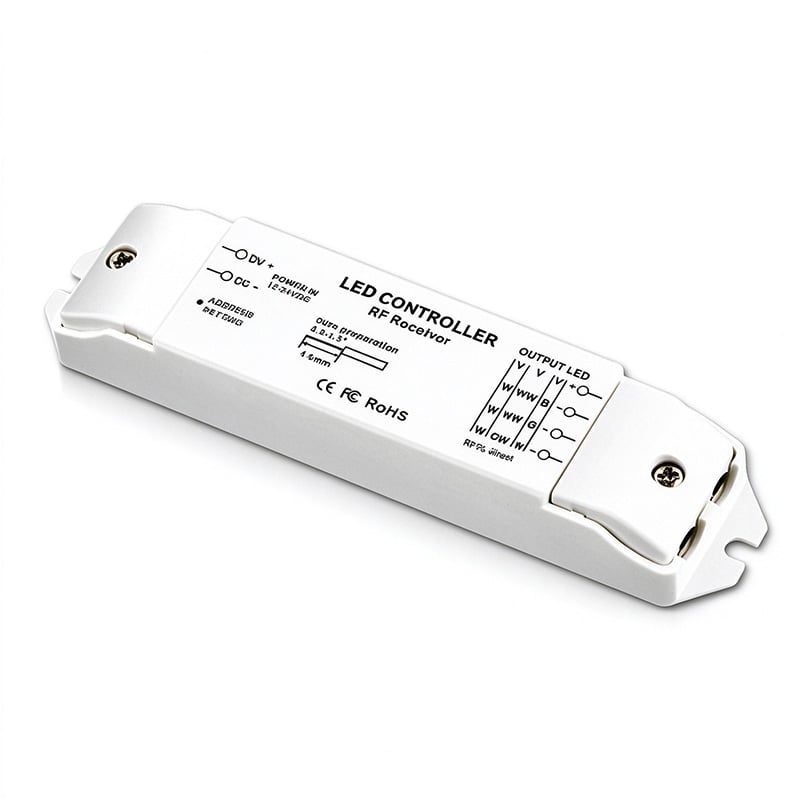
BinColor R3M 3-Channel Wireless Remote LED Strip Light Receiver
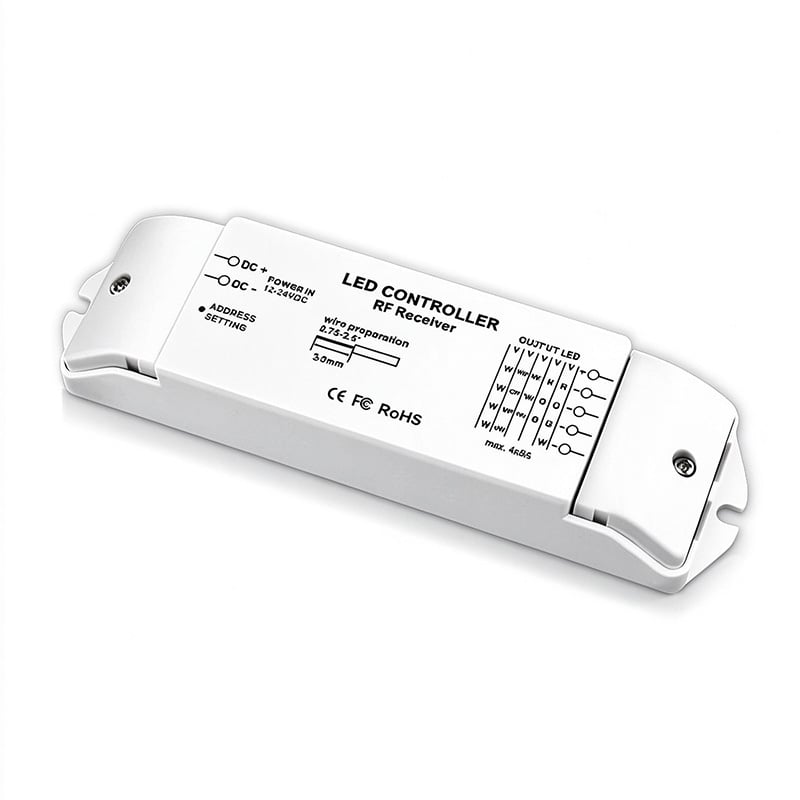
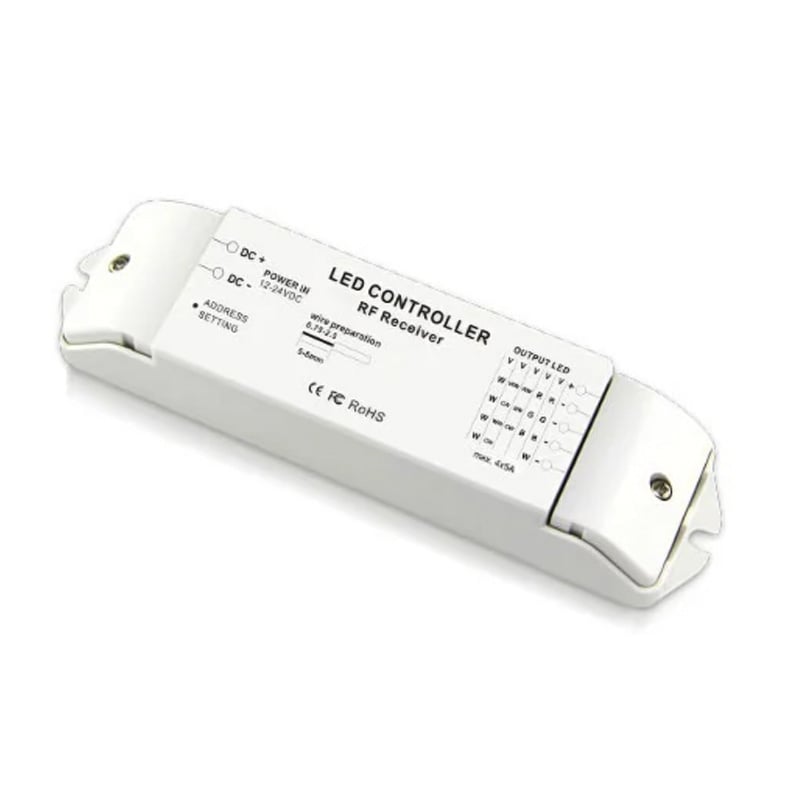
BinColor R4-2.4G Wireless 4-Channel LED Light Strip Receiver For PX Panel Remotes


FAQ About Multi Zone Control Series
Direct answers to technical questions about wiring, pairing, and sizing multi-zone LED strip controllers from our engineering desk.
A multi-zone controller for LED strip lights transmits discrete digital RF addresses to individual receivers, assigning each receiver to a specific zone number on your handheld remote or wall panel. When you press Zone 1 on a T-series remote or PX panel, the transmitter broadcasts only to receivers paired to channel 1, leaving zones 2, 3, and 4 completely unaffected. You can adjust the brightness in your kitchen cove without changing the under-cabinet lighting. Each zone handles its own dimming level, color scene, or dynamic cycle, but you also get a master button to turn everything off at once.
The R3M receiver drives up to 3 output channels, while the R4M drives 4 separate channels for low-voltage LED strip lights. That means an R3M is built for single-color dimming, dual-white CCT, or standard RGB strips where you only need three negative return lines. The R4M adds a dedicated fourth channel, making it necessary when you install RGBW tape or need four independent dimming channels on one receiver. Both operate from 12V to 24V DC and deliver 4,096 grayscale levels for smooth PWM dimming, but choosing the R4M gives you that extra white channel for true architectural task lighting alongside color accents.
To control RGB LED strip lights across multiple zones, wire each zone's strip to its own low-voltage receiver, power each receiver with 12V or 24V DC, and pair them one by one to your multi-zone remote. Start with the T8 handheld remote or P7X wall panel. Power up receiver 1, tap the pairing button on the receiver, and immediately press Zone 1 on the remote. Repeat the exact same sequence for receivers 2, 3, and 4 using their corresponding zone buttons. Once paired, select any zone button before adjusting the color wheel to dial in distinct colors per area, as explained in our guide on how to wire RGB LED strip lights.
The maximum run length depends on the strip wattage and receiver amperage, not the wireless signal. The R4M and R4-2.4G constant voltage receivers handle a maximum load of 5A per channel (up to 15A to 17A total across the unit). On a 24V setup drawing 14.4 W/m, a single channel can carry roughly 8.3 m of tape before hitting the 5A ceiling. If you run 12V tape drawing 14.4 W/m, that 5A threshold cuts your max run to about 4.1 m per channel due to higher amperage.