
WiFi Control Master
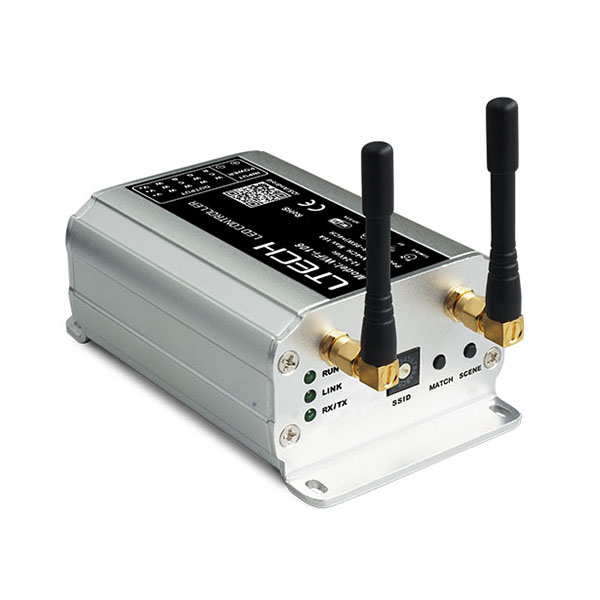
2 productsThe L-BUS WiFi Master Control System combines smartphone-based Wi-Fi lighting control with a dedicated wireless RF remote, giving you two convenient ways to manage compatible low-voltage LED strip lights. Designed for residential and small commercial lighting applications, this system supports single-color dimming, tunable white (CCT), RGB, and RGBW lighting, depending on the connected lighting configuration.
Control your lighting from a compatible iOS or Android mobile device, or use the included F12 wireless remote for quick, convenient adjustments. The WiFi-106 system supports direct connection or operation through a compatible Wi-Fi router, depending on the setup
With support for up to 12 lighting zones, the system allows compatible lighting areas to be organized and controlled separately. This makes it suitable for multi-room LED strip lighting, under-cabinet illumination, cove lighting, and other installations where flexible zone control is useful.
Compatible options include EX Series RF+DMX512 touch panels, E Series RF LED strip touch panels, F Series and Q Series RF remote controls, wireless LED receivers, and RF signal converter EBOX modules.
FAQ About WiFi Control Master
Direct answers to technical, wiring, and integration questions on Ltech LT-BUS WiFi master controllers, answered by our engineering team.
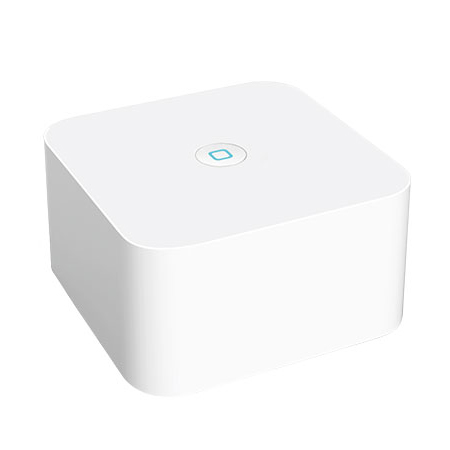
An LED WiFi control master is a central bridge that converts local 2.4GHz Wi-Fi and mobile app signals into LT-BUS RF radio commands for wireless receivers. Instead of wiring your phone directly to every fixture, the master controller receives your dimmer settings over Wi-Fi or cloud servers and transmits wireless 2.4GHz RF signals across distances up to 30 m indoors. It gives you smartphone, tablet, and voice automation over single-color, tunable white, RGB, and RGBW LED strip lights without requiring you to replace your existing wall-mounted remotes or local receivers.
An LED WiFi control master operates in two-way wireless harmony with our LT-BUS RF touch wall panels and handheld remotes without signal collisions. Because all LT-BUS devices share the same 2.4GHz RF frequency band, an update sent from your smartphone app updates the receiver instantly, while adjusting an EX-series glass touch panel or an F-series handheld remote updates the physical zone without unpairing the gateway.
Supply the master controller with clean, uninterrupted DC power directly from a regulated power source rather than tapping a line shared with heavy inductive loads. The WiFi-108 requires a dedicated 5V DC supply via its Type-C USB port drawing roughly 1A, while the WiFi-106 connects directly to a 12V or 24V DC driver via screw terminals. If your 24V LED strip lights draw close to the WiFi-106 unit's 16A maximum limit (384W total), voltage drop on undersized 18 AWG feed wires can cause the internal Wi-Fi logic board to reboot during sudden full-brightness transients. Use 14 AWG input wire to hold the DC rail steady.
Lagging response occurs when the 2.4GHz radio frequency signal between the master controller and your wireless receivers is obstructed by structural metal or high Wi-Fi channel interference. While open-field range reaches up to 100 m, reinforced concrete walls, foil-backed insulation, and metal studs cut practical transmission down to 10 m to 15 m. To solve this, relocate the master controller to a central hallway ceiling or open shelf. If your receivers are spread across different floors, place an LT-BUS RF signal repeater halfway along the run to regenerate commands before packet loss occurs.
Open the L-BUS mobile application connected to your WiFi-108 gateway, navigate to the Timing menu, and assign automated scene triggers based on network clock synchronization. You can map up to 16 separate zones across 16 groups, allowing your warm-white 2700K cove LED strip lights to slowly fade up at 06:30 over a 15-minute curve while your under-cabinet LED strip lights remain dark until 07:00. Because the WiFi-108 synchronizes time stamps with internet NTP servers, scheduled lighting transitions run reliably even after local power outages without requiring manual clock resetting.
A handheld RF remote operates purely via direct line-of-sight 2.4GHz radio packets with zero internet connectivity, whereas an LED WiFi control master bridges your lighting into smartphone apps, automated timers, and global cloud networks. Our sibling shelf contains 12 handheld remote models and 6 dedicated wireless receivers, but none of those sibling units feature built-in Wi-Fi radios. Adding a WiFi master gives you global remote access from cellular data outside the home, programmable multi-step calendar scenes, and voice control through smart assistants, while retaining instant wall panel control.