
2 Wire Dim to Warm LED Strip
14 products
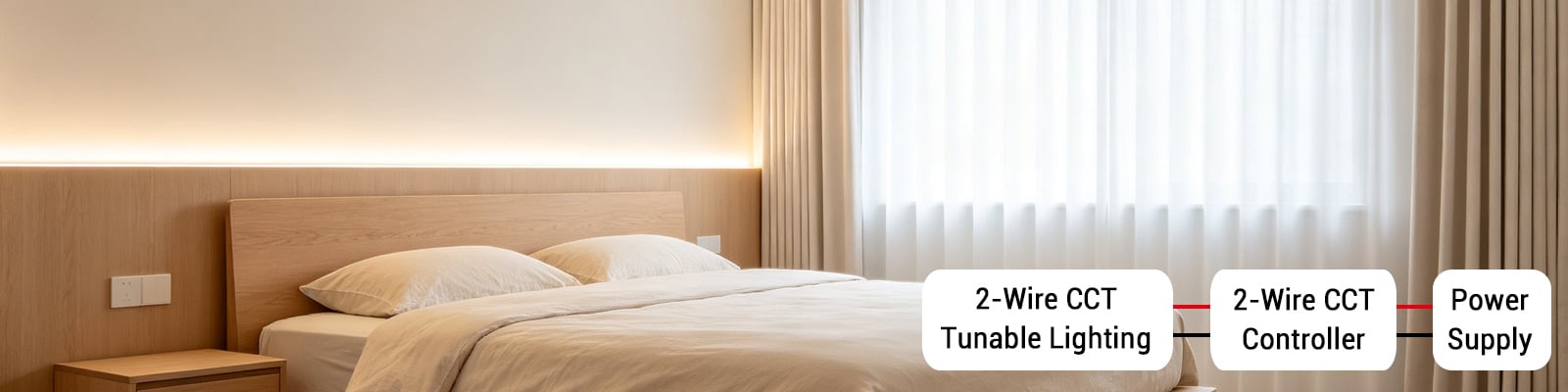
Unlike traditional Dim-to-Warm lighting technology, SuperLighting LED 2-Wire CCT LED Strips—although they also have only two wires—allow you to independently control both brightness and color temperature.
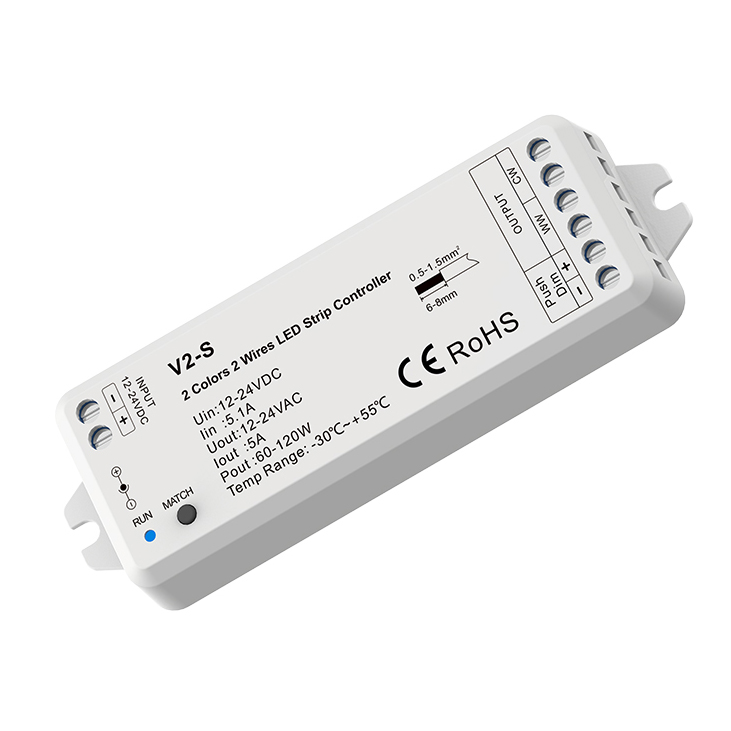
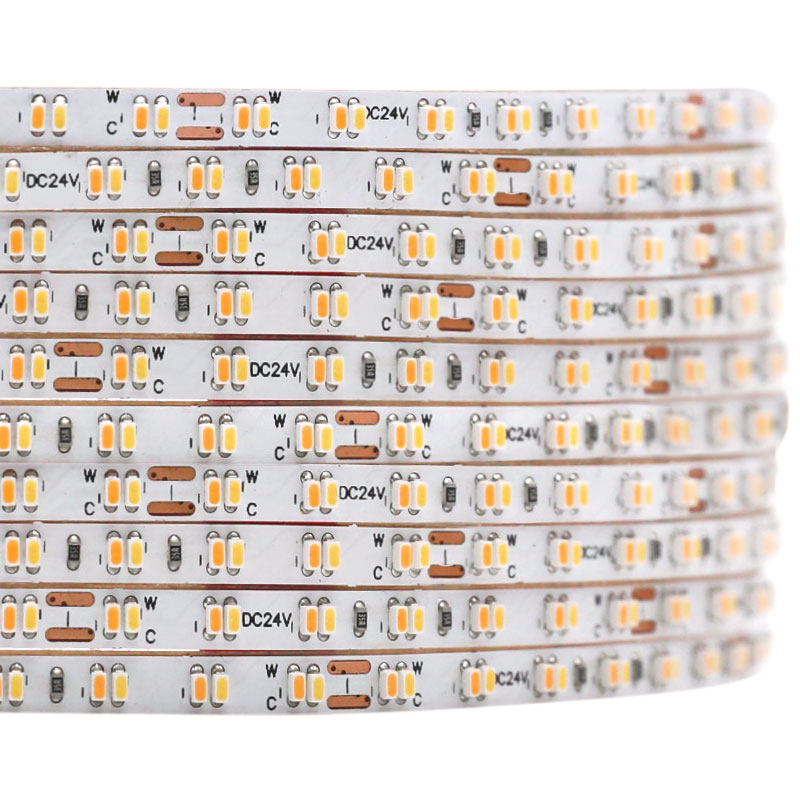
Standard 3-wire tunable white CCT strips rely on a common positive (+) and two dedicated negative channels (-WW / -CW). In contrast, 2-Wire CCT uses a non-polarized, reverse-parallel diode design. Warm and cool LED chips are wired in opposite electrical directions along the same two conductors.
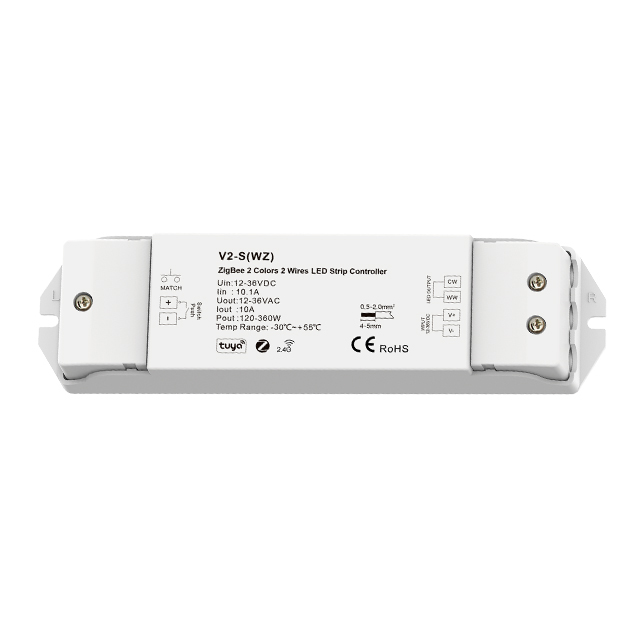
To actively shift between these antiparallel diode sets, the system requires a dedicated 2-Wire CCT controller or polarity-reversing driver that rapidly toggles DC voltage direction and adjusts PWM duty cycles.
Unlike Dim-to-Warm fixtures that lock color shift strictly to lower light levels (typically 1800K–3000K), our 2-Wire tunable white LED strips offer fully independent CCT tuning across expansive spectrums—such as 2700K to 6500K. This allows users to dial in crisp, energizing daylight at any brightness level for task work, or soften the space to warm white for evening relaxation without being forced to dim the entire setup.
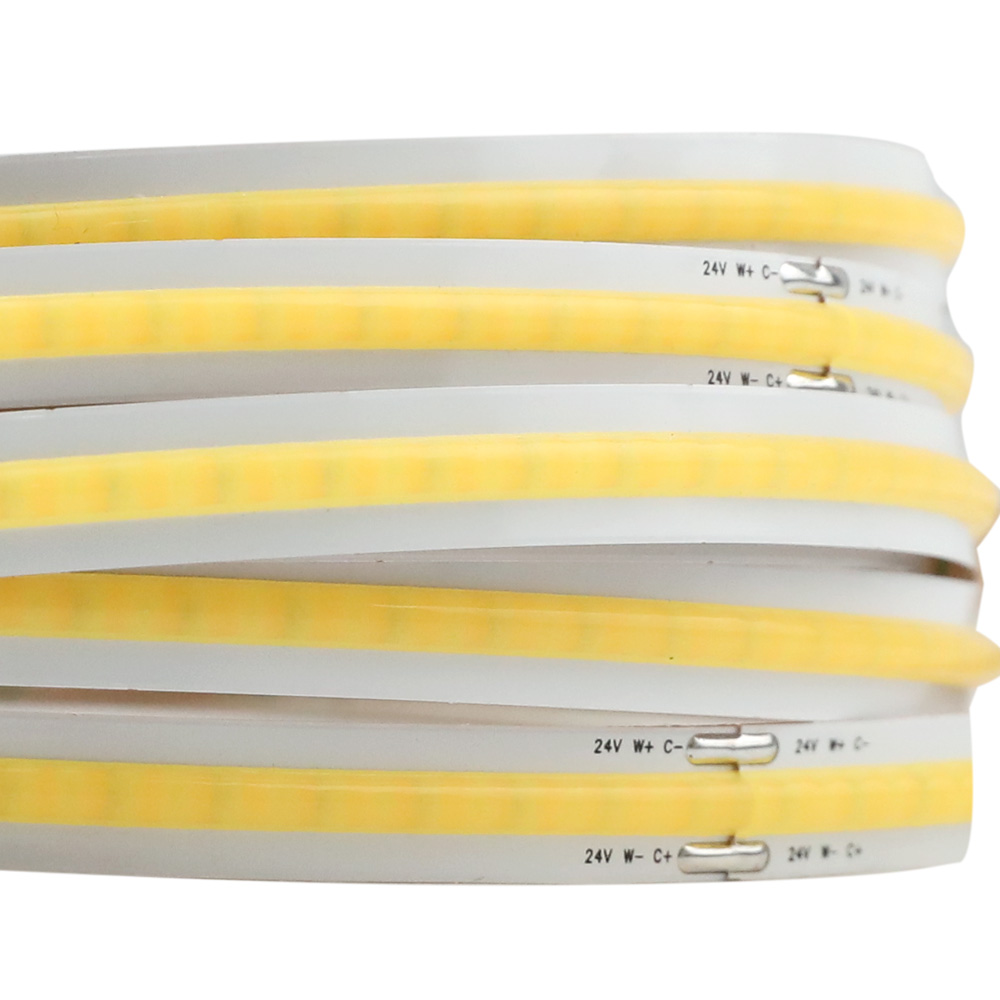
24V Free-Cut Cob 2-Wire Tunable White Bright LED Dotless Strip
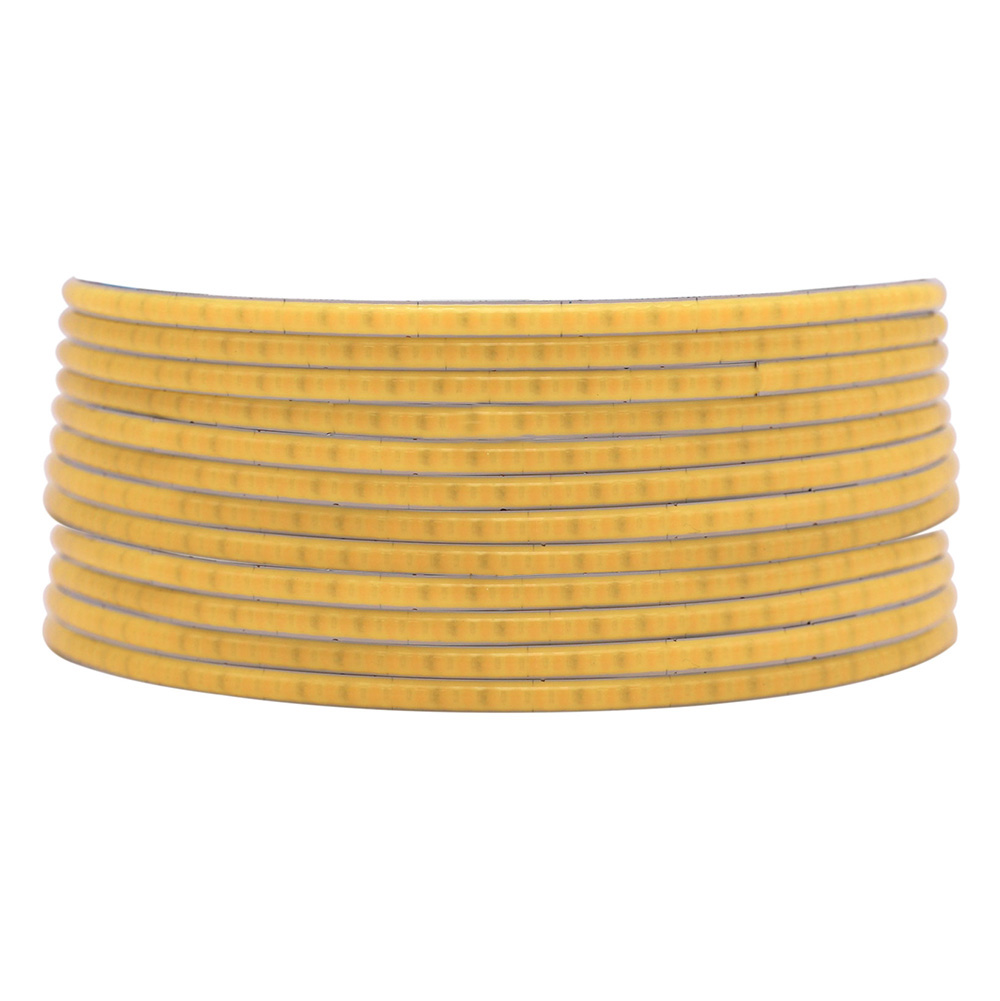
DC12/24V 5mm Ultra Thin COB 2Pin/3Pin CCT LED Strip Light
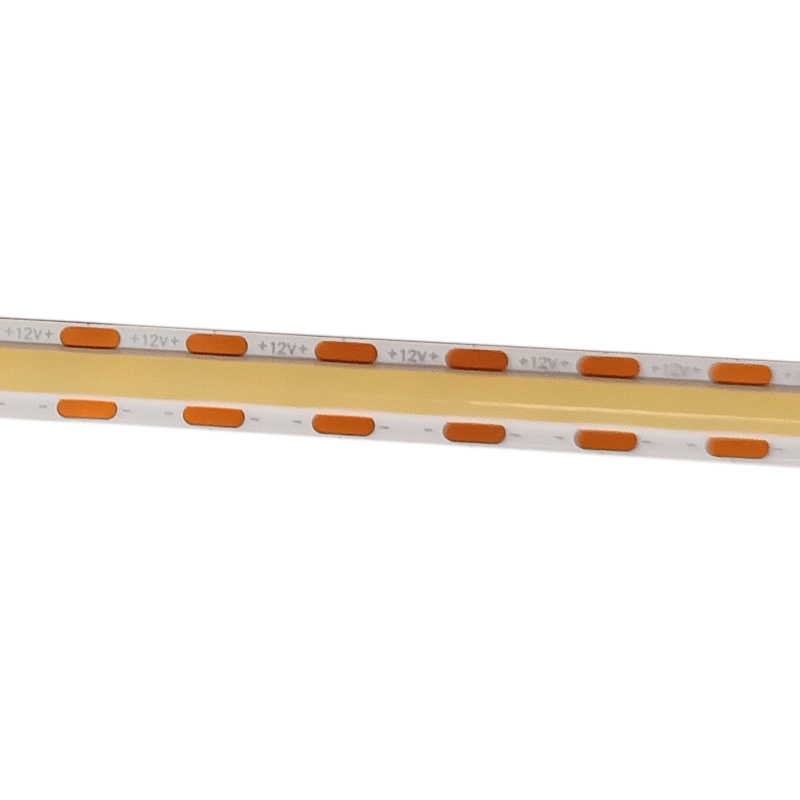
DC12/24V 2-Wire 2700-6500K CCT Changeable COB 8mm Accent Beam LED Tape
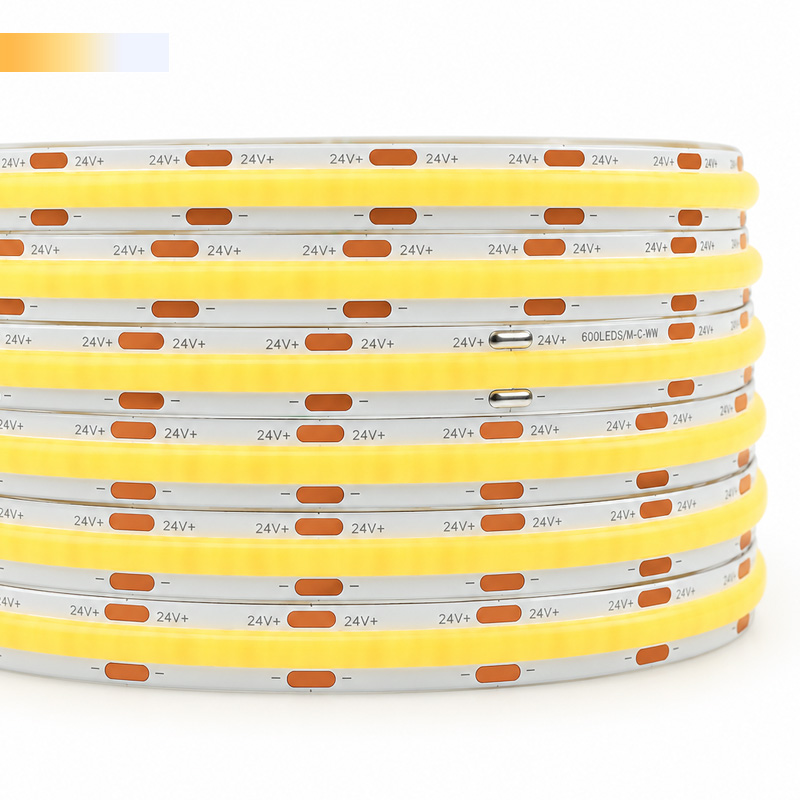
8mm 2-Wire CCT Standard 180 Cob Light Tape LED
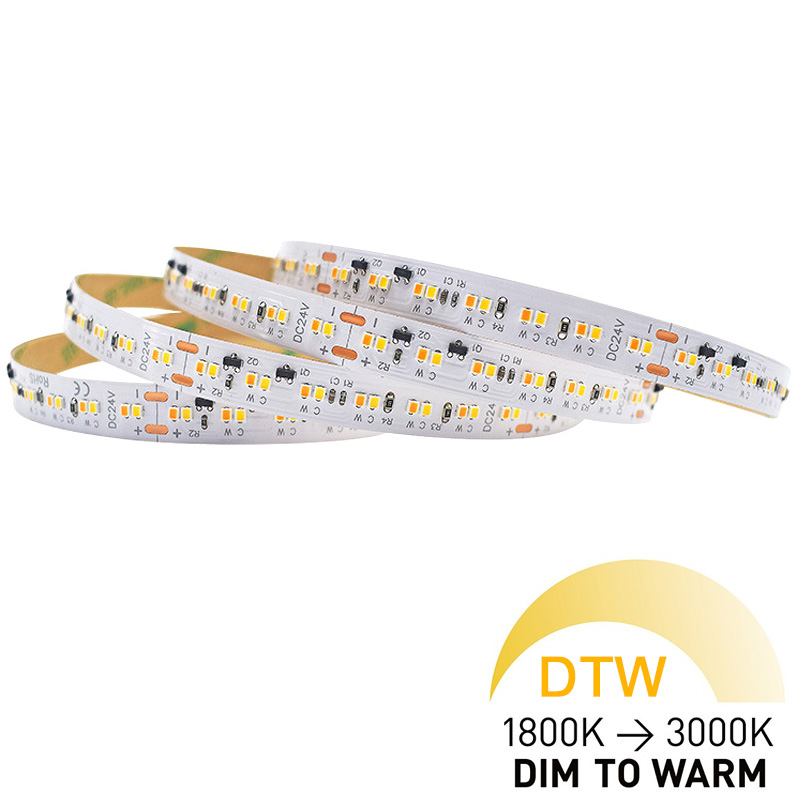
24V 2216 Dim to Warm LED Flexible Strip Light 1800K to 3000K
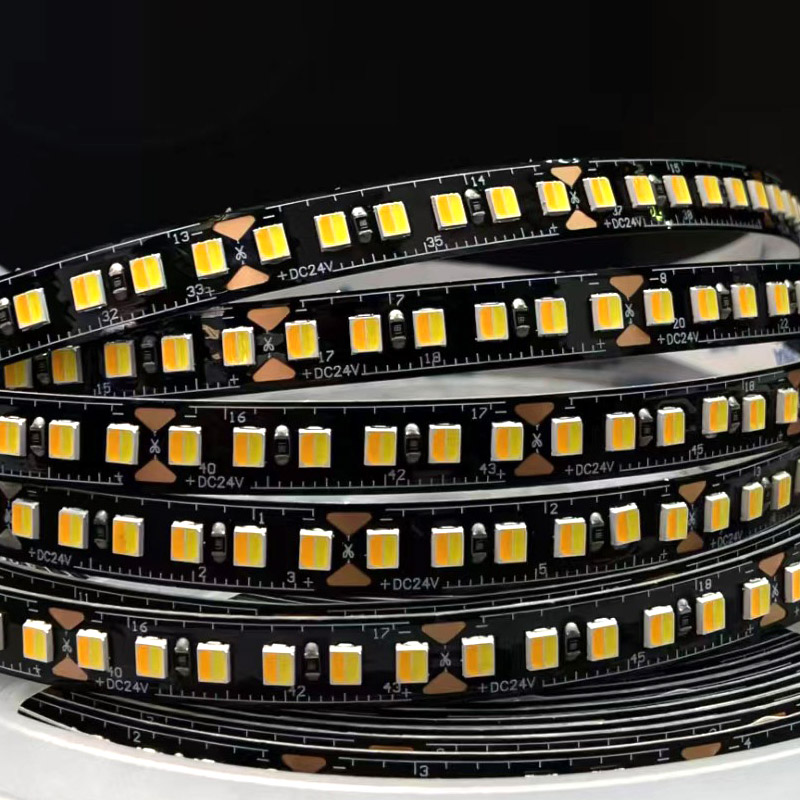
10M Bi-Color LED Tape Light | CCT Changing SMD2835 for Home
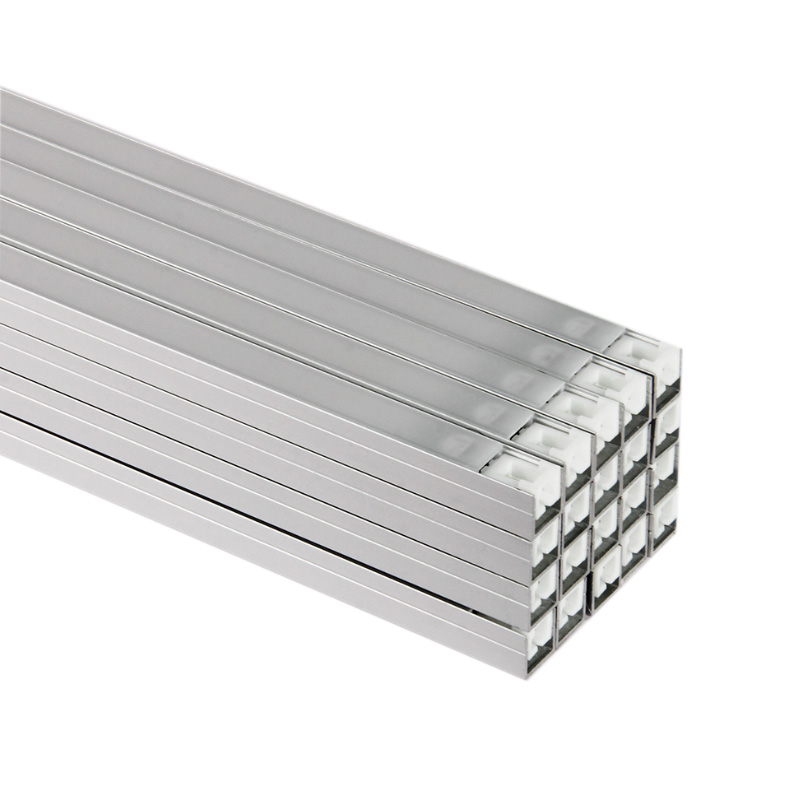
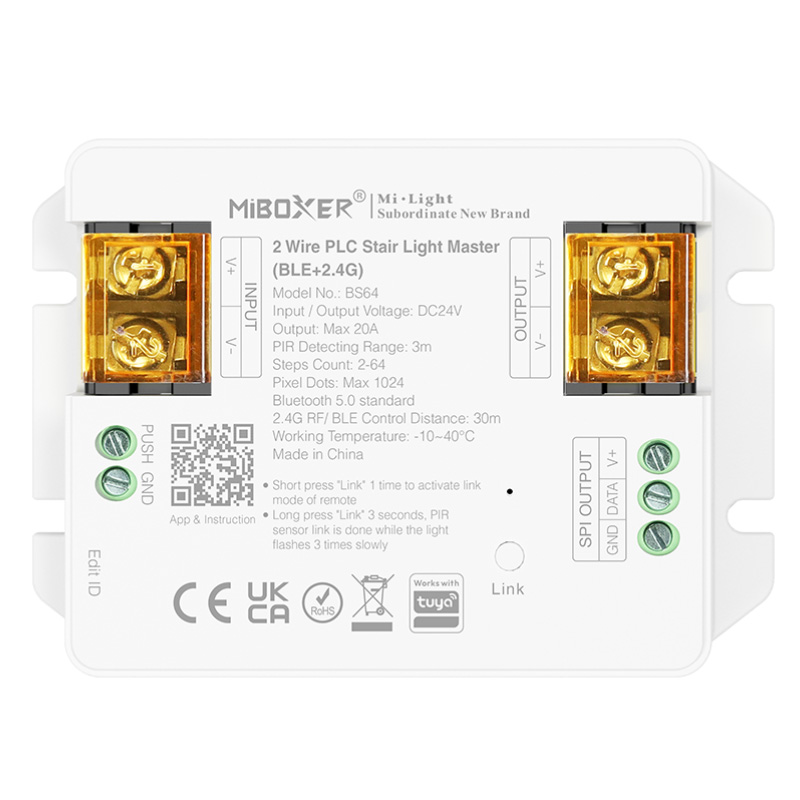
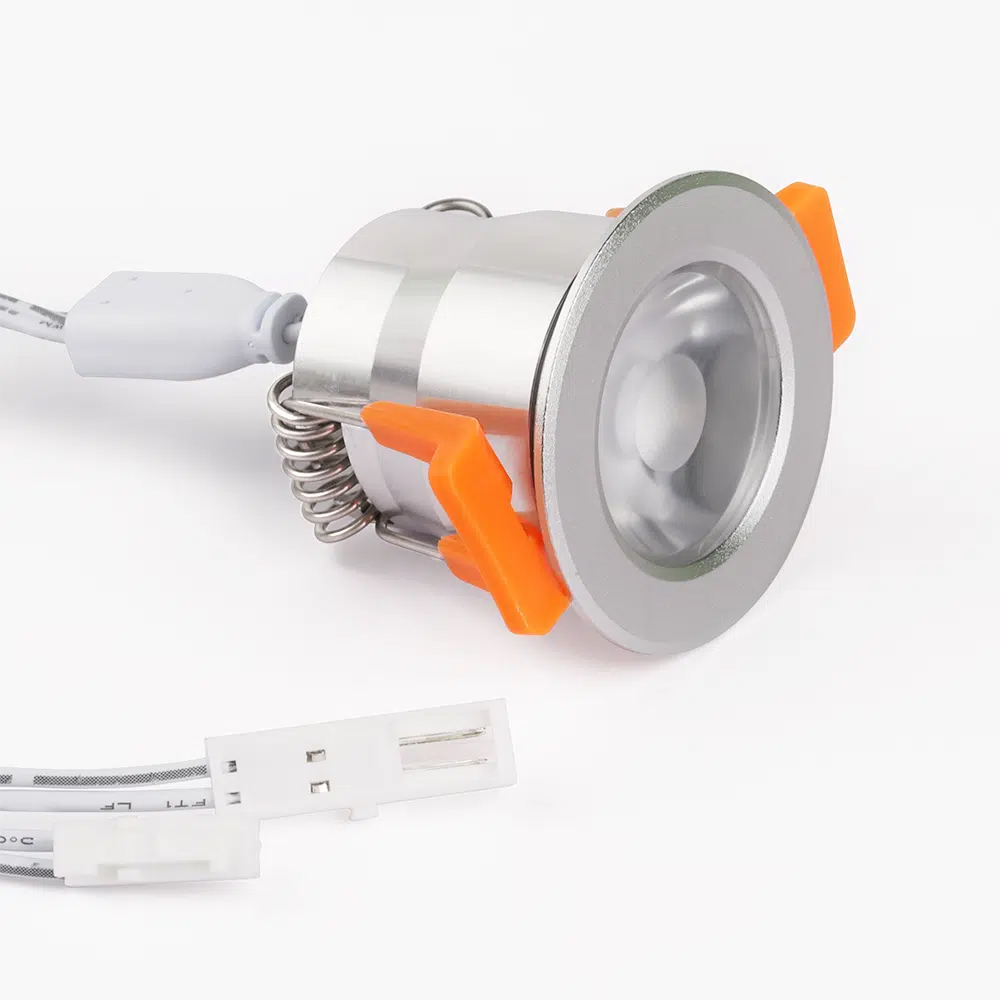
BS-L2 DC24V CCT Dual White LED Stair Tread Lights 120 Degrees
280LEDs/m Super Narrow 4mm 2110 Tunable White CCT LED Strip
SuperLightingLED 2-Wire CCT vs. Dim to Warm
Choosing between 2-Wire CCT (Tunable White) and Dim-to-Warm LED strip lights comes down to how you want to control color temperature and brightness.
Dim to Warm LED Strip is a special CCT LED Strip with an overall warm glow. The color temperature change of Dim to Warm LED Tape is different from ordinary tunable white LED strip, it changes the light brightness at the same time the light color temperature is changing.
Dim to Warm Technology simulates the effect of traditional halogen and incandescent lighting, with a color temperature of 3,000K or 2,700K warm light at its brightest, and a color temperature of 1,800K amber light at its dimmest.
Gradually changing from a brighter warm white light to a warmer orange-red light, the Dim-to-Warm LED Strip Light's circadian-adapted artificial sunset light effect is ideal for use in resting areas such as bedrooms, spa suites, home theaters, and hospitality lounges.
Since the Dim to Warm LED Strip is two-wire, i.e. one positive and one negative, it is compatible with 0-10V, DALI, Triac, Lutron dimming protocols.
| Feature | 2-Wire CCT (Tunable White) | Dim-to-Warm LED Strips |
|---|---|---|
| Wiring Layout |
2-Wire (Dynamic Polarity / Non-Polarized) |
2-Wire (Fixed Polarity + / -) |
| CCT & Brightness Control |
Independent: Adjust color temperature and light intensity separately. |
Linked: CCT automatically drops as brightness decreases. |
| Driver / Dimmer Compatibility |
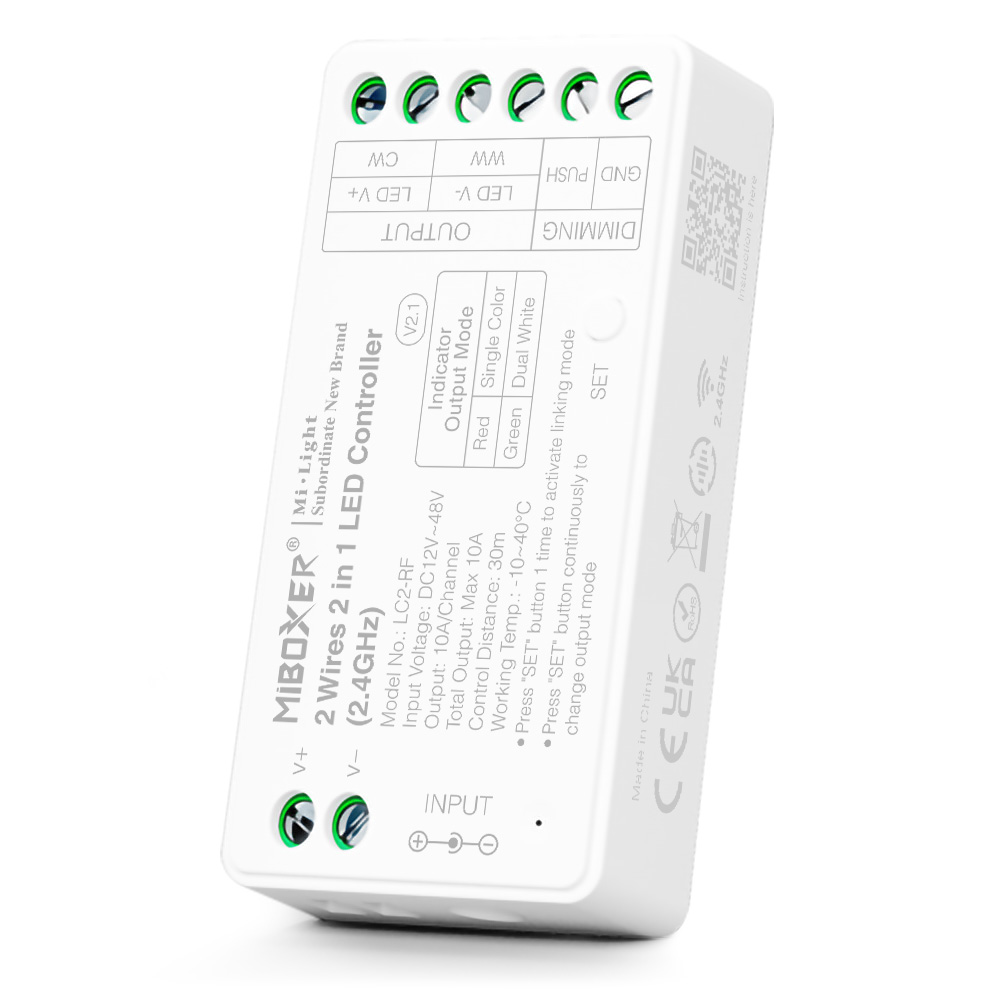
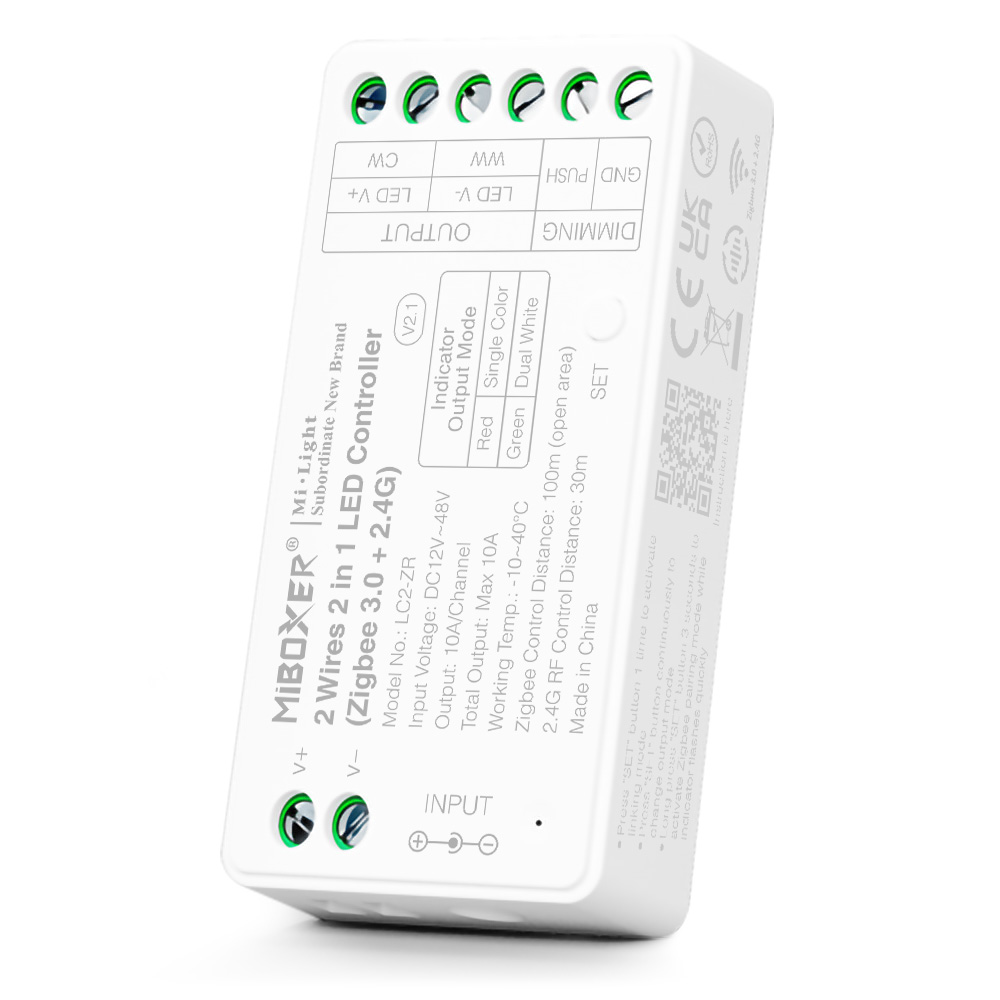
Requires dedicated 2-Wire CCT Polarity-Reversing Drivers or RF/Wi-Fi/Zigbee CCT Controllers. |
Compatible with standard TRIAC, 0-10V, DALI, MLV, and Lutron single-channel dimming drivers. |
| Primary Lighting Goal |
Task-to-ambient flexibility, schedule-based circadian tuning, and custom architectural scene setting. |
Relaxing accent lighting, mood creation, and traditional incandescent replacement. |
| Best Application |
Offices, custom shelving/cabinetry, kitchens, and retail display cases. |
Bedrooms, living rooms, restaurants, hotel guest rooms, and home bars. |
2-Wire CCT LED Strip Wiring Diagram
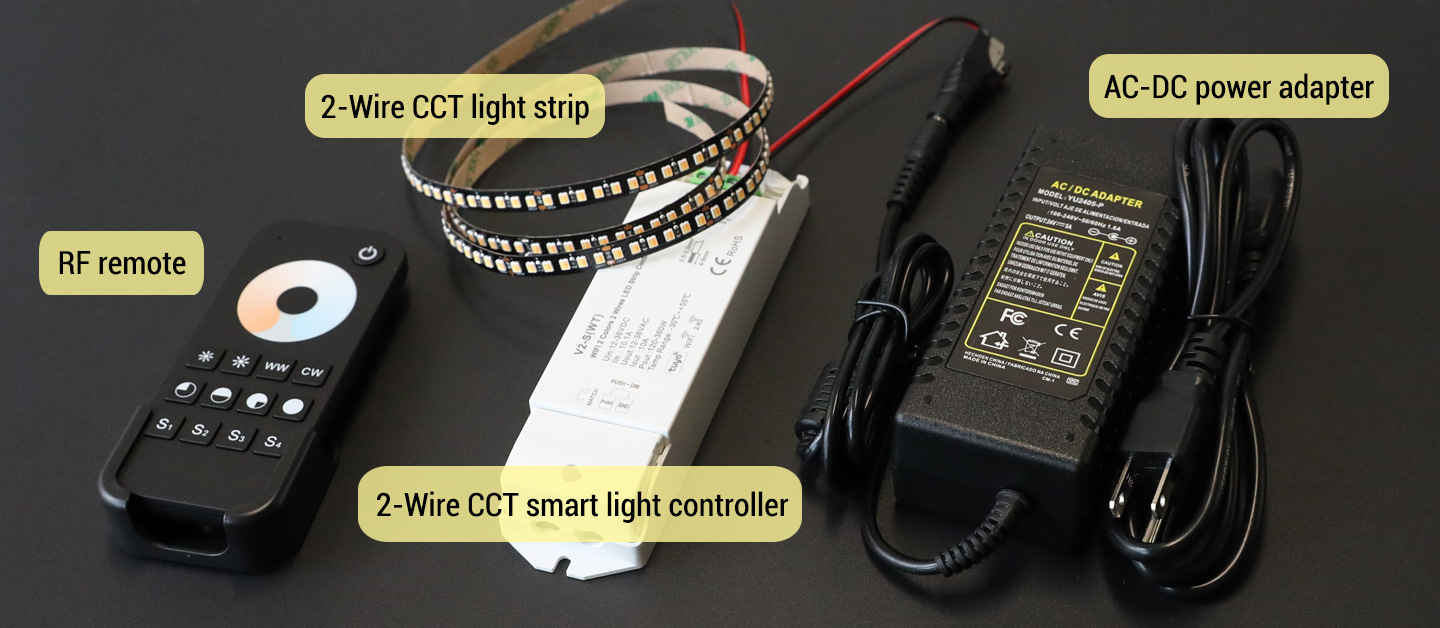
Since the red and black wires of the 2-wire CCT light strip each represent a different color temperature, you must connect the correct color temperature wire to the controller’s CW or WW port. If you notice that the light appears cool white when you’re trying to set it to warm white, simply swap the positions of the two wires coming from the controller.
Frequently Asked Questions About 2 Wire Dynamic White LED Strips
Your technical questions about selecting, wiring, and controlling 2-wire dynamic white lighting, answered by our engineers.
These strips use specialized internal circuitry and paired LEDs with different color temperatures. With a compatible dimmer, it'll creates a smooth, simultaneous shift in both brightness and CCT.
Since these 2-wire CCT dimmable white LED strips still need to be connected to a 2-wire CCT controller, you can simply use a constant-voltage power supply with the corresponding voltage. If the LED strip is 12V, choose a 12V power supply; if the LED strip is 24V, choose a 24V power supply.
For most of our 24V 2-wire tunable white LED strips, the maximum recommended single-ended run is 5 meters (16.4 feet). For longer runs, you must power the strip from both ends or use multiple parallel runs back to the power supply to avoid visible dimming and color shifting at the far end. Some of our specialized long-run strips can go up to 10 or 20 meters, but always check the product's specific datasheet for its maximum run length.
You should wire multiple strips to a single power supply in parallel, not in series (end-to-end). This means running separate pairs of positive and negative wires from each strip segment back to the driver's output terminals. You can use terminal blocks or wire nuts to consolidate the connections. This prevents voltage drop across the combined length and ensures every strip dims uniformly. We offer various 2-Pin Single Color LED Strips Parts to make these parallel connections clean and secure.
No, it does not. In fact, dimming an LED generally increases its operational lifespan. LEDs degrade faster at higher temperatures, and dimming them reduces both the current and the heat generated. The CCT shifting mechanism in these strips is managed by gentle voltage reduction, which is not stressful to the LED components. Like all our strips, they are rated for 50,000+ hours of operation.