
DMX512 Master controller
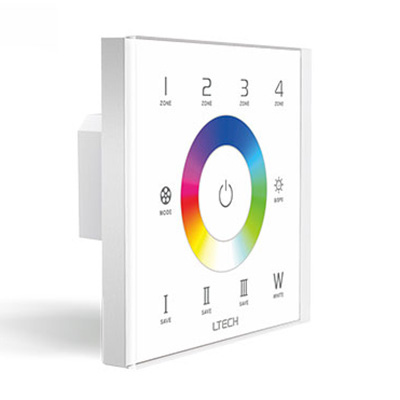
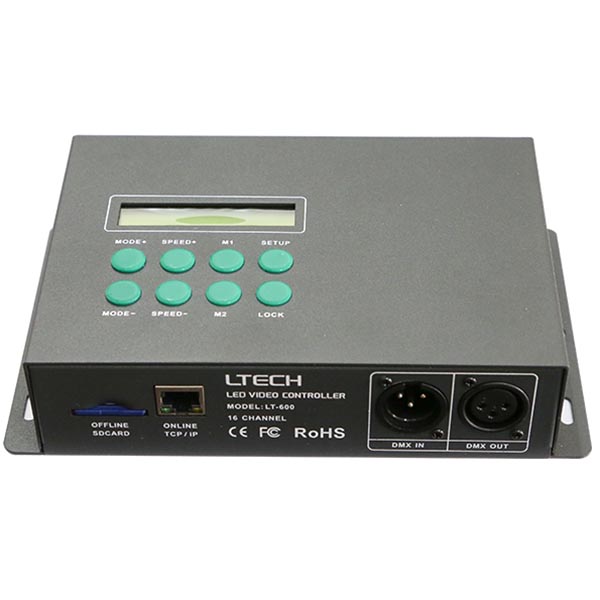
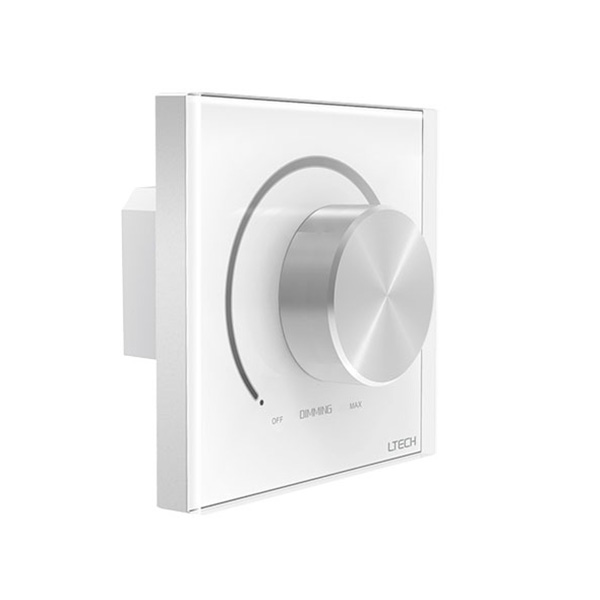
51 productsLTECH DMX512 Master Controllers provide centralized and flexible control for professional LED lighting systems. Depending on the model, the series includes wall-mounted touch and rotary panels, RF + DMX controllers, USB/PC programmable controllers, WiFi and RDM control devices, wireless DMX transmitters and receivers, and standalone programmable masters.
A DMX master can control compatible DMX lighting fixtures directly or send DMX512 signals to a decoder or dimmable driver to control conventional LED strips and other LED lights. Different models support single-color, tunable white, RGB, RGBW, multi-zone, scene, and programmable lighting control, making the series suitable for residential, commercial, hospitality, architectural, and large-scale lighting projects.
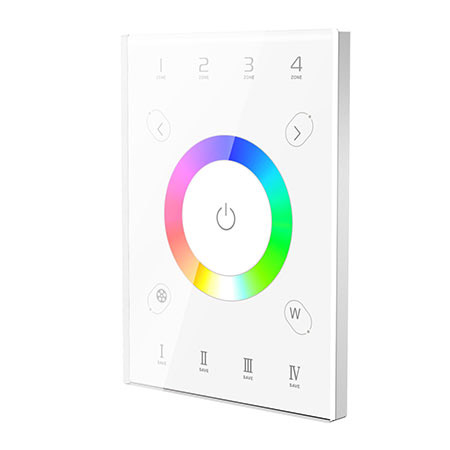
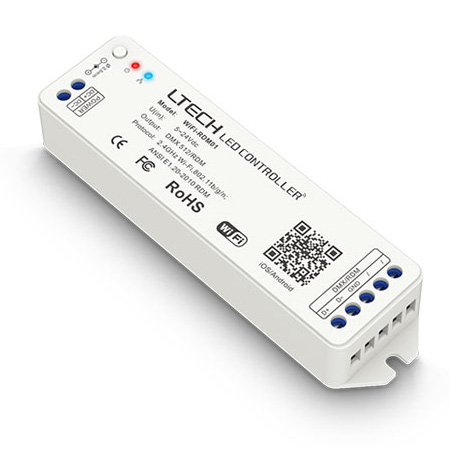

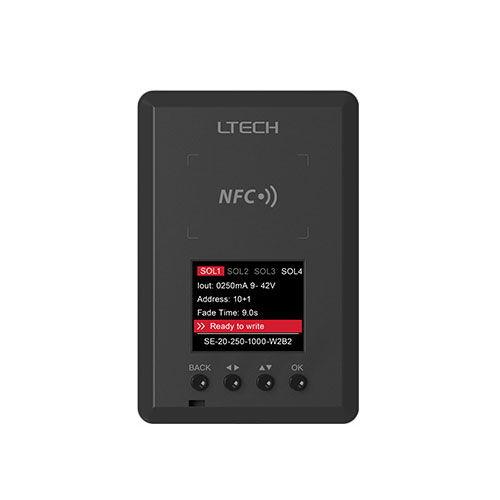
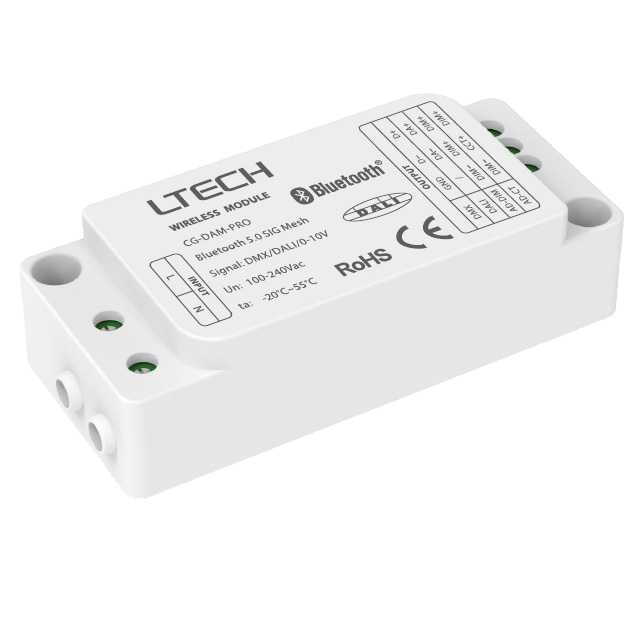
GC-DAM-PRO Bluetooth 5.0 Mesh LED Controller - DMX, DALI, 0-10V Output
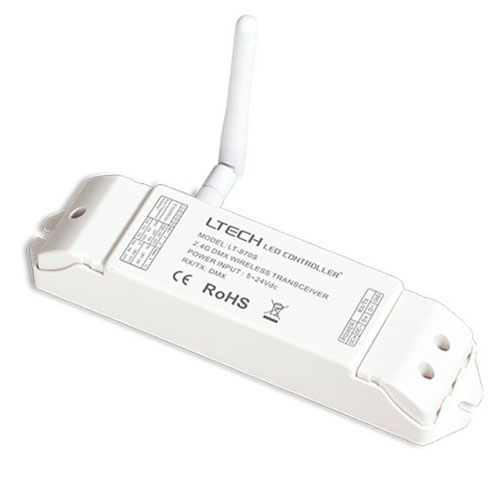
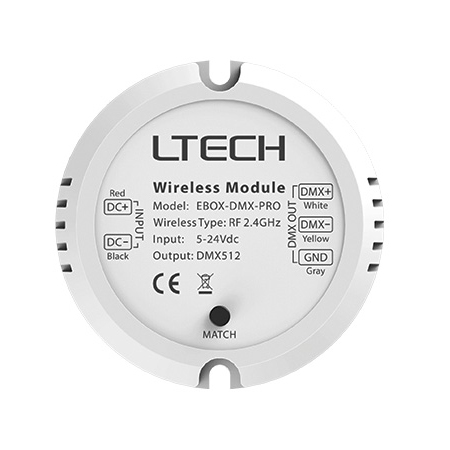
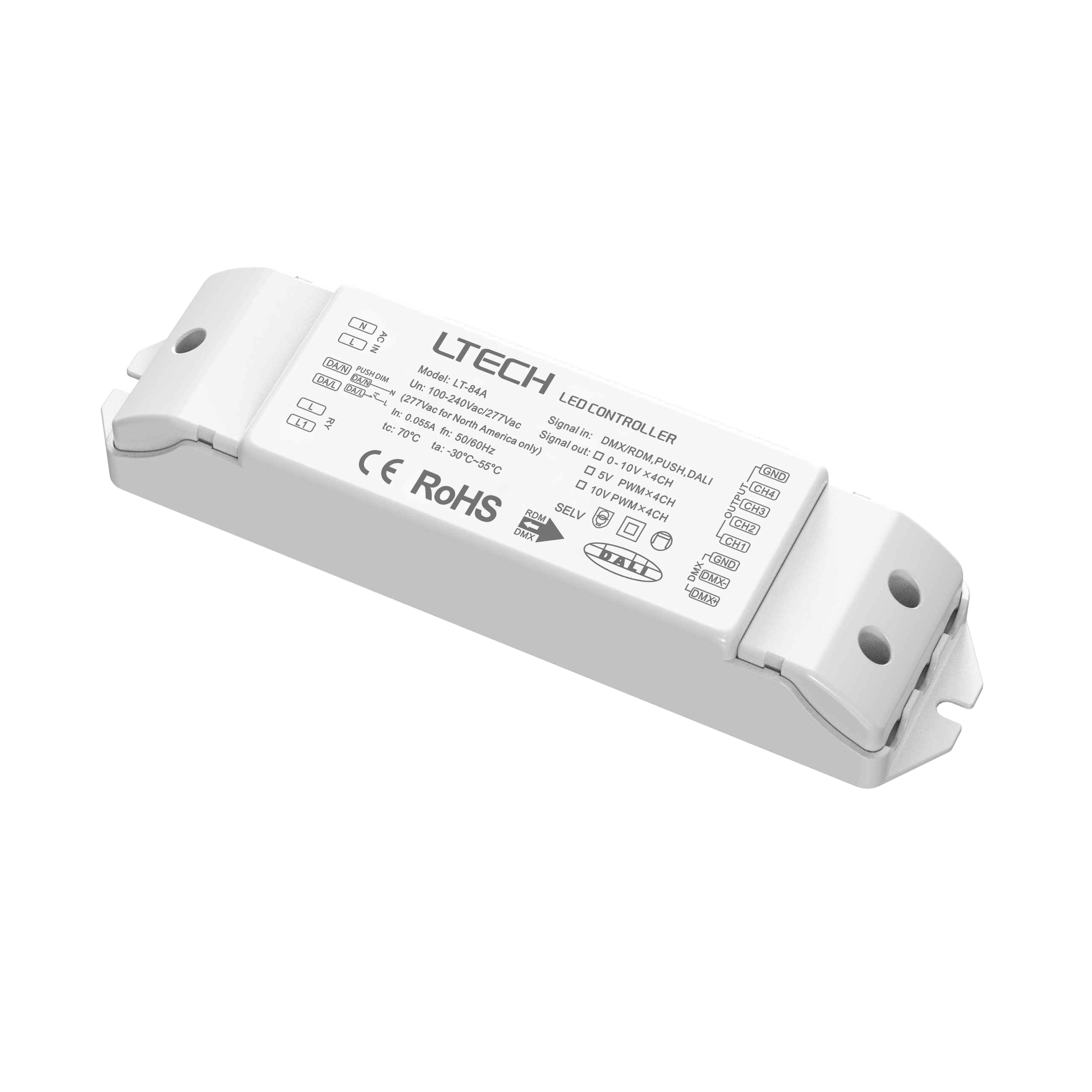
LT-84A Dmx Dali to 4CH 0-10V 5V PWM 10V PWM Converter
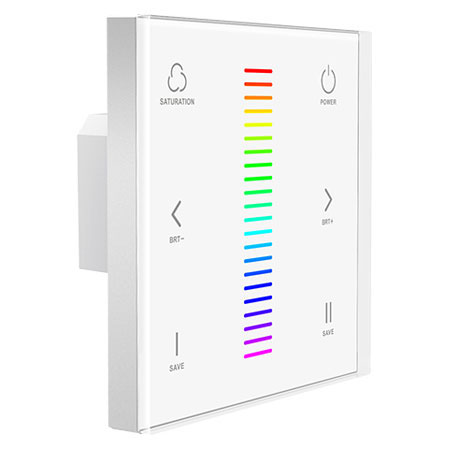
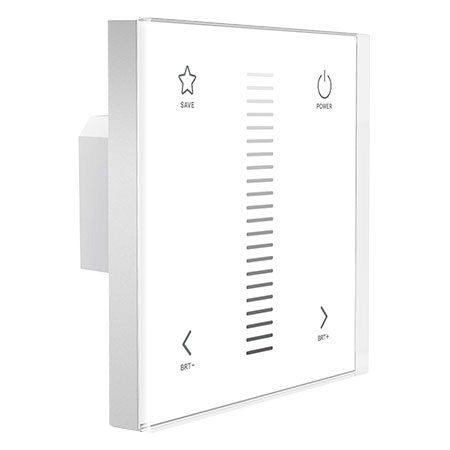
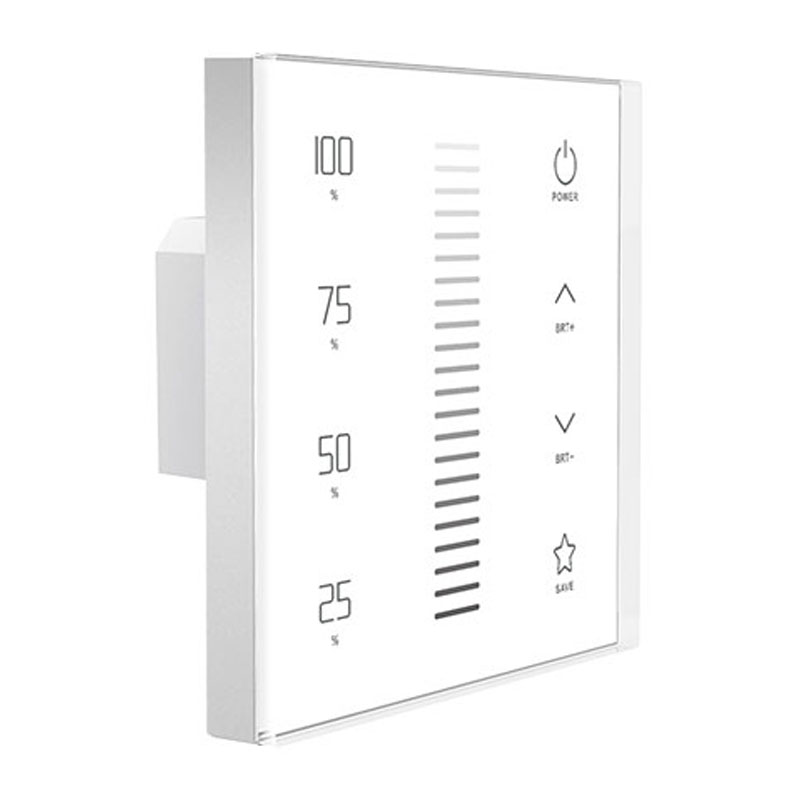
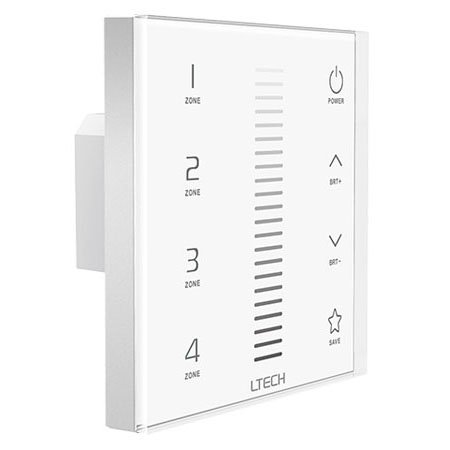
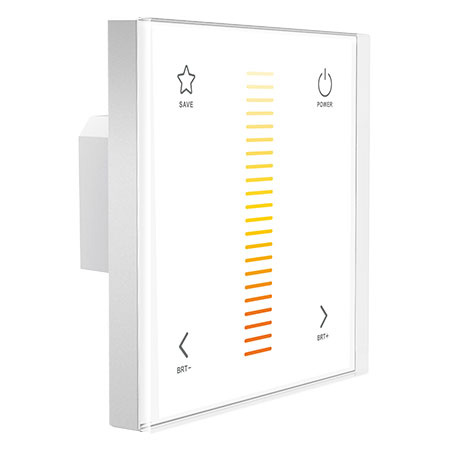
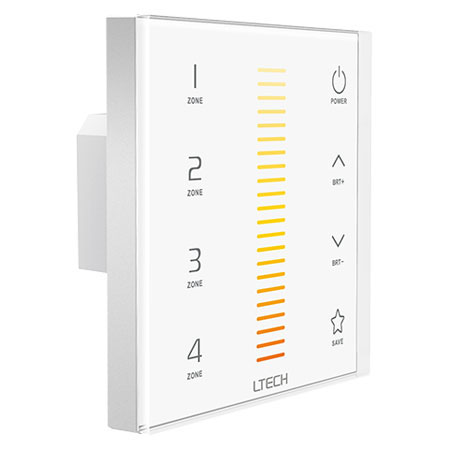
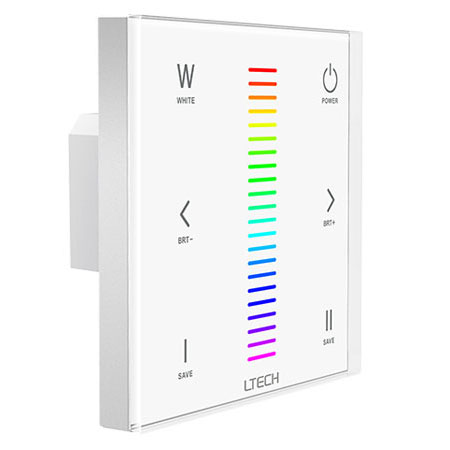
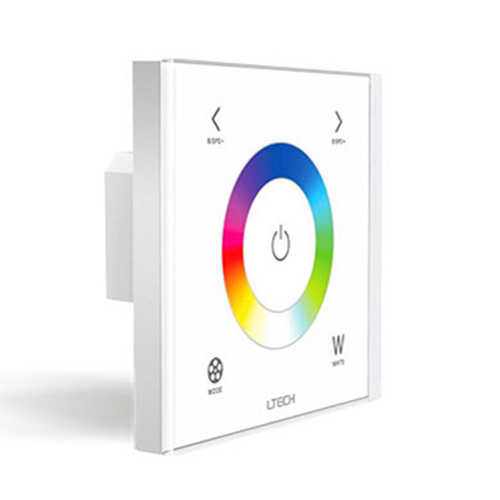
How LTECH DMX512 Master Controllers Work
A DMX master is the control center of a DMX512 lighting system. It generates the control commands that determine brightness, color, scenes, zones, and dynamic effects.
For DMX-native fixtures, the master can communicate directly with the lighting fixture: DMX Master → DMX Fixture
For conventional constant-voltage or constant-current LED lighting, a decoder is added between the master and the light source: DMX Master → DMX Decoder → LED Light
This architecture separates the control signal from the lighting load. It allows one master controller to manage multiple lighting zones and makes the system easier to expand for larger residential, commercial, and architectural projects.
LTECH DMX master products also incorporate RF, Bluetooth, WiFi, RDM, USB, or other communication methods, allowing the DMX system to be controlled through wall panels, wireless devices, computers, software, or smart-control interfaces depending on the selected model.
Choose the Right LTECH DMX Master Controller
Wall-Mounted DMX Controllers
Wall-mounted controllers are ideal when simple everyday operation is required.
LTECH offers touch-panel and rotary-control models for single-color, tunable white, RGB, RGBW, and multi-zone lighting. Many models combine DMX output with RF control, allowing the wall panel to serve as the main user interface while compatible wireless controls can be added to the system.
These controllers are well suited to homes, restaurants, hotels, retail spaces, meeting rooms, lounges, and other architectural lighting installations where users need convenient access to brightness, color, zones, and scenes.
USB & Programmable DMX Controllers
For lighting projects that require more advanced programming, USB and computer-based DMX masters provide greater control over channels, scenes, timing, and dynamic effects.
These controllers are suitable for programmed architectural lighting, entertainment lighting, showrooms, commercial displays, building lighting, and other projects where preset scenes or more complex sequences are required.
Some models can also operate offline after the lighting program has been created and saved, reducing the need for a permanently connected computer.
WiFi, RDM & Wireless DMX Control
SuperLightingLED also offers LTECH devices for wireless and network-based DMX system control.
Selected models support WiFi, Bluetooth, RDM, or 2.4GHz wireless communication for system setup, remote control, programming, signal transmission, or device management.
Wireless DMX transmitters and receivers can also help carry DMX signals between locations where running an additional signal cable is difficult.
Always check the individual product specifications, as communication methods and supported functions vary by model.
Build a Complete DMX512 Lighting System
The DMX master is only one part of the complete lighting control system. SuperLightingLED provides the related LTECH control products needed to connect different types of LED lighting to DMX512.
Use a CV DMX512 decoder when controlling common constant-voltage LED strips such as single-color, CCT, RGB, RGBW, or RGB+CCT strips. The decoder receives the DMX512 signal and converts it into PWM output for the LED strip: DMX Master → CV DMX Decoder → Constant Voltage LED Strip
For constant-current LED fixtures and modules, choose a compatible CC DMX512 decoder or driver according to the current and electrical requirements of the light source.
Addressable or pixel LED strips normally use digital IC signals rather than conventional PWM. A DMX-SPI decoder converts DMX512 data into a compatible SPI pixel signal, allowing a DMX system to control supported addressable LED strips, pixel modules, and other digital lighting products: DMX Master → DMX-SPI Decoder → Addressable LED Lights
For installations that require both power conversion and DMX dimming, a compatible DMX dimmable LED driver can combine the driver and control functions into one device. SuperLightingLED offers constant-voltage and constant-current DMX driver options for different lighting systems.
Larger or mixed-protocol projects may also require additional devices such as:
- DMX signal amplifiers and distributors for extending or splitting the DMX signal;
- DMX to 0/1-10V converters for integration with 0-10V lighting;
- DMX to TRIAC control for compatible AC dimming applications;
- Art-Net to DMX interfaces for network-based professional lighting systems;
- wireless DMX transmitters and receivers where physical DMX cabling is impractical.
The appropriate combination depends on the LED type, number of channels, load, control method, project scale, and required lighting effects.
Other DMX Controller Brands at SuperLightingLED
LTECH is only one of the professional lighting control systems available from SuperLightingLED.
We also provide DMX controllers, decoders, wall panels, signal converters, programmable controllers, and related lighting-control products from SkyDance, MiBoxer / Mi-Light, BinColor, LeyNew, as well as SuperLightingLED controller series.
Different brands offer different combinations of user interface, control protocol, channel capacity, wireless connectivity, programming functions, form factor, and price. If a particular LTECH model does not match your project requirements, you can compare alternative DMX solutions across our controller collections rather than redesigning the entire lighting project around a single controller.
Your Questions About DMX512 Master Controllers
Got questions about setting up your DMX system? We've answered the most common ones we hear on the support desk.
Mostly, yes. The DMX512 protocol itself is a universal standard, so a signal from one brand's master will be understood by another's fixture or decoder. The real question is features. The channel count and functions of the DMX512 master controller must match the capabilities of your lights.
Check the product spec sheet carefully, because it varies. Some of our DMX master controllers wire directly into AC mains (100-240V), just like a standard light switch. This is common for our European-style EX series panels. Others, like the UB series intelligent panels, require low-voltage DC power, typically in the 5V to 24V range. You'll need a separate small DC power supply for those, often hidden in the wall box.
It's a DMX address issue. Every DMX decoder or fixture needs a unique starting address set on it, and if it's wrong, it won't listen to the right commands from the DMX512 controller.
They solve different problems. Bluetooth is for direct, short-range control from a phone or tablet, great for setup or a single room. RF (Radio Frequency) is for dedicated wireless remotes and wall panels talking to receivers, which is very reliable. WiFi connects your DMX512 master controller to your local network, allowing control from apps anywhere in the building or even remotely over the internet. Choose based on whether you need a dedicated remote, phone control, or network integration.
RDM, or Remote Device Management, makes DMX a two-way street. A standard DMX512 controller only sends commands out. With an RDM-compatible system, the master controller can also receive information *back* from the fixtures or decoders. This lets you do things like remotely set the DMX address of a light that's already installed up on a 30-foot ceiling, or get status updates and error reports, all from your controller. It's a huge time-saver on big jobs.
No, and this is the single most important wiring rule to get right. A DMX master controller sends a *signal*, not power. You absolutely must have a separate LED driver (power supply) correctly sized for your LED strips. The wiring order is always: DMX Master -> DMX Decoder -> LED Strip. Connecting a controller directly to a high-wattage power source will destroy the controller instantly.