
Carpet Transition Strip Profiles
6 products
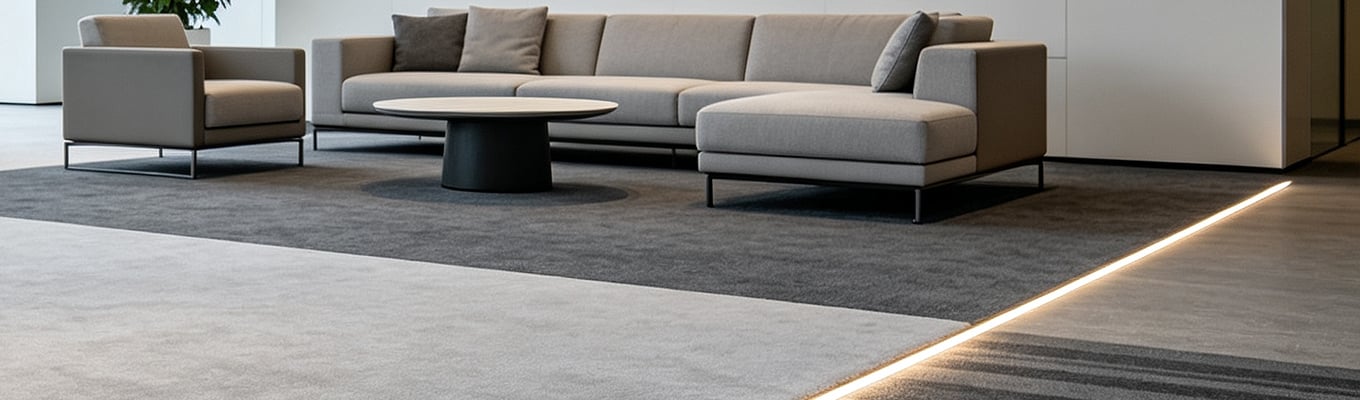
Aluminum metal trim strips for smooth transitions between different types, heights, and materials of flooring, inside which LED strips can be placed to create a unique ambiance and visual effect for the room. These LED transition strips can transition carpet to carpet, carpet to tile/wood panel, and carpet to wall edge areas for protection and decoration.
Transition strips are used to connect different types or heights of flooring materials to ensure a smooth, safe visual and physical transition. They are used for flooring so they are also known as floor transition strips. Carpet transition strip is one of them and used to transition from carpet to carpet, tile or wood planks.
By placing LED strip lighting into floor transition strip, the flooring transition strip is able to provide additional lighting that can increase the visibility of the transition area, as well as add vibrancy and atmosphere to the space through color changes and dynamic effects.
• Carpet to tile transition strip: Aluminum strip used to connect carpet to tile floors, providing visual cleanliness.
• Carpet to carpet transition strip: Used to connect two carpets, effectively reducing the wear and tear of the carpet edges and prolonging the life.
• Tile to tile transition strip: Used to connect two tile floors to protect the edges of the tiles.
• Tile to wood transition strip: Used to connect tile floors to wood floors, providing a smooth transition.
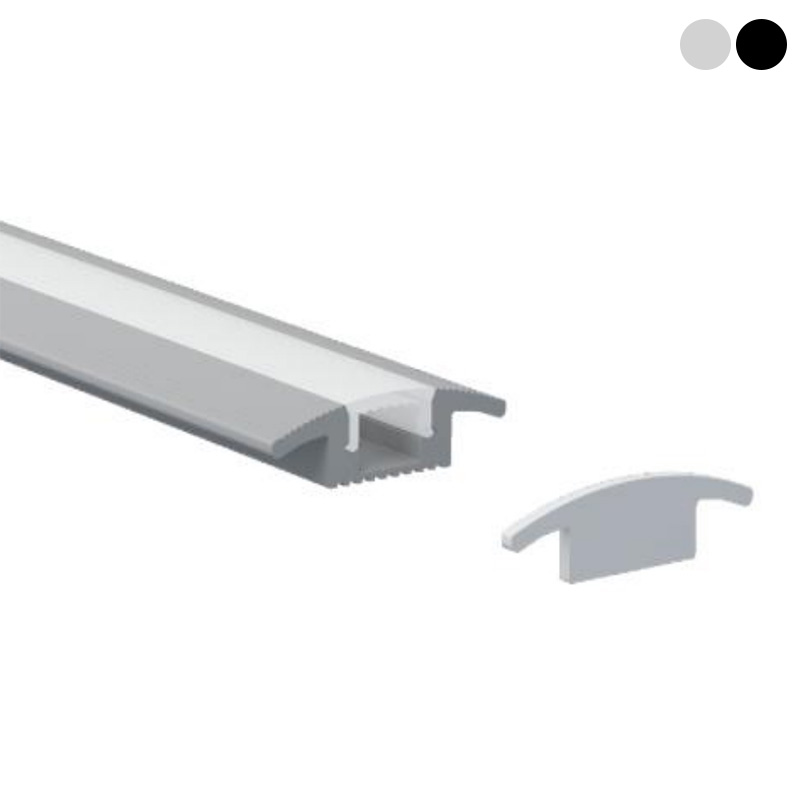
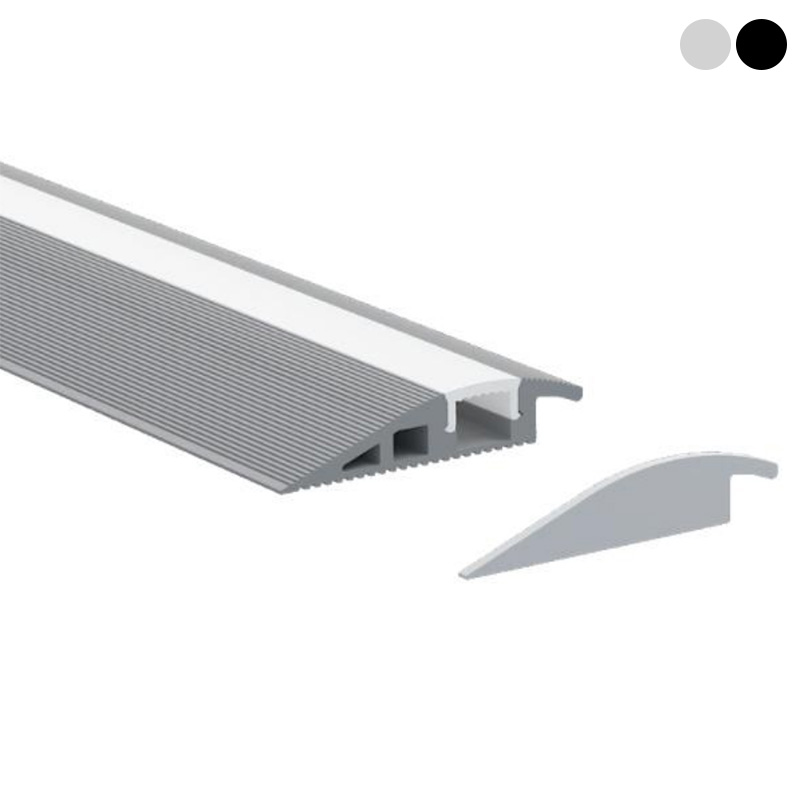
LED Carpet To Tile/Wood Transition Strip Channel
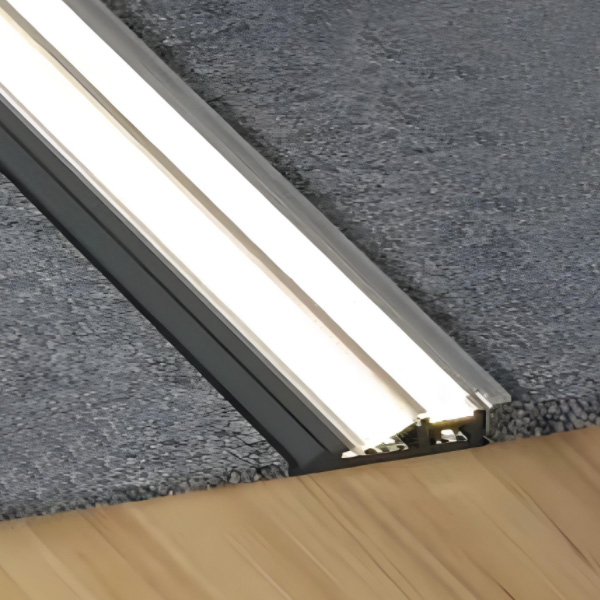
Dual-Track LED Tactile Uplight Carpet Edge Channel | 2026 New
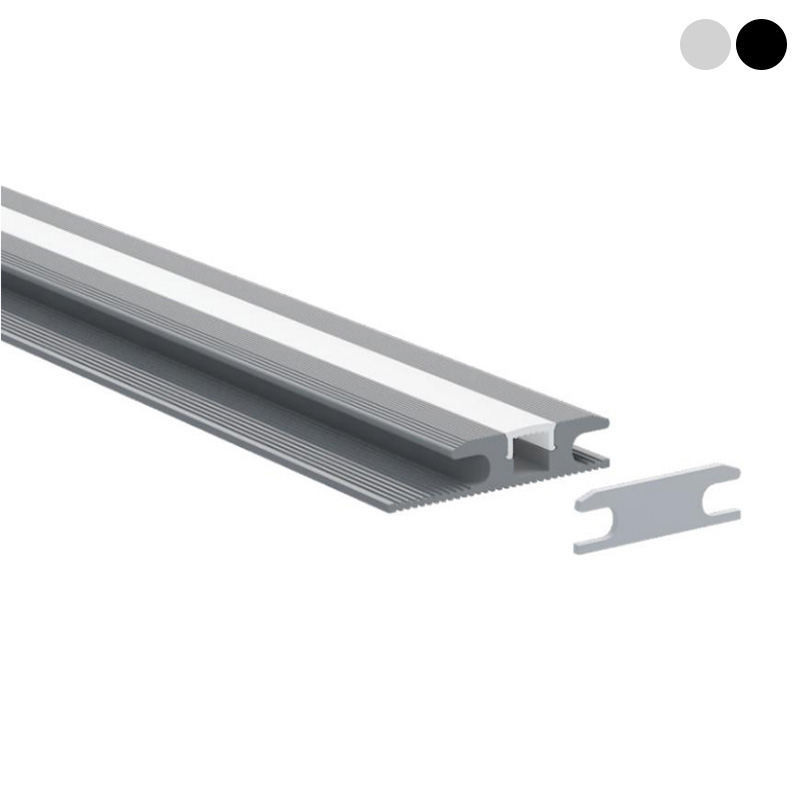
LED Aluminum Carpet Edging Trim Profile
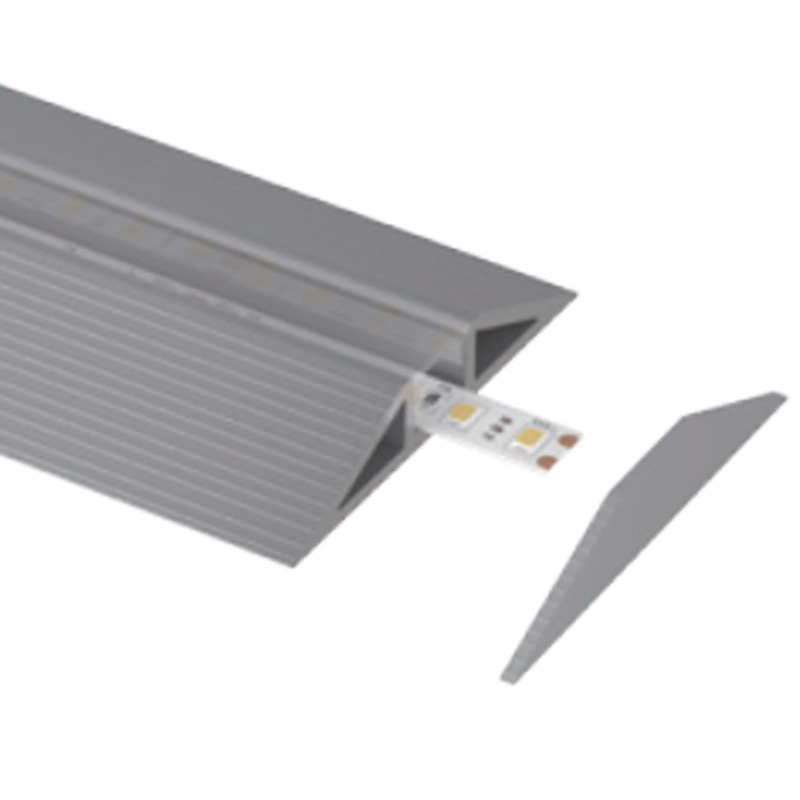
Versatile Tactile LED Floor & Ground Light Guidance Profile
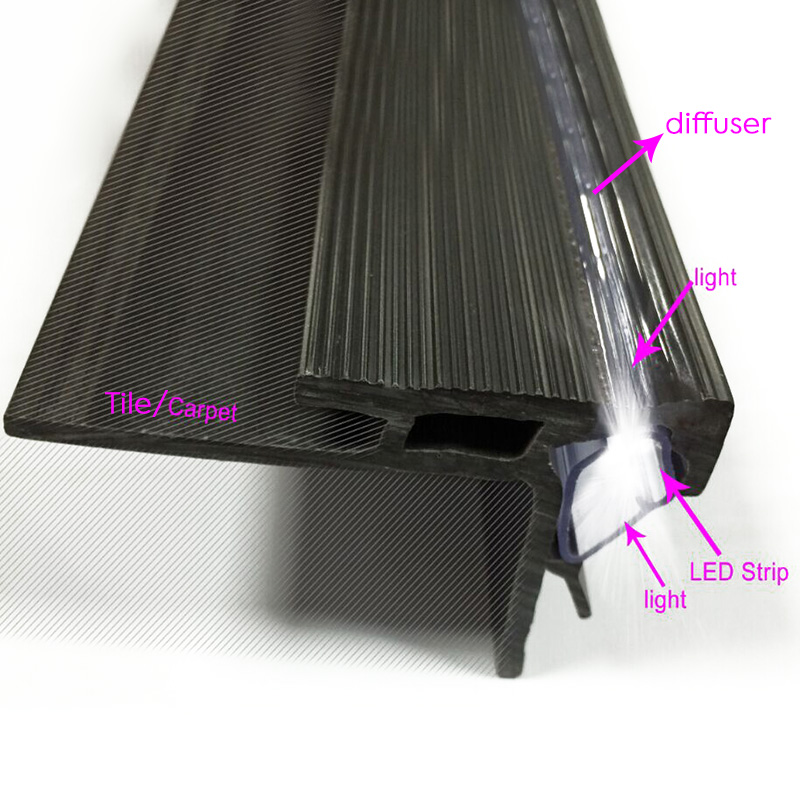
Staircase LED Diffuser Channel Black - Anti-Slip Double-Sided Light | 10mm Strip
Why Add LED Lighting to a Carpet Transition?
At SuperLightingLED, we focus on the transition areas around the carpet—the places where different floor materials, levels, or functional zones meet.
A conventional carpet transition strip creates a physical connection between flooring materials. By integrating an LED strip into the transition profile, we turn that necessary connection into a visible architectural lighting element.
The illuminated line can define where one surface ends and another begins, add a subtle visual boundary, and give the floor a more deliberate and refined appearance. This is especially useful in spaces where the floor itself needs to contribute to the overall lighting design.
Define Different Spaces With Illuminated Carpet Transitions
Floor transitions are often used to separate different materials or functional areas within the same interior. Once LED lighting is incorporated, that boundary becomes much easier to read visually.
A continuous illuminated transition can separate a carpeted seating area from a hard-floor circulation area, distinguish different carpet zones, or outline the edge of a room feature without requiring partitions or additional fixtures.
This approach is particularly attractive for: Hotels, offices, theaters, retail interiors, exhibition spaces, and modern residential interiors.
Frequently Asked Questions About Carpet Transition Strip Profiles
Got a question about installing LED lighting in your floor transitions? You're in the right place. Here are the answers we give customers every day.
The right carpet transition strip profile depends on two things: the flooring materials you're connecting and their height difference. For joining a carpet to a hard surface like tile or wood, you'll need a profile with a ramped or lipped edge to cover the carpet's edge neatly. For carpet-to-carpet connections, a lower-profile, symmetrical strip often works best. Always measure the height difference to ensure a smooth, trip-free floor transition.
It's a trade-off. For the cleanest look with no visible hardware, a strong construction adhesive is the way to go. But in very high-traffic commercial areas like hallways or theaters, mechanical fastening with countersunk screws provides the most secure, long-term installation. Often, installers use both—a bead of adhesive to prevent squeaks and screws for strength.
Most of our carpet transition strip profiles are designed for standard 10mm wide LED strips, which is the most common size on the market. A few, like our tactile guidance profiles, are made for 8mm strips. It's crucial to check the 'Specification' table on the product page before you order to make sure your strip's PCB width will fit.
This needs to be planned before you install the flooring. The most common way is to cut a shallow channel in the subfloor to lay the wire in. You can also run the wire under the carpet edge to the nearest wall. Trying to hide the wire after the floor is down is the number one mistake we see people make.
Yes, absolutely. They're made from high-quality 6063-T5 aluminum alloy with tough polycarbonate diffusers. They are engineered specifically for foot traffic, which is why you'll find them in theaters, hotels, and offices. They protect the LED strip from being stepped on and keep the carpet edges from fraying.
The aluminum channel itself provides good physical protection, but it's not waterproof. To protect against spills, you need to install a waterproof LED strip, something with an IP65 rating or higher, inside the channel. For a truly sealed connection, you'll also need a set of our IP68 connectors to protect the wiring points.
You can avoid 'hotspots' by choosing the right combination of strip and diffuser. A high-density COB (Chip-on-Board) LED strip paired with one of our frosted diffusers will give you a completely smooth, dot-free line of light. The closer the LEDs are, the better the diffusion. We have a whole guide to diffusing light if you want to go deeper.
Yes, and we do it all the time. A huge part of our business is building solutions to fit a customer's exact drawing. Just send us the lengths you need for your floor transition. We can cut the aluminum profiles and the diffusers to match.