
CV DALI Low Voltage Driver
8 productsLTECH Low Voltage DALI Dimming Controllers for LED Strips
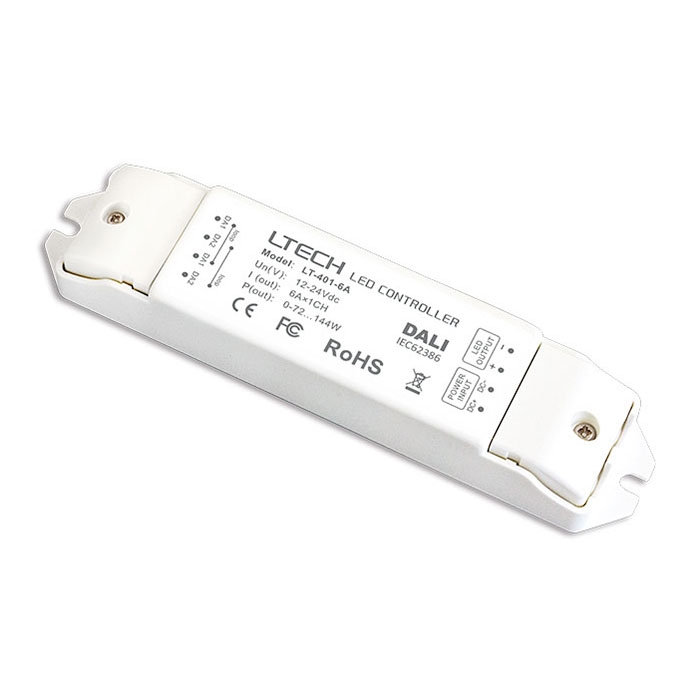
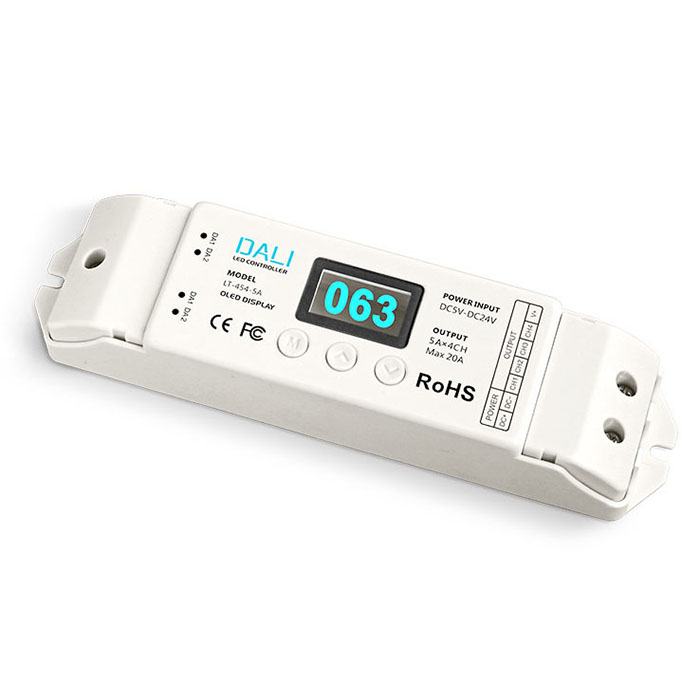
LTECH CV DALI Low Voltage Drivers are DC-input DALI-to-PWM dimming controllers designed to integrate conventional constant-voltage LED strips and LED fixtures into a professional DALI lighting system.
Unlike an AC-input DALI driver, these low-voltage LED controllers require a separate constant-voltage power supply. The controller receives the DALI digital signal and converts it into PWM output for compatible low-voltage LED lighting.
A typical system is: AC Power → 12V/24V/36V/48V Constant Voltage Power Supply → LTECH DALI DC Controller → DC LED Strip Lights (Single Color / CCT / RGB / RGBW), with the DALI bus connected directly to the LTECH controller for addressing and dimming commands.
This architecture is especially useful when a building already uses DALI but the final light source is a conventional PWM-controlled LED strip rather than a luminaire with a built-in DALI driver.
LTECH models follow the DALI IEC 62386 standard and use a standard DALI logarithmic dimming curve for smooth, predictable brightness control. They come with a 5-year warranty and are FCC, CE, and RoHS certified; some even have UL, TÜV, BIS, and DALI-2 certifications.
This makes them particularly suitable for architectural LED strip installations in hotels, retail spaces, restaurants, offices, residences and other projects where DALI is already used as the building lighting-control protocol.
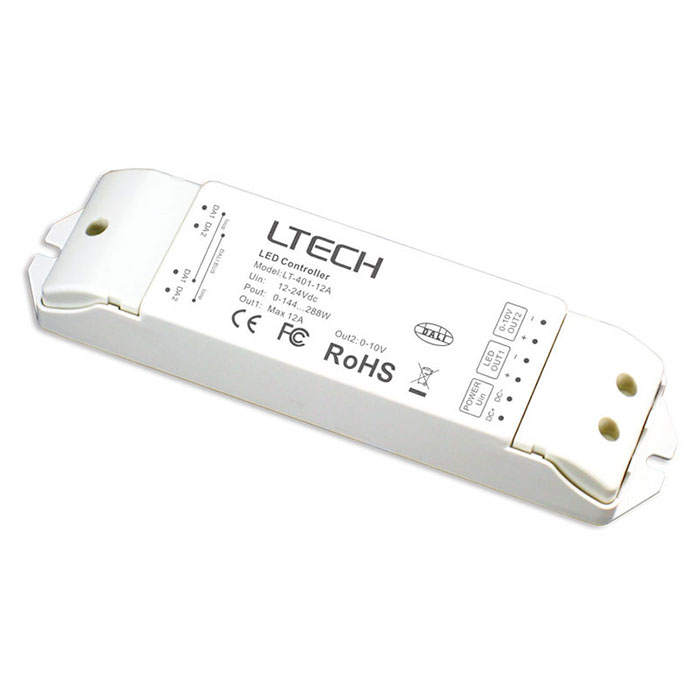
LT-401-12A DALI CV Dimming Driver - 12A, 0-10V Output | PWM Digital Dimming
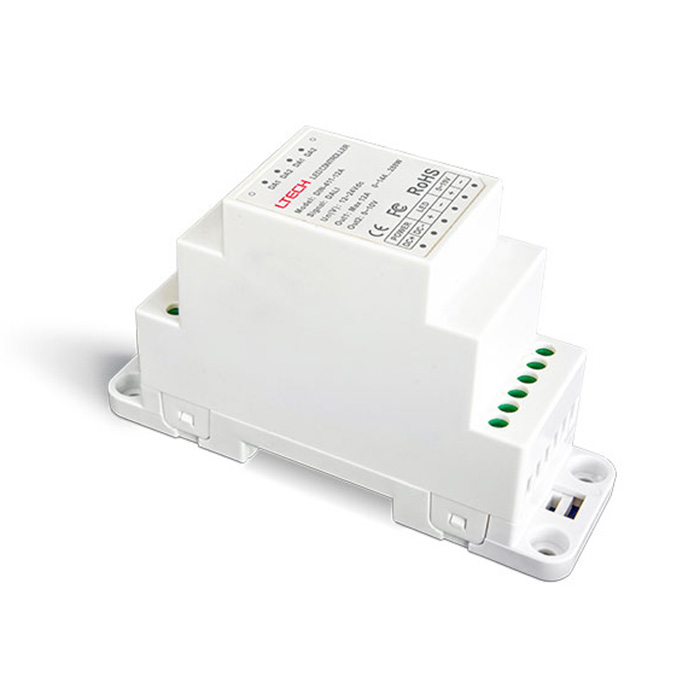
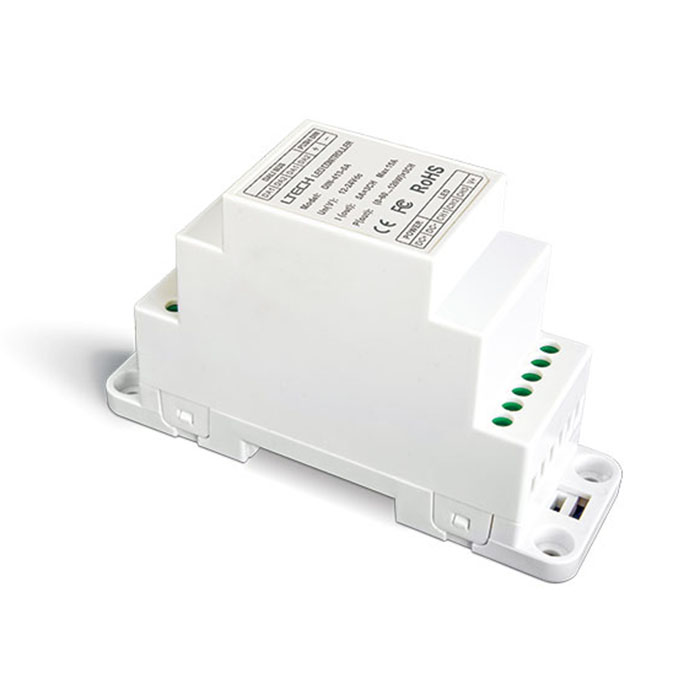
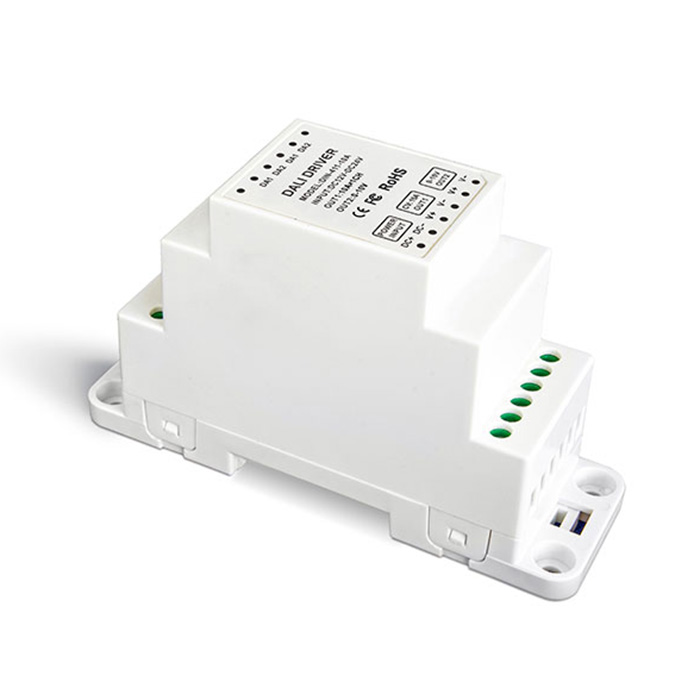
DIN-411-12A DALI Dimming Driver - 12A CV, 0-10V Output | PWM Digital
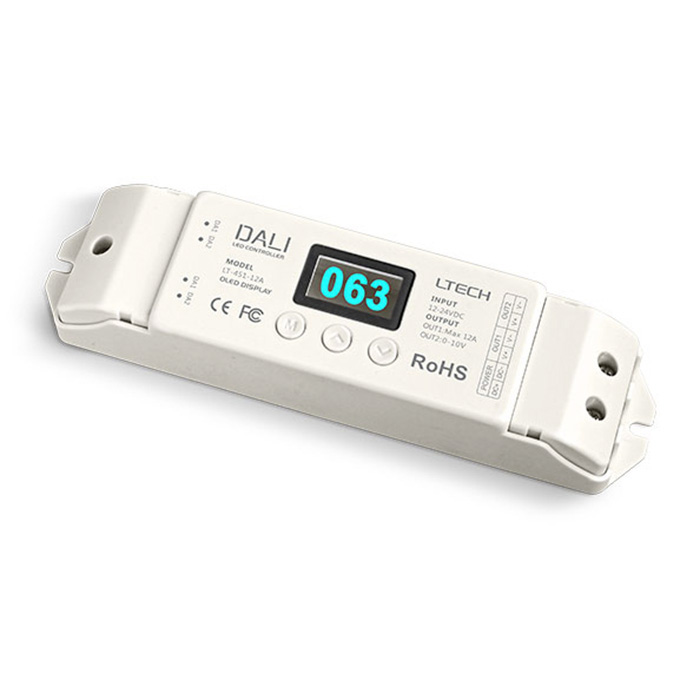
More Low-Voltage DALI Control Options at SuperLightingLED
In addition to LTECH, SuperLightingLED offers a broader selection of DALI controllers and dimmers from brands such as SkyDance, Sunricher, MiBoxer / Mi-Light, and other professional lighting-control manufacturers.
Different DALI product families emphasize different features, including DT6 or DT8 control, single-color or multi-channel output, higher-current LED strip control, RGB/RGBW/RGB+CCT applications, digital addressing, NFC programming, waterproof designs, and different installation formats.
This allows SuperLightingLED to provide more than one DALI solution for the same project. If a specific LTECH model does not match the required voltage, current, channel count, control type, or installation method, you can compare compatible alternatives across our other DALI product series while keeping the same overall DALI lighting architecture.
FAQ About CV DALI Low Voltage Driver
Direct answers to the most common wiring, addressing, and load-matching questions for low-voltage DALI LED strip installations.
A constant voltage dali led strip controller is a DC-to-DC dimming interface that sits between an external power supply and low-voltage tape lights. Unlike standard mains-powered DALI drivers that take 120V or 230V AC line power directly, this unit accepts a 12V to 48V DC input and converts incoming digital DALI bus commands into high-resolution PWM duty cycles. This design lets commercial building automation systems manage conventional LED strip lighting without running individual line-voltage feeds to every single fixture location.
The difference comes down to where AC-to-DC power conversion happens. An AC DALI driver wires directly to line voltage and combines rectification, step-down, and dimming inside one chassis. In contrast, a dc dali led controller requires a dedicated constant-voltage power source on its input terminals and strictly handles digital-to-PWM signal modulation.
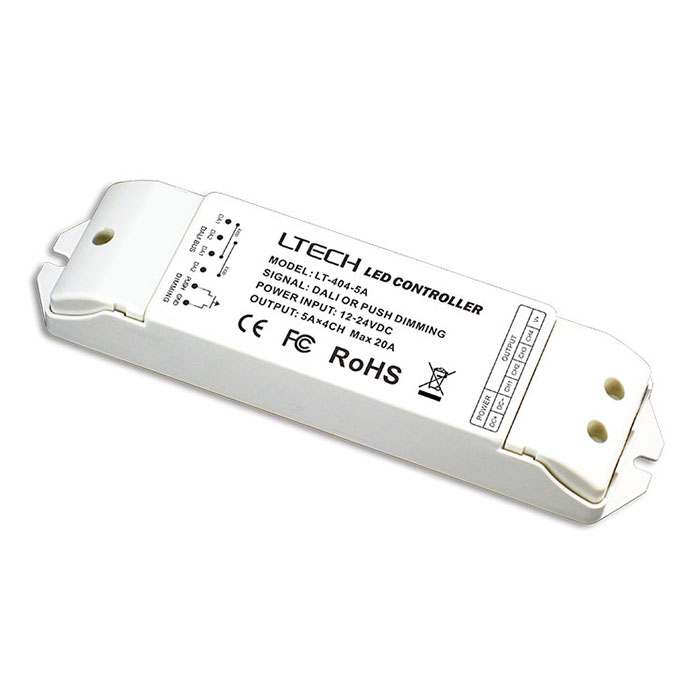
Capacity depends entirely on the controller's channel current rating multiplied by your DC input voltage. On a single-channel unit rated for 12A running at 12V DC yields 144W maximum, while switching to 24V DC doubles that capacity to 288W. On 4-channel units rated at 5A per channel (20A total), you can manage up to 240W at 12V or 480W at 24V across your LED strip installations. Always apply an 80% continuous-load safety margin to prevent thermal throttling.
A dali dc led strip driver operates across a broad 12V to 24V input window, but its output voltage matches whatever DC power source you feed into it. If you feed 24V DC from a transformer, the controller terminal delivers a 24V PWM output. Feeding 24V DC into the controller while connecting a 12V LED strip will instantly burn out the diodes.
No, DALI control wiring is completely polarity-free. Standard DALI transceivers feature an integrated bridge rectifier on the DA/DA input terminals, so you can connect the two control wires either way without risk. However, polarity is critical on the DC power supply input terminals (+ and -) and output LED terminals (+ and -). Reversing the DC input connections will trip internal reverse-polarity protection or blow the controller's input stage.
Select models like the LT-401-12A and DIN-411-12A include an auxiliary 0-10V output alongside the PWM terminals, specifically designed to bridge mixed systems. When incoming DALI digital bus signals adjust lighting levels, the unit generates an optically isolated 0-10V sink/source signal in tandem. This feature lets you integrate conventional 0-10V commercial fixtures or secondary booster modules into a unified DALI control zone without purchasing separate signal conversion gateways.
LTECH low-voltage DALI decoders utilize hardware-level PWM modulation that follows standard IEC 62386 logarithmic curves, delivering stable dimming down to 0.1%. Because human eyes perceive low-light changes exponentially, the logarithmic curve provides gradual, linear-feeling fading near dark without abrupt drop-outs or stepping. For deeper technical insights on bus commands and curve settings, review our guide explaining DALI dimming.