
SYS Subordinate Lamp Series
11 productsWhat is a slave light? What is slave in lighting?
Slave light means that its light signal comes from the master control, and all the slave lights are given light signals and synchronized changes by one host controller. These slave lamps are under the same control system and control mode.
MiBoxer Mi-Light SYS Series LED Slave Lights are connected to a wireless master controller via a wired connection and can be controlled remotely by Mi-Light RF remote or smartphone, tablet via a gateway. The host controller is also compatible with DMX control and is linked to the DMX console via the wireless DMX transmitter FUTD01. And multiple host controllers are synchronized wirelessly within 30 meters of each other.
When more than 50 light slaves are connected, or the total cable length exceeds 300 meters, or the LED power exceeds 360 watts or 360 watts, an amplifier is required to boost the master signal to synchronize all the slaves.
The synchronization of master and slave lighting is ideal for outdoor landscape lighting. Control 16 millions color, color temperature, brightness, and saturation. Widely used on landscapes such as building, bridge, underground.




FAQ About SYS Subordinate Lamp Series
Direct answers to common wiring, controller capacity, and installation questions for MiBoxer SYS exterior systems.
A SYS subordinate lamp is an RGB+CCT exterior fixture that has no built-in RF receiver, relying instead on a centralized host controller for power and data. Instead of placing independent wireless chips inside every underground or underwater fixture—where water, earth, and metal housings kill 2.4 GHz radio signals—the SYS system shifts the wireless antenna to a dry, above-ground host box (like the SYS-T1 or SYS-PT1). That host transmits DC24V power along with a hardwired 1-wire digital communication signal down a 3-core trunk line. Every connected fixture receives color, saturation, and dimming commands in synchronized unison without signal lag.
You can run up to 50 SYS subordinate lamps on a single host controller, provided your total wattage stays within the controller rating. For the DC24V input SYS-T1, that ceiling is 15A or 360W; for the all-in-one AC mains SYS-PT1, the internal driver caps total output at 8.5A or 200W. If your fixture count exceeds 50 units, or your cumulative load passes those wattage limits, insert a SYS-T2 or SYS-PT2 signal power amplifier. The amplifier refreshes the 1-wire data stream and injects a fresh power rail for another 50 fixtures or 360W block.
Wiring a SYS subordinate lamp requires a 3-core waterproof outdoor cable with a minimum conductor gauge of 18 AWG (0.75 mm²) to 16 AWG (1.5 mm²). The three conductors carry DC24V positive (V+), DC24V negative (V-), and the digital sync line (DAT). For direct-burial runs across garden beds or long paths exceeding 50 meters, step up to 14 AWG (2.5 mm²) to prevent voltage drop from dimming the fixtures at the end of the line. Always use water-blocked round cable so compression glands on IP68 junction boxes can bite down and seal completely.
Every SYS subordinate lamp on the same output line displays the exact same color and brightness because the SYS protocol is a broadcast sync bus, not an addressable pixel protocol. When the host controller transmits a command to change to 3000K warm white or 100% red, all downstream fixtures follow instantly. If you need independent multi-zone control across separate landscape beds, you must install a separate host controller for each zone. MiBoxer handheld remotes and wall panels support up to 4 or 8 individual zones, letting you assign one host box per garden zone.
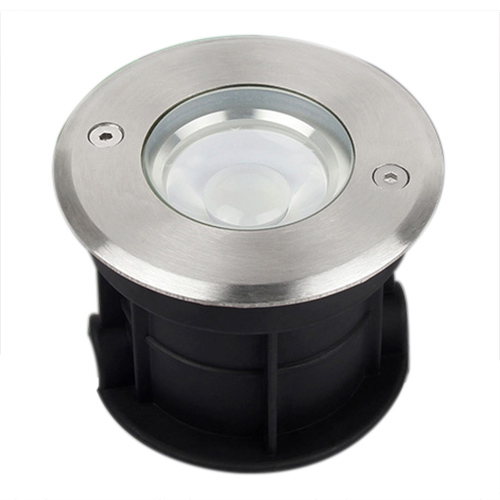
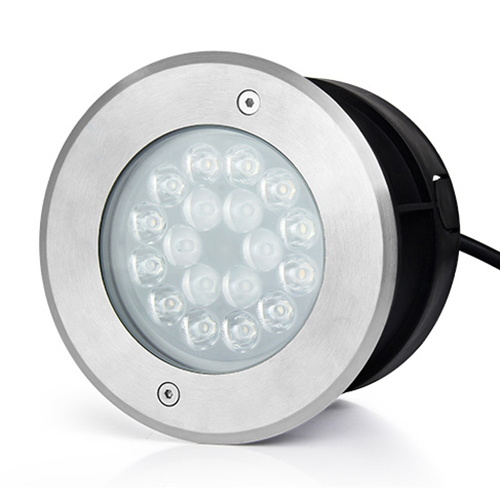
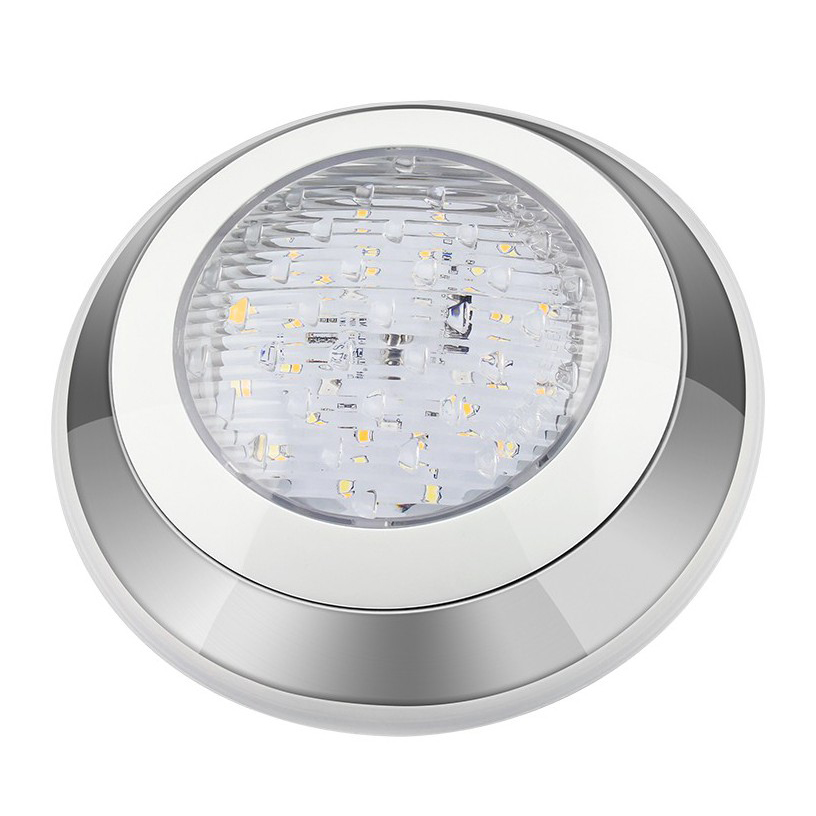
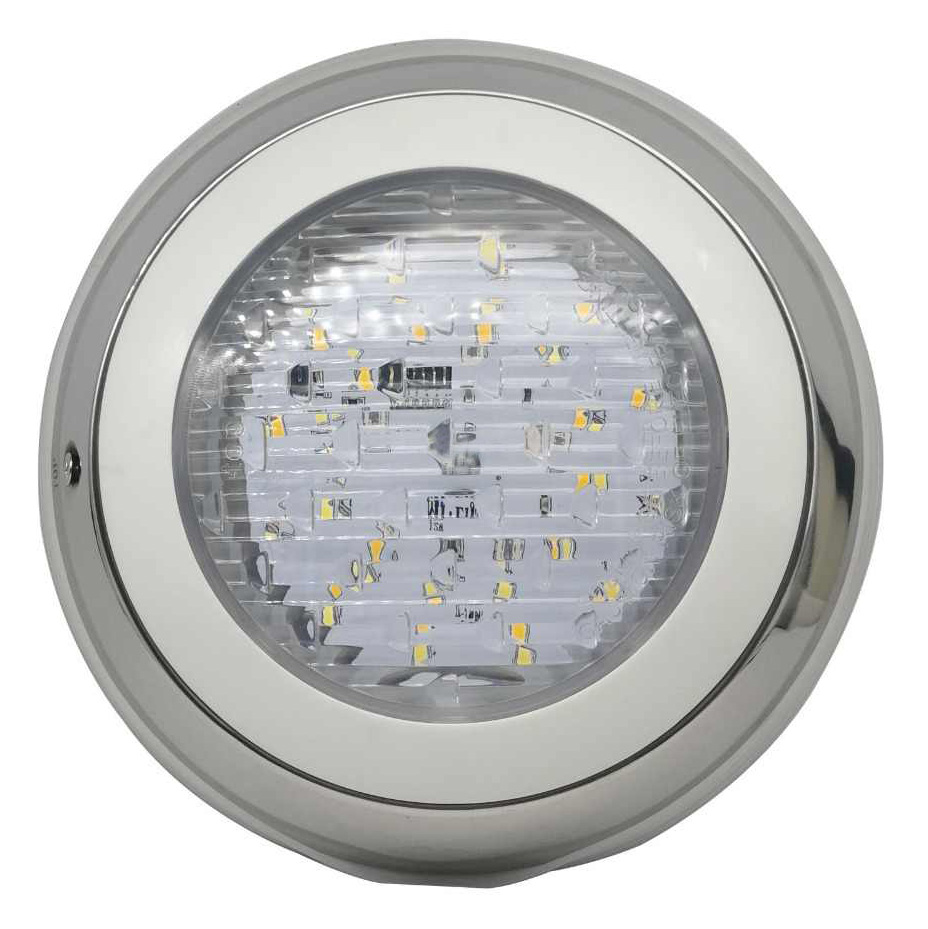
Submersing a SYS subordinate lamp is only supported on dedicated underwater models like the SYS-RW1 (12W) and SYS-RW2 (27W), which carry an IP68 rating and 316 stainless steel housings. Inground units like the SYS-RD1 and SYS-RD2 are rated IP68 against heavy rain, pooling groundwater, and brief immersion, but they are not engineered for continuous underwater hydrostatic pressure. Never install underground lamps in ponds or fountains. For swimming pools, verify that local electrical codes permit 24V low-voltage fixtures and always position host boxes and power supplies in dry equipment enclosures.
Exceeding 300 meters of total cable on a SYS series run causes the 1-wire digital timing pulse to degrade, leading to delayed response or random fixture strobing. The host controller transmits data at a frequency calibrated for 300 meters of cumulative line length. When you reach that distance, insert a SYS-T2 or SYS-PT2 amplifier. The amplifier actively reads the incoming digital signal, reconstructs the clean square-wave data pulse, and drives it down another 300 meters of branch cabling without command degradation.
A hardwired 24V bus eliminates the RF dead zones and dead batteries that plague standalone wireless landscape lights buried in wet soil or encased in concrete. A single above-ground host controller receives your smartphone, RF remote, or automation signal reliably in open air, then distributes clean DC power and digital data over copper. It eliminates the frustration of unlinked underground lights and provides true synchronized color fades.
Properly sealing a SYS subordinate lamp cable splice requires an IP68 screw-type compression junction box packed with two-part re-enterable polyurethane resin or silicone gel. Standard outdoor wire nuts and electrical tape will fail inside 6 to 12 months as soil freeze-thaw cycles draw moisture through microscopic gaps, corroding copper conductors and bridging the digital data line to ground. Use round, smooth-jacketed cables matched to the rubber grommet diameter on the junction box, torque the gland nuts until snug, and fill the cavity completely with potting gel before burial.