
RGBW LED Puck Light
2 productsIf you've ever been disappointed by the bluish-white from a standard RGB light fixture, our RGBW LED Puck Lights are the solution you're looking for. They include a dedicated white LED. This gives you the best of both worlds: vibrant, saturated colors for mood and accent lighting, plus a clean, functional true white light for tasks like kitchen prep or reading.
This dual-functionality makes RGBW pucks perfect for multi-use spaces. You can set them to a high-quality white for everyday use in a cabinet or closet, then switch to any color you want for entertaining or creating a specific ambiance.
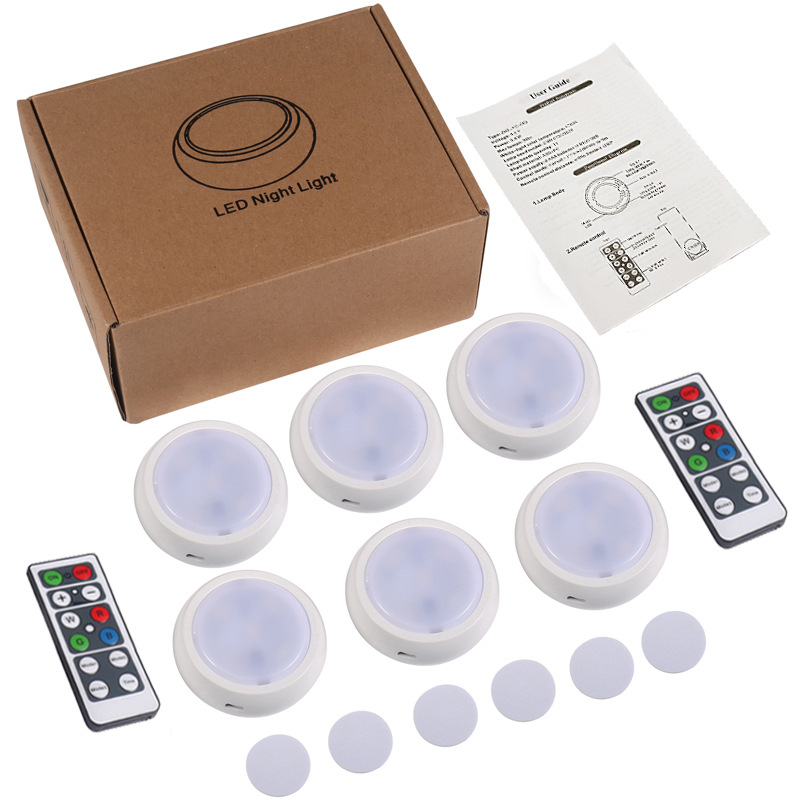
Rechargeable Batteries Homelife LED Lights Wardrobe Closet Lighting Emergency LED Night Light Cabinet Lighting DC5V RGBW
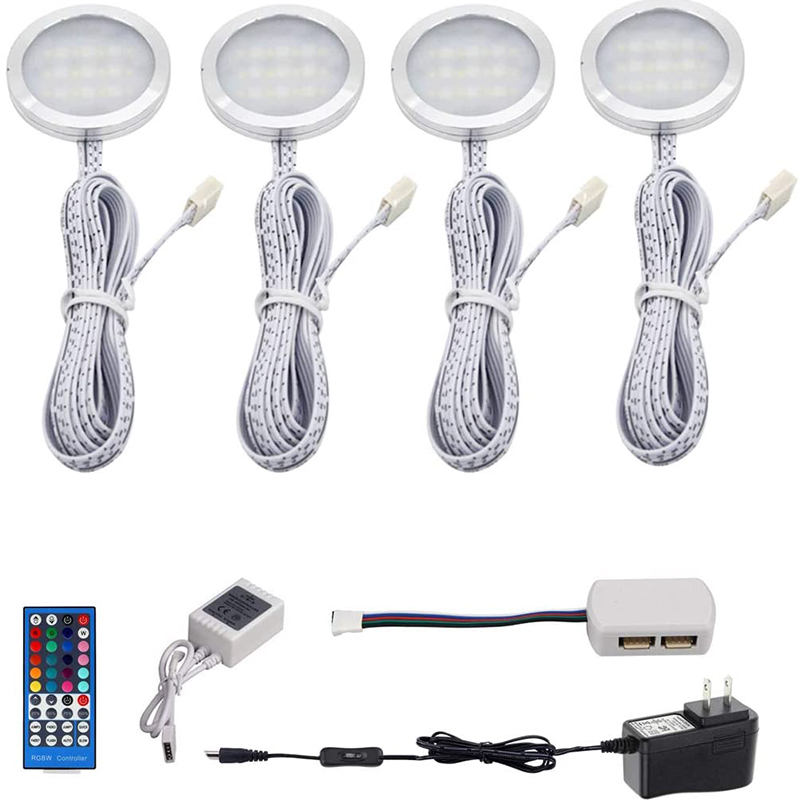
Why is a dedicated white chip better in an RGBW light?
The 'W' in RGBW makes a massive difference in light quality. A standard RGB LED creates white by turning on all three color diodes (Red, Green, Blue) at full power. The resulting light often has a noticeable color cast—usually blue—and poor color rendering. This means it can make food, clothing, and skin tones look unnatural. Our RGBW puck lights use a 4-in-1 LED chip that adds a dedicated white diode. When you select 'white' on the remote, only this diode activates, producing a pure, high-quality white light that's more efficient and renders colors far more accurately. For a full technical breakdown, see our complete guide to color-changing LEDs.
Frequently Asked Questions About RGBW LED Puck Lights
Your project questions, answered by our engineers. Here’s what you need to know before you buy.
Yes, absolutely. The dedicated white chip in an RGBW puck light is the whole reason this category exists. It produces a pure white light with a high Color Rendering Index (CRI), so it makes things like food on a countertop or items in a display look natural. It’s a massive upgrade over the artificial-looking white from an RGB-only puck.
Choosing between battery and hardwired RGBW puck lights comes down to convenience versus performance. Battery-powered pucks like our rechargeable RGBW model are incredibly easy to install—just stick them on. The tradeoff is you have to recharge them. Hardwired kits offer consistent power and can be controlled by a wall switch, but require running low-voltage wires. Note that hardwired RGBW pucks are often built-to-order now, so check with us on availability.
Installation depends on the model. Most of our kits are designed for surface mounting and come with high-quality foam adhesive pads for a simple peel-and-stick install. Some aluminum-body pucks may also have screw holes if you prefer a mechanical fixing, which is a good idea for rough or textured surfaces where adhesive might not hold perfectly.
This is a common and important question. Puck lights are wired in parallel—each with its own wire running back to a distribution hub—not in series like old Christmas lights. Wiring them in series would cause significant voltage drop, making each puck down the line dimmer than the last. It also ensures that if one puck fails, the rest stay lit. Don't try to daisy-chain them.
For standard under-cabinet task lighting, a good rule of thumb is to place one RGBW puck light every 12 to 24 inches, centered on the cabinet doors. For a 36-inch cabinet, two pucks usually look best. If you're lighting a glass-front display cabinet, one puck per shelf is often plenty. The goal is even light pools without dark spots in between.
It's generally not a good idea. Different kits can have different connectors, voltage requirements, or control signals, even if they look identical. Adding more pucks to a kit also means you risk overloading the power supply it came with, which can cause flickering or total failure. It's always best to stick with the components from a single, complete kit or plan a larger system with a correctly sized power supply from the start.
It's purely about the aesthetic. An RGBW LED strip light creates a continuous, even line of light with no gaps. RGBW puck lights create distinct pools of light. On a glossy surface like polished granite, strips can create a long, unbroken reflection, while pucks create a series of circles. Some people find the 'hotspots' from pucks more visually interesting for accent lighting. For pure task lighting, a strip often gives more even coverage.
Yes, we do this all the time. A huge part of our business is building kits to fit a customer's exact layout, something that never even appears on the main site. Just send us a sketch of your bookshelf or cabinets with the dimensions and where you want the lights. An engineer here will map it out and send back a wiring plan, parts list, and quote, usually the same business day. There's no fee for the consultation and no obligation to order.