
Triac CV Dimmable Driver
16 productsA Triac CV dimmable driver converts incoming phase-cut AC line voltage into a low-volatge 12V or 24V DC output, enabling traditional/modern Triac wall dimmers to control low-voltage tape light without separate wiring. SuperLightingLED provides a complete range of LTECH constant voltage phase-cut power solutions engineered specifically for solid-state lighting installations, spanning capacities from 10W up to 150W. These drivers eliminate intermediate signal converters by reading forward-phase or reverse-phase AC pulses and translating them directly into smooth high-frequency DC pulse-width modulation.
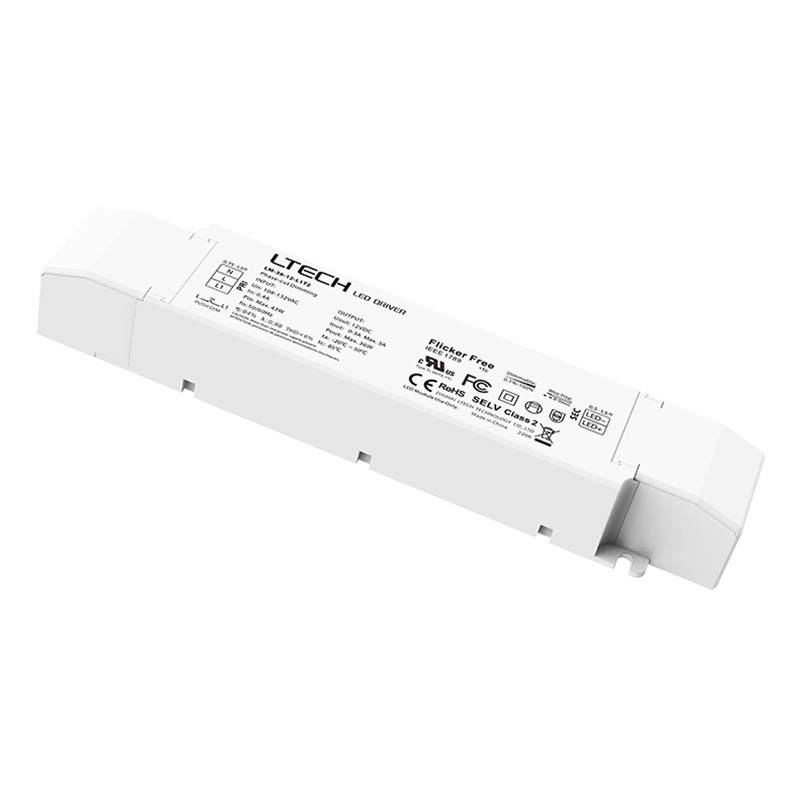
LM-36-12-L1T2 36W 12VDC Class 2 CV Dimmable Triac LED Driver

LM-36-24-L1T2 36W 24VDC CV Class 2 Intelligent Triac Dimming LED Driver
LM-60-12-L1T2 60W 12VDC CV Energy Efficient Class 2 Triac LED Driver
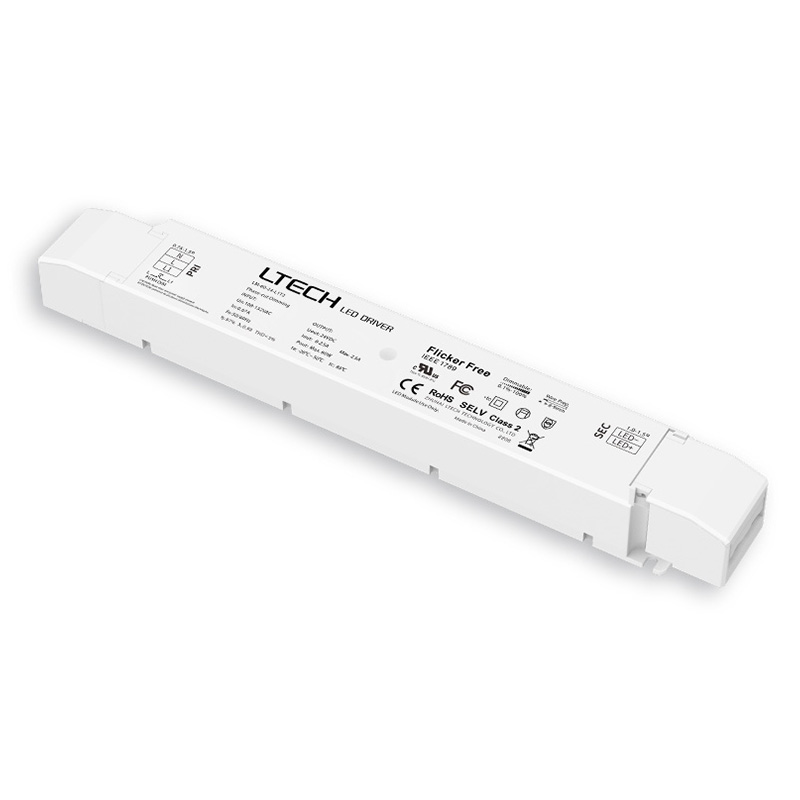
LM-60-24-L1T2 60W 24VDC Push DIM CV Triac Dimming LED Driver
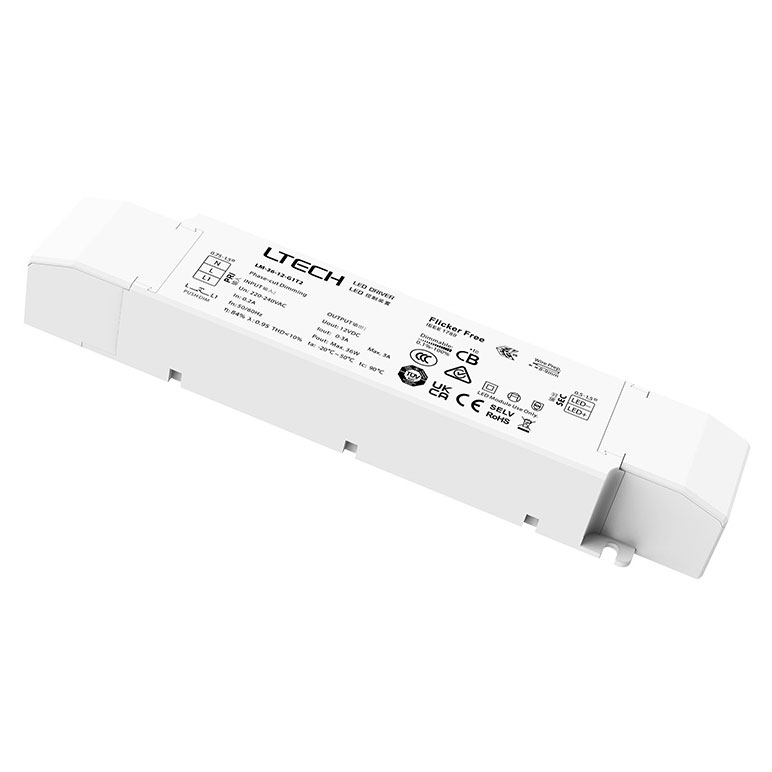

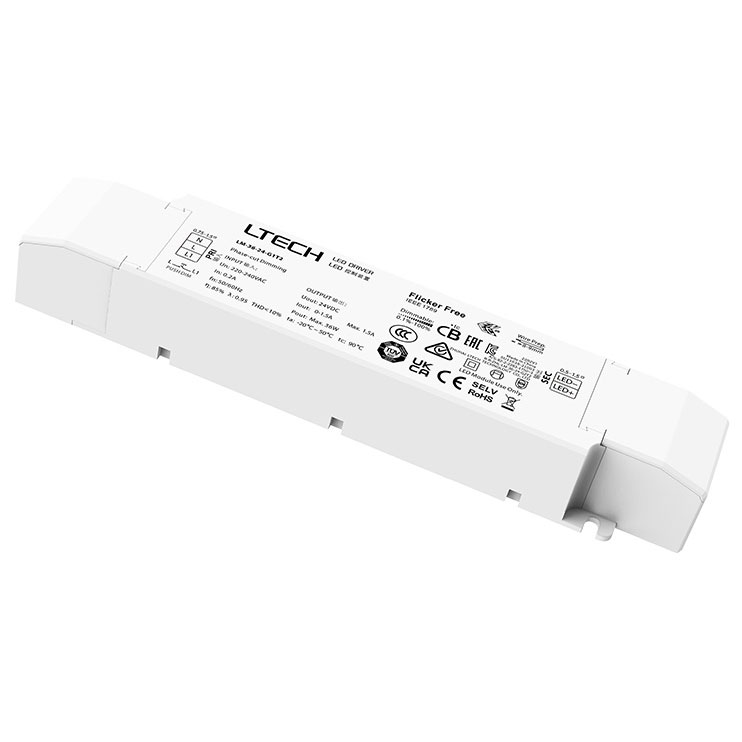
LM-36-24-G1T2 36W 24V Triac Dimmable LED Driver - Flicker-Free 0.1% Dim
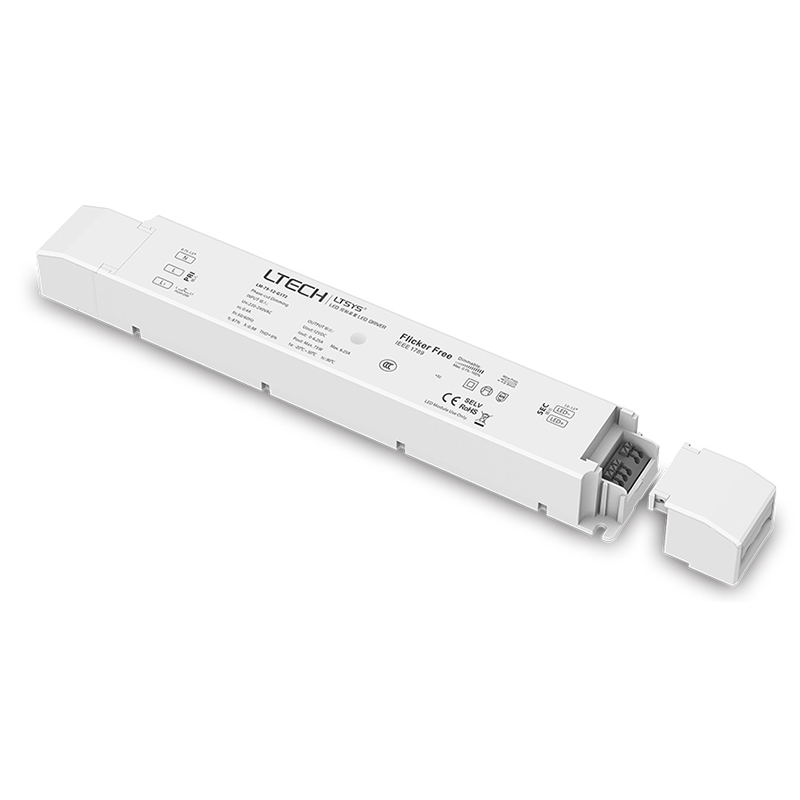
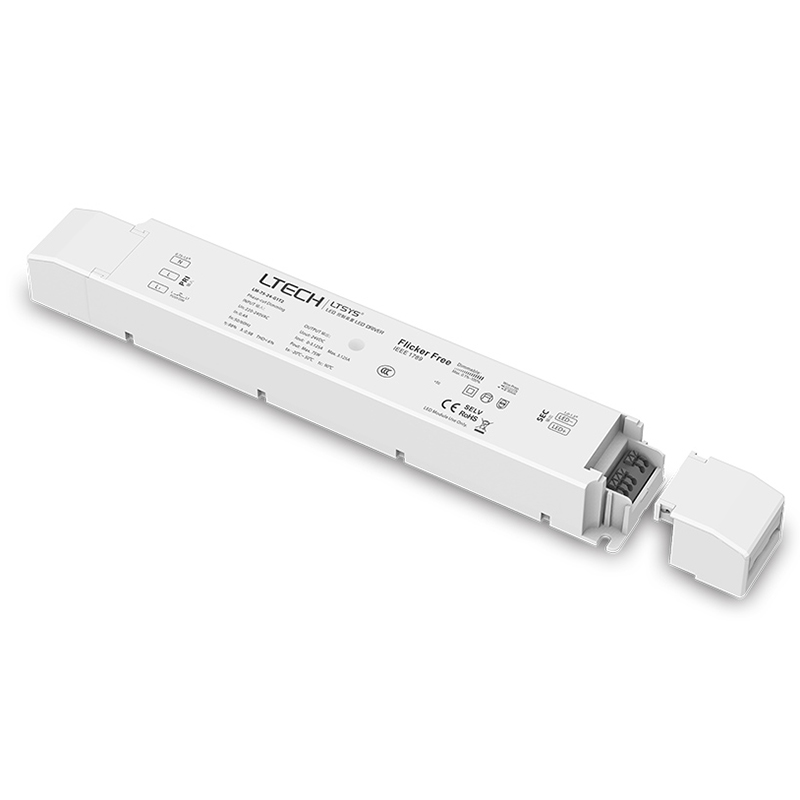
LM-75-24-G1T2 75W 24V Triac Dimmable LED Driver - Flicker-Free 0.1% Dim


150W 24V Triac Dimmable LED Driver LM-150-24-G1T2 | 0.1% Smooth Dimming


FAQ About Triac CV Dimmable Driver
Direct engineering answers on phase-cut dimming, wiring limits, load sizing, and flicker troubleshooting for constant voltage LED systems.
A Triac CV dimmable driver converts incoming phase-cut AC line voltage into a regulated 12V or 24V DC output while using pulse-width modulation (PWM) to dim constant voltage LED strip lights. Standard wall dimmers chop the AC waveform, but low-voltage LED strip lights require steady DC voltage to operate safely. That makes a Triac CV dimmable driver the exact bridge between standard residential wall dimmers and parallel-wired LED strip lights.
Yes, you can pair a leading-edge wall dimmer with a Triac CV dimmable driver provided the driver explicitly supports forward-phase chopping. Most residential rotary and slide switches from Lutron and Leviton operate on leading-edge phase cut. Our intelligent units feature adaptive microprocessor sensing that reads both forward-phase and reverse-phase inputs automatically. Just calculate the load properly: forward-phase inrush current is higher, so keep your driver input load within 70% of the wall dimmer stated incandescent wattage rating to avoid tripping.
Calculate your Triac CV dimmable driver size by adding an absolute minimum 20% headroom over the full running wattage of your LED strip lights. For example, a 5-meter run of 24V LED tape light pulling 14.4 W/m requires 72W of raw continuous draw; factoring in 20% overhead demands a driver rated for at least 90W. In that setup, choosing a 150W unit prevents heat buildup and extends component lifespan. Sizing a driver right at 100% capacity triggers thermal foldback, causing intermittent pulsing when running at high ambient temperatures.
Low-end flicker happens when the wall dimmer phase angle drops below the holding current threshold of the Triac switch inside the driver. While older analog power units snap off or strobe between 5% and 10%, our full-digital circuit design uses secondary MCU logic to achieve smooth, stepless PWM dimming down to 0.1%. If your setup flickers at minimum trim, adjust the low-end calibration screw on your wall switch to raise the minimum gate voltage slightly, or wire a dummy resistive load across the AC side to satisfy dimmer holding current.
A standard single-channel Triac CV dimmable driver cannot adjust color temperature because it only varies voltage on one positive and one negative terminal. To adjust dual-white CCT tape through phase-cut wiring, you need a specialized dual-channel unit like our LM-75-24-G2T2, which provides two independent constant voltage outputs to shift brightness and color temperature synchronously.
Yes, you can run multiple home-run lines in parallel from a single Triac CV dimmable driver as long as the combined wattage stays below 80% of driver capacity. For instance, a single 60W 24V driver can easily feed three separate 15W cove lighting sections. Split the output using terminal blocks near the driver rather than daisy-chaining strip-to-strip, which forces high current through narrow copper traces. Parallel star-wiring guarantees identical voltage at the start of each individual LED strip light, eliminating front-to-back brightness drift across your layout.
Push-DIM uses a momentary normally-open switch wired directly to the driver control terminals instead of passing chopped AC line power through a wall dimmer. Pressing the button toggles power on and off, while pressing and holding ramps brightness smoothly up or down. Some models support both phase-cut and Push-DIM interfaces on the same chassis. Push-DIM completely bypasses the phase-angle distortion, electronic buzzing, and minimum load limits typical of wall dimmers, making it an exceptional alternative for commercial offices, headboards, and bedside architectural millwork.
A Triac CV dimmable driver pairs cleanly with Lutron Caseta, Leviton Decora Smart, and similar phase-cut modules when set to ELV reverse-phase mode. Smart dimmers contain sensitive microprocessor radios and solid-state MOSFET switches that require clean power transitions without aggressive inductive bounce. Drivers with V0 flame-retardant PC housings like our LM-60-12-L1T2 handle these transitions smoothly thanks to integrated soft-on filtering. Just ensure your smart switch neutral wire is connected properly, as two-wire no-neutral smart dimmers can leak phantom current that causes LED strip lights to glow faintly when switched off.