
DMX Signal Driver
6 productsThe BinColor DMX Signal Driver Series includes two main types of products designed to extend, enhance, and convert DMX lighting control signals.
1. DMX Signal Amplifiers & Enhancers
Available in both wireless and hardwired versions, these devices help amplify, regenerate, or extend DMX512 signals to improve signal transmission and support more reliable communication across DMX lighting systems. They are useful for installations with long cable runs, multiple DMX devices, or situations where additional signal distribution is needed.
2. DMX Signal Converters
These converters transform DMX512 digital control signals into other control signal formats, including 0-10V analog signals and 5V/10V PWM signals. They allow DMX lighting control systems to work with compatible 0-10V dimmers and controllers, PWM-controlled LED lighting products, and other lighting equipment that uses these signal inputs.
Depending on the model, an additional DC power supply may be required to support signal amplification or conversion. Always check the product specifications for compatible input/output signal types, wiring requirements, and DC power supply ratings before installation.

DMX512 to 0-10V Converter BC-834-010V - 4-Channel PWM Output
FAQ About DMX Signal Drivers
Direct engineering answers on signal splitting, opto-isolation, 0-10V conversion, and bus limits for DMX512 installations.
A DMX signal driver conditions, boosts, isolates, or converts digital DMX512 communication signals rather than powering LED strip lights directly. Where a decoder takes DMX data and turns it into DC power to illuminate chips, a signal driver works strictly on the low-voltage control layer. It reshapes square data waves that have degraded over distance, splits one incoming stream into two independent branches, or translates serial DMX packets into analog 0-10V dimming voltages for commercial drivers.
Optical isolation uses an infrared LED and photosensor barrier to block ground loops and voltage spikes from jumping between separate DMX branches. If fixtures on branch A share an electrical panel 60 m away from branch B, earth potential differences between their power grounds can push stray current through the DMX shield wire. That stray voltage burns out transceiver chips on your control board. An isolated driver breaks that electrical continuity with up to 3 kV of galvanic protection, keeping console ports safe.
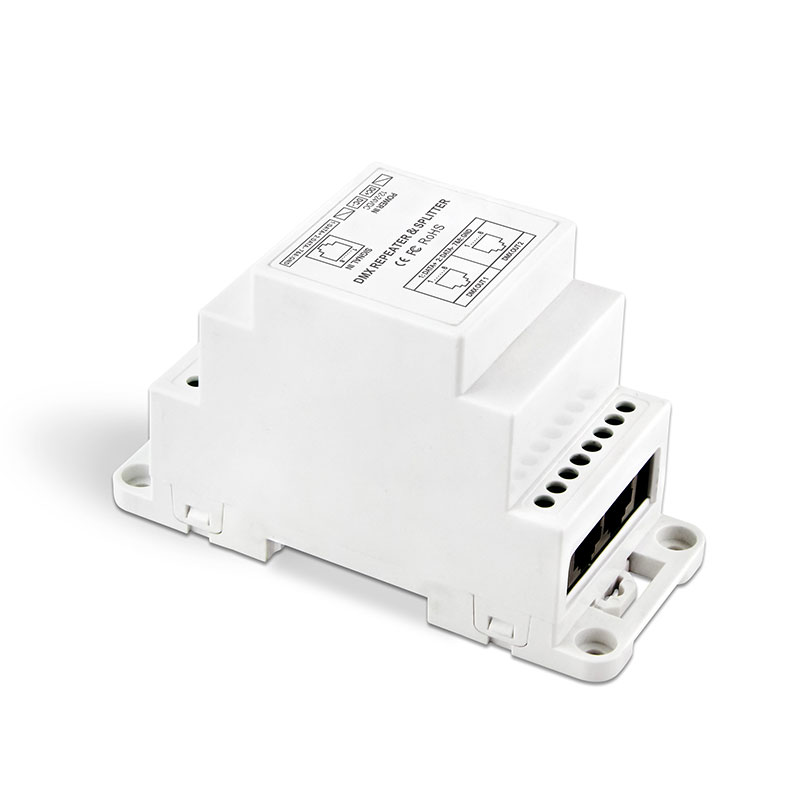
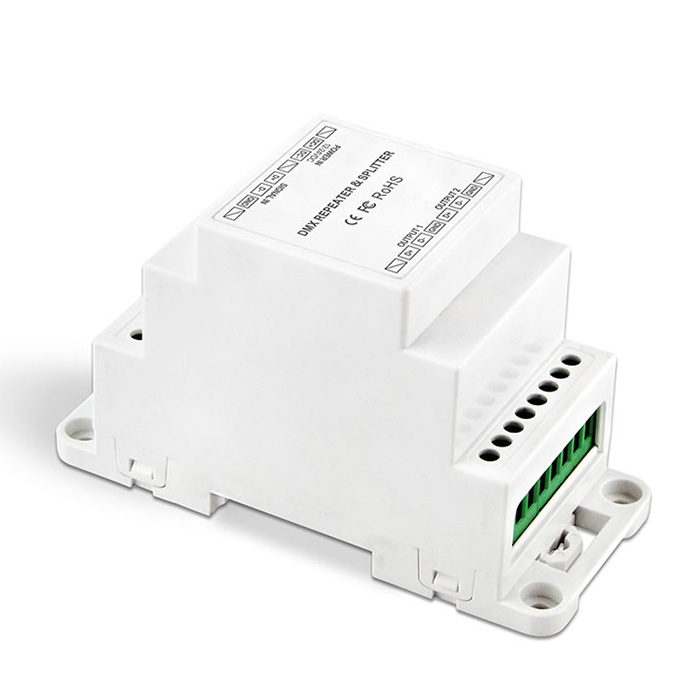
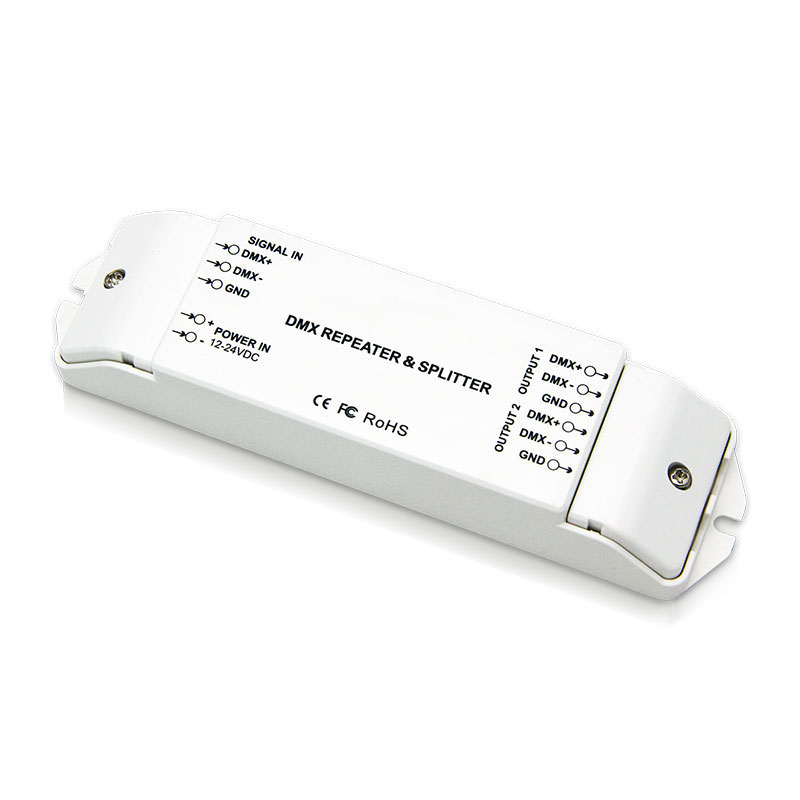
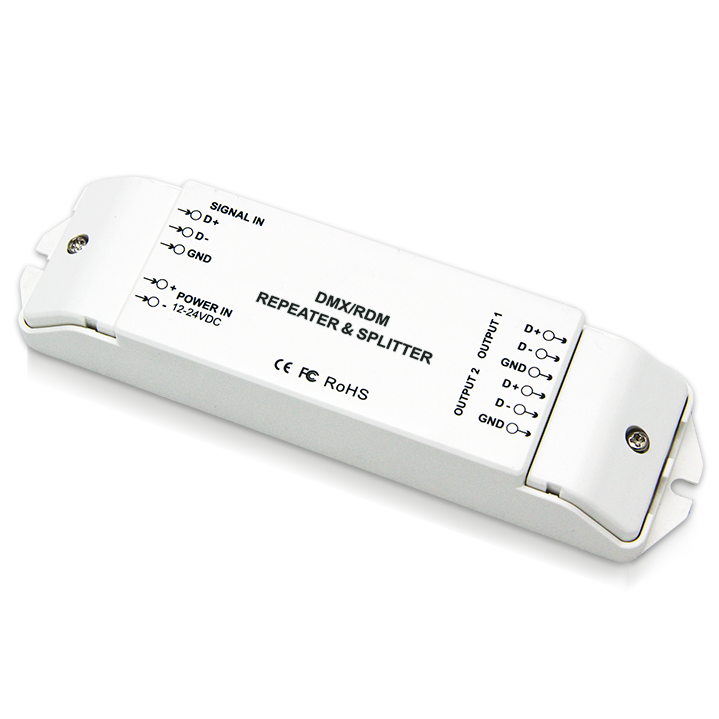
A standard DMX signal driver amplifier handles up to 32 unit loads per output branch, effectively doubling your fixture capacity to 64 devices on a dual-channel unit. The EIA-485 hardware standard permits 32 standard receiver loads per electrical segment. Because our amplifier models like the BC-812 feature two fully isolated, independently driven output ports, each port starts an entirely fresh 32-device bus budget. That lets you manage 64 decoders across two cable paths from one console feed.
A standard DMX signal driver only pushes data in one direction, so you must select a dedicated bidirectional unit like our BC-812-RDM if your fixtures require RDM feedback. Standard DMX512 transmits one-way from console to fixture. RDM requires half-duplex two-way communication so fixtures can report back their temperature, run hours, and DMX start addresses. A standard opto-coupler completely blocks reverse data flow, whereas an RDM-compliant amplifier detects direction switches and passes discovery packets back upstream within microseconds.
A multi-channel DMX signal driver converter translates incoming DMX512 slot levels into analog 0-10V or 10V PWM outputs to regulate third-party commercial lighting drivers. Units like our BC-834-010V signal converter accept 12V to 24V DC input and map four sequential DMX channels into four isolated 0-10V analog sinking or sourcing pairs. This lets you integrate architectural 0-10V troffers, high bays, or commercial downlights directly into your DMX show programming without swapping out their primary ballast power supplies.
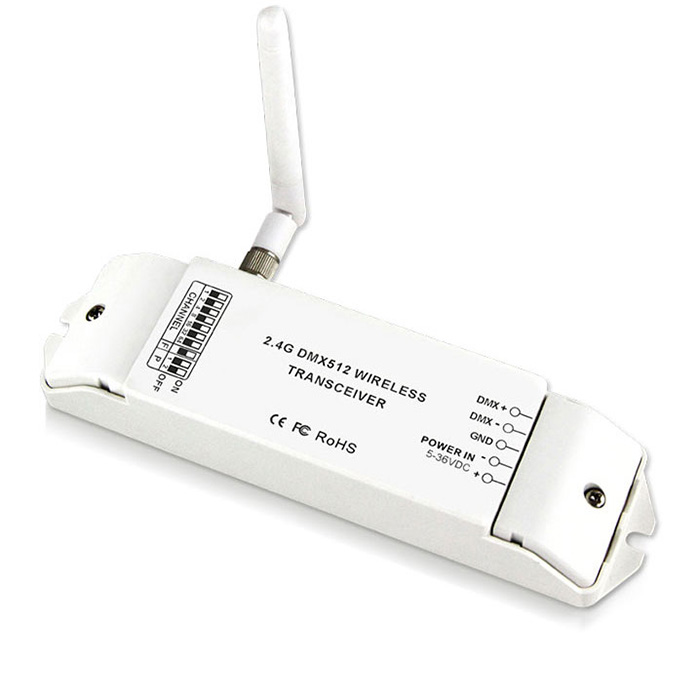
You can replace physical cable runs up to 350 m across line-of-sight using a wireless DMX signal driver transceiver pair operating on the 2.4 GHz band. Our BC-870 transceivers handle DC5V to 36V and broadcast standard DMX packets using frequency-hopping spread spectrum across 126 channels. They hop automatically past local Wi-Fi traffic with zero frame latency. You wire one unit as the transmitter at your lighting desk and one or more matching units as receivers at remote LED strip installations.