
LED UV Flood Light
7 productsLED UV flood light can evenly distribute UV rays over a broad area with extended reach, specially designed for large-area UV lighting.
SuperlightingLED provides professional UV flood lights, all focusing on the UV-A range, able to emit accurate 365 nm or 395 nm ultraviolet rays. Multiple sizes, voltages, powers, LED chip quantity, and waterproof levels are available to best suit your needs. The ultraviolet flood light comes with cables and can be installed on the wall or the floor easily.
We recommend using a 365nm UV panel for glue and resin curing, while 395nm UV panel lights are mainly used for fluorescent body painting, Halloween decorations, and black light parties. Although a 365nm UV light panel can also stimulate fluorescence reactions, it will show small stains and dust that 395nm cannot excite, detract from the overall aesthetics. So 365 nm UV flood light is more suitable for detailed inspection, not entertainment or art creation. In addition, 365nm ultraviolet radiation cannot directly contact the eyes, while 395nm ultraviolet rays are relatively safe for humans.
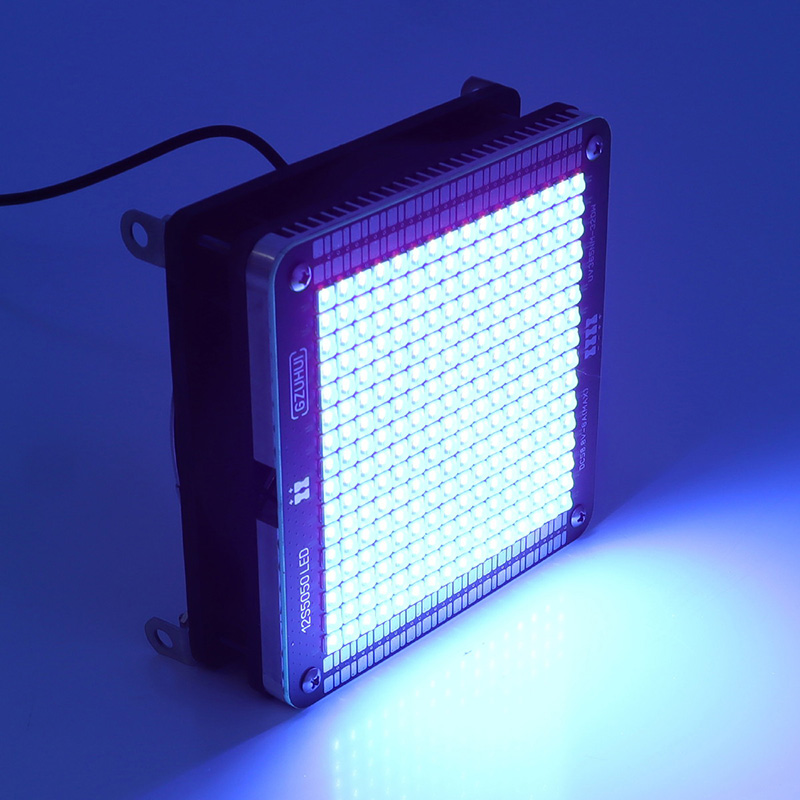
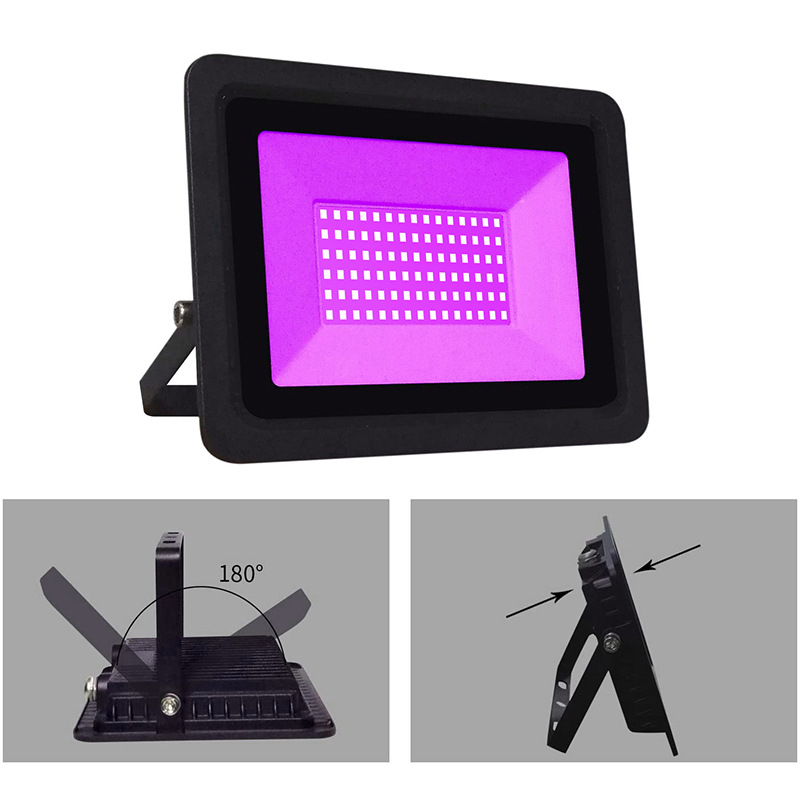
365nm LED UV A Black Light Outdoor Flood Light

100W UV Blacklight Linear Wall Washer Light AC Input
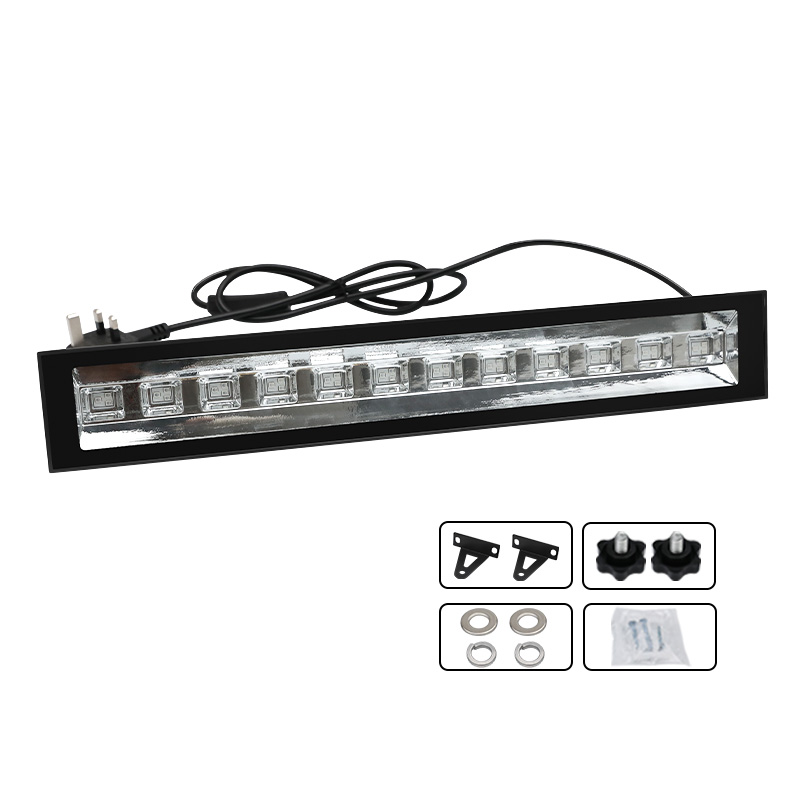
27W 395-405nm UV-A Linear Wall Washer Black Light
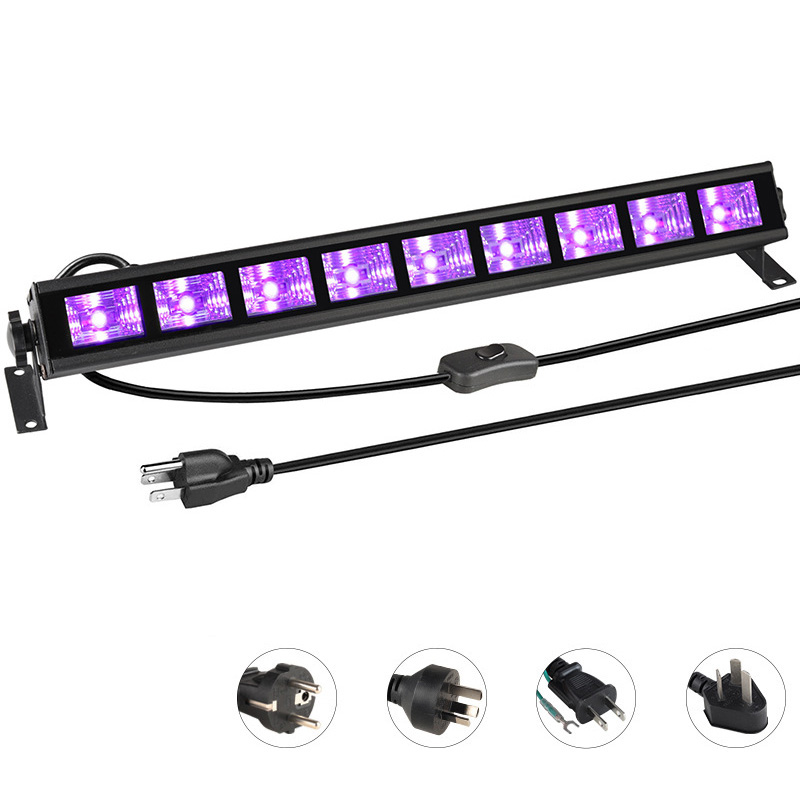
36W Plug-In 385nm-400nm Black UV Linear LED Wall Washer Light
395nm UV Blacklight LED Flood Lights Outdoor - Plug In
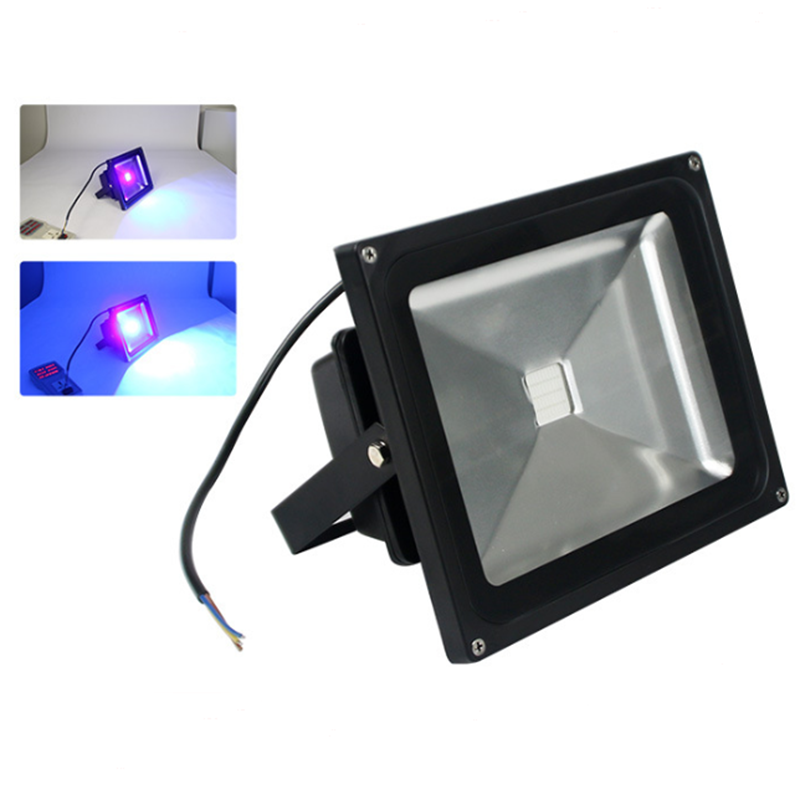
395nm-400nm LED Waterproof IP66 UV Purple Black Floodlight
Frequently Asked Questions About LED UV Flood Lights
Got a question before you buy? I've been answering these for 12 years. Here are the common ones.
UV light, or ultraviolet light, is simply light that's beyond the violet end of the spectrum that humans can see. For an LED UV flood light, UV-A is the specific 'slice' of the UV spectrum we use. It's the longest wavelength (315-400nm), making it much safer than the UV-B or UV-C rays from the sun and the right tool for making things glow or for curing certain materials.
Honestly, for your purposes, there isn't one. 'Blacklight' is just the common name for a lamp that mostly emits UV-A light. When you buy one of our LED UV flood light models, you're buying a blacklight. We just use the technical term 'UV' because we offer precise wavelengths like 365nm and 395nm for specific jobs.
For parties, Halloween, or art, you want a 395nm LED UV flood light. It produces a strong fluorescent glow with a noticeable violet light. For industrial or craft curing of glues and resins, you absolutely need a 365nm model. It has higher energy that actually cures materials properly, but it looks dimmer to the eye and requires more caution.
Lots of things you wouldn't expect. White clothes, tonic water (it's the quinine), many plastics, most fluorescent paints and posters, petroleum jelly, and unfortunately for some, pet stains. It's all about phosphors – substances that absorb the invisible UV light and re-emit it as visible light. That's the glowing effect you see.
The 395nm versions are generally considered safe for casual exposure, like at a party. You shouldn't stare directly into any bright light, but they're safe for illuminating a room. The 365nm lights are different; they are for industrial use. You should avoid direct skin and eye exposure to the 365nm beam, as it's more intense and can be harmful over time. Always use them as directed.
It's all about the shape of the light. A standard flood light creates a round or square cone of light, great for a specific area. A UV wall washer creates a long, wide sheet of light. It's designed to illuminate a whole wall evenly, which is perfect for architectural effects or large backdrops.
A good rule of thumb for a party is one 30W to 50W UV flood light for every 200-250 square feet of space. For curing applications, it's less about area and more about getting the right intensity on your part, so you might need a more focused, powerful light closer to the object.
Yes, our outdoor-rated LED UV flood lights are IP66. The first '6' means they are totally dust-tight, and the second '6' means they can handle powerful jets of water from any direction. Heavy rain, sprinklers, or a pressure washer rinse are no problem. They are designed to be permanently installed as exterior black lights.
Technically, you can't see the UV radiation itself. What you see is a side effect. The 395nm lights produce a visible deep purple or violet haze because their output slightly overlaps the visible spectrum. The 365nm lights look much dimmer, with just a faint, hazy blue-white light, because almost all their energy is outside our vision.