
Are led strip lights safe?
Yes. Used the right way, LED strip lights are safer than large household appliances such as your refrigerator:
- Safe voltage and materials. Most LED strips run at a low voltage (5V, 12V or 24V), which is a safe voltage, and they use non-toxic materials with no heavy metals such as lead and mercury.
- No fire on their own. Without an external flame the strip itself will not cause a fire: its working temperature is up to 50°C, far below the temperature that can cause a fire.
- They get warm, like any electronics. Keep the load within 80% of the power supply, do not connect too many strips in series, and give the strip a heat path such as an aluminum profile.
- Sleeping with them on is fine if the light does not disturb your sleep; if it does, turn it off.
- They do not burn out like a bulb. An LED fades very slowly over its life; what kills a strip early is too much current, the wrong voltage or too much heat.
The safety checklist below turns this into ten things to check before you switch on.
“Is it safe?” is one of the first questions customers ask us at SuperLightingLED, usually followed by “will it get hot?” and “can I leave it on at night?”. Below you will find a safety checklist with the wiring diagrams our engineers use, the difference between low-voltage and high-voltage strips, and then our full guide.
*Before reading this article, you may want to know: What are led strip lights?
#Part 1. Are led strip lights safe? #Part 2. Do LED strip lights overheat? #Part 3. How do you stop LED strips from overheating? |
LED strip light safety checklist
Almost every problem with an LED strip comes from the same few causes. Check these before you switch on; the last column links to the diagram or guide with the details.
| Risk | What causes it | How to prevent it | Details |
|---|---|---|---|
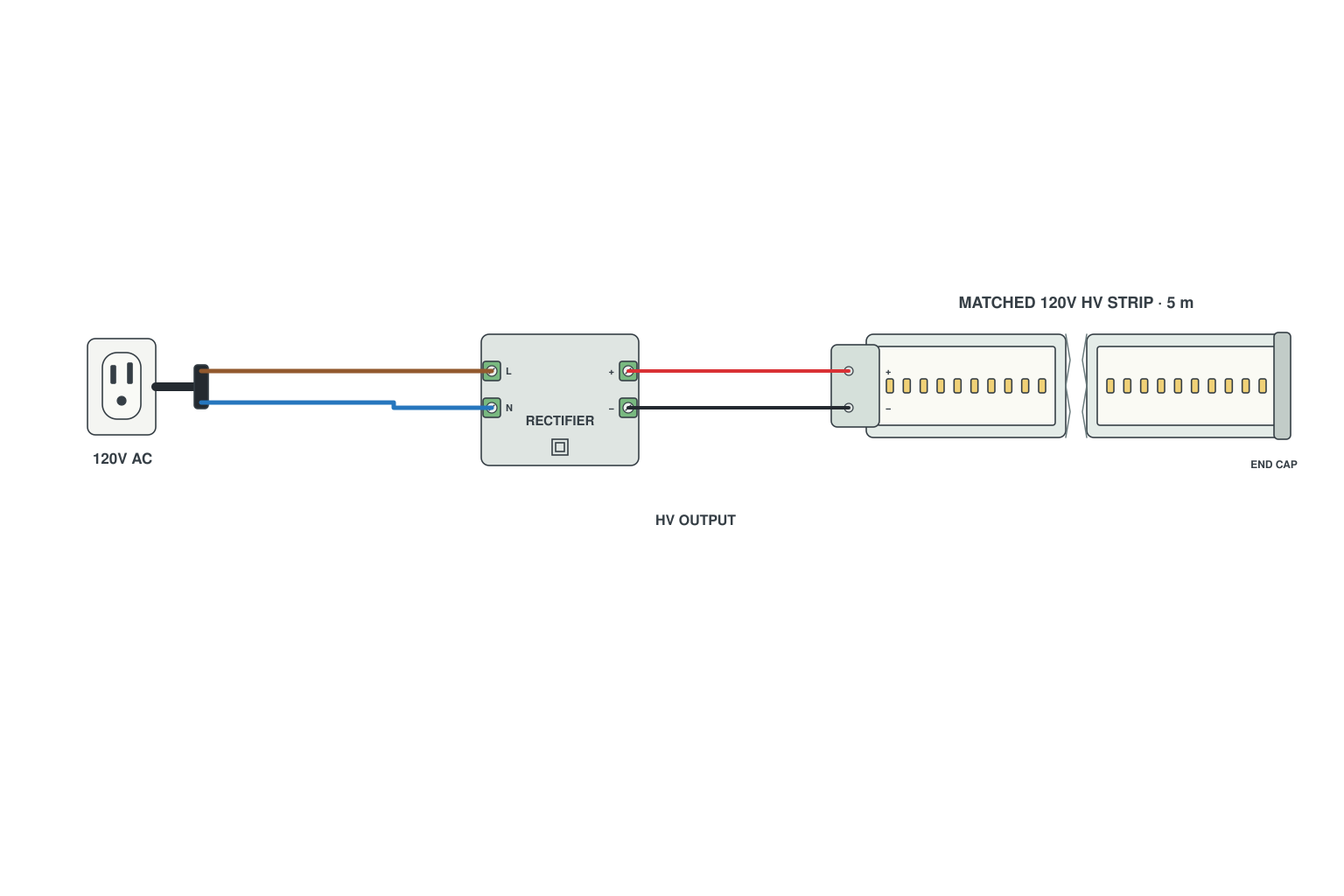
| Electric shock | High voltage LED strips (AC110V, AC220V) are plugged directly into alternating current. | For most projects choose a low voltage 5V, 12V or 24V strip: low voltage is a safe voltage. On a 110V/220V strip, switch off at the socket before touching the strip, and keep the plug end indoors or in a weatherproof box. | Diagram H1 · low vs high voltage |
| Wrong voltage | A power supply that does not match the strip: a 24V adapter on a 12V strip burns it out. | Everything on one circuit must be the same voltage: strip, controller and power supply. | Diagram B2 · connecting to a power supply |
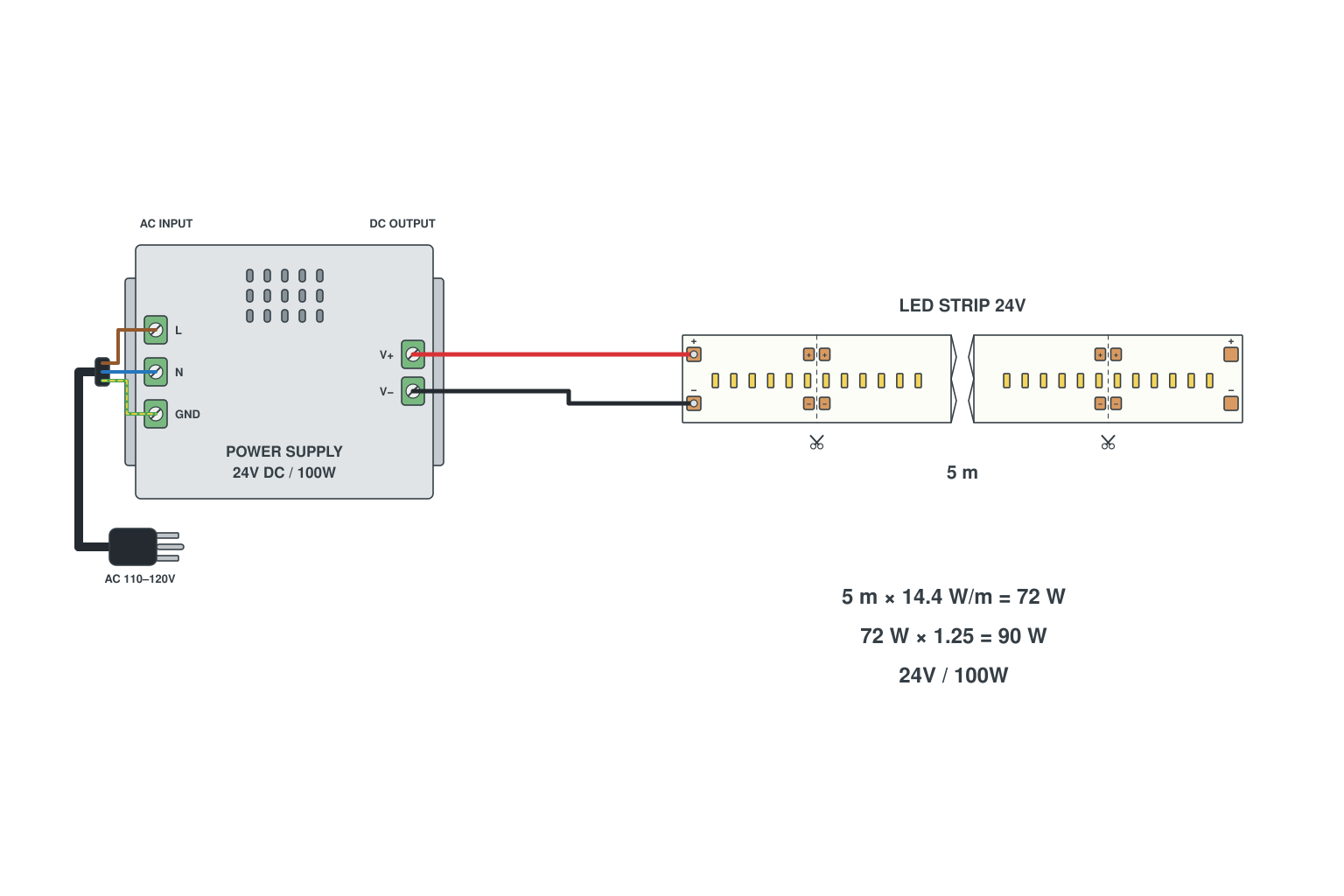
| Overload | Current above the rated working current, a power supply smaller than the strip wattage, or too many strips connected in series. | Keep the 80% rule: the strip uses only 80% of the power supply. Example: 5 m × 14.4 W/m = 72 W, so choose a 100 W supply. Do not connect too many strips in series. | Diagram B3 · power calculation |
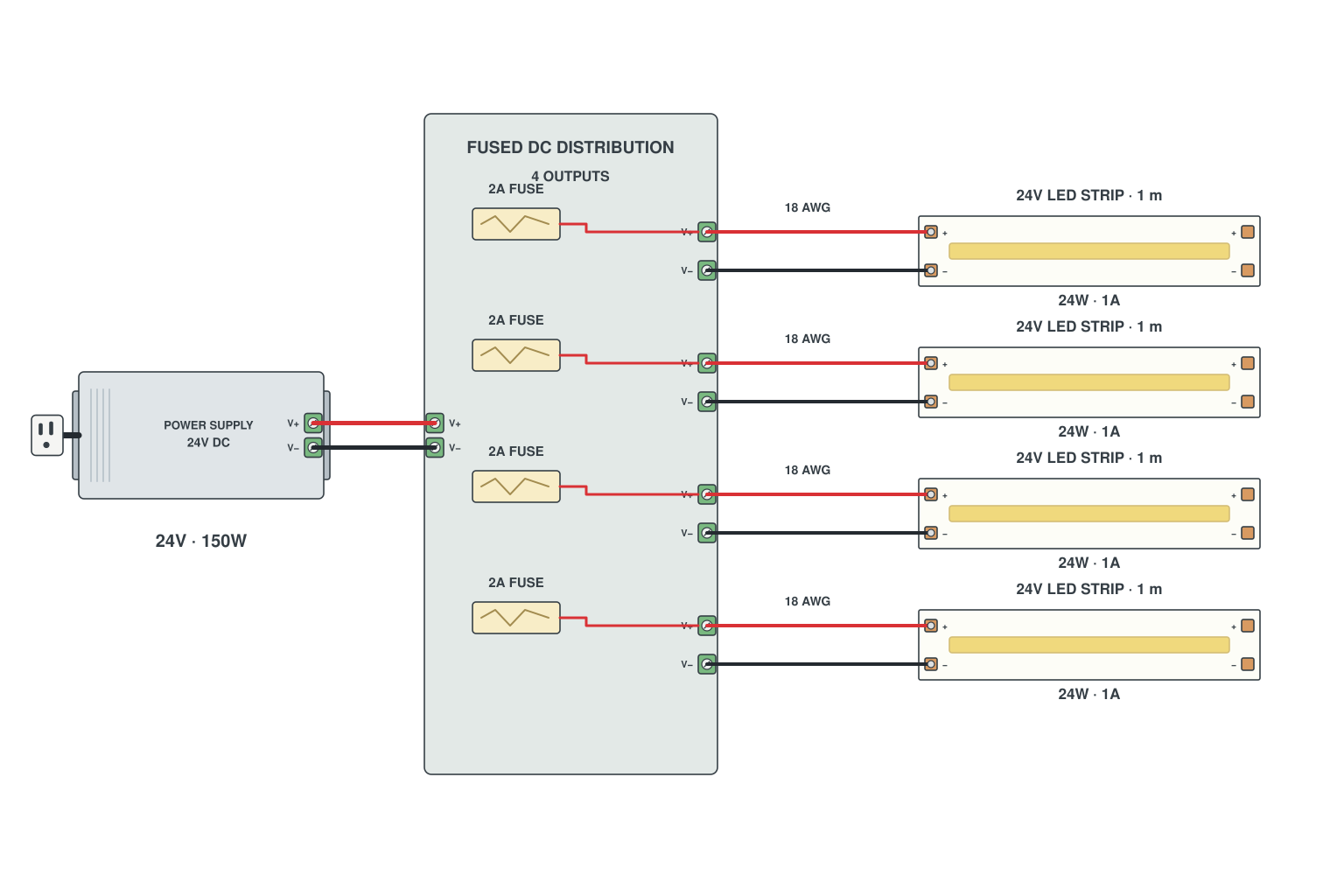
| Short circuit | A fault on the strip or its wiring. | The switching power supply outputs zero for protection. With one supply feeding several runs, give each run its own fuse at about twice its current (a 24 W run at 24V draws 1 A, so a 2 A fuse), and never daisy-chain runs off one fuse. | Diagram S13 |
| Cable too thin | Feed cable between the supply and the strip that cannot carry the current. | Work out the current (watts divided by volts) and pick the gauge from the chart. 22 AWG tops out around 3 A; when in doubt, go one gauge heavier. | Diagram B5 |
| Heat build-up | The strip itself has limited heat dissipation; working and ambient temperature too high. Too much heat can melt the adhesive and the strip can fall off. | Install the strip in an LED aluminum profile, a good heat dissipation tool, and use it within its working temperature of 10°C below zero to 50°C. | Aluminum profile guide · stop overheating |
| Low-quality strip | If the quality of the strip is not good enough, it will overheat. | Choose high-quality LED strip lights and power supplies. At SuperLightingLED, UL/ETL certified products carry a 3-year warranty. | Warranty |
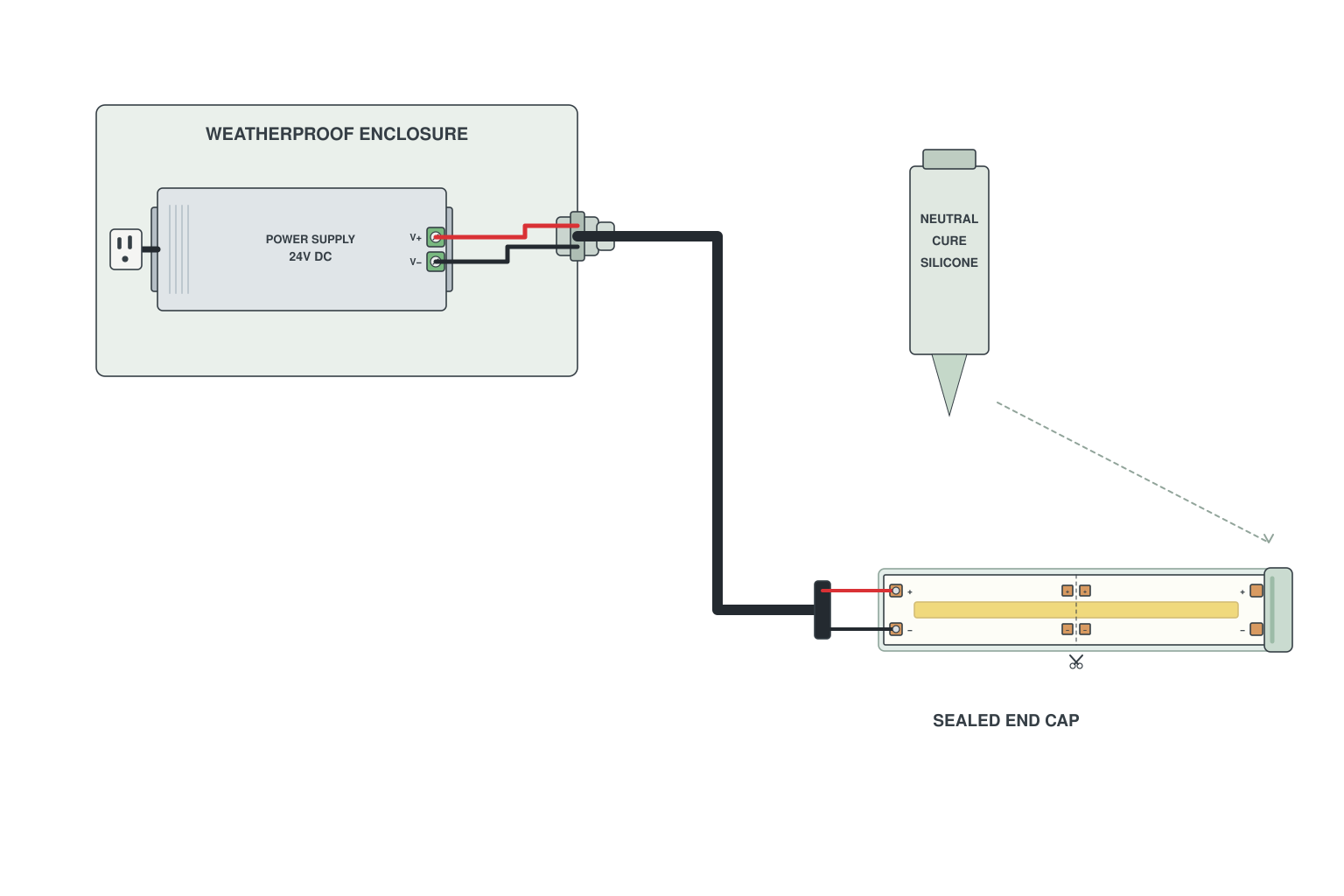
| Water outdoors | Non-waterproof connectors or joints left exposed outdoors; a strip used outside its IP rating. | Seal the end caps with neutral-cure silicone, put connectors and the driver in an IP65 junction box with cable glands, and mount the box above the strip so cables slope away from it. Match the IP rating (table below). | Diagram C6 · choosing connectors |
| Mains wiring | Hardwired power supplies have mains L, N and earth terminals. | Wire L, N and earth exactly as marked. Mains terminals inside a metal supply are for a qualified electrician; a plug-in adapter avoids mains wiring altogether. | Diagram C10 · B4 |
| Children | Curious hands near the strip, the connectors and the power supply. | Install the strip where children cannot reach. | How to install |
Drawn by the SuperLightingLED engineering team; wire colors follow our house convention (red V+, black V-/GND). Click a diagram for the full notes in our LED strip wiring diagrams library.
Wet and outdoor locations: match the IP rating
An IP rating is a specification, not a safety margin. This table is from our warranty page:
| Rating | Designed for | Do not use for |
|---|---|---|
| IP20 | Dry indoor only: coves, cabinets, shelving | Any moisture, kitchens near sinks, bathrooms |
| IP65 | Splashes and rain: covered outdoor, bathrooms | Direct jets, standing water, burial |
| IP67 | Exposed outdoor, brief accidental immersion | Permanent submersion: ponds, pools, fountains |
| IP68 | Continuous submersion to the stated depth | Depths beyond spec; chlorinated or salt water unless confirmed |
A waterproof strip joined with a non-waterproof connector is only as waterproof as the joint. Shop outdoor LED strip lights, IP68 waterproof connectors and DC24V waterproof power supplies.
Are LED strip lights bad for you?
No. Here is what that answer rests on:
- Materials. LED strip lights use non-toxic materials and contain no harmful substances such as the heavy metals lead and mercury.
- Voltage. Most strips run at 5V, 12V or 24V, a safe voltage with no danger to humans. Only a few special high voltage strips (AC110V, AC220V) connect straight to the mains; see low vs high voltage.
- Heat. The working temperature is up to 50°C, far below the temperature that can cause a fire; see can LED strips catch fire.
- Light at night. If a strip keeps you awake, turn it off when you sleep; see sleeping with LED strip lights on.
- Eyes and color. Which color and which white to choose is covered in how to choose the right color for your LED strip lights.
Are led strip lights safe?
Before buying led strip lights, most people have a concern, that is whether the light strip is safe. They are afraid of bringing a bad experience to themselves. So they didn't get the led strip lights. At this point I want to say that your worries are unnecessary, because the use of led light strips is much safer than other large appliances, such as your refrigerator.
Led strip lights use non-toxic materials, do not contain harmful substances, such as heavy metals the lead and mercury, and will not harm human health. Some metal elements that are harmful to human health can induce diseases and even cause death.
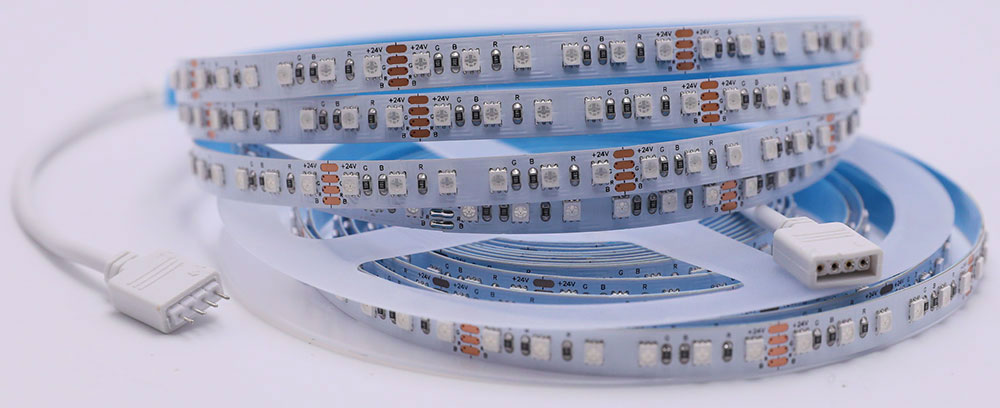
Most led rope lights are used at low voltage like 5V tape lights, 12V led strips or 24V led light strips, except for a few special high-voltage light strips such as AC110V high voltage led strips or AC220V high voltage led strip lights.
Low voltage is a safe voltage, which can be used in various occasions without any danger to humans. We have all heard of incidents of high-voltage injuries, such as, on a thunder and rainy day, do not approach high-voltage routes, but we have not heard of incidents of low-voltage injuries.
*High voltage led light strip is directly plugged into alternating current.
The power supply for led striping lights is generally constant current(means that the led brightness and led color is at the same in one long led lighting strip) and constant voltage(there is the led voltage drop when running ultra long led strip), and the energy is greatly limited.
If the light strip is over-current or short-circuited, the switching power supply will output zero for protection. Without energy, naturally there will be no heat and no fire will be caused.
A series-connected led light strip will be burnt out quickly under the action of high current. As long as one LED is burned out, the remaining series-connected LED particles will also be extinguished due to an open circuit.
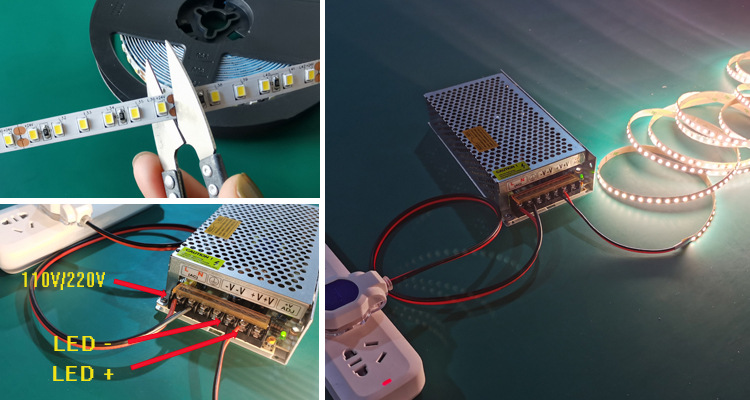
*24V LED strip connects to the transformer and then plugs in the alternating current.
In summary, it is safe for people to use led strip lights, and it will not cause harm to the human body. Feel free to use the led strip lights. When you have it, you can truly see the feeling it brings to you.
►Knowledge about led light strip wiring diagram, how to wire led strip lights:
How to wire single color led strip lights?
How to wire tunable white/CCT led strip lights?
How to wire RGB color changing led strip lights?
How to wire RGBCCT led strip lights?
How to wire addressable led strips?
Low voltage vs high voltage LED strips: which is safer?
Both are sold as “LED strip lights”, but they are powered very differently:
| Low voltage: 5V, 12V, 24V | High voltage: AC110V, AC220V | |
|---|---|---|
| How it is powered | Through a power supply (transformer) that plugs into the alternating current | Plugged directly into alternating current through an inline rectifier and mains plug; no separate power supply |
| Safety | A safe voltage that can be used in various occasions without danger to humans | Mains voltage: switch off at the socket before touching the strip; keep the plug end indoors or in a weatherproof box |
| Where you can cut it | At the cut mark: every 3 LEDs on 12V, every 6 LEDs on 24V | Only at the 50 cm or 100 cm mark printed on the strip |
| Run from one feed point | 12V up to 5 m, 24V up to 10 m | Up to 50 m (some types 100 m) |
| Good for | Shelves, display cases, rooms; 12V for short runs, boats, campers and anything fed from a battery | Gardens, rooflines, fences, building outlines, warehouse eaves: long runs with no low-voltage supply |
Our advice. Low voltage is the safe voltage, so for most projects we recommend a 12V or 24V strip: single color LED strip lights. High voltage strips earn their place on long outdoor runs; see high voltage RGB LED strips and high voltage LED strip parts. How to cut each type safely: can you cut LED light strips.
Do LED strip lights overheat?
All electronic equipment generates heat during operation, such as our commonly used mobile phones and computers, so as the led strip lights. This heat must be discharged to the outside of the equipment, otherwise the accumulation of heat will cause equipment failure.
►More knowledge about led light overheated:
Why does white LED light turn yellow?
Why are your led strip lights not the same color?
So, do LED light strips get hot?
They produce some heat, like all electronic equipment, but LED components use less energy and generate less heat. A strip works normally from 10°C below zero to 50°C. When a strip runs noticeably hotter, one of these is usually the reason:
- The current is above the rated working current, or the power supply is too small for the strip (the 80% rule).
- Too many strips are connected in series.
- The strip has no heat path: no aluminum profile, or it is sealed into a closed recess.
- The ambient temperature is too high, or the strip is of low quality.
Each one has a fix in the next section.
How do you stop LED strips from overheating?
For led strip lights, if you connected multiple light strips in series, It causes circuit overload. The current is too large, exceed the rated working current, and generates a lot of heat. Excessive heat will affect the service life of the led tape lights.
To improve led lighting lifespan, led power must be limited. Regarding the power of the led strips, there is an eternal rule, the 80% rule. The led strip power only uses 80% of the power supply. When you are connecting led strip lights in series, do not connect too many light strips.
Another way is to strengthen heat dissipation. Due to the limited heat dissipation of the light strip itself, you can choose led aluminum profile to install the led strip lights. It is a good heat dissipation tool.

*COB led strip is installed in the led aluminum channel. Click the picture to know more.
The quality of light strips on the market varies from good to bad. If the quality of the light strip is not good enough, or very low quality, it will cause the light strip to overheat. LED lights normally do not burn out over time like incandescent bulbs. And LED components use less energy and generate less heat.
However, as the light strip ages, the high temperature resistance of the strip will become worse.
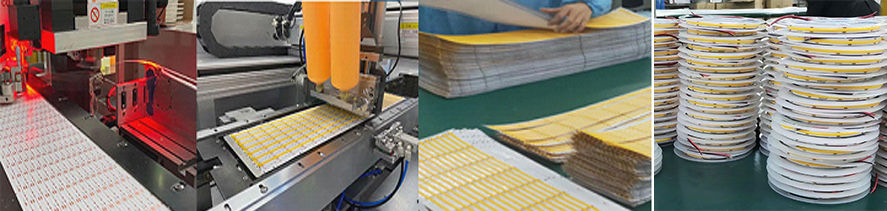
*COB led production process. Click the picture to know more.
Led strip light has its own operating temperature. The light strip will work normally within a certain temperature range, which is 10 degree C under zero to 50 degree C, and this temperature is called the working temperature of the light strip. The storage temperature is 40 degree C under zero to 80 degree C.
If the working temperature and ambient temperature are too high, It will melt the adhesive and even cause the light strip to fall off from the installation site. And it is also bad for led strip lights.
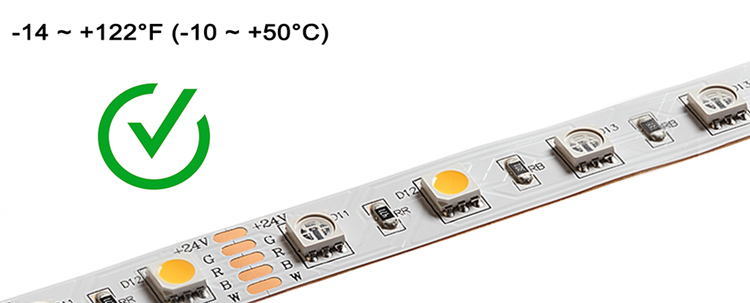
Therefore, if you don’t want your led strip lights to overheat, please pay attention to the following points.
1. The use current should not exceed the rated working current, and the power is suitable. Keep the rule 80% in your mind.
2. Don't connect too many led strips in series.
3. Choose heat dissipation material, like the aluminum profile.
4. Choose high-quality led strip lights.
5. Use led light strips under suitable working temperature and ambient temperature.
►Knowledge about installing led light strips:
How to install led strip lights? What accessories will be needed?
How to install LED sensor stair lights?
Sizing the power supply: a worked example
From our wiring diagram B3: 5 m of strip at 14.4 W/m draws 72 W. Add 20–30% headroom so the supply is not running flat out: 72 W × 1.25 = 90 W, so choose a 100 W supply. At 24V that is 90 W / 24V = 3.75 A, and the controller and the wire must carry that current too.
Full method: how to calculate power for LED strip lights. Choosing the supply itself: how to choose LED strip light power supply. Joining strips without loose joints: how to connect LED strip lights.
For the heat path, see the ultimate guide on aluminum profile for LED strip lighting and our range of LED aluminum profiles:
Can LED strips catch fire?
Without an external flame, the led strip itself will not cause a fire, even though it’s overheated. The working temperature of led strip lights is up to 50 degrees C, although incorrect use will cause the temperature to be higher, it is far below the temperature that can cause a fire.
However, for the safety of you and your family, it is recommended that you install the light strip where the children cannot reach. The fire broke out because the temperature of the combustible material reached the ignition point. The important point to note here is that the temperature is too high.
We must pay attention to any factors that mentioned above, current, voltage, power, the number of connecting led strip lights, quality, heat dissipation material, working temperature and ambient temperature, that will cause the high temperature of the led strip lights.
What keeps an LED strip installation safe
- The power supply protects itself. If the strip is over-current or short-circuited, the switching power supply outputs zero. Without energy there is no heat.
- Fuses for bigger installs. One supply feeding several runs: one fuse per run, so a short on one strip does not take the whole supply down (diagram S13).
- A correctly sized supply and a heat path. The 80% rule plus an aluminum profile keep the temperature down (diagram B3).
- Sealed joints outdoors. End caps with silicone, connectors in a junction box (diagram C6).
- Out of reach of children. Install the strip where children cannot reach.
Installing for the first time? Follow how to install LED strip lights; it lists the accessories you need.
Do LED strip lights burn out?
Not the way a bulb does. LED lights normally do not burn out over time like incandescent bulbs. As our warranty page explains, LED lifetime is measured as L70: the point at which light output has faded to 70% of day one. The LED does not switch off; it dims so slowly that most people never notice.
What does end a strip early:
- Too much current. A series-connected strip burns out quickly under high current, and once one LED burns out, the rest of that series goes dark because the circuit is open.
- The wrong voltage. A 24V adapter on a 12V strip burns it out (diagram S12).
- Heat. As a working rule in the industry, every ~10°C rise in junction temperature roughly halves usable life.
- Age. As the strip ages, its high temperature resistance becomes worse.
The same strip can last very different lengths of time depending on where it goes. These planning figures are from our warranty page:
| Installation | Ambient | Daily use | Realistic calendar life |
|---|---|---|---|
| Ventilated cove, aluminum channel | ~20°C | 3 hours | 15+ years |
| Retail display, LED aluminum channel, air-conditioned | ~25°C | 12 hours | 10–11 years |
| Sealed plaster recess, no LED aluminum channel | ~40°C | 8 hours | 4–6 years |
| Unventilated outdoor sign, hot climate | ~45°C+ | 8–12 hours | 3–4 years |
These are engineering estimates for planning purposes, not warranty terms. On the warranty side: a section that fails while running inside its rated voltage and current is covered (UL/ETL certified products 3 years, selected brand products such as Meanwell LED drivers 5 years, all other products 1 year), and so is an LED strip that drops noticeably within months. Wrong voltage, or an LED driver without enough headroom for the load, counts as installation damage. Details on our warranty page.
Is it safe to sleep with LED strip lights on?
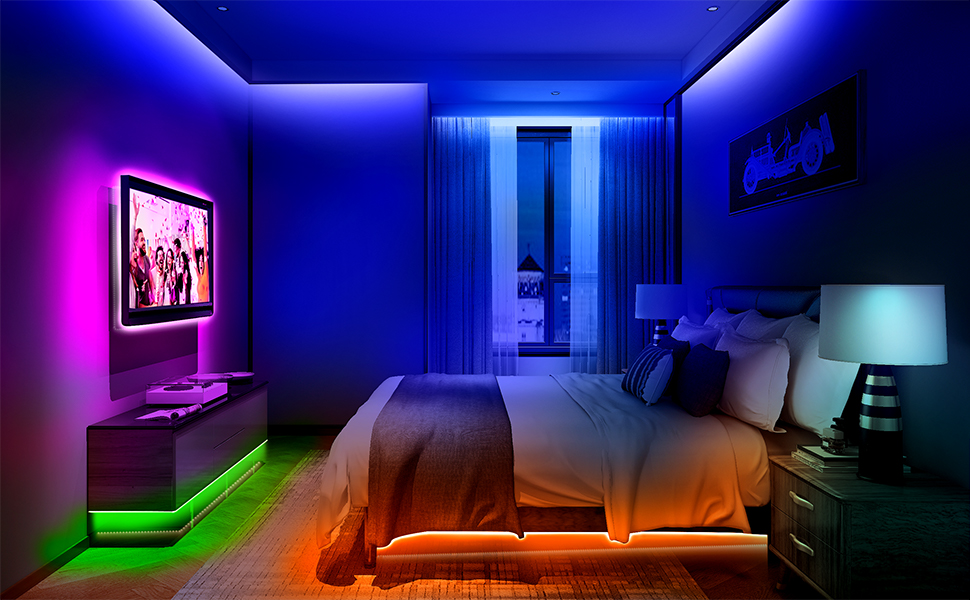
Led strip lights are the same as other lights. When you sleep, you can choose to leave the light on or off, and it all depends on your personal wishes. This will not affect you much, except that you may have to pay a little more for electricity.
Choose whether to turn on the light strip, the influencing factor is whether it will affect your sleep. If you think sleeping with led strip lights on is OK, and it is OK. However, If the light strip prevents you from sleeping well, turn it off. And if you have insomnia or sleep disorders, we recommend that you turn it off when you sleep, or use color led strip lights which is a sleep aid, to give you a good sleeping environment.
►More knowledge of sleep and led lighting:
What is the most relaxing color for LED lights?
What color led light is best for sleeping?
Are led lights bad for your eyes?
Is cool white or warm white better for eyes?
Leaving LED strip lights on overnight
A strip left on at night needs the same things as one left on in the evening: a power supply sized with the 80% rule, a heat path such as an aluminum profile, and a place children cannot reach (see the safety checklist). If you want to keep it on but less bright, add a dimmer between the power supply and the strip for brightness control (diagram S5); shop our single color dimmers. Colors for sleeping and relaxing are covered in how to choose the right color for your LED strip lights.
LED strip light safety FAQ
Are LED strip lights safe?
Yes. Most LED strip lights run at a low voltage (5V, 12V or 24V), which is a safe voltage, and they use non-toxic materials with no heavy metals such as lead and mercury. Keep the load within 80% of the power supply, do not connect too many strips in series, and use an aluminum profile to dissipate heat.
Are LED strip lights bad for you?
No. LED strip lights use non-toxic materials, contain no harmful substances such as lead and mercury, and will not harm human health. If the light keeps you awake at night, turn it off when you sleep.
Can LED strip lights cause a fire?
Without an external flame, the LED strip itself will not cause a fire, even if it is overheated: its working temperature is up to 50 degrees C, far below the temperature that can cause a fire. If the strip is over-current or short-circuited, the switching power supply outputs zero for protection.
Is it OK to sleep with LED strip lights on?
Yes, if the light does not affect your sleep; you may pay a little more for electricity. If the strip prevents you from sleeping well, or you have insomnia or sleep disorders, turn it off when you sleep or use color LED strip lights as a sleep aid.
Do LED light strips get hot?
They produce some heat, like all electronic equipment, but LED components use less energy and generate less heat. A strip works normally from 10 degrees C below zero to 50 degrees C. Too much current, too many strips in series, a power supply that is too small or poor heat dissipation make it run hotter; an aluminum profile helps.
Parts for a safe LED strip installation
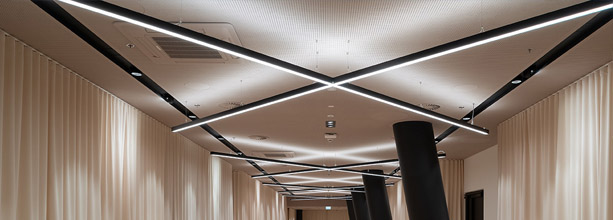 LED Aluminum ProfileA heat path for the strip
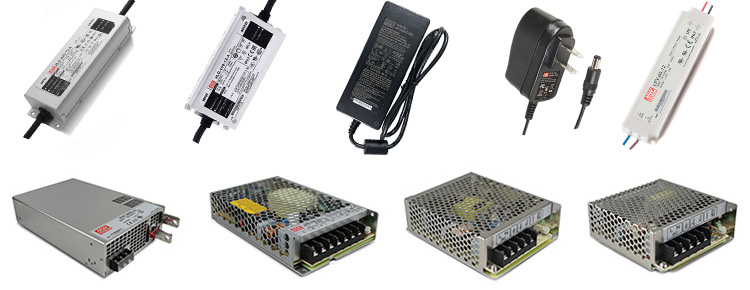 DC12V MW UL-Listed Power SupplyFor 12V strips; size with the 80% rule
 DC24V MW UL-Listed Power SupplyFor 24V strips
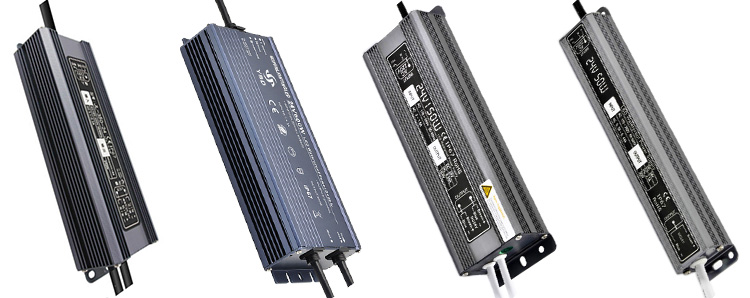 DC24V Waterproof Power SupplyOutdoors and damp rooms
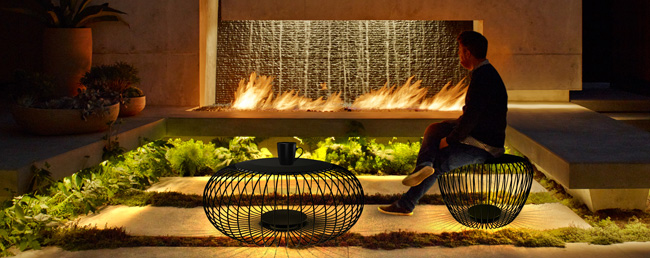 Outdoor LED Strip LightsStrips for wet locations
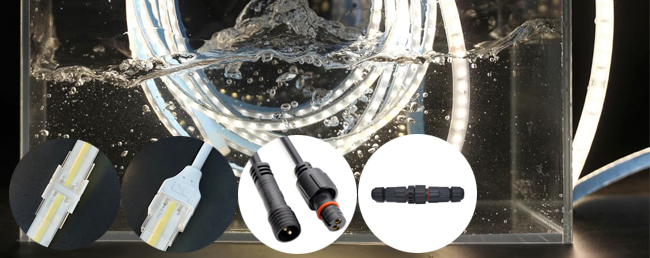 Waterproof IP68 Connector SeriesSealed joints outdoors
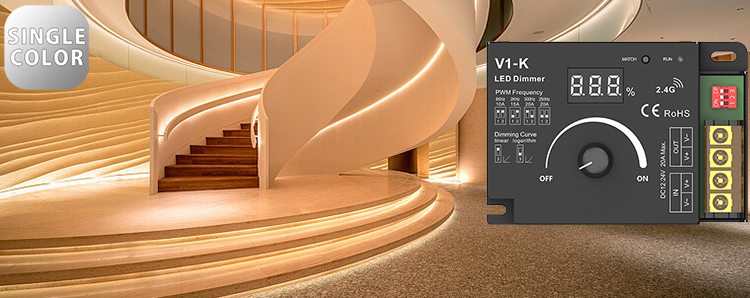 Single Color Dimmer SeriesBrightness control between supply and strip
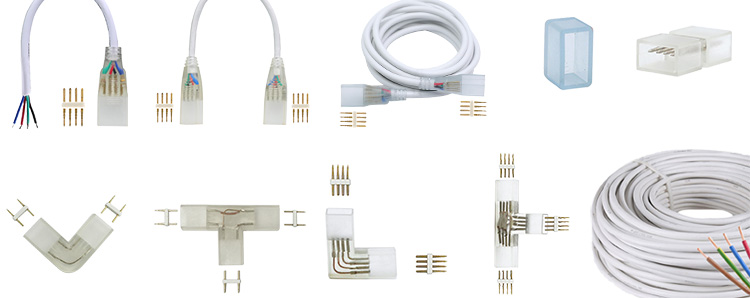 High Voltage LED Lights PartsParts for 110V/220V strips
Send us the strip model, the length and where it will go (a cabinet, a closed recess, a bathroom or outdoors), and the SuperLightingLED team will check the power supply size, fusing, cable and heat path before you order. Already installed and something looks wrong? A photo or a short video is all we need for a free diagnosis. Standard orders such as accessories and controllers ship within 24–48 hours; LED strip orders follow the production lead time shown on the product page. Contact our team