
What is color rendering index?
CRI (color rendering index) is an important method to evaluate the color performance of light sources: the degree of consistency between the color of an object under the measured light source and its color under the reference light source. The color rendering index of sunlight is defined as 100.
- Ra is the general color rendering index: the average of the special color rendering indexes R1–R8. The greater the Ra, the better the color rendering.
- Ra 90–100 is excellent color rendering, for color matching, galleries, museums, shops and restaurants; Ra 80–89 is good.
- For LED strips, the CRI needs to be greater than 80 to protect eyesight, and the CRI of LED strip lights can now reach 95.
CRI is not color temperature: see what is color temperature.
At SuperLightingLED the CRI is one of the first numbers customers ask about when they choose a white LED strip. Below are the CRI values of common light sources, what CRI and Ra mean, a CRI 80 vs 90 vs 95 chart for LED strips, and how to choose.
For those engaged in the lighting industry, CRI is a commonly used term. You often see the CRI value in the data of the light source, but what is its actual meaning? The CRI value of a light source is 95. What information does this convey? Here we will take everyone to fully understand what CRI is.
Color rendering index value of specific lamps
Incandescent lamp: Ra97
Daylight fluorescent lamp: Ra80-94
White fluorescent lamp: Ra75-85
Warm white fluorescent lamp: Ra80-90
Tungsten halogen lamp: Ra95-99
High-voltage mercury lamp: Ra22-51
High-voltage sodium lamp: Ra20-30
Metal halide lamp: Ra60-65
Sodium thallium indium lamp: Ra60-65
Dysprosium lamp: Ra85 above
What is the CRI benchmark?
The benchmark is the reference light source. The color rendering index of sunlight is defined as 100, and incandescent lamps are very close to sunlight, so they are regarded as an ideal reference light source (Ra97 in the list above; tungsten halogen lamps reach Ra95–99). The CRI of a light source is not measured by eye: it is calculated by comparing the light source spectrum with the spectrum of the color samples (see how to find CRI value).
Where LED strips sit against that benchmark: the CRI value of LED strip lights can reach 95; CRI 85 is the universal CRI with the highest brightness and good quality, and the most common on the market; and for eyesight the CRI of an LED strip needs to be greater than 80.
What is CRI in led lights?
CRI(color rendering index) is an important method to evaluate the color performance of light sources. It is to quantitatively evaluate the color rendering of the light source and is the degree of consistency between the color of the object under the measured light source and the color of the object under the reference light source.
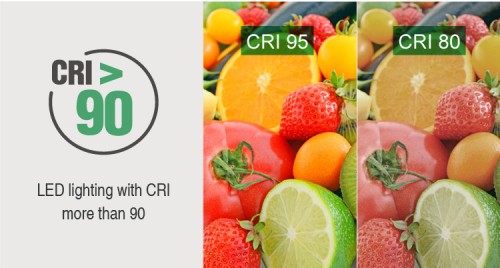
The light source with high color rendering can reproduce the color better, and the color we see is closer to the natural primary color, that is, the color under the sunlight. The light source with low color rendering has poor color reproduction, and the color deviation we see is also large.
As the light source, the led strip lights with CRI≥90 emits a soft and comfortable light like the morning sun, reduces visual fatigue, makes the field of vision clearer, and the image is more three-dimensional. It brings users a better lighting experience.
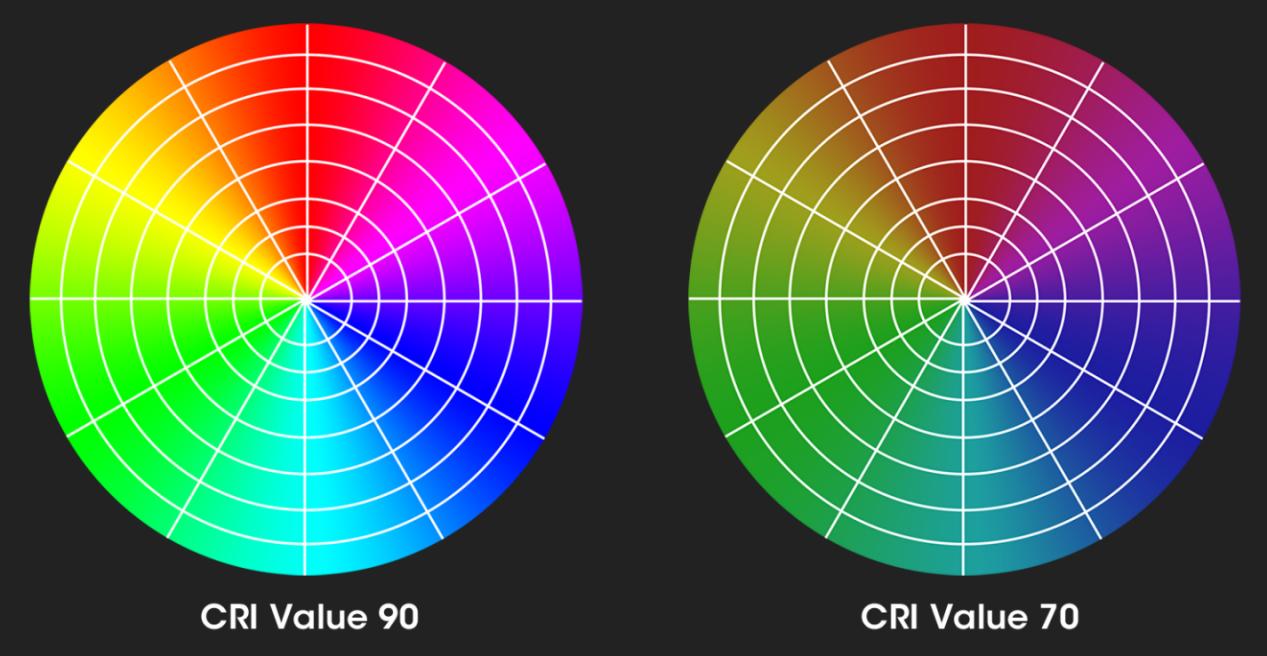
CRI tells you how truly a light shows the colors of the things it lights. How warm or cool the white itself looks is a different number, the color temperature in Kelvin: see what is color temperature, and the color difference between warm white, pure white and cool white for the three common whites side by side.
What is the difference between CRI and Ra?
The establishment of the CRI metric standard is not far away. The original purpose of this standard was to use it to describe the color rendering of fluorescent lamps that began to be used extensively in the 1960s and to help users understand that fluorescent lamps with linear spectral distributions can be applied on which occasions.
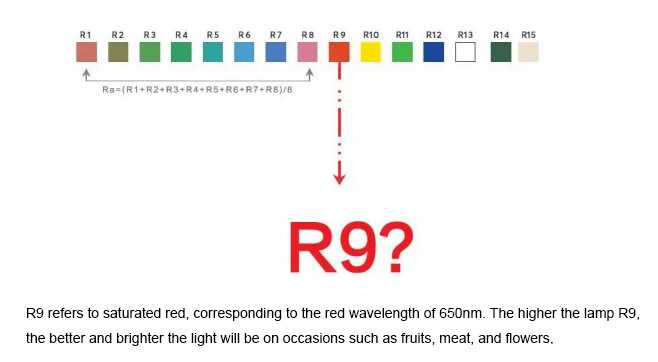
CRI has 15 test colors that also called standard color samples. Use R1-R15 to represent the color rendering index of the light source for these 15 colors.
Numbers 1-8 are 8 natural colors, selected from the Munsell color scale, including various representative colors, and they have medium chroma and lightness.
Numbers 9-15 are 7 test colors, including red, yellow, green, and blue with higher chroma, skin color of young European and American women, the skin color of young Chinese women, and leaf green.

The special color rendering index (Ri) is the color rendering index of the light source for a selected test color sample.
The general color rendering index (Ra) is the average value of the special color rendering index of the 8 colors of the light source pair numbered 1-8. Usually we use the general color rendering index to characterize the color rendering of the light source. The greater the Ra, the better the color rendering of the light source.
Different light sources have different special color rendering indexes for the same test color, and Ra is also different. And the same light source has different special color rendering indexes for different test colors.
CRI 80 vs 90 vs 95+: where each fits
The CRI (Ra) chart further down this page, regrouped by the numbers you see on LED strip specifications:
| CRI (Ra) | Color rendering | Where it fits | On LED strips |
|---|---|---|---|
| Below 80 | Normal (Ra 60–79) or poor (below 60) | General factory operations, control rooms, office and study (Ra 60–79); heavy industry, warehouses and outdoor roads (below 60) | Not recommended: to protect eyesight, the CRI of an LED strip needs to be greater than 80 |
| CRI 80–89 | Good | Places that require correct color judgment: printing, painting, fiber and precision operations; residential, hotel and restaurant | CRI 85 is the universal CRI with the highest brightness and good quality, and the most common on the market |
| CRI 90+ | Excellent (Ra 90–100) | Places that require precise color contrast: color matching, color inspection, art galleries, museums, supermarkets, shops, restaurants | Soft, comfortable light that reduces visual fatigue. The higher the CRI, the lower the brightness: for CRI 90 and bright light, choose constant current LED strips |
| CRI 95+ | Excellent, close to 100 | The same places; the closer the value is to 100, the more faithful the color | The CRI of LED strip lights can reach 95; sunlight is 100 |
Beyond Ra. A high Ra is the first step. Where one color matters most, also check the special color rendering index: R9 for red, such as meat in supermarkets and shops, and R15 for skin color in studios (see how to choose the right CRI).
How to choose the right CRI when buying led strip lights?
The color rendering index of sunlight is defined as 100, and the color rendering index of incandescent lamps is very close to sunlight, so it is regarded as an ideal reference light source. The theoretical color rendering index of incandescent lamps is 100, but there are many types of incandescent lamps in real life and their applications are different, so their Ra values are not completely consistent. However, due to low light efficiency and insufficient energy saving and environmental protection, it has gradually withdrawn from the stage of history.
Nowadays, the color rendering of led light strips is gradually improving, and the CRI value can reach 95. Because of energy-saving and environmental protection, led strips light are currently more popular light sources.
In order to correctly express the original color of the object, a light source with a high color rendering index must be used. The higher the Ra, the higher the faithfulness to the natural color of the object. The value is close to 100, and the color rendering is the best.
Different application places have different requirements for the faithful color rendering of the light source. If you do not know how to choose the CRI for your led lighting, you can take the chart below into consideration.
Ra 90-100: Excellent color rendering. Places that require precise color contrast---color matching, color inspection, art gallery, museums, supermarkets, shops, restaurants, etc. Ra 80-89: Good color rendering. Places that require correct color judgment---factory for printing, painting, fiber and precision operations. Residential, hotel, and restaurant. Ra 60-79: Normal color rendering. Places requiring medium color rendering---factory for general operations such as electromechanical assembly, surface treatment, and control room. Office and study are also allowed. Ra 40-59: Poor color rendering. Places with low requirements for color rendering and small color difference---heavy industry factories such as machining, heat treatment, casting, etc., and outdoor streets. Ra 20-39: Poor color rendering. Places with no specific requirements for color rendering---warehouse, build metal warehouse, and outdoor road. |
Choose a specific color rendering index in special scenes such as meat product windows to clearly emphasize specific colors and express better colors. In this case, it is usually necessary to increase the corresponding special color rendering index according to the color of the illuminated object under the premise of ensuring that the Ra meets the requirements.
For example:
1. For the lighting source of meat products in supermarkets and shops, the R9 color rendering index is particularly important. Meat is usually reddish. So a high R9 can make the meat look fresher and more delicious.
2. For studios and other occasions where the skin color needs to be truly reproduced, the R15 index of the lighting source must not be low.
What is the relationship between CRI and brightness?
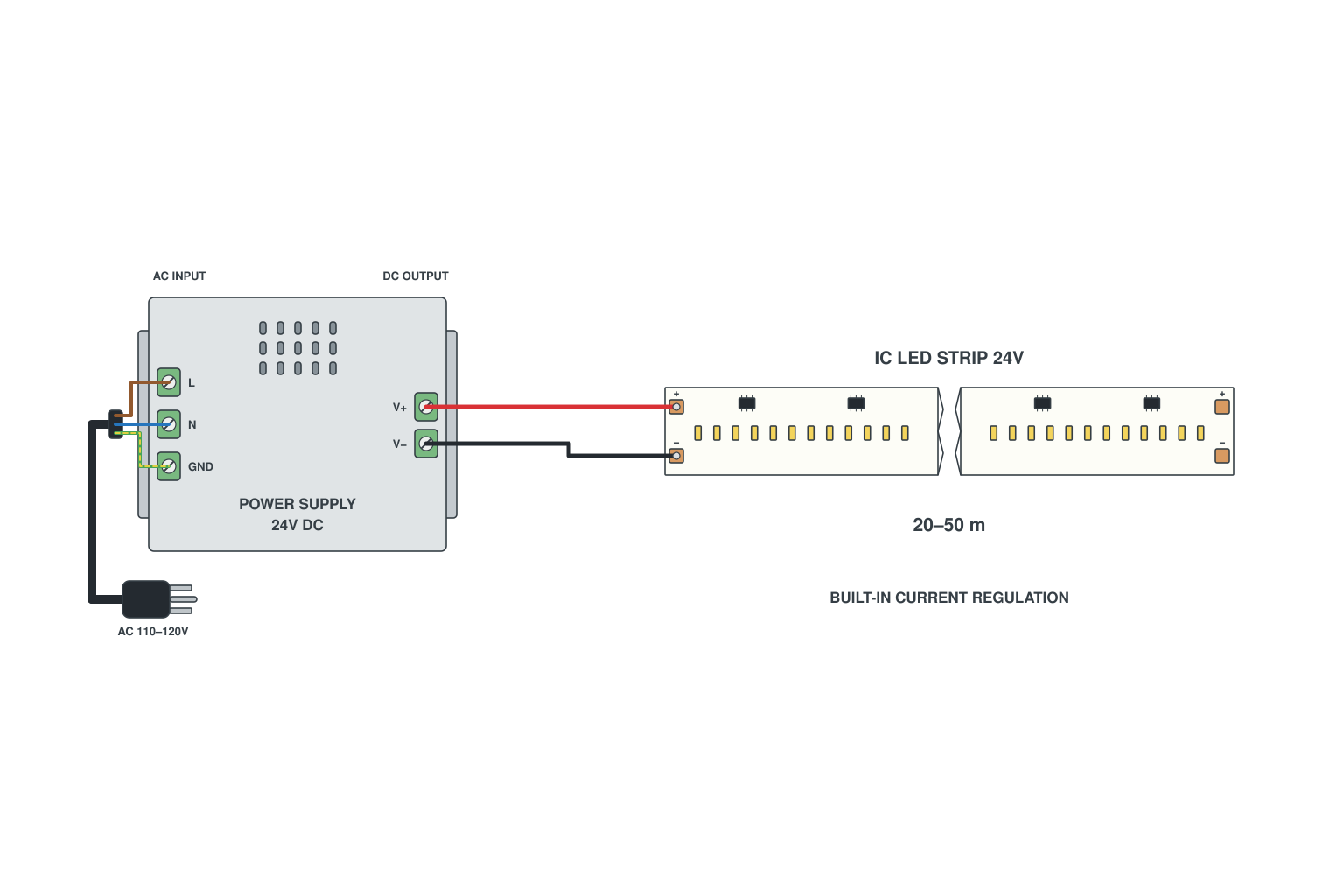
We should pay attention to a problem, that is the higher the CRI, the lower the brightness. At present, the universal CRI with the highest brightness and good quality is 85, which is also the most circulating in the market. If you want 90 high CRI led lighting and have a bright brightness at the same time, we recommend you to choose constant current led strip lights. Constant current led strips is no voltage drop. And it can achieve an ultra-long distance run and ensure that the color and brightness of the light strip keep the same.
Here is how a constant current run is wired. The diagram is drawn by the SuperLightingLED engineering team; wire colors follow our house convention (red V+, black V-/GND). Click it for the full notes in our LED strip wiring diagrams library.
Shop: ultra-long constant current LED strips, high efficiency constant current LED strips, built-in constant current LED strips and LED power supplies.
Is higher CRI better? High CRI VS Low CRI
If it is exposed to a light source with a poor color rendering for a long time, the sensitivity of the cone cells of the human eye will also decrease, and the brain will tend to concentrate more intentionally or unintentionally when distinguishing things, which can easily cause eye fatigue and even cause myopia. And a low CRI will cause color distortion. From the perspective of protecting eyesight, the CRI of the led strip light used needs to be greater than 80.
Different scenes have different requirements for the CRI of the light source. Choose the appropriate CRI value according to your usage scenario.
How to find CRI value?
Although the color samples are carefully specified, and real objects can produce the colors of these color samples, the CRI value is completely derived from calculations. It is very important to understand that it is not necessary to illuminate the real color samples with real light sources. What we have to do is to compare the measured light source spectrum with the spectrum of the formulated color sample, and then calculate the CRI value through mathematical analysis. Therefore, the measurement of CRI value is quantitative and objective. It is by no means just relying on a trained observer to judge which light source has better color rendering.
When you browse led strip products, CRI will be generally indicated in the product specifications. Pay attention to it if you want to choose a great CRI.
Color rendering index FAQ
What does CRI mean?
CRI stands for color rendering index. It is an important method to evaluate the color performance of light sources: the degree of consistency between the color of an object under the measured light source and its color under the reference light source. The higher the CRI, the closer the colors look to their natural color under sunlight.
What is the difference between CRI and Ra?
CRI has 15 test colors, and R1-R15 represent the color rendering index of the light source for each of them. Ra, the general color rendering index, is the average of R1-R8, and it is the number usually used to characterize the color rendering of a light source. The greater the Ra, the better the color rendering.
What is the CRI benchmark?
The color rendering index of sunlight is defined as 100. Incandescent lamps are very close to sunlight, so they are regarded as an ideal reference light source; a common incandescent lamp is Ra97.
Is CRI 90 good for LED strip lights?
Yes. Ra 90-100 is excellent color rendering, for places that require precise color contrast such as color matching, art galleries, museums, shops and restaurants. The higher the CRI, the lower the brightness, so for CRI 90 and bright light choose constant current LED strips.
What CRI do I need for LED strip lights?
To protect eyesight, the CRI of an LED strip needs to be greater than 80; CRI 85 is the most common. Choose Ra 90-100 where color must be precise, and check R9 for red objects such as meat and R15 for skin color in studios.
Shop high CRI LED strips
Pick the CRI band from the chart above, then the strip. The CRI is generally indicated in the product specifications:
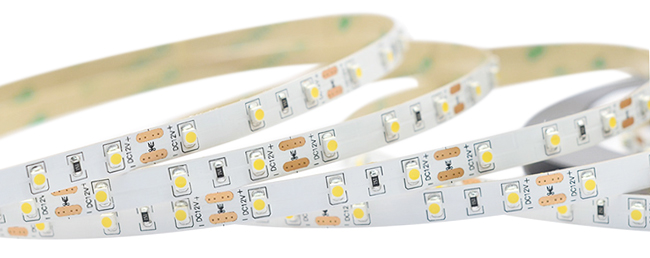 Full Spectrum LED Light StripsFor color matching, galleries, museums and shops
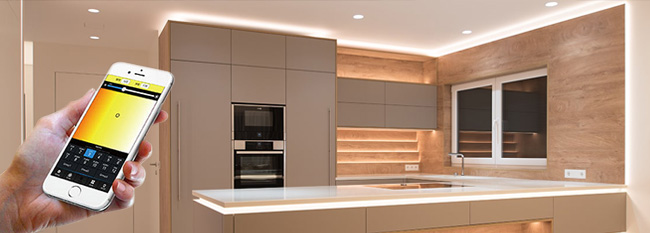 Single Color LED Strip LightsIncludes our LED strip lights with CRI≥90
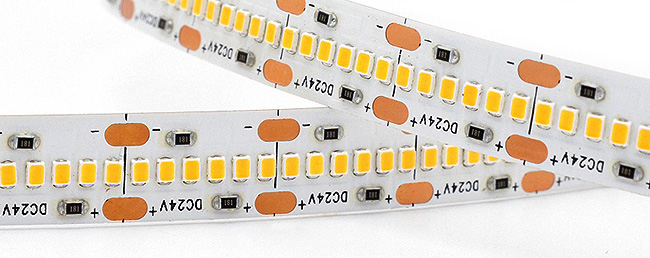 2216 SMD Flexible LED Strip LightsCheck the Ra in the product specifications
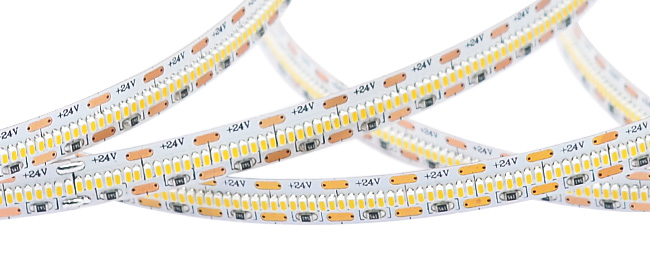 2110 SMD Flexible LED Strip LightsCompare the CRI in the specifications
 Constant Current LED StripsHigh CRI and bright light at the same time
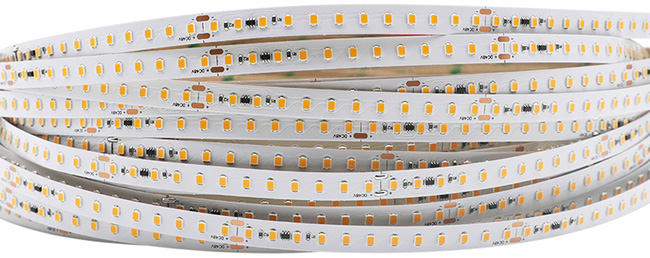 Ultra-long Constant Current LED StripsSame color and brightness over an ultra-long run
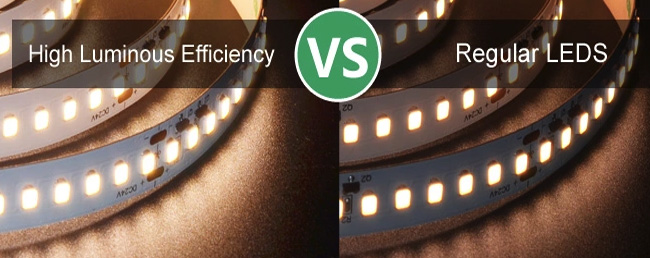 High Efficiency Constant Current LED StripsConstant current, no voltage drop
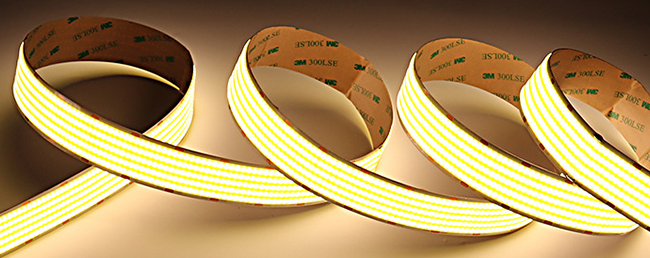 Super Bright COB LED Tape LightCOB tape light; compare CRI and brightness
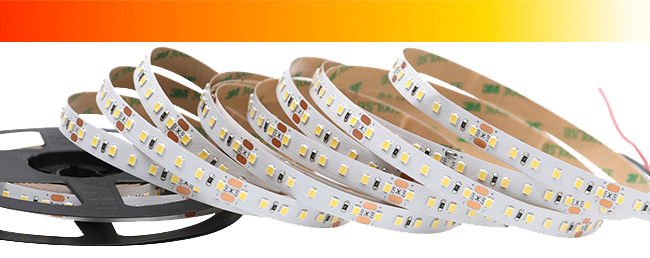 Static White LED Strip LightsPick the color temperature, then the CRI
Tell us what you are lighting, from a shop window to a studio or a kitchen, and the SuperLightingLED team will suggest a CRI and match the strip, controller and power supply. Standard orders such as accessories and controllers ship within 24–48 hours; LED strip orders follow the production lead time shown on the product page. Contact our team
Full Spectrum LED Light StripsFor color matching, galleries, museums and shopsSingle Color LED Strip LightsIncludes our LED strip lights with CRI≥90Constant Current LED StripsHigh CRI and bright light at the same timeUltra-long Constant Current LED StripsSame color and brightness over an ultra-long run