
Is it worth getting led strip lights?
For most indoor and outdoor projects, yes. Here is the short version of the considerations below:
- Pros: LED strip lights are flexible, can be cut to length, stick on with a 3M adhesive backing, save energy (95% of LED energy is converted into light), dim from the darkest to the brightest and last up to 50,000 hours.
- Cons: a strip needs a power supply to work, a color-changing strip also needs a controller, and a single color strip may need a dimmer. Long runs lose voltage: from one feed point, 12 V up to 5 m and 24 V up to 10 m.
- Curves and corners: bend a flexible strip within a certain angle; at a 90-degree corner use an L connector or an S-shaped strip instead of folding it; for curves in a channel use a flexible LED channel.
At SuperLightingLED we sell LED strip lights and every part that goes with them, so “is it worth it?” usually comes with two follow-up questions: what are the downsides, and will the strip go round a curve? Below are the considerations, a pros and cons table, and plain answers to both.
For those who have not bought the LED strip lights but want to start, is it worth getting LED strip lights ? The answer depends on yourself. But here we will provide you some considerations to help you determine if you start with LED strip lights.
Pros and cons of LED strip lights at a glance
Each row pairs an advantage from this guide with the thing to plan for. The details, and the fixes, are in the sections below.
| Topic | Pro | Con / what to plan for |
|---|---|---|
| Bending | Most LED strip lights are flexible and can be bent within a certain angle. | Bend only horizontally and backward along the arrangement direction of the SMD LED. Folding a strip at a corner may harm it; rigid strips cannot be bent at all. How to curve |
| Length | Can be cut: one, three or six LEDs per cutting unit, depending on the strip. | Cut only at the cut mark; the copper pads either side of it are where you reconnect. Cutting guide |
| Installation | 3M adhesive backing: peel it off and stick the strip in place. | Clean the surface first. Sun, rain and cold weaken adhesive on outdoor surfaces, and IP67/IP68 strips are too heavy for adhesive, so fix them with clips and screws. |
| Electricity | Energy saving: a 5 m strip of 5050 SMD LEDs at 60 LEDs per meter is about 60W, and 95% of the energy becomes light. | It needs a power supply to work. Size it by the 80% rule. Power calculator |
| Brightness and color | Dim from the darkest to the brightest; color-changing strips work with a remote. | A color-changing strip needs a controller between strip and power supply; a single color strip may need a dimmer. Choosing a controller |
| Run length | Low voltage and safe. | Voltage drop: from one feed point, 12 V up to 5 m and 24 V up to 10 m. Strip, controller and power supply on one circuit must all be the same voltage. |
| Heat | Only 5% of LED energy is converted into heat. | Heat is still fatal to the strip: do not light a rolled-up strip for a long time, and use an aluminum channel for heat dissipation where heat builds up. Aluminum profile guide |
| Lifespan | Up to 50,000 hours. | Protect naked strips from external force and never install them on a sharp surface. |
| Choice | Single color, tunable white, RGB, RGBW, RGBCCT and addressable strips; white from 2700K to 6500K. | Match the parts to the strip: connectors must fit its pin count and width, as 8 mm, 10 mm and 12 mm connectors are not interchangeable. |
Are led strip lights flexible?
Most led strip lights are flexible. The biggest feature of the flexible strip lights is that it can be bent, which is the biggest difference between flexible strips and rigid strips. When you use led strips, it is not limited to horizontal use. You can bend within a certain angle. It is more adaptable to the installation environment.
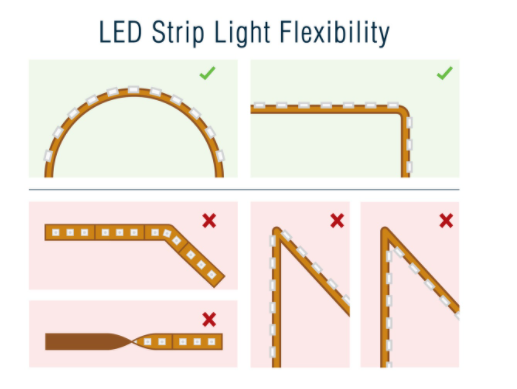
Want to know two types of led strip lights:
Flexible led strip lights VS Rigid led strip lights
How to curve LED strip lights and bend them round corners
Flexible LED strip lights are built on a flexible printed circuit board, which is what makes bending possible. Rigid LED strips cannot be bent at will: it breaks the LED chips, so they only go on flat surfaces (flexible vs rigid LED strips). For a flexible strip, choose the method by the shape you need:
| Shape you need | What to use | Watch out |
|---|---|---|
| A gentle curve | Bend the flexible strip itself, within a certain angle. COB LED strips can be wound and bent at will. | Bend only horizontally and backward along the arrangement direction of the SMD LED (precaution 6 at the end of this page). |
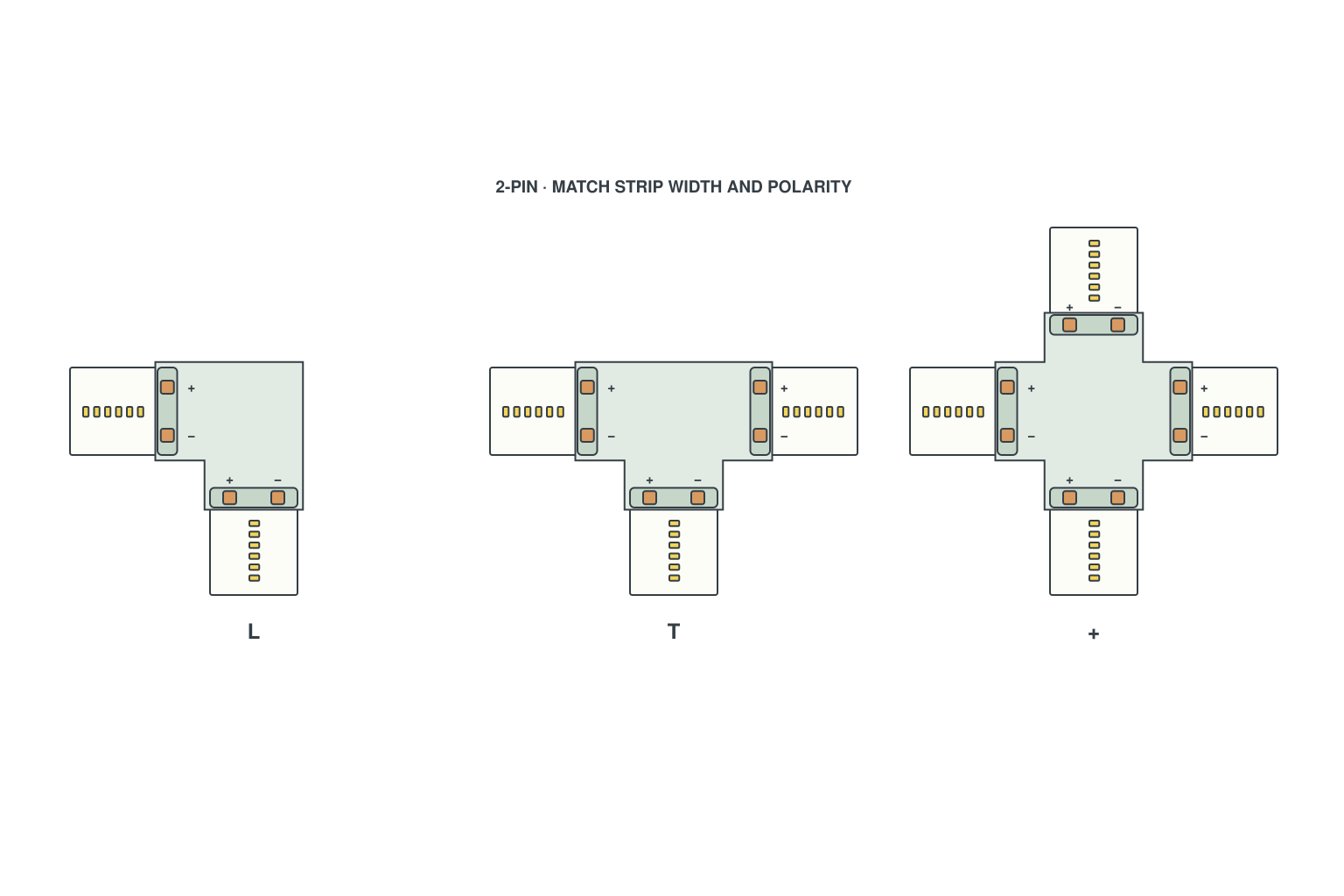
| A 90-degree corner | L corner connector: two clips at 90 degrees, for inside or outside corners. A T connector splits a run in two, a + connector goes four ways. | Do not fold the strip. Corner connectors are for the same strip type only; do not mix voltages. |
| Right angles without cutting | An S-shaped LED strip bends at right angles without cutting and without connectors, for example our S shape RGB bendable LED strip. | For pixel projects there is also a WS2815 bendable addressable zigzag LED strip. |
| A curve inside a channel | Flexible LED channel series: aluminum profiles with a structural design that lets you bend them into different shapes. | Check the inner width of the channel fits your strip. |
| A corner inside a channel | LED strip corner channel for 45-degree light in corners and cabinets. | - |
| Free shapes and signs | LED neon strip lights: more flexible than an aluminum channel and made in various shapes, which is why it is used for advertising signs. | Our flex neon has no cut sign on the tube, so we make it to the length you need. How to make LED neon lights |
This corner diagram is drawn by the SuperLightingLED engineering team; wire colors follow our house convention (red V+, black V-/GND). Click it for the full notes in our LED strip wiring diagrams library.
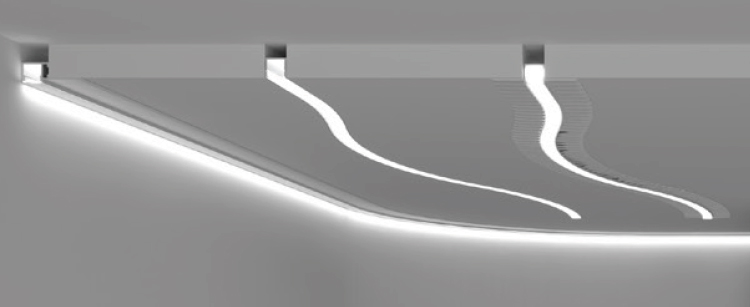 LR Series curved LED tape tracksFlexible LED channel series
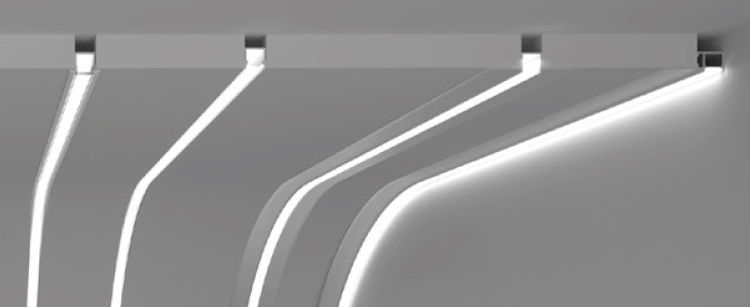 UD Series bendable LED strip tracksFlexible LED channel series
 3D fully bending LED strip railsFlexible LED channel series
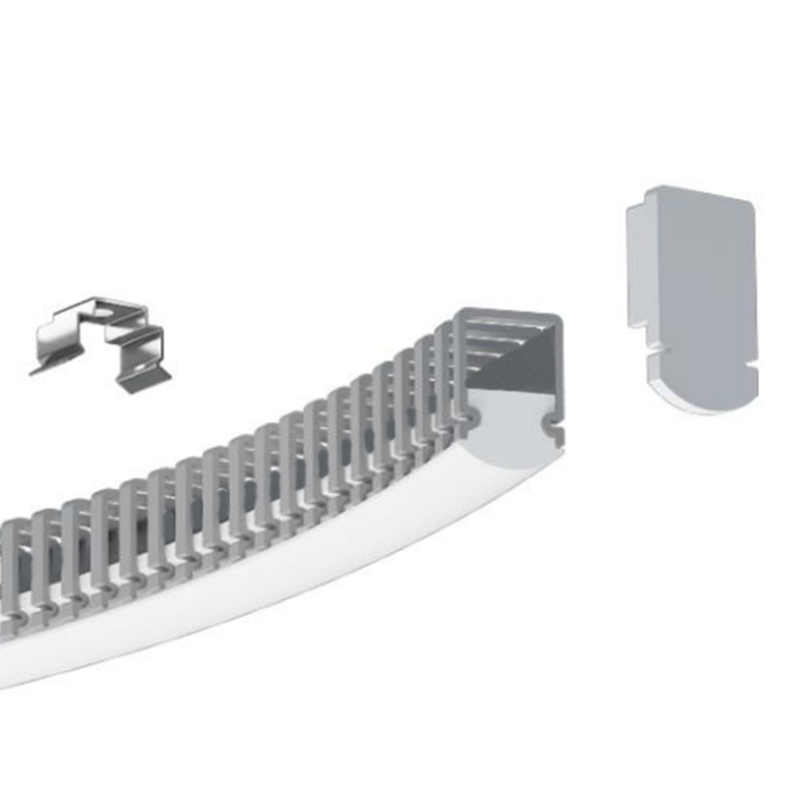 Bendable S shape aluminum profileFor 10 mm flexible LED strips
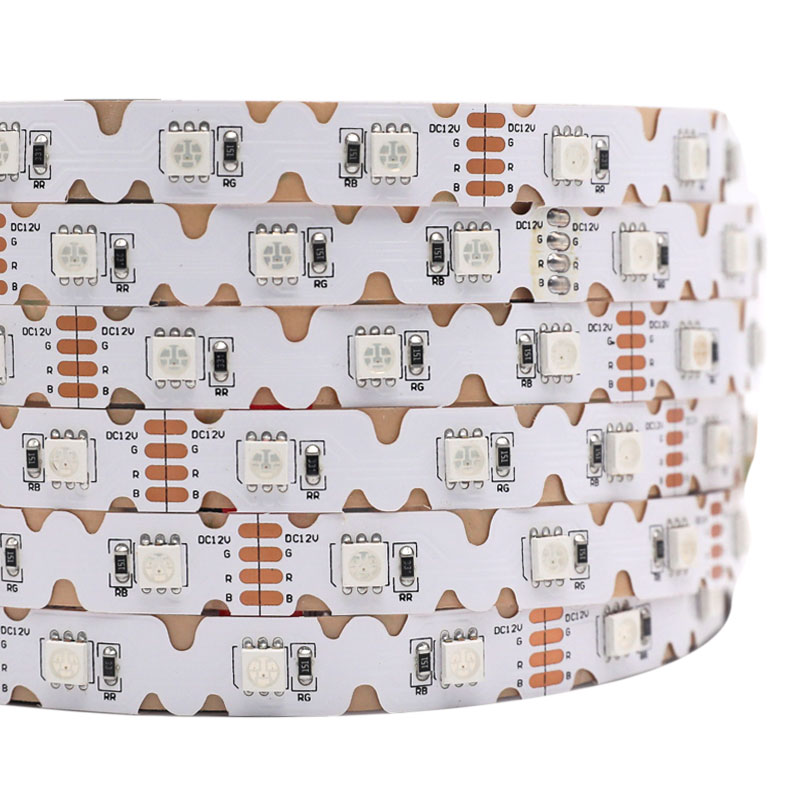 S shape RGB bendable LED stripBends at right angles without cutting
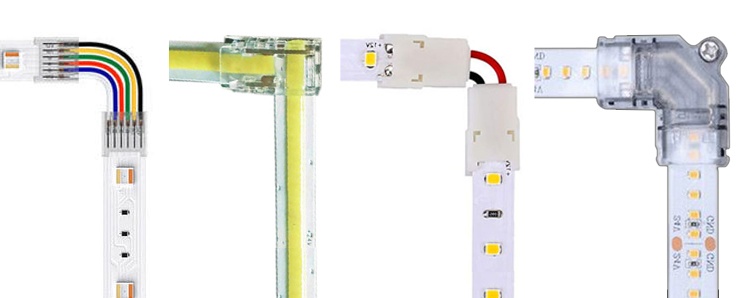 90 degree L connector cornersInstead of folding the strip
More on corners and joints in how to choose LED strip light connectors and how to install LED strip lights.
Can you cut led strip lights?
Many people have the question : can I cut led strip lights ? They don’t know an important feature of led strip lights is that can be cut. Each kind of led strip has different cutting units. One led light, three led lights, and six led lights. The advantage of cut is that, when the length of your project is longer than your led strip, you can according the length to cut and obtain your perfect length.
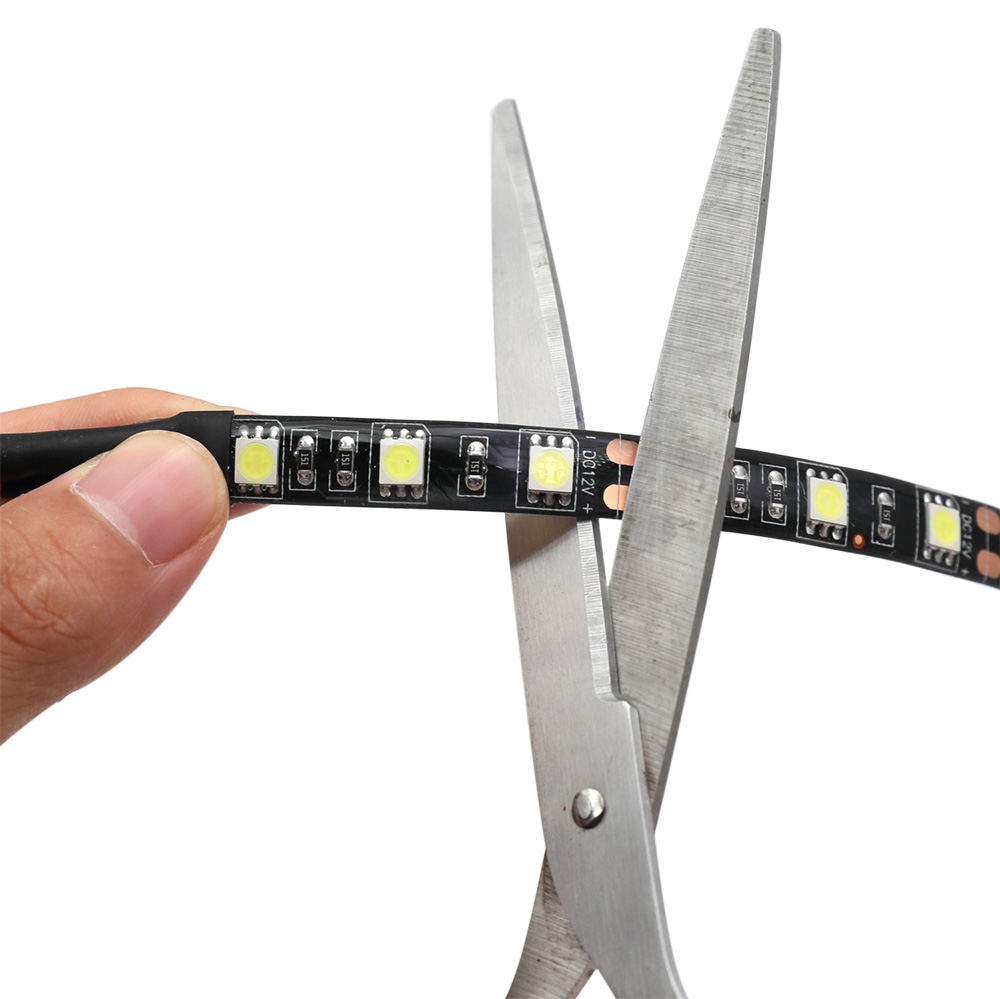
More cutting knowledge:
How to Connect LED Strip Lights?
Are led strip lights easy to install?
Led strip lights usually have a 3M adhesive backing. Compared with other led lights installation, the installation of led strip lights is more simple and convenient. You just only need to tear off the adhesive, and stick it to your installation place. The tape of led strip lights is very sticky. It won't fall off easily if you clean up your installation place.
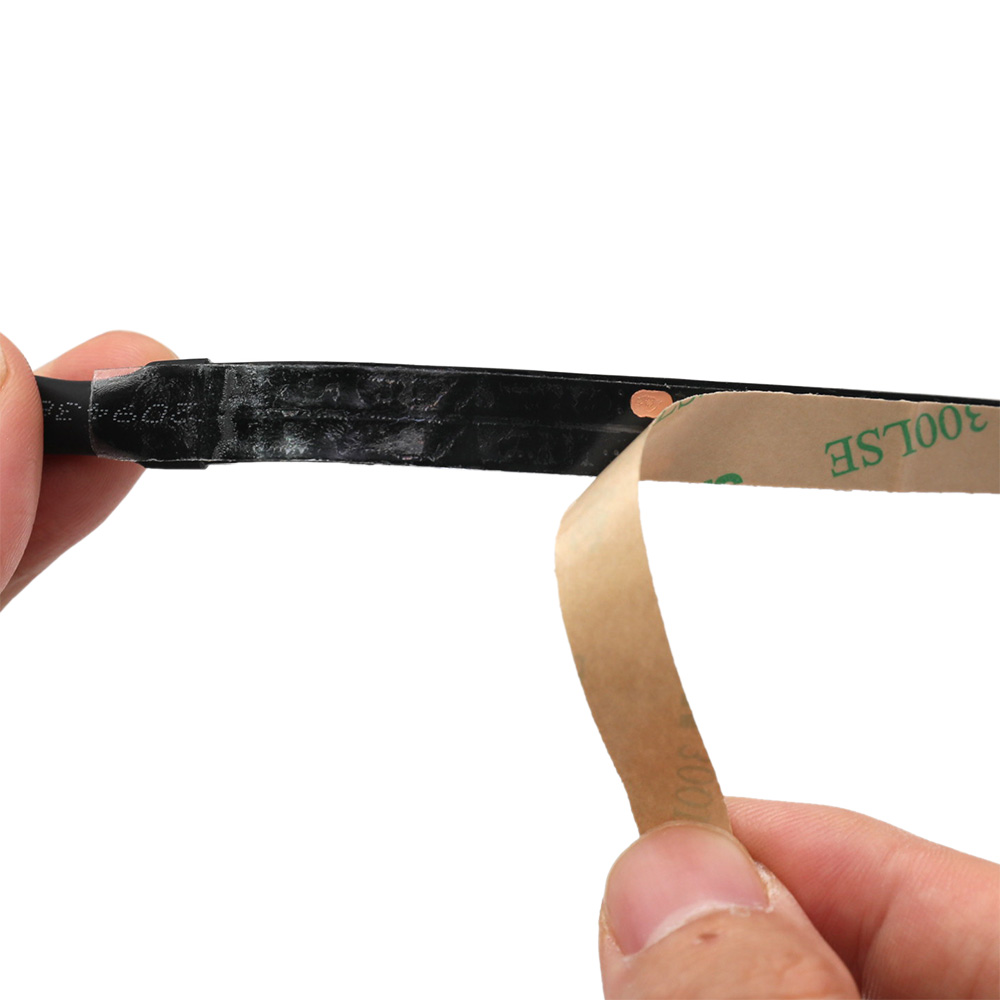
About installing led strips:
How to Install LED Strip Lights?
Do LED strip lights use a lot of electricity?
Why are LED lights energy efficient? Let's take 5050 SMD LED as an example, the wattage of a 5050 SMD LED is about 0.2W. If it has 60 LED lights, and the total wattage of a 5 meters / 16.4 feet led strip is, 0.2*60*5=60W/5 meters.
Compared with large household appliances such as refrigerators and air conditioners, LED strip lights are very energy-saving appliances. LED is made of semiconductor materials into light-emitting diodes to directly convert electrical energy into light energy, and its electro-optical efficiency is very high. 95% of LED energy is converted into light, and only 5% is converted into heat.
Can you adjust brightness of led strip lights?
If you are not satisfied with the brightness of your light, or you want to determine the brightness by your will, starting with led strip lights is a great choice. With a dimmer, you can get different brightness from the darkest to the brightest. You can choose the right brightness in every case. Multi-color led strip lights can adjust brightness as well with a remote.
More knowledge about led control:
How to choose led strip light controllers?
How many colors are in led strip lights?
Most of normal LED lighting lights only have a role of lighting. However, led strip lights not only have various colors but also there are a variety of color temperatures to choose from, which gives you more possibilities to enjoy led strip lights.
There are single color led strip lights, tunable white led strips, RGB led strip lights, RGBW led strip lights, RGBCCT led strip lights, and addressable RGB/RGBW/RGBCCT led strip lights.
| Led strip lights | Color and color temperature |
| Single color led strip lights | Red, green, blue, ice blue, purple, pink, warm white, cool white, daylight, yellow |
| Tunable white led strip lights | warm white(2800K-3200K), natural white(4000K-5000K), daylight white(6000K-6500K) |
| RGB led strip lights | Color changing |
| RGBW led strip lights | RGB color changing and white color |
| RGBCCT led strip lights | RGB Color changing and warm white, cool white |
| Addressable RGB led strip lights | Dream color |
| Addressable RGBW led strip lights | Dream color |
| Addressable RGBCCT led strip lights | Dream color |
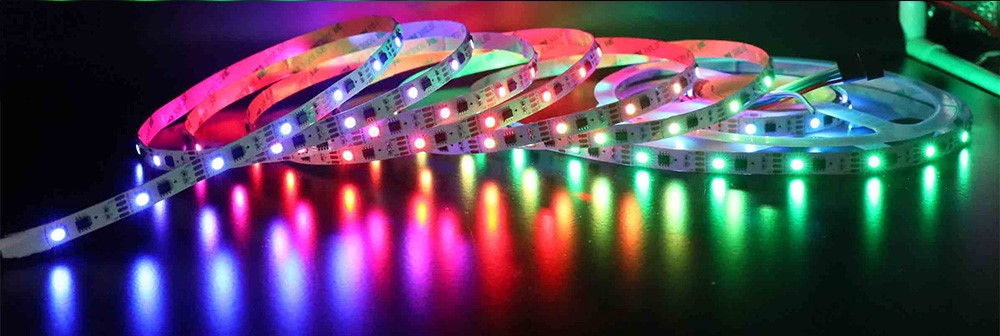
*Addressable dream color led strip light
How to choose the right white light color temperature?
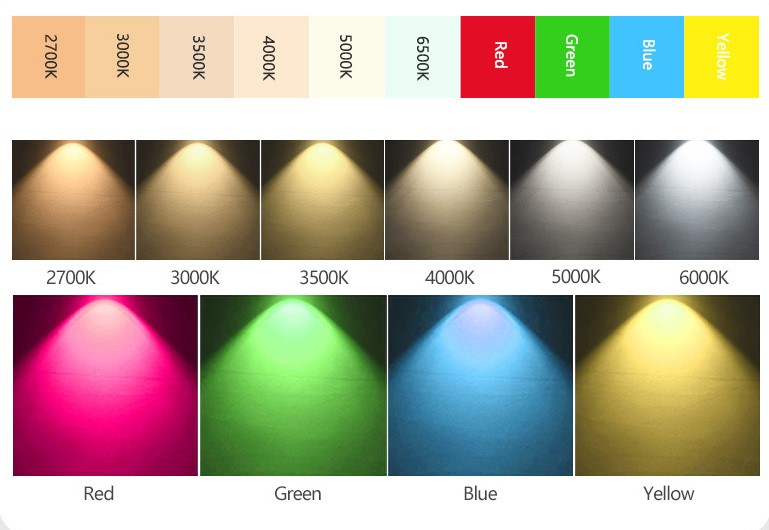
We provide 2700K-6500K white light color temperature to you to choose from warm white, daylight, to cool white. The 2800K-3200K is warm white, and the 6000K-6500K is daylight white.
More led color knowledge:
Color difference between Warm White 2700K, 3000K, 4000K, 6000K Pure White and 7000K Cool White
Are LED Strip Lights sustainable?
In our daily life, paying attention to environmental protection is one of our responsibilities. That means it’s important that whether the materials we use are environmentally friendly. Led strip lights are sustainable in three aspects.
►Led strip lights are more energy-saving, it is 80% more energy efficient than traditional incandescent lamps. Compared with traditional lights, the energy of led strips requires less. Less energy means less consumption. While you are using one incandescent lamp, others can use multiple led strip lights with the same energy.
►Non-toxic materials used in the production of led lights. It won’t be harmful to human health. Some traditional lights are not friendly to environment because of the toxic materials. The use of non-toxic materials greatly improves the possibility of sustainable development.
►Led strip lights have a long lifespan, which can reach to 50,000 hours. The life of the LED is related to the LED chip and drive. LED long life is because it will not cause the problem of filament fusing. During the use of an led strip light, you may have replaced several traditional lamps. This is enough to prove that the led strip lights have a longer service life and more durable than traditional lamps.
Choosing led strip lights is not only a sustainable choice, but also a healthy choice. A good environment is the basis for our survival. And the environment is better, we can live better.
Related article:
What are the pros and cons of led strip lights?
Pros
The pros of led strip lights are numerous. And it is precisely because of these advantages that more and more people are buying led strip lights to use indoor and outdoor, home, company, factory, supermarket, etc. If you want to enjoy led strip lights as well, start now.
• Flexible / can be bent.
• Can be cut.
• Easy to install.
• Energy saving, high efficiency and environment friendly.
• Various color and color temperature to choose.
• Adjustable brightness.
• Long lifespan.
• Low voltage and safe.
Cons
Led strip lights need be connected to power supply if it want to work. And if your led strip light is color changing, it requires to install an led controller between led strips and power supply to control color and adjust brightness with a remote or mobile phone. Although your strip light is single color, it may need a dimmer sometime. Therefore, It may take some cost to prepare a set of led strip lights.
After reading the above content, I believe you should already have the answer whether start with led strip lights. If you have any other question, contact us and we will wholeheartedly answer for you.
What are the disadvantages of LED strip lights?
The list above names one con: the cost of preparing a full set. There are a few more to plan for. As our wiring guide notes, nine out of ten support emails we answer trace back to wrong polarity, a 12 V strip that should have been 24 V, or a power supply that is too small. Here they are, each with the fix:
1. It is a set, not a single product
LED strip lights need a power supply to work. A color-changing strip needs a controller between the strip and the power supply, and a single color strip may need a dimmer. See what goes into the price below.
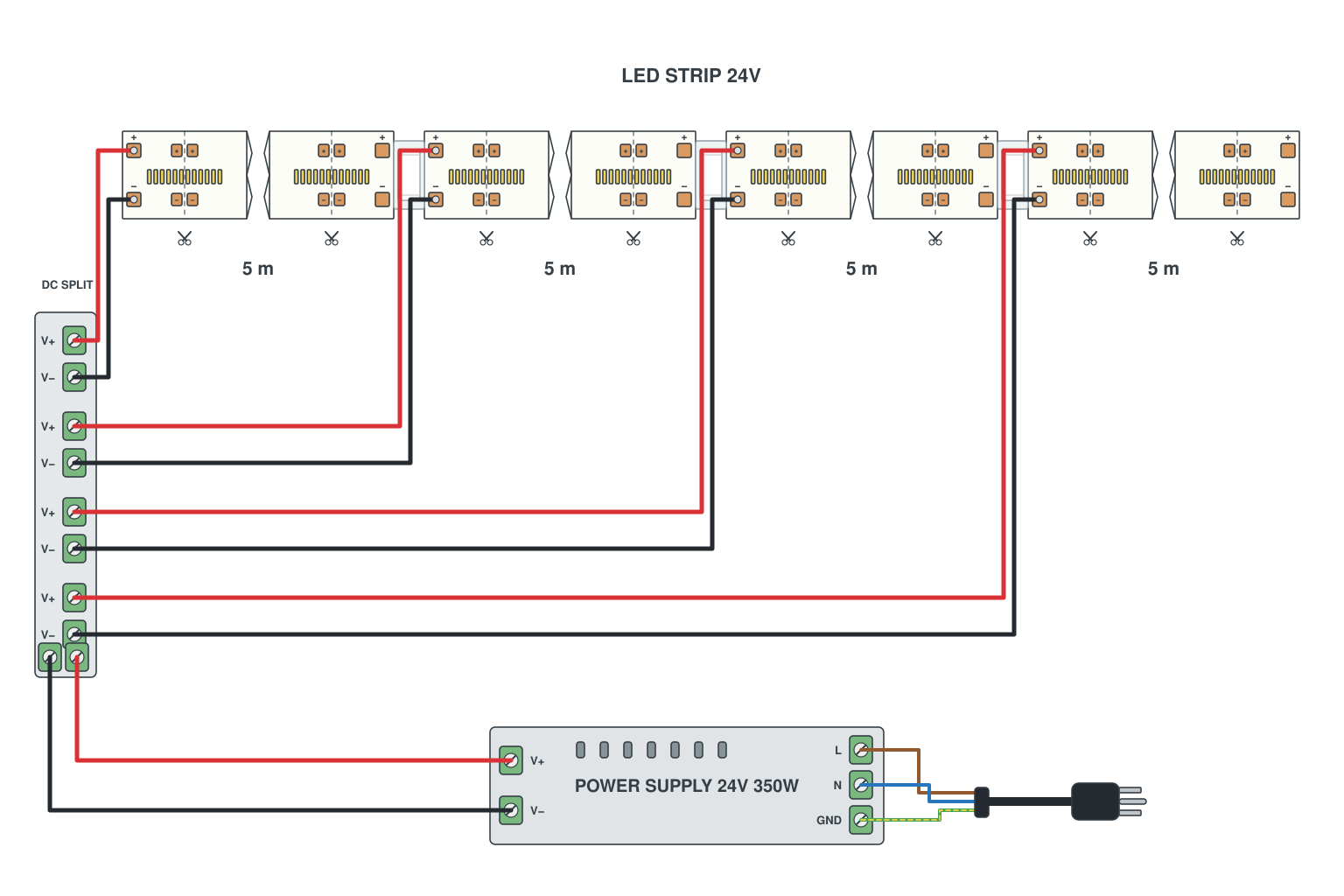
2. Voltage drop on long runs
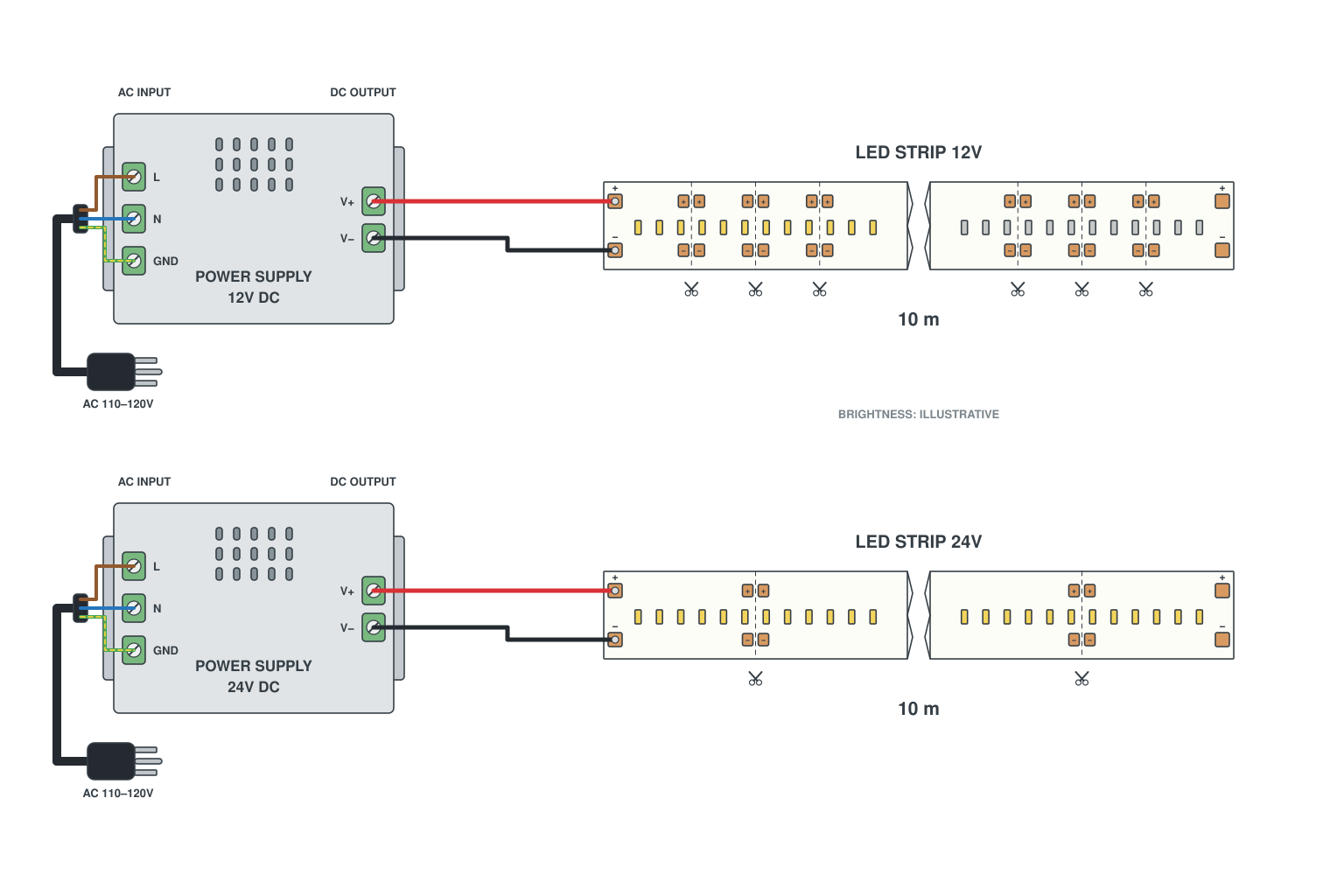
At the same wattage a 24 V strip draws half the current of a 12 V strip, so the copper on the strip loses half the voltage and the far end stays bright. Rule of thumb from one feed point: 12 V up to 5 m, 24 V up to 10 m. Beyond that, split the run into 5 m (12 V) or 10 m (24 V) sections, each with its own feed pair from the supply. 12 V still makes sense for short runs, boats, campers and anything fed from a battery.
3. Adhesive does not last outdoors
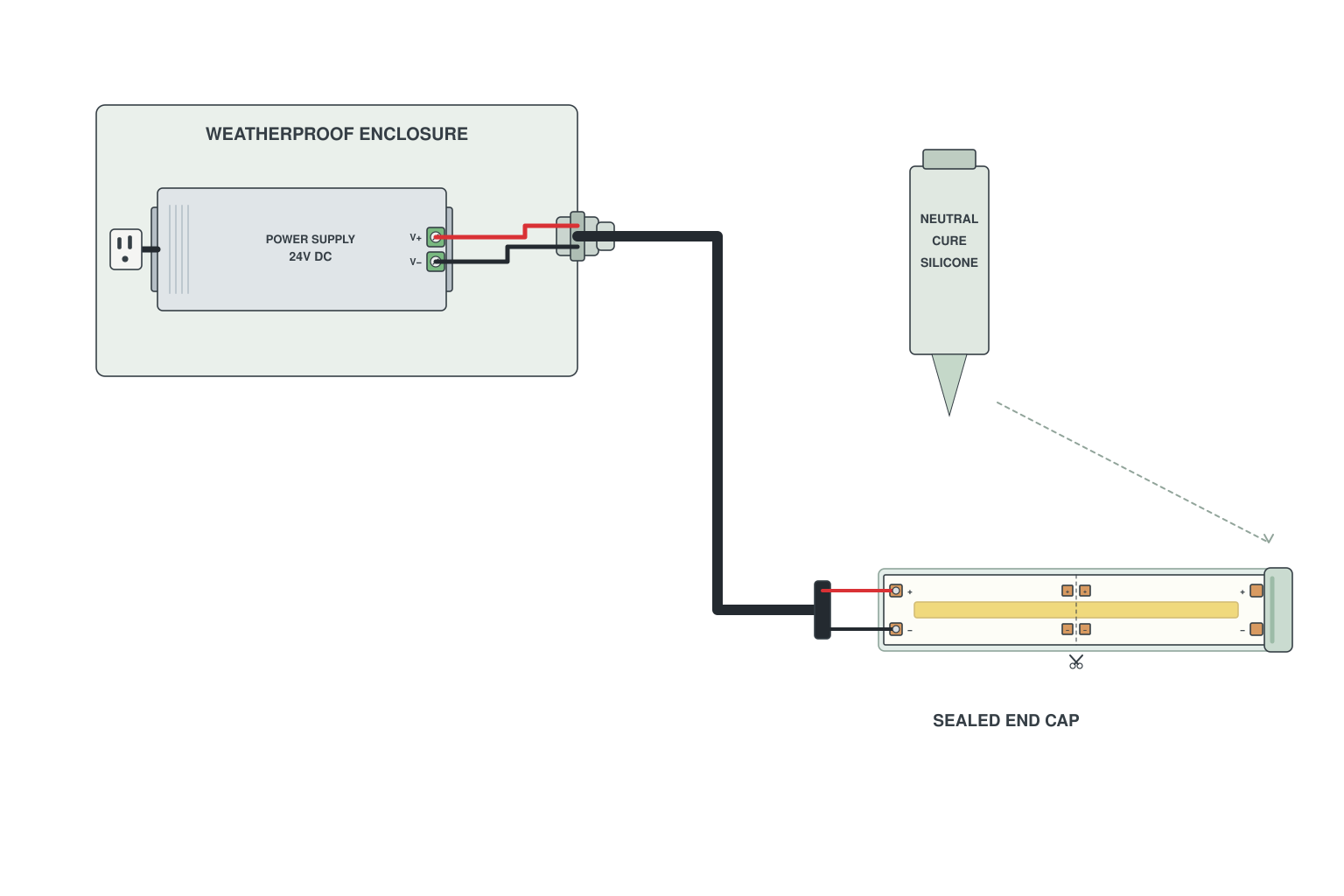
Sun, rain and cold weaken adhesive on outdoor surfaces. Outdoors, use an IP67 water resistant LED strip or IP68 LED strip, fix it with mounting clips and screws rather than adhesive, seal the connections and keep the power supply dry. IP20 strips are for dry indoor spaces only and IP65 suits covered outdoor spots and bathrooms; exposed outdoor runs need IP67, and an aluminum channel does not make a strip waterproof.
4. Heat has to go somewhere
Only 5% of LED energy becomes heat, but heat is fatal to the strip. Do not light a strip for a long time while it is still rolled up, and never size the power supply below the strip wattage: it will overheat and switch itself off. Where heat builds up, we recommend an LED aluminum channel as a heat dissipation channel; it also protects the strip from dust and knocks.
5. Bending has limits
Flexible strips bend within a certain angle only, rigid strips not at all, and folding a strip at a corner may harm it. How to curve LED strip lights shows the ways round a curve or a corner.
6. Wiring must be right
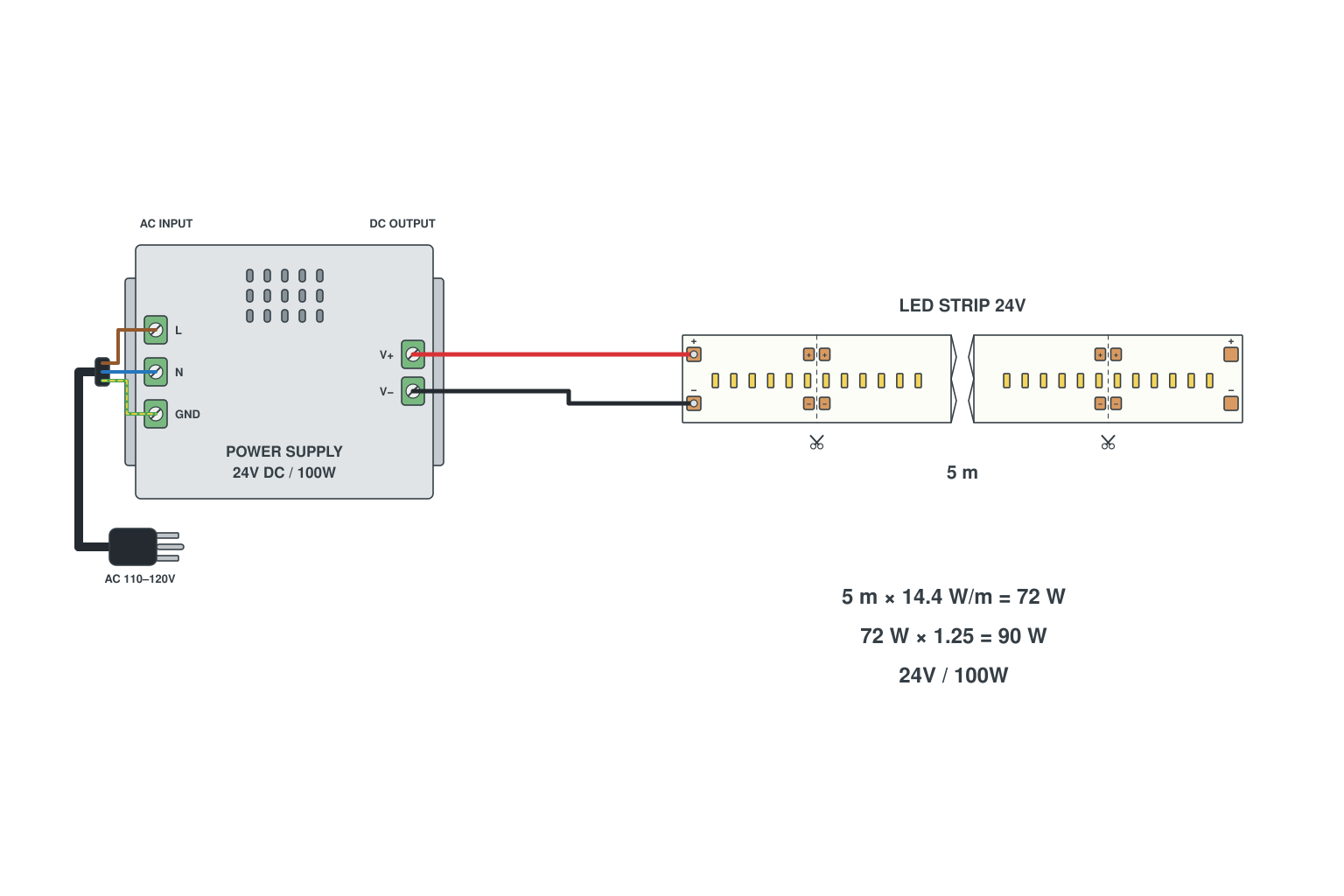
Red wire to +, black wire to -. Reversed polarity does no harm, but the strip stays dark. Everything on one circuit must be the same voltage: strip, controller and power supply.
The diagrams behind these points are drawn by our engineers; click one for the full notes in the wiring diagrams library.
What goes into the price of LED strip lights?
The price of LED strip lights is really the price of a set, because a reel on its own does not light up. This is what a working set contains; the current price of each part is on its product page.
| Part | Do you need it? | Shop |
|---|---|---|
| LED strip | Always. Choose the type by the colors you want (see the color table above). | Single color · RGB · Addressable |
| Power supply | Always. Length × watts per meter, plus 20-30% headroom; the same voltage as the strip. | Power supplies |
| Controller | For color-changing strips: it goes between the strip and the power supply, for a remote or a phone app. | Smart controllers |
| Dimmer | For a single color strip, when you want to set the brightness. | Single color dimmers |
| Connectors and wire | When you cut the strip, turn a corner or join runs. | Strip accessories |
| Aluminum channel | Optional: protection, heat dissipation, dust protection and an even line of light. | Aluminum profiles |
| Mounting clips | For IP67 and IP68 strips outdoors, instead of adhesive. | Mounting brackets |
To buy the parts in one go, see complete LED strip kits (single color, multi-color and weatherproof). Rather not wire anything? Send us the lengths, colors and where the power point is, and the SuperLightingLED team cuts the strip, solders the leads and connectors, pairs the controller and packs it with the matching supply: see custom lighting services. Standard orders such as accessories and controllers ship within 24–48 hours; LED strip orders follow the production lead time shown on the product page.
Where are LED strip lights worth it?
People use LED strip lights indoors and outdoors: at home, in companies, factories and supermarkets. If you are still deciding, look at what others have built first:
Precautions for led strip lights
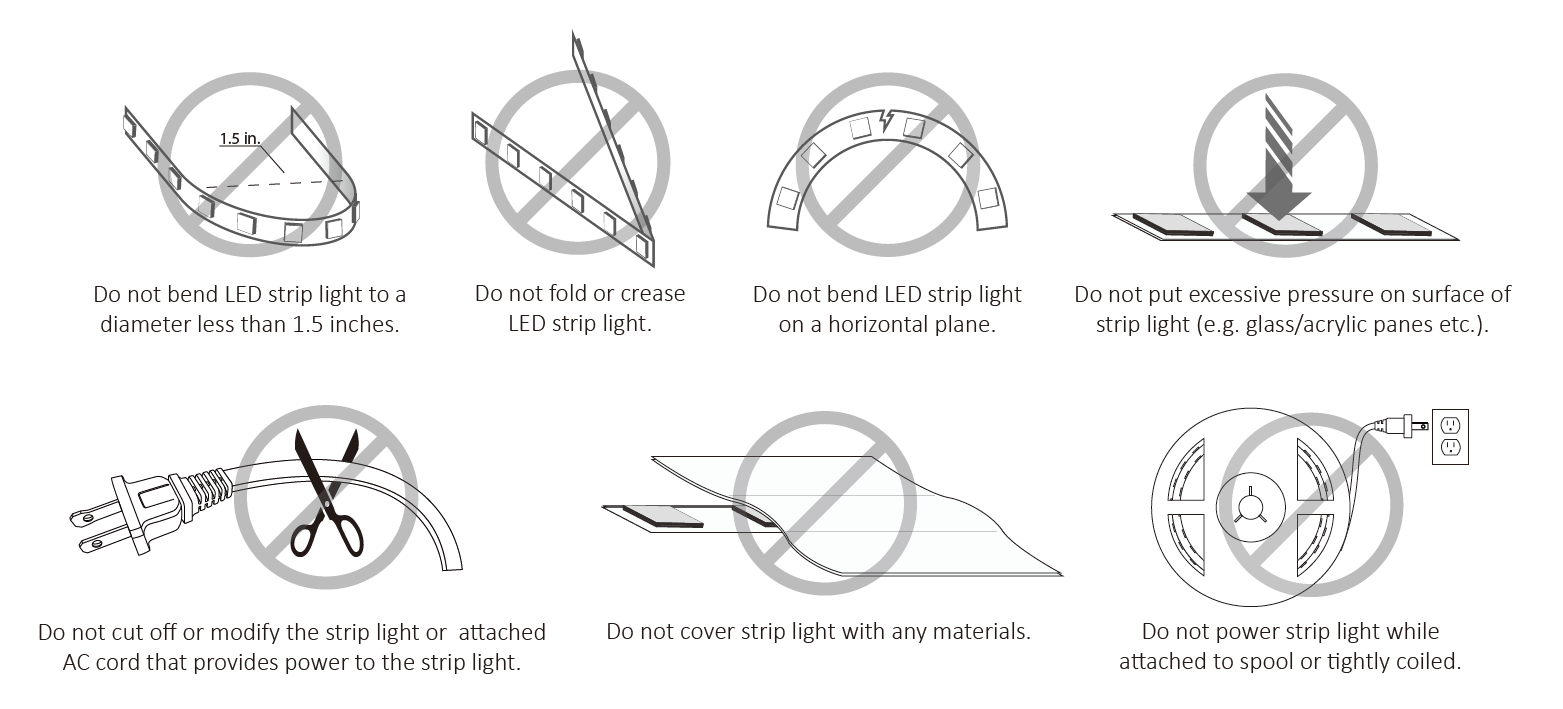
Although the led strip lights have a long life and is more durable than ordinary lamps, it should be protected during use. There are still some aspects that must be paid attention to, otherwise it may cause a reduction in the service life of the led strip and cause great damage to the lighting. Proper use not only protects the light strip itself, but also gives you a healthier light environment.
1. Naked led strip lights should avoid external force and prevent damage to the strip.
2. The led strip light cannot be installed on a sharp surface.
3. When the led strip light is rolled, it cannot be lighted up for a long time.
4. Make sure the wiring is correct when wiring the led strip lights to power supply or controller.
5. Make sure the current, voltage, and wattage are used correctly. Remember the rule 80%.
6. The led strip light can only be bent horizontally and backward along the arrangement direction of the SMD LED.
LED strip lights FAQ
Is it worth getting LED strip lights?
For most indoor and outdoor projects, yes. LED strip lights are flexible, can be cut to length, install with a 3M adhesive backing, save energy (95% of LED energy is converted into light) and last up to 50,000 hours. The trade-off is that a strip needs a power supply, plus a controller or dimmer if you want to change color or brightness.
What are the disadvantages of LED strip lights?
You need a full set rather than a single product; long runs lose voltage (from one feed point, 12V up to 5 m and 24V up to 10 m); sun, rain and cold weaken adhesive on outdoor surfaces; heat must be kept away from the strip, for example with an aluminum channel; and a strip bends only within a certain angle.
How do you curve LED strip lights?
Bend a flexible strip gently within a certain angle, horizontally and backward along the arrangement direction of the LEDs. For a 90-degree corner use an L connector instead of folding the strip, or an S-shaped strip that bends at right angles without cutting. For curves inside a channel, use a flexible LED channel.
What affects the price of LED strip lights?
The price depends on the whole set, not the reel alone: the LED strip, a power supply, a controller or dimmer if you want to change color or brightness, and connectors, aluminum channel or mounting clips if the installation needs them. Each product page shows the current price, and complete LED strip kits bundle the parts.
Do LED strip lights use a lot of electricity?
No. A 5050 SMD LED is about 0.2W, so a 5 m strip with 60 LEDs per meter is about 60W. 95% of LED energy is converted into light and only 5% into heat, and LED strip lights are 80% more energy efficient than traditional incandescent lamps.
Shop the parts for a set of LED strip lights
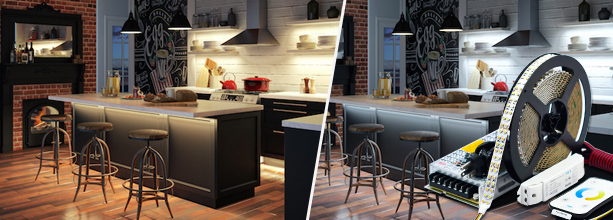 Complete LED strip kitsStrip, supply and control in one box
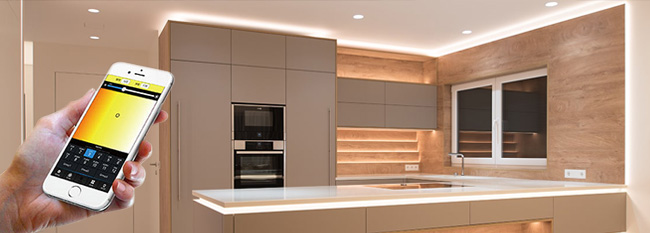 Single color LED strip lightsOne color or one white
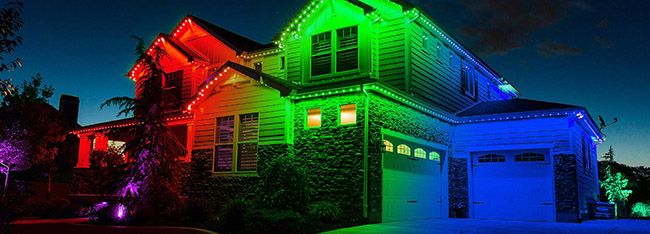 Multicolor RGB LED stripsColor changing with a controller
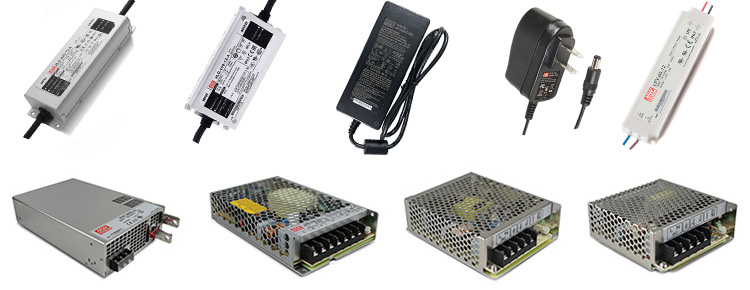 DC12V MW UL-listed power suppliesEvery strip needs one
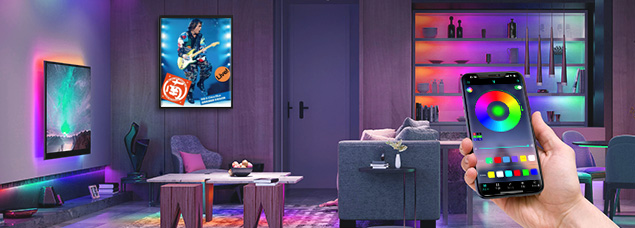 LED smart controllersRemote, app and wall control
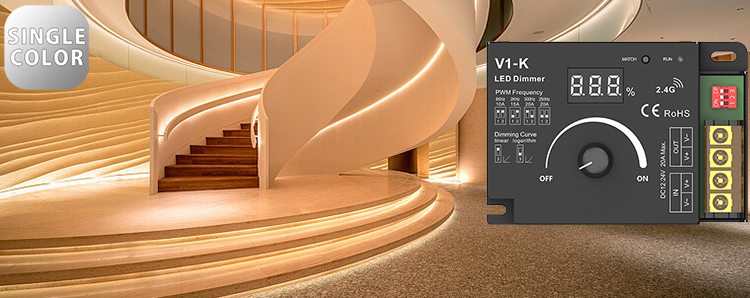 Single color dimmersSet the brightness
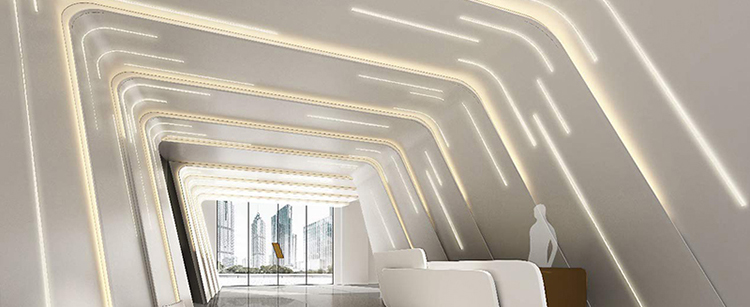 Flexible LED channelsBend along curves
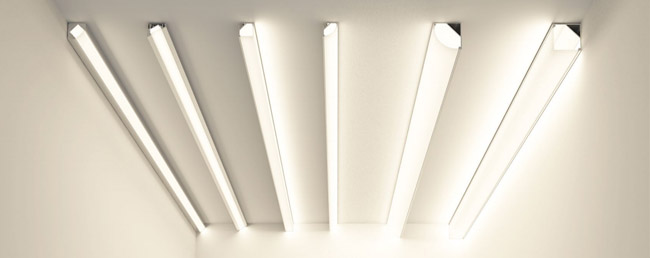 LED strip corner channelsCorners and cabinets
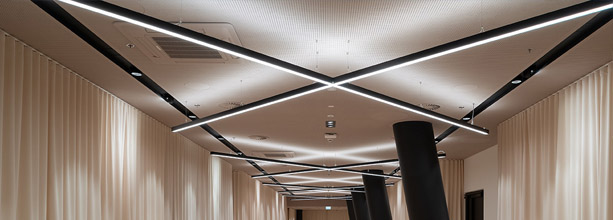 LED aluminum profilesHeat dissipation and protection
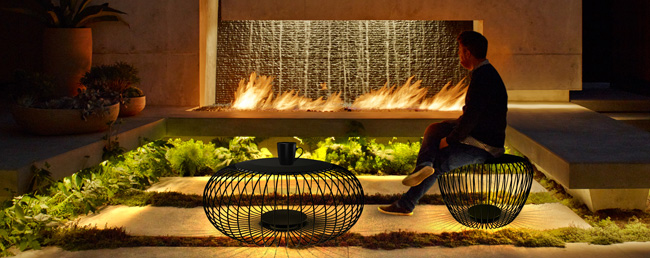 Outdoor LED strip lightsIP67 and IP68 for outside
Tell us where the light goes and how long the runs are, and the SuperLightingLED team will put together the strip, power supply and control for it. Contact our team