
LED Manual Control Series
9 productsEngineered for applications where IR, RF wireless signal or smart control is not required, the LED Manual Control Series offers a reliable, hardwired solution for standalone LED lighting systems. This series features intuitive, physical on-board controls—including built-in push buttons, DIP switches, and rotary knobs—allowing users to directly adjust brightness, dynamic modes, and color tuning (Single Color, CCT, RGB, RGBW) straight from the unit. Perfect for high-security environments, industrial cabinets, and zero-interference installations, these manual controllers deliver seamless plug-and-play operation with maximum hardware reliability.

 12-24VDC 3-Key Single Color Dimmable LED Mini Controller.jpg)
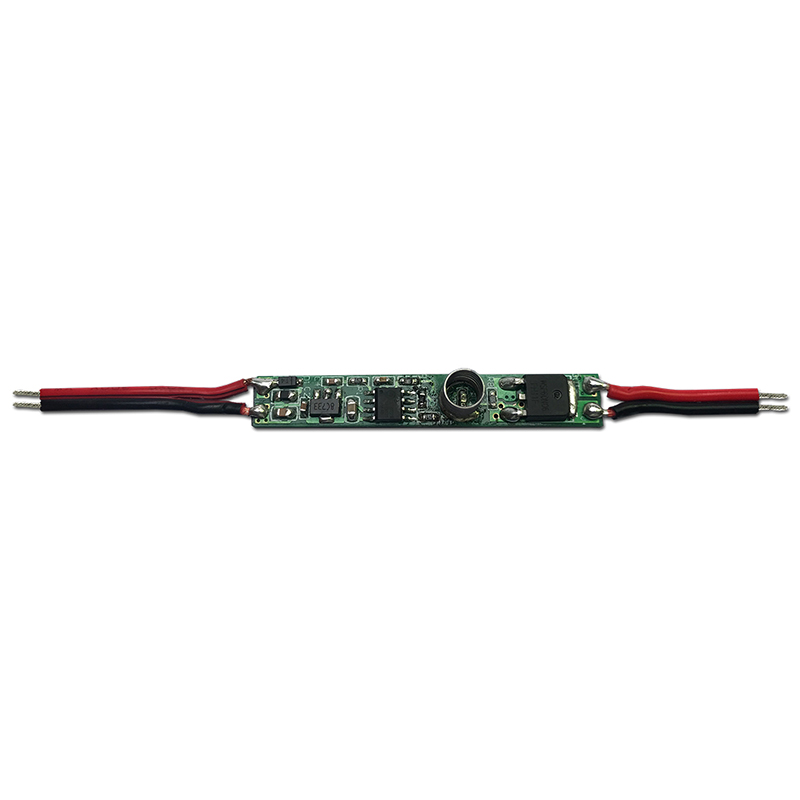
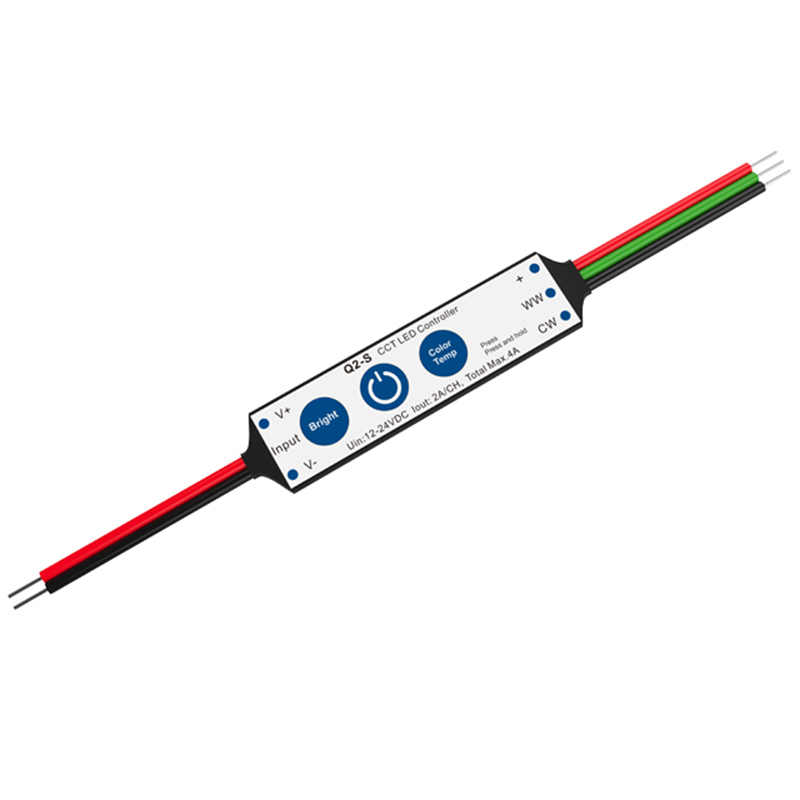
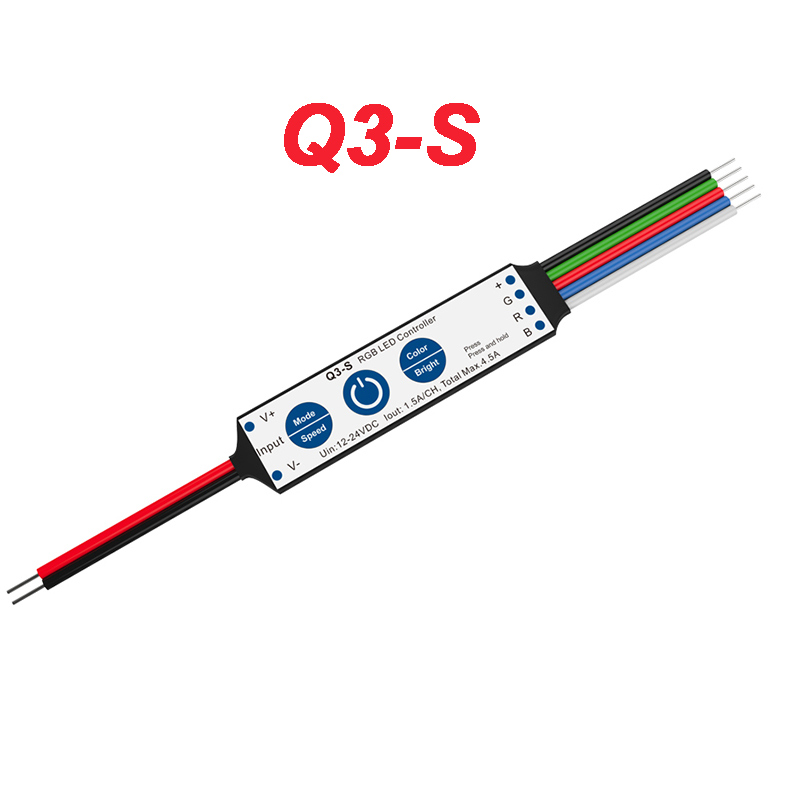
FAQ About LED Manual Control Series
Direct answers to technical, wiring, and selection questions on standalone manual dimmers and inline controllers for low-voltage LED strip lights.
A manual LED controller gives you physical, hardwired reliability with zero radio frequency emissions and no remote controls to misplace or batteries to replace. In RF-sensitive environments like hospital imaging suites, EMC testing chambers, server rooms, and shielded industrial cabinets, wireless signals are either banned or blocked by steel enclosures. Standalone manual units rely purely on onboard pushbuttons, rotary potentiometers, or DIP switches. Once set, the hardware cannot drop off a Wi-Fi network, freeze from a firmware glitch, or suffer from 2.4 GHz band crowding.
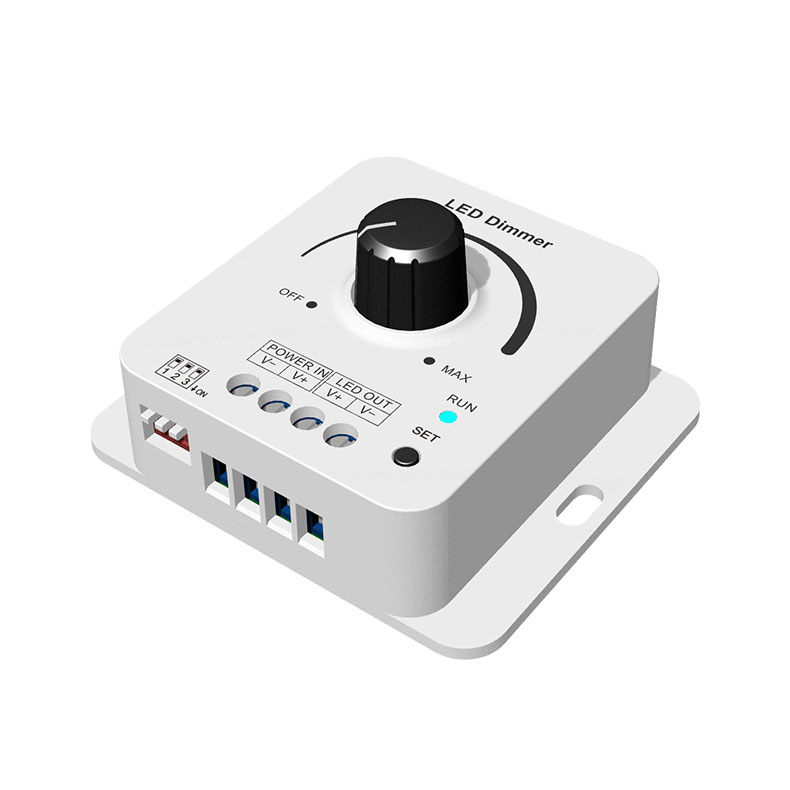
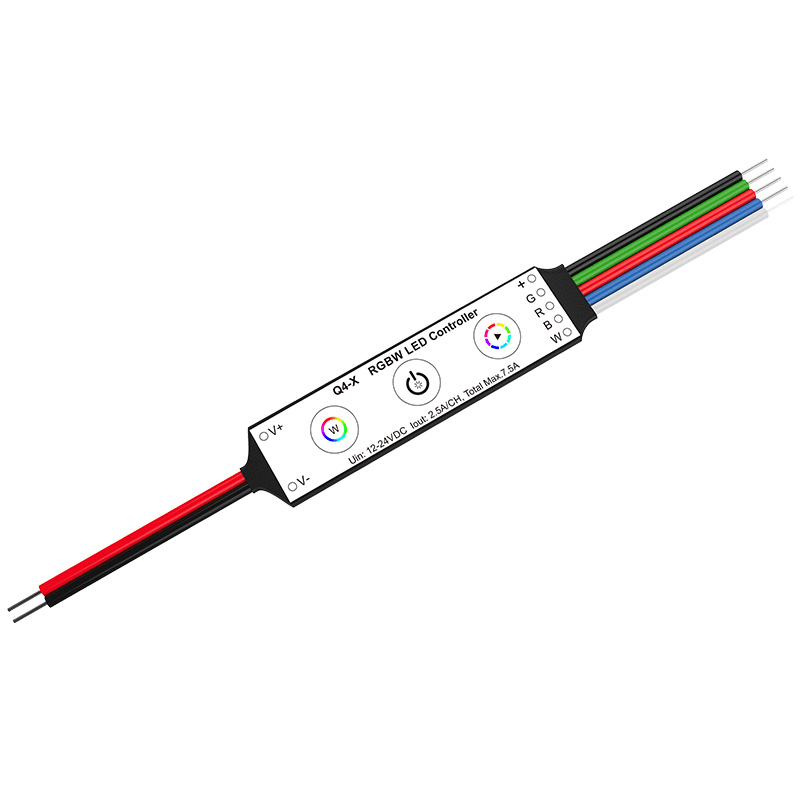
Match your LED strip lights by channel count first—single color, tunable white CCT, RGB, or RGBW—then choose your control interface. Within our manual control category, the LED controller uses a slim or mini form factor engineered to sit inline along a wire run or inside cabinetry. If you need fine manual dimming at a desk or bench, pick a rotary knob like the V1-KC.
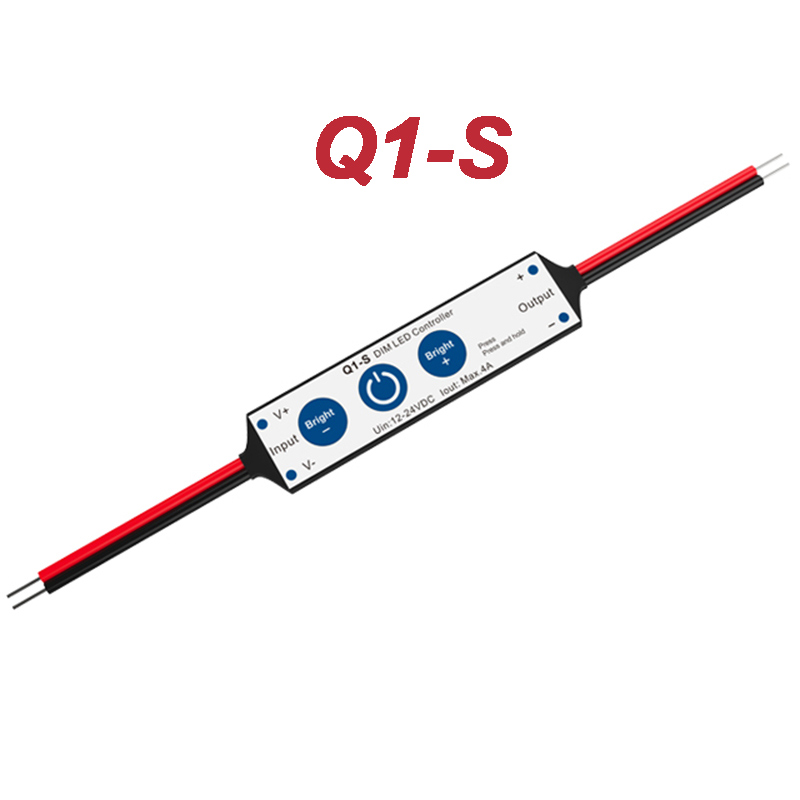
You can safely load a mini manual LED controller up to 80% of its rated current capacity—for instance, 3.2A continuous on a 4A rated unit like the Q1-S. At 24V DC, a 4A single-channel controller handles up to 96W of LED tape light (or 48W at 12V DC). If your run length exceeds these amperage limits, do not overload the onboard FETs; instead, route the output signal into a power repeater to drive additional strip segments from a secondary power supply.
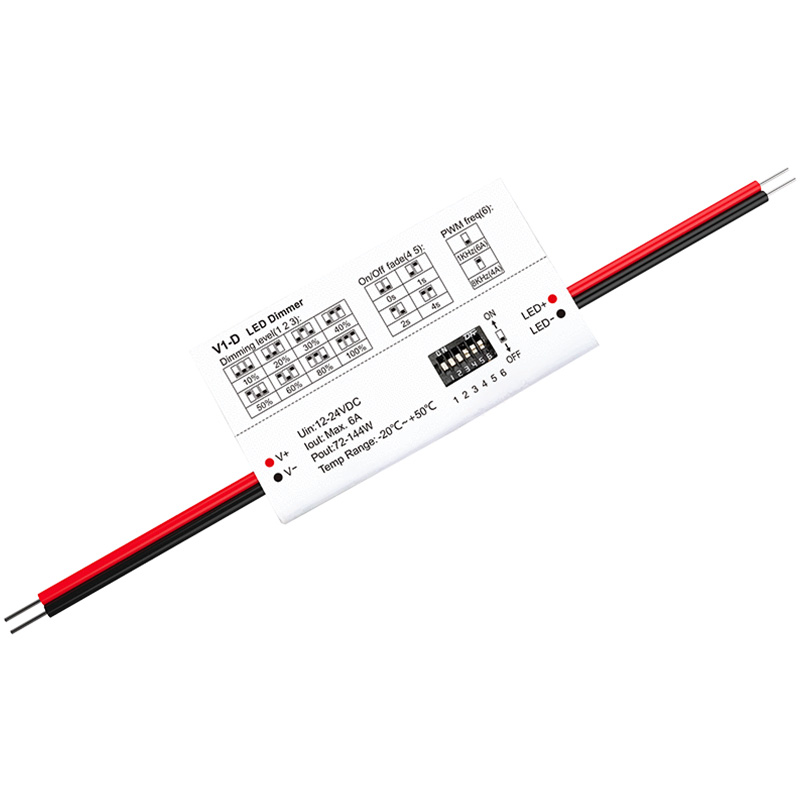
The V1-D DIP switch dimmer uses 6 physical DIP switches to lock in fixed dimming parameters, fade transitions, and PWM frequencies rather than relying on a continuously variable knob. Rotary knobs are vulnerable to tampering by staff or the public in retail displays, museum vitrines, and hotel corridors. With the V1-D, you set your desired fixed output brightness, select an on/off fade time between 0.5 and 20 seconds, and choose your PWM frequency behind an equipment cover. Once set, the output remains locked and tamper-proof.
A low-voltage manual LED controller must always be wired on the secondary DC side between the constant voltage power supply and the LED strip lights. Connecting an inline DC controller to a 120V or 230V AC mains line will instantly destroy the unit and create an electrical hazard. Keep the wire length from the power supply to the controller under 10 meters using 16 to 18 AWG copper wire to prevent voltage drop before the dimming stage. Ensure polarity matches strictly: DC positive to positive (+), and negative to negative (-).
Yes, every manual LED controller in this series includes non-volatile memory that restores your exact brightness and color settings when power returns. When an upstream wall switch or breaker cuts the 120V/240V AC power feeding your driver, the controller chip saves its last operating state to onboard EEPROM. When the circuit is energized again, your LED strip lights power back up to the identical dimming level, dynamic speed, or color mix without requiring manual readjustment.
A manual LED controller is well-suited for 12V and 24V vehicle, camper van, and boat electrical systems because it has no wireless receiver susceptible to engine ignition noise or metal chassis shielding. In metal van bodies and aluminum boat hulls, 2.4 GHz RF signals often struggle to penetrate bulkheads, whereas hardwired manual buttons operate reliably regardless of surrounding sheet metal. Ensure your vehicle DC supply voltage does not spike beyond 28V during alternator charging, or wire a DC-DC voltage regulator before the controller to protect against transient voltage surges.