
IC Programmable LED Sheets
6 products
SuperLightingLED™ IC Programmable LED Sheets (also known as flexible addressable LED matrices) are engineered for designers and hobbyists who demand precision, flexibility, and vibrant color performance. Unlike standard LED sheet lighting, these digital LED panels feature advanced integrated circuits such as the UCS2905/WS2805 5-in-1 RGBCCT, WS2815 RGB, and SM16703 RGB, allowing for individual pixel control for complex animations, scrolling text, and immersive backlighting.
A common question about LED sheet is whether it is DIY-friendly: the answer is yes. Designed on ultra-thin, flexible and cuttable PCBs—available in both black board and classic white board—our IC-controlled LED light sheets utilize high-intensity SMD5050 LEDs and Z-shape signal routing, you can transform any flat or contoured surface into a dynamic light canvas, tailoring the shape to your project. This is also an upgraded version of the smaller, fixed-size, non-trimable 5V and 12V individually addressable flexible LED panels.
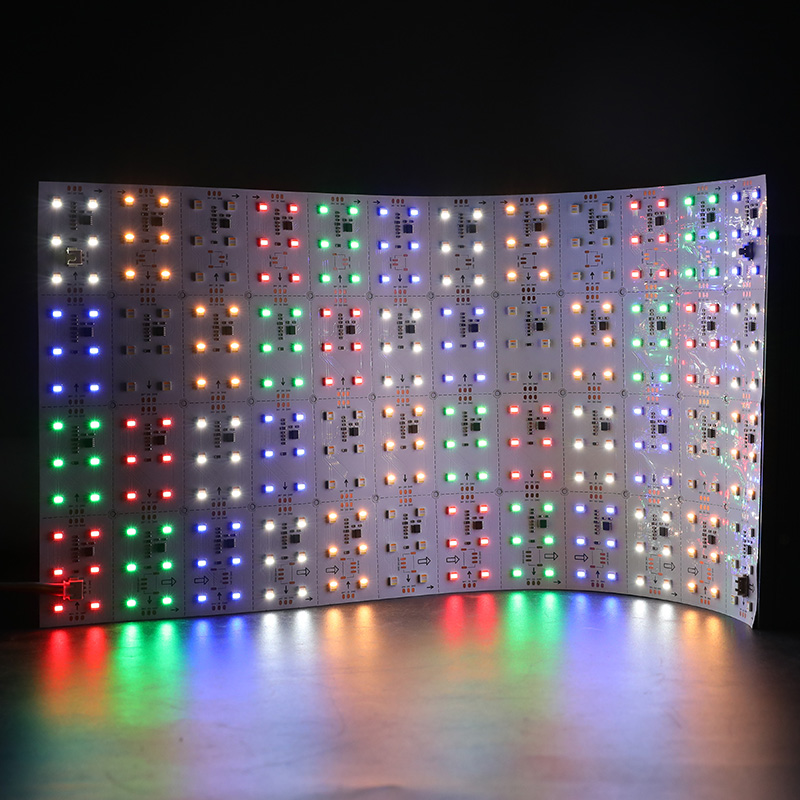
WS2805 Digital 5-in-1 RGBCW LED Matrix Light Sheet 1.24FT²
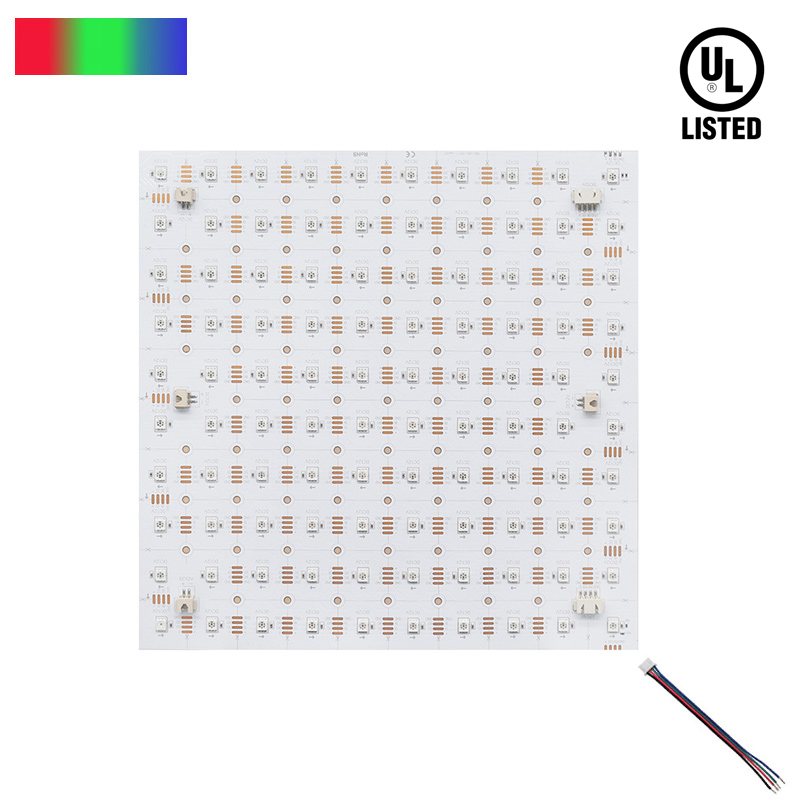
UL 12V WS2815 Programmable RGB Pixels LED Light Sheet 96.8in²
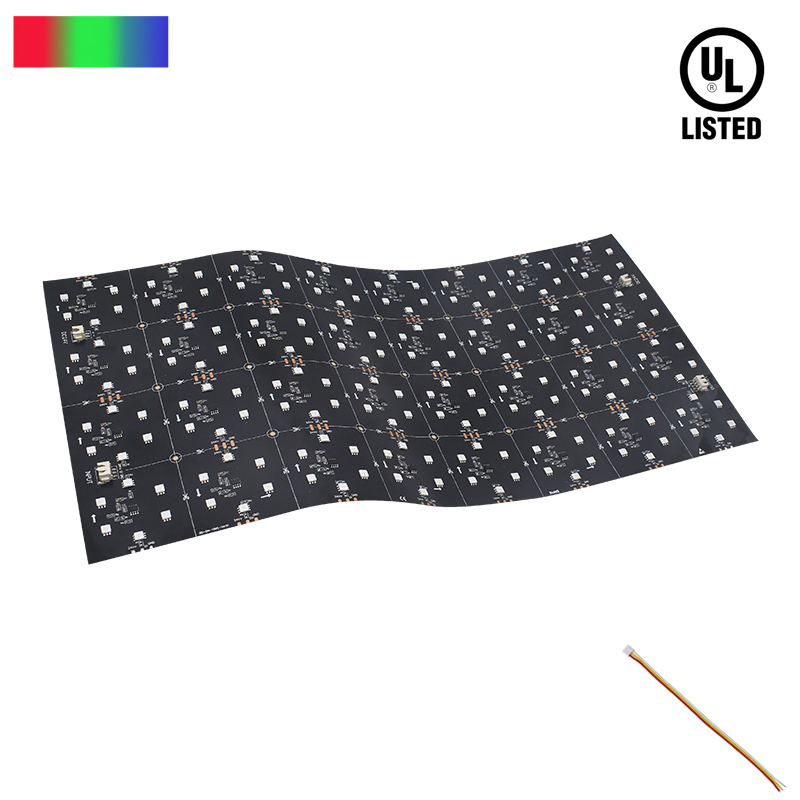
UL 24V Black SM16703 RGB Addressable Flex LED Sheet 1.29FT²
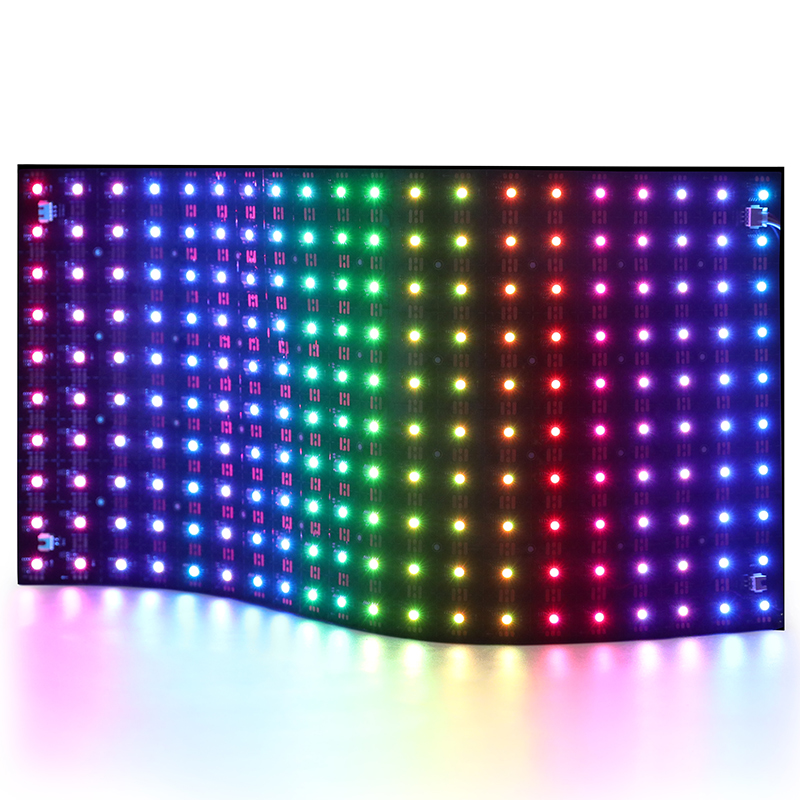
WS2811 Individually Controllable & Cuttable RGBIC LED Sheet 1.35FT²
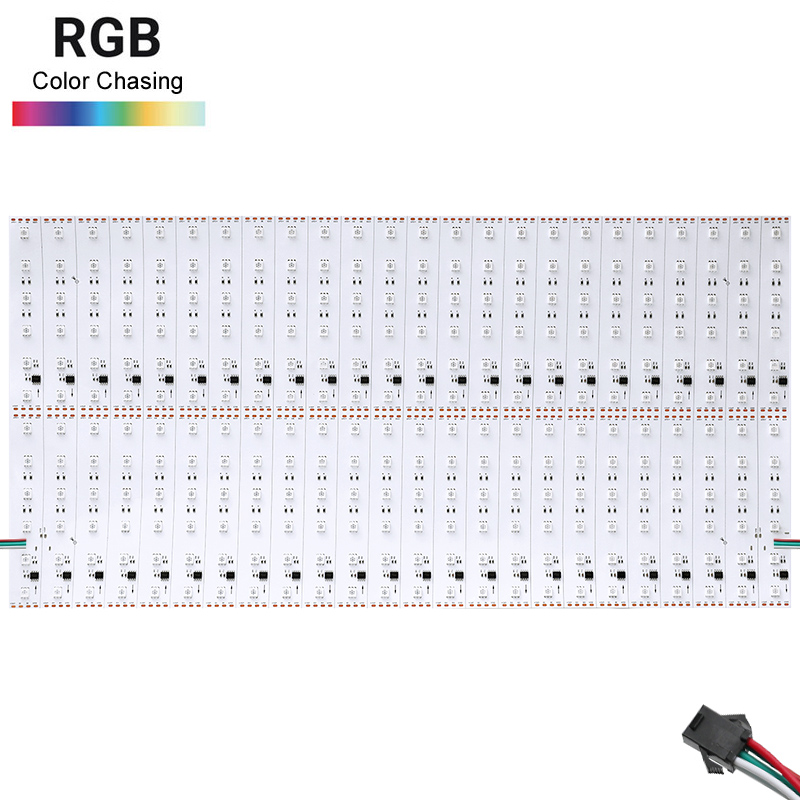
High-Density SM16703 IC RGB Pixel LED Sheet 1.24FT²
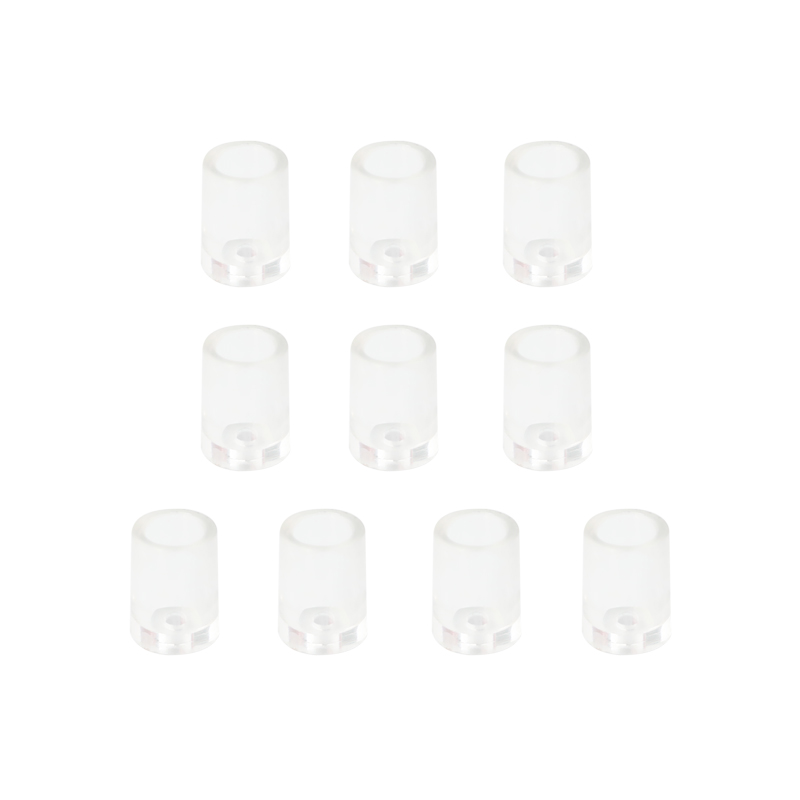
Plastic Clear PC Support Pillars For Backlit LED Sheet Installation
What Makes an IC Programmable LED Sheet Different?
An IC programmable LED sheet gives you pixel-level control for creating dynamic, animated lighting effects. While standard white LED backlight sheets illuminate a surface uniformly, these addressable flex sheets integrate control chips (ICs) like the WS2811, SM16703, and WS2805.
This technology allows a controller to command individual LEDs or small groups, which is how you create flowing color gradients, video displays, and scrolling text. Designed for feature walls, signage, and custom media installations.
To achieve breathtaking dynamic colors on translucent backlit materials such as stone, marble, granite, etc., these programmable LED panel sheets require a compatible IC controller. You can customize light patterns via smartphone apps or utilize DMX-to-SPI decoders for professional-grade staging.
Choosing the Right Programmable Flex Sheet
Selecting the correct model comes down to the scale of your project and the color effects you need. The main differences in our range are the operating voltage and the type of control IC, which determines the color capabilities.
24V vs. 12V Systems for LED Sheets
Most of our IC programmable LED sheets run on 24V DC. For larger installations where multiple sheets are connected, 24V is a better choice because it significantly reduces voltage drop, ensuring more consistent brightness and color from the first panel to the last. Our 12V WS2815 model is a solid option for smaller projects and benefits from a dual-signal data line, which means if one pixel fails, the signal still passes to the rest of the sheet.
Black vs. White PCB Flex Sheets
We offer both white and black PCB options. Our black light sheets are designed for installations where the sheet itself might be partially visible. The black background minimizes reflections and blends into dark enclosures or surfaces, making the illuminated pixels stand out more distinctly, which is often preferred for screen-like applications.
Frequently Asked Questions About IC Programmable LED Sheets
Got a question about getting your project running? I've probably answered it before. Here are the common ones.
The key difference in an IC programmable LED sheet is individual pixel control. A standard RGB sheet shows one solid color across the whole panel. On these, an integrated circuit (IC) controls every single LED or a small group of them, letting you create flowing animations, scrolling text, or video effects. It's the same tech as in addressable strips, but in a flexible grid for backlighting. Our regular color changing RGB sheets are great for static colors, but these are for dynamic, moving light.
Addressable LED sheets work by sending a digital signal down a single data wire that daisy-chains from one pixel's IC to the next. The controller sends a long string of data, and each IC 'listens' for its specific instruction (what color and brightness to be), then passes the rest of the signal to the next IC in line. That's how one data wire can create a complex image across hundreds of LEDs.
You'll need a dedicated SPI (Serial Peripheral Interface) controller that's compatible with the specific IC on your programmable LED panel, like a WS2815 or SM16703. For professional stage or architectural jobs, you can use DMX master consoles paired with a DMX-to-SPI decoder.
It's not just two wires for power. For an IC programmable LED sheet, you have at least three connections: positive (+24V), ground (GND), and a data line (DI or DAT). Some models, like our WS2815 sheet, also have a backup data line (BI) for redundancy. You connect the power and ground to your power supply and the data line to your SPI controller's data output.
Yes, you can cut these programmable LED sheets, and that's one of their biggest advantages. The circuit path runs in a Z-shape, and you can cut anywhere between the individual LEDs. Just remember that the data signal flows in one direction. If you cut a section out of the middle, the LEDs downstream from the cut won't get the signal anymore unless you wire them back in.
You don't necessarily have to be a coder. Many SPI controllers come with a smartphone app that has dozens of pre-programmed scenes and effects you can customize. For fully custom animations, you'd use software like Madrix, MadMapper, or the open-source WLED project with an ESP32 controller.
Voltage drop is the main reason. On lower voltage systems, the power doesn't travel as far down the wire, causing lights at the far end of a long run to look dim or shift color. Using a 24V programmable LED sheet lets you connect more panels together and run longer distances from a single power injection point. It's a much more stable and efficient choice for the large-scale architectural backlighting these sheets are designed for.
Yes, they are designed to be chained together. Each addressable LED sheet has a data input (DI) and a data output (DO). You simply connect the 'DO' of the first sheet to the 'DI' of the second sheet, and so on. This creates one long, continuous data path that your controller sees as a single large display. Just be mindful of your total power requirements and inject power fresh from the power supply every few sheets to avoid voltage drop.