
Color Changing RGB LED Sheets
4 productsRGB LED light sheets are the foundation of dynamic, multi-color backlighting. SuperLightingLED™ RGB LED sheets allow your mood and interior atmosphere to be expressed through vibrant color, transforming flat surfaces into immersive visual features.
Ideal for kitchen islands, home bars, cocktail lounges, entertainment rooms, feature walls, and creative displays, these color changing LED light panel sheets create rich, color-saturated lighting effects that bring nightlife energy and personality into residential and commercial spaces.
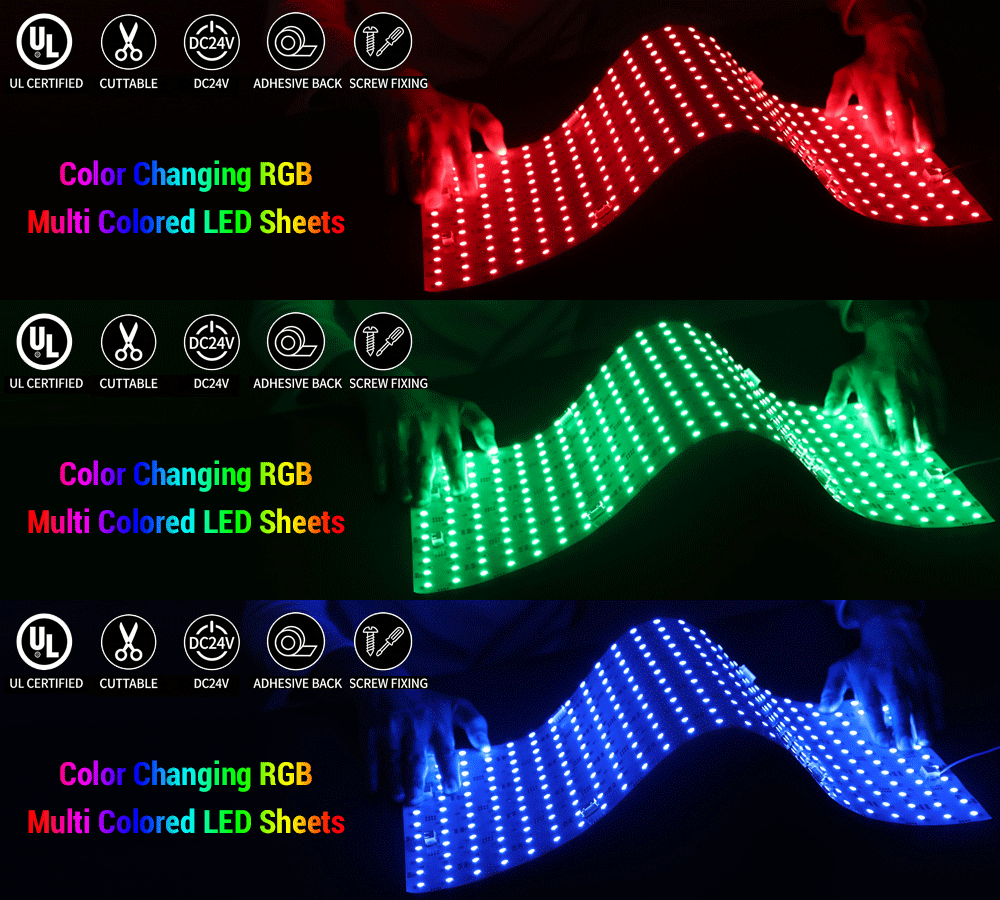
How to Create a Dynamic RGB LED Backlight Ambiance?
Step 1 is to select an RGB LED sheet that matches the desired visual impact of your backlighting project. If you’re not sure where to begin, use the guidelines below:
-
Prioritizing the backlit ambiance - Choose our 18W energy-efficient 24x12 RGB multi color LED sheet
-
Balance vivid color effects with practical brightness - Choose our 45W bright 16x8 flexible RGB LED sheet
-
Require strong color saturation and maximum visual impact - Choose our 65W super bright 24x12 LED RGB sheet
Step 2 is to select the appropriate RGB controller and 24V DC power supply sized according to the total wattage of your system. If you have any questions regarding control, power distribution, or wiring methods, please refer to our detailed LED sheet backlighting blog for instructions.
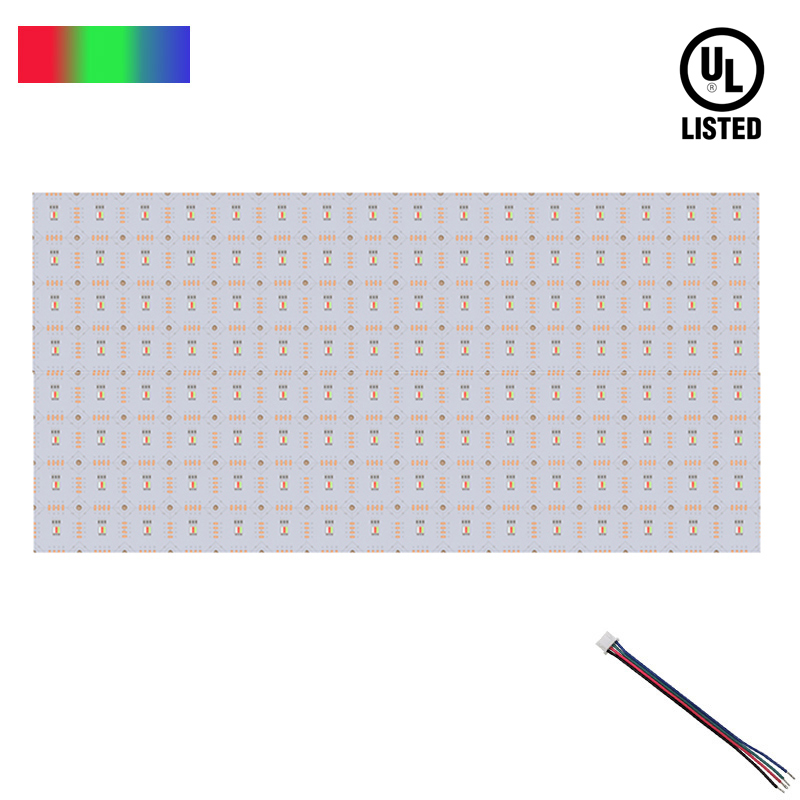
UL 24V 5054 3-in-1 RGB Cuttable LED Sheet Panel Lights 1.29FT² 45W
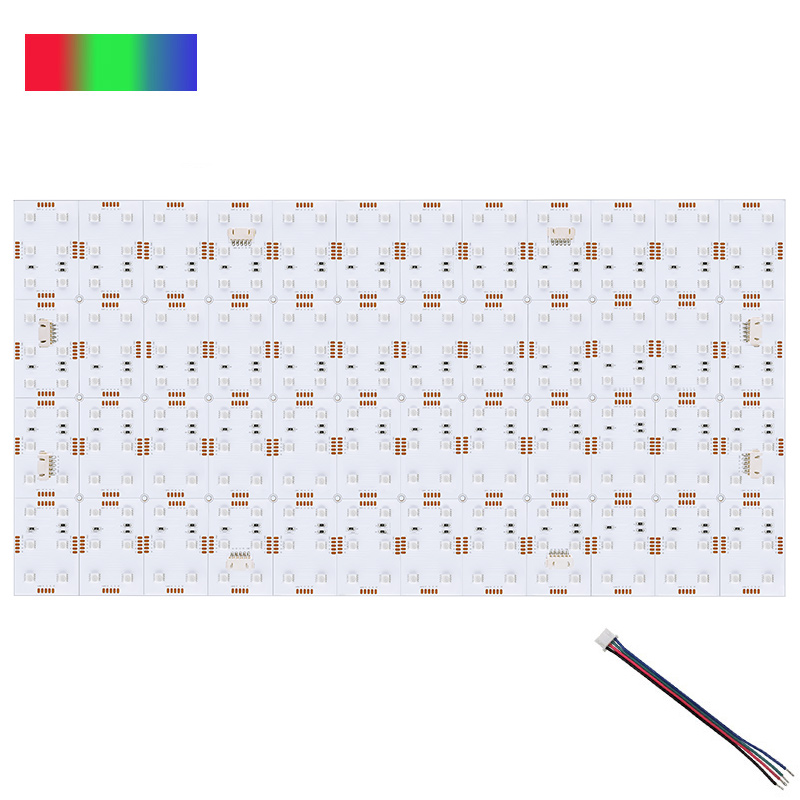
Bright 65W Paper-Thin RGB Flexible LED Light Panels For Backlighting 1.24FT²
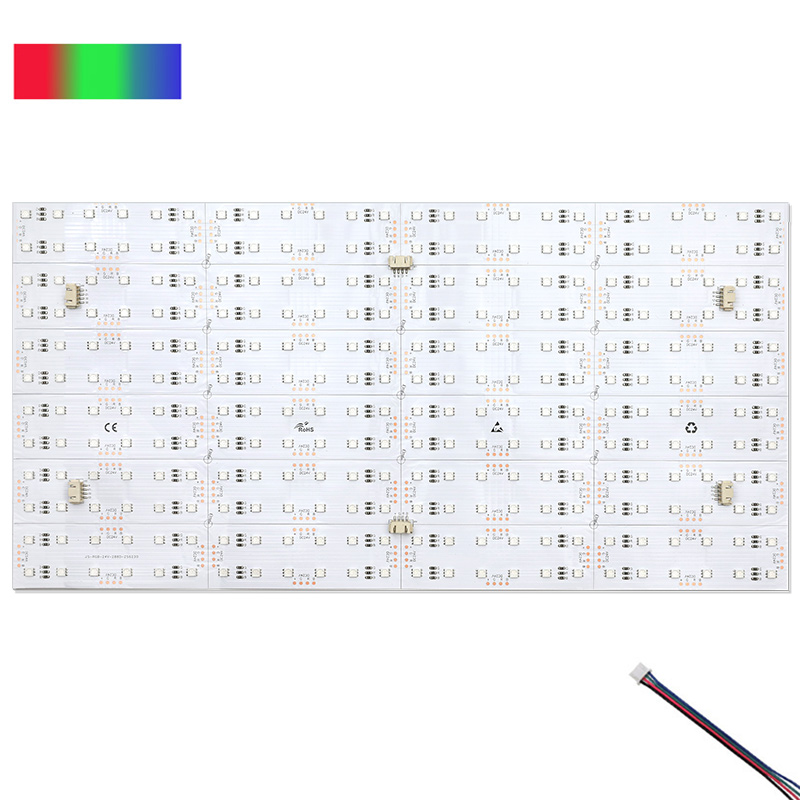
24V 5050 RGB Multi Color LED Sheet 1.24FT² 18W Ambience Backlighting
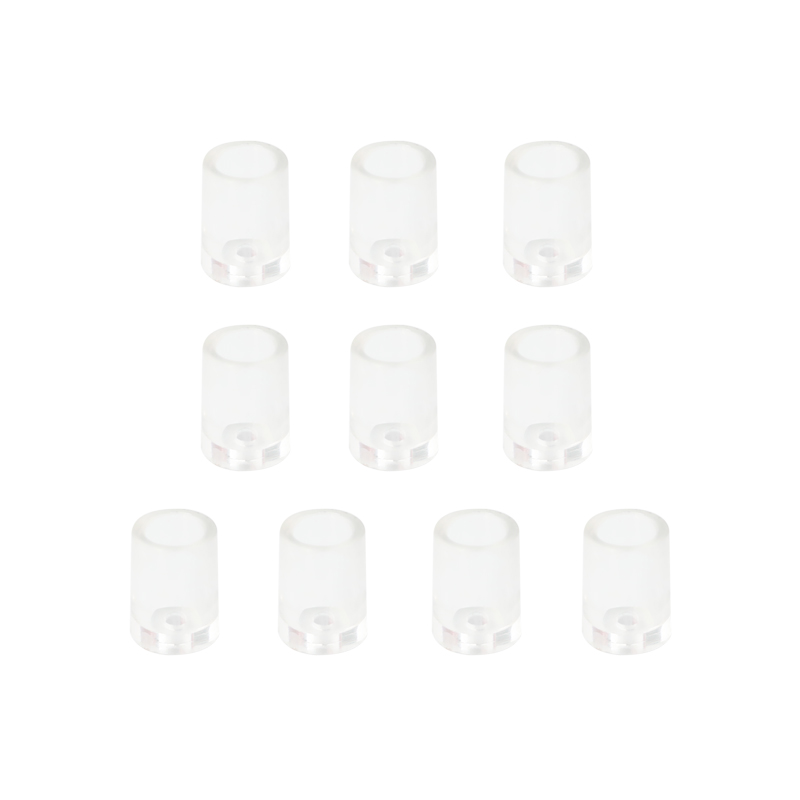
Plastic Clear PC Support Pillars For Backlit LED Sheet Installation
Choosing Your RGB LED Sheet: Cut Zones and Precision
The main difference between our color changing RGB LED sheets is the cutting resolution. For backlighting intricate shapes or custom signage, you need a sheet that can be trimmed precisely. Our 24V RGB light sheets offer different levels of customization, measured by how many LEDs are in the smallest cuttable segment. A smaller segment means more flexibility and less waste.
Single-LED vs. Multi-LED Cut Sections
Your project's complexity determines the right model. We list three distinct cutting options across our RGB sheet lights:
- Single LED Cut (128 zones): The 5054 RGB LED sheet gives you the most control. You can cut between any individual LED, making it the choice for fitting logos, complex curves, or eliminating any chance of an unlit edge on a custom-sized panel.
- 6-LED Cut (48 zones): A balanced option for most projects, like backlighting kitchen islands or displays. The 480x240mm RGB panel can be trimmed every 6 LEDs, offering good flexibility for common rectangular and square shapes.
- 12-LED Cut (24 zones): For larger, more uniform areas, the 12-LED cut RGB sheet is a cost-effective solution. With fewer cut lines, it's straightforward to work with on large feature walls or back bars where ultra-fine trimming isn't needed.
RGB vs. RGBW Sheets: What's the Difference for Backlighting?
Pure RGB LED sheets use a 3-in-1 LED chip to create color. They excel at producing deeply saturated, vibrant colors — think bold reds, blues, and greens. They create a version of white light by mixing all three colors at full intensity, which often has a cooler, slightly bluish tint.
If your project demands vivid, dynamic color as the primary feature, this is the right product. If you also need high-quality, dedicated white light for tasks, consider our RGBW LED sheets, which include a separate white LED on the chip for better white light quality.
Installation Tips for Flawless Backlit Surfaces
Achieving a smooth, hotspot-free glow depends on creating a small gap between the LED sheet and the translucent material you're backlighting, like onyx, stone, or acrylic. We recommend using our clear PC support pillars to create a consistent 20mm (0.78in) space for the light to blend perfectly. For installations in potentially damp areas, such as bar counters or bathroom vanities, be sure to select the IP54-rated version of the sheet, which has a protective silicone spray coating.
Frequently Asked Questions About Color Changing RGB LED Sheets
Got a question about setting up your RGB backlighting? We've probably answered it a thousand times. Here are the most common ones we get right before an order is placed.
For lighting up large, uniform surfaces, these color changing RGB LED sheets are the right tool for the job. An LED sheet starts as a solid panel of light, which saves a huge amount of installation time and gives a much more professional, even glow from the start.
You need a 24V DC power supply, and the wattage is the most important part. First, add up the total wattage of all the RGB sheets in your project. For example, two of our 45W sheets is 90W. Then, add a 20% safety margin. So for 90W of lights, you'd need a power supply rated for at least 108W. Undersizing the power supply is a very common reason for flickering or poor performance.
You can create a whitish light by turning the red, green, and blue LEDs on at full power, but it's not a true, dedicated white. It often has a cool, slightly bluish or purple tint to it. For projects where you need both saturated colors and a clean, functional white light, you are much better off with an RGB+CCT sheet, since it includes separate chips for warm and cool white.
Our RGB LED sheets have built-in connectors, making it easy to daisy-chain them to cover a large area. The main thing to plan for on big projects is voltage drop. For large arrays, you'll need to run parallel power wires from the power supply to different sections instead of wiring everything in one single, long chain.
This is a simple wiring mix-up. An RGB light sheet has four connections: R, G, B, and V+ (common positive). If you accidentally swap the red and green wires between the controller and the sheet, the commands get crossed. Just power everything down and double-check that the R, G, B, and V+ outputs from your controller are wired to the matching R, G, B, and V+ inputs on the sheet.
They're very flexible—you can easily bend them by hand around curved surfaces like bar fronts, reception desks, or columns. They are about as thin as heavy cardstock. The only thing to avoid is creating a sharp, hard crease, as that can damage the printed circuit. As long as you stick to a smooth, gentle curve, they'll perform perfectly.