
TRIAC 0/1-10V PWM Dimmable Driver
24 productsA 5-in-1 dimmable LED driver combines an LED power supply with compatibility for five widely used dimming methods: TRIAC, 0-10V, 1-10V, PWM, and Resistance Dimming. Instead of choosing a power supply that is limited to one specific dimming system, this type of driver gives installers and lighting designers greater flexibility when matching the power supply to an existing dimmer, control system, or project requirement.
The five dimming methods cover different types of residential, commercial, and professional lighting control. TRIAC dimming is commonly used with AC wall dimmers; 0-10V and 1-10V are widely used in building and commercial lighting control systems; PWM dimming is suitable for LED controllers and PWM-based lighting systems; and Resistance Dimming provides a simple way to adjust brightness through a variable resistance control. The driver converts the selected control input into the appropriate output regulation for the connected LED load.
SuperLightingLED also offers 6-in-1 dimmable LED drivers, expanding the compatibility of our multi-mode driver platform to include DALI-2 DT6 and DT8, in addition to TRIAC, 0-10V, 1-10V, PWM, and Resistance Dimming. These drivers provide greater flexibility for projects that require integration with modern DALI-based lighting control systems.
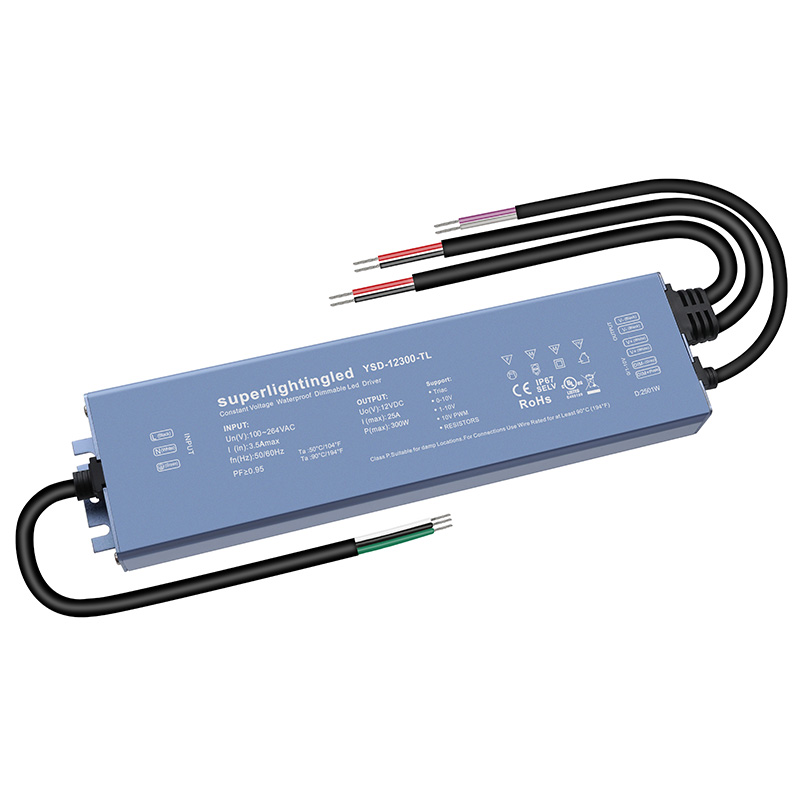
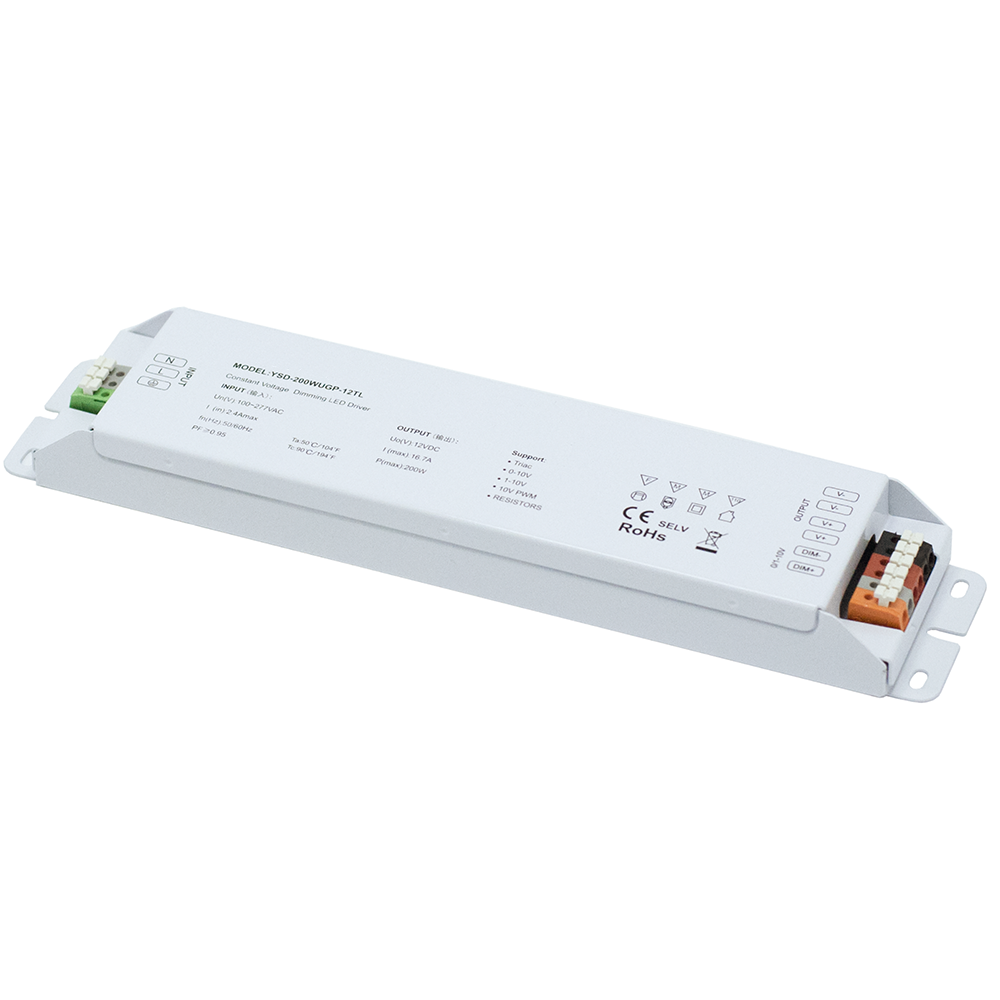
DC12V 300W TRIAC 0/1-10V PWM 5 in 1 Dimming LED Driver
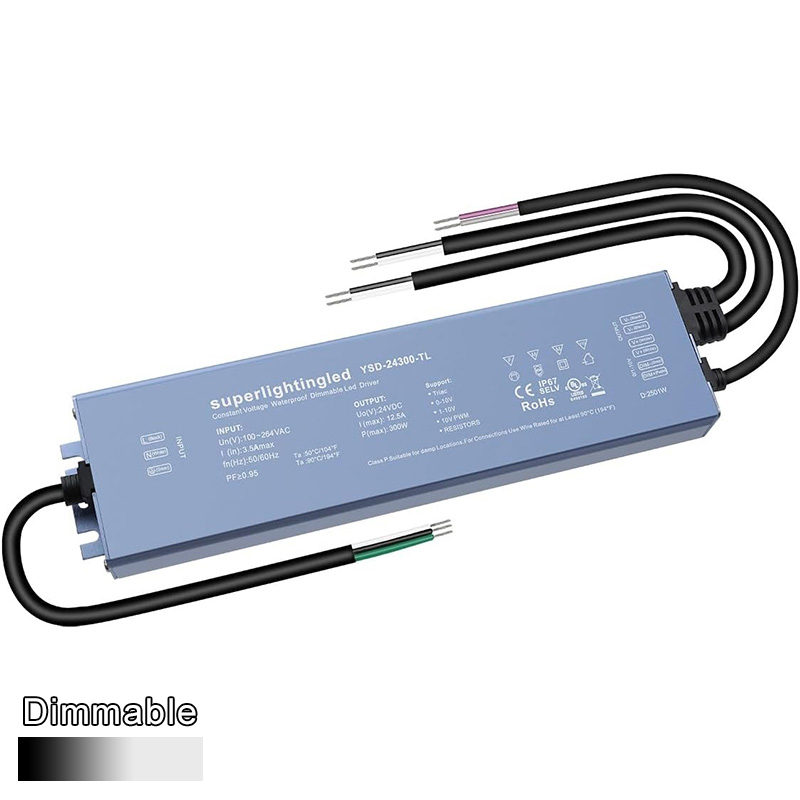
DC24V 300W TRIAC 0/1-10V PWM Dimmable 5in1 LED Intelligent Driver
Why Choose a 5-in-1 Dimmable Driver?
A conventional dimmable LED driver may require you to select a specific dimming interface before purchasing. This can become inconvenient when working with different projects, replacement installations, or commercial lighting systems where the available dimming infrastructure is already determined.
A 5-in-1 driver provides greater flexibility by allowing the same driver platform to be matched to different dimming environments. This can simplify product selection, reduce the need to stock multiple driver types, and make it easier for installers to adapt the LED power supply to an existing lighting control system.
1. TRIAC Dimming: A common type of AC dimming for home and commercial environments. It changes the brightness by controlling the waveform of the AC power.
2. 0-10V Dimming: A low-voltage dimming method that controls the LED light brightness by changing the size of the voltage signal, 0V means off and 10V means maximum brightness.
3. 1-10V Dimming: Similar to 0-10V dimming, but 1-10V dimming range starts from 1V instead of 0V. This means that the lights will not turn off completely.
4. PWM Dimming: Pulse Width Modulation dimming, controls the LED brightness by changing the pulse width of the signal.
5. Resistance Dimming: Change light brightness by changing the resistance value in the circuit.
It is particularly useful for residential renovations, commercial lighting, architectural projects, cabinet and accent lighting, retrofit installations, and professional LED strip installations where the required dimming method may vary from one project to another.
One Driver, Five Dimming Options — But Use One at a Time
The key advantage of a 5-in-1 driver is control-system compatibility, not simultaneous operation of all five dimming methods. During installation, you select one supported dimming method that matches the dimmer or control system being used. The corresponding wiring and terminals are then connected according to that selected mode.
For example:
TRIAC Dimmer → 5-in-1 LED Driver → LED Strip
or
0-10V Dimmer → 5-in-1 LED Driver → LED Strip
or
PWM Controller → 5-in-1 LED Driver → LED Strip
The same driver can therefore be used for different projects with different control requirements, but TRIAC, 0-10V, 1-10V, PWM, and Resistance Dimming should not be treated as five control inputs operating simultaneously. Always follow the wiring diagram and configuration specified for the particular driver model.
Before installation, verify the LED driver input voltage, output voltage, maximum load, LED type, dimming method, and dimmer/controller compatibility.
Frequently Asked Questions About 5-in-1 Dimmable LED Drivers
Your project questions, answered. Here’s what I tell installers on the phone every day.
Yes, but you have to match the technologies. A TRIAC dimmable LED power supply is designed specifically for those common residential dimmers. Just make sure your dimmer is a modern CL-type or LED-rated model. An old incandescent-only dimmer will cause flicker or buzzing because it can't handle the low load of LEDs. The wall dimmer controls the driver, and the driver controls the strip—never wire an AC dimmer directly to a DC LED strip.
That sound means your dimmer and driver aren't compatible. Check the spec sheets for both components. Send us the model numbers and we'll tell you which one needs to be swapped out.
To select the right dimmable driver, you calculate the total wattage of your LED strips and then add a 20% buffer. So, if you have 10 meters of a strip that uses 9.6 watts per meter, that's 96 watts total. Multiply 96 by 1.2, and you get 115.2W. You'd need at least a 120W driver, but a 150W gives you more headroom. Never load a driver to 100% of its rated capacity; it'll run hot and fail early.
It's probably not broken; you might be using a 1-10V dimming signal instead of 0-10V. Our 5-in-1 drivers support both. A true 0-10V signal will dim the lights completely off when the signal hits 0 volts. A 1-10V signal, however, only dims down to about 10% brightness at 1V and won't shut the lights off. Some controllers or dimmers can be switched between these two modes, so check your controller's settings first.
Absolutely. You just run the control wires from your dimmer and connect them to the terminals on the first driver. Then, you daisy-chain from that driver to the next one, and so on, connecting them all in parallel. They will all respond together to the single dimmer control signal.
These are constant voltage (CV) drivers, designed specifically for things like LED strips, modules, or light bars that require a steady 12V or 24V DC. Most dimmable LED globes or bulbs are designed to run on 120V AC and have their own internal driver. If you have low-voltage DC landscape lights or puck lights, these drivers would work perfectly. But for a standard screw-in bulb, you don't need an external driver like this.
Many of them are. Look for the IP rating on the product page. Anything rated IP67 is fully waterproof and suitable for outdoor installation where it might get rained on directly. We have a whole range of waterproof 12V power supplies and waterproof 24V power supplies built for exactly that. The non-rated or IP20 drivers are for indoor, dry locations only. Don't put an indoor driver in a damp location—it's a safety hazard and will fail quickly.