
CC LED Dimmer
5 productsBinColor PWM Constant Current (CC) LED Dimmers are designed for dimmable constant current LED fixtures, providing convenient brightness adjustment through PWM control. They are suitable for lighting applications that use constant current LED lighting products and require reliable, straightforward dimming control.
Depending on the model, available control methods include wireless remote control, rotary knob adjustment, and touch-panel control. These options allow users to adjust fixture brightness directly or wirelessly, making it easy to incorporate constant current LED lighting into traditional residential and commercial lighting systems.
Whether you need simple local dimming or more flexible wireless control, BinColor CC PWM dimmers offer practical control solutions for compatible constant current LED fixtures. Select the appropriate dimmer based on the fixture's rated output current, channel configuration, and control requirements.
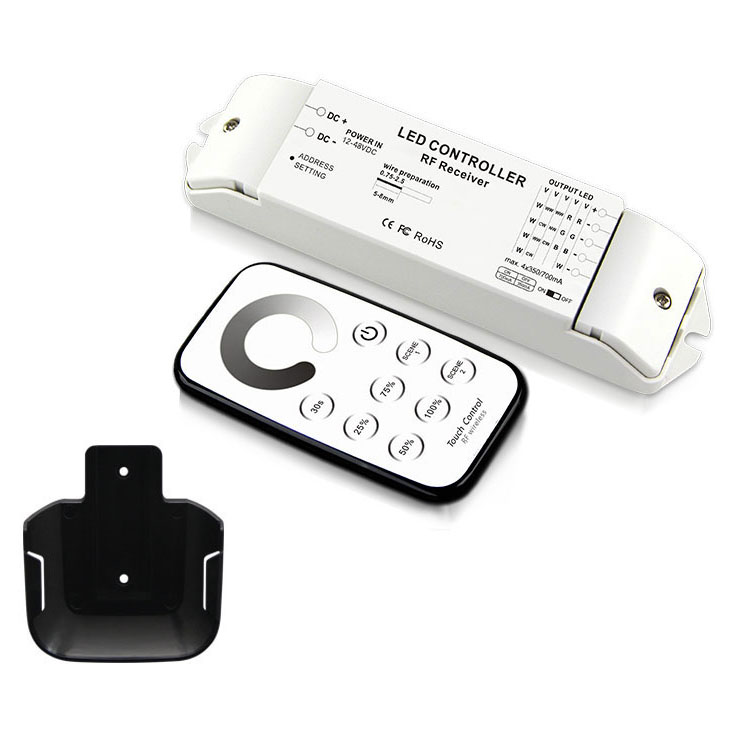
DC12V-48V LED Constant Current Dimmer T1+R4-CC - Wireless Remote Control
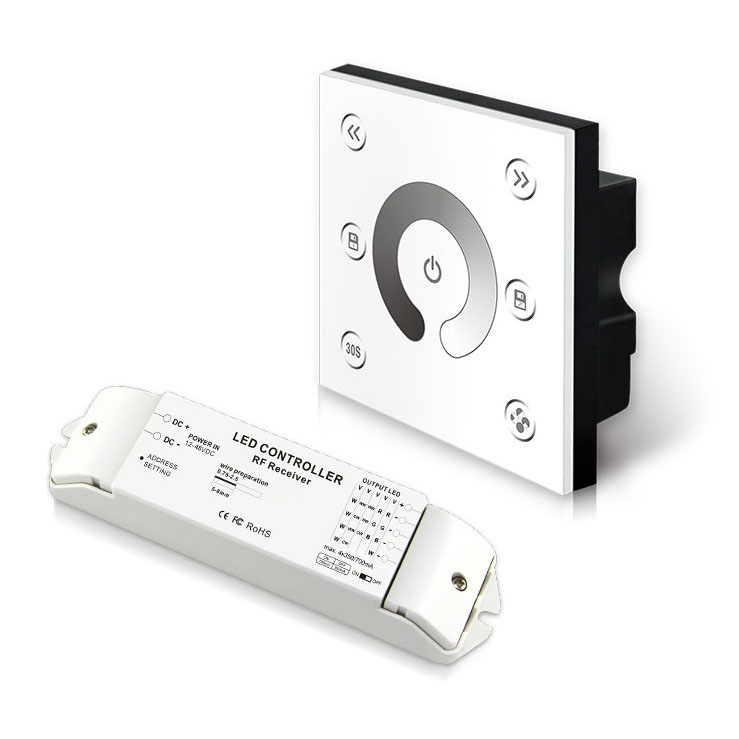
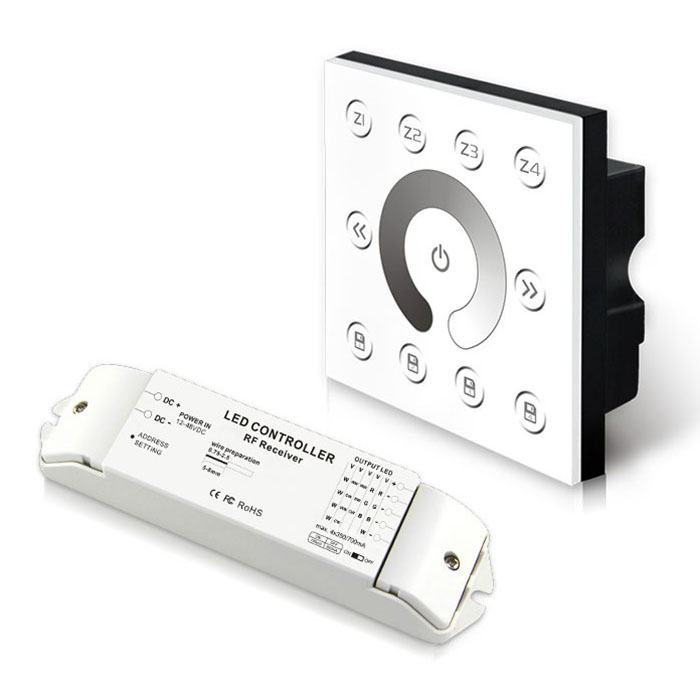
DC12V-48V Constant Current LED Dimmer BC-319 | 0-100% Flicker-Free
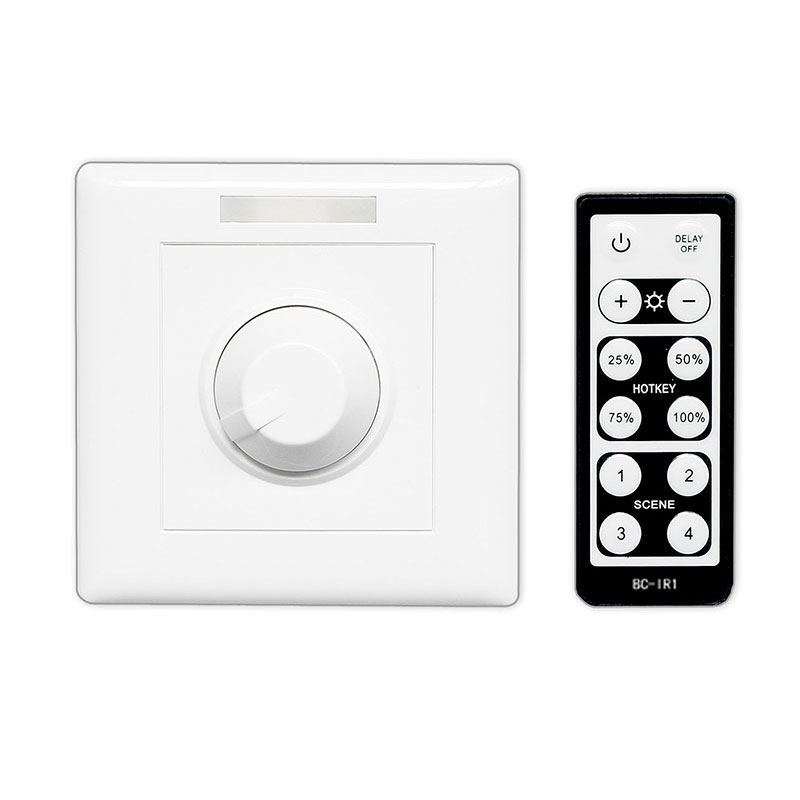
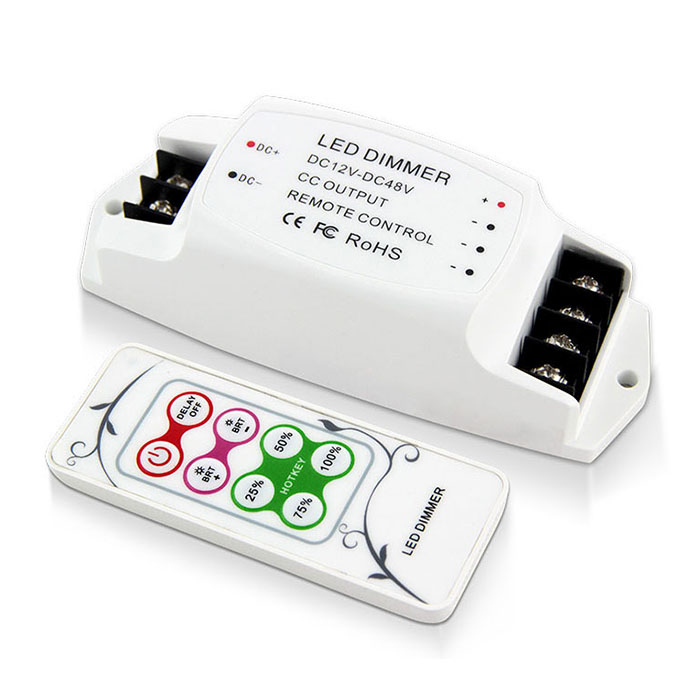
DC12-48V LED Constant Current Dimmer BC-320-CC - IR Remote & Knob Control
FAQ About CC LED Dimmers
Get direct engineering answers on constant current PWM dimming, wiring topologies, milliamp matching, and multi-channel control.
A CC LED dimmer regulates brightness by modulating pulse widths on a fixed milliamp (mA) output, designed specifically for constant current LED fixtures rather than standard LED strip tape. If your lighting fixture specifies a fixed drive current like 350mA, 700mA, or 1050mA and a variable forward voltage (such as 9V to 36V DC), you must use a constant current dimmer. Standard constant voltage tape relies on onboard resistors, but bare COB chips, downlights, and architectural spotlights require precise milliamp regulation to prevent thermal runaway while delivering smooth 0% to 100% dimming.
A CC LED dimmer must never be connected to standard constant voltage LED strip lights, because driving fixed-voltage tape with a regulated current driver will either under-power the LEDs or burn out their onboard resistors. Constant voltage LED strip lights are engineered for a fixed 12V or 24V rail and regulate current locally using passive SMD resistors. If you wire them to a constant current output, the dimmer attempts to force its preset milliamps across the circuit, causing severe flickering, excessive heat, or dead diodes. For standard 12V or 24V tape, choose our sibling constant voltage dimmers instead, where we stock 14 dedicated models.
A CC LED dimmer must have an output milliamp rating that matches or falls slightly below the operating current printed on your LED fixture's specification label. If your fixture is rated for 700mA at 30V to 36V DC, your dimmer channel must deliver exactly 700mA across that voltage window. Supplying 1050mA to a 700mA diode over-drives the junction, creating thermal buildup that permanently degrades lumen maintenance within months. Running a 700mA downlight on a 350mA dimmer channel is electrically safe; it simply limits the maximum light output to roughly 50%. Always verify that the fixture's forward voltage span falls within the dimmer's DC output envelope.
Connecting multiple fixtures to a single CC LED dimmer channel requires strict series wiring, never parallel. In a series circuit, every LED receives the exact same milliamp flow, and their individual forward voltages add together. For instance, wiring three 350mA LEDs with a 3.2V forward drop in series creates a circuit demanding 350mA at 9.6V DC. If you wire them in parallel on a 700mA channel, minor semiconductor tolerances cause one diode to pull more current than the other (current hogging), leading to cascade burnout. Make sure the total forward voltage remains at least 2V to 3V below your input power supply rail.
Controlling multiple zones of constant current lighting from a single wireless CC LED dimmer touch panel is achieved using multi-zone 2.4GHz RF pairing. Wall panels like our P5X transmit wireless 2.4GHz RF signals across 30m line-of-sight to multiple paired R4-CC receiving units. This lets you assign downlights in an office, accent spotlights in a conference room, and perimeter wall grazing to separate zones on one glass wall plate without pulling low-voltage control cables through finished ceilings. Each receiver independently manages its own constant current output channel, ensuring that dimming Zone 1 does not alter the forward current of Zone 2.