
IR LED Emitters & Diodes
6 productsIR LED emitters and diodes are the fundamental components for creating custom infrared light sources. When you need to design a specific IR illuminator for a security camera, build a prototype for a machine vision system, or repair existing equipment, you start with these individual LEDs. SuperLightingLED provides a focused range of these core components, from surface-mount devices for production runs to through-hole diodes for DIY projects, ensuring you get the right infrared LED emitter for the job.
These are not simple plug-and-play lights; they are components intended for integration into a larger circuit. Success requires understanding how to provide the correct forward voltage and drive current.
What are the different types of IR emitter LEDs?
Our IR LED emitter and diode category contains several distinct form factors, each suited for different applications and assembly methods. Choosing the right one depends on your project's scale, your manufacturing capability, and the final application's requirements.
| Component Type | Package Size / Base | Typical Use Case | Power Range |
| SMD LED Diode | 3.5x3.5mm, 5.6x3.0mm | Automated PCB assembly, compact product design | 0.5W - 3W |
| Through-Hole LED | 5mm | Manual soldering, prototyping, DIY illuminators | 1W |
| Finished Bulb | E27 Screw Base | Light therapy, plant growth, direct use | 12W - 18W |
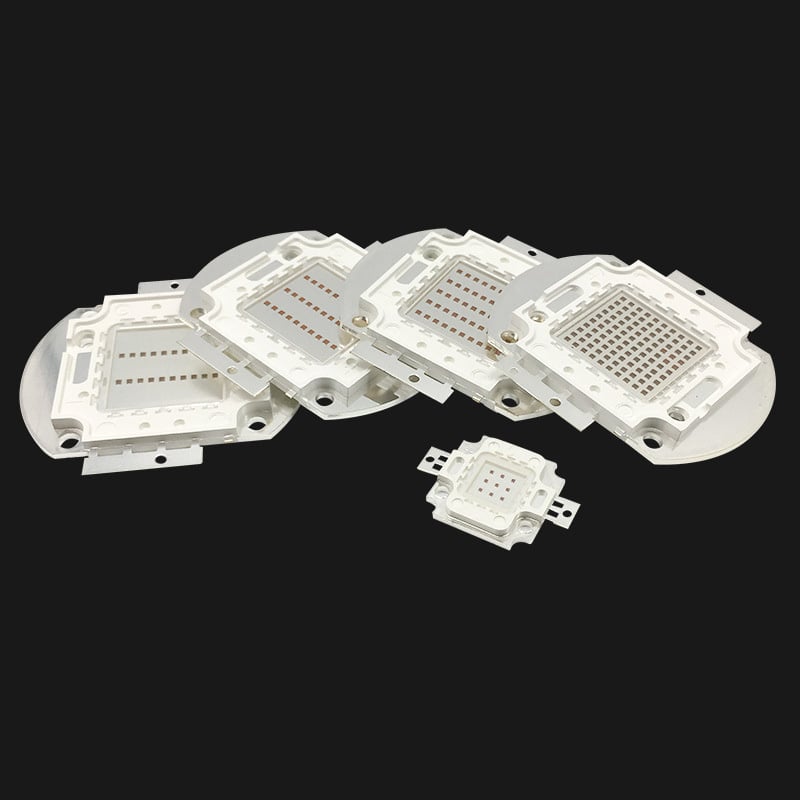
10W 20W 30W 50W 100W High Power Infrared Emitter 940nm IR LED Chip
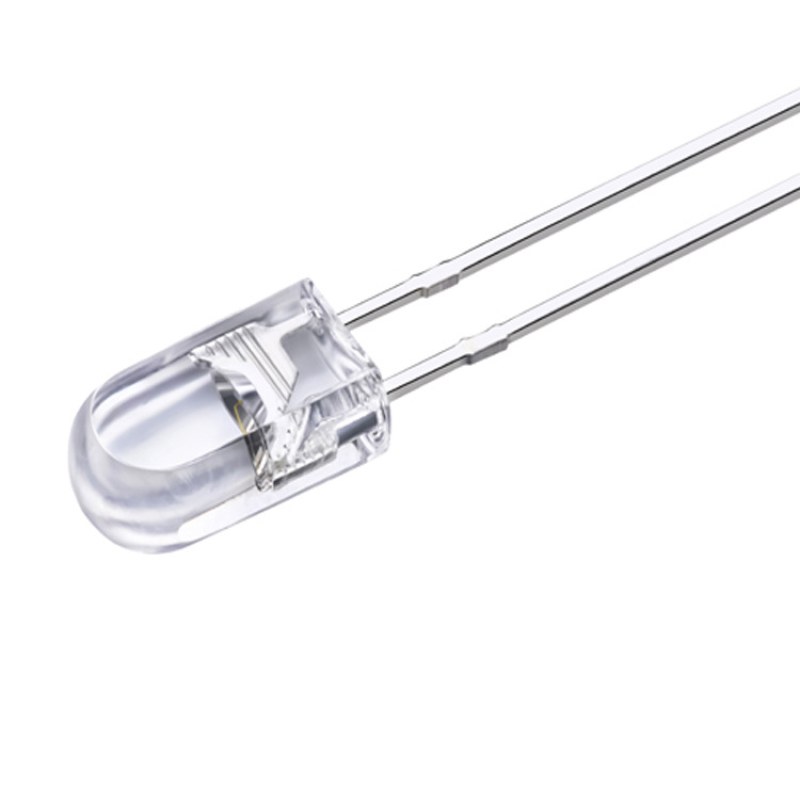
850nm 1W IR LED Emitter | 5mm Infrared Diode | 100-Pack

E27 660nm Deep Red & 850nm IR LED Bulb - Plant Grow & Therapy Light
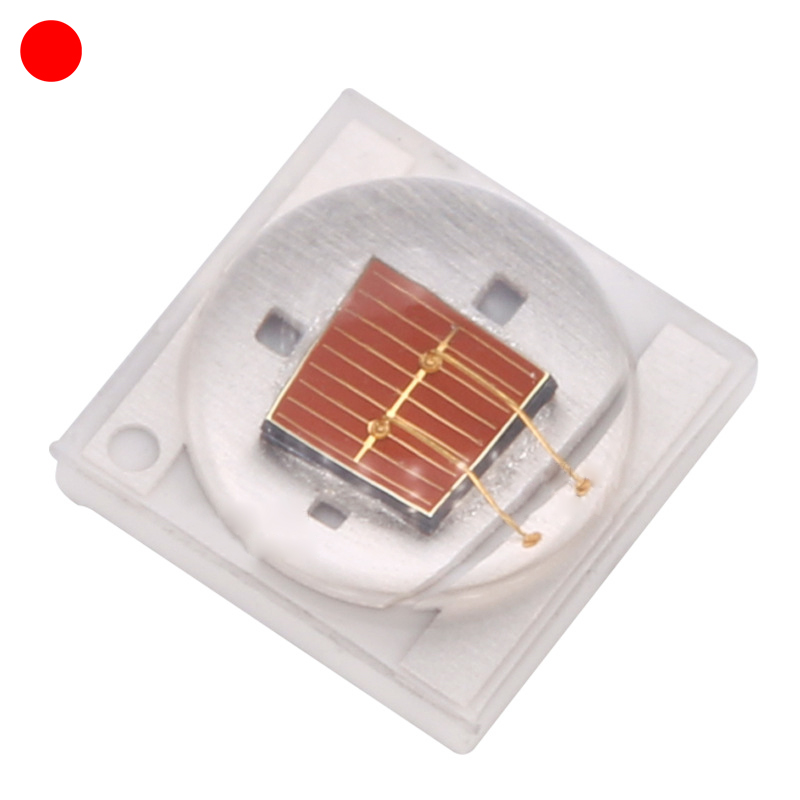
Red LED 640nm 650nm 660nm Ceramic Substrate LED Lens 3535 SMD, 10PCS
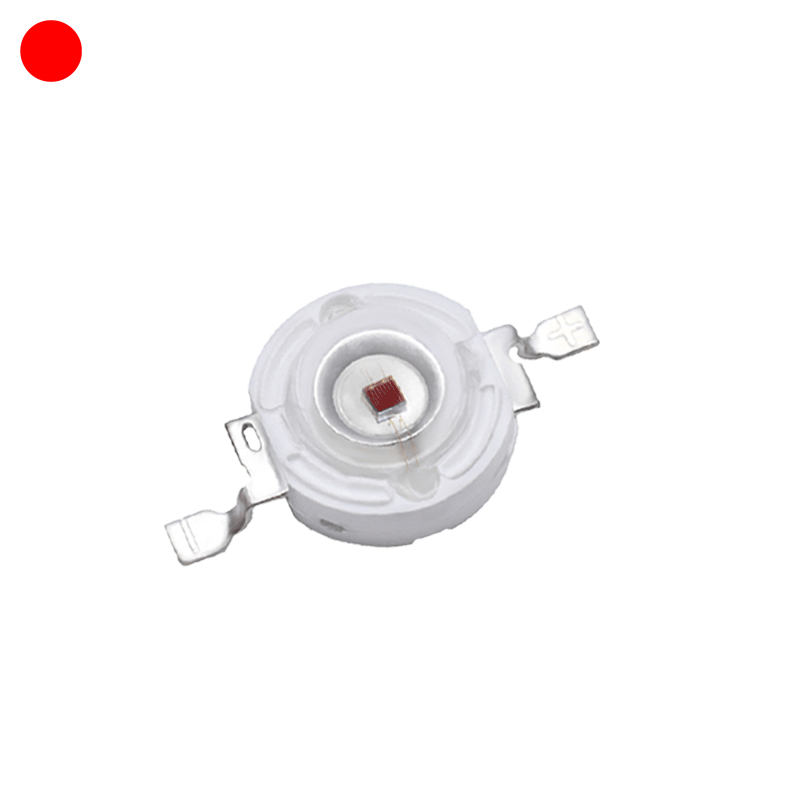
630nm 660nm LED Deep Red Light Emitting Diode, 0.5W to 3W, 100PCS
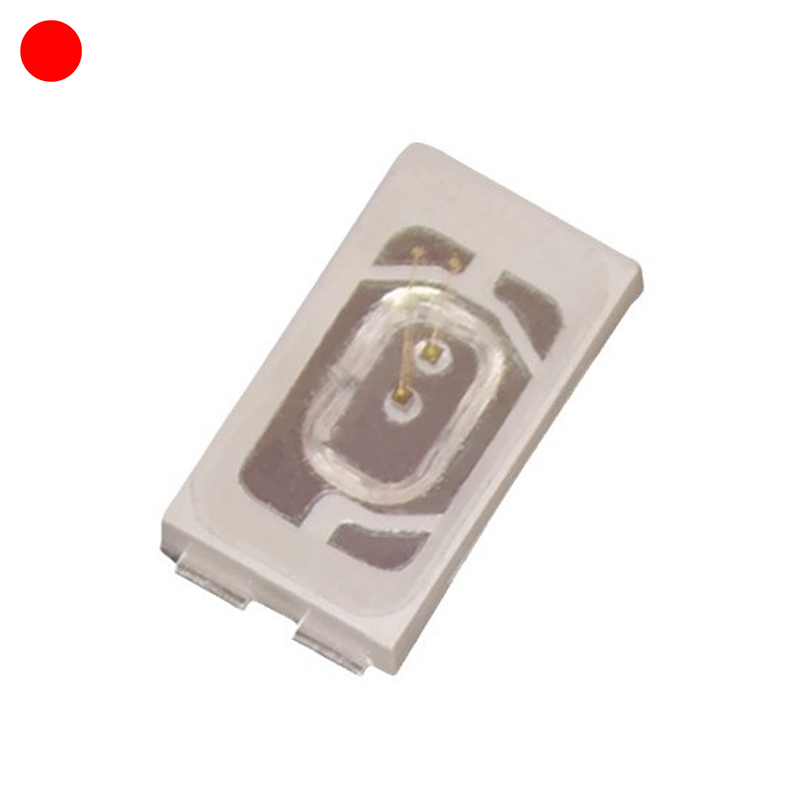
Surface-Mount (SMD) Infrared LED Diodes
SMD LEDs, like our 3535 and 5630 models, are designed for automated pick-and-place assembly onto printed circuit boards (PCBs). Their small footprint (the 3535 red LED is just 3.5mm x 3.5mm) allows for dense arrays and compact product designs. Some models use a ceramic substrate. This is critical for high-power applications because it offers much lower thermal resistance than standard packages, allowing heat to be drawn away from the LED junction more effectively. This is essential for maintaining output and service life in a bright IR LED module.
Through-Hole IR LED Emitters
For prototyping, repairs, or manual assembly, through-hole LEDs are often easier to handle. The long leads are easy to solder by hand into a perfboard or custom PCB. These are commonly used to build custom illuminators for night vision setups or as an LED IR transmitter in remote control projects. A single emitter produces a focused beam, and multiple can be arrayed to create a powerful IR floodlight.
Finished IR LED Light Bulbs
For applications that don't involve building a custom circuit, a finished bulb is the most direct solution. It combines visible deep red light with invisible near-infrared light. It fits into any standard E27 lamp socket, making it a simple way to deploy targeted wavelengths for light therapy or specialized plant growth without any wiring. It's a complete IR led light system in a familiar package.
Frequently Asked Questions About IR LED Emitters & Diodes
Got a question about building your own infrared light source? You're in the right place. Here are the common questions we answer every day for engineers and makers.
It's all about how you plan to assemble your circuit. SMD (Surface-Mount Device) IR emitters, like our 3535 and 5630 models, are tiny and designed for automated pick-and-place machines to create compact products. Through-hole emitters have long wire leads, making them much easier to solder by hand for prototypes, repairs, or DIY projects.
You're not imagining it. While the peak output of an 850nm IR LED emitter is well outside the visible spectrum, the spectral output isn't a perfect spike. It has 'tails', and a tiny fraction of the light leaks into the deep red part of the spectrum that the human eye can just barely detect, especially in a dark room when looking directly at the emitter. This is normal for 850nm.
Engineers and product designers use these as the core component for custom lighting. Common applications include building custom illuminators for security cameras, creating specific arrays for machine vision systems, night vision equipment, remote control transmitters, and scientific or horticultural research setups where a specific wavelength is required.
Absolutely, yes. For any emitter 1W or higher, proper thermal management is critical for performance and lifespan. Without a heat sink to draw heat away from the LED junction, it will overheat, its output will drop, and it will fail prematurely. For our SMD models, this means designing a PCB with a good copper thermal pad.
Heat is the enemy of high-power LEDs. A ceramic substrate, like the one on our 3535 red LED emitters, has much lower thermal resistance than standard packages. This means it transfers heat away from the LED chip far more efficiently, which is essential for keeping the emitter running bright and stable in demanding applications.
Yes, that specific model is designed for exactly that. Our E27 red and IR therapy bulb has all the driver electronics built in and uses a standard household screw base. It's a finished product, intended for users who need the light without wanting to design and build the circuitry themselves.
A VCSEL (Vertical Cavity Surface Emitting Laser) is a type of laser diode, not a standard LED. While they can look similar, a VCSEL LED produces a more focused, higher-quality beam of light with lower power consumption. It's often used in applications that need more precision than a standard LED can offer, like sensing or data communication.
Use these components when you need total control over the design. If you're building a product and need a specific shape, density, or beam angle that a pre-made strip can't provide, you start with emitters. If you just need to illuminate a space with IR for a security camera, a finished 850nm infrared strip light is a much faster and simpler solution.
These are the two most important numbers for powering an LED. Forward Voltage (Vf) is the amount of voltage the LED 'drops' when it's on; think of it as the minimum voltage required to turn it on. Drive Current is the amount of electrical current (in milliamps, mA, or amps, A) you should push through the LED to get its rated brightness. You need to match these to your LED driver.