
WiFi RGB LED Strip Controller
35 products
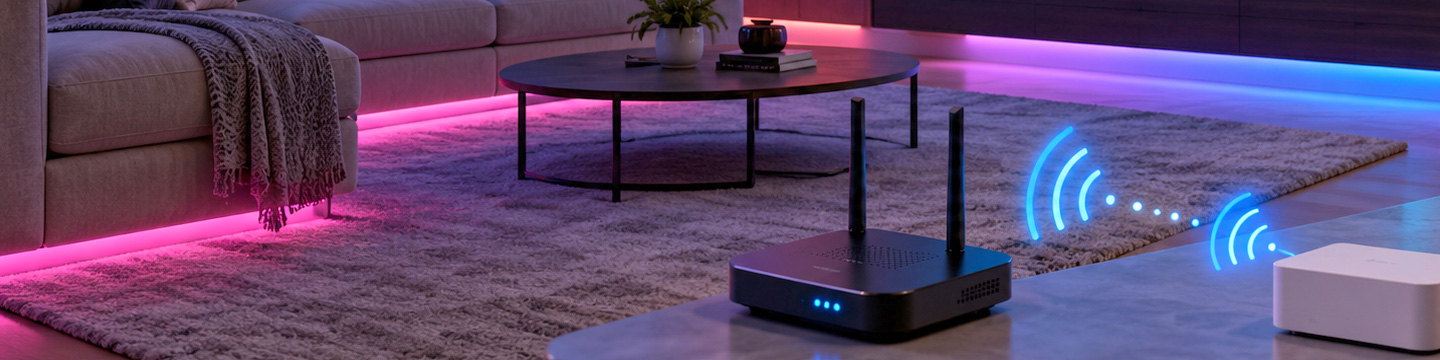
WiFi-integrated LED controllers have become the gold standard for residential smart lighting, offering unparalleled convenience for modern home automation. By connecting your RGB LED strip light to a 2.4GHz network, you can manage your atmosphere from anywhere in the world, allowing for complex scheduling, timer runs, and scene settings directly through a smartphone and a tablet. This technology is not limited to interiors; also apply to outdoor landscapes, patios, and pool areas.
Smart Living with WiFi RGB LED Strip Controllers
The power of a WiFi RGB controller lies in its vast ecosystem compatibility. Most units support leading smart home platforms including Amazon Alexa and Google Assistant, enabling hands-free voice control for color changes and dimming. Depending on your specific hardware, you can utilize a variety of high-performance apps tailored to different user needs:
-
Tuya Smart / Smart Life: The most versatile choice for overall home automation and cloud-based access.
-
BanlanX (SP Series): Ideal for users wanting advanced "All In One" IoT features and PWM/SPI signal versatility.
-
Surplife / Magic Home Pro: Popular for its intuitive interface and broad compatibility with UFO-style controllers.
Some RGB light controllers also feature dual-mode modules (WiFi + Bluetooth, WiFi + RF or WiFi + IR) to ensure a stable connection during initial setup and reliable performance even if the local network fluctuates.
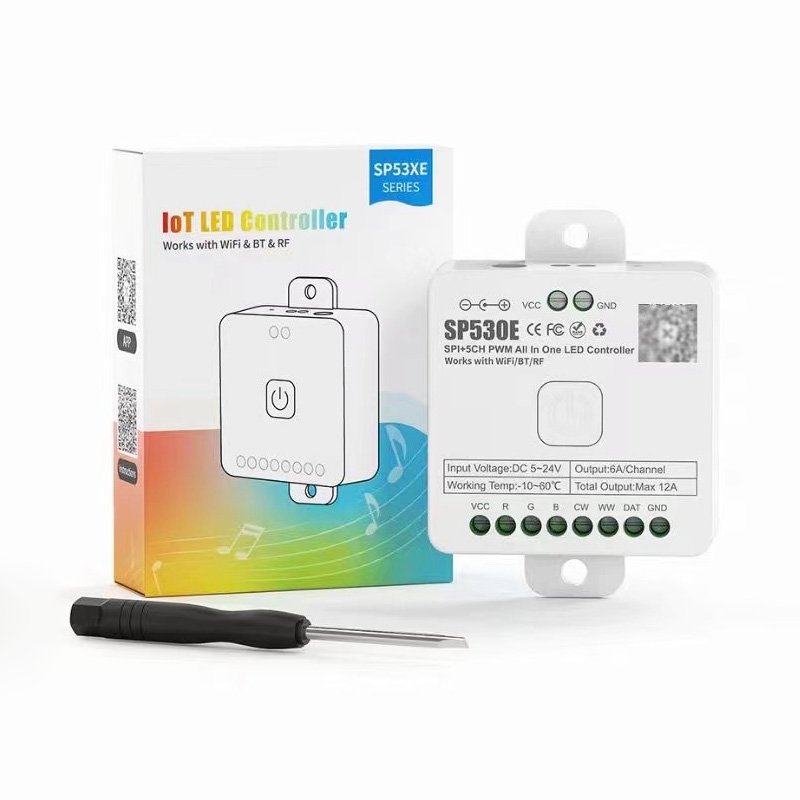
SP530E WiFi Bluetooth RF Music LED Strip Light Controller (Upgraded of SP630E)
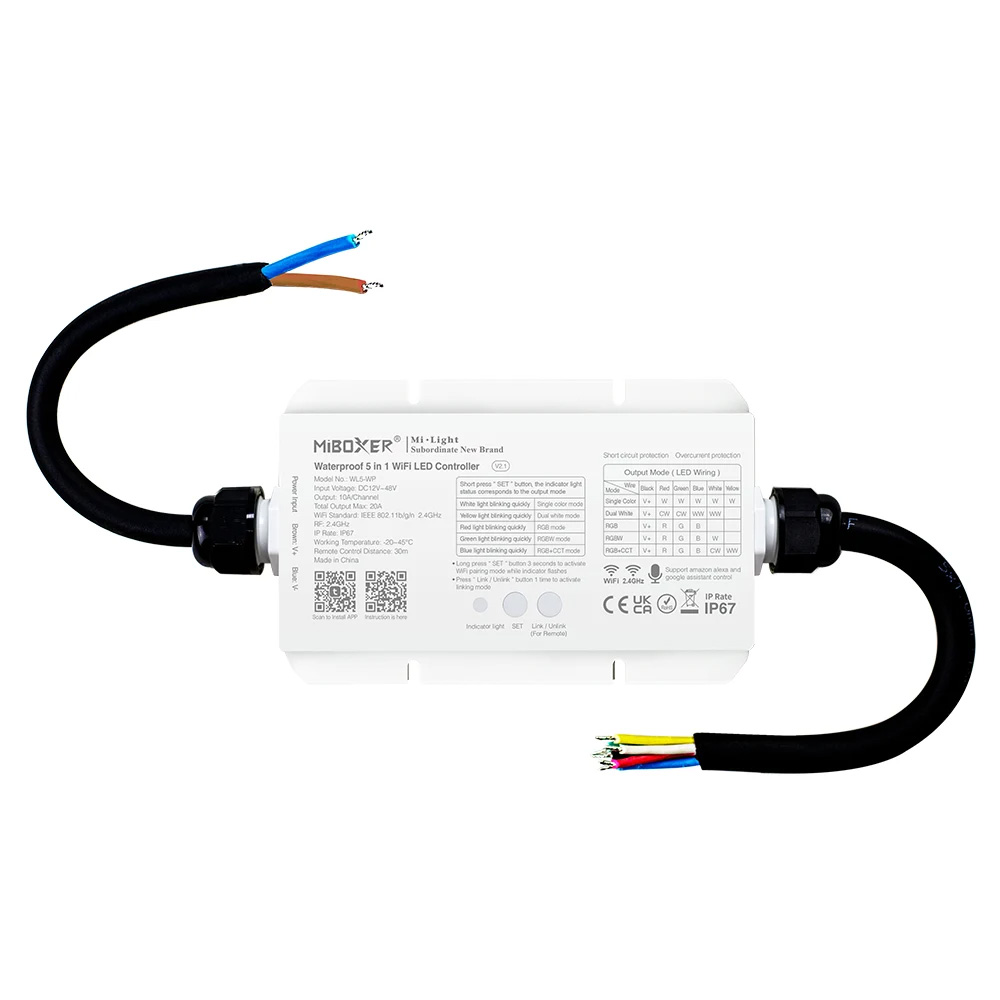
.jpg)
6 Buttons Tuya WiFi LED Rgbw LGB CCT Controller M5(WT)
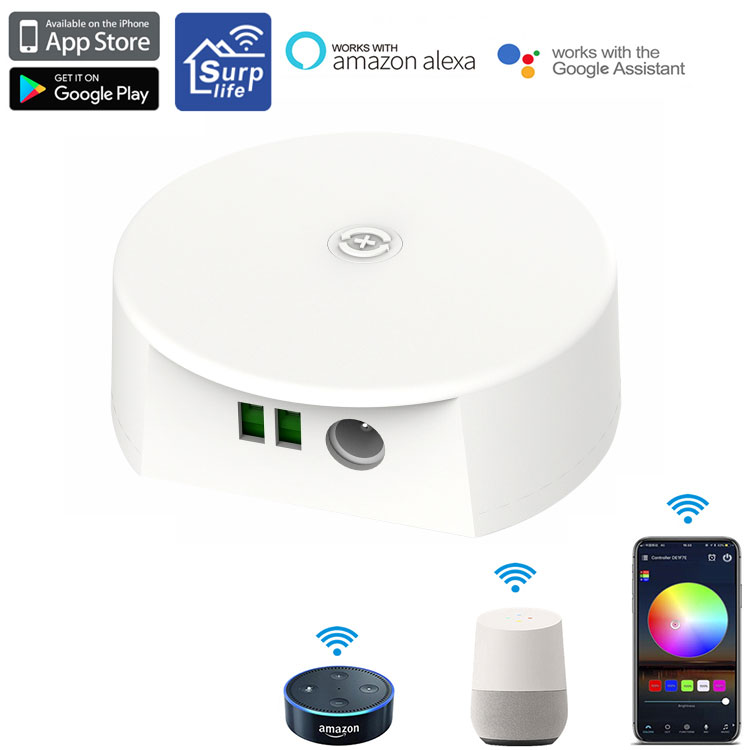
DC12-48V Alexa APP Control Hardwired WiFi LED Controller
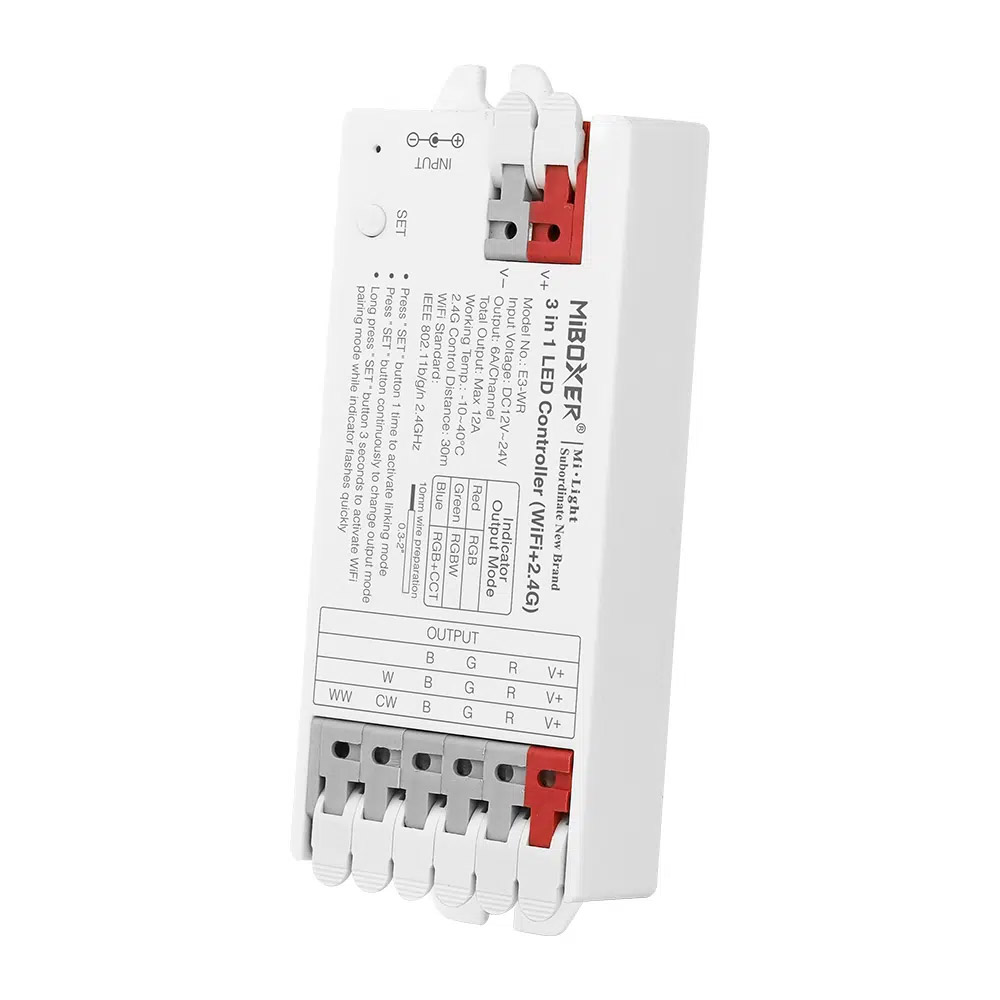

Magic Home Pro APP LED Smart WiFi Controller Works with Amazon Alexa, Google Assistant Home
.jpg)

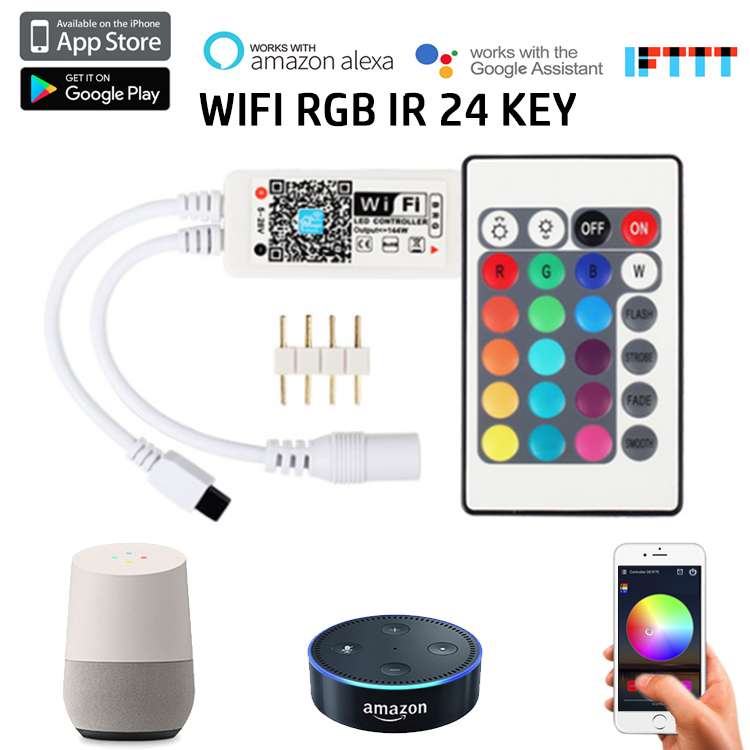
WiFi RGB LED Button Controller With IR Remote And Voice Control
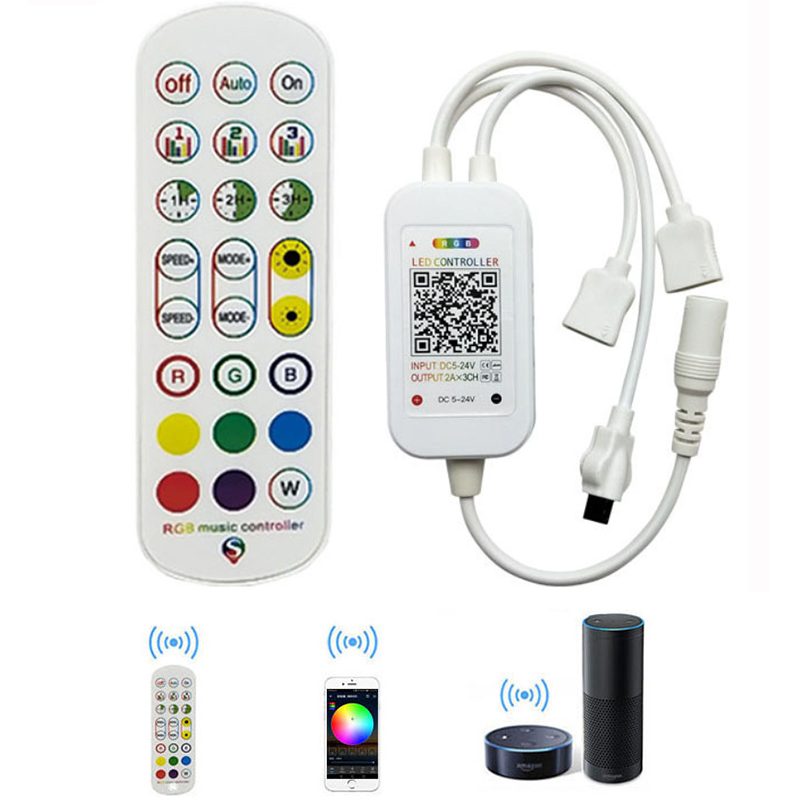
DC5-24V RGB Bluetooth/WiFi Music APP LED Mini Controller With 24 Keys Remote Control, Work With Alexa & Google Assitant
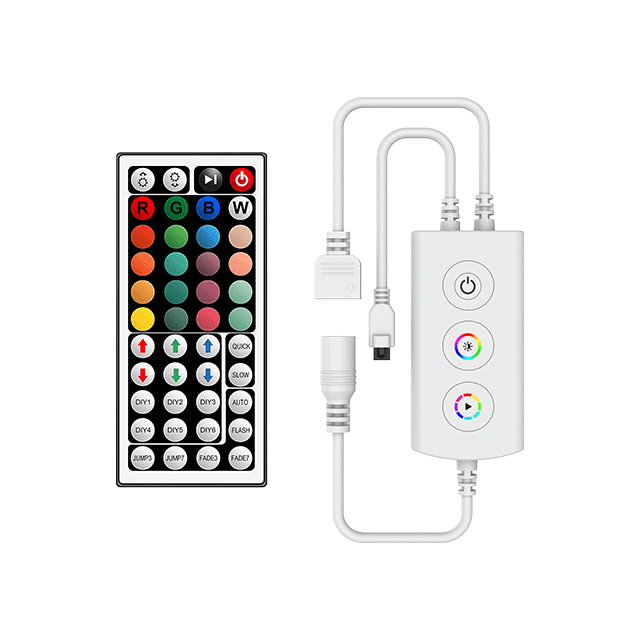
+RC3-WiFi-&-IR-Dimmable-RGB-LED-Controller-with-IR-Remote.jpg)
+RC3-3CH-LED-RGB-WiFi-IR-Controller-with-Infrared-Remote.jpg)
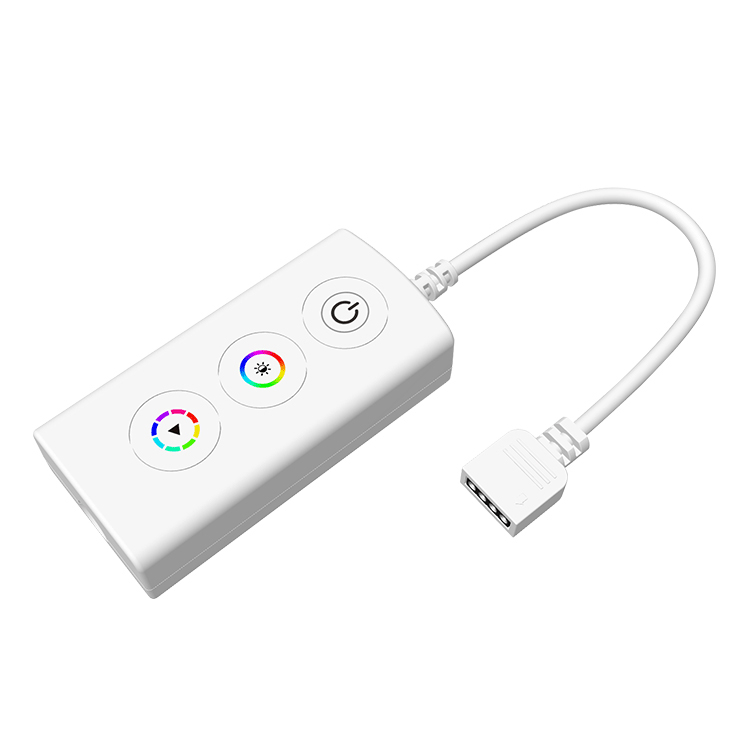
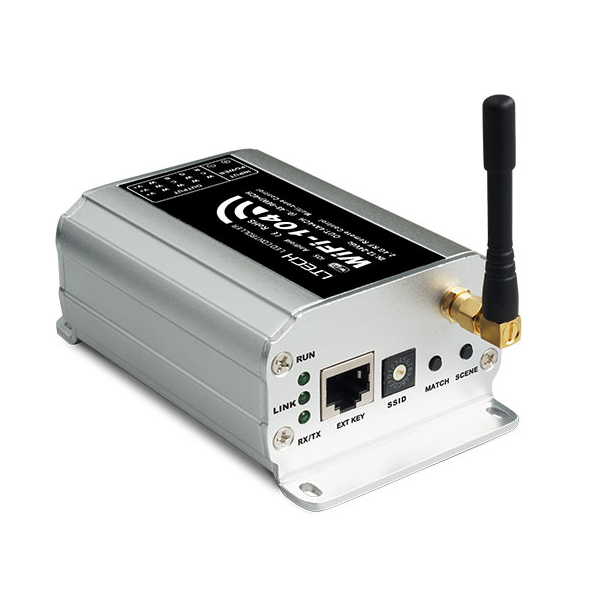
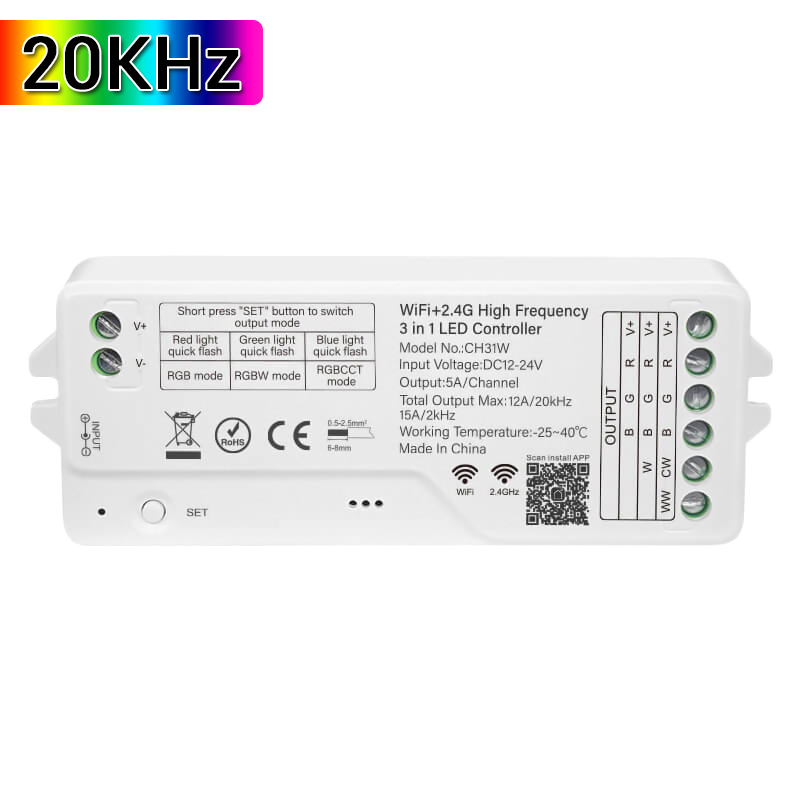
20KHz High Frequency Color Changing LED Strip Controller 3-5CH Smart
Frequently Asked Questions About WiFi RGB LED Strip Controllers
Your project questions, answered by an engineer. Here's what people ask us right before they buy.
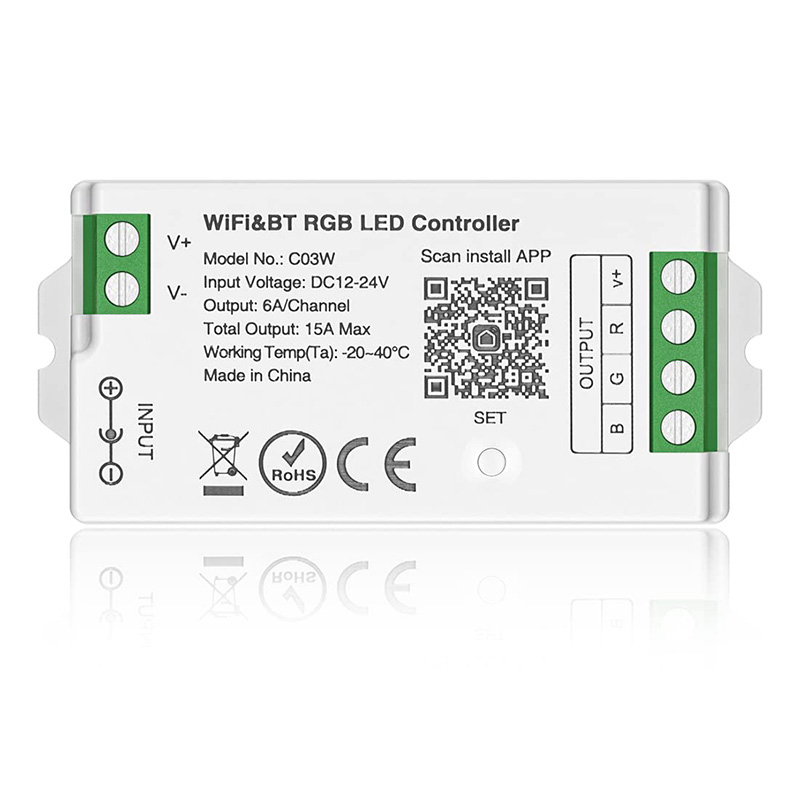
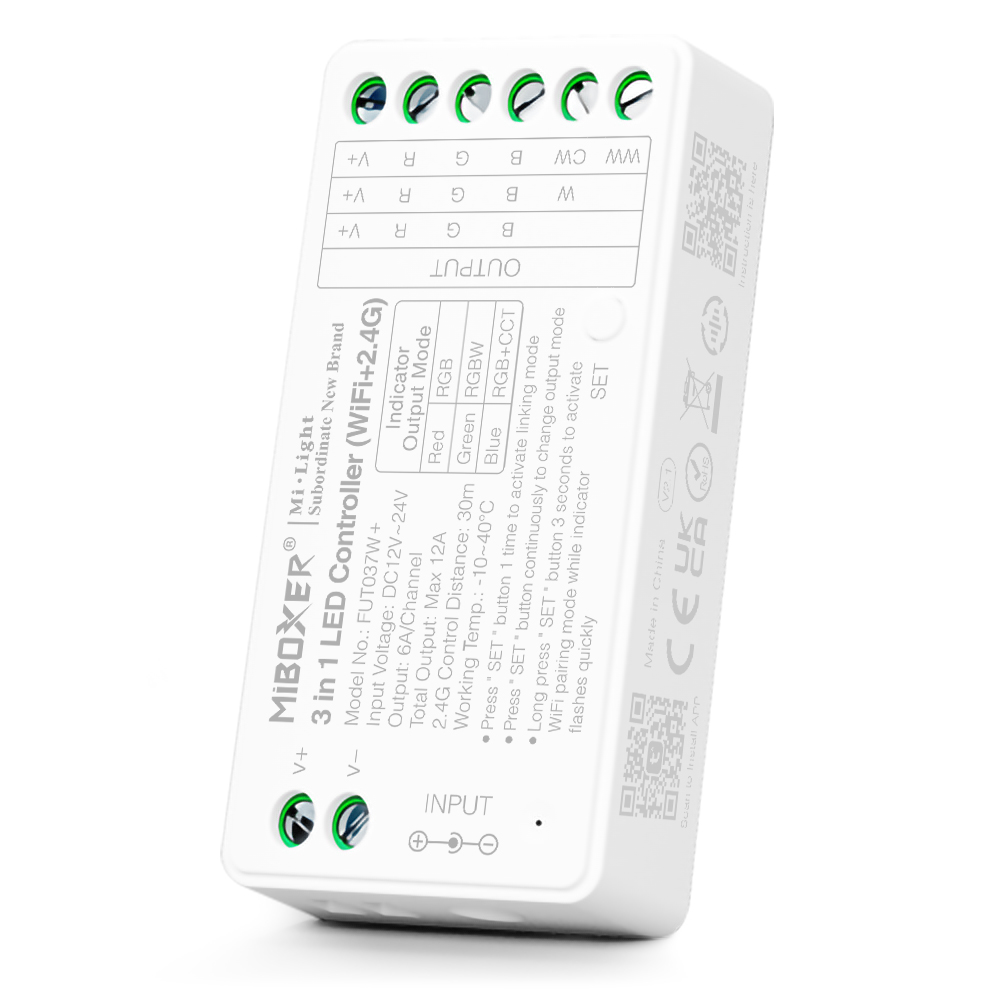
A WiFi RGB LED strip controller is the brain of the operation. The controller receives commands from your phone app over your 2.4GHz WiFi network, then translates them into electrical signals. It adjusts the power sent down three separate channels—Red, Green, and Blue—on the LED strip. By mixing the brightness of these three primary colors at high speed, it can create millions of different final colors. The whole process is called Pulse Width Modulation, or PWM.
Inside each 'dot' on an RGB strip are actually three tiny LEDs: one red, one green, one blue. The controller's job is to make them glow at different intensities to mix colors. You have to match the strip's required voltage (usually 12V or 24V) with the controller and the power supply. A 12V strip on a 24V controller will burn out instantly. A 24V strip on a 12V controller will be extremely dim or won't light up at all. Always match all three parts.
This is a classic wiring mix-up. Your strip has separate inputs for Red, Green, and Blue (and sometimes White or a common positive). If you accidentally swap the green and red wires between the controller and the strip, the app's color wheel will be completely wrong. When you select red in the app, the controller sends power down the red channel, but it ends up at the green LED. Just power everything down and check your wiring sequence (usually printed on the controller and the strip). 99% of the time, that's the fix.
There can be, but it's usually less than a second. When you tap a color in an app like Tuya or Smart Life, the command goes from your phone, to your router, over the internet to a cloud server, back to your router, and finally to the controller. This round trip can introduce a tiny bit of lag. For most home use, it's unnoticeable. Controllers with Bluetooth or RF backup modes often feel more responsive for initial setup or when your internet is slow, as they communicate directly with your phone or remote.
Most apps like Tuya, Smart Life, or Magic Home Pro don't have a hard limit on the number of devices. You can add dozens of individual WiFi controllers to the app. The real magic is in grouping. You can create groups like 'Kitchen Lights' or 'Downstairs Zone' and control multiple controllers as if they were one. This lets you sync colors and on/off commands across different rooms or even different properties, as long as they're all linked to your account.
Mostly, yes, as long as you match the key specs. The strip must be a standard 'common anode' type, which covers over 95% of the RGB strips out there. Most importantly, match the voltage (12V or 24V) and make sure the controller's amperage rating is high enough for the total length of your strip. A 5-meter strip of 5050 LEDs might pull 6 amps; your controller needs to be rated for at least that. If it isn't, the controller will overheat or the lights will flicker.